Whale Watching Waikiki Hawaii: When to Go and How to Watch
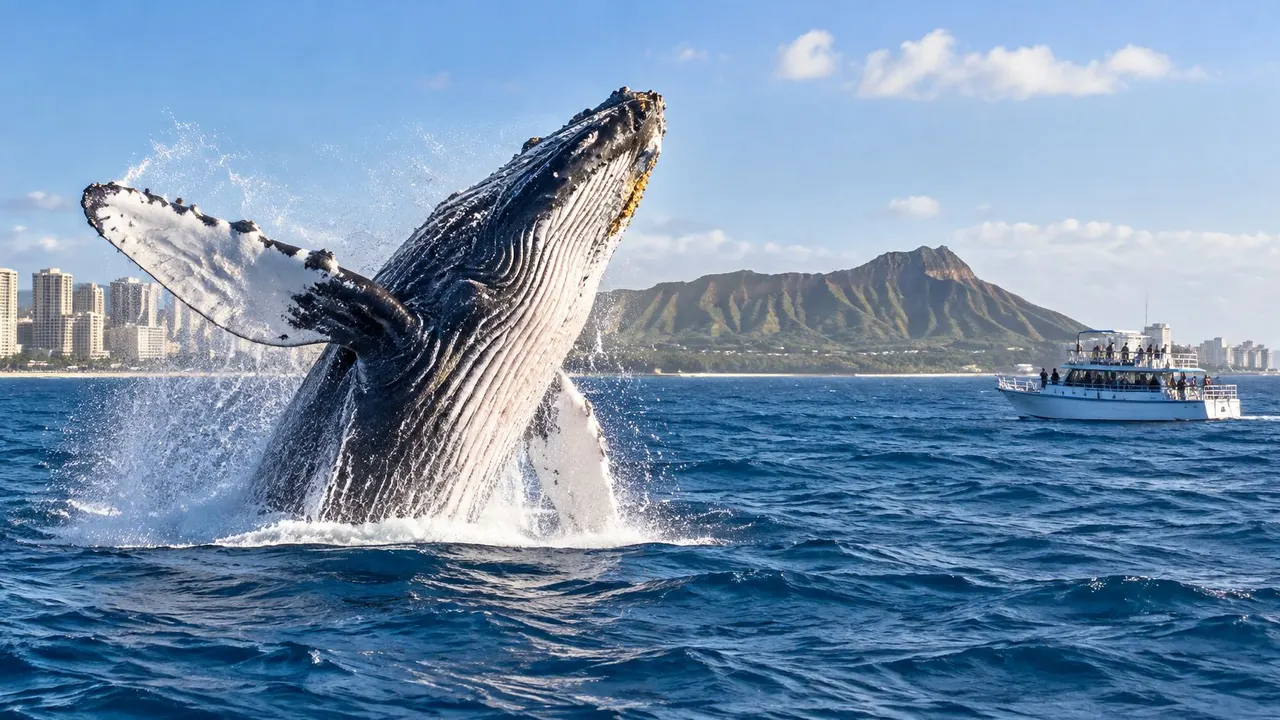
You've already booked the flights and the hotel, and the only open question left is which morning to spend on the water. So you pull up three whale watch listings on your phone, and they all use the same photo of a breaching humpback above the same promise. None of them tell you what decides your morning: whether the whale is in these waters that week, whether the sea is flat enough to spot a blow, and how close the boat is allowed to get.
That gap is worth closing before you pay. Whale watching in Waikiki rewards planning by month and by departure time far more than it rewards picking the flashiest brochure, and the rules that shape the trip are written down in federal and state guidance that almost nobody reads.
What follows is an odds-first plan. A month-by-month read on the season, a candid comparison of Oahu with the rest of Hawaii, the legal distances and speeds a captain works inside, and a backup date instead of a promised sighting.
Table of Contents
- When Humpback Whales Visit Waikiki
- Your Realistic Odds of Seeing Whales From Waikiki
- Humpback Viewing Rules and Safe Distances
- What Happens on a Waikiki Whale Watch Cruise
- Family-Friendly Whale Watching Tips
- Book a Waikiki Whale Watch Tour With Confidence
When Humpback Whales Visit Waikiki
The season has a shape, and that shape decides your odds far more than the boat does.
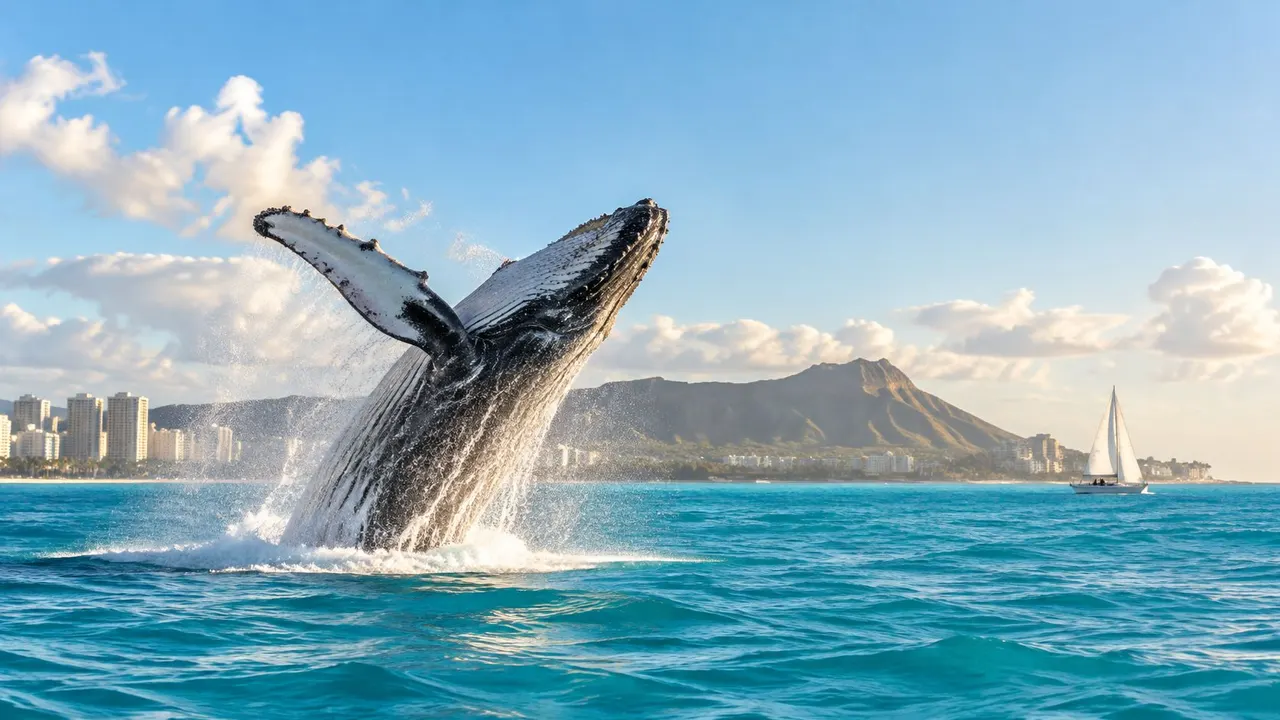
NOAA's Hawaii humpback whale guidance describes the season as generally running from November through May, with the highest concentration typically from January through March, because the whales come to breed, give birth and nurse calves rather than to feed. Oahu sits inside the protected habitat of the Hawaiian Islands Humpback Whale National Marine Sanctuary, so a Waikiki departure happens in recognized winter habitat rather than alongside some incidental migration route (NOAA Hawaii humpback whale boating guidance).
The scale is what makes this worth planning around. As many as 12,000 humpback whales return to Hawaiian waters each winter, more than half of the North Pacific population, after migrating thousands of miles from feeding grounds in Alaska and other northern waters (NOAA Office of National Marine Sanctuaries). That is why a winter morning off Waikiki belongs to a North Pacific wildlife event, not a local attraction.
The population you're watching is also a recovery story, which is the right frame for expectations. Commercial whaling cut North Pacific humpbacks to roughly 1,000 to 1,400 animals by the early 1970s, and the Hawaii distinct population segment was removed from the U.S. Endangered Species List in 2016 after decades of protection (NOAA sanctuary history). A sighting is the payoff of that work. It is not a scheduling formality.
Month by month, from the opener to the tail end
| Month | Whale presence | What you are likely to see | Planning note |
|---|---|---|---|
| November | Season opens, numbers building | Early arrivals, mostly single whales or small groups | Lower odds, good value as a backup date |
| December | Rising numbers | Pairs, small groups and occasional breaching | Solid odds, book ahead over holidays |
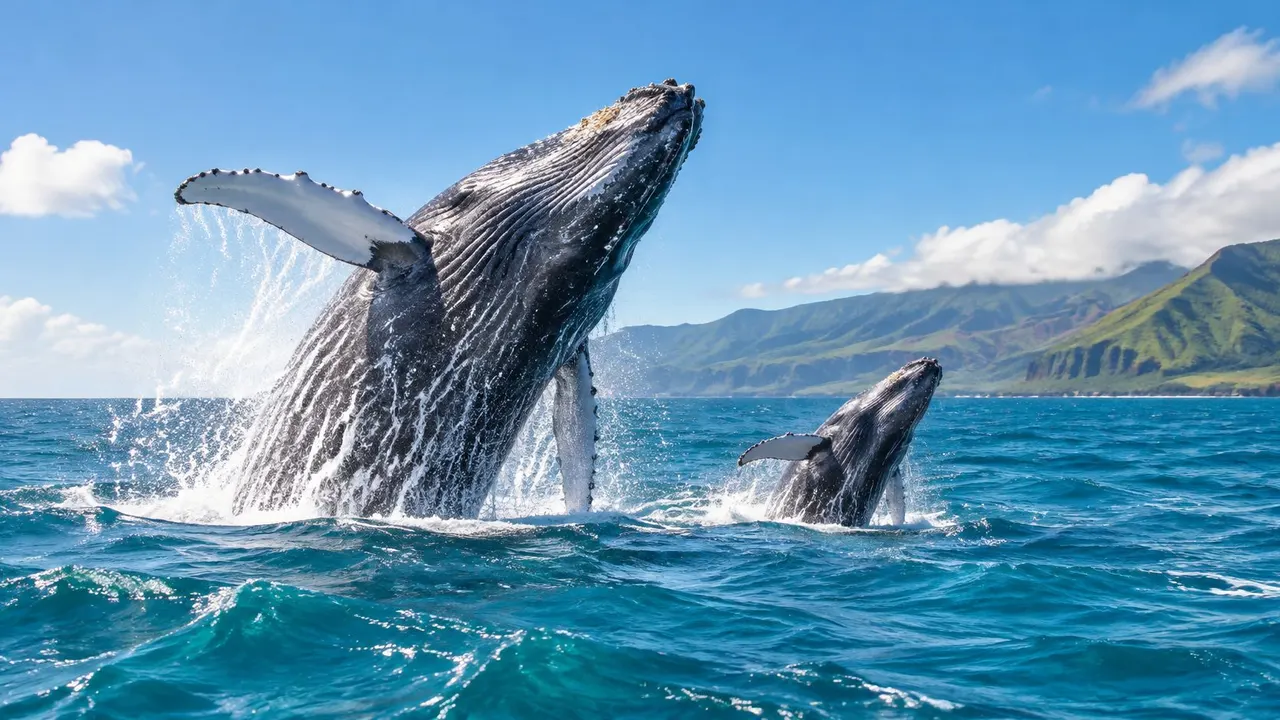
| January | Peak abundance | Mothers with calves and active surface behavior | Strongest odds of the season |
| February | Peak abundance | Breaching, tail slaps and calf play | Strongest odds, equal to January |
| March | High but tapering | Mix of adults and calves | Reliable backup to February |
| April | Tapering | Fewer whales, less predictable | Book only if flexible on the date |
| May | End of season | Occasional stragglers | Weather-dependent, treat as a bonus |
| June to October | Largely absent | Rare sightings | Plan a scenic cruise, not a whale trip |
Read that table as a decision tool rather than trivia. November and December are genuine whale months, but the animals are still arriving and spread thin, so a morning can pass with one distant blow and nothing else. January and February are when the breeding and calving cycle is in full swing and surface activity peaks. March holds most of that energy and then softens, which is exactly why it makes a good fallback.
Planning rule: book a January or February morning, hold a March date as backup, and treat any date in November, December, April or May as a winter boat ride with a real but uncertain whale bonus. June through October is scenery, not whale watching.
Treat whale watching Waikiki Hawaii as a calendar decision first and the rest gets simpler.
Your Realistic Odds of Seeing Whales From Waikiki
A Waikiki whale trip offers a genuine chance of seeing humpbacks. It cannot offer a guarantee, and any page that implies otherwise is selling you a coin flip as a sure thing.
Geography is the first honest variable. Hawaii's humpback season generally runs November through May with peak abundance typically in January and February, and official guidance describes sightings as common around Oahu but less frequent than around Maui, Lanai, Molokai, Kauai's north coast and Hawaii Island's Kohala coast (NOAA's Hawaii humpback whale viewing guidance). Oahu is a legitimate whale island. It isn't the state's densest concentration, and comparing a Waikiki cruise uncritically with a Maui one sets you up for disappointment.
Distance is the second. Federal approach limits keep the boat well back from the animal, so a whale that looks enormous in a photo may have been a long way off, and one that "looks close" on the horizon may be a mile out. That's the deal, not a shortfall in the tour.
Departure time changes what you can see
| Departure time | Light and visibility | Sighting trade-off | Best for |
|---|---|---|---|
| Morning | Calm seas, clear water, strong light | Usually the calmest conditions for spotting blows | Families and first-timers seeking the best odds |
| Midday | Bright sun and glare on the water | Good visibility but more boat traffic | Flexible schedules and mixed-age groups |
| Late afternoon | Softer light, sometimes rising wind | Fewer boats, but spotting gets harder as light fades | Photographers wanting warm light |
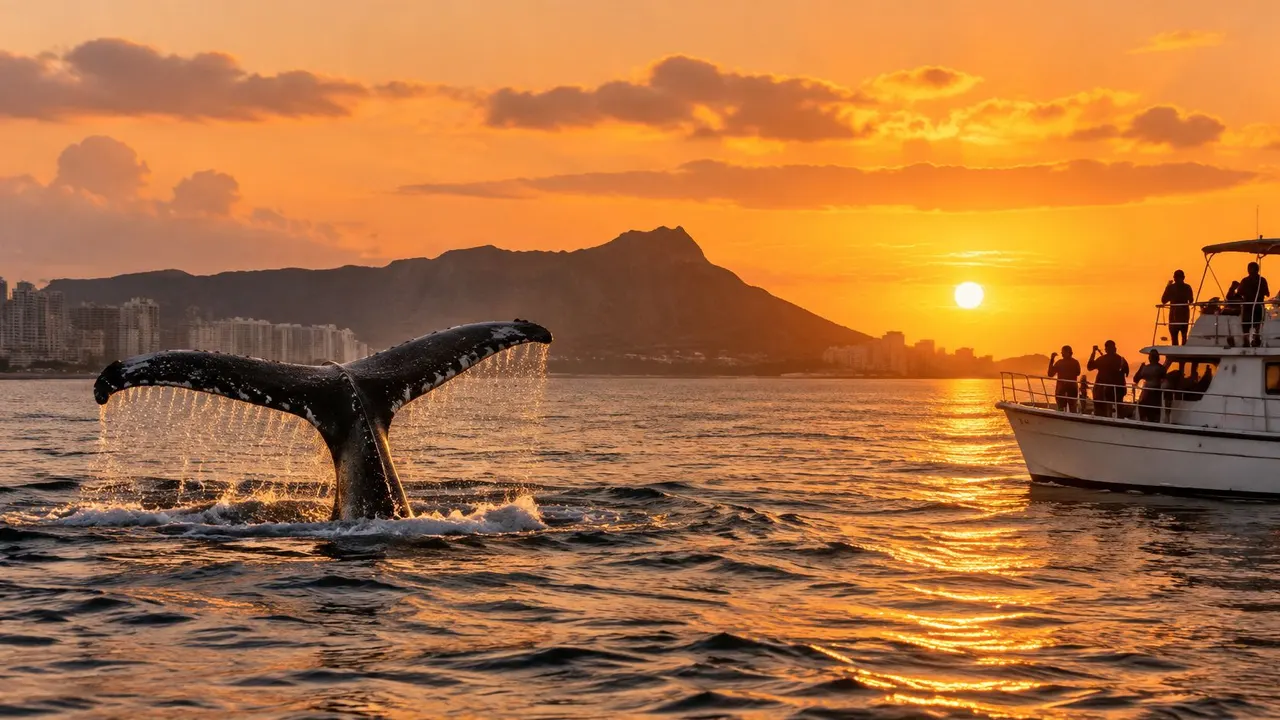
| Sunset | Golden light, fading visibility | Lowest odds of a clear whale sighting | Couples who want scenery first and whales as a bonus |
Four things move your odds on the day: sea state and wind, the boat's position relative to where whales are working, the hour you sail, and how hard the crew scans. Flat water makes a blow visible a long way off, while chop hides everything but a breach. If you're choosing between a morning and an afternoon slot and the forecast is marginal, whether whales are more active in the morning or the afternoon is worth ten minutes before you commit.
Treat a sunset cruise as a scenic product first. Fading light makes spotting harder, and the golden-hour sell is about the skyline, not the wildlife.
Pick the earliest morning departure you can stand, in the peak months, and put a spare date in the itinerary so weather has somewhere to put you.
Then plan for the whale-free morning in advance. A calm ride out of the harbor, Diamond Head from the water and a pod of spinner dolphins can carry a trip on their own, and framing it that way means nobody spends two hours staring resentfully at the horizon.
Humpback Viewing Rules and Safe Distances
Almost every instruction a captain gives on a whale trip traces back to two numbers: a distance in yards and a speed in knots.
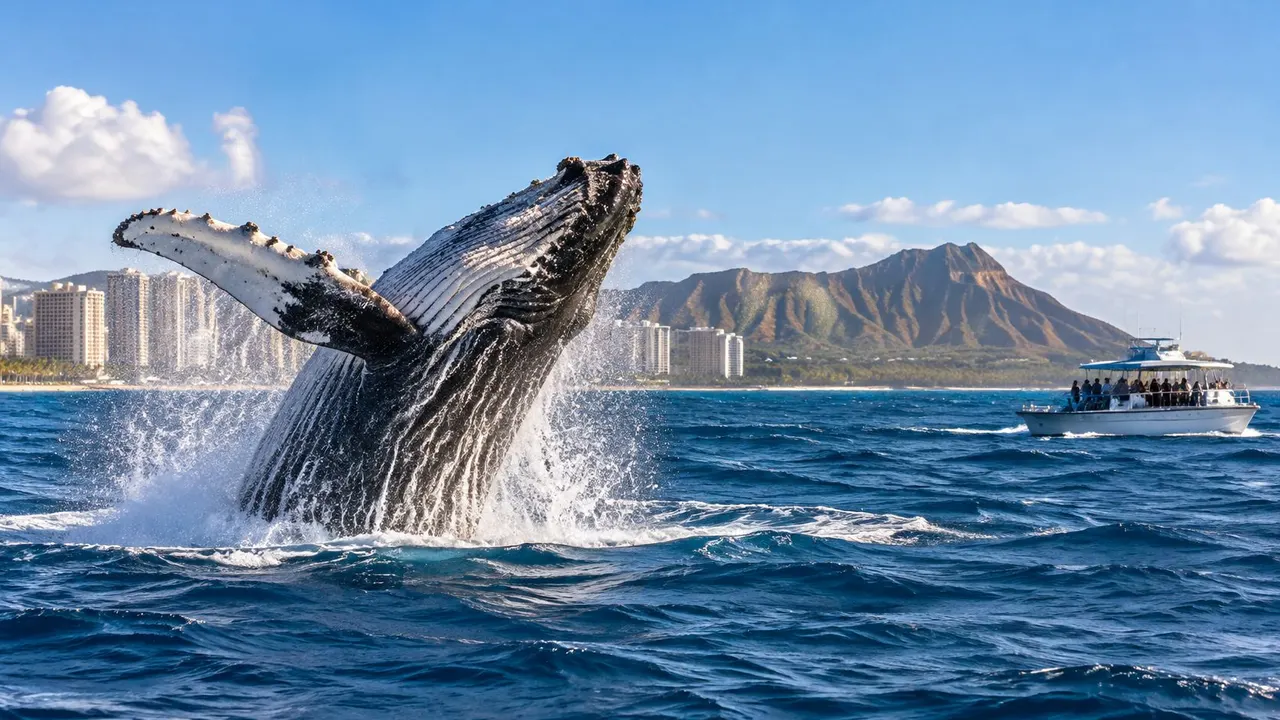
Federal law bars any boat, swimmer, surfer, paddlecraft or drone from approaching a humpback within 100 yards, or 90 meters, by any means, and it bars intentionally intercepting a whale's path, the maneuver sometimes called leapfrogging (Hawaii Division of Boating and Ocean Recreation humpback whale regulations). Note the scope. The rule applies to everyone on the water, not just commercial tours, and limited exceptions exist only for authorized research, rescue or government activity.
That same limit answers the question of whether you can swim with whales in Hawaii: you can't, not by boat, paddle or swim fin.
Speed is the second half of the framework. Hawaii guidance recommends 6 knots or less within 400 yards of a whale, held until the vessel is more than 400 yards away, and 15 knots or less (or minimal planing speed) in whale habitat at depths of 600 feet or less during whale season (Hawaii DLNR guidance on boating with humpback whales).
Why both? Because of where the whales are. The Hawaiian Islands Humpback Whale National Marine Sanctuary, designated in 1992, protects 1,370 square miles of federal and state waters from the shoreline out to the 600-foot depth contour, including waters around Oahu (NOAA Hawaiian Islands Humpback Whale National Marine Sanctuary). Those shallow coastal waters are the nursery. Slow speeds and wide berths exist to cut collision and disturbance risk in the exact zone where calves are learning to swim.
What each rule looks like from your seat
| Rule | Requirement | What it means for you |
|---|---|---|
| Approach distance | No closer than 100 yards (90 meters) by any means | The boat holds back even when whales come close |
| Speed near whales | 6 knots or less within 400 yards, until 400 yards away | Slow, steady cruising near whales |
| Speed in habitat | 15 knots or less in waters 600 feet deep or less, during season | A smoother ride and fewer collision risks |
| Unexpected approach | Engine in neutral, vessel stays still | Expect pauses while the whale moves on |
| Leapfrogging | No cutting across a traveling whale's path | The captain repositions instead of chasing |
| Drones and swimmers | Same 100-yard limit | Other users must keep their distance too |
What the crew is doing: holding the engine in neutral, letting the animal set the direction, and repositioning for the next encounter instead of closing on this one. If the boat seems to be drifting away from a whale, that's usually the point.
Your job as a passenger is narrow and useful. Follow crew instructions, keep your seat when asked, and say something if a private boat or a drone is crowding an animal. Report a violation rather than shouting at the operator, because the agencies that enforce this respond to specific reports, not to arguments across the water.
What Happens on a Waikiki Whale Watch Cruise
The trip is short enough that knowing the sequence makes the whole thing calmer, especially with children in tow.
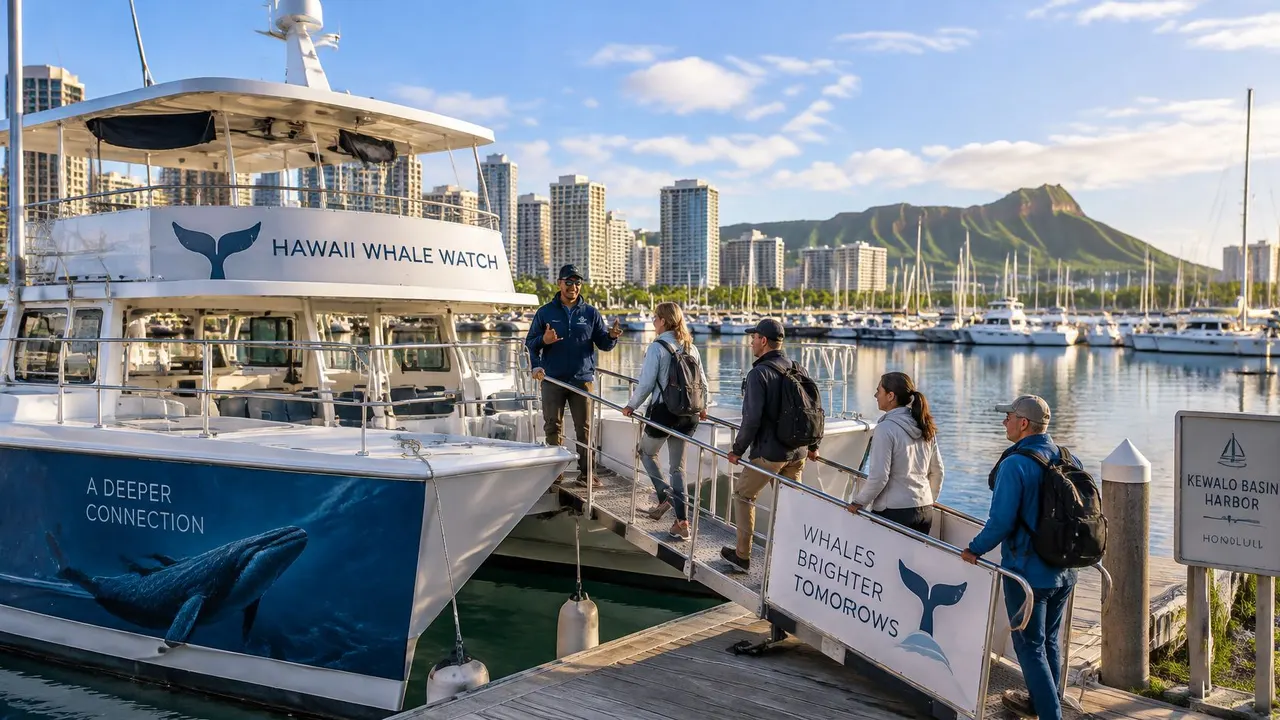
- Check in at Kewalo Basin Boat Harbor. Living Ocean Tours departs from here daily, a short ride from Waikiki Beach, and the boat leaves on schedule, so arrive with time to park, sign in and find a seat.
- Board and listen to the safety briefing. Life jackets, seating, where to stand and the whale rules all get covered in a couple of minutes. Ask where the shade is if you burn easily.
- Leave the harbor at a slow, steady speed. The early stretch is calm cruising because the boat is already inside whale habitat and the speed guidance applies from the moment you clear the channel.
- Watch the lookout work. Crew scan for blows, backs, tails and breaches and call what they see so everyone looks in the right direction at the same moment. Ask them which side to watch.
- Idle when a whale is in range. The engine drops to neutral, the boat stops maneuvering, and the animal decides direction and duration. Expect two minutes or twenty.
- Head back with time for photos. The return leg is when you review what you caught and ask the crew what you were looking at.
Pack for the deck, not the beach
- Sun protection: reef-safe sunscreen, a hat and polarized sunglasses, which cut glare and make blows easier to spot.
- A wind layer: it's cooler on the water than on the beach, even at midday.
- Water and a snack: especially with children who get restless on a 1.5-hour trip.
- Binoculars: a cheap pair beats a phone camera at legal viewing distances every time.
- A phone with optical zoom and a dry bag: burst mode is your friend, sea spray isn't.
- A seasickness plan: if you're prone to it, take medication before boarding rather than after the harbor.
Accept that sightings vary by day and that some mornings deliver more sky than whale. A whale-free trip still gives you the Honolulu skyline from the water, Diamond Head from a new angle and an hour and a half of open ocean, which is not nothing on a winter vacation.
Family-Friendly Whale Watching Tips
Say you're traveling with a six-year-old who has decided whales are the entire point of the trip, plus a grandmother who would rather not get soaked. The morning has to work for both, and that changes how you plan it.
Choose the morning slot. Seas are generally calmer early, children are fresher, and you've still got the afternoon if the boat comes back empty.
Pack binoculars. This is the single best upgrade for a family. At legal distances a whale is often a dark shape and a puff of mist, and binoculars turn that into an animal with a tail.
Take the seasickness question seriously. Medication before boarding, sit mid-boat, look at the horizon, and skip the greasy breakfast.
Set the standing rules at the dock. Stay seated when the captain asks, keep life jackets on, hands inside the rail, no leaning over the bow for a better angle.
Explain the pauses in advance. When the boat idles or drifts, it's following the rules, not stalling. Children accept a stop far more easily if they knew it was coming.
Make spotting a game. First to call a blow gets a point, a tail gets two, and a breach gets bragging rights for the rest of the trip. It keeps eyes on the water instead of on a screen.
If a whale surfaces inside the protected zone, Hawaii guidance says the vessel stays stationary with the engine in neutral and waits for the animal to move away, and a responsible captain may cut speed, stop maneuvering or decline a close photograph even with a whale right alongside (NOAA Fisheries marine life viewing guidelines). Closer isn't better. It's just closer, and the animal pays for it.
The best family outcome is a calm shared sighting at a respectful distance, not a photograph that required a chase.
For the logistics side of traveling with little ones, these tips for whale watching with a toddler on Oahu cover nap timing, gear and boarding.
Book a Waikiki Whale Watch Tour With Confidence
Book the earliest January or February morning departure you can get, and hold a March date in reserve if your trip is long enough. That one decision does more for your odds than any upgrade on the boat.
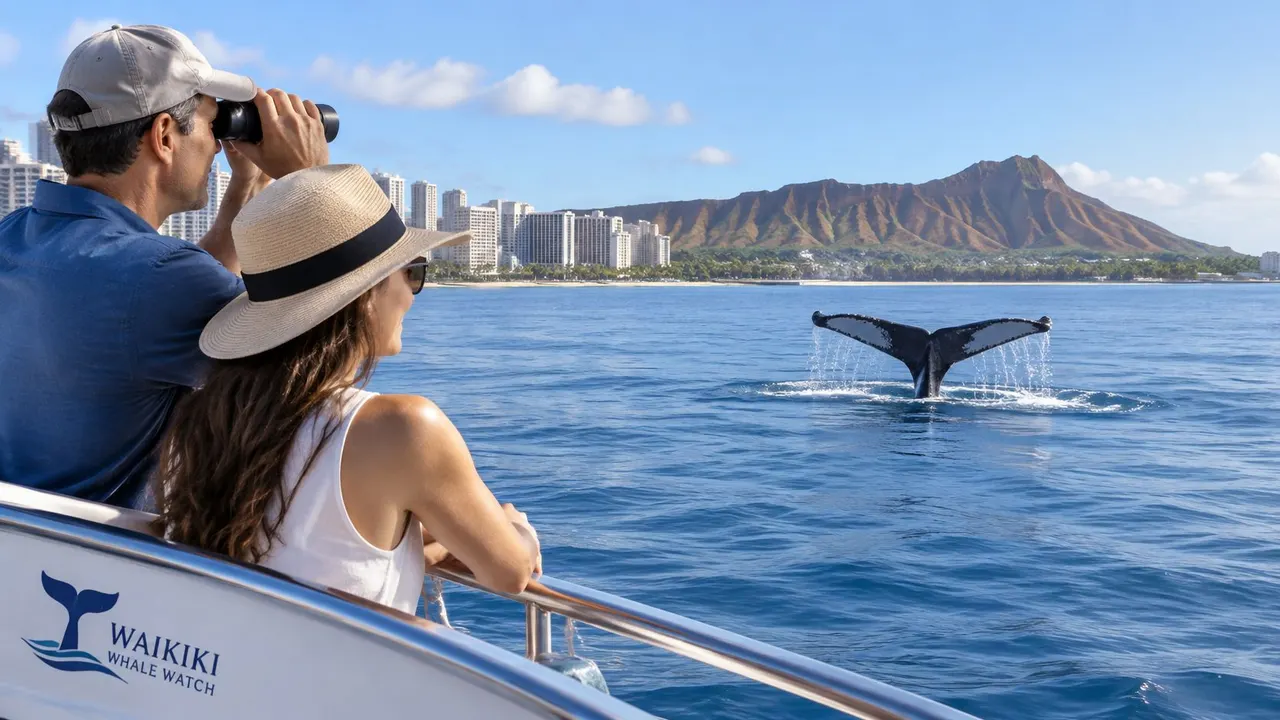
Compare operators on five things and the choice gets easy. Does the season window overlap your dates, not just "winter"? How far is the departure harbor from your hotel at 7am? Does the crew explain the approach rules or dodge the question? How many guests share the deck? And what happens on a whale-free morning?
One option worth weighing
Living Ocean Tours is Oahu's top rated and most reviewed snorkel company, and its Waikiki Whale Watching Cruise runs from January 2nd through March 31st, lasts 1.5 hours, is for ages 3 and up, and costs $49 per person. The company runs its trips out of Kewalo Basin Boat Harbor, which keeps the pre-dawn logistics short if you're staying in Waikiki.
Check the current season dates, fare and age rules on the Waikiki whale watch tour page before you commit, since they change by year. If budget is driving the decision, this breakdown of what whale watching costs in Hawaii is a useful reality check on what a fair fare looks like.
The five-minute pre-booking check
- Confirm the date against the calendar, not the marketing copy. A cruise that ends March 31st is no use for an April 2nd arrival.
- Read the cancellation policy on the checkout screen, including what happens if the harbor is blown out.
- Ask how the crew handles a whale that approaches the boat. The answer tells you whether the rules are procedure or decoration.
- Check the sea state the day before. A small craft advisory changes everything, and rescheduling beats a miserable morning.
- Arrive early. Harbor parking and check-in eat more time than visitors expect.
- Put the trip in the first half of your stay so weather has room to reshuffle it.
If anything about your booking needs confirming, reach the team at info@livingoceantours.com or +1 (808) 436-3483 and ask directly. Then lock in that January or February morning, keep March in your back pocket, and email or call before you travel to confirm the details are unchanged.
A morning on the water along the Waikiki coastline is the most direct way to see humpback whales during their winter visit, and Living Ocean Tours runs its seasonal whale watch out of Kewalo Basin Boat Harbor with an eye on the approach rules rather than a race to the animal. If your dates land between January and March, that's the window to plan around. Visit Living Ocean Tours to check the current schedule and get your morning on the water booked.