When Is the Best Time to See Whales in Hawaii
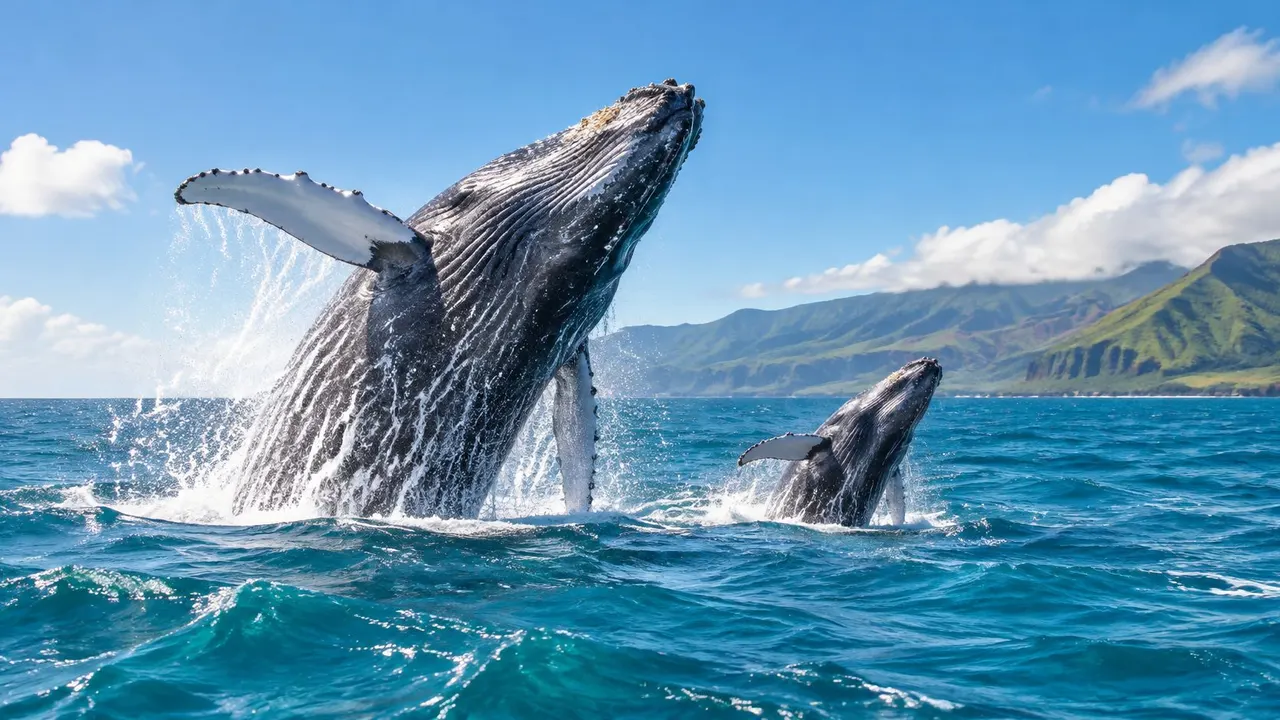
Table of Contents
- What the peak months actually deliver
- Working with shoulder-season dates
- A season that shows up plainly in the records
- The modeled peak inside the peak
- What that means for a Waikiki vacation
- Whale behavior runs all day
- Wind decides comfort more than whales do
- What good etiquette looks like on deck
- The Waikiki departure that matches those dates
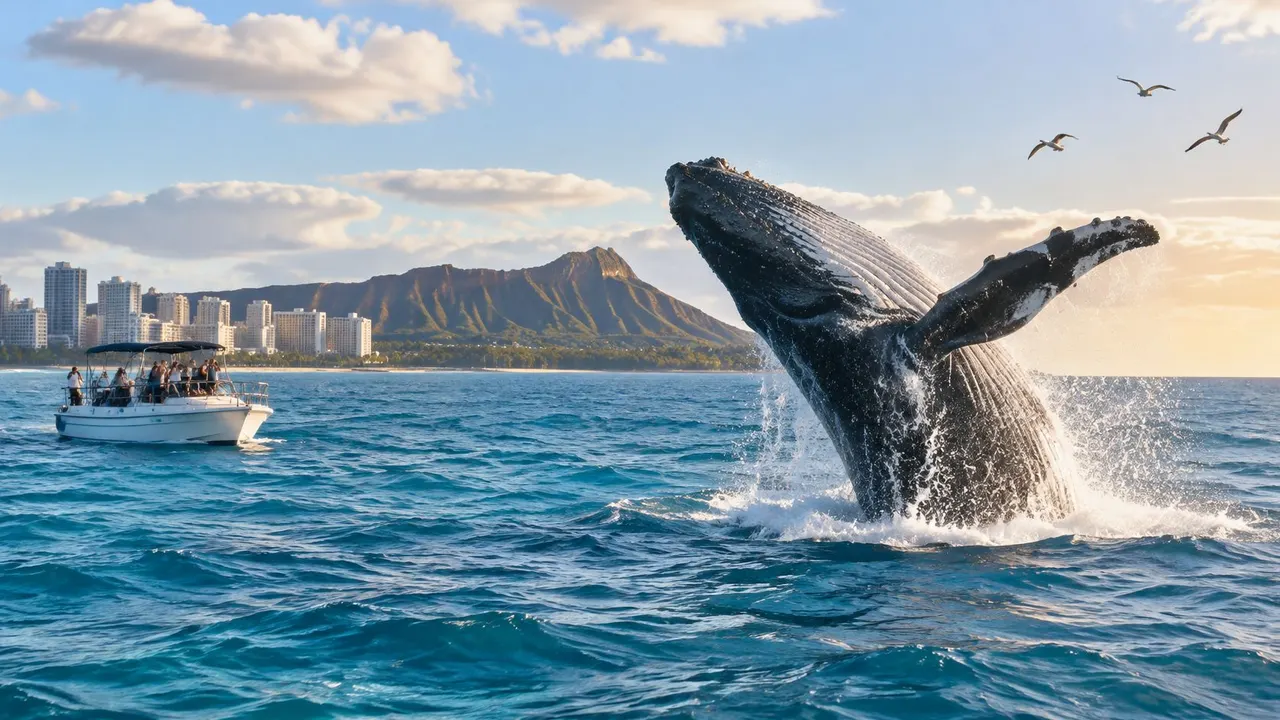
As many as 12,000 humpback whales return to Hawaiian waters each year from November through May, according to NOAA's Hawaiian Islands Humpback Whale National Marine Sanctuary. NOAA's modeled abundance peak runs from about February 19 through March 22 (NOAA sanctuary overview), a narrower window inside the familiar winter season.
That distinction helps with planning. November through May is the broad season; January through March is the usual peak; and the modeled late-February-to-March-22 period is a more specific abundance target. None guarantees a sighting on a particular trip. Whale numbers and behavior vary, and Oahu's waters are not as densely populated as the channels between Maui, Lanai, and Molokai.
The Best Months to See Whales in Hawaii
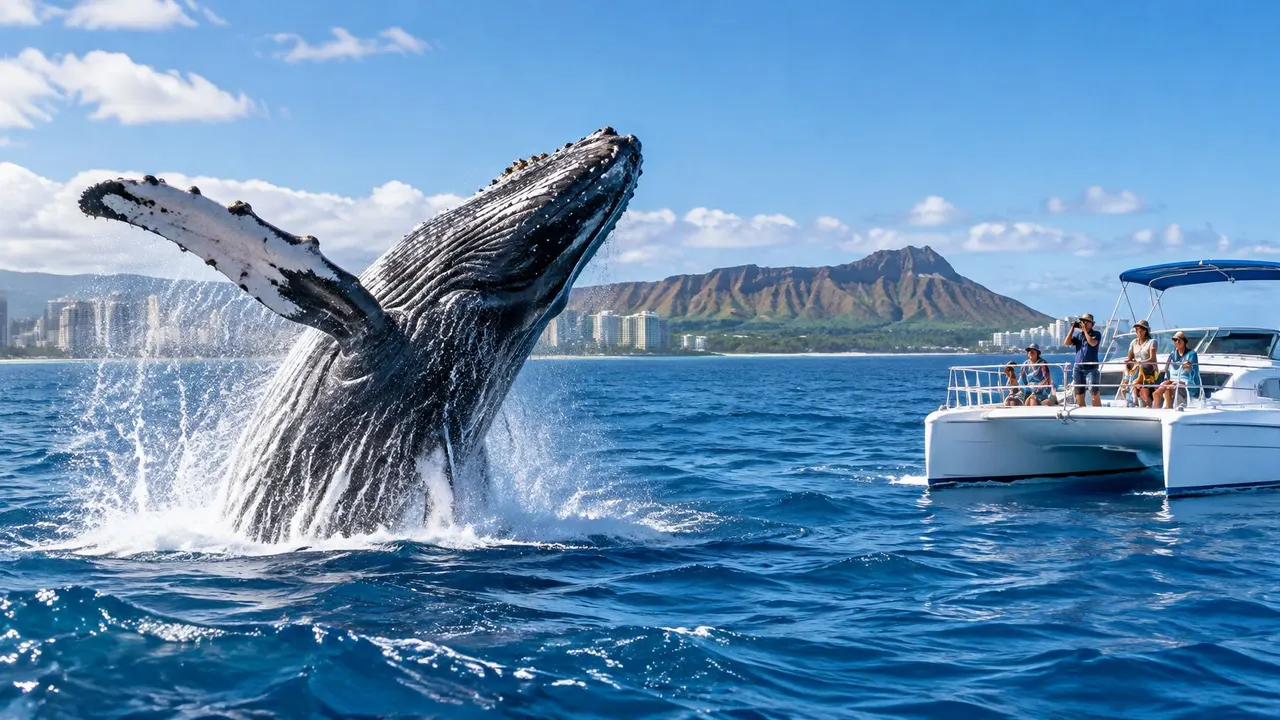
January through March is the most reliable window for a whale-watching trip in Hawaii. The season is underway, and humpbacks may be seen at the surface, sometimes with calves. If your dates are flexible, the modeled peak from about February 19 through March 22 offers a narrower target, though no date can promise what wildlife will do.
Use this table to compare the broad season with the tighter peak:
| Window | Months | What to expect | Best for |
|---|---|---|---|
| Peak season | January through March | The usual peak months, with opportunities to see active whales and calves | First-time visitors and families |
| Highest-probability slice | About February 19 through March 22 | NOAA's modeled peak in Hawaiian waters | Travelers who can choose exact dates |
| Early shoulder | November and December | Whales arriving; sightings may be less concentrated | Flexible early-winter trips |
| Late shoulder | April and May | Whales may still be present as the season winds down | Fixed late-spring dates |
| Outside the core season | June through August, and typically September | Very few sightings compared with the winter season | Trips focused on other activities |
NOAA reports that humpbacks return to Hawaiian waters from November through May to breed, give birth, and nurse their calves. The modeled peak is narrower than that full season, so a trip in November or May can still coincide with whales, but it does not carry the same seasonal odds as midwinter.
What the peak months actually deliver
The peak means more whales are in Hawaiian waters, but a sighting can still be a distant blow or a fluke slipping beneath the surface. Breaching, tail slapping, and other surface activity may happen, but it is never scheduled.
Calves are another reason families often choose the winter months. A mother and calf may travel together near the surface, but their presence is not guaranteed on any one outing. Bring patience, and give the crew time to scan the water.
Working with shoulder-season dates
November and December are part of the arrival period. A December trip may offer a memorable sighting, but encounters can be less concentrated than later in winter. In April and May, whales may still be in Hawaiian waters as the season winds down.
Planning rule: If your dates are flexible, choose the peak months. If flights are already booked for a shoulder month, keep expectations tied to the season rather than to a single forecast or brochure.
For an early-November or late-May trip, leave room in your schedule for another outing if whale watching is a priority. A quiet trip is not a prediction of what you will see on a different day.
Why Midwinter Brings the Most Whales
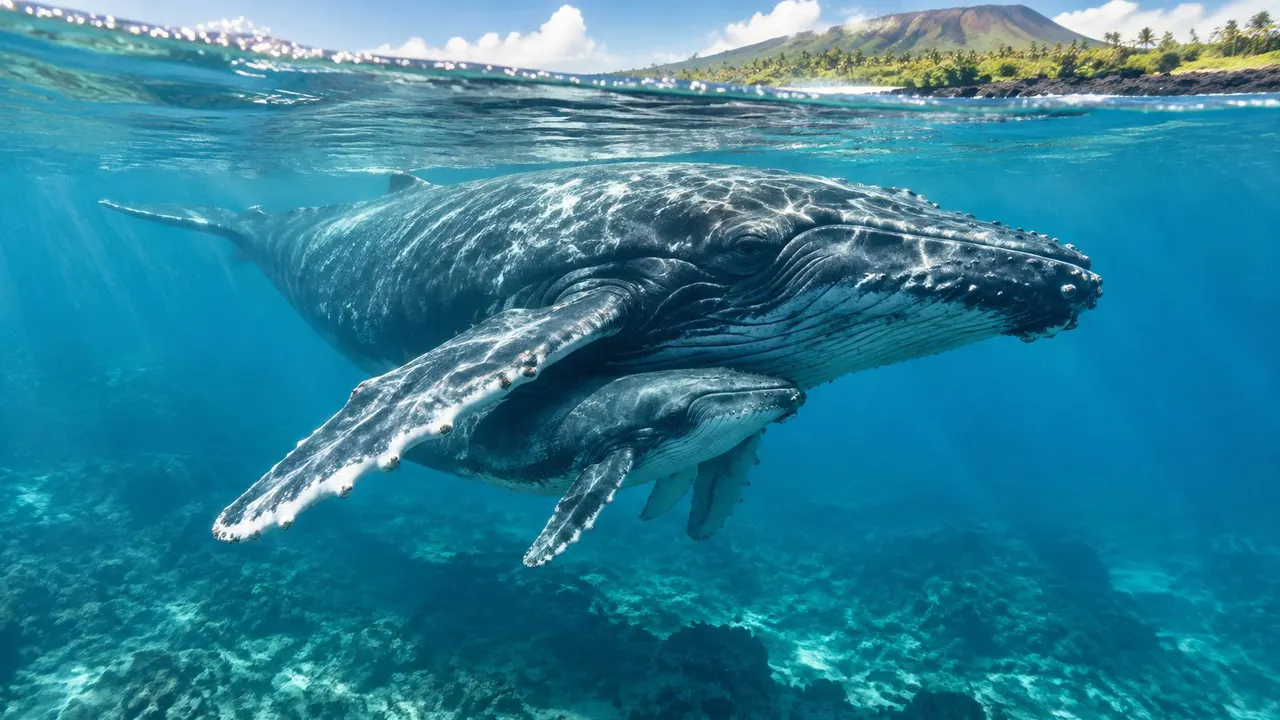
Humpbacks feed in high-latitude North Pacific waters during the warmer months, then migrate to Hawaii to court, give birth, and raise calves. The islands offer warmer water for this part of their annual cycle. As the season progresses, whales arrive and gather; later, they head north again.
A season that shows up plainly in the records
A photo-identification study published in Marine Mammal Science examined 37,384 individual humpback records gathered from 2002 through 2023 and found whales in every month except June and September; 99.97% of sightings fell between November and May, according to the published analysis.
The same analysis estimated average annual breeding-season abundance at 11,617 whales and reported a 37% decline from the 2014-15 season to 2021-22 (published analysis). It also cites a separate 2020 estimate of 11,278 individuals, with a 95% confidence interval from 4,049 to 31,412 (published analysis). That wide range reflects the difficulty of counting whales across a large ocean area.
The modeled peak inside the peak
NOAA's abundance modeling places the peak in the Hawaiian Islands Exclusive Economic Zone at roughly February 19 through March 22, as described in NOAA's sanctuary overview. It is a useful target for choosing dates, not a promise that every trip during that window will be busy.
For Oahu, February and March generally offer strong seasonal odds, with January also within the peak months. Year-to-year conditions vary, and whales move through the area on their own schedule.
A peak-week booking can improve your odds. It cannot guarantee a breach, a close view, or even a sighting.
Oahu Maui and the Other Islands Compared
Hawaii shares a broad whale season, but sightings are not equally concentrated around every island. Humpbacks gather in relatively shallow, warm waters to mate, calve, and nurse. The shallow channels between Maui, Lanai, and Molokai are known for denser concentrations than Oahu's coast.
Humpbacks are commonly seen around Oahu, though less frequently than in the Maui, Lanai, and Molokai channels. NOAA's boating guidance describes this difference for vessels operating around the islands.
| Area | Relative density | Why | Planning note |
|---|---|---|---|
| Maui, Lanai, and Molokai channels | Highest | Shallow warm water where humpbacks aggregate | Best if the island is still a choice |
| Oahu and the Waikiki coast | Common, less concentrated | Sightings occur, but are less frequent than in the Maui channels | Convenient from Honolulu in January and February |
| Kauai | Present in season | Part of the November-to-May migration | A winter boat trip may suit visitors already on Kauai |
| Hawaii Island | Present in season | Part of the statewide breeding season, but not the main aggregation | Do not expect Maui-channel numbers |
What that means for a Waikiki vacation
If you are staying in Waikiki, Oahu is still a reasonable place to look for whales. It does not offer the same density as the Maui-area channels. January and February fall within the peak season, and a boat trip gives you a chance to scan the coast from the water.
Our Oahu versus Maui whale-watching comparison explains the trade-off between convenience and the higher whale density in the Maui-area channels.
A quiet outing can happen even during peak season. Whales move, and no crew can direct them toward a boat. If your schedule allows, a second trip gives you another opportunity to see them on a different day.
Best Time of Day and Ocean Conditions
Humpbacks may surface at any time during daylight hours. A breach in the morning is no more scheduled than one in the afternoon. The conditions that change over the day are the wind and sea state, which affect how comfortable the ride feels.
Whale behavior runs all day
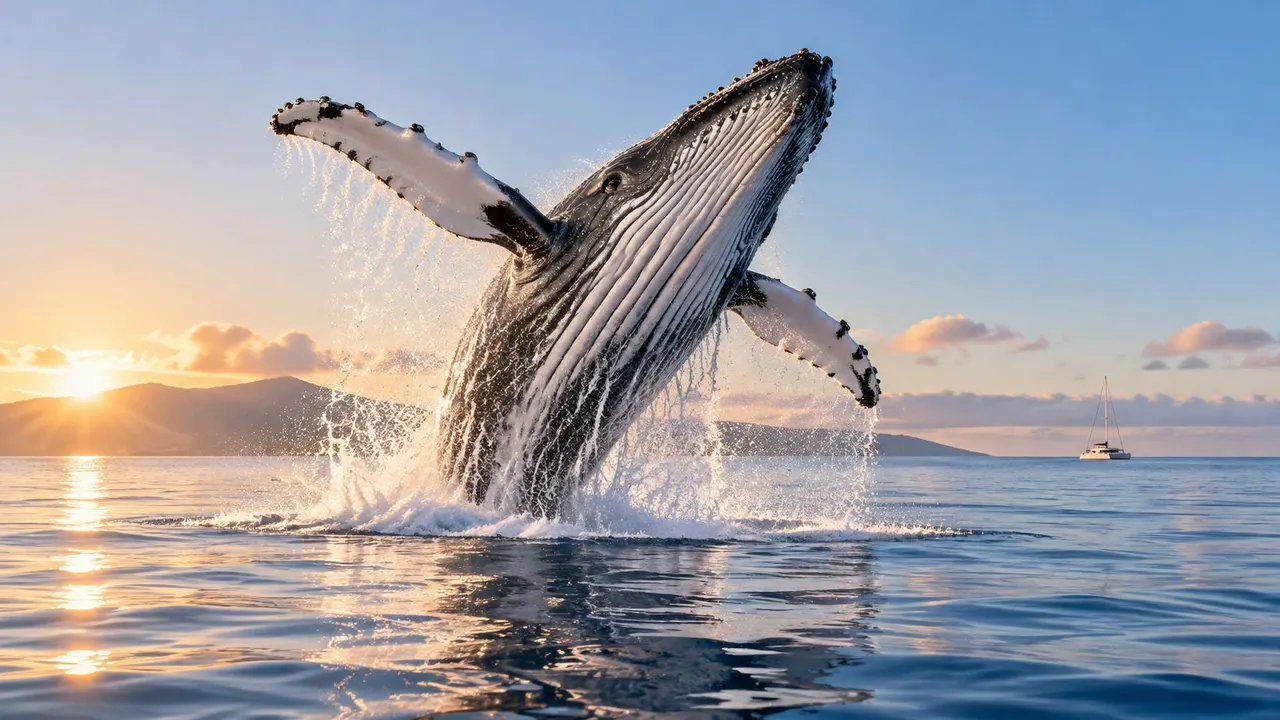
Breaches, tail slaps, and pectoral slaps can happen at different times of day. There is no reliable hour when whales become more active, so choose a departure that suits your schedule and the expected conditions. Our guide to whether whales are more active in the morning or afternoon explains the trade-off.
Wind decides comfort more than whales do
Wind and swell shape the ride, especially for children and first-time boaters. Check the forecast for your outing rather than assuming one time of day will always mean calmer water. A later trip can be comfortable on a calm day, too.
Check the day, not the habit: Review the wind and swell forecast for your specific date. Strong swell or gusty winds can make a coastal trip feel rougher.
A Waikiki whale watch stays closer to shore than a full-day search of the Maui channels, so choose a day with suitable ocean conditions when you can. NOAA's Hawaiian Islands Humpback Whale National Marine Sanctuary notes that humpbacks can be seen from shore and at sea from November through April. A coastal lookout can be an alternative if conditions make a boat trip uncomfortable.
How Close Boats May Approach Whales
A close pass is not the goal of a responsible whale watch. In Hawaiian waters, federal rules prohibit people, vessels, swimmers, paddlecraft, and drones from approaching a humpback closer than 100 yards, or 90 meters, under the sanctuary's approach regulations.
If a whale closes the distance on its own, the crew must give it space and avoid pursuing it. The animal decides where it goes.
NOAA Fisheries provides operating guidance for boats near whales, including a recommended maximum of 15 knots, or safe planing speed, while transiting, and about 6 knots when approaching or leaving an observation area within 400 yards of a whale (NOAA Fisheries guidance). Operators should stay out of a whale's path and avoid separating a mother from her calf.
A spout at a respectful distance is a successful sighting. The whale's space is part of the experience.
What good etiquette looks like on deck
- Binoculars help with distant sightings. They make it easier to see a blow or a fluke without expecting the boat to approach.
- Keep drones away from whales. The 100-yard rule applies to them, too.
- Follow the captain's instructions. Slowing or changing course gives the whale room and keeps the vessel within the rules.
Whales may appear as early as September and as late as May, but November through May is the practical season, with January through March the usual peak. A late-May trip can still offer a sighting, but it is outside the peak. Our Oahu whale-watching rules explain the basics before you board.
Swimming with humpbacks is not allowed. Watching from a respectful distance lets the animals continue their natural behavior.
Book a Peak-Season Waikiki Whale Watch
Choose your dates first, then consider which island and departure make sense for your trip.
- Choose the window. If you can, travel during January through March. The modeled abundance peak runs from about February 19 through March 22.
- Keep another morning available. If whale watching is a priority, a second chance on a different day can help when the first trip is quiet or conditions are rough.
- Set expectations for shoulder months. November, December, April, and May can bring sightings, but they are outside the usual peak.
- Choose another activity for summer. June through August falls outside the core whale season.
- Choose the island with your goal in mind. Maui's channels have higher whale density. If you are staying in Waikiki, Oahu offers a convenient chance to see humpbacks without changing islands.
The Waikiki departure that matches those dates
Living Ocean Tours offers a Waikiki Whale Watching Cruise from January 2nd through March 31st. The cruise lasts 1.5 hours, is for ages 3 and up, and costs $49 per person. It departs daily from Kewalo Basin Boat Harbor near Waikiki Beach to view humpback whales wintering along the Waikiki coastline. See the Waikiki whale-watching cruise details.
Expect to look for spouts, flukes, surface activity, and possibly mothers traveling with calves, always at a legal distance. Wildlife sightings are never guaranteed. The cruise's 1.5-hour length offers families a focused outing without taking up the whole day.
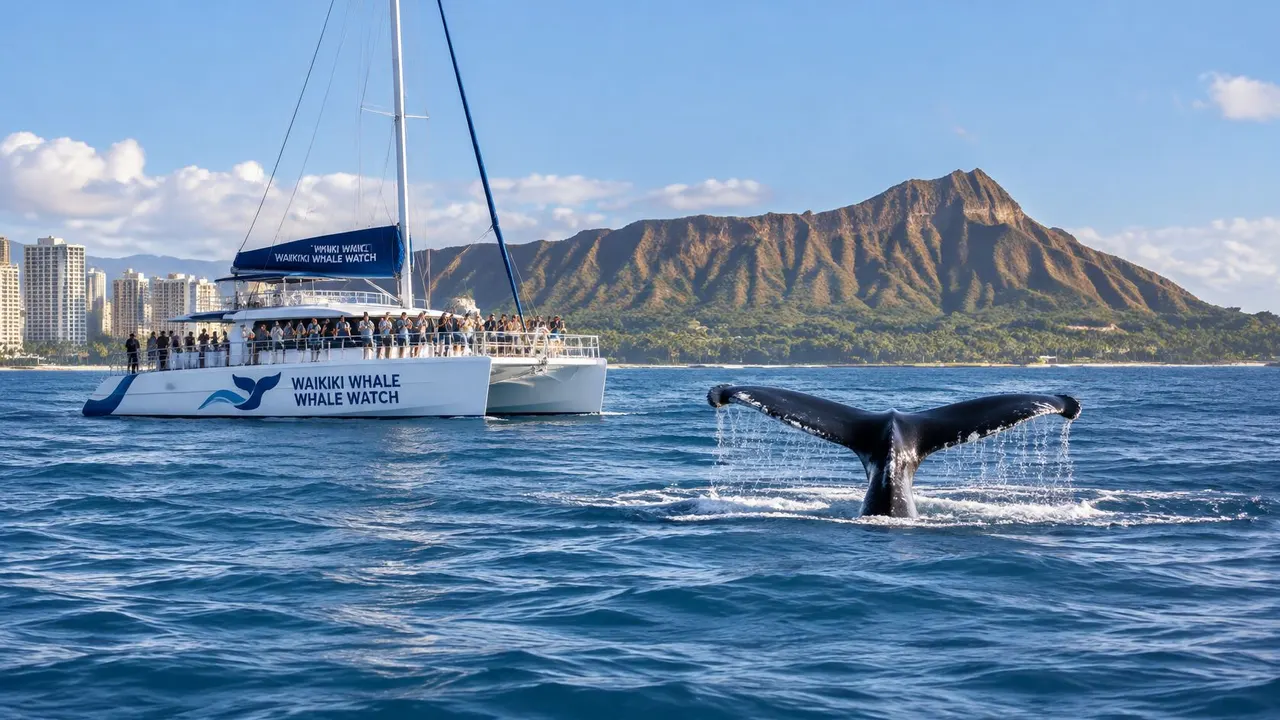
Bring a light layer for spray, polarized sunglasses to cut glare, and a camera you can use quickly. Then let the crew scan the water.
The 100-yard rule is part of a responsible whale watch, not a barrier to enjoying it. Choose dates during the season, leave room for another outing if possible, and let the whales set the distance.
Living Ocean Tours offers whale watching from Kewalo Basin Boat Harbor near Waikiki Beach from January 2nd through March 31st. Its 1.5-hour cruise is for ages 3 and up and costs $49 per person. Visit Living Ocean Tours to check dates.