
How Much Does Whale Watching Cost in Hawaii? 2026 Prices
Table of Contents
- Whale watching prices by tour option
- A budget option from Waikiki
- Season windows and sighting odds
- Trip length sets a different kind of value
- Build the bill in purchase order
- Age rules and discounts need separate checks
- Pay for observation quality, not proximity
- Questions that justify an upgrade
- Compare in order of financial impact
- Confirm the practical details before checkout
- Family of four price totals by band
- Add the expenses outside the ticket
- A formula you can use before paying
Statewide, whale-watching tours are generally reported at $50–$120 per person, with Oahu averages of $60–$150 per adult, and budget seasonal options start at $49. Your actual bill also needs to cover parking, drinks, and any transportation or checkout charges that are not included in the ticket.
The regional spread matters: Hawaii.com reports Hawaii Island tour prices of $75–$150 per person in 2026, depending on tour type and duration. That makes the island, vessel, and itinerary part of the budget decision, not just the backdrop.
For families, the useful question is not how much does whale watching cost in Hawaii? It is how much the whole party will pay for an outing that fits their schedule, comfort needs, and expectations about seeing wildlife.
Typical Whale Watching Prices in Hawaii
A useful statewide reference is $50–$120 per person, the general range reported by Hawaii.com for whale-watching tours in 2026. For Oahu specifically, Hawaii.com reports an average band of $60–$150 per adult in 2026, depending on vessel and duration.
These are not interchangeable measures. A statewide range helps you establish a vacation budget, while an island-specific range is more useful when you are comparing actual departures near your hotel.
Whale watching prices by tour option
The standard catamaran range is a seasonal benchmark, not a promise that every sailing falls within it. Private charters need a different comparison altogether: request the total boat price, passenger allowance, itinerary, and included services rather than assuming the advertised amount is per person.
For another island comparison, Hawaii.com reports Maui whale-watching tours at $55–$139 per person in 2026, depending on vessel and operator. A cheaper ticket on another island does not necessarily save an Oahu visitor money once travel is involved.
A budget option from Waikiki
At Living Ocean Tours, Oahu's top rated and most reviewed snorkel company, our Waikiki Whale Watching Cruise costs $49 per person, lasts 1.5 hours, and accepts guests ages 3 and up. The seasonal schedule runs January 2 through March 31.
Use the Waikiki whale-watching tour page to check current departure availability and fare details before paying.
Choose a price tier before choosing a departure. If you want a straightforward seasonal outing, compare shared cruises. If you need exclusive use, a customized itinerary, or a celebration setting, compare charter quotes instead.
Neither comparison is complete until you have checked the full checkout amount and the expenses you will pay at the harbor.
How Season and Length Move the Price
Timing changes the wildlife opportunity, not just the availability of tickets. NOAA's sanctuary boating guidance identifies roughly November through May as the viewing season, with greatest abundance typically from January through March.
Treat the season edges as approximate. They describe whale movement, not a switch that turns sightings on or off.
Season windows and sighting odds
These are qualitative seasonal comparisons, not measured probabilities for an individual boat. There is not a verified percentage here that would justify telling your family it has a particular numerical chance of success.
The Hawaii Department of Land and Natural Resources says humpbacks can arrive as early as September and remain as late as May, with peak activity in January and February. The department also describes Oahu sightings as common but less frequent than around Maui, Lanai, Molokai, Kauai's north coast, and Hawaii Island's Kohala coast.
A lower fare outside the peak can be good value if you will enjoy the boat trip without a sighting. It is not automatically a bargain if seeing a whale is the main reason you are booking.
Trip length sets a different kind of value
Separate time aboard from time spent actively observing whales. Boarding, harbor transit, searching, and returning all occupy part of the itinerary, so a longer excursion does not translate directly into proportionally more sightings.
Our winter cruise searches for humpback whales along the Waikiki coastline. Its fixed seasonal schedule gives travelers a clearly defined product, but wildlife still decides what appears.
Use our Hawaiian whale-watching season guide when matching vacation dates to the outing. Compare duration alongside seating, deck access, and commentary rather than assuming a longer trip or larger boat must be more expensive or better.
The strongest conclusion is narrower: more time can provide more searching opportunity, but no duration purchases certainty.
What Is Included and What Costs Extra
A fare should tell you what you are buying aboard the boat. It should not leave you guessing about the costs of getting there, parking, or purchasing refreshments.
For each departure, check whether the ticket includes crew-led interpretation, access to the advertised viewing areas, and any food or beverages. Do not assume that an amenity shown in a photograph is included in your fare.
Build the bill in purchase order
- Checkout charges. Review the final payment screen for taxes and booking charges before comparing the total with another operator's advertised fare.
- Harbor parking. At Kewalo Basin Boat Harbor, parking costs $2 per hour, paid by scanning the QR code on the parking lot signs. Allow for check-in and returning to your car, not just the advertised cruise duration.
- Drinks aboard. Our whale cruise operates on Lokahi, which has a cash bar. Treat purchased drinks as a separate allowance unless your booking explicitly includes them.
- Hotel transportation. Confirm whether transfers are included, sold separately, or something you must arrange yourself. A harbor departure does not by itself imply hotel pickup.
- Disruption expenses. Read the weather policy before paying. Do not assume a canceled sailing creates a rebooking charge, but do consider whether a replacement departure would require another transfer or parking payment.
A cash bar is not an open bar, and a sightseeing ticket is not a transportation package. Those distinctions matter more for a group because each optional purchase can increase the party total.
Age rules and discounts need separate checks
Our whale cruise accepts guests ages 3 and up. Families traveling with younger children need to resolve eligibility before purchasing tickets rather than arriving at the harbor expecting an exception.
There is no confirmed child, senior, or family discount established here. Ask for each applicable rate and keep the written price breakdown with your confirmation.
Budgeting rule: Count an inclusion only when it appears in the booking details. Count a discount only when it appears in your quoted total.
At Living Ocean Tours, we can answer questions about our departure and onboard arrangements before you book. Reviews can help you assess the guest experience, but your reservation details remain the place to verify what you are purchasing.
When a Premium or Small-Boat Tour Is Worth It
A higher fare does not buy permission to approach a whale more closely. NOAA's regulations prohibit approaching a humpback within 100 yards in Hawaiian waters.
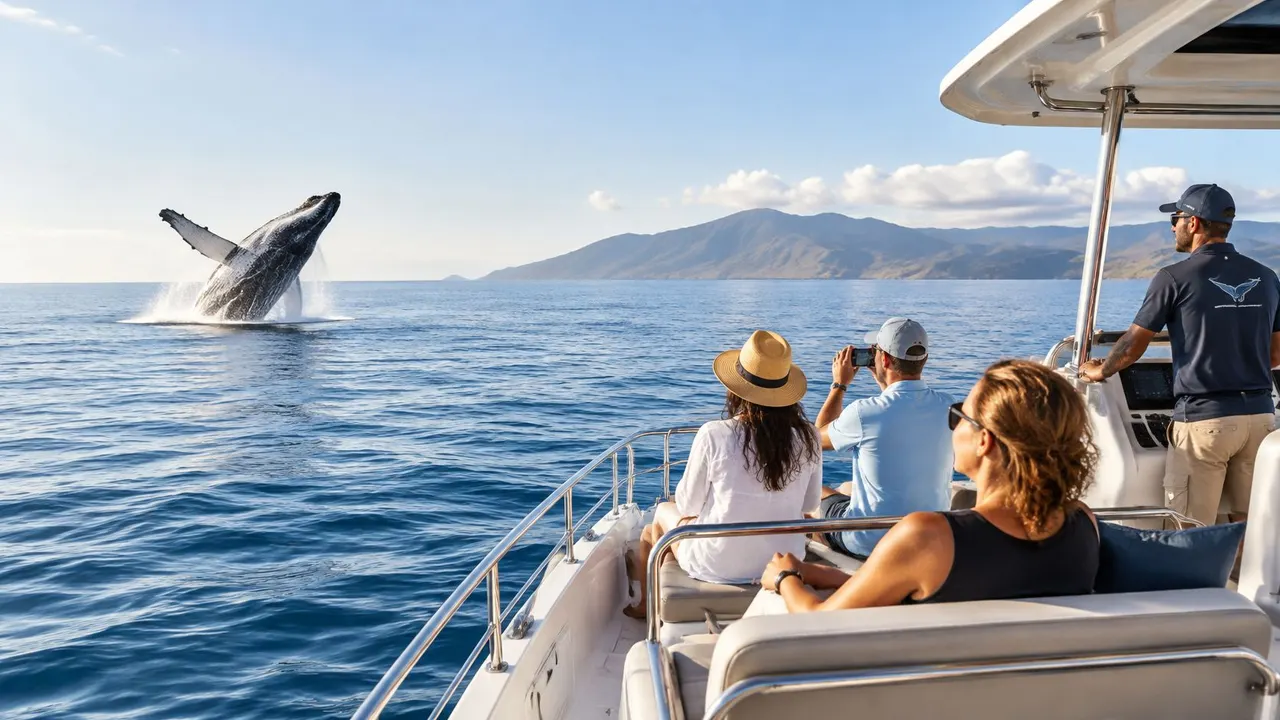
That distinction matters when an operator uses close-up wildlife photographs to sell an expensive trip. Judge the promised service, not the apparent distance in a marketing image.
Pay for observation quality, not proximity
NOAA's humpback guidance recommends transit speeds of 15 knots or less in relevant whale waters, reducing to 6 knots or less when approaching or departing within 400 yards. These are speed recommendations, distinct from the legal approach prohibition.
Responsible crews must plan around wildlife rather than chase every splash. That can mean waiting, changing course, or declining to pursue an animal when doing so would undermine safe observation.
Smaller boats can offer more individual guide attention and less competition for a viewing position. But small capacity alone is not proof of better value: ask about passenger load, seating arrangement, shade, and how easily guests can see from their seats.
A larger vessel can spread operating costs across more passengers and may suit travelers who prioritize room to move. Compare the actual boat layout, not just the label “premium” or “small group.”
Questions that justify an upgrade
Before accepting a higher quote, ask:
- Approach practices. Does the operator explicitly follow the legal viewing distance?
- Unexpected encounters. What does the crew do if a whale surfaces near the vessel?
- Booking protection. What happens after a weather cancellation or a trip without a sighting?
- Guest experience. What specific benefit does the premium buy, such as exclusive use, more usable viewing space, or dedicated interpretation?
Our Honolulu whale-watching guide can help frame the experience you want before comparing departures.
No verified statewide average establishes a fair premium or private-charter price. Request itemized quotes, then decide whether the extra spending solves a real need for your party.
Qualified crew, compliant navigation, useful commentary, and clear policies are defensible reasons to pay more. A promise of unusually close contact is not.
Booking Tips That Lower Your Whale Watching Bill
The most effective savings come from avoiding a mismatched purchase. A cheap ticket can become poor value if your group cannot use the departure, needs unplanned transportation, or misunderstands the cancellation terms.
NOAA's recreation guidance supports treating whale watching as a seasonal wildlife experience, not a guaranteed attraction. That makes flexibility and realistic expectations part of a sensible buying decision.
Compare in order of financial impact
- Match the departure to your priority. If whale viewing is the main objective, choose a departure within the strongest seasonal window. If the boat outing itself is enough, consider an available shoulder-season trip, but verify the fare rather than assuming it is discounted.
- Compare the delivered experience. Put duration, passenger capacity, viewing access, commentary, and cancellation terms beside the price. Do not pay for an upgrade whose benefits your party will not use.
- Calculate the group's checkout total. Enter the actual passenger mix before judging affordability. A headline adult fare will not reveal whether discounted tickets exist or how additional charges affect the reservation.
- Add land-side and onboard spending. Include parking, transportation, and planned drinks. Set an allowance before departure so optional spending does not become a surprise.
- Read the refund terms before paying. Distinguish a refund from a rebooking credit. A credit may be useful early in your vacation and impractical on your final day.
For departure planning, our Oahu whale-watching guide provides another way to evaluate the outing. Keep your booking confirmation and cancellation terms together so the person managing the reservation can find them quickly.
Confirm the practical details before checkout
Living Ocean Tours is Oahu's top rated and most reviewed snorkel company. Our tours depart daily from Kewalo Basin Boat Harbor near Waikiki Beach, while the whale-watching product follows its winter schedule.
Our office is at 1125 Ala Moana Blvd Slip B-01, Honolulu, HI 96814. For fare and departure questions, email info@livingoceantours.com or call +1 (808) 436-3483.
Give us your intended date, passenger ages, and party size when asking about pricing. That makes it easier to resolve eligibility and availability before you commit.
Check the available departure and review its final total before completing payment.
What a Family of Four Pays and How to Budget
Consider a hypothetical family with two adults and children aged 5 and 8, arriving in one car. To avoid assuming an unconfirmed discount, price every passenger at the adult or published per-person rate.
For context, How to Live in Hawaii reports typical prices of $65–$120 for standard two-hour catamaran or nonprofit eco tours during the 2025–2026 season. The party totals below are simple multiplication of the price bands, not separate family-package offers.
Family of four price totals by band
Children may cost less where an operator offers a child rate. Until that rate appears in your reservation, using the full fare gives you a more conservative spending plan.
For a private charter, do not multiply a quoted whole-boat price by the number of passengers. Confirm whether the quote covers exclusive use and whether any additional passenger charges apply.
Add the expenses outside the ticket
In this hypothetical example, a two-hour parking stay adds $4, bringing our cruise's ticket-and-parking subtotal to $200. That is not an all-inclusive total: it excludes drinks, any checkout charges, transportation beyond parking, and other optional spending.
The parking assumption needs care. A cruise's advertised duration does not include every minute between parking the car and driving away, so leave enough paid time for check-in and disembarkation.
Use a drink allowance rather than an invented menu price. Have each adult decide whether they will purchase anything, then use the actual onboard price to finish the calculation.
The right family budget is one you are comfortable spending on the outing itself, even if no whale appears.
For grandparents joining the trip, price their tickets individually and ask whether a senior rate is available. Do not assume that a group qualifies for a family discount just because everyone books together.
A formula you can use before paying
Party budget = passenger fares + checkout charges + parking + transportation + planned drinks + a disruption allowance.
The disruption allowance is not a predicted operator fee. It is room in your vacation budget for incidental expenses if you choose another departure after weather changes your plans.
Our guide to whale watching with kids can help you consider the experience alongside the price. A shorter outing may fit a child's attention and comfort better, while another family may prefer more time aboard.
Choose your departure date, enter every passenger, and confirm age eligibility and any discounted fares in writing. For a peak-season trip, reserve once those details fit your budget rather than relying on last-minute availability.
Our seasonal Waikiki Whale Watching Cruise offers a clearly priced way to search for winter humpbacks along the Waikiki coastline. Visit Living Ocean Tours to check departures, confirm your party's fare, and plan the full outing cost before you book.


