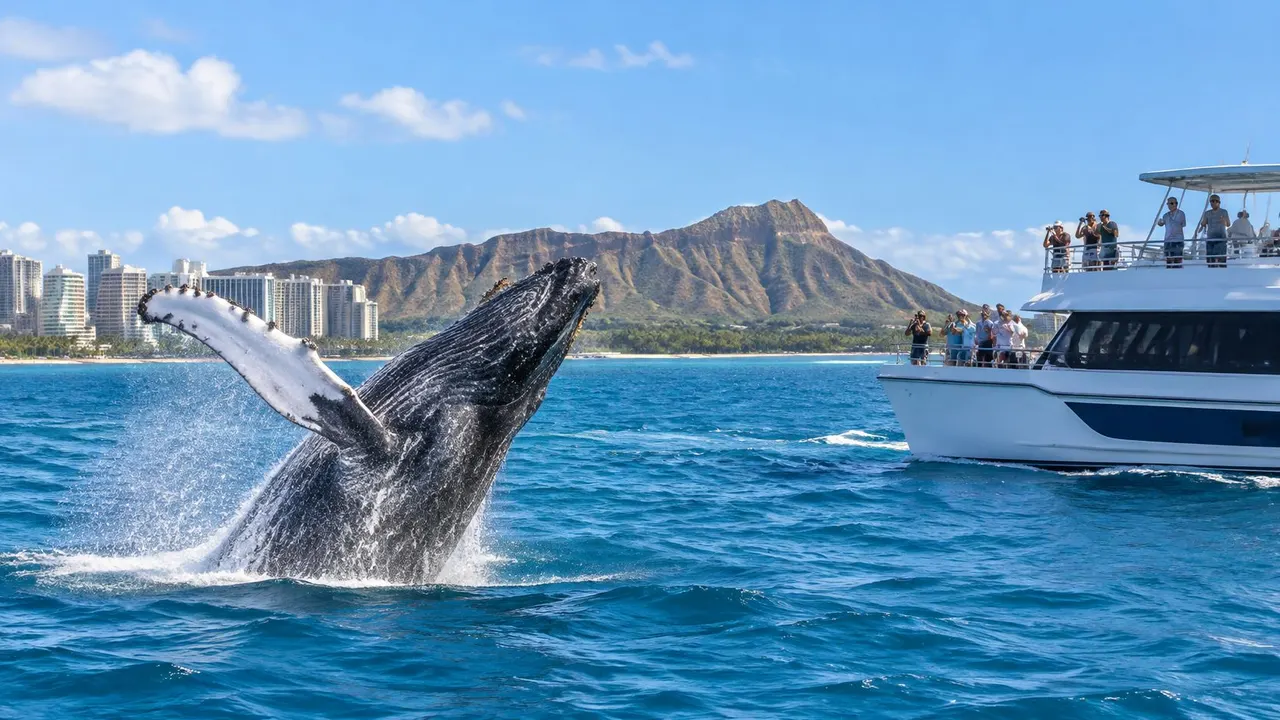
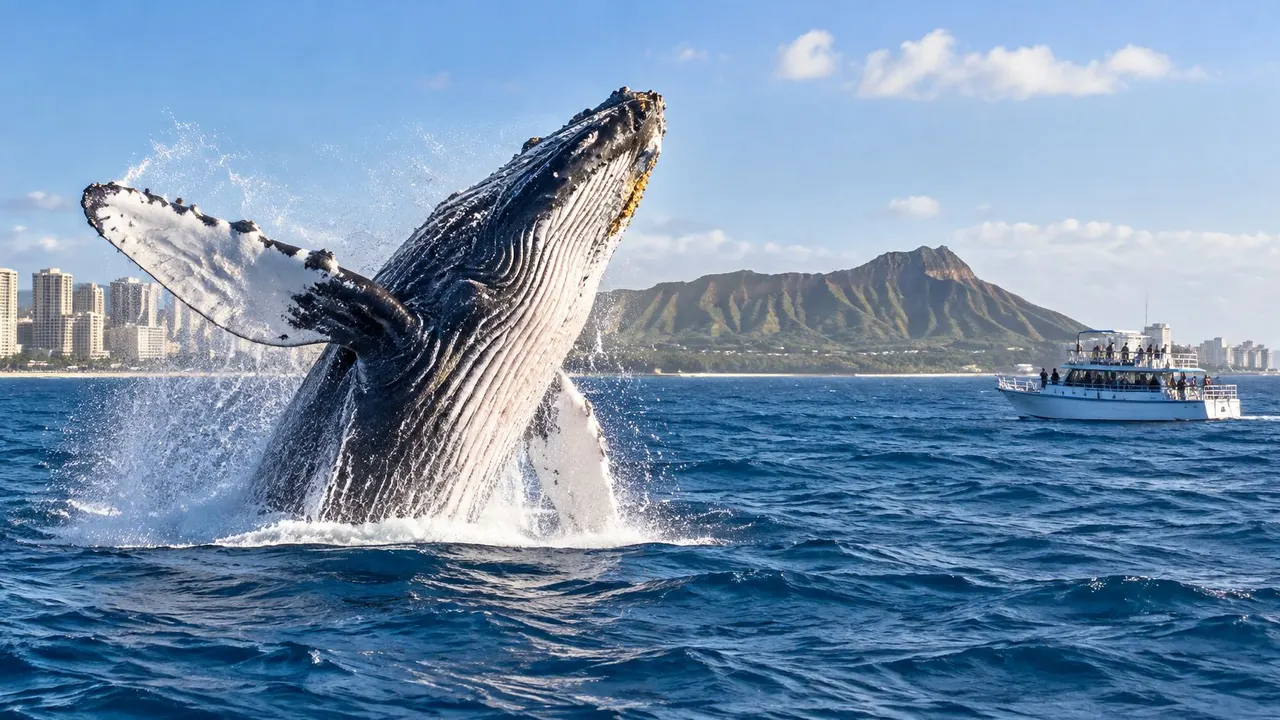
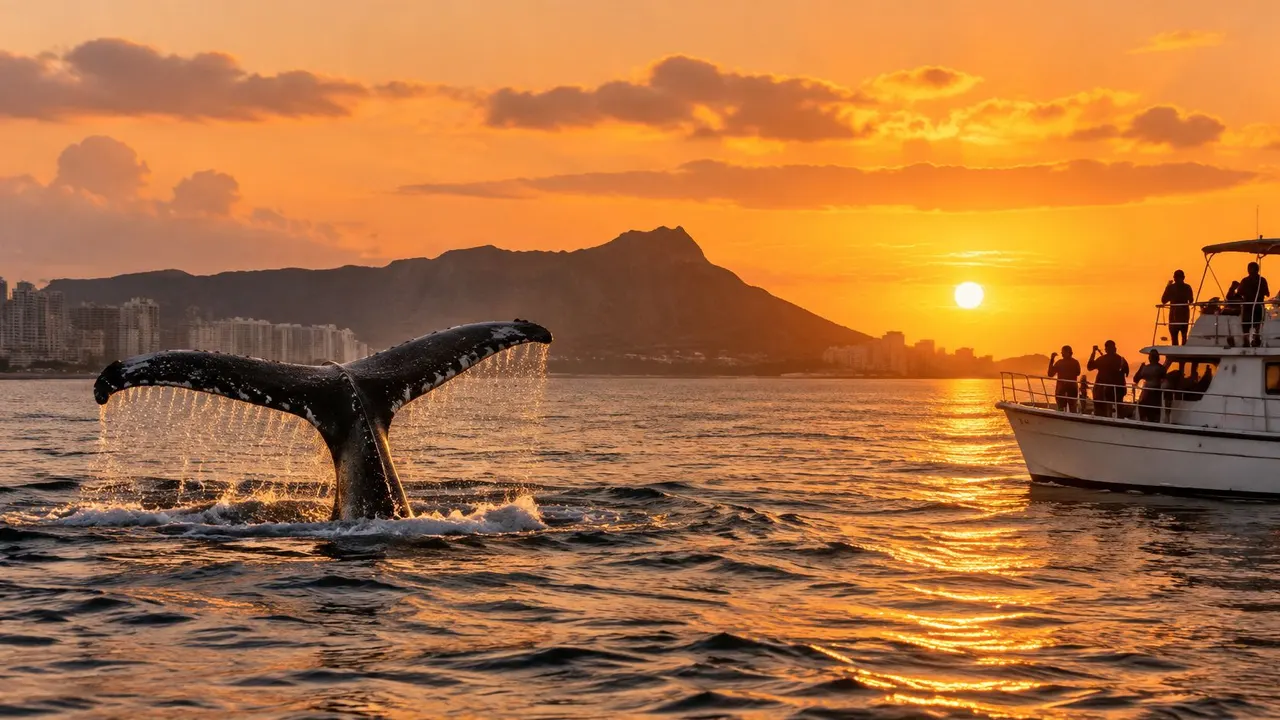
Whale Watching Cruise Oahu: When to Go and What to Expect
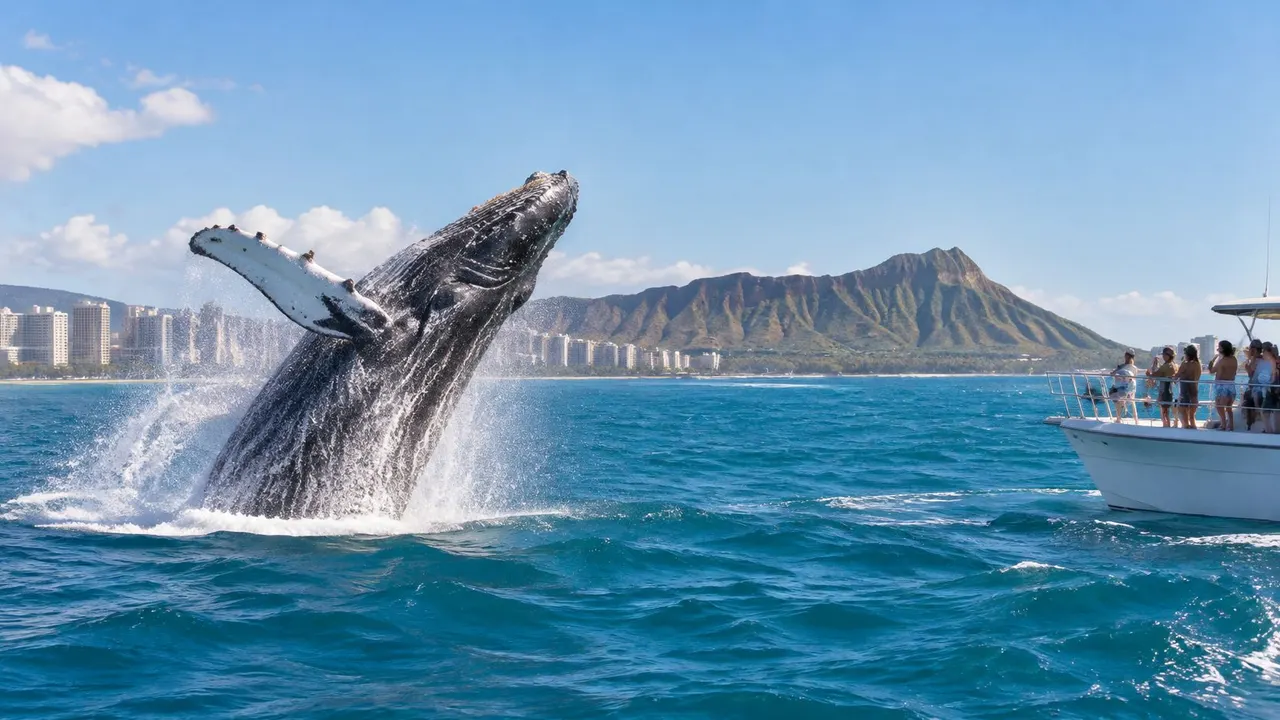
If a closer whale is a better whale, why do the boats that follow the rules still fill up every winter? A whale watching cruise Oahu visitors enjoy is built on timing and a legal stand-off, not on an animal at arm's length. Humpbacks come here to breed, give birth, and nurse. They don't perform on a schedule, and a careful crew won't close the gap to make a photo look bigger.
I would book the date before I book the camera angle. January and February give you the strongest odds. A quiet hour on the water is still a real outing along the south shore, and a boat that holds its distance is doing the job right.
When Humpback Whales Are Near Oahu
January through March is the core window for humpback whales around Oahu, and January and February carry the strongest odds. NOAA's Hawaiian Islands Humpback Whale National Marine Sanctuary overview estimates that as many as 12,000 humpback whales, more than half of the North Pacific population, return to Hawaiian waters each year from approximately November through May to breed, give birth, and nurse their calves. NOAA identifies January through March as the peak months for whale watching.
That viewing window is much longer than a holiday week, and the animals don't arrive in one wave. Early winter is a build. The middle of the season is when the south shore feels busy. Spring is leftover traffic, not a second peak. Historical NOAA research from the 1976–1977 season found that sightings rose rapidly toward a peak around the third week of February, and calf numbers also appeared to peak in February, according to NOAA's account of the Sanctuary Ocean Count.
Match your dates to the odds
| Month | Humpback activity | What it means for your cruise |
|---|---|---|
| November | Whales begin arriving | Early season; sightings possible but less frequent |
| December | Numbers building | Good option if your dates are flexible |
| January | Peak activity | Strongest odds; book early |
| February | Peak activity and calf numbers peak | Strongest odds; book early |
| March | Peak months ending | Still strong in the first half of the month |
| April | Migration tapering | Opportunistic; treat sightings as a bonus |
| May | Last whales leaving | Rare; treat as off-season |
April and May are opportunistic, not reliable. You might see a late animal. You should not plan the trip around that chance. If your only open days are late April, treat any whale as a bonus and enjoy the coastline either way.
During the February 2024 coordinated whale count, volunteers recorded 363 humpback whales from Oʻahu, according to Maui Now's report of Hawaiian Islands Humpback Whale National Marine Sanctuary and Pacific Whale Foundation results. That is a shore count of animals seen from Oahu sites on count days, not a promise for one boat. It does show how many whales can be in local waters when the season is full.
Practical rule: If your dates are flexible, pick late January or February. If they aren't, book the first half of March and accept lower odds than the February peak.
How Often Whales Show Up on Oahu Cruises
No Oahu cruise can promise a sighting. Whales are free-ranging. They move for breeding, resting, and calf care, not along a set route a captain can reserve.
Hawaiʻi's Department of Land and Natural Resources says sightings are common around Oʻahu but less frequent than at some other islands, on its whale watching timing FAQ. For a short Waikiki trip, the month you sail matters more than hopping islands. A January departure still beats a May departure on Oahu. It does not turn the ocean into a show.
Counts are activity, not your personal odds
In 2024, volunteers recorded 5,120 humpback-whale observations across Hawaiʻi during NOAA's Sanctuary Ocean Count, and the agency cautioned that observations may include duplicate sightings of the same whale, as NOAA's sanctuary notes explain. Don't read that statewide total as 5,120 different animals, and don't read it as your chance on one afternoon.
During the final coordinated count in March 2024, volunteers recorded 282 humpback whales from Oʻahu, according to Big Island Now's Sanctuary Ocean Count report. Local activity was still real late in the peak window, then lower than the heart of the season. That pair of shore counts is not a forecast for the boat you board.
What helps on the day you sail is a longer search, a crew that can use recent reports of blows, flukes, breaches, and spyhops, and sea conditions you can scan. Wind chop hides a blow. Flat water makes the same blow obvious. If you're choosing a morning or afternoon slot, our note on whether whales are more active in the morning or afternoon is the practical companion to the calendar.
A trip with no whale is still an ocean outing with coastline views. Judge the operator on the search and on how the crew explains a quiet hour, not only on whether a whale appears.
What Happens Onboard a Whale Watching Cruise
Most Waikiki departures leave from Kewalo Basin Boat Harbor, next to Waikiki Beach. For many hotels it's a short walk, which matters with kids, strollers, and a tight afternoon.
Say you're meeting a 1.5-hour whale trip, a common length that still leaves the rest of the day open. You check in, step aboard, and get a safety briefing that covers life jackets, the search area, and the distance rules before anyone is looking for a fin. The boat then heads toward water where whales have been reported recently, not toward a random pin on the map.
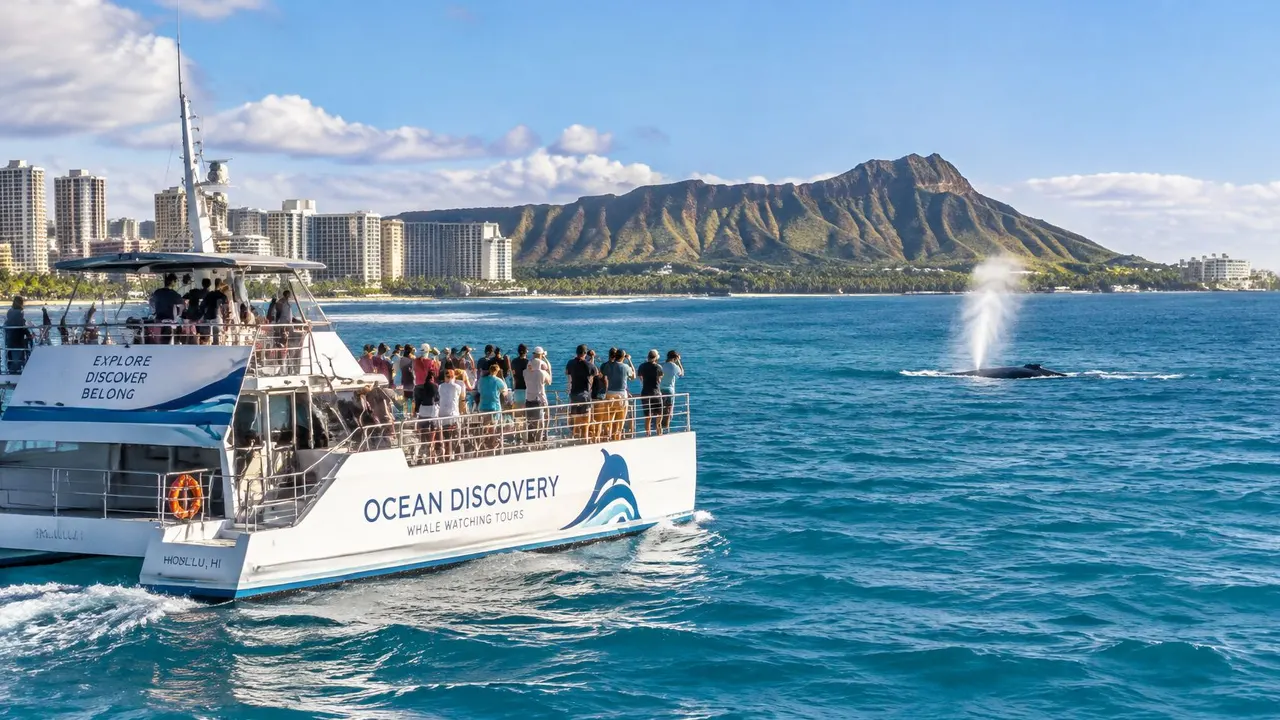
From the deck, the crew scans with binoculars. You're watching for a blow, a fluke, a breach, or a spyhop. When a whale surfaces, the boat slows, shifts to a non-intercepting angle, and holds its distance. It does not chase. The animal sets the geometry. Then you head back to the harbor.
Stretches of searching are normal. Whales surface when they surface. Stay on deck with binoculars or a phone zoom ready, because the useful moment is often short.
A good trip feels steady. The scan is patient, the rules are clear before the first sighting, and the crew names what you're seeing instead of racing the boat closer for a bigger shape in the frame.
Responsible Viewing Rules and Distance Limits
A good Oahu whale cruise meets a federal stand-off, not a guest's wish to get closer. The benchmark is 100 yards, about 91 meters, roughly the length of a football field. NOAA Fisheries states that federal rules prohibit approaching Hawaiian humpback whales within that distance by vessel, swimmer, kayak, paddleboard, drone, or any other means. Operators also may not intercept a whale's path, cause it to come inside the restricted zone, or disrupt its normal behavior.
The same 100-yard rule applies year-round in Hawaiian waters, even though most humpback activity is seasonal. Winter is not a waiver.
If a vessel finds itself inside 100 yards, NOAA guidance is to stop immediately, keep engines running but out of gear, and wait until the whale moves away. In practice a careful crew uses a marked 100-yard range, avoids converging with other boats, approaches only from a non-intercepting angle, and lets the whale set the encounter. That predictability matters on family boats. Fewer sudden turns and less wake, and nobody is nudged toward the water.
Other animals on the same coastline
Whales aren't the only animals with a stand-off. NOAA's Hawaiian Islands Humpback Whale National Marine Sanctuary regulations page distinguishes viewing distances you can check from the rail.
| Wildlife | Minimum distance | What it applies to |
|---|---|---|
| Humpback whale | 100 yards (about 91 m) | Vessels, swimmers, kayaks, paddleboards and drones |
| Spinner dolphin | 50 yards | Boats and swimmers |
| Hawaiian monk seal | 50 feet | Boats, swimmers and people on shore |
| Sea turtle | 10 feet | Swimmers and boats |
A whale that looks small in a photo is the ethical result. Closer is not better. Swimming or paddling up to a whale is not a gray area, which is why we spell out whether you can swim with whales in Hawaii before anyone asks on deck.
Watch the boat, not only the whale. No chasing. No piling up with other vessels. A briefing that states the 100-yard rule before the first sighting.
How to Choose a Whale Watching Operator
Price is the last comparison, not the first. Run the same eight checks on every Oahu whale cruise, then look at the fare. Our breakdown of what whale watching costs in Hawaii is useful only after the boat passes this list.
- Distance policy: The crew states the 100-yard humpback rule, does not chase, and does not cut across a whale's path.
- Crew knowledge: A guide names blows, flukes, breaches, and spyhops, and says when a calf is present.
- Boat and group: Smaller boats feel personal. Larger boats usually add shade and a restroom. Pick the trade-off your group will use.
- Departure: The harbor beside Waikiki, with clear parking or a short hotel walk, beats a long transfer with tired kids.
- Duration: About an hour and a half is typical. Ask how much of that is search time rather than transit.
- Families: Confirm the minimum age, often 3 and up, and whether there's seating for mixed ages.
- Weather: Ask what happens if wind or swell cancels, and whether the fare is refunded or moved.
- Reviews: Read recent comments about a close, legal sighting and about a trip with no whale. The second kind tells you how the crew behaves when the ocean is quiet.
I would drop any operator that sells a "swim with the whales" add-on or brags about getting inside a football field. That pitch fails the first check, so the fare doesn't matter.
What to Pack and Who Will Enjoy the Cruise
Open-ocean glare and a breeze off the water will beat a beach outfit. Pack a small bag. Storage on boats is limited, and everything has to fit under a seat. Our boat tour packing list covers the same idea for other harbor departures.
- Sun: Reef-safe sunscreen, a hat, and sunglasses.
- Wind: Light layers and a windbreaker. The harbor can feel warm while the rail feels cool.
- Looking: Binoculars, plus a camera or phone with a zoom and a clean lens. You will not walk up to the whale.
- Comfort: A refillable water bottle, snacks, a motion-sickness remedy taken before you board, and a dry bag for phones.
For families, bring children's binoculars, plan snacks and a nap window, and confirm the operator's minimum age before you pay. A three-year-old who can sit for the safety talk is a different guest from a toddler who needs a crib.
For accessibility, ask before you book about deck access, seating, where the restroom is, and help at the gangway. Decks and ramps can be uneven, and "we'll figure it out at the dock" is a bad plan with a walker or a wheelchair.
Conditions depend on the day. Check the forecast that morning and still bring the layer. A calm sunrise does not lock in a calm return.
Book Your Whale Watching Cruise for January to March
Book early for January and February. If those dates are gone, take a flexible day in the first half of March rather than sliding into late spring.
Living Ocean Tours is the top rated and most reviewed snorkel company on Oahu, and our seasonal whale trip is the Waikiki Whale Watching Cruise on the whale watch tour page. It runs January 2 through March 31, lasts 1.5 hours, is for ages 3 and up, and costs $49 per person. We depart from Kewalo Basin, and the office at 1125 Ala Moana Blvd Slip B-01, Honolulu, HI 96814 is open seven days a week for trip planning. Email info@livingoceantours.com or call +1 (808) 436-3483.
Pick the date, read the distance rules, and book. A legal view at 100 yards in February beats a closer story you should not be offered.
Quick Answers Before You Book
Can we swim or paddle up to a whale? No. The stand-off covers swimmers, kayaks, paddleboards, and drones all year, so the cruise stays on the boat.
Are sightings guaranteed? No. Whales are free-ranging. Peak months only raise the odds, and a quiet trip is still a coastline cruise.
Is Oahu the best island? Sightings are common here, and the state notes they are less frequent than at some other islands. For a short Waikiki stay, the month matters more than changing islands.
How long, and from where? Plan about an hour and a half from the harbor next to Waikiki Beach.
What age should I confirm? Many boats start at age 3. Match that to the dates posted for the winter window before you pay.
What if I get seasick? Take a remedy before boarding, stay outside, and watch the horizon while the crew searches.
What should a good photo look like? A whale at the legal distance or farther, with the boat holding position instead of closing in.
What if the wind cancels the trip? Ask for a refund or a new date before you pay, and pack a windbreaker either way.
Living Ocean Tours runs seasonal humpback whale watching from Kewalo Basin along the Waikiki coast, with the same harbor used for our snorkel and sunset trips. If you want a winter cruise that keeps the legal distance and explains what you're seeing, start with the dates and the crew, not a promise of an arm's-length whale. Visit Living Ocean Tours to see the current schedule and reserve a seat.