
Simple boat tour packing to keep your essentials dry
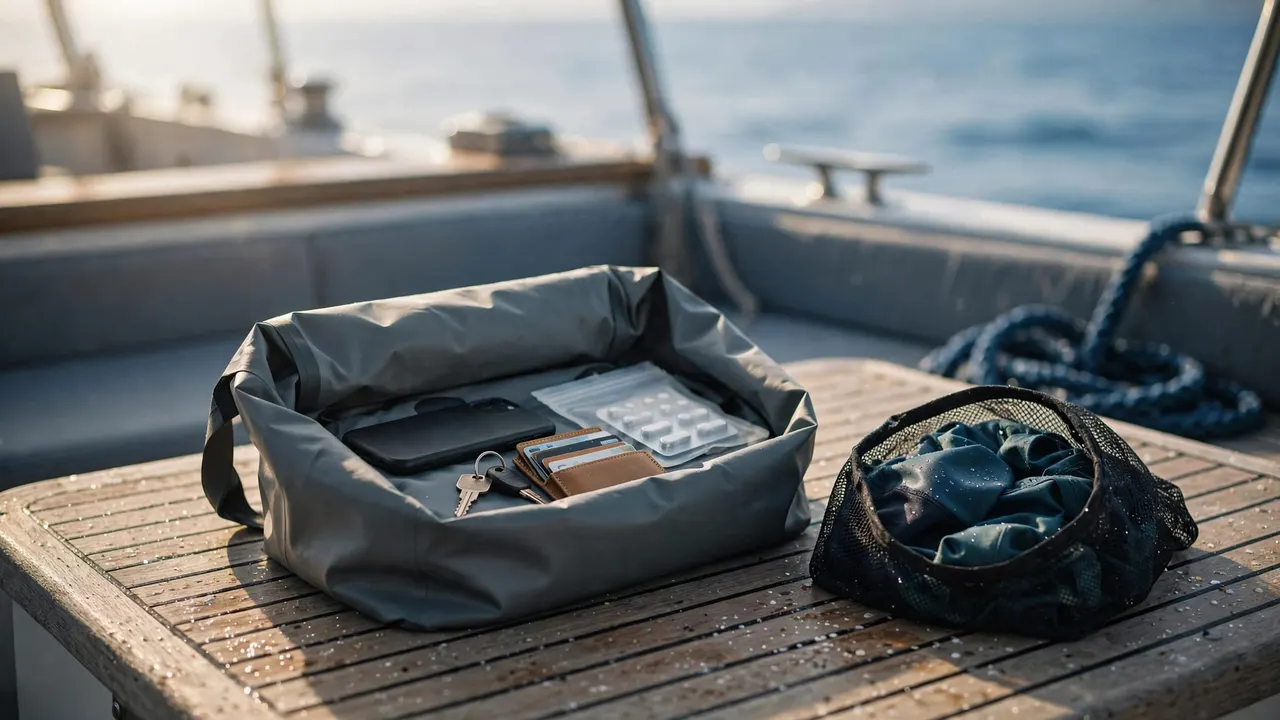
Keep your personal items dry by packing them inside a closed protective bag, separating wet clothing, and keeping valuables out of spray. Good boat tour packing starts with choosing what deserves space, rather than bringing everything you might use.
At Living Ocean Tours, we want you enjoying the ocean instead of managing a bulky beach bag. A little separation between dry essentials and wet gear makes the biggest difference, starting before you leave your hotel.
Key takeaways
- Keep your phone, room key, cards, and necessary medication together in a protected inner pouch.
- Give wet swimwear and towels a separate place so they don’t soak your return clothes.
- Wear your swimsuit and sun-protective clothing instead of packing duplicate outfits.
- Close your bag after each use and put your phone away before moving around the boat.
Make boat tour packing fit a compact bag
Choose a closure you can use easily
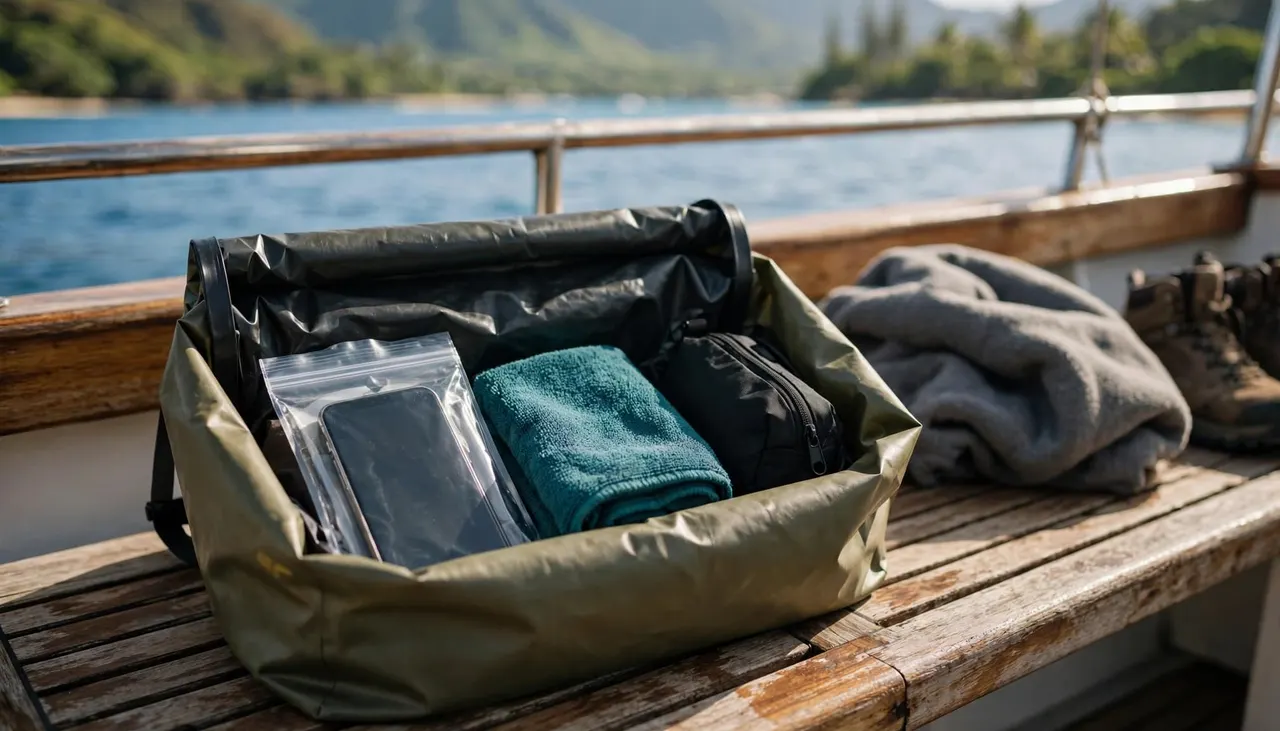
A compact dry bag is useful because it gathers loose belongings behind a secure closure. Choose something you can carry comfortably while leaving a hand available for boarding.
Look for a clean, undamaged opening and a closure that stays fastened. When packing, leave enough room to close it properly. A bag stuffed to the top is harder to organize and more tempting to leave open.
Put your dry clothing inside first, then arrange smaller essentials where you can reach them without emptying everything. Keep sunscreen upright and contained separately from fabric.
Remove things that don’t earn their space
Leave expensive jewelry, unnecessary electronics, and extra shoes at your accommodation. Passports usually don’t need to accompany a coastal outing unless you have a separate reason to carry them.
For families, gather children’s small belongings in the same main bag rather than scattering them across seats. Keep each child’s dry clothing together so you can find it without unpacking everyone else’s things.
You should be able to lift your bag, close it, and move comfortably. If loose items hang off every side, simplify before heading to the harbor.
Keep valuables together and easy to reach
Give your phone a protected home
Store your phone in a protective pouch when you aren’t taking photos. Put your room key and payment card in the same protected area, away from damp towels and sunscreen bottles.
Before opening the pouch, dry your hands and move away from spray. Remove only what you need, then close it again before returning to your seat.
Take photos while settled in a safe position. Put the phone away before climbing stairs, stepping over a threshold, or boarding. A photo can wait until you have a stable place to stand.
Carry essentials, not your entire wallet
Bring the payment method and identification you need for your outing. Leave spare cards, receipts, and unrelated documents behind.
Keep necessary medication accessible and protected according to its storage requirements. Don’t bury something you may need beneath clothing.
This boat tour packing habit also makes the return trip easier. You won’t need to search through a damp tote for your room key while everyone waits to leave. Before boarding, decide where each essential belongs and keep using that same spot.
Separate wet belongings before they become a problem
For snorkeling, boat tour packing needs a plan for what happens after your swim. A towel that starts dry won’t stay that way, and damp fabric can transfer moisture to everything around it.
Keep return clothes away from swim gear
Wear your swimsuit beneath your clothes to the harbor. Add a rash guard or lightweight cover-up that works comfortably around the water.
Pack a dry shirt or light layer separately from your swimming items. It earns its space when wind hits damp skin on the return ride.
A compact, quick-drying towel is easier to manage than a bulky beach towel. However, it still needs its own place after use. Carry a separate washable bag for wet clothing and towels, and keep it apart from your dry layer.
Contain bottles and small spills
Sea spray isn’t the only source of moisture. A loosely closed water bottle or sunscreen cap can spoil a dry bag from the inside.
Tighten caps before leaving your accommodation. Keep sunscreen inside a separate pouch, and place your reusable water bottle where a leak won’t reach your valuables.
After using sunscreen, wipe your hands before handling closures. Greasy fingers make slippery devices harder to manage and leave residue on seals.
Settle your belongings before the boat moves
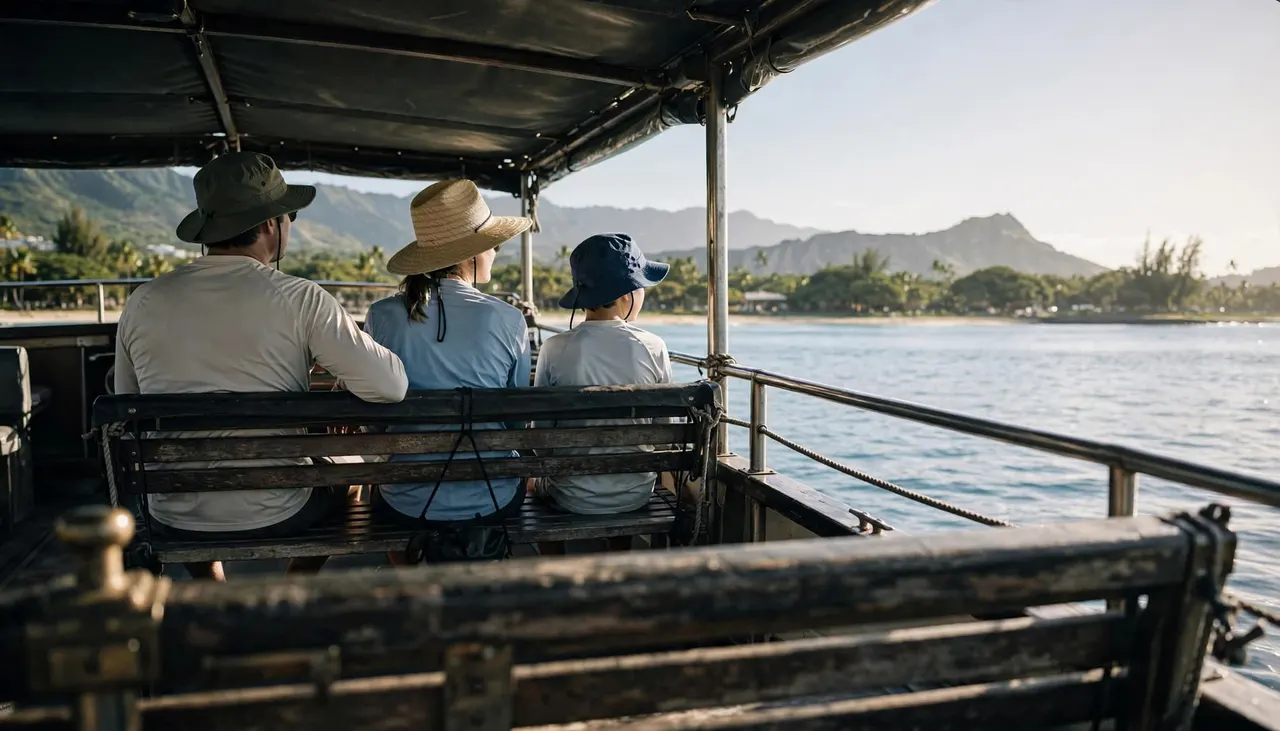
Board with your bag closed and your phone put away. Once aboard, follow the crew’s directions about where belongings belong.
Keep straps out of walkways and away from stairs. Don’t place a bag where it blocks a ladder, doorway, or access to safety equipment. A tidy space matters when passengers need to move.
The BoatUS Foundation’s equipment guidance emphasizes properly sized, serviceable life jackets. Your personal storage arrangements should never interfere with access to safety equipment.
Also, resist opening your bag whenever spray reaches the deck. Wait until you’re settled somewhere sheltered, then retrieve what you need.
Wet hands and an open bag can undo careful packing. Dry your hands before reaching for your return clothes or valuables.
Keep sunglasses secured when leaning forward, and tuck away loose hats when the breeze picks up. Hair ties, wrappers, and receipts belong inside a zipped compartment.
If something slips out of reach, alert the crew instead of lunging after it. Minnesota DNR’s boating guide advises staying seated and low to help prevent falls overboard. Keep your attention on your footing whenever you move.
Match your bag to the outing you booked
Good boat tour packing reflects what you’ll actually do. Swimming calls for different personal items than staying aboard for coastal views.
For a snorkeling outing
Prioritize a towel, sun protection, drinking water, and a dry return layer. A rash guard provides useful coverage without taking up space in your bag.
Choose mineral-based sunscreen with zinc oxide or titanium dioxide, and keep the container secured. Bring a camera only if you want to use it; you don’t need extra electronics to enjoy the reef.
On our snorkeling outings, you receive guidance before entering the water. At Living Ocean Tours, we’re the only tour company with professional snorkel guides. Let your guide know your experience level, and observe marine life without touching animals or coral.
For an outing spent aboard
Leave swimming extras behind when you won’t enter the water. Comfortable clothes, secure footwear, sunglasses, and a light layer cover the practical basics.
Sunglasses still help during an evening departure because low sunlight creates glare across the water. Meanwhile, a secure-fitting hat is more useful than a loose brim that needs constant attention.
Keep your bag small enough to manage comfortably while boarding and moving around your seating area.
Test your pouch before leaving your accommodation
An unfamiliar pouch deserves attention before you put valuables inside. Look for trapped hair, sand, damaged seams, or a closure that doesn’t line up.
If you’re using a waterproof phone case, test it empty with dry tissue inside according to its instructions. Dry the outside before opening it, then inspect the tissue for moisture. Leave a leaking case out of your packing plan.
Practice opening and closing the pouch with dry hands. You should understand the closure before you’re distracted by boarding or excited about wildlife.
Repeat the inspection after opening it during your outing. A clean closure at breakfast can collect sunscreen or grit later.
Finally, close the main bag and lift it as you would carry it. Remove awkward extras if straps snag or the contents keep the opening from fastening properly.
Frequently asked questions about keeping items dry
Can you use a resealable plastic bag?
A resealable bag can organize cards, keys, and other small items inside your main bag. Keep it away from sharp objects, and close it fully after use. Don’t leave valuables loose in an open tote because they’re inside a smaller bag.
Should you bring a full change of clothes?
For snorkeling, dry return clothes can improve comfort. Choose lightweight pieces rather than packing another complete beach outfit with extra footwear. For children, a dry shirt is useful when splashes or wet swimwear make them uncomfortable.
What should you do with belongings after the tour?
Separate wet towels and swimwear as soon as practical. Empty your bag, let the interior dry, and clean salt or sand from its exterior according to its care instructions.
Before putting a phone or glasses back into a case, dry the case’s interior. Packing everything away while damp carries the moisture problem back to your accommodation.
Keep your bag simple and your essentials protected
Your boat tour packing plan works best when dry clothing, valuables, and wet gear each have a clear place. A compact bag is easier to manage when you leave unnecessary extras behind.
Focus on keeping dry items separate, closing every pouch after use, and freeing your hands before moving around the boat.
Pack for the ride back as carefully as the departure, and you’ll have less to carry and fewer damp surprises.


