Whale Watch Waikiki: 2026 Season, Tours and Tips
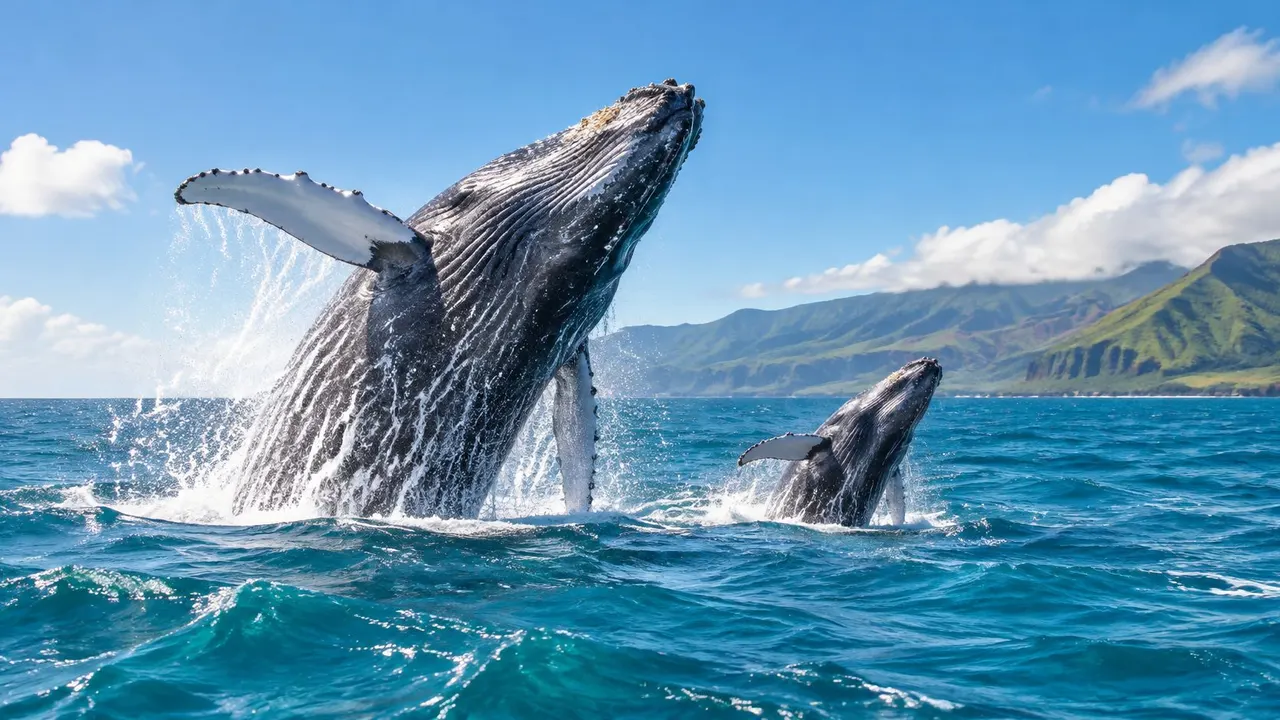
Humpback whale season in Waikiki peaks from January through March, and the boats that run whale watch Waikiki trips leave Kewalo Basin Boat Harbor, minutes from Waikiki Beach, for roughly 90 minutes on the water. Book a morning departure in those three months and your odds of seeing a blow, a fluke or a full breach are as good as they get anywhere on Oʻahu.
Those whales aren't residents. Each winter, more than 12,000 humpbacks gather in Hawaiian waters, part of a migration that pulls in over half the North Pacific population, as NOAA's Hawaiian Islands Humpback Whale National Marine Sanctuary documents. What that means for a visitor is simple: the animals are here on their own schedule, not ours, and the best trips are built around that fact instead of fighting it.
Table of Contents
- Whale Watch Waikiki at a Glance
- The Best Time to Whale Watch in Waikiki
- Whale Watch Tours and Departure Points Near Waikiki
- What to Bring on Your Waikiki Whale Watch
- Responsible Whale Watching Rules in Hawaii
- Waikiki Whale Watch FAQs
- Book Your Waikiki Whale Watch Trip
Whale Watch Waikiki at a Glance
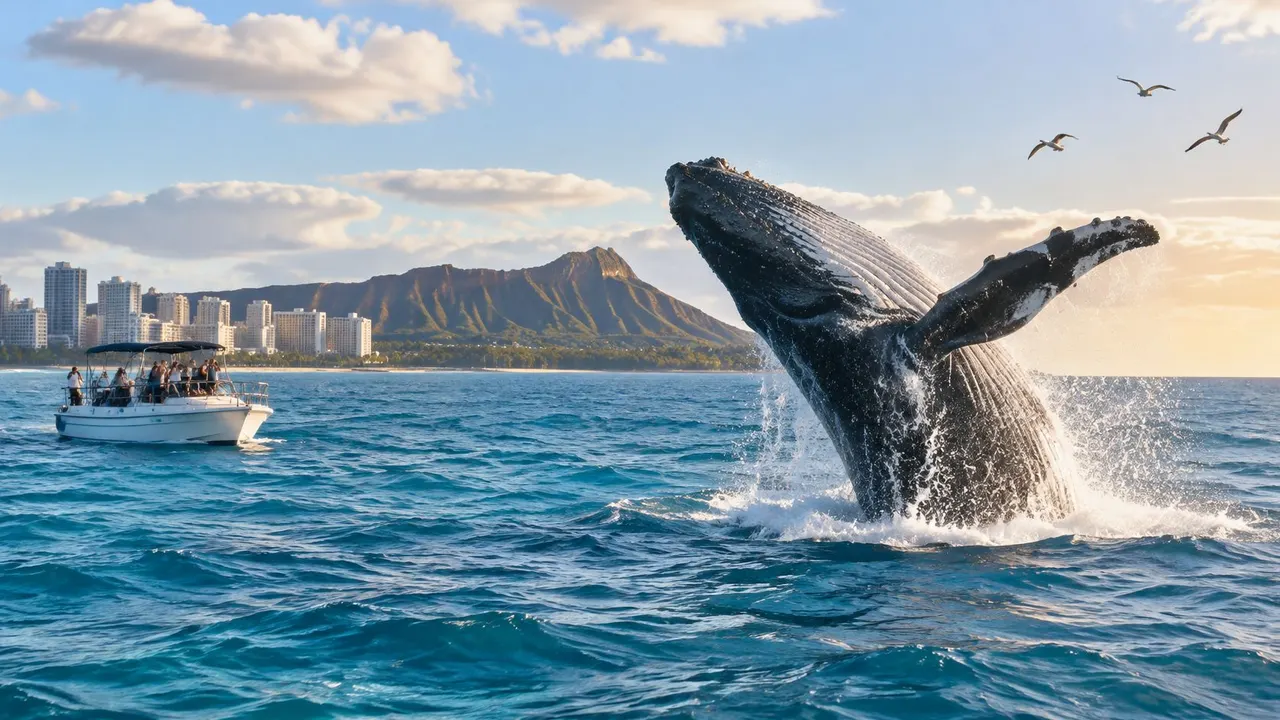
A winter morning at Kewalo Basin looks the same most days. Charter boats idle at the dock before sunrise, crews hand out life jackets, and by eight o'clock a line of catamarans is heading out past Diamond Head with a few dozen passengers scanning open water. Somewhere out there a humpback is coming up for air, and nobody aboard knows exactly where.
That uncertainty is the honest part of the trip. Wild whales surface where they please, so no operator can guarantee a sighting, and anyone who promises one is selling you something other than wildlife. What the peak weeks deliver is volume: breaches, tail slaps and mother-calf pairs along the Waikiki coast become routine sights.
A good trip follows a predictable shape. You check in thirty minutes early, sit through a short safety briefing, motor out past the Waikiki skyline and spend the next hour watching the water. When a blow appears, the captain cuts speed, repositions and holds a legal distance while the whale decides what happens next. That is the sighting worth paying for: a relaxed animal feeding, resting or traveling a hundred yards off, behaving as if the boat were never there.
The decisions that shape the day are few. Pick dates inside the season window, choose a boat size and departure that fit your group, pack for wind and spray, and learn the approach rules before you board. Living Ocean Tours runs its Waikiki Whale Watching Cruise through the heart of the season, January 2 to March 31, at $49 per person with children welcome from age three, and at that price I would book early.
The Best Time to Whale Watch in Waikiki
| Time of year | Sighting odds | What you are likely to see | Planning note |
|---|---|---|---|
| September to October | Occasional early arrivals | First migrating adults, often farther offshore | Odds are low; book only if your dates are flexible |
| November to December | Good and improving | Travelling adults, early surface activity | Good value window before peak-season crowds arrive |
| January to March | Best of the season | Breaching, tail slaps, pectoral slaps, mother and calf pairs | Peak season; book morning trips at least a week ahead |
| April | Good, tapering | Newborn calves and active yearlings | Shoulder season with lighter crowds and softer light |
| May | Fair to occasional | Last northbound whales passing the coast | Check schedules as operators wind the season down |
| June to August | Off-season | Humpbacks are feeding in Alaska | Choose a snorkel or sunset cruise instead |
Read that table as a probability statement, not a timetable. Humpbacks leave their feeding grounds in the north Pacific in late fall and cross to warm, shallow Hawaiian water to breed, calve and nurse, which is why the Hawaiʻi Division of Aquatic Resources puts the local viewing season at roughly November through May with peak activity from January through March. November and December bring the first arrivals and thinner crowds. January through March is when surface behavior peaks and the water fills up.
How to Read the Season Table
January builds steadily. Early January can still feel quiet, then whale numbers climb through the month and the south shore fills with animals moving between resting and calving areas.
February is usually the single most reliable month. If you can only pick one week and you want surface action, pick this one.
March adds calves. Newborns travel close to their mothers along the coast, and calves are the reason March produces some of the most memorable sightings of the year, along with some of the longest surface intervals while a mother nurses.
April tapers, May is sporadic. Both months still produce whales, and both reward flexible travelers who treat a sighting as a bonus rather than a plan.
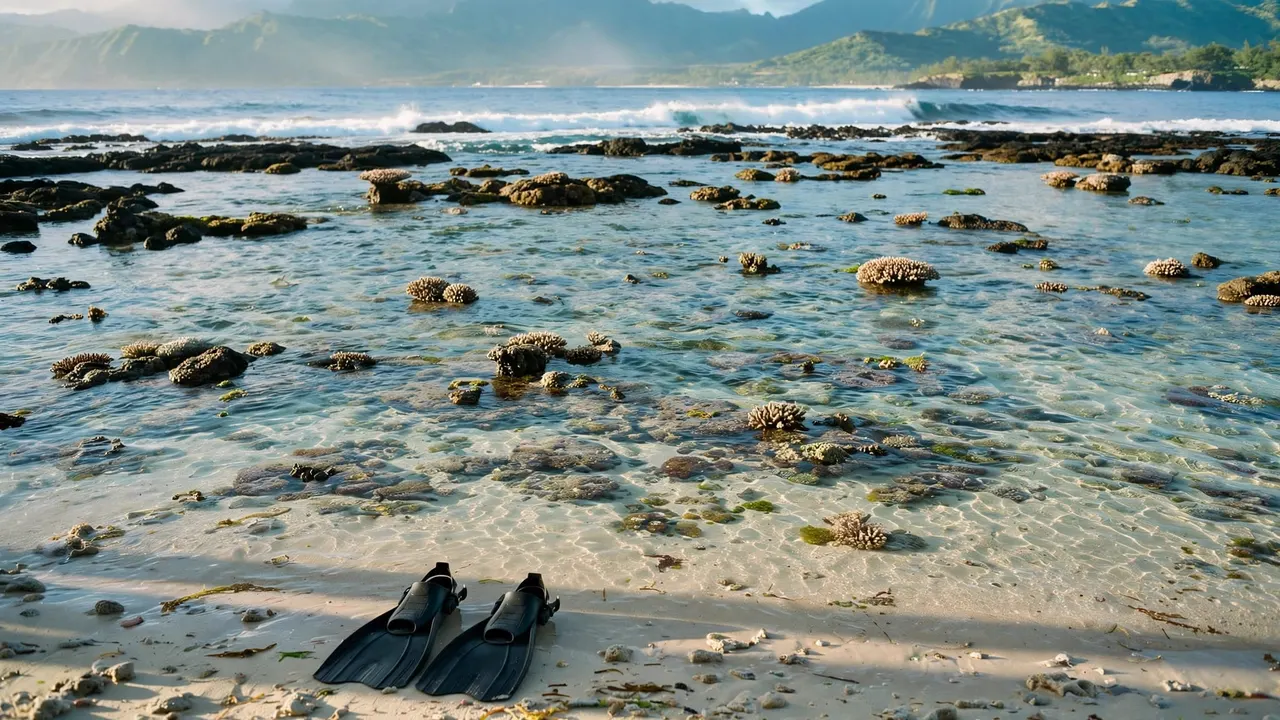
June through August is not whale season here. If your trip lands in summer, swap the whale watch for reef snorkeling or a sunset sail and come back in winter.
Weather, Seas and the Morning Advantage
Winter on Oʻahu's south shore brings swells, passing rain showers and wind that builds through the day. Flat water at 7 a.m. often turns choppy by early afternoon, which is why the earliest departure is worth the alarm clock, especially with children and grandparents aboard. Mornings also give you cleaner light and less glare on the water, so blows are easier to spot at distance.
Here's the part that separates a good whale watch from a frustrating one: humpbacks spend most of their time submerged and can move miles overnight. Crews aren't driving to a fixed address. They're reading for blows, flukes, slicks on the surface and birds working the water, then positioning ahead of a whale's travel line rather than chasing it.
If your dates are locked, keep one backup morning free. The trip that gets cancelled for swell on Tuesday is often glassy by Thursday.
If your schedule has any slack in it at all, the month-by-month breakdown of Hawaii's whale season narrows the choice further with weather patterns and crowd levels for each window.
Whale Watch Tours and Departure Points Near Waikiki
Choose the boat before you choose the departure time. Three formats cover most Waikiki whale watches, and the right pick depends on who is with you and how much motion they tolerate.
| Format | Best for | Trade-offs |
|---|---|---|
| Large catamaran | Families, grandparents and anyone who wants a steadier ride | More room and more stability, but more passengers and a slower run to a distant animal |
| Rigid-hull inflatable raft | Guests who want speed and a low, close-to-the-water view | Wetter, louder and bumpier; poor fit for toddlers or back and neck problems |
| Mid-size cruise vessel | Guests who want indoor seating and a cabin | Weather cover and walk-around decks, with less open-air feel than a catamaran |
Catamarans are the forgiving choice: twin hulls damp the roll, there is usually shade and a head, and a seated adult can still see over the rail while a kid scans the water. Rafts trade comfort for response. They get on a moving whale faster and put you near eye level with the surface, but every guest feels the chop. Mid-size vessels split the difference when wind or a passing shower makes a cabin useful.
Departure Logistics at Kewalo Basin
Nearly all Waikiki-area whale watches leave from Kewalo Basin Boat Harbor at 1125 Ala Moana Boulevard, roughly a 10-minute drive or a 25-minute walk from central Waikiki. Plan to arrive 30 minutes before departure for check-in, waivers and the safety briefing. Paid harbor parking fills fast on weekends, so add a buffer or walk over from the hotel.
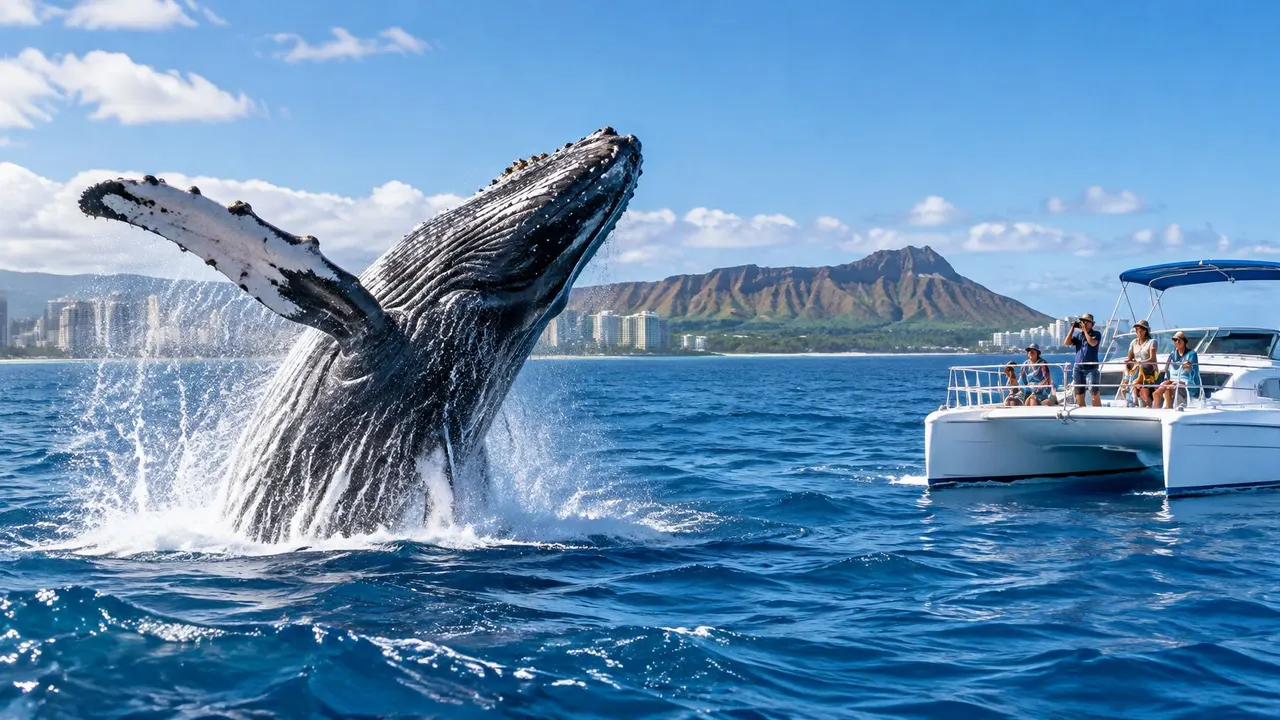
February morning on the south shore: Diamond Head astern, a catamaran working the Waikiki edge, and everyone watching the same flat patch of water for the next blow.
Living Ocean Tours, a Honolulu snorkel and cruise operator, runs a seasonal Waikiki Whale Watching Cruise from January 2nd through March 31st. The 1.5-hour trip is open to ages 3 and up at $49 per person, with boats loading at 1125 Ala Moana Blvd Slip B-01, Honolulu, HI 96814.
A Typical Trip, Start to Finish
Check-in is at the dock. The crew covers life jackets, rail space and where to stand before the lines come off, then the boat clears the harbor and turns along the coast while the guide explains why humpbacks winter here.
The searching is the tour. When a blow shows, the captain slows and sets up ahead of the whale's line rather than crowding it, holding the required 100-yard standoff and letting the animal choose the approach. That restraint is the tell of a good crew: a legal pass that lasts beats a close pass that ends in a dive. Some trips find whales within fifteen minutes; some work for an hour and earn one clean look.
Directions, parking notes and slip details are on the Kewalo Basin boat location page.
What to Bring on Your Waikiki Whale Watch
Pack in boarding order, not in a rush the night before. The items below are the ones people use on the water, in the sequence they reach for them.
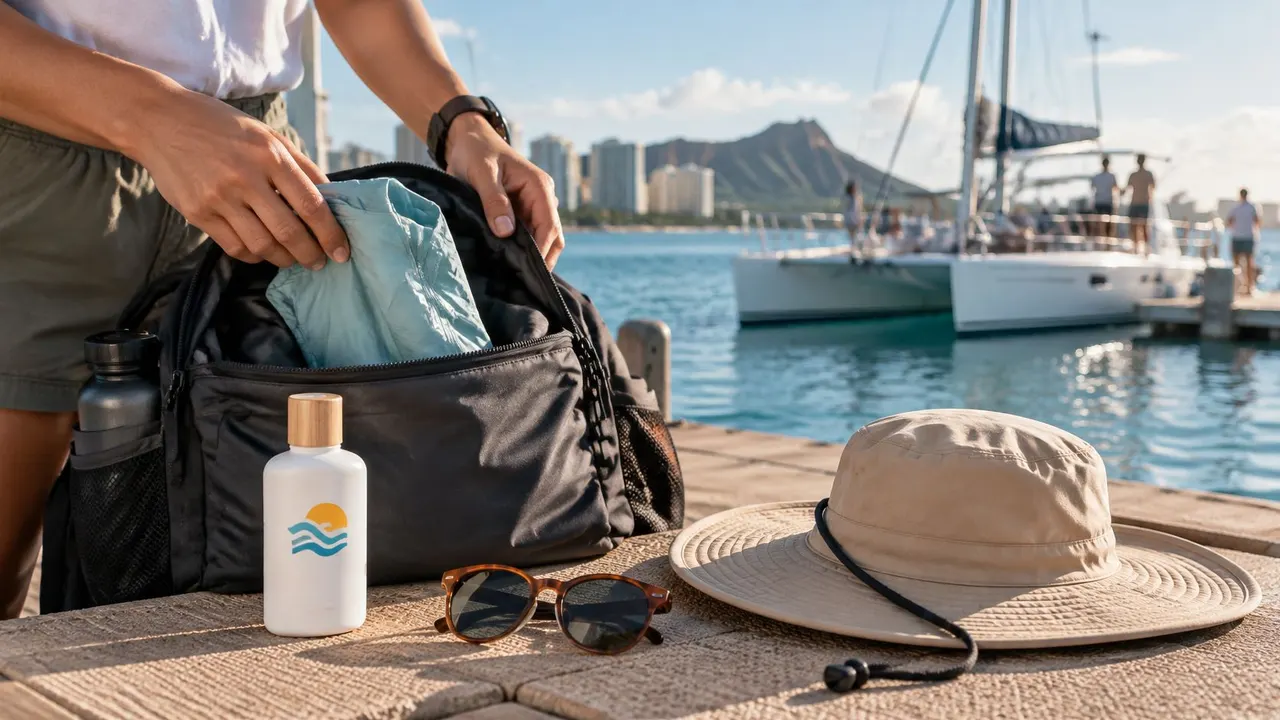
- Reef-safe sunscreen, applied 30 minutes before you board. Put it on dry skin at the hotel. Spraying it on a moving deck wastes half the bottle and coats everyone downwind.
- Polarized sunglasses and a hat with a retention strap. Polarized lenses cut glare so you can see a blow against a choppy surface, and the strap stops your hat from joining the whales.
- A light windbreaker or fleece. It's noticeably cooler and wetter at cruising speed than it is in Waikiki, even on a sunny 80-degree day.
- Non-slip shoes or strapped sandals. Flip-flops that slide off on a wet deck are the most common self-inflicted problem on these trips.
- A phone or camera on a lanyard. Sea spray arrives without warning, and a wrist strap has saved more phones than any waterproof case.
- One small soft bag per person. Hard coolers and oversized luggage usually stay ashore. Everything you carry gets salty.
Motion Sickness, Handled Early
Take dimenhydrinate or ginger 30 to 60 minutes before boarding, not once you feel queasy, because by then it's too late. Sit midship where the motion is mildest, keep your eyes on the horizon instead of your phone screen, and skip the greasy breakfast. Operators typically provide life jackets and shaded seating, and some sell snacks and drinks on board, so a light meal beforehand is plenty.
Worth knowing: the cheapest prevention is a window seat, a full water bottle and a horizon to stare at. The most expensive is a shortened trip spent below deck.
Traveling With Kids and Grandparents
Many family-oriented cruises welcome children from around age three, so choose a catamaran with full railings, a restroom and shade if toddlers or grandparents are in the group. Morning departures beat windier afternoons for small stomachs. Mention wheelchair or stroller needs when you book, since dock and vessel access varies by boat and gangway width.
Pack light, expect everything to taste like salt by the end, and keep your hands free. Guests who aren't juggling a bag, a drink and a phone are the ones who spot the first breach.
Responsible Whale Watching Rules in Hawaii
A whale seen from a legal distance is not a consolation prize. It's the clearest evidence you chose an operator who follows the law, and it's the reason the animal keeps behaving like a whale instead of changing course to avoid you.
The core rule is federal, not local custom. Approaching a humpback whale within 100 yards, or 300 feet, is prohibited in Hawaiian waters, and that ban covers boats, kayaks, paddleboards, swimmers, drones and any other means of approach, according to the Hawaiʻi Division of Aquatic Resources humpback whale rules. It also applies year-round within 200 nautical miles of the islands, not only during the winter migration. Intercepting a whale or disrupting its natural behavior is equally off-limits.
What a Compliant Crew Does
Watch the crew, not the brochure. Responsible operators reduce speed to 15 knots or less in whale habitat at depths of 600 feet or less, drop to 6 knots or less when approaching or departing whales within 400 yards, and post a dedicated lookout during the run, per Hawaiʻi's DLNR guidance on protecting marine species.
When a whale chooses to come to the boat, the correct response is to stop forward motion, leave the engine in neutral and wait for the animal to move off, while keeping its path clear. That last part matters: a captain who cuts across an oncoming whale can cause it to surface inside the prohibited zone, which is bad for the whale and worse for the operator's record.
Judging a tour before you book: ask what the captain does when a whale surfaces 50 yards off the bow. The answer tells you more than any photo on the website.
What guests can control is simpler than they think. Keep your voice down when whales are near, keep everything on board, and leave the drone in the hotel room, since launching one from a tour vessel is a bad idea on every level. Whether you can legally get in the water with these animals at all is answered in this guide to swimming with whales in Hawaii.
| Rule | What it requires | Who it applies to |
|---|---|---|
| 100-yard approach ban | No approach within 300 feet of a humpback by boat, swimmer, kayak, paddleboard or drone | Everyone, year-round within 200 nautical miles of the islands |
| Slow speed in whale habitat | 15 knots or less in waters 600 feet (100 fathoms) deep or less | All vessel operators |
| 6-knot zone | 6 knots or less when approaching or leaving whales within 400 yards | All vessel operators |
| No intercepting | Never position a vessel in the path of an oncoming whale | Operators and passengers |
| Engine-neutral protocol | If a whale approaches, stop forward motion, keep the engine in neutral and wait for it to move off | Vessel operators |
Waikiki Whale Watch FAQs
Can you see whales from shore in Waikiki? Yes, and it costs nothing. From December through March, high lookouts such as Diamond Head and points along Oʻahu's east coast produce regular sightings if you bring binoculars and scan for blows. A 2024 shore-based scan on Oʻahu logged a high of 48 whales in 30 minutes, its highest count since 2010, according to the Hawaii Marine Mammal Consortium. During that same season, more than 1,300 volunteers observed 5,120 humpbacks across the sanctuary, per NOAA's Office of National Marine Sanctuaries.
Are sightings guaranteed? No. Humpbacks surface unpredictably and spend most of their time underwater, so a boat can cover the right water on the right day and still come up short. Ask about the rebooking policy before you pay rather than after a quiet trip.
Can I fly a drone for whale photos? Not legally near a whale. Drones count as a means of approach under the federal distance rule, and launching one from a tour vessel is off-limits. Bring a zoom lens and shoot from the deck instead.
What happens if we don't see any whales? Booking choices pay off here. Ask about free rebooking or refund terms before you pay, and keep a flexible backup morning open in January through March. If budget is the deciding factor, this guide to what whale watching costs in Hawaii breaks down what each price tier includes.
Book Your Waikiki Whale Watch Trip
A good booking choice comes down to three things: dates inside the season, a crew that treats distance as part of the show, and clear logistics before checkout. Judge the trip by patient boat handling around whales. A clean sighting at legal range beats a chase every time.
- Lock the dates first. For Living Ocean Tours, the whale window runs January 2 through March 31; weekdays are usually easier on families than holiday peaks.
- Book ahead for peak weeks. School breaks and weekend calendars tighten first, especially on boats with limited seating.
- Compare what the fare covers. Time on the water, check-in margin, restroom access, seating and weather terms matter more than a small price gap.
- Read the swell policy before you pay. Know who cancels, how much notice you get, and what “rescheduled” means.
- Confirm ages, meeting point and harbor logistics. Kewalo Basin Boat Harbor sits near Waikiki Beach, but you still want the slip, arrival time and parking plan in writing.
Living Ocean Tours runs its Waikiki Whale Watching Cruise from January 2 through March 31, with 1.5 hours on the water, for ages 3 and up at $49 per person. The office at 1125 Ala Moana Blvd Slip B-01, Honolulu, HI 96814 is open 7 days a week for trip planning, and the team answers at info@livingoceantours.com or +1 (808) 436-3483.
Check Availability
A cheap seat loses value fast if the boat is crowded or the calendar leaves no room for a weather shuffle. Pick a date inside the January-to-March window, keep the 100-yard rule as your standard for a good encounter, and book while the peak weeks still show open seats.
Living Ocean Tours runs its seasonal Waikiki Whale Watching Cruise from Kewalo Basin Boat Harbor near Waikiki Beach, with responsible wildlife viewing built into the approach. Check winter dates and reserve seats at Living Ocean Tours before the peak weeks fill.