
Snorkeling in Honolulu Your Complete Guide to Reefs
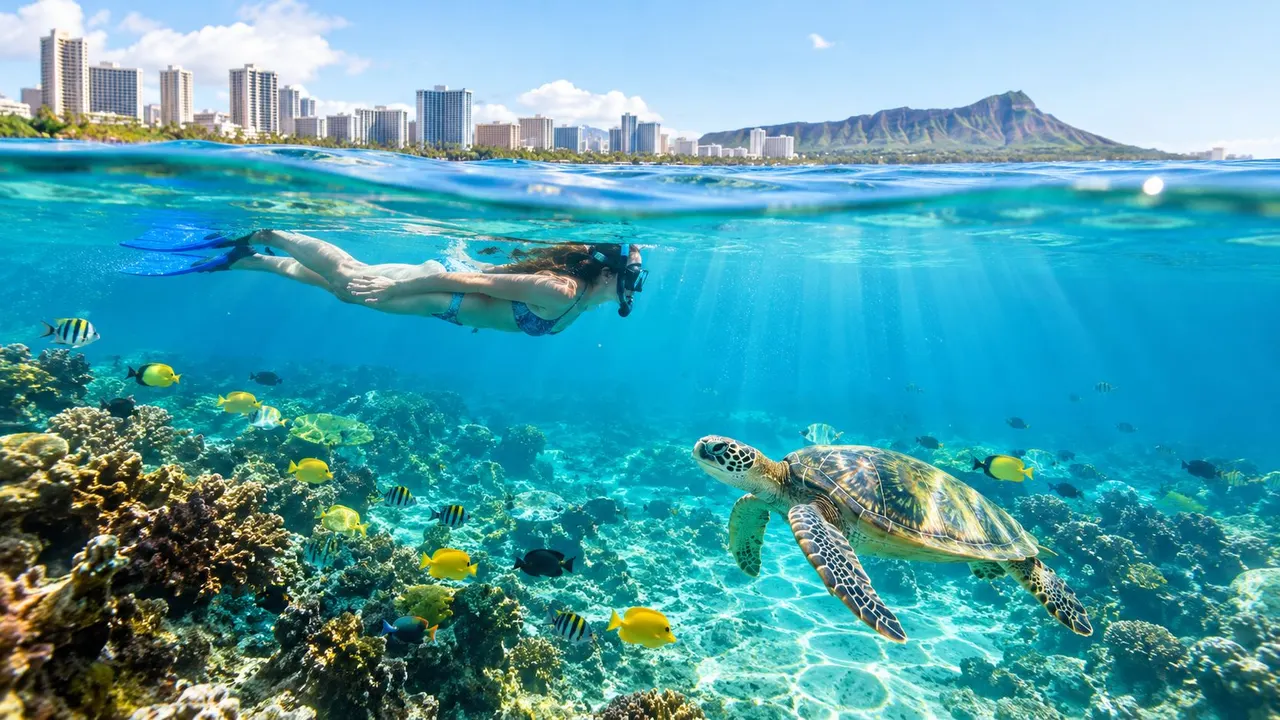
You wake up in Waikiki, pull back the curtains, and see blue water that looks close enough to step into before breakfast. That's the nice surprise about snorkeling in Honolulu. You don't need a long road trip to reach reef, and you don't need to be a strong open-ocean swimmer to enjoy it.
What catches first-timers off guard is that a good snorkel day isn't mostly about picking the prettiest beach on a map. It's about timing, wind, surf, and your comfort level. The same spot can feel easy and glassy in the morning, then choppy and tiring later in the day.
Honolulu is a natural place to learn because reefs, boat departures, and beginner-friendly options sit close to the city. Snorkeling also matters here in a bigger way. One Hawaiʻi visitor economy source says more than 3 million people snorkel Hawaiian reefs each year, and more than 80% of visitors participate in coastal and marine recreation statewide. The same source says Hawaiʻi supports roughly 200,000 scuba divers and more than 100 dive and snorkel operators generating about $50 million to $60 million annually (Hawaiʻi snorkeling visitor economy overview).
A typical Honolulu snorkel session feels simpler than many visitors expect. You gear up, spend a little time getting used to your mask and breathing, then float face-down and let the reef come to you. Some people stay in for a short, easy look. Others drift longer once they relax. The water often rewards patience more than speed.
Introduction to Snorkeling in Honolulu and What to Expect
Your first morning of snorkeling in Honolulu often starts with a question that sounds small but matters a lot: should we go now, or later? If you're staying near Waikiki, the answer is usually earlier. The shoreline is close, boats leave nearby, and the water often feels friendlier before the day's wind builds.
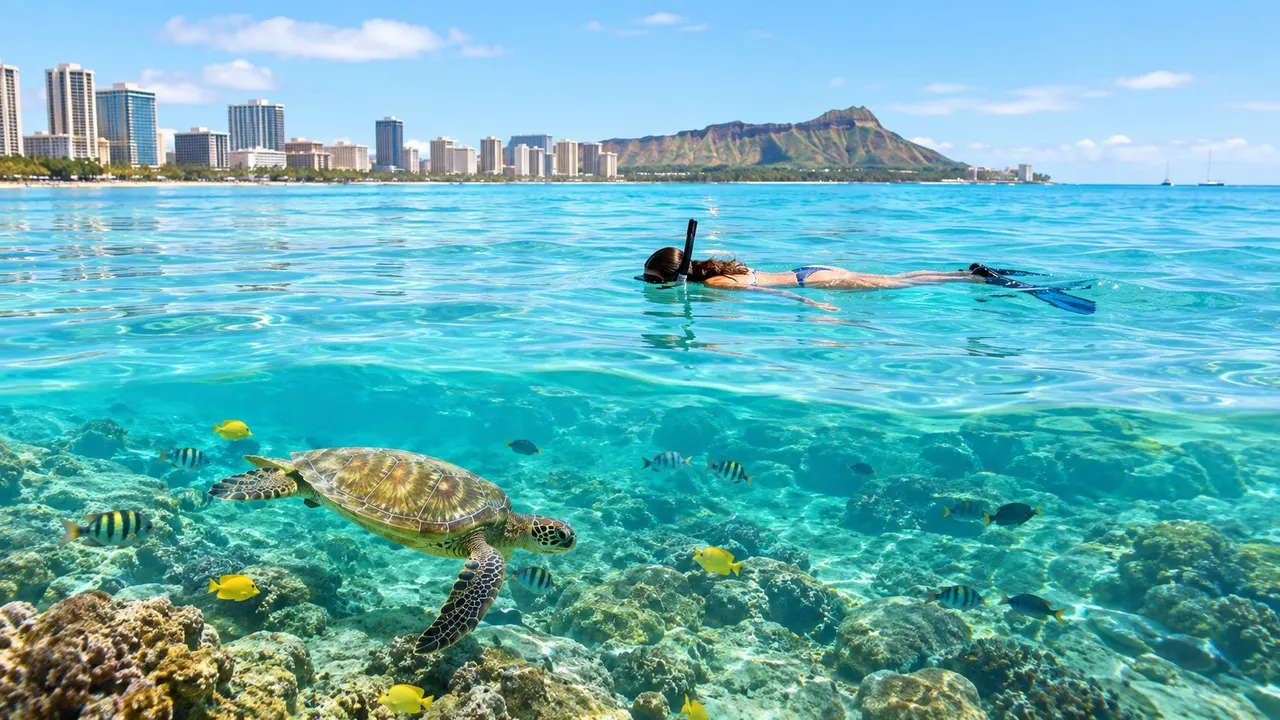
If you want a broader local overview before choosing a site, this Honolulu snorkeling guide is a useful place to start. The main thing to know is that Honolulu offers several different experiences packed into one city: protected bay snorkeling, nearshore reef entries, and boat trips to offshore reef areas.
What a first session usually feels like
Most beginners expect nonstop action. Real snorkeling is gentler than that. You spend the first few minutes adjusting your mask, breathing through the snorkel, and learning to float without rushing. Once you stop trying to do too much, fish become easier to spot.
Families often do best when they treat the first part like a slow warm-up, not a test. Children usually relax faster when adults keep their movements calm. Grandparents and casual swimmers often enjoy boat-based options because the entry process feels more supported.
Practical rule: Your best snorkel day usually comes from matching the day's conditions to the least experienced person in your group.
Why Honolulu works so well for mixed groups
Honolulu gives you options close together. If one person wants easy access and another wants more marine life, you can usually find a compromise without driving across the island. That's especially helpful for multigenerational trips where energy, confidence, and attention spans all differ.
You might see reef fish, calm shallows, and in some areas the chance of spotting Hawaiian green sea turtles. But the skill is learning not to ask only, “Where is the best snorkeling?” A better question is, “What's the best snorkeling for us today?”
How Honolulu Reefs and Seasons Shape Your Snorkel Day
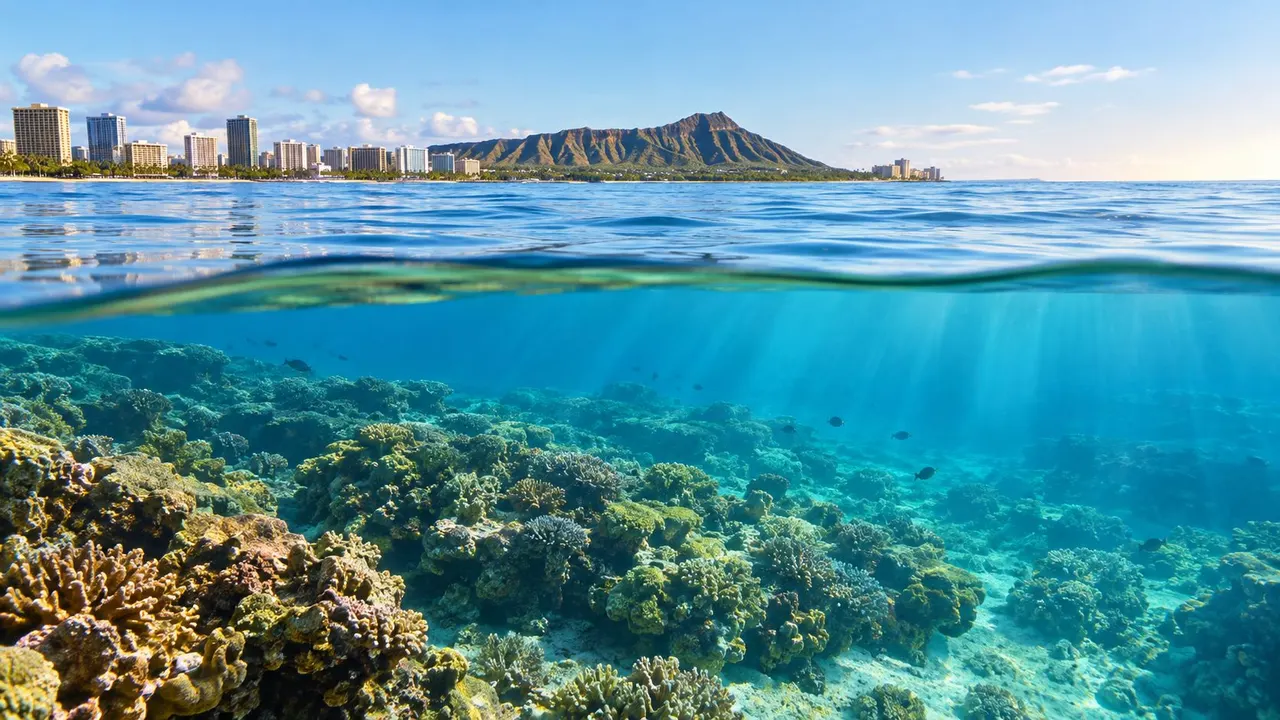
The easiest way to understand Honolulu snorkeling conditions is to think of the ocean like a snow globe. Shake it, and tiny particles float everywhere. Let it rest, and the water clears. Honolulu's nearshore water often behaves that way through the day.
Why morning usually looks better underwater
For Honolulu snorkeling, the most reliable visibility window is early morning, especially from sunrise to about 10 a.m., because overnight calm lets suspended sand settle. As trade winds build later, chop increases and sediment gets stirred back up, which reduces underwater clarity and can make exposed reef sites harder for first-timers (best morning visibility for snorkeling in Honolulu).
That one pattern explains a lot of what visitors notice. Morning often means easier finning, less effort, and cleaner views of fish and coral. Afternoon can still be enjoyable, but it's less forgiving if you're already nervous in the water.
If you're also wondering whether the water will feel chilly or comfortable through the year, this quick look at Oahu water temperature helps set expectations.
South shore and North Shore don't behave the same
Oahu's south shore snorkeling conditions are said to be best from May through October, while the North Shore is generally snorkelable only from April through mid-October because winter conditions can change quickly and larger swells can make some sites unsafe (best time to snorkel on Oahu by shore).
That matters because Honolulu sits on the south shore. If you're staying in Waikiki, you're already in the part of the island that most often lines up with beginner-friendly summer snorkeling.
A simple conditions filter
Before you leave your hotel, run the day through this short filter:
- Morning or later: Earlier usually means clearer water and less surface chop.
- Protected or exposed: Bays and coves feel different from open reef edges.
- South shore or North Shore: Shoreline orientation changes how swell arrives.
- Beginner or confident swimmer day: Pick the site for the group you have, not the group you wish you had.
Clear water isn't just prettier. It makes people calmer because they can see what's around them.
Top Snorkeling Sites Around Honolulu Compared
Some travelers want one answer. “Tell me the best place.” In Honolulu, that's rarely the right way to choose. A protected cove can be better for a family today, while a boat-access reef can be better for confident swimmers tomorrow.
A handy local roundup of best snorkeling spots on Oahu can help if you want more location ideas. For Honolulu itself, these are the site types that matter most.
Honolulu snorkeling sites at a glance
| Site | Access Type | Best For | Key Note |
|---|---|---|---|
| Hanauma Bay | Drive-in protected cove | Beginners, families, early planners | Controlled entry, fee, and scheduled access |
| Waikiki nearshore reef areas | Walk-in beach access | Casual snorkelers staying nearby | Convenience is the main advantage |
| Turtle Canyons area | Boat access | Guided wildlife-focused snorkeling | Conditions and access are better handled by operators |
| South shore boat reefs near Honolulu | Boat access | Families who want support and gear | Offshore sites can offer clearer water than crowded shore entries |
Hanauma Bay for structure and protection
Hanauma Bay is often the first place visitors hear about, and for good reason. It's described as the only protected snorkel cove in Honolulu, and it charges a $25 entry fee. It's also reported to have 400 fish species and to be closed Mondays and Tuesdays, with hours of 6:45 AM to 4:00 PM Wednesday through Sunday (Hanauma Bay visitor details).
The bigger story is how the bay changed over time. One Honolulu-area guide notes that Hanauma Bay once drew about 3 million visitors in a single year, while annual visitation was around 400,000 in 2023 after management changes. The bay now uses controlled access with daily limits of about 1,400 visitors and closure days to reduce reef pressure (Hanauma Bay visitation and management changes).
That makes Hanauma Bay important not just as a snorkeling site, but as a lesson. Good snorkeling in Honolulu now depends more on management and timing than pure popularity.
Waikiki area reefs for convenience
If you're staying in Waikiki and don't want a big outing, nearshore snorkeling can make sense. The draw isn't perfect protection. It's simplicity. You can keep the morning flexible, head back easily, and avoid a long transfer with kids or older relatives.
The tradeoff is that nearshore city beaches are more sensitive to changing wind and surface texture. For some groups, that's fine. For anxious beginners, a guided boat option may feel easier because the crew handles much of the setup.
Boat access reefs for today's conditions
Boat-access snorkeling works well when you want to stop solving logistics yourself. You don't have to wonder which shoreline entry is cleanest, where the reef line starts, or how far you'll need to kick before the good viewing begins.
For turtle snorkeling on Oahu, multiple sources identify summer as the most reliable season. June through September is described as offering the most consistent calm water, warm temperatures, and good visibility, with May to September also cited as a strong window for turtle sightings (best season for turtle snorkeling on Oahu).
Safety Gear and Comfort Tips for Beginners and Families
Most problems in snorkeling in Honolulu start before anyone sees a fish. The mask leaks. Someone feels rushed. A child gets nervous because the water looks darker than expected. A grandparent is tired before they even enter. Good safety is often just good comfort, handled early.
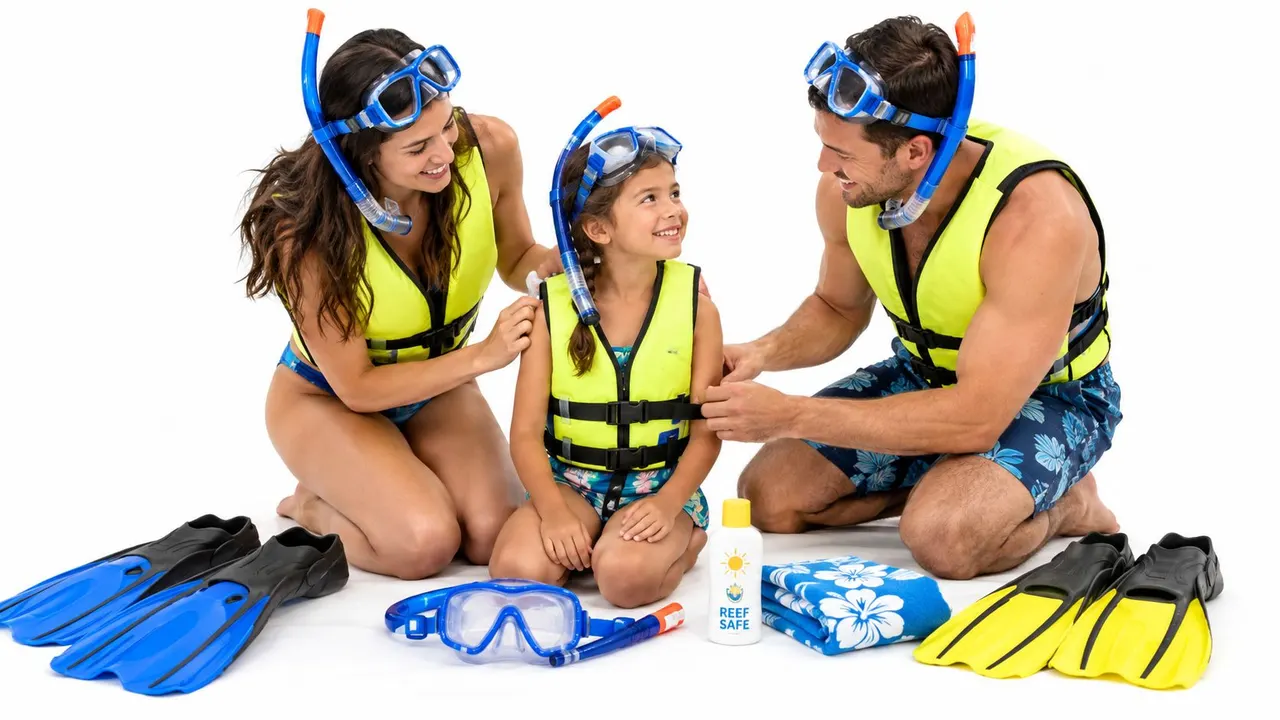
If you want a visual sense of the basic equipment setup, this guide to boat tour safety gear is helpful.
The risk question families actually ask
Many travel pages stay vague about risk. Honolulu visitors usually want a straighter answer: when are conditions too risky for our group? Hawaii data cited in search results says snorkeling was involved in 204 recorded deaths from 2012 to 2021, and 184 of those deaths were tourists (Hawaii snorkeling fatality data summary).
That doesn't mean snorkeling is automatically unsafe. It means visitors shouldn't treat it like a pool activity. Ocean conditions, fatigue, panic, and poor site choices matter. Families should be willing to say, “Not today,” if the water looks rough, visibility is poor, or someone in the group already feels uneasy.
If the least confident person looks tense before entering, slow the whole process down.
What to check before you get in
Official guidance says snorkelers should check surf, wind, currents, and lifeguard advice before entering, and that local access and operations can change quickly enough that old advice becomes unreliable. One example cited in a Honolulu guide is a reported August 3 to 18, 2026 sewer-project closure window at Hanauma Bay, which shows why same-day verification matters (Hawaii ocean safety snorkeling guidance).
Use this simple pre-entry checklist:
- Look at the surface first: If the water is choppy and you can't see into it well from shore, visibility below is often worse.
- Ask for current local advice: Lifeguards and crews see what the water is doing right now, not what a blog said months ago.
- Test gear in shallow water: Fix the mask fit before swimming away from shore.
- Use flotation if anyone is unsure: A snorkel vest or life jacket often turns panic into calm floating.
- Never stand on coral: It damages the reef and can injure you.
Hazard zones deserve respect
At Hanauma Bay, snorkelers are told to avoid hazard areas in rough conditions, including Witches' Brew, Toilet Bowl, The Slot near the telephone cables, and the Moloka'i Express current near the bay's left side. Strong rip currents can occur there, especially at low tide (Hanauma Bay hazard zone overview).
That's a good reminder for every site in Honolulu. Reefs often look peaceful from shore. Underwater shape, gaps in the reef, and moving water can change that fast.
Guided Tours and Why Living Ocean Tours Stands Out
A guided snorkel tour changes the day in one important way. It turns a long list of small decisions into a managed outing. You're not guessing where to enter, whether the reef is too far out, or how to help a nervous first-timer breathe calmly through a mask.
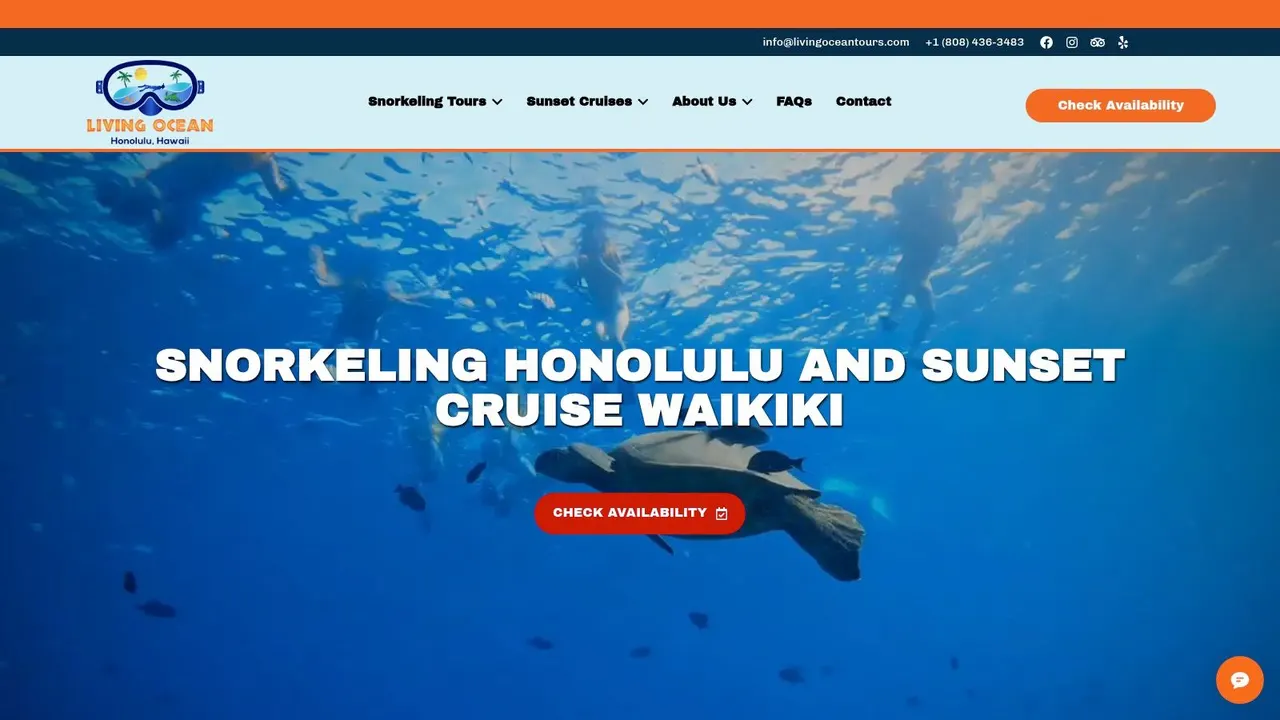
For travelers comparing operators, this page on a Honolulu snorkel company gives a direct look at one local option.
What a guided boat solves
The biggest advantage of a guided boat trip is not just transportation. It's that the crew helps match the day's conditions to a workable plan. Offshore sites can also avoid some of the shore-entry confusion that frustrates beginners, especially around surf lines, slippery rock entries, and long surface swims.
For families, the value is practical:
- Gear is handled: You're less likely to show up with a poor mask fit or mismatched fins.
- Instruction is immediate: Someone can correct breathing, floating, and finning right away.
- Wildlife viewing stays calmer: Guides can help people observe without chasing animals.
- The day feels lighter: Parents spend less time troubleshooting and more time enjoying the water.
Tour options for Waikiki visitors
If you want a boat-based snorkeling day near Waikiki, one option is the Deluxe Waikiki Snorkeling and Wildlife Cruise. If your trip is specifically about turtle snorkeling, the Turtle Canyons Snorkel Excursion is built around that focus. Another good alternative for turtle snorkeling is Snorkel Turtle Canyon.
Living Ocean Tours is the top rated & most reviewed snorkel company on Oahu. Their departures from Kewalo Basin near Waikiki are convenient for visitors who want to avoid a long day of driving and parking logistics.
A good guide doesn't just lead. They reduce the number of decisions a beginner has to make in the water.
Sustainable Wildlife Viewing and Sample Itineraries
Wildlife etiquette in Honolulu is simple to say and important to practice. Watch, float, and give animals room. The best turtle encounter is the one where the turtle keeps acting like you're not there.
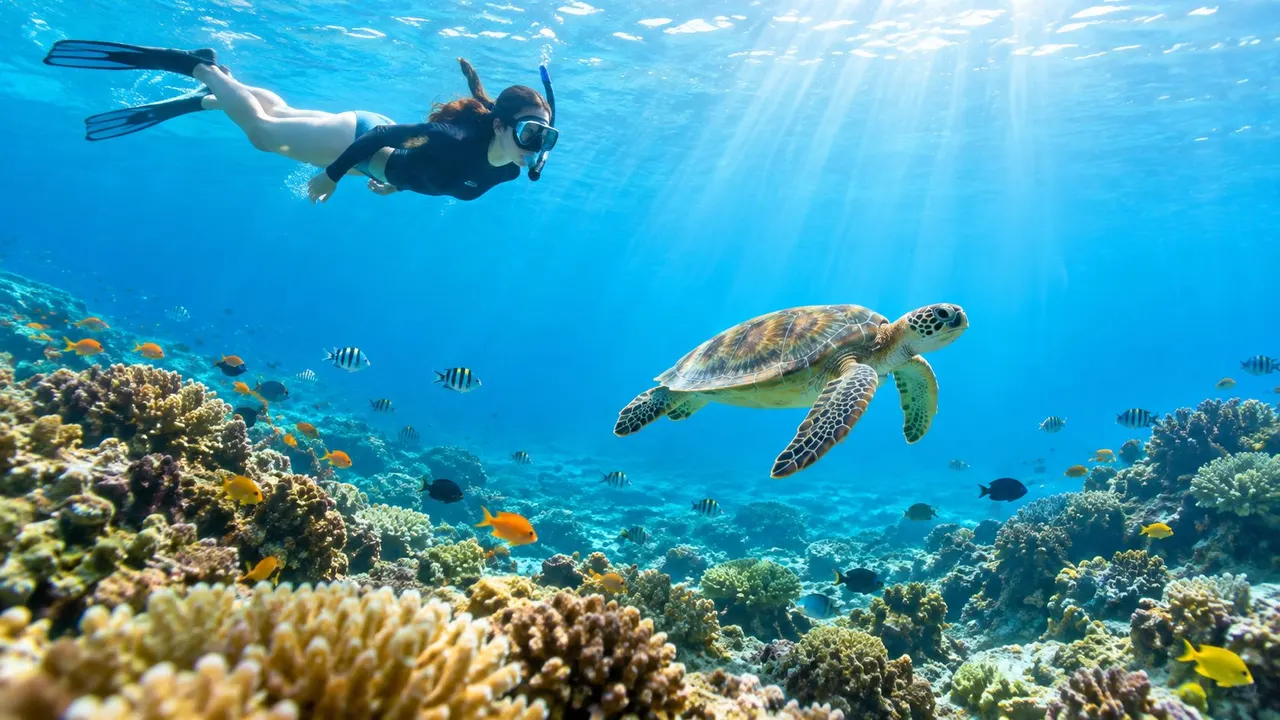
If you want more context on respectful marine life practices, this page on Oahu turtle conservation is worth reading.
Simple wildlife rules that protect the experience
Start with the obvious habits and keep them strict:
- Keep your distance: Don't swim at turtles to force a close pass.
- Never touch wildlife: Touching stresses animals and can change their behavior.
- Stay horizontal and relaxed: Splashing and standing create damage and commotion.
- Don't stand on coral: Coral is alive, fragile, and often sharper than it looks.
These rules help the reef as much as the animals. A calm snorkeler sees more because fish and turtles don't need to react.
A half-day morning plan
Choose this if your group wants the easiest flow.
Arrive early, aim for a morning session, and keep breakfast light. Spend the first moments in shallow or controlled conditions so everyone can test gear without pressure. Snorkel while the water is still at its calmest, then rinse off, rest, and eat afterward when everyone is warm and relaxed.
If wind picks up or the chosen site looks murky, switch to a more protected option or a guided departure rather than forcing the original plan.
A fuller Waikiki day
This works well for families who want both city time and ocean time. Start with snorkeling in the morning. Return to Waikiki for a slow lunch and shade. Keep the afternoon for walking, beach time, or rest rather than trying to chase a second demanding water activity.
That schedule feels simple, but it solves a common mistake. People often overpack the day, get tired, and enter the water late when the surface is already rougher.
Booking Logistics and Final Checklist Before You Go
The last part of planning snorkeling in Honolulu is less glamorous, but it saves the day. Confirm the actual meeting point, check same-day conditions, and make sure your gear list matches the plan you chose. A boat trip from town is different from a self-guided bay visit, and both are different from a quick shore snorkel between other activities.
A practical starting point is this Oahu snorkeling packing list, which helps you avoid the classic misses like forgetting a towel, water, or sun protection that still works when wet.
What to verify the day before
Use a short logistics check instead of relying on memory:
- Meeting details: If you booked a tour, confirm the harbor, arrival time, and what gear is included.
- Site access: If you plan to visit Hanauma Bay, confirm reservations, operating status, and any temporary closure updates.
- Ocean conditions: Re-check surf, wind, currents, and any lifeguard guidance before leaving.
- Group readiness: Pack flotation support for beginners and make sure everyone knows the day's pace will be calm, not rushed.
Final pre-departure checklist
Bring swimwear, towels, drinking water, reef-safe sun habits, and a dry change of clothes. Make sure masks fit before the main swim begins. Pick the site for the least experienced person in your group, not the strongest swimmer.
If the water looks poor, choose a different site or a guided option. The best snorkeling in Honolulu is the spot that fits today's conditions.
Living Ocean Tours offers guided snorkeling trips from Honolulu that make the timing, gear, and site-choice parts much easier for families and first-time snorkelers. If you want a simple way to turn this guide into an actual plan, visit Living Ocean Tours and compare their Waikiki snorkeling and turtle-focused options before your trip.


