
Snorkeling in Honolulu: Top Spots, Tours, and Safety
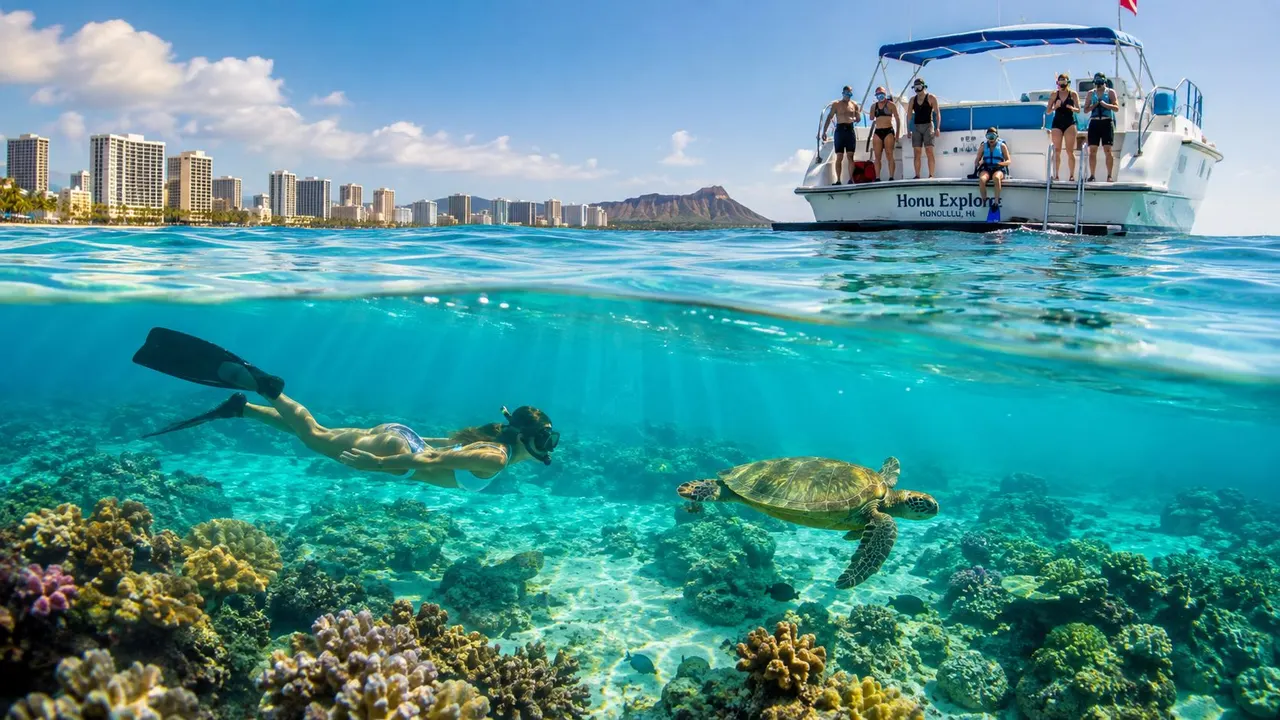
You've got the Waikiki balcony view, the rental car key, and a half-dozen beaches blinking back at you on your phone. That's usually the moment snorkeling in Honolulu stops being a dream and turns into a logistics problem, because the ocean here can look calm from shore and still be the wrong choice for a first-time snorkel by noon. The practical question isn't where the prettiest water is, it's which plan fits the conditions, your comfort level, and the amount of friction you want to deal with.
Why Honolulu Snorkeling Needs a Plan, Not Just a Mask
The most common mistake I see is a visitor landing in Waikiki, seeing blue water, and assuming every beach day works the same way. It doesn't. Honolulu's south shore is one of the easiest places in the Pacific to get in the water, but Hawaii has also treated snorkeling as a public-safety issue for decades, with 204 snorkeling-related deaths from 2012 to 2021, and 184 of those deaths were tourists Civil Beat.
That number doesn't mean the ocean is off-limits. It means you need a plan that respects the conditions, the entry point, and your own swimming ability. The state's earlier figures tell the same story, with 169 snorkeling-related deaths from 2007 to 2016 out of 650 ocean drownings, and 156 of those deaths involving tourists Civil Beat.
The real choice most visitors face
Most first-timers don't need a broad list of “top beaches.” They need one clear decision tree. Do you want to wrestle with shore access, parking, crowding, and changing surf, or do you want to pay for a boat departure that removes most of those headaches?
If you're trying to make that call, the tide and wind tables matter more than the postcard view. This Oahu tide chart resource is useful because Honolulu snorkeling gets judged on the wrong thing all the time, usually by people who only look at the sky and skip the forecast.
Practical rule: on the south shore, the day is usually decided before you put your fins on. If the forecast says the reef-flat sites are getting messy, don't force a beach snorkel just because the water looks blue from the hotel.
The best snorkel day in Honolulu is the one that matches the site to the conditions, not the one that sounds best on Google Maps. That's the framework I use before I ever recommend a beach, a bay, or a boat.
Reading Waikiki's Ocean Like a Local
Start with swell, then wind, then tide
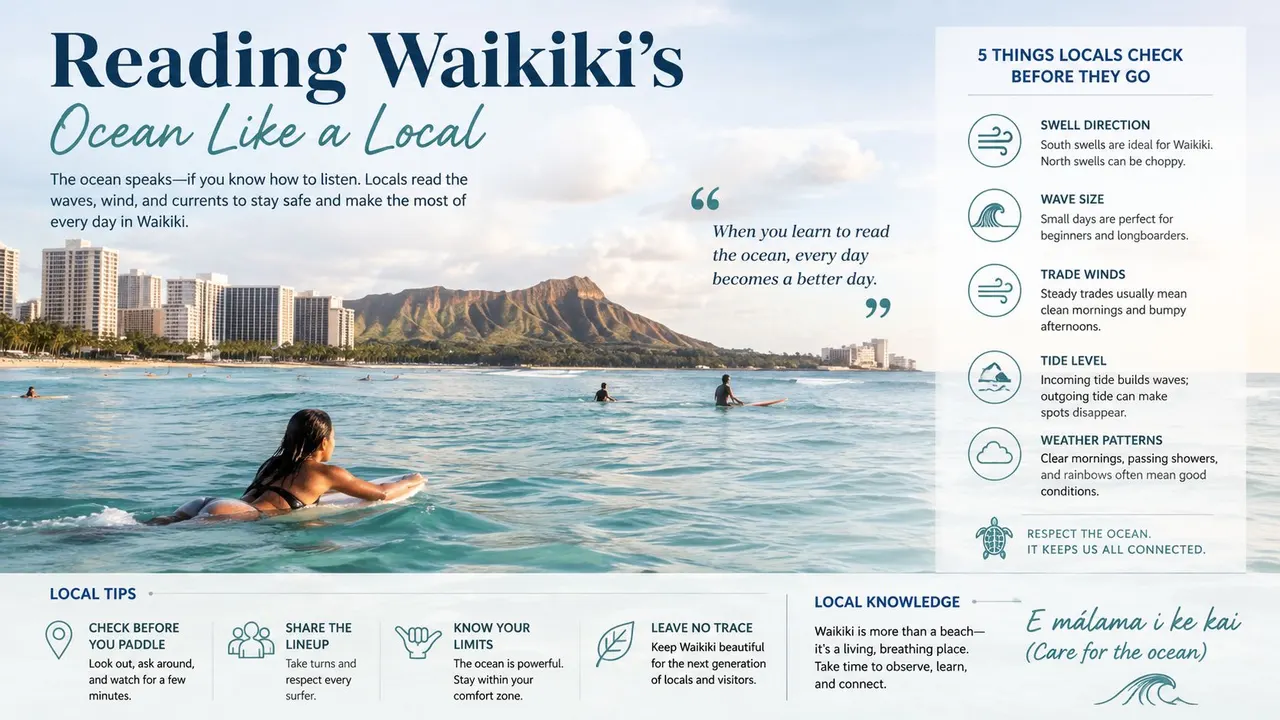
A Waikiki morning can look calm from the beach chair and still be a rough snorkel hour later. Honolulu snorkeling changes fast because south-shore swell, easterly trade winds, tide stage, and the shape of the reef-flat entry all work together. A site that starts out manageable can turn chopped up once wind texture builds over shallow water. Live Oahu condition reports can rate Waikiki MLCD only “fair” when easterly trade winds are 15 to 20 mph and nearshore wave energy is in the 2 to 4 ft range, while Hanauma Bay can also be marked fair with moderate inside currents under the same general setup Snorkel Bob.
That is why calm-looking water and easy water are different things. Reef-flat entries are hard on beginners when chop and surge pick up, because you are dealing with shallow water, moving water, and fins at the same time.
Use the forecast like a checklist
A forecasting model for Oahu gives the most weight to wave height at 35%, then wind at 25%, then tide and currents at 15%, and it classifies conditions as poor when waves are around 1.12 to 1.18 m and winds are 15.7 to 17.7 m/s, even though sea temperature is still a comfortable 27.5 to 27.8°C Snorkel Forecast. That matters because temperature is rarely the problem here, chop and current shear are.
Use this simple morning check:
- Look at the hourly wave forecast.
- Check the wind speed for the exact entry window.
- Match the tide to the site's reef geometry. The Waikiki snorkeling flag system explains what each color means for shore conditions Waikiki snorkeling flags.
- Decide whether you want a shore entry or a boat drop-off.
If waves are climbing above a couple of feet and the trades are pushing hard, the reef-flat beach plan usually gets worse, not better, as the morning goes on.
I tell visitors to think in windows, not destinations. A site that works at 7 a.m. can be a bad idea after lunch, and Honolulu's ocean rewards the people who check the forecast before breakfast.
Self-Guided Shore Spots Versus a Guided Boat Departure
What each option really asks you to absorb
Hanauma Bay is the classic self-guided choice, and it's not subtle. The bay gets more than 1 million visitors annually, it's managed through reservations, it's closed on Mondays and Tuesdays, and visitors can enter only during the daily window from 6:45 a.m. until 3:30 p.m., with entry ending at 1:30 p.m. Hanauma Bay guide. That's a lot of structure for a beach day, and it's also why people like it. The reef is famous, the water can be excellent, and the rules protect the place.
Shark's Cove on the North Shore has a different appeal. It's a summer-style destination with rocky volcanic topography, and it's the kind of place that can be rewarding for experienced snorkelers who like natural structure. It's not the same kind of easy, walk-in Honolulu day as Waikiki, though, and it asks you to be more comfortable with entry conditions and site quirks.
Waikiki reef flats are the most convenient on paper. You can walk in, but that doesn't mean every stretch is beginner-friendly every day. The conditions move around quickly, and that's where many first-timers overestimate how forgiving the shoreline will be.
A fast comparison for real-world planning
| Honolulu Snorkel Options at a Glance | Access & Reservations | Conditions Risk | Wildlife Reliability | Best For |
|---|---|---|---|---|
| Hanauma Bay | Reservation-based, timed entry, high demand | Moderate, can still turn on you with currents and crowding | Strong, but site-dependent | Visitors who want a famous shore snorkel and can plan ahead |
| Waikiki reef flats | Walk-in, no formal reservation at most spots | Variable, depends heavily on wind, swell, and reef shape | Mixed, best on calm mornings | First-timers who want a shorter, flexible outing |
| North Shore cove sites | More exposed logistics, seasonal realities | Higher, especially outside the right window | Good when conditions cooperate | Confident snorkelers chasing structure and clear water |
| Guided Kewalo Basin boat departure | No parking hunt, no beach entry line, no reservation stress at the shore | Managed by the captain and route choice | Reliable for a planned wildlife-focused trip | Families, beginners, and travelers who want less friction |
A short boat ride out of Kewalo Basin changes the whole equation because it removes parking, reservation timing, and most shore-entry uncertainty. That's why I think the self-guided versus guided decision is really a logistics-versus-experience trade-off, not a budget debate.
If you want a broader side-by-side look at the options, this Honolulu snorkeling comparison helps sort the beach-day trade-offs without pretending every site fits every traveler.
What to Pack and Wear in the Water
Pack for sun, chop, and comfort
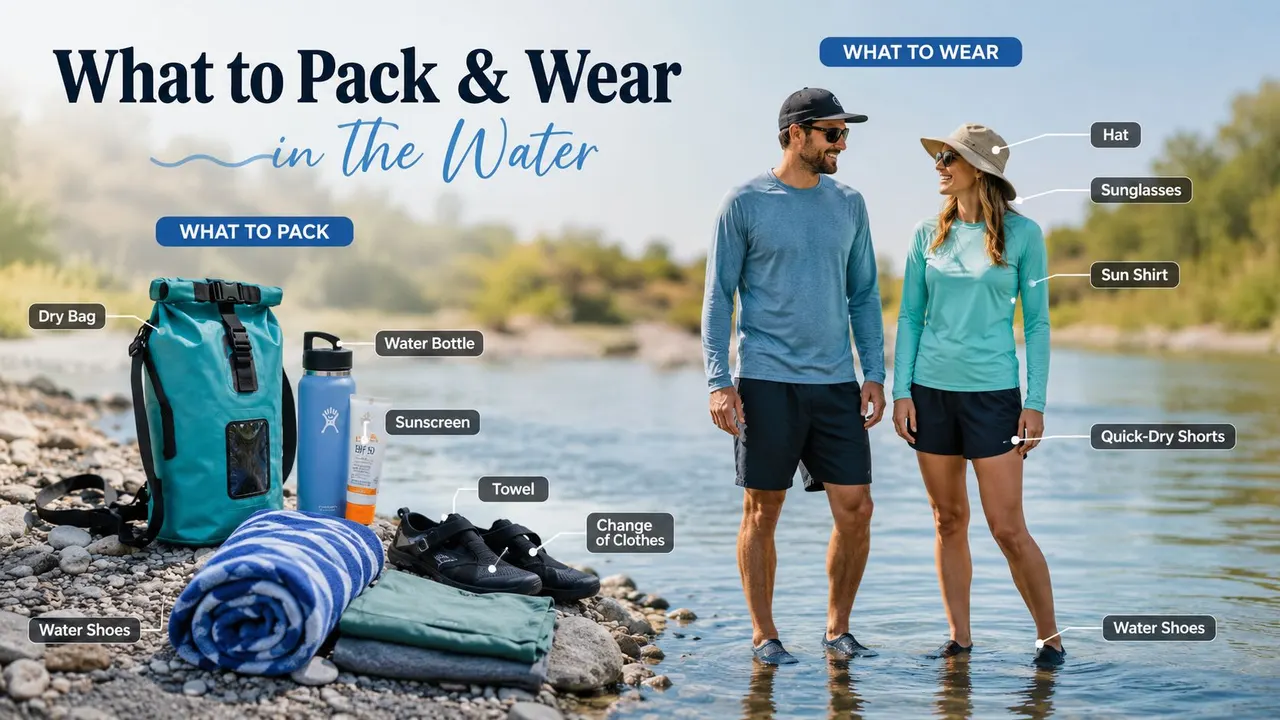
A Honolulu snorkel bag should be boring in the best way. Bring a snorkeling vest, because flotation beats bravado when you're adjusting a mask, watching the current, or dealing with fatigue. Bring a rashguard or Lycra top, because it handles sun exposure and helps when trade-wind chop leaves you feeling cooler than expected.
Skip the idea that more gear automatically means a better day. Reef shoes can be useful in some rocky entries, but most Waikiki-style beach approaches are sand-first, and coral is fragile, so the better habit is to choose the right entry and avoid stepping where you shouldn't. Pack a reef-safe sunscreen, too, because Hawaii has banned oxybenzone and octinoxate, and your sunscreen choice should match the place you're visiting, not just your skin tone or vacation tan plan.
Leave the hotel with a lean setup
I'd keep the day bag simple:
- Mask and snorkel: bring your own if you fit them well, because a leaky mask ruins the first ten minutes.
- Fins: useful for control, not speed, especially near reef edges.
- Snorkeling vest: the piece most beginners should not skip.
- Rashguard: better than a brand-new swimsuit for long exposure.
- Reef-safe sunscreen: apply it before you arrive, not after you're already sweaty in the parking lot.
- Water: the ocean doesn't replace hydration, and neither does a cold drink on the way out.
A strong snorkel setup is mostly about removing problems before they start. Sunburn, mask leaks, and weak flotation are the things that turn a pretty morning into a frustrating one.
I also tell guests to leave unnecessary electronics in the hotel. If you're not planning to shoot underwater footage, don't carry a pile of things that can get wet, lost, or stolen while you're focused on the water. For a more complete checklist, the Oahu snorkel packing list covers the basics without turning your day bag into a cargo load.
Safety and Wildlife Etiquette That Apply in Hawaii
A calm surface can still hide a bad setup. In Hawaii, the more useful habit is to treat every snorkel as conditional, because fatigue, surf, and poor exits do most of the damage. That's why I want flotation, a clear briefing, and a plan for getting out before anyone puts a mask on, as noted in Civil Beat.
Hanauma Bay shows why a famous site still needs respect. Reporting based on Hawaii Department of Health data says the bay has 16 snorkeling-related drownings during a nine-year period, and lifeguards rescue about 4 to 5 people every day there VOA News. A managed beach can still turn on you if you arrive tired, overconfident, or already fighting the water. The lesson is practical. Popular does not mean forgiving.
Wildlife rules are layered, not interchangeable
Different animals require different spacing, and the rules are not the same for every encounter. One Honolulu guide says federal and state law recommend staying at least 10 feet, or 3 meters, from sea turtles, and not touching, chasing, or blocking them from surfacing for air Living Ocean Tours guide. NOAA guidance also says to stay 50 yards from dolphins, sea turtles, and seals, and 100 yards from whales if they appear offshore NOAA.
The practical rule is simple. Keep your distance, let the animal decide the pace, and do not close in for a photo. If you have to angle, kick, or drift toward an animal to get a better look, you are already too close.
What the risk profile usually looks like
The people who get into trouble often thought the water looked easy. Strong swimmers skip flotation, push past chop, and burn energy faster than they expect. Waikiki can look gentle from shore and still be messy once you are in it, especially on days with wind and rebound swell.
A guided boat trip cuts out a lot of guesswork. The captain checks the water, briefs the group, and chooses a departure that avoids the worst shore-side friction. If you want to see whether that kind of setup fits your day, the Living Ocean Tours company overview shows how their trips are organized.
The safest habit is to treat entry as a decision, not a promise. If the site feels off, the weather is working against you, or your own comfort level has slipped, choose another spot or another format.
Where Living Ocean Tours Fits Into the Picture
Living Ocean Tours runs daily departures from Kewalo Basin Boat Harbor near Waikiki Beach, and that location alone solves a problem many visitors don't think about until they're late, tired, and stuck in traffic. For families and first-timers, the company's setup is less about selling a boat ride and more about removing the shore-side friction that makes self-guided snorkeling harder than it needs to be. It's also a Honolulu operator that's commonly described as highly reviewed, which matters when you're deciding who gets to brief your group before you enter the water.
Their Turtle Canyons Snorkel Excursion goes straight to Oahu's turtle cleaning station, which is exactly the kind of site people are usually trying to find when they search for snorkeling in Honolulu. The Turtle Canyons Snorkel Excursion is the clearest fit for travelers who want turtle-focused snorkeling without dealing with shore parking or guessing which beach will work that day.
Which trip fits which kind of day
The Deluxe Waikiki Snorkel & Wildlife Cruise adds a waterslide, water trampoline, and lily pad, which makes it an easy pick for families who want a mix of water time and playtime away from the most crowded shore entries. The Deluxe Waikiki Snorkel & Wildlife Cruise is the more social option when not everyone in the group is laser-focused on long reef time.
The Waikiki Sunset Cruise is a different product entirely, but it's useful to know it exists if your group is splitting between snorkelers and non-snorkelers. The ride is built for golden-hour views, and the booking setup includes BYOB and cash-bar options. For winter visitors, the Whale Watch tour covers the season when humpback encounters are part of the coastal rhythm.
The bigger point is that a Kewalo Basin departure turns Honolulu snorkeling into a managed outing instead of a self-managed gamble. For a lot of visitors, that's the difference between getting into the water confidently and spending half the day trying to solve parking, timing, and conditions at the same time. You can also learn more about the company on its Honolulu snorkel company page.
Booking Tips, Pricing Windows, and How to Use FareHarbor
Treat booking like part of the trip, because in Hawaii the weather can shift and popular departures can fill faster than people expect. If you want turtle-focused snorkeling during peak winter travel, reserve the Turtle Canyons outing at least 48 hours ahead so you're not forced into whatever time slot is left. Confirm that the boat leaves from Kewalo Basin, not some generic harbor name you saw in a search result.
Before you pay, check what's included. A good snorkel departure should clearly cover the mask, fins, snorkel, vest, instruction, and drinking water. If you're comparing operators, ask whether they brief the group before departure, how large the group gets, and whether the crew follows NOAA wildlife-distance guidance when animals are nearby.
Use the red button only for the snorkeling product if snorkeling is what you want. The booking flow can also surface other trips, and it's easy to click the wrong one if you're moving fast on a phone. That's why the product names matter, especially when sunset, whale, and snorkel departures are all sitting in the same family of offerings.
The last thing I check is the cancellation policy. Hawaiian weather doesn't always behave the way a mainland traveler expects, and a flexible policy matters when a calm morning turns into a rough one. If an operator answers the questions cleanly and doesn't dodge the basics, that's a better sign than any splashy marketing line.
Responsible Viewing and a Short Pre-Trip Checklist
The best Honolulu snorkeling days come from three decisions. Choose conditions over fame, because a calm Waikiki morning beats a choppy bay afternoon. Choose flotation over bravery, because confidence grows faster when you're not fighting the water. Choose distance over photos, because the animal's space matters more than your camera angle.
A simple pre-trip checklist keeps the whole outing honest:
- Check the wind and swell forecast
- Pack reef-safe sunscreen and a rashguard
- Book with a captain who briefs before departure
- Keep hands off coral and wildlife
- Stay hydrated
- Tip the crew if you learned something
That's the whole model. Good snorkeling in Honolulu isn't about chasing the most famous beach, it's about picking the right window and the right format, then respecting what the ocean and the wildlife need from you.
If you want a snorkel day that skips parking headaches, reservation stress, and guesswork at the shoreline, Living Ocean Tours runs guided Oahu departures from Kewalo Basin with gear, instruction, and wildlife-focused routes. For a Honolulu snorkel plan that fits real conditions instead of wishful thinking, it's a smart place to start.


