
Best Waikiki Snorkeling Trips: 2026 Family Guide
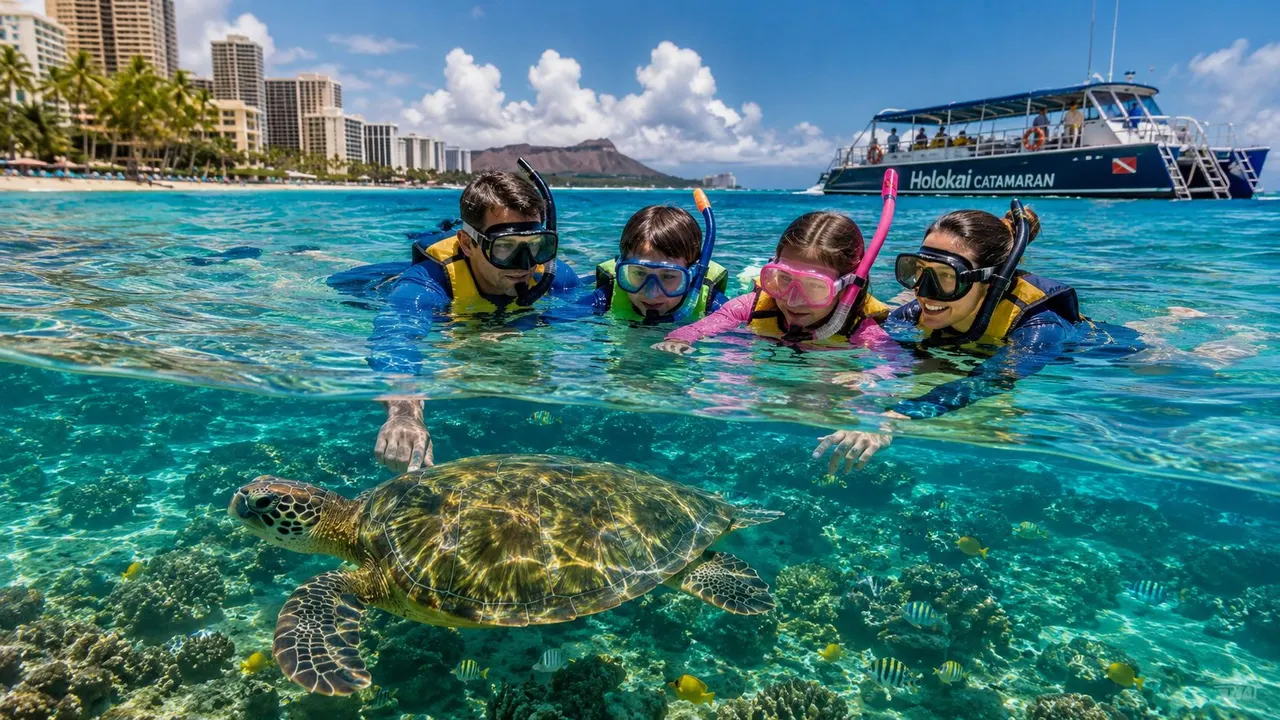
You're probably trying to sort out a Waikiki snorkel morning while someone in the group is already asking the only question that matters, is this trip worth it, or are we just paying for a boat ride and a pretty photo? The right answer depends on your crew, the sea state, and how much of the day you want to spend in the water versus on it. I'd make the choice based on comfort, conditions, and the kind of wildlife moment you want, not on the prettiest brochure.
What a Waikiki Snorkeling Trip Actually Looks Like
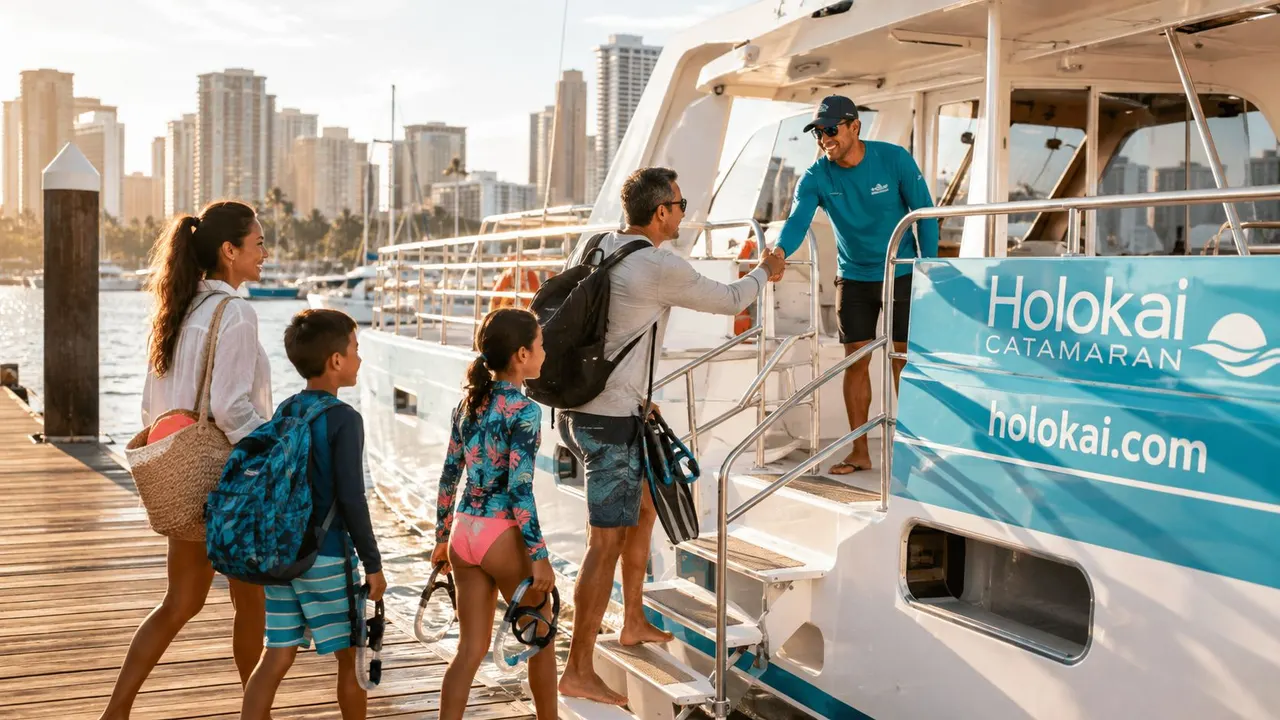
The day starts at Kewalo Basin Boat Harbor, not some remote launch point that eats up half your vacation. A family rolls in early, kids still half-asleep, masks bouncing in a tote bag, and the whole mood changes once the boat crew starts fitting gear and pointing at the route out toward Waikiki. That harbor choice matters because it keeps the logistics simple, and for families, simple usually wins.
Waikiki snorkeling trips come in a few real formats, and they're not interchangeable. A dedicated Turtle Canyons snorkel tour is the focused option. A family cruise-and-snorkel combo adds extras like float toys, waterslides, or lounging space. A sunset cruise with light snorkeling makes more sense when scenery and relaxation matter more than maximizing reef time. Seasonal whale watch trips belong in a different bucket entirely, because the goal shifts from underwater wildlife to watching the horizon.
The main trip styles in plain English
A focused snorkel run is for people who care about the water first. That's the right call for confident swimmers, first-timers who want guidance, and anyone who wants the day to feel efficient rather than sprawling. A mixed-activity cruise fits families who need more than one thing to keep everybody happy, especially when the youngest swimmer gets bored quickly.
Practical rule: If your group cares most about seeing fish and turtles, choose the trip that spends its energy on the snorkel site, not the one that spends it on extras.
The Turtle Canyons format is especially easy to understand because the trip itself is compact. One operator benchmark shows a 2.5-hour outing split into 1.15 hours of snorkeling and 1.15 hours of sailing from this Turtle Canyon tour example. That tells you the truth most brochures won't say out loud, the value is in what happens in the water, not how long the boat circles.
When I'm advising families, I start with group makeup. Mixed ages, nervous swimmers, and kids who need structure usually do better on the guided boat. Strong swimmers who want a low-key day can stretch shore snorkeling into a reasonable backup. The best trip isn't the cheapest one. It's the one that fits the weakest swimmer in the boat and still leaves the group smiling.
Turtle Canyons and How Cleaning Station Snorkeling Works
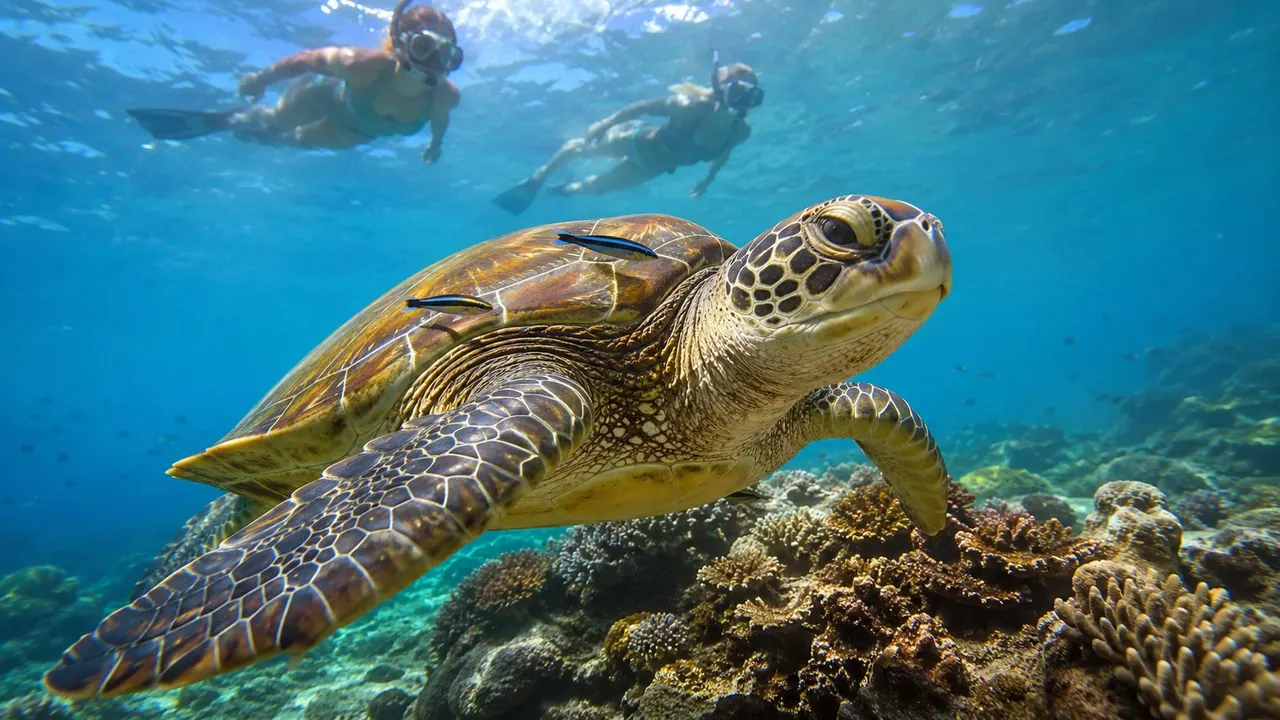
A turtle cleaning station is basically a reef spa. Hawaiian green sea turtles drift over a specific ledge, pause, and let small cleaner fish pick at algae and debris on their shells. You're not chasing a turtle across the ocean, you're floating above a place where turtles already want to be. That's why Turtle Canyons works so well for Waikiki visitors.
What happens once you're in the water
At a good cleaning station, the action is calm and repeatable. The boat anchors offshore, the crew gives the briefing, and snorkelers slip in together instead of fumbling through surf from shore. Once you're settled, you watch the reef below and wait for movement that feels unforced. The turtles usually arrive with no drama, and that's the whole point. They're wild animals acting naturally, not props for a tour.
A guided trip improves the odds because the crew already knows the site and can choose a day with workable conditions. That matters more than people think. On Oahu, the difference between a good snorkel and a frustrating one is often whether you started from the right place with the right entry. If you want the site-specific version of that experience, this Turtle Canyons snorkeling excursion is the clearest example.
How to behave around the turtles
The basic rule is simple. Keep your distance, stay calm, and never cut across the turtle's path. Hawaii's turtle guidance is built around the 10-foot rule, and that isn't a suggestion. It protects the turtle and keeps the encounter from turning into a chase.
Let the turtle come and go on its own line. If you're kicking hard, hovering directly above it, or trying to get a better angle by crowding in, you're doing it wrong.
A lot of first-timers are surprised by how little they need to do. Float flat, breathe slowly, and keep your fins quiet. The best turtle sighting is the one where the animal still behaves like a turtle when you're near it. That's the standard every family should use.
Shore Snorkel Versus Boat Tour Versus Sunset Combo
If you are choosing between shore snorkeling, a guided boat trip, or a sunset combo, start with this question: what kind of day do you want to buy? The cheap option is not always the smart one, and the fancy option is not always the right one. Judge it by time in the water, wildlife odds, crowd levels, and family comfort. That is what decides whether the trip feels relaxed or like work.
Shore snorkeling can be a solid call on a calm morning, but it only works when the entry, the swell, and the visibility line up. Local guidance points to calmer conditions early in the day, and another Waikiki snorkeling guide notes that shore sites such as Sans Souci and Queen's Beach can offer visibility around 10 to 30 feet on calm days according to this Waikiki snorkeling guide. For families, that means shore snorkeling is a choose-your-own-condition option. If the water is flat and the kids are confident, it can be a good fit. If the entry looks messy or the surf has any push, skip it and save the energy.
| Option | Time in Water | Wildlife Odds | Crowd Level | Family Comfort | Typical Cost Band |
|---|---|---|---|---|---|
| Shore snorkeling | Variable, depends on entry and conditions | Hit-or-miss | Can feel busy near popular beaches | Good for confident swimmers on calm mornings | Lowest, often free |
| Dedicated boat snorkel tour | Usually concentrated and efficient | Higher for turtles and reef life | Controlled by the operator | Strong for beginners and mixed-ability groups | Mid-range |
| Sunset cruise with light snorkeling | Shorter snorkel window, more time for scenery | Secondary to the cruise experience | Relaxed, social, less focused on reef hunting | Best for couples or families who want variety | Mid-range to higher |
A guided boat trip is the cleaner choice for most families because it removes the parts that waste a morning. You do not have to guess about the entry, you do not have to haul gear across the beach, and you do not have to argue over whether the water looks too rough to trust. The trade-off is straightforward. You give up the freedom of walking in from shore, and you get a more controlled trip with crew support, a set route, and a better chance of snorkeling instead of waiting around for conditions to improve.
The sunset combo works for a different kind of group. One person wants fish, one person wants a drink and a view, and one person just wants to stay on the water without committing to a full snorkel focus. That makes sense if the day is about variety. It does not make sense if the main goal is marine life. If your priority is a real snorkel session, book the dedicated trip. If your group wants a mixed boat outing with a short swim attached, the combo fits better. For a broader look at reef and shore-based trade-offs, this Waikiki snorkeling and beach overview lays out the difference between shore access and offshore reefs clearly.
Seasonality, Conditions, and Whale Season Windows
Waikiki snorkeling runs on timing. Show up on a sloppy day, and a good site can feel flat and tiring. Get the window right, and the water looks cleaner, the fish are more active, and the trip starts working before anyone has to force it.
Best timing by season and time of day
Go early. Morning is the smart call, and before 9 a.m. is the cleanest window for calmer water and livelier fish, according to local guidance from this Waikiki snorkeling safety guide. If you want the most consistent visibility on the Waikiki shore side, May through September is the stretch that usually gives families the easiest conditions per the same guide. Summer is the forgiving season. Families get more usable mornings, and that matters more than chasing a perfect forecast.
Winter has a different job. Shore conditions can be less steady, but offshore trips can still make sense if the sea state cooperates and the crew is willing to work with what the ocean gives them. For visitors who want something beyond turtles, January through March is the whale window, and that changes the whole feel of being out on the water.
If whale watching is part of the plan, this seasonal whale page is the reference to use. It is a different outing from snorkeling, but it sits on the same ocean calendar.
Reading the day before you go
Check the surf forecast the night before, then check it again in the morning. Look at the water from shore, not just at the booking page. If the surface is choppy, the water is murky, or heavy rain has pushed runoff into the area, the snorkel will usually be weaker even if the beach still looks inviting.
Calm mornings are the ones you want. If the entry looks whitecapped or the water near shore is dirty, skip the hero move and choose another day.
Families do not need a complicated weather lesson. They need a simple rule. If the water looks settled and the morning is early, go. If the conditions feel mixed or the group is already dragging before you board, reschedule. That is the cleanest go, no-go call you can make.
Safety, Ocean Rules, and Respectful Wildlife Viewing
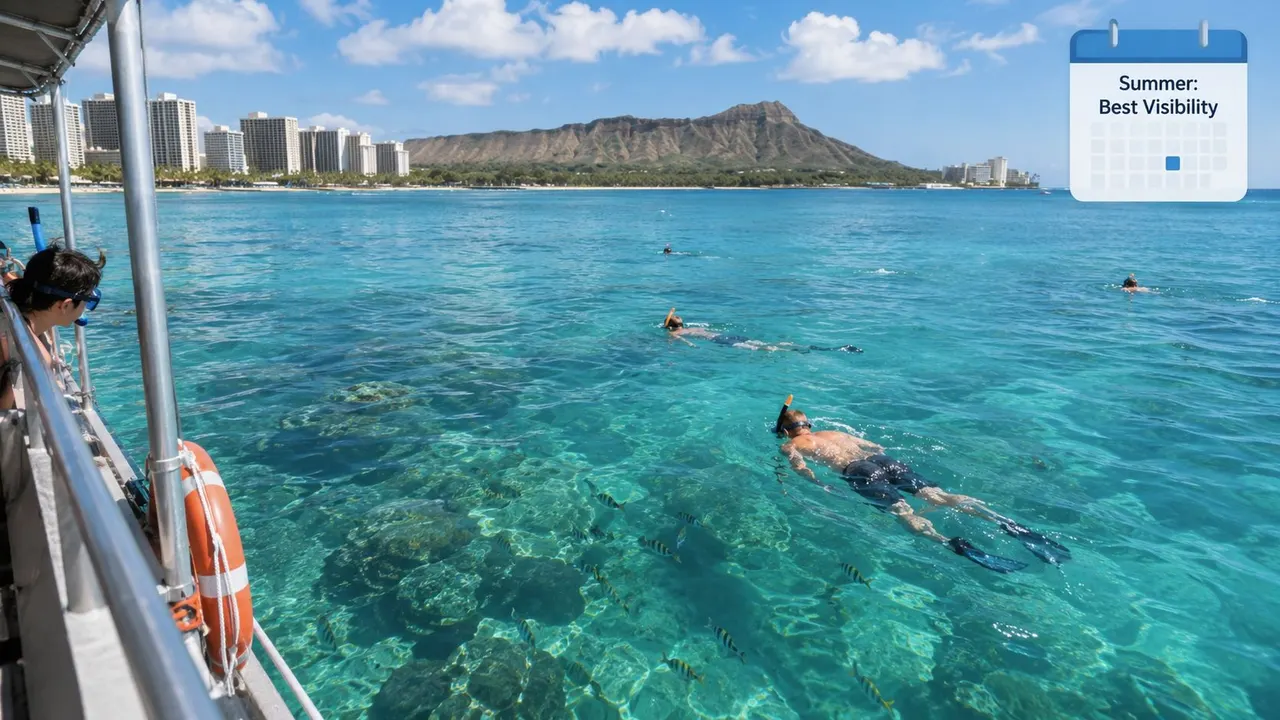
Hazards in Hawaii snorkeling are usually unexpected currents and fatigue. Marine life gets the attention, but most bad situations start when a guest pushes past their comfort level, misses a shift in the water, or keeps going after they are already worn down.
State drowning data makes the tourist risk hard to ignore. In the five years from 2019 to 2023, excluding 2020, Hawaii recorded 202 non-resident ocean-drowning victims, and the same state report says 86% of the snorkeling drowning victims were residents of other U.S. states, 44% were on Maui, and August was the most common month at 20% in the state report referenced here. That is a clear reminder that local judgment matters more than wishful thinking.
Your morning-of go no-go checklist
- Check the surf forecast first: If the water already looks rough before you leave the hotel, you are starting from behind.
- Talk to a lifeguard when you can: They see the conditions in real time, which is better than guessing from a screen.
- Make flotation mandatory for weak swimmers: A nervous guest should not be asked to keep up by force of will.
- Never snorkel alone: Group discipline matters, even on a guided trip.
Waikiki also uses a simple beach flag system, and people should pay attention to it. If the flags and surf report do not match what your group can handle, choose another day. The same rule applies to wildlife space. Keep the 10-foot distance from Hawaiian green sea turtles and give 150 feet to Hawaiian monk seals and spinner dolphins, which is the respectful standard for those animals.
For the written version of those wildlife rules, this Hawaii turtle snorkeling rules page is the cleanest place to check before boarding. The short version is simple. Stay calm, stay back, and let the ocean be the bigger thing in the water.
Packing, Kids Tips, and What the Boat Actually Provides
Pack less than you think, but pack the right things. A lot of families show up with a giant beach bag and still forget the item that would've saved the day, usually a rashguard, a dry shirt, or the kid's favorite strap-on sandals. The boat will already cover the essentials, so don't haul your house down to the harbor.
Hawaii's reef-safe sunscreen rule matters here, and that's one item you shouldn't improvise on. Wear clothing that's easy to board in, not heavy shoes or outfits that become annoying once wet. Slip-on footwear is easier at the dock than anything you have to wrestle with while carrying a towel and a mask case.
What earns its place in the bag
- Rashguard: Cuts sun exposure and keeps kids from getting chilled after time in the water.
- Towel and dry layer: The ride back always feels better when nobody is sitting in wet clothes.
- Dry bag or waterproof pouch: Phone, keys, and wallet need a place that doesn't depend on hope.
- Phone lanyard: If someone insists on bringing a phone close to the action, at least keep it attached.
- Motion-sickness support if needed: Don't wait until the boat leaves to deal with that problem.
Kids do best when the expectations are simple. If a child is nervous, the answer isn't to push harder, it's to shorten the decision chain. Get them fitted for flotation, let them watch the water from the deck, and give them a clean first entry only when they're ready. A good crew usually knows how to handle that without turning the morning into a lecture.
For a fuller packing checklist, this Oahu snorkel packing list is a useful companion. The main thing to remember is that good operators already provide gear, instruction, and supervision, so your job is to bring comfort and simplicity, not a second equipment shop.
Why Living Ocean Tours Stands Out for Waikiki Snorkeling
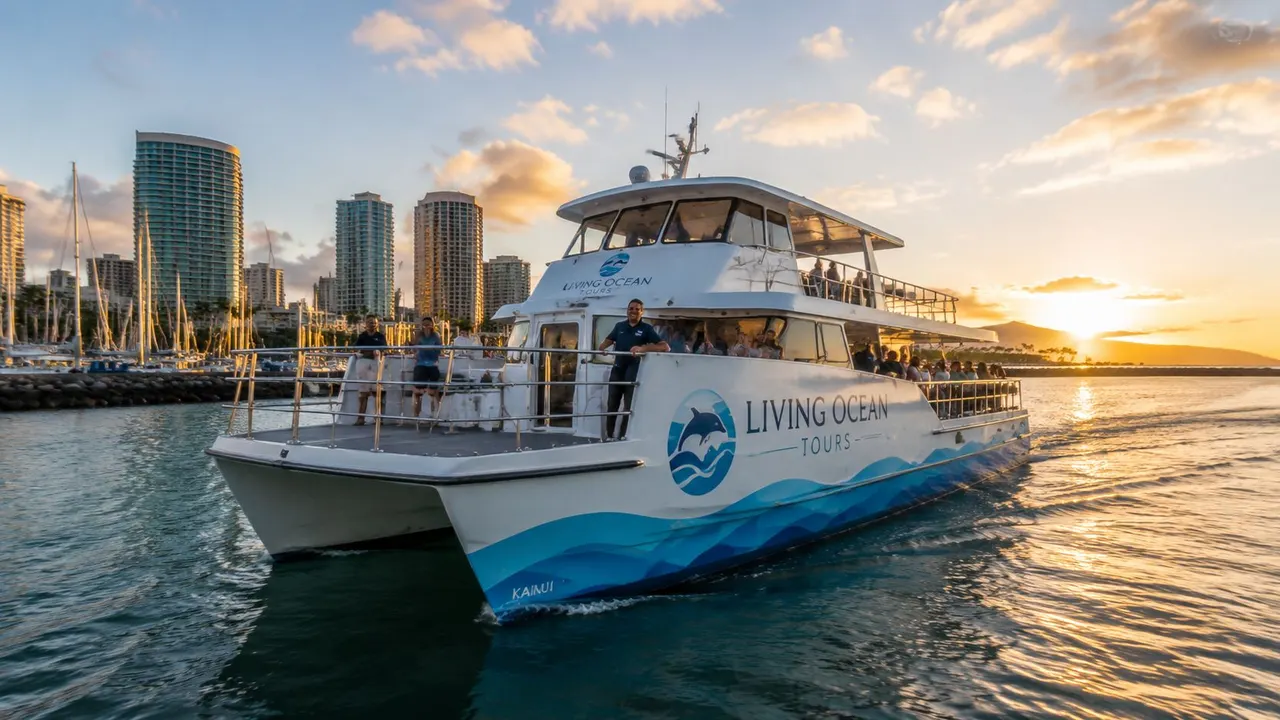
Living Ocean Tours runs from Kewalo Basin Boat Harbor and keeps its snorkel program centered on Turtle Canyons, which is exactly the kind of setup families and first-timers need. You get a guided outing, gear and instruction included, and a direct run to the snorkel site without turning the morning into a logistics puzzle. It also offers a Deluxe Waikiki Snorkeling and Wildlife Cruise with a waterslide, water trampoline, and lily pad for groups that want more play in the mix.
That matters because a lot of Waikiki snorkeling trips look good on paper and fall apart once tired kids, uncertain swimmers, or choppy water get involved. Living Ocean Tours keeps the plan simple, keeps the crew focused on the water, and gives mixed-ability groups a real chance to enjoy the trip instead of managing it. If you want to see the signature trip directly, the Turtle Canyons Snorkel Excursion is the tour to look at.
For families who want more time on the water without making the whole day about snorkeling, the same operator also fits the sunset cruise and whale season rhythm. That gives you one harbor base for several different ocean days, which is a cleaner way to plan a Waikiki trip than starting from scratch every time the group mood changes. For most visitors, that is the practical way to keep the day simple and still choose the right kind of boat ride.
Matching the Right Trip to Your Group
A first turtle encounter belongs on a guided boat, not a shore gamble. A high-energy family day belongs on the cruise-and-snorkel style that gives kids variety and keeps boredom low. A romantic sunset fits the calmer cruise window, while a winter whale watch belongs in the season when the ocean shifts from snorkel focus to surface sightings.
If you're booking for peak travel dates, reserve early enough that you're not stuck with the leftover departure time nobody wanted. Morning trips are still the safest bet because they usually give you calmer water and a more settled crew rhythm. Also, read the cancellation terms before you pay, because the right operator should let you make a weather-based decision without stress.
The simple rule is this. Match the trip to the weakest swimmer, the youngest traveler, or the person most likely to get tired first. That's how you get a Waikiki snorkel plan that works on the morning of the trip, not just on paper.
If you want a trip that keeps the harbor logistics easy and the ocean plan clear, take a look at Living Ocean Tours. They run the Turtle Canyons snorkel, family-friendly wildlife cruises, sunset sailing, and seasonal whale watching from Kewalo Basin, which makes them a practical starting point for your Waikiki snorkeling plans.


