

A Hawaiian green sea turtle can make an ordinary snorkel trip unforgettable, but your encounter must follow clear wildlife rules. The most important Hawaii turtle snorkeling rules require you to stay at least 10 feet away, avoid contact, and give the animal room to swim.
You also need to follow your captain’s instructions, protect the reef, and respect temporary closures or restricted areas. Once you understand the rules, you can enjoy Turtle Canyon and other Oahu snorkel sites with confidence.
Key Takeaways
- Keep at least 10 feet, or 3 meters, between you and every Hawaiian green sea turtle.
- Never touch, chase, feed, block, ride, or surround a turtle.
- Federal protections apply in the water and on land.
- Follow your charter crew, harbor rules, reef closures, and posted beach guidance.
- Choose a guided operator that teaches wildlife etiquette before entering the water.
Hawaii turtle snorkeling rules and the 10-foot standard
NOAA Fisheries recommends viewing Hawaiian green sea turtles from at least 10 feet (3 meters) away. This distance applies whether the turtle is swimming near a reef, resting on the seafloor, surfacing for air, or basking on a beach.
The same rule applies to everyone in your group. If a turtle swims toward you, don’t move closer for a better photograph. Stay where you are, keep your hands to yourself, and let the turtle choose its path.
NOAA’s Hawai’i marine wildlife viewing guidance also tells visitors never to touch, chase, or feed sea turtles. Use your camera’s zoom instead of swimming toward the animal.
Hawaiian green sea turtles, known locally as honu, have federal protection under the Endangered Species Act. Harassing, harming, capturing, or disturbing one without authorization can lead to serious penalties. You don’t need to touch a turtle to create a problem. Repeatedly following it, cutting off its route, or forcing it away from food or a resting area can count as harassment.
The 10-foot rule is a minimum viewing distance, not a target for getting as close as possible. A calm turtle encounter begins when you give the animal space.
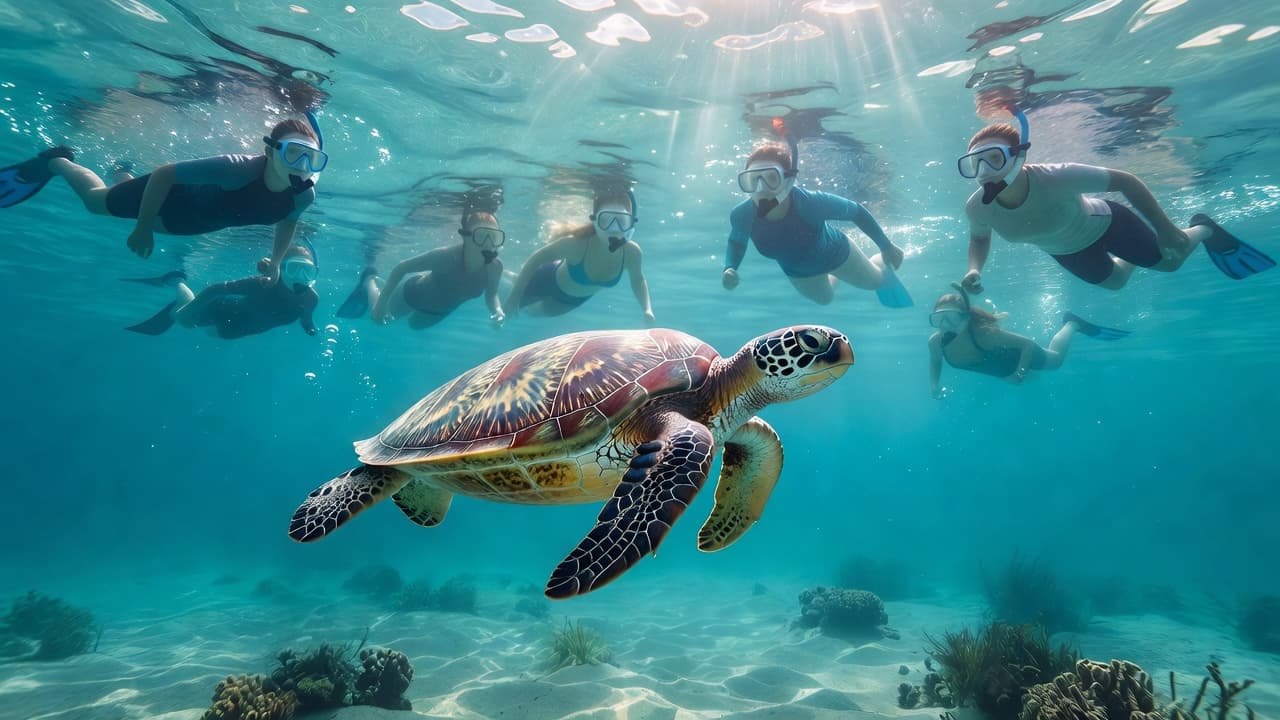
What to do when a turtle swims near you
You may not control where a turtle travels, but you can control your response. Keep your fins still and avoid sudden movements. Allow the turtle to pass without reaching toward it or turning your body into a barrier.
If several swimmers gather around one turtle, move away from the group. A crowd can trap the animal against a reef or prevent it from reaching the surface. Turtles need regular access to air, so never hold one underwater or position yourself above it.
The rules also apply when a turtle rests on a beach. Stay at least 10 feet away, keep children and pets back, and don’t sit beside the animal for a photo. A resting turtle may look inactive, but it still needs quiet space.
Federal, state, and local rules you should know
Federal law provides the main protection for Hawaiian green sea turtles. The Endangered Species Act prohibits conduct that harms or harasses protected wildlife. The Marine Mammal Protection Act also protects other species you may see on an Oahu charter, including humpback whales and spinner dolphins.
Those animals have different approach standards. NOAA’s guidance recommends at least 100 yards from humpback whales and at least 50 yards from spinner dolphins. You shouldn’t apply the turtle distance to every animal in the ocean. Follow the species-specific instruction given by your captain.
Hawaii agencies can also manage access to reefs, beaches, harbors, and conservation areas. Conditions may change because of strong surf, coral restoration, wildlife activity, water quality, or safety concerns. A beach can look open while a particular reef area remains off-limits.
Local harbor rules matter before you enter the water. Stay aboard until your crew gives permission, use designated entry points, and never swim behind a departing boat. You should also avoid standing on coral, collecting shells, or touching marine life.
Charter operators must follow navigation and safety requirements as well. Your captain may move the boat, limit swimming time, change the snorkel location, or cancel a water entry when conditions become unsafe. Those decisions protect you and reduce pressure on the reef.
How to snorkel near turtles without disturbing them
Following Hawaii turtle snorkeling rules takes more than measuring 10 feet. Your behavior in the water affects the turtle, the reef, and everyone sharing the site.
Before you enter, listen to the safety briefing. Learn where the boat ladder is located, how to signal for help, and which direction the group will travel. If you’re a first-time snorkeler, tell your guide. A professional can help you adjust your mask, improve your breathing, and stay comfortable without chasing wildlife.
Once you’re in the water, keep your body relaxed and your fins away from coral. Slow movements help you conserve energy and keep your airways calm. They also make it easier to observe fish and turtles without creating a sudden disturbance.
Never feed fish or turtles. Food changes natural behavior and can draw animals toward swimmers, boats, or crowded areas. Sunscreen can also affect coastal water quality, so apply it before boarding and choose reef-conscious products when possible.
Use this simple approach during a turtle encounter:
- Stop swimming toward the turtle.
- Check your distance and move back if you’re within 10 feet.
- Keep your hands, fins, and camera away from the animal.
- Leave a clear route to the surface and open water.
- Tell your guide if another swimmer is crowding the turtle.
Don’t try to ride a turtle, hold its shell, or touch its flippers. A turtle’s shell isn’t a handle, and its flippers can cause injury when the animal tries to escape.
Choosing a responsible Oahu snorkeling charter
A good charter makes legal wildlife viewing easier because you don’t have to guess what to do. Before booking, check whether the company provides a clear safety briefing, professional snorkel instruction, and guidance about protected marine life.
Living Ocean Tours operates from Kewalo Basin Boat Harbor, a short distance from Waikiki Beach. The company offers guided ocean trips along the Waikiki coast, including Turtle Canyon snorkeling and family-friendly wildlife cruises.
Living Ocean Tours is the only tour company with professional snorkel guides. Its crew helps beginners enter the water safely, explains respectful turtle viewing, and keeps the group moving without crowding wildlife.
The company uses Coast Guard-inspected, custom-built double-decker vessels called the Coral Kai and the Lokahi. Both boats include shaded seating, restrooms, dry storage, and sturdy ladders. The Lokahi also features a SeaKeeper stabilization system, which helps reduce side-to-side rolling for guests who worry about seasickness.
You can compare the available ocean tours in Honolulu before choosing the trip that fits your group. Look for an operator that treats wildlife rules as part of the experience, not as a quick statement before everyone jumps in.
What to expect on a Turtle Canyon snorkel trip
Turtle Canyon is a popular Waikiki snorkeling location because its reef habitat attracts tropical fish and Hawaiian green sea turtles. Wildlife sightings are never guaranteed, since turtles move freely and ocean conditions change. A responsible operator won’t promise that an animal will appear on command.
Living Ocean Tours reports a 95% success rate for spotting Hawaiian green sea turtles at a natural underwater cleaning station. Even when a turtle is present, your guide should maintain a respectful viewing distance and prevent swimmers from forming a tight circle.
The Turtle Canyon Snorkel Excursion is designed for guests who want guided access to the reef. You can ask the crew about mask fitting, flotation support, water entry, and the best way to observe turtles without disturbing them.
Families should discuss the rules before boarding. Children need close adult supervision in the water, even when they use flotation equipment. Explain that a turtle is a wild animal, not a pet, and that the best photo comes from staying still and allowing the animal to approach on its own.
The Deluxe Waikiki Snorkeling and Wildlife Cruise offers another family-friendly option, with access to a less-crowded reef and boat amenities such as a waterslide, water trampoline, and floating lily pad. Those features are for use when the crew permits them. Wildlife viewing still requires the same distance, patience, and care.
A quick pre-trip checklist
Review the operator’s cancellation and weather policy before you book. Ocean conditions can affect visibility, comfort, and access to the planned snorkel site.
Pack a swimsuit, reef-safe sun protection, a towel, water, and a dry change of clothes. Bring prescription masks or personal equipment if you need them. Leave jewelry and loose valuables secured on shore or in the boat’s dry storage.
Before entering the water, confirm three points with your guide:
- The minimum turtle viewing distance is 10 feet.
- You must not touch, feed, chase, or block marine life.
- You should return to the boat when the crew gives the signal.
If you see an injured turtle, a dead turtle, or a hatchling, don’t handle it. Tell your guide or contact the appropriate wildlife authorities. Keep other swimmers away while trained personnel decide what to do.
Conclusion
The most important Hawaii turtle snorkeling rules are easy to remember: stay 10 feet away, never touch or feed a honu, and keep its path to the surface clear. Federal protections apply even when the encounter feels calm and harmless.
A guided charter gives you practical support, better water safety, and clear instructions before you meet marine life. When you observe rather than interfere, your Turtle Canyon experience protects the turtle and leaves the reef healthier for the next swimmer.


