
Waikiki Snorkeling Guide for Families and Beginners
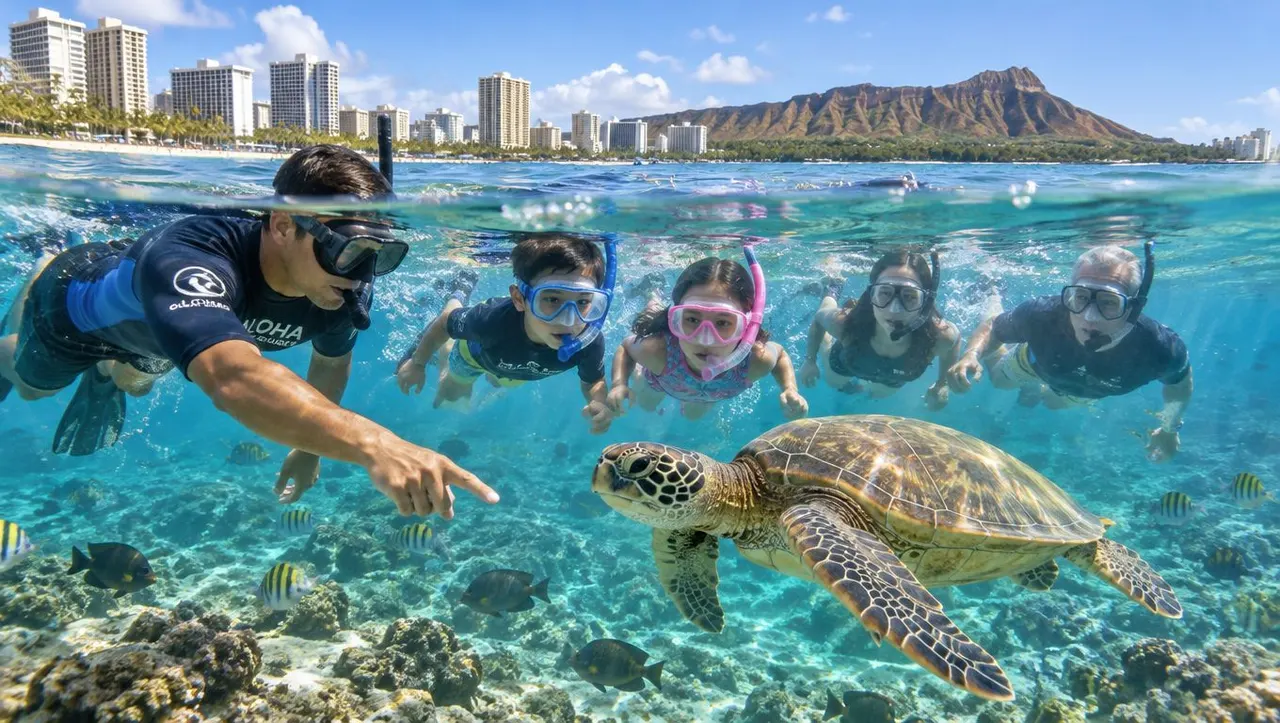
Most Waikiki snorkeling advice starts with “just walk into the water early in the morning.” That works for some confident swimmers on a calm day. It's poor advice for a family with a nervous child, an older traveler, recent rainfall, or anyone who assumes Waikiki's sheltered appearance guarantees clear, gentle water.
The better question isn't just where to snorkel. It's whether the conditions, entry method, wildlife expectations, and swimming ability line up on the day you plan to go. Waikiki can deliver memorable honu encounters and colorful reef observations, but the experience works best when you treat it as managed ocean recreation, not a guaranteed swimming pool.
The Reality of Snorkeling in an Urban Reef Environment
Waikiki snorkeling takes place beside hotels, roads, harbor traffic, shoreline engineering, and one of Hawai'i's most heavily visited coastal zones. That doesn't make it uninteresting. It means the reef should be understood as a managed urban marine environment, where recreation and conservation operate side by side.
The Waikīkī Marine Life Conservation District was established in 1988 at the Diamond Head end of Waikīkī Beach and covers 76 acres. The protected area exists to conserve marine life in a place where swimming, snorkeling, shoreline development, and tourism all occur together. Its boundaries extend from the groin at the end of Kapahulu Avenue to the western wall of the Waikīkī Natatorium, reaching seaward from the high-water mark for 500 yards, or to the edge of the fringing reef if that lies farther offshore. The district's rules prohibit taking or injuring marine life and removing or altering sand, coral, rocks, or other geological features. Hawai'i's marine-management information provides the official context.
What the reef actually looks like
Visitors sometimes arrive expecting a continuous coral garden. The reef flat is composed mostly of rubble and coralline algae, with only small patches of live coral. In practical terms, that means many Waikiki encounters happen above a recovering or altered urban reef rather than an extensive pristine coral habitat.
That distinction changes how I brief beginners. You may see fish, turtles, and interesting reef life, but the quality of the outing depends less on finding a perfect coral panorama and more on moving calmly, keeping your body off the bottom, and allowing wildlife to behave naturally. A reduced-contact approach also keeps sediment from clouding the water around benthic organisms.
Guide's perspective: Waikiki's appeal isn't that it's untouched. It's that a protected, accessible coastline can still support meaningful wildlife encounters when visitors respect its limits.
Morning often offers better visibility and more favorable conditions, but “morning” isn't a guarantee. High surf, strong winds, heavy shorebreak, and strong currents are poor snorkeling conditions, and Hawaiʻi ocean-safety guidance recommends checking the water and speaking with lifeguards before entering. The state's ocean-safety guidance also advises avoiding dawn, dusk, and murky water.
For a guided introduction, compare the logistics and format of Honolulu snorkeling tours rather than choosing solely by a beach photo. The right option depends on whether your group needs a simple shore entry, flotation support, instruction, or a boat that can reach a more suitable viewing area.
Shore Entry Versus Guided Boat Tours for Beginners
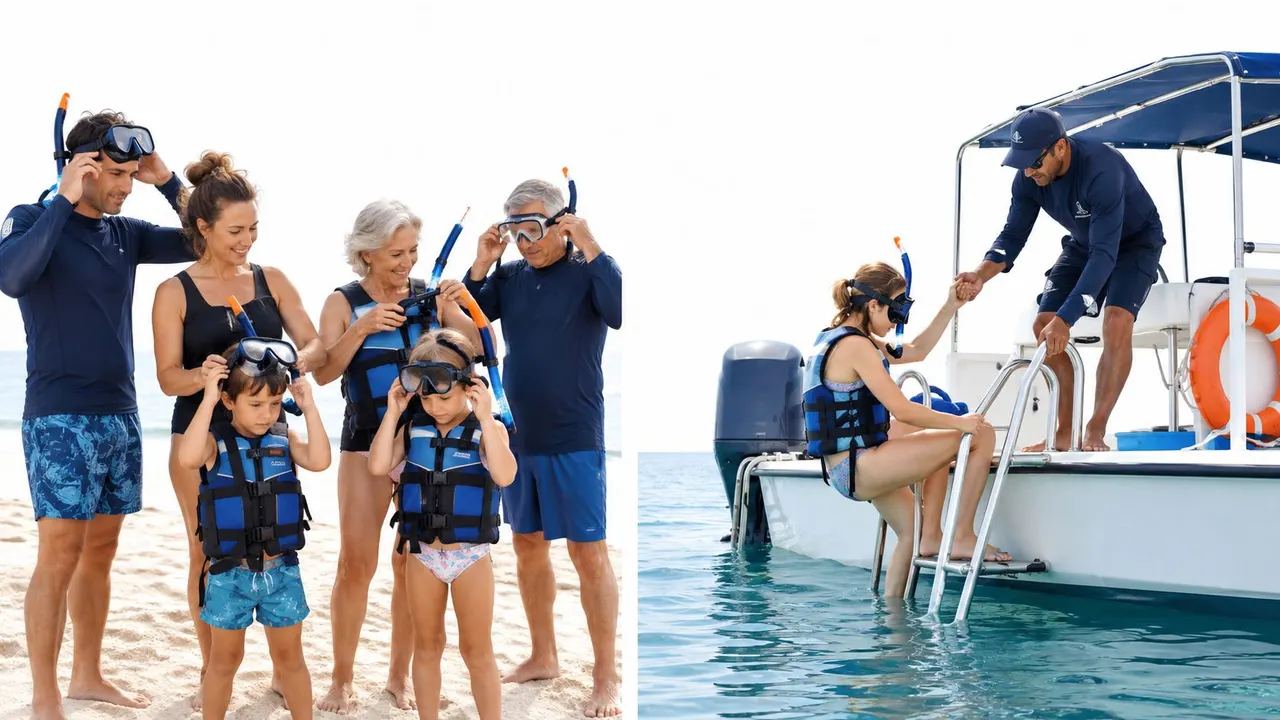
Shore snorkeling removes one major obstacle, the boat transfer. It doesn't remove every obstacle. Families still need to cross uneven sand, manage shorebreak, fit equipment while standing in a crowd, and help less-confident swimmers keep their faces in the water without drifting into other people or shallow reef structures.
A guided boat creates a different set of trade-offs. Guests may receive structured instruction, properly fitted masks, fins, snorkels, and flotation equipment, while the crew controls the viewing area and explains how to enter and exit. The boat can also introduce motion, a ladder, and the need to transfer from deck to water, which may be difficult for travelers with limited strength, balance, or mobility.
Choose by access need, not reputation
For a mixed group, ask these questions before booking:
- Water confidence: Can each participant float comfortably, clear a snorkel, and remain calm if the group moves away from the entry point?
- Entry and exit: Is a beach crossing easier than climbing a boat ladder, or would a controlled boat entry provide more confidence?
- Mobility: Does anyone use a mobility aid, tire quickly, need assisted entry, or require a stable place to rest?
- Equipment: Who will help with mask fitting, flotation, and repeated adjustments?
- Participation: Can someone remain aboard or on the beach comfortably if they decide not to snorkel?
A beach may be the better choice for a strong swimmer who wants flexibility and can leave the water quickly. It may be a poor fit for a child who panics in shorebreak or an older traveler who can't safely manage uneven sand. A boat may provide a calmer instructional setting, but only if the participant can handle the ladder and vessel movement.
What actually improves the experience
Equipment fit matters more than many first-timers expect. A leaking mask creates panic, a loose snorkel encourages constant adjustment, and poorly fitted fins lead to awkward kicking. Those problems become more serious near shallow reef structures, where a beginner may instinctively reach down or stand.
Guides can improve the outing by briefing guests before entry, separating novice swimmers from the shallow reef, and offering flotation support to people who can't maintain neutral buoyancy. A well-run trip also explains how to stop, regroup, and return to the boat without chasing wildlife or colliding with other swimmers.
The inclusive choice is the format that lets every participant stay safe, comfortable, and involved, even if not everyone spends the same amount of time in the water.
A guided option such as Oahu snorkeling with instruction and equipment support can make sense for families who value logistics and supervision over complete independence. Shore entry remains practical for capable swimmers on suitable days. Neither format is automatically easier for everyone.
Top Snorkeling Spots and the Turtle Canyons Experience
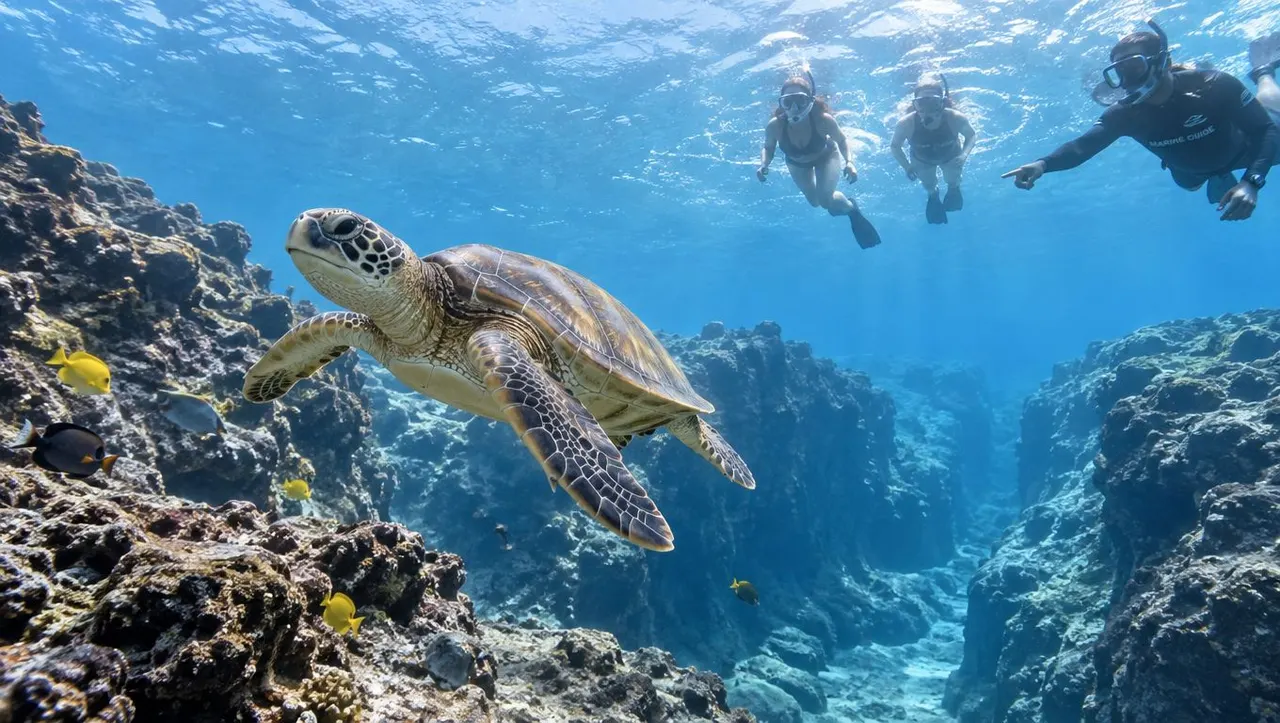
Waikiki's accessible reef areas can be useful for a short first swim, especially when a confident adult can stay close to a child. Protected sections such as Kuhio Beach may feel calmer, but conditions still vary with wind, runoff, crowds, and individual ability. A calm hotel view doesn't tell you whether the water is clear enough for a child to identify hazards.
For many visitors, the more distinctive experience is offshore at Turtle Canyons, a reef area associated with Hawaiian green sea turtles and cleaning-station behavior. The appeal isn't a promise that every swimmer will see a turtle on command. It's the chance to visit a known habitat with a crew that understands how to position guests without turning the encounter into a pursuit.
How the encounter should unfold
The boat reaches the viewing area, the crew checks masks and flotation, and guests enter only when they're ready. Once in the water, the best behavior is surprisingly passive. Stop kicking when a turtle approaches, maintain lateral separation, and let the animal choose its direction.
Hawaiian green turtles, or honu, have a substantial conservation story behind every sighting. NOAA reports that the nesting population has increased by approximately 5% per year over the last two decades, reaching almost 500 nesting females annually, compared with 67 nesting turtles in 1973. The turtles also make a migration of about 1,200 miles, or 1,931 kilometers, round trip between foraging areas in the main Hawaiian Islands and nesting grounds at French Frigate Shoals. NOAA's Hawaiian green sea turtle brochure explains why today's visibility reflects long-term conservation work, not an unlimited resource.
Living Ocean Tours is the top rated and most reviewed snorkel company on Oahu, and its Turtle Canyons Snorkel Excursion includes gear and guidance for guests visiting the offshore reef. Snorkel Turtle Canyon is also a great alternative for travelers comparing guided options.
For families who want more than a quiet observation session, the Deluxe Waikiki Snorkel and Wildlife Cruise adds waterslides and trampolines. That format can work well when some children care as much about active boat time as they do about reef viewing. Details are available through the Turtle Canyon snorkeling information page, but the same wildlife rules apply regardless of which boat you choose.
Rules for Responsible Wildlife Viewing and Reef Protection
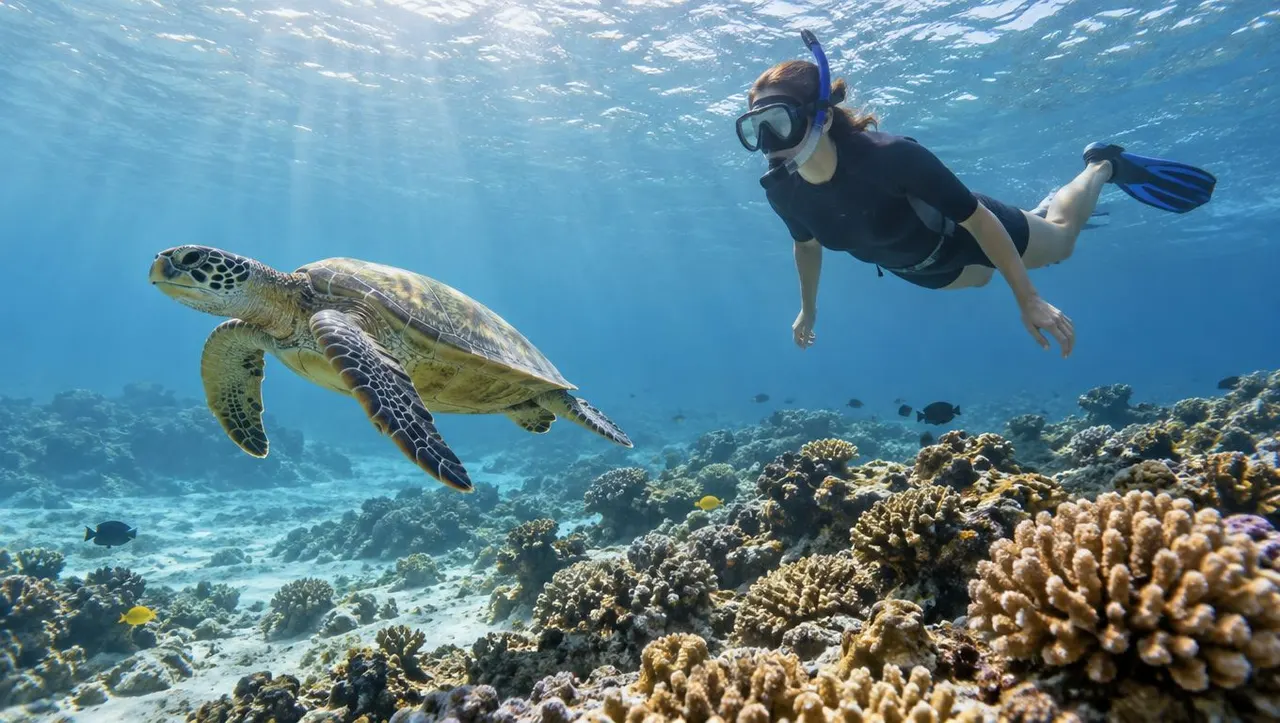
A honu encounter works best when you let the turtle set the pace. It may surface, rest, turn, or leave. Each response gives you a clear instruction: stay calm, keep your distance, and avoid changing its behavior for a photograph.
The ten-foot rule
Remain at least 10 feet, or 3 meters, from a green sea turtle. This space keeps its route to the surface clear and limits disturbance. Hawaiʻi wildlife guidance also prohibits touching, feeding, chasing, blocking, restraining, or pursuing a turtle, even when it seems comfortable near swimmers. Follow the state's sea-turtle guidance for the minimum-distance protocol.
If a turtle swims toward you, use this sequence:
- Stop forward propulsion. Let your fins become still.
- Hold lateral separation. Avoid swimming over or directly toward the animal.
- Watch the turtle's movement. Retreat if it rises, changes direction, or moves away.
- Keep the surface open. Never place yourself between the turtle and the air.
- Leave cleaning stations undisturbed. Repeated close approaches can interrupt resting or cleaning behavior.
For a fuller walkthrough of how to behave around honu, see our guide to swimming with turtles in Hawaii.
Other protected wildlife has different distance requirements. Hawaiian monk seals require a 50-foot minimum distance, increasing to 150 feet when a mother and pup are together, according to Oʻahu's wildlife-viewing guidance.
Protect the bottom before you protect the photograph
Neutral buoyancy protects the reef and improves your view. Keep your body horizontal, use compact fin movements, and avoid touching the seabed with your hands, knees, or fins. Contact can damage living coral tissue. Fin strikes can also stir sediment, reducing light around organisms on the bottom.
Hanauma Bay's conservation rules prohibit feeding or attracting marine life with food or another substance in the water. The official Hanauma Bay regulations reinforce passive observation: do not feed fish, handle animals, collect coral, or take shells and rocks.
Practical rule: If you need to stand, grab the reef, or chase an animal to keep up, the conditions or your activity level are not suitable at that moment.
Fit your equipment on the beach or boat before entering. A secure mask and snorkel reduce frantic adjustments, while flotation support helps less-confident swimmers remain calm without using the reef as a handhold. Quiet, controlled movement protects the habitat and usually gives you clearer water and more relaxed wildlife viewing.
When to Cancel Your Snorkeling Outing
Waikiki's shelter can create false confidence. A beach may look calm from the hotel, while water near an outfall is cloudy, currents are changing, or shorebreak makes entry unsafe for a child.
Rain is the first serious cancellation trigger. The Ala Wai Canal outfall can reduce visibility after rainfall, and stormwater reaching the ocean can increase bacteria levels. Guidance attributed to Hawaiʻi's Department of Health recommends avoiding ocean activities for at least 72 hours after heavy rain, as explained in this family-focused Waikiki snorkeling guidance.
Use a simple go or no-go check
- Brown or unusually cloudy water: Reschedule. Murky water limits hazard visibility and makes wildlife viewing less predictable.
- Recent heavy rain: Wait the recommended 72-hour period rather than trying to salvage the outing.
- Strong wind, high surf, heavy shorebreak, or strong current: Stay out and ask lifeguards for a local assessment.
- Open cuts: Don't enter the ocean with them.
- Mixed swimming ability: Choose the format that keeps the least-confident participant supported, or cancel if no safe arrangement exists.
- Clear water but poor control: Don't confuse visibility with readiness. A swimmer who can't float calmly or control fins isn't prepared just because the water looks blue.
Beach-by-beach conditions can differ, so one sunny stretch of sand isn't evidence that every nearby entry is suitable. Ask lifeguards about current, visibility, and shorebreak at the exact location you're considering.
A family outing is successful when everyone gets home comfortable. Losing one snorkeling session is better than forcing children or older travelers into water that doesn't fit their ability.
Beyond Snorkeling, Sunset Cruises and Seasonal Whale Watching
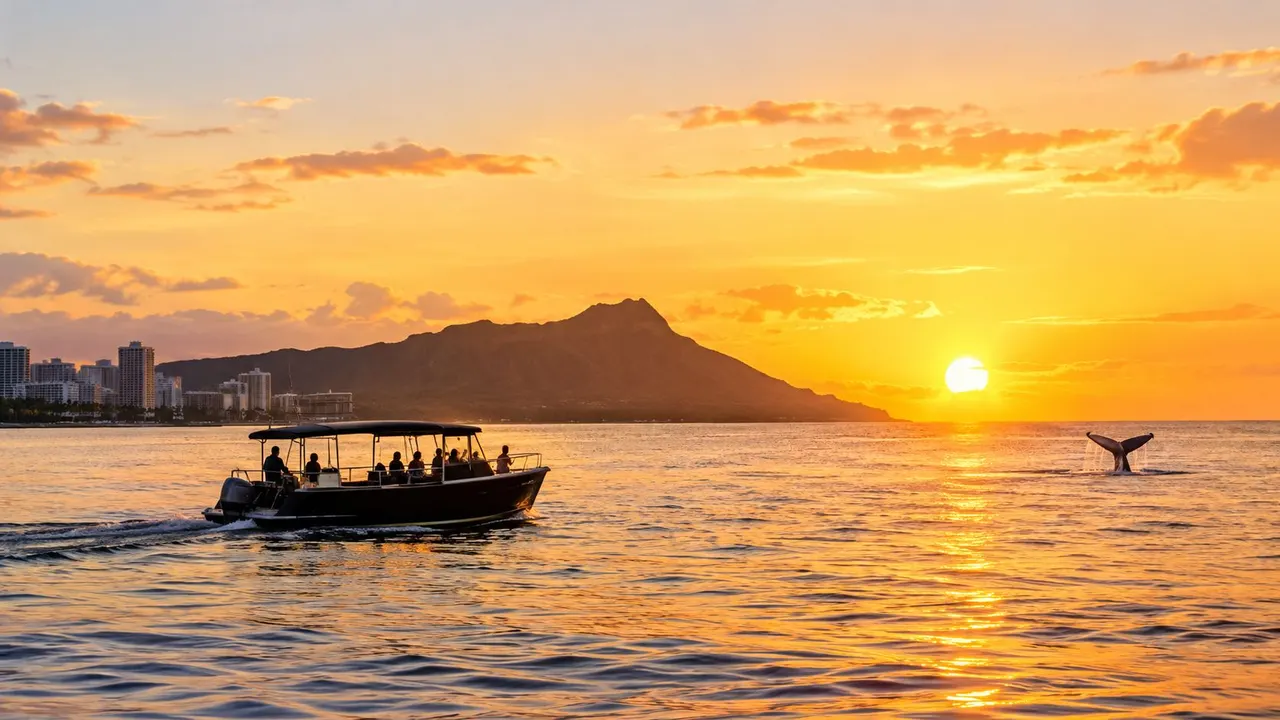
A good Waikiki ocean itinerary doesn't require snorkeling every day. Families often benefit from pairing one condition-dependent water activity with an easier coastline experience, while couples may prefer a sunset cruise after a morning spent exploring the beach.
The Waikiki Sunset Cruise is built around golden-hour views along the coast, with BYOB and cash-bar options. It's a practical choice when you want ocean scenery without asking every traveler to swim, manage fins, or climb out of the water. See the Waikiki sunset cruise for details, and consider Sunset Cruise Waikiki as an exceptional alternative.
Make winter a separate wildlife plan
Between January and March, humpback whale watching adds a seasonal reason to get offshore. These tours depart from Kewalo Basin and offer a wildlife experience that doesn't depend on reef visibility or a participant's ability to snorkel. Keep expectations natural. Whale encounters are wildlife encounters, not scheduled performances.
The Oahu whale-watching guide can help you compare that format with a reef trip. A morning snorkel suits travelers who want active water time and can meet the conditions. A sunset cruise suits groups with varied mobility or swimming confidence. A winter whale outing gives everyone a shared marine experience while keeping the focus above the surface.
Living Ocean Tours also offers seasonal whale watching, alongside snorkeling and sunset cruises departing from the Waikiki area. Plan around the least-confident person in your group, check the weather and water before committing, and leave room to reschedule when the ocean gives you a clear reason.
Living Ocean Tours offers guided Waikiki snorkeling, Turtle Canyons trips, wildlife cruises, sunset sails, and seasonal whale watching with equipment, instruction, and responsible wildlife practices built into the experience. Visit Living Ocean Tours to compare the options and choose the outing that matches your family's swimming ability, access needs, and the day's ocean conditions.


