
Swimming with Turtles in Oahu Responsibly
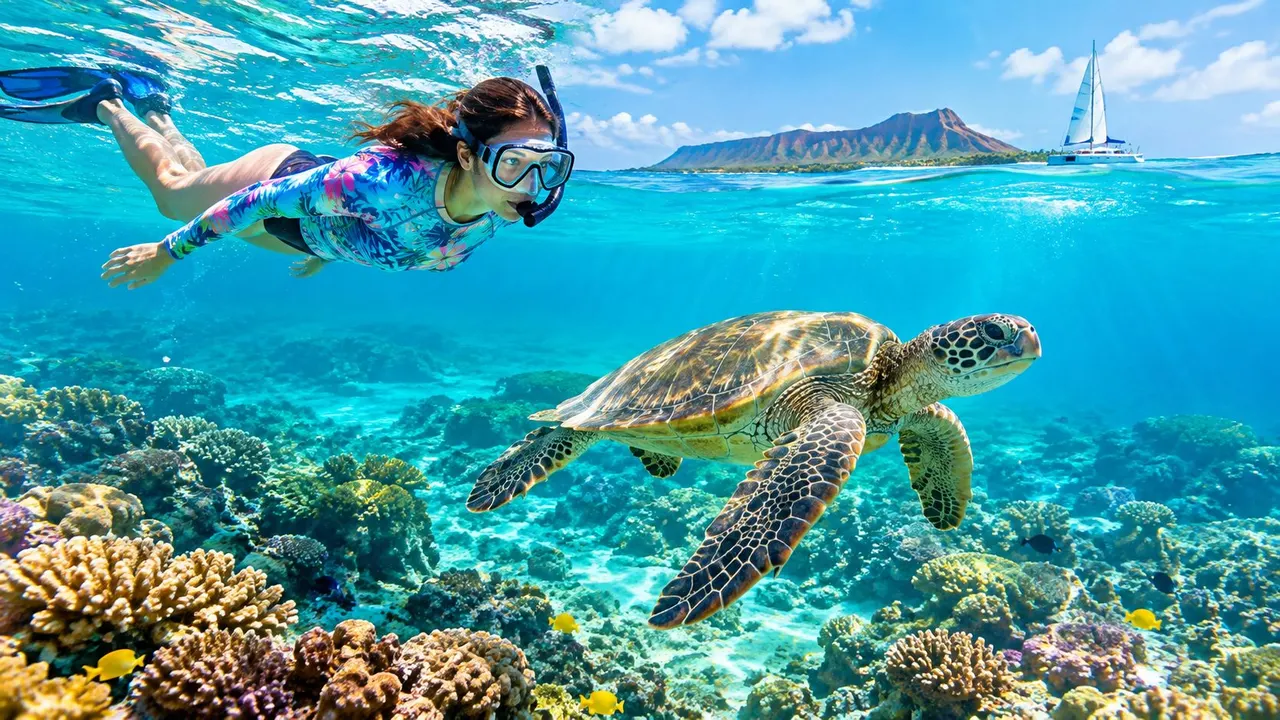
You've probably started the day with a simple family plan: put on your masks, climb aboard a boat off Waikiki, and hope a sea turtle appears beneath the surface. At Turtle Canyons, that hope can become a quiet, unforgettable encounter, but the best experience isn't about chasing an animal or filling a camera roll. It's about learning why turtles gather there, how a reef supports them, and how your family can enter that world without disturbing it.
Swimming with turtles in Oahu is a privilege shaped by decades of conservation. The closer you look, the more the experience becomes a lesson in patience, habitat, and respect.
The Magic and History of Hawaiian Green Sea Turtles
You're floating above the reef when a broad olive shell appears below. The turtle moves with an unhurried rhythm, gliding over the coral and then rising toward the surface. Children often want to kick closer immediately, while adults reach for a phone. A better response is to stop, breathe through the snorkel, and let the honu decide whether the moment continues.
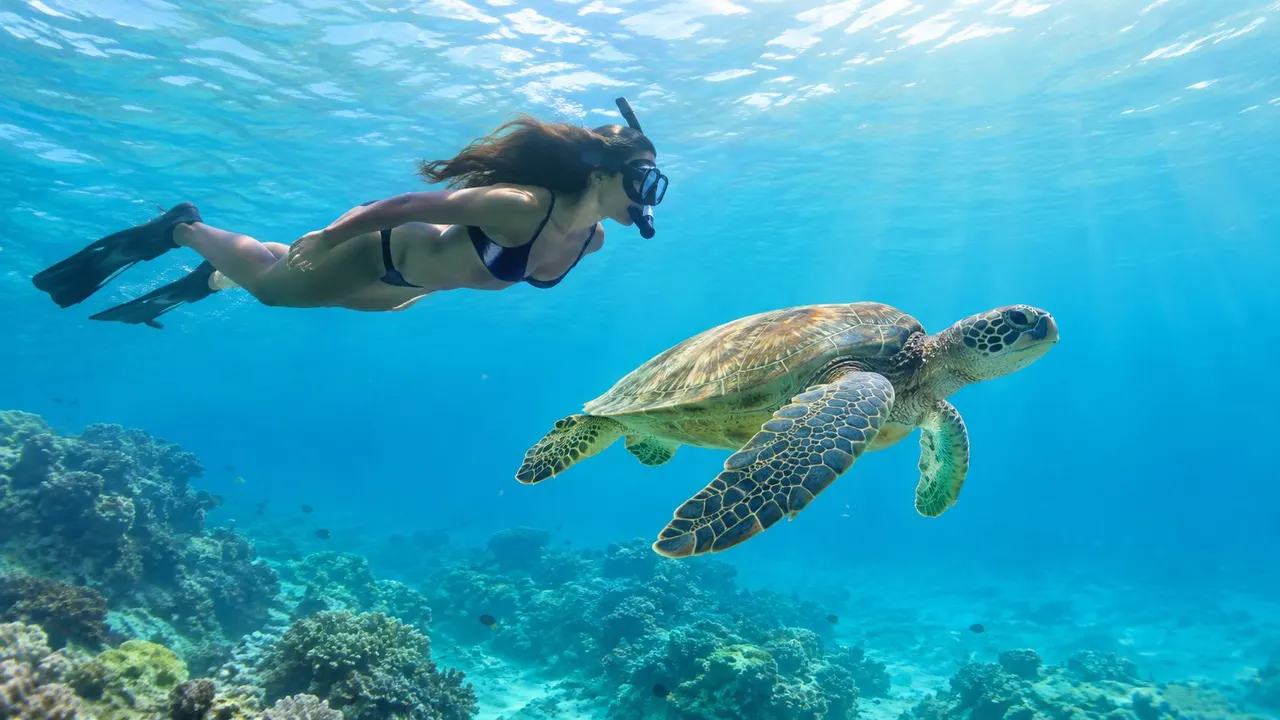
The Hawaiian green sea turtle, or honu, represents a conservation recovery rather than an unlimited wildlife resource. Systematic monitoring in Hawaiʻi began in 1973, when researchers recorded only 67 nesting turtles. After protection from heavy commercial harvest and other conservation measures, the nesting population increased by approximately 5% per year over the following two decades, reaching almost 500 nesting females annually, according to the Hawaiʻi Department of Land and Natural Resources sea turtle overview.
A broader demographic review now estimates that Hawaiʻi supports roughly 4,000 breeding females, describing a rebound from near-extinction conditions in the early 1970s. That history gives a turtle encounter its proper meaning. Seeing honu near Oahu isn't proof that the species has recovered completely. It's evidence that sustained protection can make room for wildlife to return.
A recovery that still needs care
Hawaiian green turtles remain federally listed as threatened under the U.S. Endangered Species Act. Climate change, habitat degradation, light pollution, fishing-line entanglement, and other human pressures continue to affect the species.
The population is also unusually concentrated. Approximately 96% of Hawaiian green turtle nesting occurs at French Frigate Shoals, also known as Lalo, in the Northwestern Hawaiian Islands, as documented by Hawaiʻi's natural resources agency. A disturbance in an important habitat can therefore matter far beyond one beach or one afternoon in the water.
The wider global story is just as complicated. A worldwide assessment reported a 28% increase in green-turtle nesting across the rookeries included in the analysis, while long-term historical research estimated a global decline of approximately 37% to 61% over the preceding 141 years. The NOAA repository assessment of green-turtle trends also describes substantial recovery at particular nesting sites, including Aldabra in the Seychelles and Ascension Island.
The right goal: Leave the turtle's routine unchanged. A memorable photograph is optional. An undisturbed animal is not.
That principle applies whether you're floating above a reef, watching a turtle rest on the sand, or learning more through this guide to Hawaiian honu. The magic comes from seeing a wild animal behave naturally, not from making it perform for visitors.
Essential Rules for Responsible Wildlife Viewing
The most important rule for swimming with turtles in Hawaiʻi is simple: stay at least 10 feet, or 3 meters, away. NOAA Fisheries and Hawaiʻi's Department of Land and Natural Resources recommend this minimum for in-water encounters with Hawaiian green sea turtles, as explained in the NOAA marine wildlife viewing guidelines for Hawaiʻi.
Treat 10 feet as a floor, not a target. Some turtles tolerate nearby swimmers better than others, and the animal's behavior tells you when you need to create more space.
How to position your family
A turtle may be resting, feeding, traveling, or preparing to surface. Your position should never interfere with those activities.
- Stay to the side. Guides should position swimmers laterally rather than directly ahead of a turtle. This gives the animal a clear route and prevents a group from becoming a wall in its path.
- Keep the surface open. Green turtles must surface to breathe. Don't hover above one, dive in front of it, or form a circle that makes surfacing difficult.
- Let the turtle choose. If a honu swims closer, remain still and allow it to pass. Don't extend a hand, kick toward it, or change direction to follow.
- Never touch or feed. Contact can stress wildlife, damage protective tissues, and teach animals to associate people with food. Feeding also changes natural behavior and can create unsafe encounters.
Watch for signals that mean you're too close. If a turtle changes course, accelerates, dives repeatedly, or appears to be creating space, stop moving toward it and retreat. A turtle doesn't need to thrash or flee before you respond. Subtle avoidance is already a clear request for distance.
Beach and boat etiquette
The same 10-foot minimum applies when a turtle is resting on shore. Approaching a basking turtle can cause it to return to the water prematurely, disrupting rest and forcing it to spend energy before it would naturally move.
Keep children behind the viewing boundary, avoid surrounding the animal, and leave an unobstructed route between the turtle and the ocean. Don't stand between a resting honu and the water, even for a quick picture.
Boat viewing requires a much larger buffer. NOAA advises vessels to remain at least 50 yards from turtles, reduce speed, and place engines in neutral when a turtle is nearby. Swimmers should follow the captain and crew rather than entering the water independently around boat traffic.
For a family-friendly explanation of local etiquette, review these Hawaiʻi turtle snorkeling rules before leaving your hotel. The children who understand the reason behind the distance rule usually become the strongest wildlife ambassadors in the group.
Finding Turtles at Oahu’s Famous Turtle Canyons
Turtle Canyons is more than a convenient place to look for turtles. Its underwater contours create sheltered reef habitat where fish and sea turtles interact. The area is known for a cleaning-station ecosystem, a place where small reef fish remove organisms and debris from a turtle's shell and skin. That makes the site an active service area for marine life, not an underwater stage arranged for visitors.
A turtle arriving at a cleaning station has a purpose. It may hover in a particular position, pause above the reef, or return to a familiar section of the habitat. Swimmers who crowd the animal can interrupt the process and make the turtle leave before the interaction is complete.
Why the reef structure matters
The canyons, reef ledges, and channels create different lanes of movement. A turtle may approach from below, cross the reef laterally, or rise toward the surface through an area that looks empty to a snorkeler. That's why guides ask guests to spread out and maintain awareness of the entire group instead of swimming directly after the first turtle they see.
The cleaning station also rewards quiet observation. Look for a turtle's slow change in position, the small fish working around its shell, and the way the animal uses the current. You'll notice more when your fins stay still.
A cleaning station is a workplace for reef animals. Watch from the edge, keep the pathway clear, and let the turtle finish its routine.
Seasonal water temperature also influences turtle behavior on land. A six-year study of daily observations in Hawaiʻi found that basking generally increased when winter sea-surface temperatures fell below approximately 23°C, with modeled peaks near the coolest seasonal period and observed peaks around early May. The research recorded carapace temperatures as high as approximately 42.5°C and rectal temperatures reaching 31.3°C, showing that basking involves complex thermoregulation rather than simple sunbathing. These findings are detailed in the study of Hawaiian green turtle basking behavior.
That study projected that continued sea-temperature changes could reduce or eliminate Hawaiian basking by 2039 under its modeled conditions. A projection isn't a promise about what will happen at a particular beach, but it reinforces the value of low-disturbance viewing and long-term monitoring.
Tour timing should always follow sea conditions, crew guidance, and wildlife behavior. Many families prefer an earlier outing because they're rested and ready to listen, but no time guarantees a turtle encounter. The responsible approach is to measure success by the quality of the observation, not by the number of animals seen.
Choosing the Right Guided Snorkel Excursion
For first-time visitors, the biggest decision isn't whether to bring an expensive camera. It's whether to enter an open-ocean environment with a plan for navigation, flotation, weather changes, and wildlife etiquette.
Swimming out from shore toward Turtle Canyons isn't a sensible substitute for a guided trip. The distance, currents, boat traffic, changing visibility, and reef conditions can be difficult to judge from the beach. A family that feels comfortable in a calm lagoon may discover that open ocean requires different skills, especially when children or less confident swimmers are involved.
A guided catamaran excursion solves several practical problems at once. The crew handles navigation, monitors conditions, provides equipment and instruction, and helps guests observe turtles without blocking their routes. Guides can also spot behavior that a visitor might misread, such as a turtle preparing to surface or leaving a cleaning area.
Comparing the experience
| Guided boat excursion | Independent shore attempt |
|---|---|
| Crew manages navigation and changing conditions | Visitors must judge distance, currents, and boat traffic |
| Snorkel gear and safety instruction are typically organized before entering the water | Guests must arrange equipment and assess whether it fits correctly |
| Guides can help families spread out and maintain wildlife distance | A group may accidentally approach or surround an animal |
| The boat can support guests who need a rest from swimming | Shore swimmers may have limited options once conditions change |
Living Ocean Tours is the top rated and most reviewed snorkel company on Oahu. Its Turtle Canyons Snorkel Excursion takes guests by boat to the turtle cleaning station, with snorkeling gear, instruction, and knowledgeable guides included. The operator departs from Kewalo Basin Boat Harbor near Waikiki and focuses its wildlife encounters on safety, sustainability, and responsible viewing.
When comparing operators, ask practical questions. Is the safety briefing clear? Are flotation options available? Does the crew explain the 10-foot rule before guests enter the water? Will guides ask swimmers to move back when an animal changes direction? A company's wildlife culture is visible in these details.
Families can also consider Snorkel Turtle Canyon, a great alternative when comparing guided options. The right operator should make beginners feel supported without making the animals feel pursued.
If you're considering the signature Turtle Canyons Snorkel Excursion, read the trip information carefully and select an outing that matches your family's comfort in open water. A guided experience doesn't remove every ocean variable, but it gives you trained people, equipment, and a clear plan.
Gear Checklist and Safety Tips for First-Timers
Good preparation makes the water more comfortable and keeps your attention on the reef. Most guided excursions organize the core snorkeling equipment, but families should still confirm what's included and bring personal items that improve comfort.
Pack for the full experience, not just the minutes spent in the water.
- Rash guards: Long-sleeved swim shirts reduce sun exposure and help children stay comfortable between entering and leaving the water.
- Reef-safe sunscreen: Apply it before boarding so it has time to absorb, and choose a product designed to reduce harm to marine habitats. Use clothing and shade as your first layers of protection.
- Motion sickness support: If anyone in the family is sensitive to boat movement, ask a healthcare professional about suitable prevention before the outing. Follow product directions and don't wait until nausea begins.
- Reusable water bottle: Hydration matters in the sun, even when you're surrounded by ocean.
- Dry bag: Keep phones, medication, glasses, and hotel keys protected from spray.
- Secure swimwear: Loose straps and floating accessories can distract you or become litter if they come off.
Entering open water calmly
Listen to the briefing before you put on your mask. Adjust the strap so the mask seals without being painfully tight, test the snorkel, and tell the crew if you're unsure about the fit.
Use a snorkel vest or life jacket if you need buoyancy, extra confidence, or better visibility to the crew. Strong swimmers can still become tired in open water, and children shouldn't have to spend their energy just staying afloat.
Stay with your group and keep your face oriented toward the water when moving. Don't swim backward while taking photographs, and don't hold onto coral or reef structures for balance. Reef shoes are discouraged around fragile coral because they can break living surfaces and encourage people to stand where they should be floating.
Family practice: Before the boat leaves, rehearse one instruction together: “If I feel tired, I signal the guide.” That makes asking for help normal instead of embarrassing.
Planning Your Eco-Conscious Ocean Adventure
A responsible turtle outing begins before you board. Choose a guided operator that explains wildlife distance, provides appropriate flotation, and treats the reef as habitat rather than scenery. Pack sun protection, water, secure belongings, and clothing that lets you spend less time adjusting gear.
During the encounter, remember the three decisions that matter most:
- Give turtles room. Maintain the 10-foot, or 3-meter, separation and retreat when a turtle changes behavior.
- Keep the route open. Don't block a surfacing path, surround an animal, or stand between a basking turtle and the sea.
- Choose the animal over the photograph. A turtle that swims away has communicated clearly. Let it go.
Small choices on the boat also protect the experience. Keep personal items secured, follow crew instructions, avoid dropping plastic or loose equipment, and speak softly when the group reaches the reef. Before your trip, review this guide to reef-safe sunscreen and decide which sun protection your family will use.
Book with realistic expectations. Wildlife is wild, ocean conditions change, and no ethical operator can promise that a turtle will appear on cue. What a good tour can offer is a safer route to the habitat, experienced supervision, context about the reef, and the chance to observe without turning an animal's routine into a performance.
When you're ready, reserve the Turtle Canyons snorkeling experience, confirm departure details, and talk through the 10-foot rule with your family before the day begins. The children who learn to float calmly, watch carefully, and give wildlife space often come away with more than a photograph. They leave understanding that conservation is something visitors practice in real time.
Living Ocean Tours offers guided Turtle Canyons snorkeling from Waikiki with gear, instruction, and knowledgeable guides focused on safe, respectful encounters with Hawaiian green sea turtles. Visit Living Ocean Tours to review the excursion details and plan an ocean day your family will remember for the right reasons.


