
Turtle Canyon Snorkel in Waikiki: What to Know Before You Go
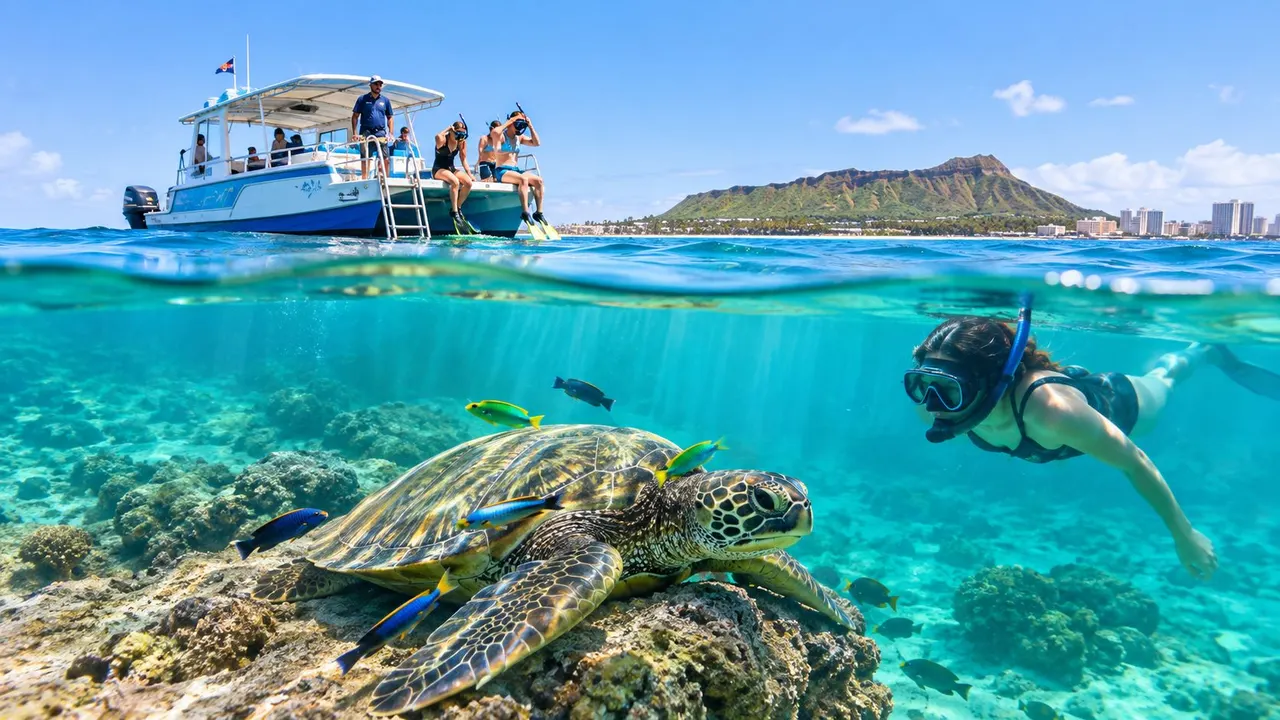
You're standing on the deck off Waikiki, mask fogging slightly, fins ready, and wondering whether the water below looks calm enough for you or your family. The boat is no longer at the beach, the reef is deeper than a typical shore-entry site, and a crew member is watching the surface instead of promising that every guest must get in.
That hesitation is useful. A Turtle Canyon snorkel is a wildlife encounter in open ocean, not a guaranteed aquarium visit. The strongest trips match the day's conditions and each swimmer's ability to the reef, then leave the turtles room to behave naturally.
Why Turtle Canyon Is Oahu’s Signature Snorkel Stop
The first thing you notice at Turtle Canyon is the change in the water beneath the boat. Waikiki's shoreline disappears behind you, Diamond Head rises to one side, and the reef opens into dark blue water marked by ledges, fissures, and volcanic ridges. Sunlight reaches the rock in shifting bands. A turtle may appear below, glide across a ledge, and settle where small reef fish begin working over its shell.
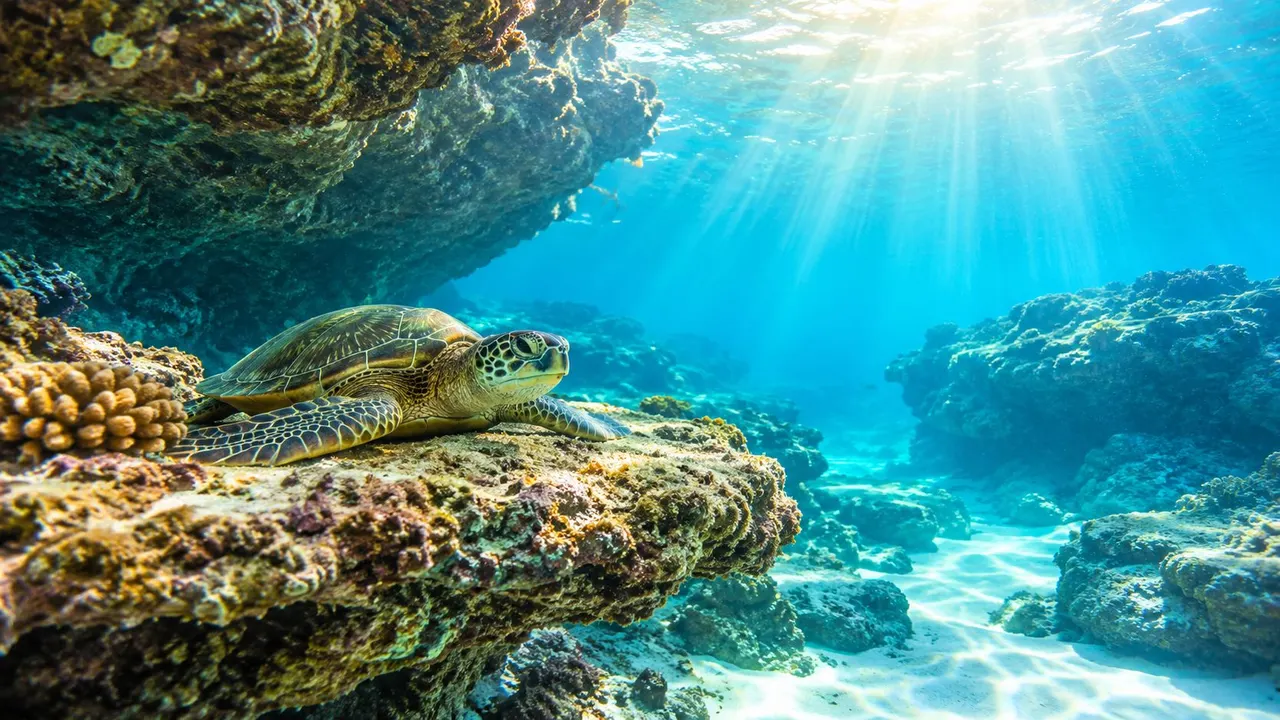
Turtle Canyon is best understood as a volcanic-reef habitat, not a deep underwater gorge. Volcanic activity and erosion shaped lava ridges, sheltered areas, and rocky openings over thousands of years. Coral growth and reef-fish behavior then turned parts of that structure into a natural cleaning station, where cleaner fish remove algae and parasites from resting Hawaiian green sea turtles. The Oahu marine life guide offers useful background before you go.
The reef works because animals use it
A honu doesn't gather at a cleaning station for visitors. It comes because the location provides a biological service. The turtle rests while cleaner reef fish move across its body, and that behavior explains why honu repeatedly use the area.
You may also see reef fish moving through the lava formations, octopus tucked into crevices, and other coastal wildlife depending on visibility and conditions. Turtles are the headline species, but the reef is more interesting when you watch the interaction rather than count animals.
That distinction changes how a captain runs the trip. A boat shouldn't crowd a resting turtle, and a guide shouldn't treat the cleaning ledge as a stage where guests can press in for photos. The best viewing position is usually the one that leaves the animal an open route to swim and surface.
What makes it different from a shore-entry snorkel
Turtle Canyon is accessed by boat from the Waikiki area, near Honolulu's main visitor district. Independent descriptions place the ride at roughly 15 minutes by boat from Kewalo Basin, near Diamond Head, as described in the Hawaiʻi Department of Land and Natural Resources sea-turtle guidance.
That creates a different experience from a beach or shore-entry site such as Hanauma Bay. You won't be walking into shallow sand, and you won't have the same easy option to stand up when nerves rise. In return, you reach an offshore reef where turtles use the habitat for their own purposes.
Captain's rule: The reef is not a coral garden built for sightseeing. It's a working habitat, and every good decision begins with that fact.
What the Turtle Canyon Snorkel Excursion Actually Looks Like
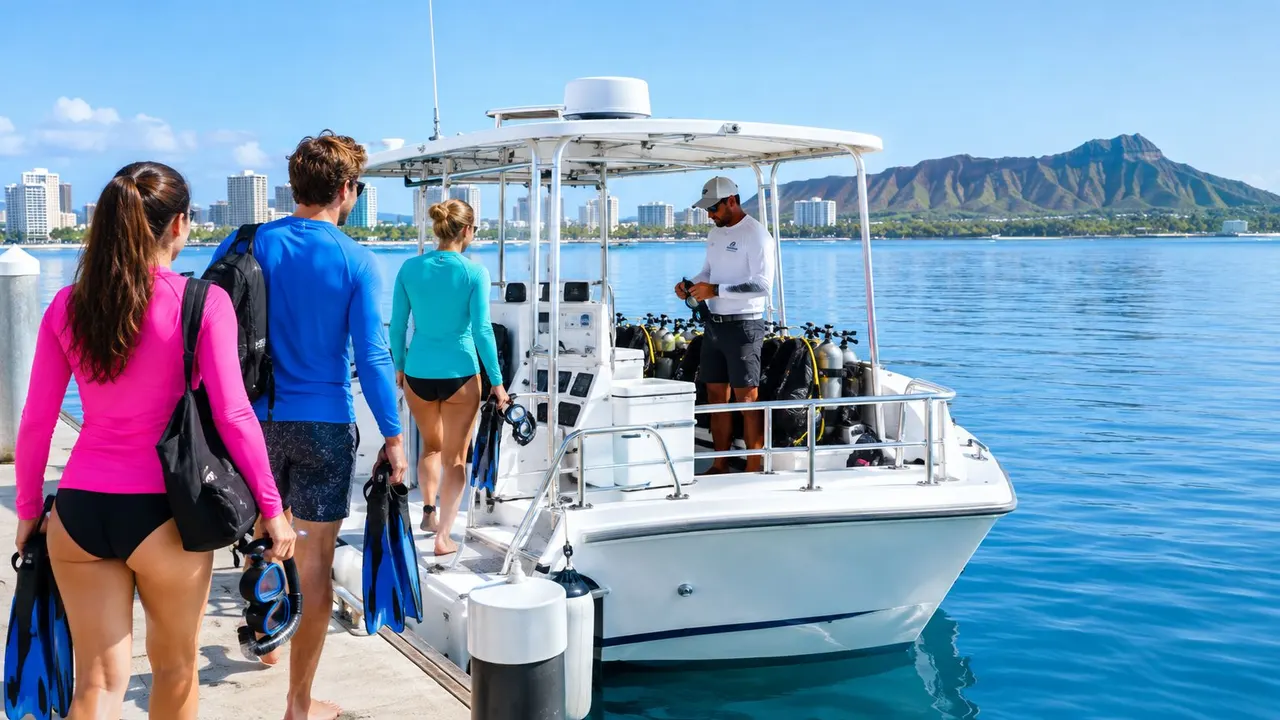
A well-run Turtle Canyon snorkel starts before the boat leaves the harbor. Check in at the slip with enough time to settle your gear and listen to the crew. The exact departure routine varies by operator, but the sequence should feel deliberate rather than rushed.
On deck, crew members help with mask, snorkel, and fin fit. Some operators also have flotation equipment and thermal layers available. A mask that seals properly matters more than owning expensive equipment. If it leaks, fix it before the boat reaches the reef.
From harbor to water entry
The ride out passes the Waikiki coastline and Diamond Head. During that time, the captain should explain where swimmers will enter, how the group will stay together, what hand signals mean, and how the crew will handle changing conditions.
The crew usually places swimmers near the active reef area rather than asking everyone to search randomly. That matters because a cleaning station has a useful viewing position, but the position changes with current, boat traffic, and animal behavior.
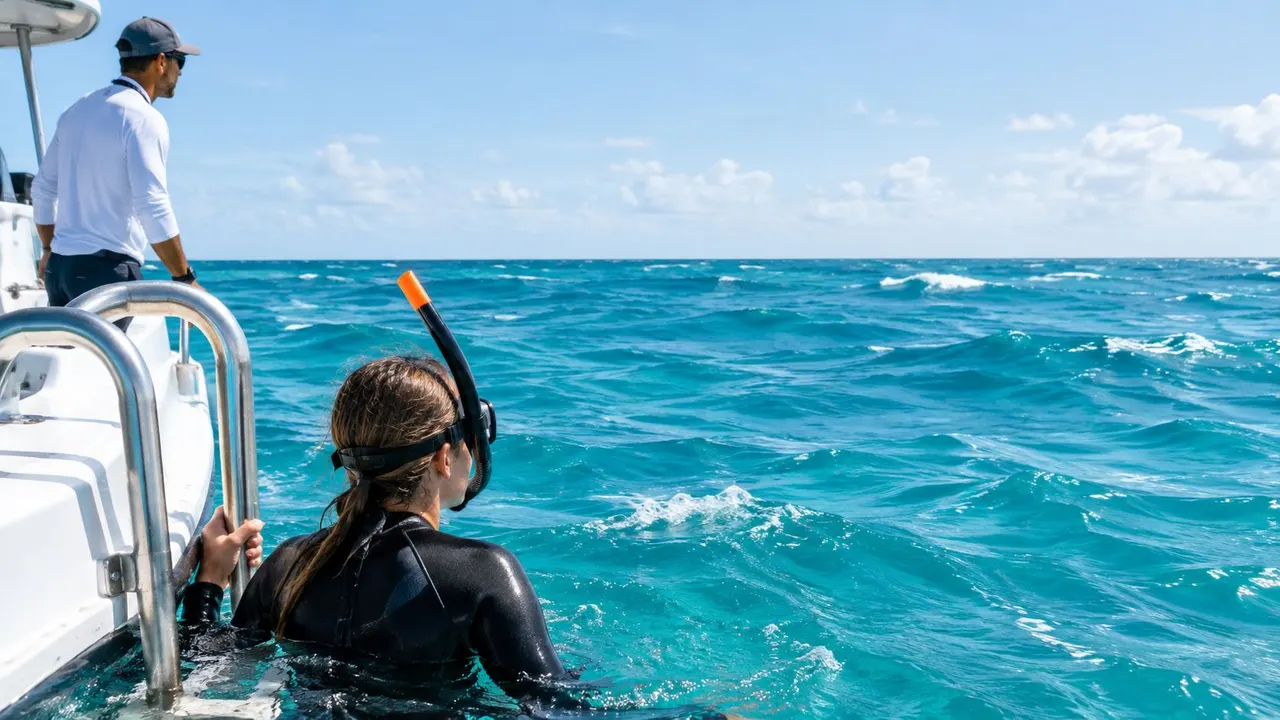
When it's time to enter, use the swim step or ladder as directed. Put your mask on before you jump, keep one hand available for the ladder, and move clear of the entry point so the next swimmer can follow safely. Nervous guests should tell the crew before entering, not after they feel overwhelmed.
What happens in the water
Expect the crew to divide the swim into controlled rotations when the group is large or conditions call for it. You may spend the first part getting comfortable at the surface, then move toward the ledges with a guide. The captain may reposition the boat or skip a later entry if wind, current, visibility, or fatigue changes the risk.
A second-time snorkeler often notices details that a first-timer misses:
- Resting behavior: A turtle may lie on the reef or sand rather than swim continuously.
- Cleaning activity: Small fish may gather around a turtle while it pauses over a particular section of rock.
- Current movement: The water can feel easy near the boat and more demanding near the reef edge.
- Group spacing: A clear viewing lane gives the turtle more freedom and gives swimmers a better view.
On the return, the boat should provide a freshwater rinse or an equivalent way to get salt off your face and gear. What guests tend to remember isn't only the sighting. It's the silence of floating above a volcanic ledge, followed by the unexpectedly calm presence of a honu that has no interest in performing.
For a practical look at the route and setting, review this guide to Turtle Canyon on Oahu.
How to Prepare for Your Turtle Canyon Snorkel
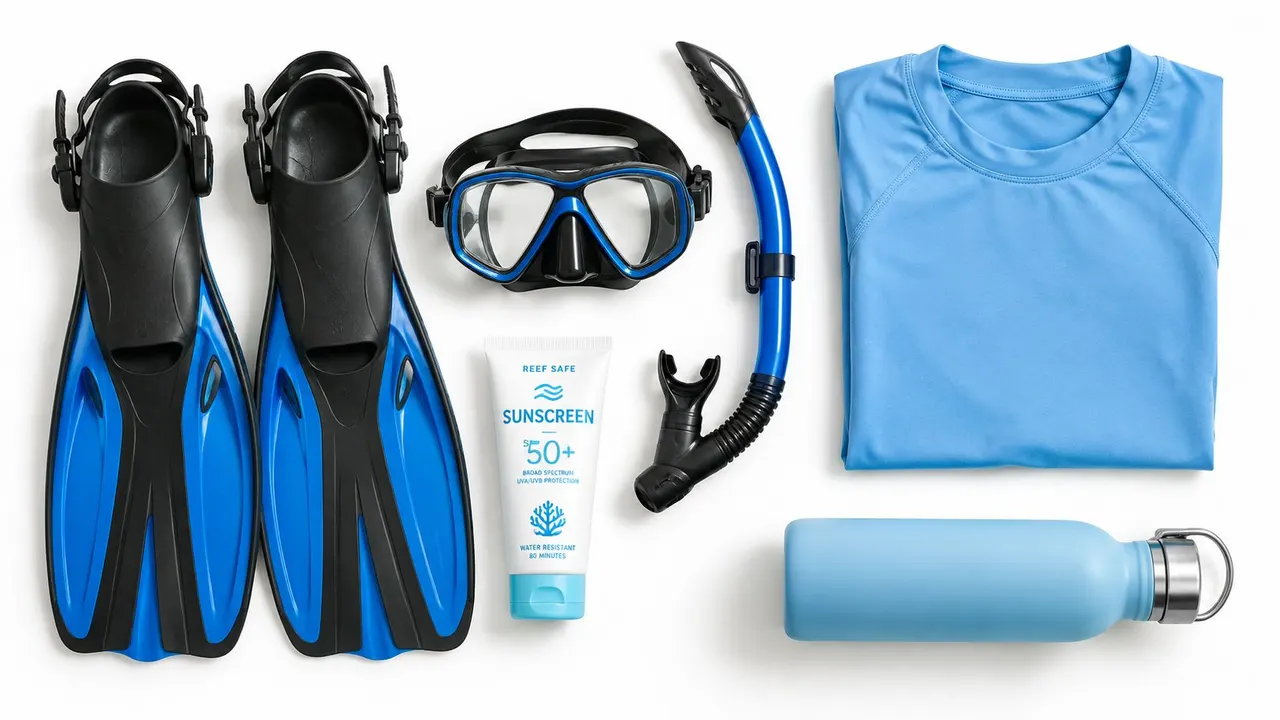
Preparation should remove avoidable problems before they reach the boat. Bring reef-safe sunscreen, a towel, a light layer for the ride, motion-sickness medication if you need it, and a dry bag for your phone. A reusable water bottle is sensible, especially if you tend to forget hydration while traveling.
Operators generally provide the mask, snorkel, fins, and flotation equipment. Leave your own gear at the hotel unless you already have a mask that fits your face well. Prescription masks and full wetsuit options may be available, but request them when you reserve rather than assuming they'll be waiting at the dock.
Match the trip to your swimming ability
You don't need to be a competitive swimmer, but you should be able to stay calm while floating and move through open water without panic. The reef isn't a sandy beach where you can stand whenever you want. If you become tired, signal early and stay near flotation or the crew.
Children need more than enthusiasm. Minimum ages vary by operator, often depending on the boat, crew, and conditions. Smaller children need properly fitted masks, not adult masks tightened until they hurt, and nervous swimmers should request a pool noodle or other flotation support before entering.
Parents should judge the least confident child, not the strongest swimmer in the family. A child who swims happily in a pool may still struggle with saltwater, wind, mask leaks, and a moving surface.
Reduce the small problems
The night before, sleep normally, drink water, and avoid alcohol. Eat a light meal before departure rather than boarding hungry or overly full. If you're prone to seasickness, discuss a patch or tablet with a qualified medical professional, and consider ginger if it works for you.
A few habits make the first minutes easier:
- Practice mask clearing: Try breathing steadily and clearing a small amount of water in a pool.
- Wear a light layer: The boat ride can feel cooler than the beach, especially after swimming.
- Pack a dry bag: A sealed phone is more useful than a phone left loose on a wet deck.
- Ask questions early: Tell the crew about motion sensitivity, anxiety, or limited swimming confidence.
The Turtle Canyon snorkel gear guide can help you make a short packing list without bringing half your hotel room.
Safety, Conditions, and When Not to Get In
A boat operating doesn't mean every guest should snorkel on every departure. Turtle Canyon is an open-ocean site, so the captain has to assess wind, swell, current, visibility, and marine traffic on the day. Hawaii Ocean Safety identifies high surf, strong winds, heavy shorebreak, and strong currents as unsafe conditions for snorkeling, and notes that morning conditions commonly offer better visibility and calmer water in its snorkeling safety guidance.
Wind creates surface chop and makes boat boarding less comfortable. Swell can turn a simple ladder exit into a demanding movement. Current increases exertion and can separate a casual swimmer from the guide or vessel. Low visibility may not look dramatic from the deck, but it makes it harder to see turtles, other swimmers, and the direction of travel.
Use a simple go-or-stay decision
Before departure, ask yourself whether you can remain calm if the water moves beneath you. Then consider the least confident participant in your group.
- Enter with confidence: You're comfortable in open water, can follow instructions, and can stay with a buddy.
- Enter with support: You're capable but anxious, tired, or inexperienced. Use flotation, stay near the crew, and limit your exposure.
- Stay aboard: You're a non-swimmer, severely motion-sick, fatigued, or unable to manage the surface conditions calmly.
Hawaiʻi Ocean Safety specifically warns that non-swimmers should stay out of the water even when wearing flotation equipment. A flotation aid supports buoyancy, but it doesn't replace the ability to respond, breathe calmly, and follow directions.
Conditions can change during the trip
A guest who feels comfortable during the first entry may feel different after swimming, sun exposure, or a change in current. If you're tired after one rotation, skipping the next entry is a sound decision, not a missed opportunity.
Wear the required life jacket while aboard, complete the buddy check, and know the hand signal for help. If you feel unwell, signal the crew immediately and move toward the ladder or boat under direction. Don't swim away to recover alone.
A good captain protects the decision to stay aboard. No turtle sighting is worth turning a manageable day into an emergency.
For a broader view of boat-based options and guest considerations, see this guide to Honolulu snorkeling.
Honu Etiquette and the Ten-Foot Rule in the Water
The most common turtle mistake isn't deliberate harassment. It's a swimmer who sees a honu and instinctively kicks toward it for a photograph. A second swimmer follows, another person drifts across the turtle's route, and suddenly the animal is surrounded at the cleaning station.
NOAA Fisheries and Hawaiʻi's Department of Land and Natural Resources recommend staying at least 10 feet, or 3 meters, from sea turtles in the water and on land, as explained in NOAA's sea-turtle viewing guidance. The distance helps turtles rest, feed, swim, and surface without changing their behavior.
When a turtle approaches you
Stop finning when you notice a turtle moving toward you. Keep your body still, move laterally away if you need more space, and leave a clear corridor to the surface. Don't back into another swimmer, and don't turn the encounter into a chase.
A turtle tolerating your presence isn't inviting touch. Calm behavior means you're less disruptive, not that the animal has become tame.
Keep your hands off the shell, flippers, and head. Never feed, ride, restrain, or block a turtle. Feeding can teach turtles to associate boats or people with food and can alter natural behavior. Operators should also use lookouts and reduce vessel speed to 10 knots or less near coral reefs, harbors, and boat ramps, following NOAA's boat and sea-turtle guidance.
Protect the cleaning station
The cleaning station only works when turtles can use it without being crowded. A swimmer who hovers directly above a resting honu can block its route to the surface. A group that forms a ring around one turtle can make the animal leave before the cleaner fish finish.
Position yourself to one side, keep your fins away from the reef, and let the animal decide how close the encounter becomes. Use a camera without flash when permitted, take a small number of photos, and then return your attention to the wider habitat.
Hawaiian green turtles are protected under federal and state law. The species received state protection in 1974 and federal threatened status in 1978, after severe depletion from overharvesting, according to NOAA's Hawaiian green turtle brochure.
Read the Hawaiʻi turtle snorkeling rules before you arrive, then follow the simplest standard underwater: slow down, create space, and let the honu leave first.
Best Time to Go, Seasonality, and Booking Logistics
Morning departures usually offer the most comfortable starting point because the surface is often calmer and visibility can be better. That's a tendency, not a promise. Wind, swell, current, and cloud cover can change the experience, and a calm-looking afternoon can still be suitable while a rough morning can require a different plan.
South-shore conditions also vary through the year. Winter swell can make the ride and water entry more demanding, while summer often brings favorable visibility, though no season guarantees a calm reef. Humpback whales overlap with the winter visitor season, so some trips may include surface wildlife viewing, but whale watching and turtle snorkeling are different activities with different priorities.
Compare the practical choices
| Factor | Morning Trip | Afternoon Trip | Winter | Summer |
|---|---|---|---|---|
| Surface comfort | Often the better starting window | Can be comfortable, but conditions may build | Swell may affect the south shore | Visibility may be favorable |
| Turtle behavior | Good opportunity to observe resting and cleaning activity | Wildlife remains unpredictable | Turtles still use the reef | Turtles still use the reef |
| Main trade-off | Earlier start | More exposure to changing wind | More variable ocean conditions | No guarantee of calm water |
| Best decision | Choose when comfort is the priority | Choose when schedule requires it | Check the same-day marine forecast | Still assess conditions before boarding |
Don't book based only on a seasonal promise. Check the National Weather Service marine forecast, ask the operator how cancellation decisions work, and confirm whether a deposit is refundable or transferable. Policies vary, so read them before paying.
Understand what you're buying
A standard excursion commonly includes snorkel equipment, flotation, crew instruction, water, and light refreshments, but inclusions differ. Reef-safe sunscreen, prescription masks, wetsuit layers, photos, and private transportation may cost extra or require advance notice.
Booking direct can make it easier to discuss swimming ability, children, medical concerns, and weather policies with the operator. A hotel concierge or reseller may be convenient, but confirm the actual departure harbor, check-in time, cancellation terms, and operator name before you finalize the reservation.
Alternatives and Upgrades Worth Considering
The right upgrade depends on the problem you're trying to solve. A larger boat may provide more room and amenities, while a smaller charter may give you more control over timing. Neither guarantees better wildlife behavior. The same reef remains a wild habitat.
A standard Turtle Canyon trip suits confident swimmers who want direct access to the cleaning-station area without paying for features they won't use. A deluxe snorkel cruise can be a better fit for families who value stability, deck space, flotation options, and extra water activities. The premium price matters when those amenities reduce stress, but the standard charter can still reach the same reef.
A sunset cruise offers softer light, a quieter atmosphere, and a strong choice for couples or photographers. The trade-off is important: turtle activity may be lower, and the trip prioritizes ambiance over a focused daytime wildlife encounter.
Match the option to the traveler
| Option | Group Size | Typical Price | Best For | Key Trade-off |
|---|---|---|---|---|
| Standard Turtle Canyon snorkel | Varies by operator | Varies by operator | Confident swimmers and first-time guests with support | Less space and fewer premium amenities |
| Deluxe snorkel cruise | Varies by operator | Higher than standard options | Families wanting stability and deck activities | Costs more for comfort and features |
| Sunset cruise | Varies by operator | Varies by operator | Couples and golden-hour photographers | Atmosphere replaces a focused turtle schedule |
| Whale-watching trip | Varies by operator | Varies by operator | Travelers prioritizing seasonal surface wildlife | It isn't a turtle-focused snorkel |
| Private charter | Customizable | Higher than shared trips | Groups seeking privacy and flexible timing | Higher total cost and more planning |
| Alternative operator | Varies by operator | Varies by operator | Guests comparing harbors and itineraries | Departure point and inclusions may differ |
Living Ocean Tours is often presented as a top-rated and most-reviewed snorkel company on Oahu, and its Turtle Canyon offering includes guided snorkeling from Kewalo Basin. If you're comparing providers, also consider Snorkel Turtle Canyon as a great alternative, then compare crew support, boat layout, cancellation terms, and wildlife-viewing standards rather than relying on a headline claim.
Bringing It All Together for Your Oahu Trip
Choose the trip by matching the least confident swimmer to the actual ocean, not by choosing the departure with the most dramatic marketing. A confident open-water swimmer may be comfortable on a standard Turtle Canyon excursion. A family with young children or hesitant adults may value the extra stability, space, and flotation options of a deluxe catamaran more than a shorter price.
Book a morning slot when possible, but still check the same-day marine forecast. Arrive with reef-safe sunscreen, a towel, a light layer, and any motion-sickness remedy you already know works for you. Tell the crew about anxiety, fatigue, or limited swimming ability before the boat reaches the reef.
Make the conservation decision part of the booking
Hawaiian green turtles have recovered substantially from historic depletion, but they remain protected. Nesting has increased by approximately 5% per year over the last two decades, with nearly 500 nesting females recorded annually compared with 67 in 1973, while NOAA materials describe fewer than 4,000 total nesting females, as reported in NOAA's conservation material.
Those figures put a sighting in context. Recovery isn't permission to crowd, touch, feed, or pursue wildlife. It's a reason to keep the protection standards that allowed the population to recover.
The best operator will explain reef etiquette, fit equipment properly, watch the group, and cancel or relocate when conditions exceed the group's ability. A responsible guest accepts that a captain may change the plan, rotate the boat, or recommend staying aboard.
Turtle Canyon isn't an aquarium. The water can change, turtles can leave, and visibility can close before you get the perfect photograph. The strongest trips are the ones where guests see a functioning reef, make conservative choices, and leave the cleaning station exactly as they found it.
Living Ocean Tours offers guided Turtle Canyon snorkeling from Kewalo Basin with equipment, instruction, and crew support focused on safe, responsible wildlife viewing. Visit Living Ocean Tours to compare the Turtle Canyon excursion with other Waikiki ocean experiences and choose the departure that fits your group.


