
Turtle Canyon Snorkel in Waikiki: What to Expect
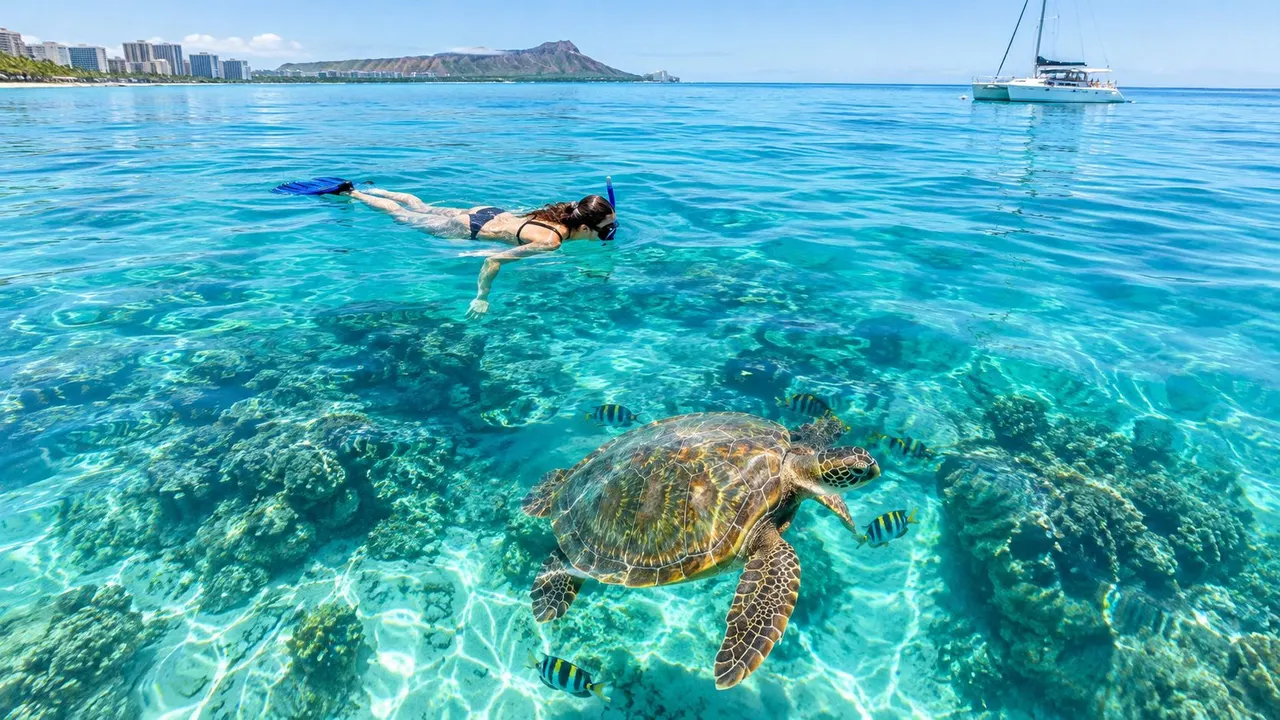
You're standing on the dock with a mask in one hand, a little sunscreen on your shoulders, and that mix of excitement and doubt that hits before any first snorkel. Turtle Canyon feels close enough to be easy, but wild enough that you know it won't behave like a swimming pool. That's exactly why people love it, and exactly why a good Turtle Canyon snorkel works best when you know what you're looking at before you get on the boat.
A Morning on the Water at Turtle Canyon
I like the early trip because the day still feels soft when you arrive at Kewalo Basin Boat Harbor near Waikiki. The harbor has that working-waterfront energy, crews loading gear, guests finding their footing, and the boat rocking just enough to remind you that you're leaving land behind. From there, the ride out is short, and as the skyline drops away, Diamond Head starts to frame the horizon in a way that makes even nervous first-timers relax a little.
By the time Turtle Canyon comes into view, the mood on board usually changes. People stop talking over one another, lean toward the rail, and start scanning the water for that first honu shape below the surface. If you've got your mask and snorkel ready, slipping in feels less like jumping into the unknown and more like stepping into a quiet wildlife theater.
Practical rule: the best first impression is usually calm, not crowded. Let the guide set the pace, then let the reef reveal itself.
Once you're in the water, the experience is simple. You float, breathe, and look down at the ledges and sandy patches where turtles move through the light. If you want a broader look at how the boat side of the day works, the offshore boat tour overview gives a useful sense of the ride before the swim.
The part that tends to stay with you isn't speed or distance. It's the hush that settles over the group when a turtle passes below, slow and unbothered, while everyone else does the smartest thing possible, stays still.
What Turtle Canyon Actually Is
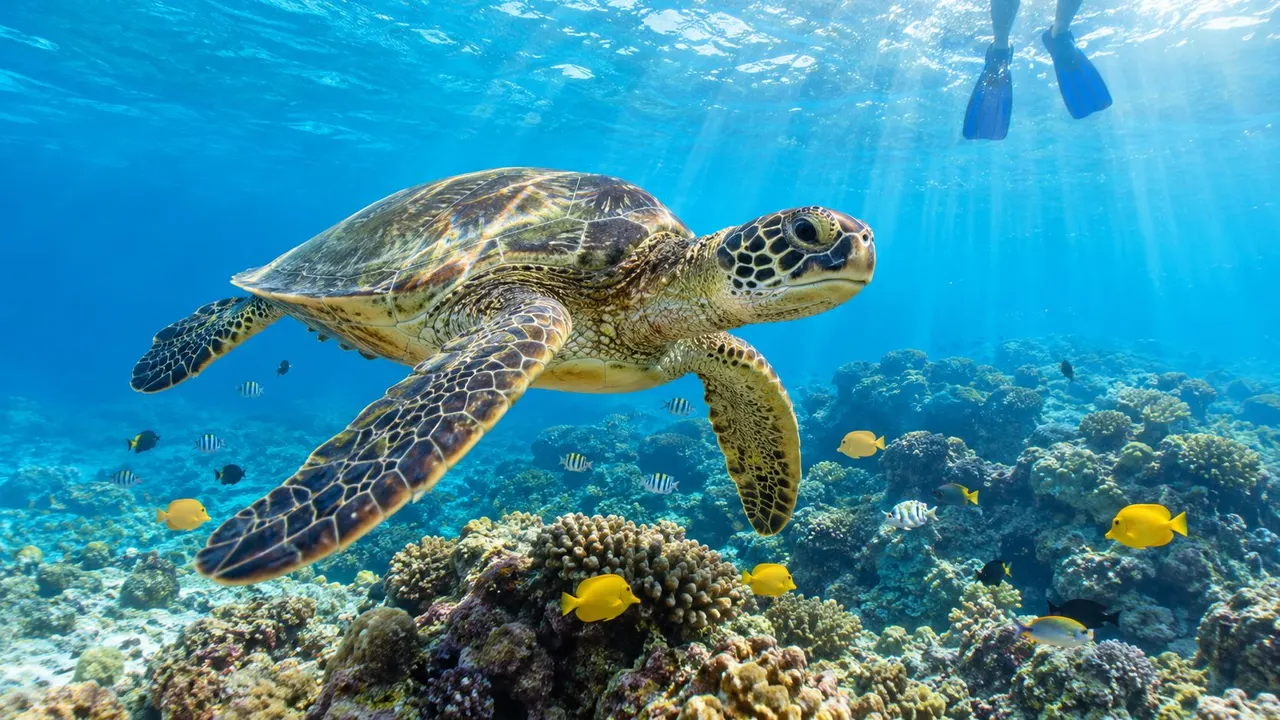
Turtle Canyon isn't a deep underwater canyon in the way people often imagine it. It's better thought of as a shallow nearshore reef habitat off Waikiki where Hawaiian green sea turtles gather, rest, feed, and use cleaning stations on the reef. The structure is low and sunlit, which is why you can snorkel it from the surface instead of diving down to find the action.
Think of it like a turtle bus stop
A simple way to understand the site is to treat it like a bus stop for turtles. The reef provides a place to pause, graze, and get cleaned by smaller fish, then move on when they're ready. Hawaiian green turtles commonly forage on reef flats and shallow rocky shelves, often at depths of 3 meters or less, and adult foraging areas are usually shallower than 10 meters, which is why snorkelers can see them from above without free diving (NOAA biological report).
That shallow profile changes how you should think about the snorkel. You're not chasing a destination underwater, you're floating over habitat and watching the reef do its work. The clear water, reef edges, and constant movement of fish are part of the setting, but the turtles are the headline.
The key takeaway is simple. Turtle Canyon is a beginner-friendly surface-viewing reef, not a deep dive site, and that's what makes it so accessible for casual swimmers and first-time snorkelers.
Wildlife You Are Likely to See

At the first clear view from the boat ladder, look for the broad, rounded shape of the Hawaiian green sea turtle, or honu. It may rest near a ledge, glide across the reef, or rise for air before settling again. Hawaiʻi's Division of State Parks describes these turtles as typically 2 to 3 feet in shell length and notes that they feed on limu, or seaweed, in calm bays and shallow offshore reefs (DLNR State Parks).
Calm turtle, stressed turtle
A relaxed turtle moves with little urgency. It may hold position, travel in a straight line, or drift upward and down again. Watch that rhythm rather than trying to swim closer. For a closer look at the species mix, see this Turtle Canyon reef overview.
A turtle under pressure gives clearer signals. It may turn sharply, swim away from the group, stay low, or head toward open water after snorkelers gather around it. Give the animal room immediately and let it choose the direction.
A good sighting isn't measured by how close you got. It's measured by whether the turtle kept acting like a turtle.
Reef fish fill the spaces around the honu. Surgeonfish, butterflyfish, and cleaner wrasses move through feeding and cleaning areas, entering and leaving the coral like traffic at a busy corner. Their presence helps explain why turtles return to familiar reef patches.
The useful skill is reading behavior, not collecting names. A turtle that remains calm near a ledge or passes at its own pace is comfortable. If it begins leaving, stop following and become part of the background. That small choice protects the animal and often gives everyone a better view.
Who This Tour Is For
A Turtle Canyon trip suits people who can float in open water, breathe through a snorkel, and stay calm when the ocean moves. You do not need to be an experienced snorkeler, but you do need enough water confidence to follow instructions and remain with the group.
Swimming ability, ocean comfort, and snorkel skill aren't the same thing
A strong swimmer who has never worn fins may need a few minutes to adjust. Someone who can float comfortably and clear a mask will often settle in with a guide nearby. A person who cannot swim should remain on the boat and should not snorkel, even with a flotation device, according to Hawaiʻi Ocean Safety guidance (TurtleCanyon.org FAQ).
Living Ocean Tours welcomes children ages 3 and up on the Turtle Canyon excursion. For younger children, calm behavior and the ability to follow directions matter more than snorkeling experience. They should stay close to the adult accompanying them. A grandparent who prefers the boat ride and watching for turtles from the deck may enjoy the outing more than someone who pressures them into the water.
| Quick readiness check for Turtle Canyon | Can snorkel on this tour | Better alternative |
|---|---|---|
| Strong swimmer, new to snorkeling | Usually yes, with a guide and time to adjust | Start slowly and stay near the group |
| Comfortable floating, nervous in open water | Maybe, if conditions are mild and the guide knows | Boat ride or shallow surface viewing |
| Cannot swim | No | Stay on the boat |
| Child ages 3 and up, calm in water | Often yes, with close adult supervision | Boat-side viewing if they're hesitant |
The ocean also decides whether a planned swim makes sense. Hawaiʻi Ocean Safety recommends avoiding high surf, strong winds, heavy shorebreak, or currents. Conditions can change the feel of the ladder entry, the surface swim, and the distance you must cover before spotting a turtle. A good guide matches the site and the day to the group rather than treating every booking as a required swim.
The same judgment helps during a sighting. Watch the turtle's direction and breathing rhythm, keep your body relaxed, and let the animal choose the distance. A participant who is comfortable in the water can enjoy the encounter without chasing it.
How to View Turtles Responsibly
The easiest rule to remember is the 10-foot, or 3-meter, distance. NOAA and Hawaiʻi DLNR both recommend staying that far from sea turtles in the water and on land, and Hawaiʻi tourism guidance adds that visitors shouldn't touch, ride, feed, or encircle them (NOAA and DLNR viewing guidance).
The in-water code that keeps the encounter natural
- Stay to the side: don't hover directly over a turtle or cut off its route to the surface.
- Leave the path open: if a turtle turns or moves away, stop following.
- Keep your hands to yourself: no touching, grabbing, or trying to steady the animal.
- Don't crowd the group: one turtle with five swimmers around it is already too many.
- Keep it brief: Hawaiʻi tourism guidance recommends limiting a single viewing to roughly 30 minutes so the animal can keep behaving naturally (Go Hawaiʻi protected species guidance).
That same logic applies to the boat crew. If a turtle surfaces near the vessel, the right move is to shift into neutral. For reef travel, Hawaiʻi DLNR says vessels should reduce speed to 5 to 10 knots over shallow reefs, near harbors, and around boat launches, and maintain no-wake speed within 200 feet of shore (DLNR respect wildlife protocols). Those are not just rules for operators, they're part of the whole experience.
If the turtle has to change its behavior because you're there, you're too close.
For practical trip planning, the Turtle Canyon safety and snorkel guidance is a helpful reference point. The goal isn't a perfect photo, it's a clean, calm encounter that leaves the turtle free to keep living its day.
Best Time of Day and Best Season
For a first Turtle Canyon trip, an early departure usually offers the gentlest introduction. Morning water is often smoother, visibility tends to be clearer, and there is less wind chop to manage when you climb down the ladder. That combination gives beginners more time to settle their breathing, float comfortably, and notice a turtle's movements instead of fighting the sea.
Morning, afternoon, and the conditions you will feel
Afternoon trips can still be rewarding. The sunlight may be softer, the pace can feel more relaxed, and the ocean may have developed more surface texture. The difference is similar to walking on a freshly swept path versus one with a light breeze moving sand across it. Neither prevents a good outing, but the morning often feels easier.
For a broader comparison of conditions around the island, see this Oahu snorkeling guide.
Season changes the feel of the ride as well. Summer generally brings the calmest ocean conditions, while fall remains warm but can be more variable with trade winds. Between January and March, humpback whales may be visible during the boat ride. That possibility adds to the journey without changing the main purpose of the snorkel.
The long-term turtle story helps explain why this area can offer regular sightings. Hawaiian green turtle nesting females increased from 67 in 1973 to nearly 500 per year on average in recent years, including a record of 808 nesting females in 2011, according to DLNR sea turtle data. A growing population does not make turtles comfortable with close approaches. Read a turtle's behavior: steady swimming or a change in direction means it needs space, while a calm animal resting below still deserves an open route.
Book the earlier departure if you can. It leaves more room for changing weather, calmer water, and the rest of your day.
Morning is a preference, not a promise. Ocean conditions can shift quickly, so the captain makes the final safety and routing decision. Choose the early window, then keep enough flexibility for the sea to set the pace.
How Living Ocean Tours Runs the Trip
The Turtle Canyon snorkel excursion runs as a two-hour outing from Kewalo Basin, with the rhythm most guests care about already built in, check-in, gear fitting, briefing, boat ride, snorkel time, and return. The setup is straightforward, mask, snorkel, fins, and flotation support are included, and the crew walks guests through what to do before anyone gets near the ladder. Living Ocean Tours says it runs daily departures and welcomes ages 3 and up, which is helpful for families trying to pick a trip that won't overwhelm younger kids.
What the boat and guide setup feel like
The boat is a comfortable catamaran-style vessel with shade, a freshwater rinse, and an easy ladder back aboard. That matters more than people expect, because a good snorkel trip is partly about what happens after you get wet. If the ladder is awkward, the whole group feels it.
The other thing guests notice fast is the attention from the crew. First-timers usually need real eyes on them, not just a speech from the dock, and a guide-led surface swim pattern makes that easier to manage. Living Ocean Tours is positioned in its own materials as the top rated and most reviewed snorkel company on Oahu, and the review widget below gives readers a direct look at current guest feedback.
When you're ready to see the trip details and reserve a slot, the official Turtle Canyons Snorkel Excursion page is the place to start. If you want the actual booking step, use the button below.
Pairing Turtle Canyon with the Rest of Your Oahu Day
A smart Oahu ocean day usually starts with the Turtle Canyon snorkel in the morning, then leaves room for something different later. If your group wants more playtime on the water, the Deluxe Waikiki Snorkeling and Wildlife Cruise adds a waterslide, water trampoline, and lily pad, which makes it a better fit for families who want more than a reef stop.
For travelers comparing snorkel operators, Snorkel Turtle Canyon is a great alternative to look at. Different boats, crews, and pacing suit different families, so comparing the tone of the outing can be just as important as comparing the reef itself.
Build the day around your energy, not just the location
If you want a full Waikiki ocean itinerary, a sunrise-to-lunch snorkel pairs well with an evening on the Waikiki Sunset Cruise. If you're visiting in winter, the Waikiki Whale Watching tour fits naturally into the same trip style, because it gives you a different kind of wildlife encounter without repeating the same water time.
The nicest part of planning it this way is that nothing feels crammed. Turtle Canyon gives you the close-up wildlife moment, the sunset cruise gives you the golden-hour view, and a winter whale watch adds the seasonal bonus if your dates line up. That combination turns one snorkel into a fuller day on the water instead of a single item on a checklist.
If you want a morning that's calm, guided, and easy to understand before you even step on the boat, Living Ocean Tours runs the Turtle Canyon trip with the gear, briefing, and in-water support that first-timers usually need. Take a look at Living Ocean Tours and book the departure that fits your Waikiki plans, then show up ready to float, watch, and let the turtles come to you.


