
Turtle Canyon Oahu: How Green Turtles See Color
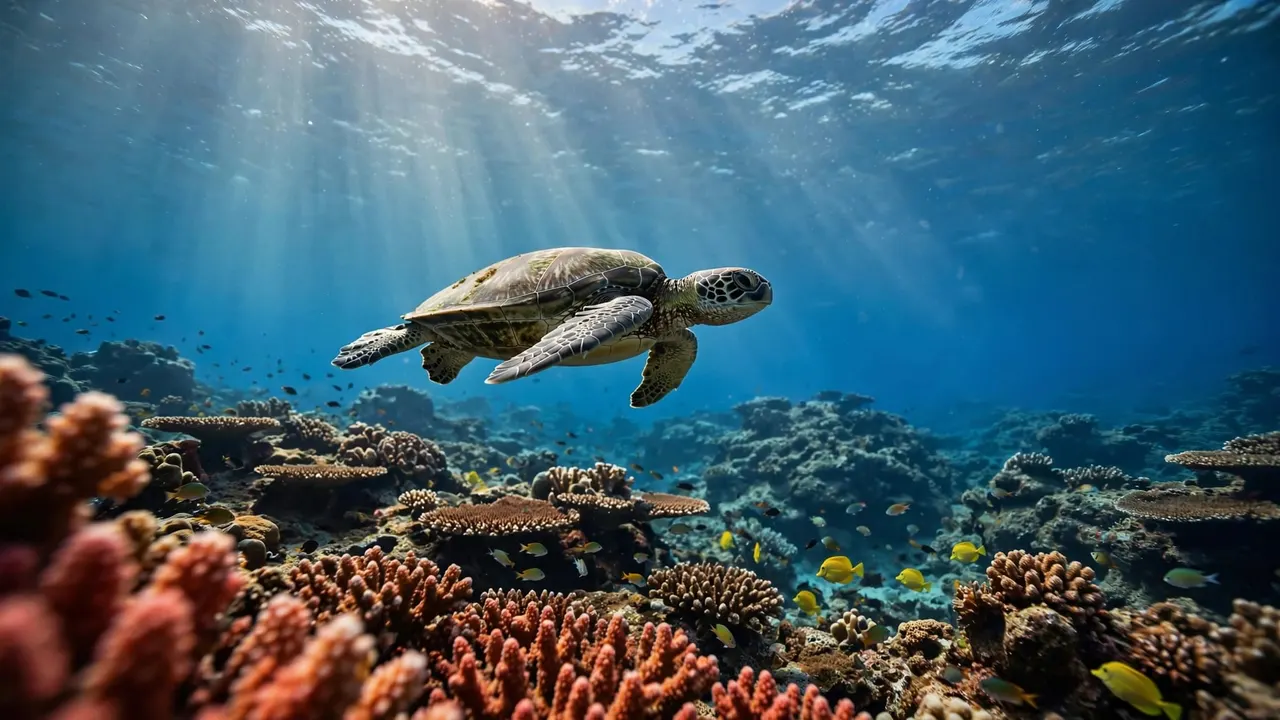
Green turtles have the eye structures needed for color vision, but you can’t recreate their view through your snorkel mask. At Turtle Canyon Oahu, sunlight, water clarity, and depth all influence the colors available to their eyes.
With us at Living Ocean Tours, you can explore this reef while watching Hawaiian green sea turtles, or honu, follow their natural routines. Understanding underwater light gives you another reason to slow down and notice the scene around them. Start with the difference between the colors present in the water and the colors an animal can perceive.
Key Takeaways
- Green turtle eyes contain the anatomy needed for color vision, although that doesn’t reveal exactly how a reef looks to a turtle.
- Water absorbs red light more readily than blue light, so the available colors change beneath the surface.
- Turtle Canyon Oahu is natural reef habitat where honu may pause while small fish clean their shells and skin.
- You can observe these behaviors without approaching closely, touching turtles, or trying to attract their attention.
The Reef Setting at Turtle Canyon Oahu
You don’t need a laboratory to appreciate why underwater vision matters here. Offshore from Waikiki, reef structure, open water, and shifting sunlight create different viewing conditions within the same habitat.
A turtle moving above the reef encounters a different background than one rising toward the surface. Against bright water, its outline may stand out clearly. Above darker reef structure, the same animal can blend into its surroundings.
Meanwhile, small reef fish gather around turtles at natural cleaning stations. They remove algae and other material from the turtles’ shells and skin. You might see a honu hover while fish move around it, then watch that turtle leave without warning.
That interaction gives you something more useful to observe than shell color alone: behavior within a living reef community.
Our guide to Turtle Canyon snorkeling introduces the setting and the wildlife experience. However, the reef isn’t a controlled attraction. Turtles choose when to arrive, rest, surface, and move elsewhere.
Because the animals move independently, a quiet moment doesn’t mean the habitat has stopped functioning. Keep watching the surrounding water as well as the reef below.
What Green Turtle Eyes Tell You About Color
Anatomy provides evidence for color vision
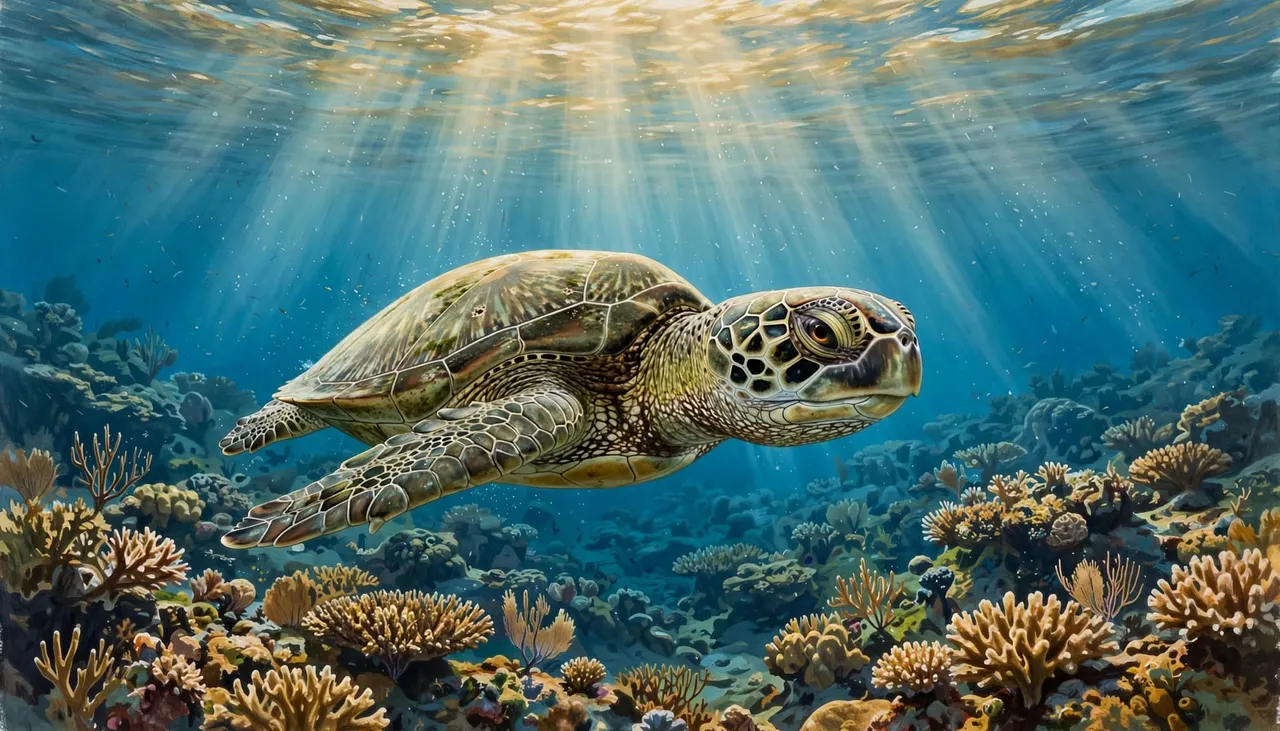
Your eyes detect light through specialized cells in the retina. Cones support color vision, while rods are particularly useful in dim conditions. Green turtle eyes also contain structures associated with detecting different parts of the light spectrum.
The 2018 paper research on green turtle color vision, by R. J. Hall and colleagues, discusses anatomical evidence supporting color vision in Chelonia mydas. That’s the scientific name for the green turtle you may encounter here.
The useful takeaway is straightforward: you shouldn’t picture a honu’s world as a simple black-and-white scene. Its visual system has the anatomy necessary for color discrimination.
Anatomy doesn’t recreate a turtle’s experience
Knowing how an eye works doesn’t let you see through it. The brain also processes incoming signals, and the surrounding light determines which signals are available.
For your snorkeling experience, separate visual capability from the appearance of the underwater scene. A turtle may possess color-sensitive structures, yet those structures can respond only to light reaching its eyes.
You also can’t establish a color preference by watching one encounter. A turtle turning toward something might respond to movement, contrast, or another cue.
That distinction keeps your observations useful. You can describe what a turtle does without assigning a precise color experience to it.
Why Underwater Colors Change With Depth
Water filters the light before an eye receives it
Sunlight contains different wavelengths, which you perceive as different colors. Once that light enters the ocean, water absorbs some wavelengths more readily than others.
The University of Hawaiʻi at Mānoa’s explanation of light in the ocean describes how red light is absorbed at shallower depths than blue light. As a result, an underwater scene often looks increasingly blue or blue-green.
There isn’t one universal depth where every object suddenly changes color. Visibility, suspended particles, the sunlight angle, and the distance light travels through water all affect the view.
At Turtle Canyon Oahu, these changes influence the light reaching both your eyes and a turtle’s eyes.
An object’s color depends on its available illumination
You see an object’s color because it reflects some of the light falling on it. If particular wavelengths have already been absorbed, the object can’t reflect much of that missing light toward you.
That’s why a warm-colored object can look duller underwater, even though its surface hasn’t changed. Meanwhile, a nearby object may retain more color because light travels a shorter distance between it and your eyes.
A faded underwater color can reveal what happened to the light, rather than anything unusual about the animal’s eyesight.
You don’t need to dive deeper to appreciate this effect. From the surface, notice how a nearby fish differs from a similar fish farther across the reef.
What You Can Learn by Watching the Reef
Follow movement, contrast, and background
Instead of concentrating only on bright colors, watch how animals become easier or harder to distinguish against different backgrounds.
A turtle’s flipper movement may catch your attention before you recognize its shell. Similarly, a fish can disappear against reef texture, then become obvious when it crosses open water.
These observations show you that an underwater scene contains more than hue. Edges, brightness, and movement also help animals detect their surroundings.
However, your ability to spot something doesn’t establish how easily a turtle sees it. Your eyes and its eyes aren’t interchangeable measuring tools.
At Turtle Canyon Oahu, patient observation gives you a richer experience than trying to guess what every color means.
Keep cleaning behavior separate from feeding
When small fish gather around a turtle, you may be watching cleaning rather than a feeding interaction for the turtle itself.
NOAA’s green turtle species profile explains that green turtles are unusual among sea turtles because they primarily eat plants. Around a cleaning station, the fish remove material from the turtle’s body.
That makes the interaction worth watching closely from a respectful distance. Notice where the fish gather, whether the turtle holds position, and when it decides to move.
Our discussion of green turtles and reef habitat adds context to these encounters. Still, a cleaning visit doesn’t demonstrate that one particular color attracted the turtle. Several features of the habitat and interaction may matter.
Observe Turtles Without Changing Their Behavior
You get a better view of natural behavior when you give wildlife room. Chasing a turtle changes the encounter and can interrupt the activity you hoped to watch.
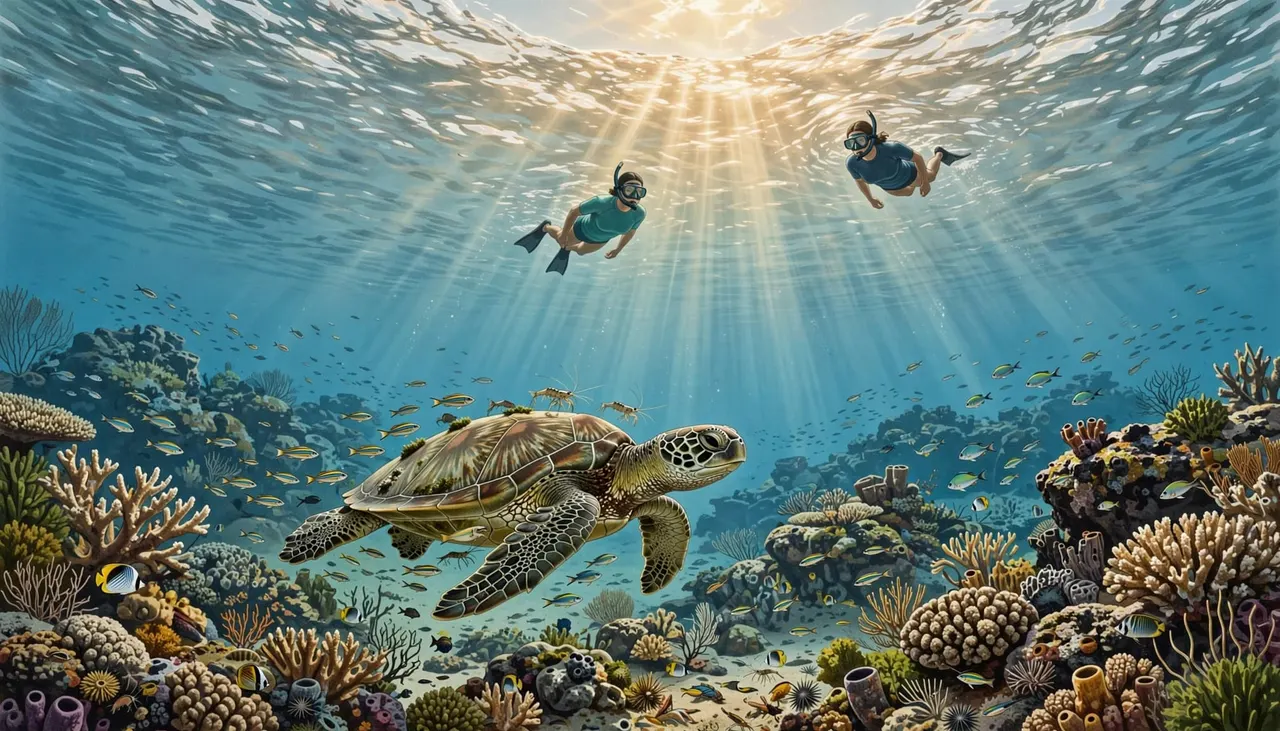
Stay at least 10 feet, about 3 meters, away. Leave an open route to the surface because turtles breathe air. If one swims toward you, calmly create space instead of reaching out.
Hawaiʻi’s Department of Land and Natural Resources explains that Hawaiian sea turtles are protected under federal and state law. Never touch, feed, pursue, or harass them.
You also don’t need a brightly colored object to test their vision. Waving equipment or offering food turns observation into interference.
Keep your movements controlled and your attention on your surroundings. Floating calmly helps you notice the fish and reef without crowding the turtle.
For photographs, use the view available from your position. A camera’s color processing can make an image look warmer or more vivid, but that result doesn’t show what the turtle perceived.
At Turtle Canyon Oahu, the most rewarding detail may be a small one: fish approaching a resting honu while you remain far enough away to leave the interaction undisturbed.
Explore Turtle Canyon With Professional In-Water Support
You can spend more attention on the reef when you have help with the practical side of snorkeling. We’re Living Ocean Tours, and we’re the only tour company with professional snorkel guides in the water with you.
Our departures from Kewalo Basin Boat Harbor put you minutes from Waikiki before your offshore outing. Beginners and families receive guidance with snorkeling basics and respectful wildlife viewing.
You can browse our ocean outings below.
For a turtle-focused outing, our Turtle Canyons Snorkel Excursion brings you to the reef with guidance and flotation support. Tell the crew if you’re nervous before entering the water so they can help you understand the entry and snorkeling plan.
You’ll still be observing wild animals in changing ocean conditions. In-water support helps you manage your own experience while respecting theirs.
Our Turtle Canyon booking advice covers planning your outing. When you’re ready for guided reef time, choose your departure below.
See the Reef With More Understanding
At Turtle Canyon Oahu, you can appreciate green turtle vision without pretending to know exactly what a honu sees. Its eyes provide evidence for color vision, while the water filters the light available beneath the surface.
Watch how brightness, distance, and background change your view. Then give turtles the space to continue cleaning, resting, and surfacing.
Your most useful viewing tool is patient observation. It helps you notice more of the reef while leaving its wildlife free to carry on.


