
Snorkeling Waikiki Made Easy and Unforgettable
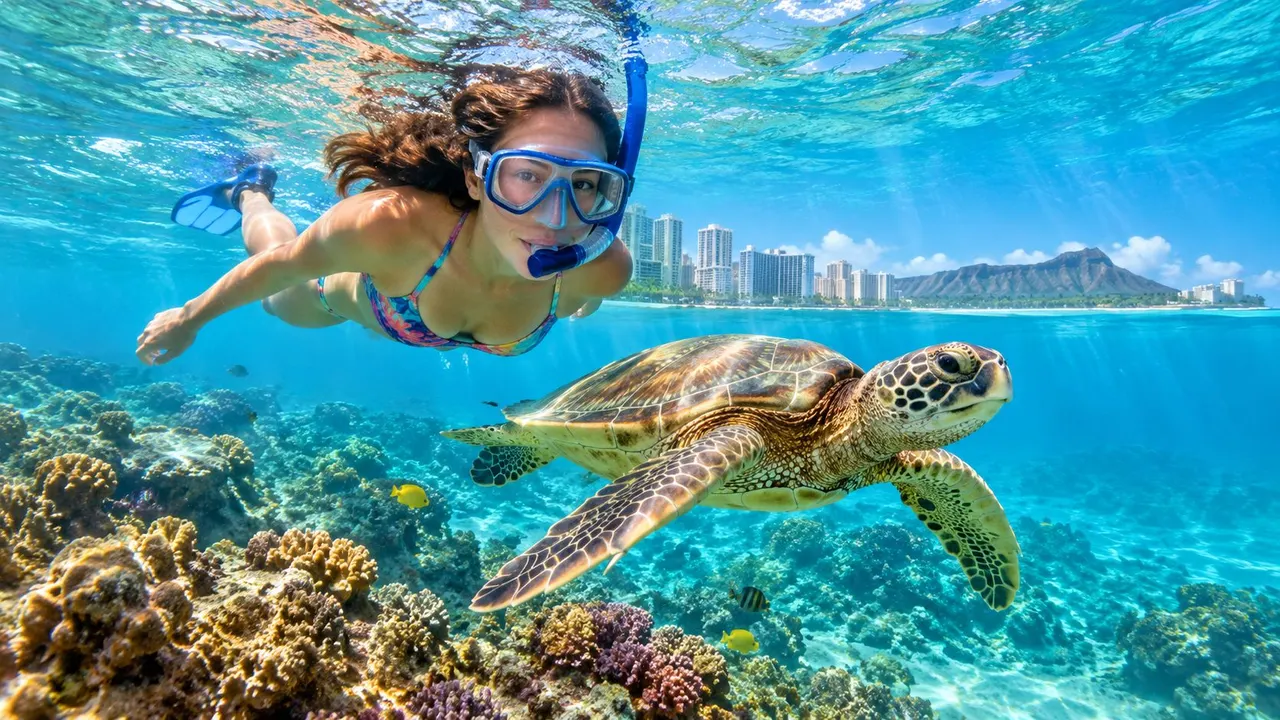
You've just arrived in Waikiki, the sun is up, Diamond Head is glowing, and someone in your family is holding a new mask that hasn't touched the ocean yet. The beach looks inviting, but one question matters before anyone walks into the water: should you snorkel from shore, or take a boat to a reef where turtles regularly gather?
That choice shapes the whole experience. Shore snorkeling can be simple and convenient, while a guided boat trip can take you beyond the busiest swim areas to a wildlife-focused site such as Turtle Canyon. Both options can be memorable, but ocean conditions, recent rain, comfort in the water, and the needs of children or older travelers should guide your decision.
This guide treats snorkeling Waikiki the way I explain it to first-time guests on the boat. You'll learn how the reef works, why turtles use offshore cleaning stations, when visibility is most likely to cooperate, how to recognize changing conditions, and what responsible turtle viewing looks like. You'll also get a practical way to decide whether a beach entry or guided trip fits your group.
Introduction to Snorkeling Waikiki for First Time Visitors
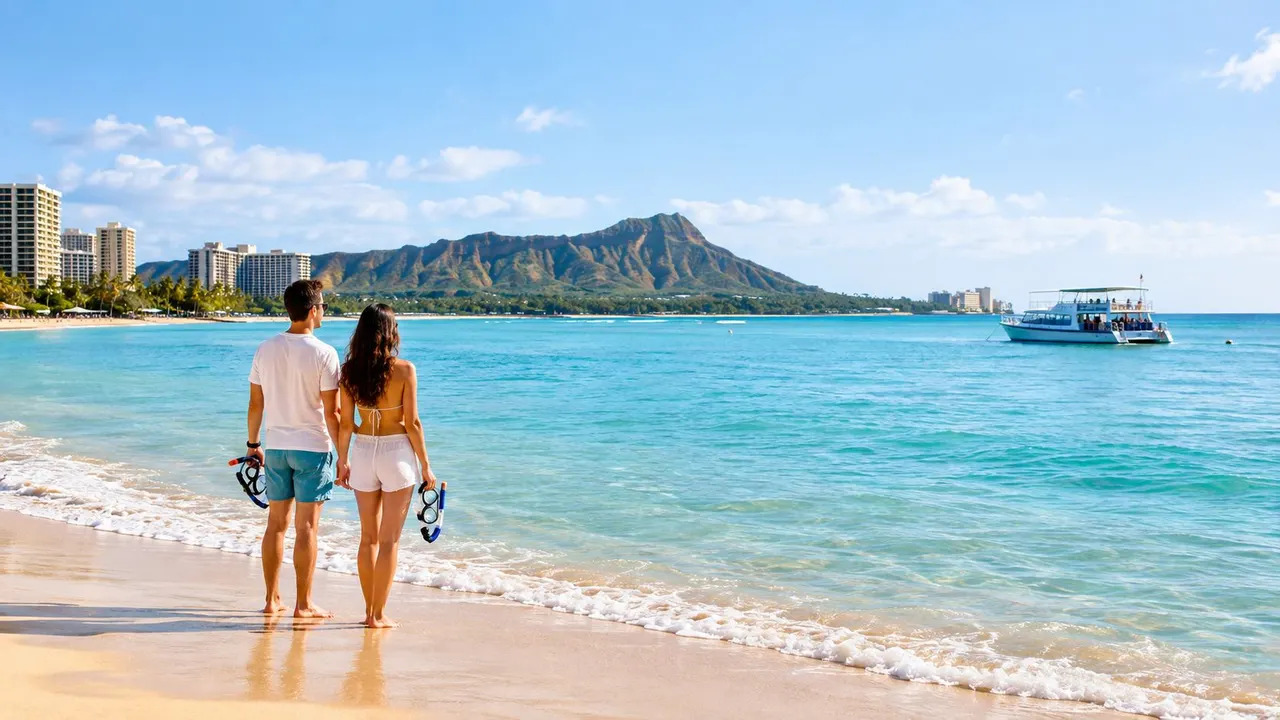
Waikiki feels easy because the water is close, the beach is busy with swimmers, and tour boats depart near the hotels. That convenience can hide the details that make a snorkeling day comfortable. A clear morning can turn hazy after wind stirs sand, and a calm-looking surface can still be tiring for someone who's new to breathing through a mask.
The wildlife is a major reason people search for snorkeling Waikiki in the first place. Hawaiian green sea turtles are now the most commonly encountered sea turtle in Hawaiʻi's reef habitats, and they're the only local sea turtle known to bask on beaches. Protection began in 1978, and conservation records show the population has grown by more than 50% over the last 30 years. One major nesting site at French Frigate Shoals accounts for about 90% of Hawaiian nesting activity, which helps explain why turtles are such a foundational part of the Waikiki experience. The Waikiki Aquarium's green sea turtle guide provides the local conservation context.
The first decision is comfort, not confidence
A family with strong swimmers may enjoy a self-guided shore entry when the water is settled. A group with young children, nervous swimmers, or grandparents may prefer a boat with flotation equipment, instruction, and a guide watching the conditions around them.
You'll also want to think about timing. Morning sessions often offer a steadier surface, while recent rainfall can affect nearshore clarity and water quality. A dry stretch, an early start, and a realistic assessment of everyone's energy usually matter more than finding the most famous-looking patch of reef.
For a wildlife-centered outing, consider the guided Honolulu snorkeling experience before you commit to swimming straight from the sand. The right trip should make the ocean easier to understand, not make you feel pressured to stay in the water.
Captain's rule: The best snorkel plan is the one that leaves everyone relaxed enough to notice the fish.
How Waikiki Reefs and Turtle Canyon Actually Work
A reef isn't a swimming pool with a floor marked by depth. It's more like a neighborhood with separate rooms, pathways, and busy corners. Sand moves across some areas, coral and rock create shelter in others, and fish choose places where food and protection are available.
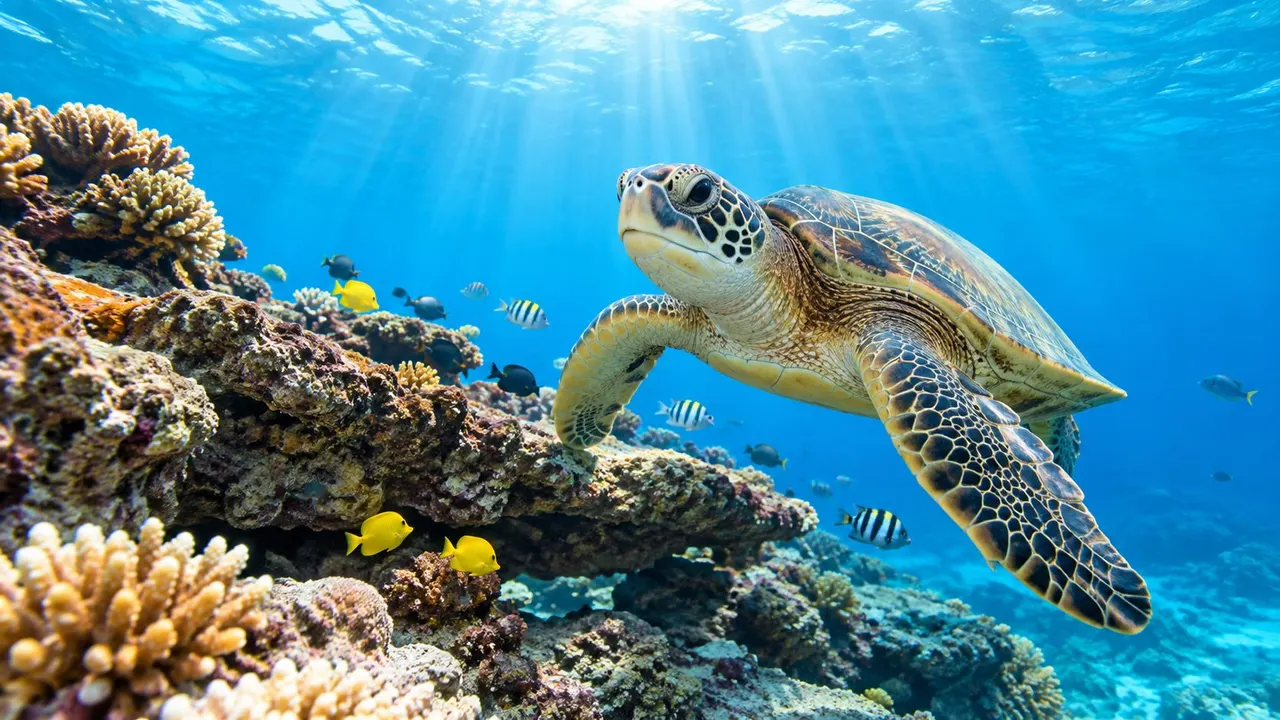
Turtle Canyon sits offshore on Oʻahu's south shore, just off Waikiki. It's an offshore reef and turtle cleaning station, not a beach that you can walk to. Boats anchor in shallow reef water, where Hawaiian green sea turtles are commonly cleaned by reef fish, and guests reach the site from the boat rather than from shore. Turtle Canyon's visitor FAQ explains this boat-access setting.
A cleaning station is a service stop
Think of a cleaning station as an underwater car wash, except the customers are turtles and the workers are small reef fish. A turtle approaches a familiar area and pauses while fish pick parasites and debris from its shell and skin. The turtle gets maintenance, and the fish get food.
That behavior gives visitors a better viewing opportunity than a random encounter in open water. The turtle may hover or rest while the fish work, allowing a guide to point out what's happening instead of shouting, “There's one,” as an animal disappears.
The reef's structure also explains why boats matter. A vessel can move the group to habitat where turtles naturally spend time, rather than asking swimmers to search along a crowded shoreline. The boat provides a stable meeting point, and guests can return to it whenever they need a break.
Depth changes the experience
The water at a reef can feel very different from the beach. You may be floating above a deeper area, with no sand beneath your feet, even though the surface looks calm. That's why flotation and slow, controlled breathing are useful for beginners. They keep your body relaxed while your eyes do the exploring.
You don't need to chase a turtle to see it. At a cleaning station, patience is more valuable than speed. Stay with your group, keep your hands off the reef, and let the animals decide how close they want to be.
For a closer look at the habitat and trip style, see this Turtle Canyon snorkeling guide.
A turtle cleaning station rewards stillness. The less you chase, the more natural the encounter becomes.
Best Places to Snorkel in Waikiki and When to Choose a Boat
Shore snorkeling and boat snorkeling solve different problems. A beach entry wins on convenience. You can walk down with your own mask, test the water, and leave whenever you like. A boat trip wins when your priority is reaching offshore habitat, learning what you're seeing, and reducing the guesswork around where wildlife tends to gather.
Turtle Canyon is described as roughly 1.5 to 2.5 miles from Waikiki Beach, with boat access typically taking about 10 to 20 minutes from the shoreline or nearby harbors. Independent coverage of Turtle Canyon trips gives that distance and travel context.
Choosing Your Waikiki Snorkel Experience
| Experience Type | Best For | Access and Crowds | Wildlife Expectation |
|---|---|---|---|
| Waikiki shore entry | Confident swimmers who want flexibility | Walk-in access, with conditions and crowd levels changing by location and time | Fish sightings can be rewarding, but wildlife encounters are less predictable |
| Guided Turtle Canyon boat trip | First-timers, families, and turtle-focused visitors | Boat access to an offshore reef, with guides helping manage the experience | Strong focus on Hawaiian green sea turtles and reef fish |
| Deluxe snorkel and wildlife cruise | Families who want snorkeling plus onboard activities | Boat-based outing with extra space and water-play features | Combines reef wildlife viewing with a broader ocean experience |
| Private charter | Groups celebrating together or planning a custom outing | Dedicated boat experience with more control over the day | Wildlife viewing depends on conditions and the captain's route |
Match the site to the swimmer
A shore entry can be a good introduction for someone who already swims comfortably and understands that visibility may change. It's less suitable when one person in the group is likely to panic without seeing the bottom or needs frequent support.
A guided boat experience can simplify the day for mixed-age groups. You get a meeting point, fitted equipment, safety direction, and someone who can interpret the reef. That doesn't remove the need for personal judgment, but it gives beginners more information before they enter the water.
The boat also changes the rhythm. Instead of spending your energy searching from shore, you arrive at a known offshore habitat and spend more of your attention watching fish behavior, turtle movement, and the texture of the reef.
What to Expect on a Guided Waikiki Snorkel Tour with Living Ocean Tours
A guided outing usually starts before anyone enters the water. At Kewalo Basin Boat Harbor, guests check in, meet the crew, and get equipment fitted. A properly adjusted mask should seal without being painfully tight, and flotation should support you without making it difficult to move your arms.
On the boat, guides explain how to clear a mask, breathe calmly, enter the water, and return to the vessel. That short lesson matters because many first-timers don't struggle with swimming itself. They struggle with the unfamiliar feeling of putting their face in the water while breathing through a tube.
Living Ocean Tours is described as the top rated and most reviewed snorkel company on Oahu. Its 2-hour Turtle Canyons Snorkel Excursion focuses on the offshore turtle cleaning station, while the 2.5-hour Deluxe Waikiki Snorkel and Wildlife Cruise adds a waterslide and other family-friendly water-play features. The company's Waikiki snorkeling and waterslide tour is suited to families who want more than a single wildlife stop.
What happens in the water
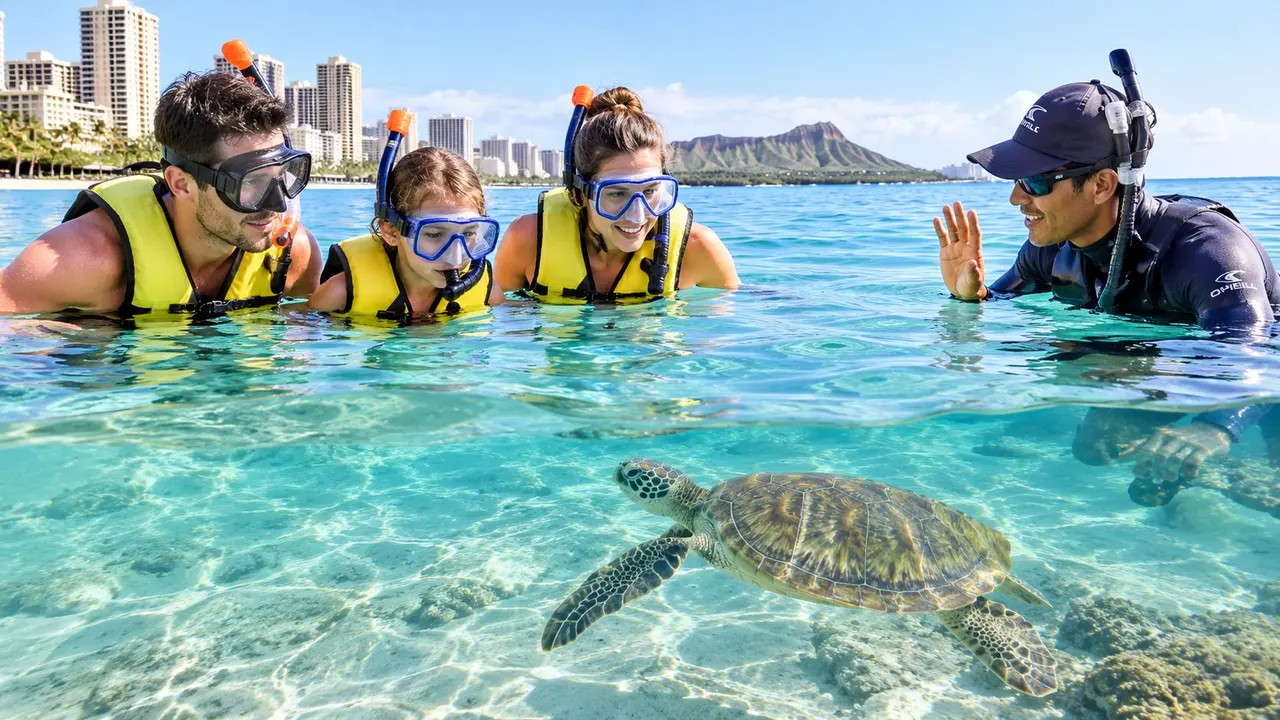
The crew's job isn't just to point out turtles. Guides help the group stay together, identify reef fish, watch spacing around wildlife, and notice when someone is tiring. If you're uncomfortable, returning to the boat is a normal part of the experience, not a failure.
One Oahu guide describes Turtle Canyon as having an approximately 98% turtle sighting success rate year-round, with the reef in about 20 to 40 feet of water. That Turtle Canyon guide presents the site as a high-probability location for Hawaiian green sea turtle encounters, though no wildlife sighting can be guaranteed.
The dedicated Turtle Canyon snorkeling adventure can suit travelers whose main goal is seeing turtles, while the Deluxe option works well for groups that want a broader boat day.
The Turtle Canyons Snorkel Excursion is one option for this style of trip. Snorkel Turtle Canyon is another company travelers can consider as a great alternative.
Best Time to Snorkel Waikiki Including Seasons and Daily Conditions
The best Waikiki snorkeling day often starts with a simple choice: join a boat to reach Turtle Canyon's cleaning station, or enter from shore when the nearshore water is calm. Either way, plan on two time scales, the season of your visit and the conditions you find that morning. Check recent rain, wind, waves, and water clarity before getting in.
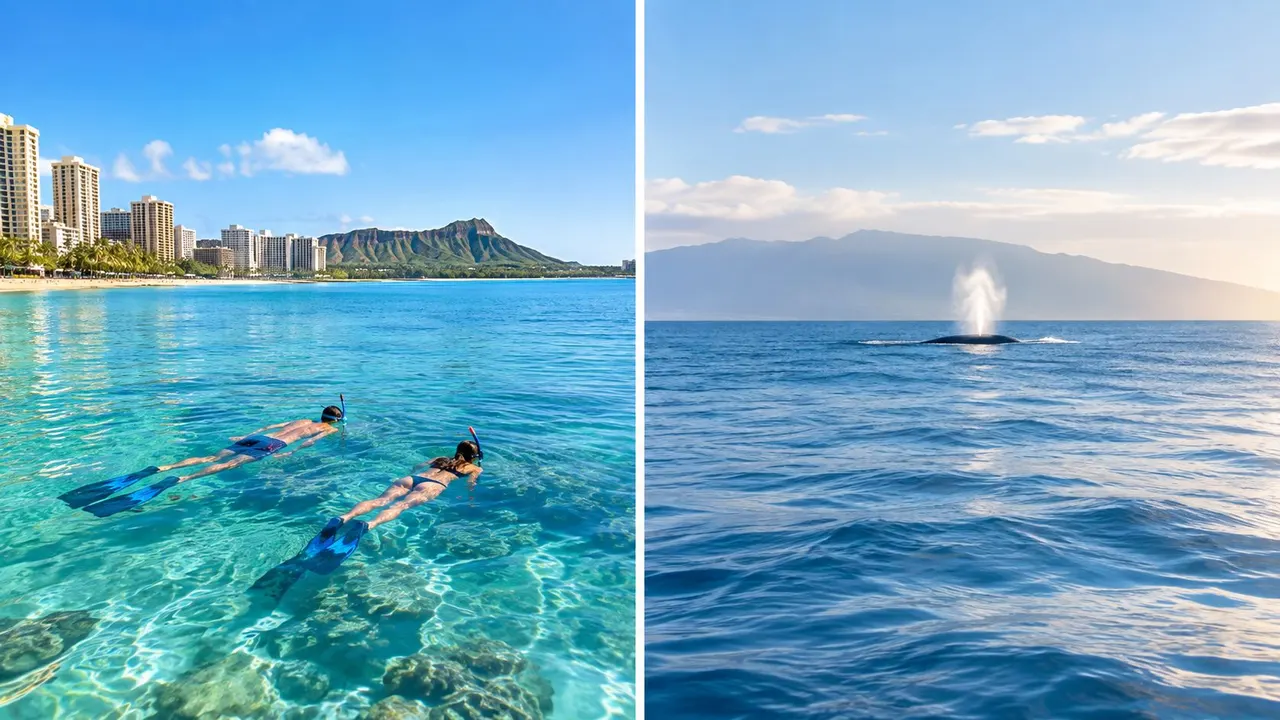
For families and first-time snorkelers, the May to September dry season often makes planning easier. On favorable days, nearshore visibility may reach 15 to 30 feet. Waikiki beach snorkeling safety guidance explains how dry weather can support clearer water and why runoff belongs in the decision.
Rain changes more than visibility
Heavy rain can send water through the Ala Wai Canal and affect nearby ocean clarity. It can also increase bacteria exposure. Hawaii Department of Health guidance recommends staying out of the ocean for at least 72 hours after heavy rainfall, as summarized in the linked Waikiki safety guidance above.
That waiting period matters most when your group has planned one major ocean day. Murky water works like a fogged window. It hides reef structure, swimmers, and wildlife, while giving the water time to settle. If runoff is present, reschedule rather than forcing a short session.
Early entries usually have the cleanest rhythm
Calmer water allows suspended sediment to settle, which can improve visibility. Light trade winds and southwest swell may still create sand haze or longshore drift, so a calm-looking morning is not a promise that conditions will stay unchanged.
Independent reporting describes favorable conditions as good morning visibility, ENE trade winds of 10 to 15 knots, southwest swell of 1 to 3 feet, and low longshore drift. The Waikiki conditions report explains why earlier entries often remain steadier before wind and boat traffic stir the water.
A boat trip can make the timing more purposeful. Rather than relying only on a beach entry, you can reach Turtle Canyon when the crew judges the site suitable, with the cleaning station as the wildlife focus. Leave room in the schedule for conditions to change.
Winter offers another wildlife possibility. Humpback whale encounters are associated with January through March, so visitors during that period can pair snorkeling with a Waikiki whale watching tour.
Weather check: After heavy rain, wait for cleaner water. A clear forecast tomorrow is more useful than forcing a cloudy, runoff-affected session today.
Safety Etiquette and Family Friendly Tips for Waikiki Snorkeling
Snorkeling is approachable, but it isn't automatically low-risk. Hawaiʻi health and snorkel-safety research notes that snorkeling-related drownings disproportionately involve visitors. A Waikiki-focused summary of Department of Health data reports that tourists accounted for 90% of 204 snorkeling-related fatalities from 2012 through 2021, and the Snorkel Safety Study warns that hypoxia and rapid-onset pulmonary edema can occur even in apparently calm water. The Snorkel Safety Study interim report discusses why a calm surface doesn't remove the need for judgment.
You don't need to approach the ocean nervously. You do need to notice early warning signs. Breathlessness, unusual fatigue, chest discomfort, confusion, or a feeling that something is wrong should trigger an immediate return to the boat or shore and a request for help.
Make the first decision before entering
Children should stay close to the adult responsible for them, and non-swimmers shouldn't depend on a mask or snorkel as flotation. Use a flotation vest when available, especially in deeper water, current, or conditions that make you work harder than expected.
Travel fatigue matters too. After a long flight, dehydration, poor sleep, or a rushed arrival, even an easy swim can feel harder. A guided trip can provide support, but each person still has to decide whether they're ready to enter.
- Start rested: Give yourself time to recover before attempting a demanding water activity.
- Use flotation early: Don't wait until you're exhausted to put on a vest or hold a flotation aid.
- Exit at the first clear warning: Breathlessness and sudden fatigue are reasons to stop, not signs to push through.
- Keep children within reach: Waves, boats, and changing visibility can separate a group quickly.
- Follow the crew: Guides know the entry point, current, and safest route back to the vessel.
Give turtles room to choose
NOAA- and Hawaii-based guidance says to remain at least 10 feet, or 3 meters, from sea turtles. Violating protections can lead to fines of up to $10,000. This turtle-snorkeling guidance also identifies mouth opening, head-bobbing, and flipper-swiping as signs of distress.
If a turtle swims toward you, hold your position and let it pass. Don't touch, block, chase, surround, or dive down after it. The same approach applies to coral. Look with your eyes, keep your fins away from the reef, and don't stand on living surfaces.
For more practical advice, use this Oʻahu snorkeling guide.
Gear Packing and Booking Checklist for Your Waikiki Snorkel Adventure
A good snorkeling day starts with less gear than most visitors expect. Guided operators commonly provide the mask, snorkel, fins, flotation equipment, and basic instruction. Confirm what your chosen company includes, then pack the personal items that make the day easier.
Bring swimwear you can move in, a towel, drinking water, reef-conscious sun protection, and a dry change of clothes. A rash guard helps protect your shoulders from sun and reduces the temptation to apply sunscreen repeatedly while you're in the water. Children may appreciate a familiar pair of goggles for pool time, even if they use the tour's mask in the ocean.
Use this Oʻahu snorkeling packing list to check the small details before leaving your hotel.
Pack for the person who tires first
The strongest swimmer shouldn't determine the plan for everyone else. Pack snacks for children, medication that needs to stay dry, a cover-up for the boat ride, and a waterproof way to carry essentials if your operator permits it.
Choose a mask by fit, not appearance. Press it gently to your face without using the strap and inhale slightly through your nose. If it holds briefly, the seal may work. If air leaks around the edges, try another size rather than tightening the strap until it hurts.
Choose the trip around your group
A morning departure is often a sensible choice because early conditions are usually more stable. Living Ocean Tours departs from Kewalo Basin Boat Harbor near Waikiki Beach, which makes the harbor-based option practical for visitors staying in the Waikiki area.
The Turtle Canyons Snorkel Excursion is the focused choice for guests whose priority is the offshore cleaning station and Hawaiian green sea turtles. The Deluxe Waikiki Snorkeling and Wildlife Cruise adds a waterslide, water trampoline, and lily pad, giving families more ways to enjoy the boat if someone wants a break from snorkeling. Private charters are available for groups of up to 40 guests, according to the publisher's tour information.
Before confirming, ask yourself:
- Has everyone slept well enough for the activity?
- Has heavy rain affected the planned ocean day?
- Does each swimmer have a flotation plan?
- Does the trip match your group's preferred pace?
- Does everyone understand the turtle-distance rule?
A successful Waikiki snorkel day doesn't depend on chasing the most dramatic encounter. Choose a dry, comfortable window, start early when conditions allow, use flotation without hesitation, and give turtles enough space to behave naturally. Living Ocean Tours offers guided Turtle Canyon snorkeling and a Deluxe wildlife cruise with equipment, instruction, flotation support, and family-friendly water activities, so visit Living Ocean Tours to compare the options and plan your Waikiki ocean day.


