
Snorkeling Oahu: The Ultimate Family Guide
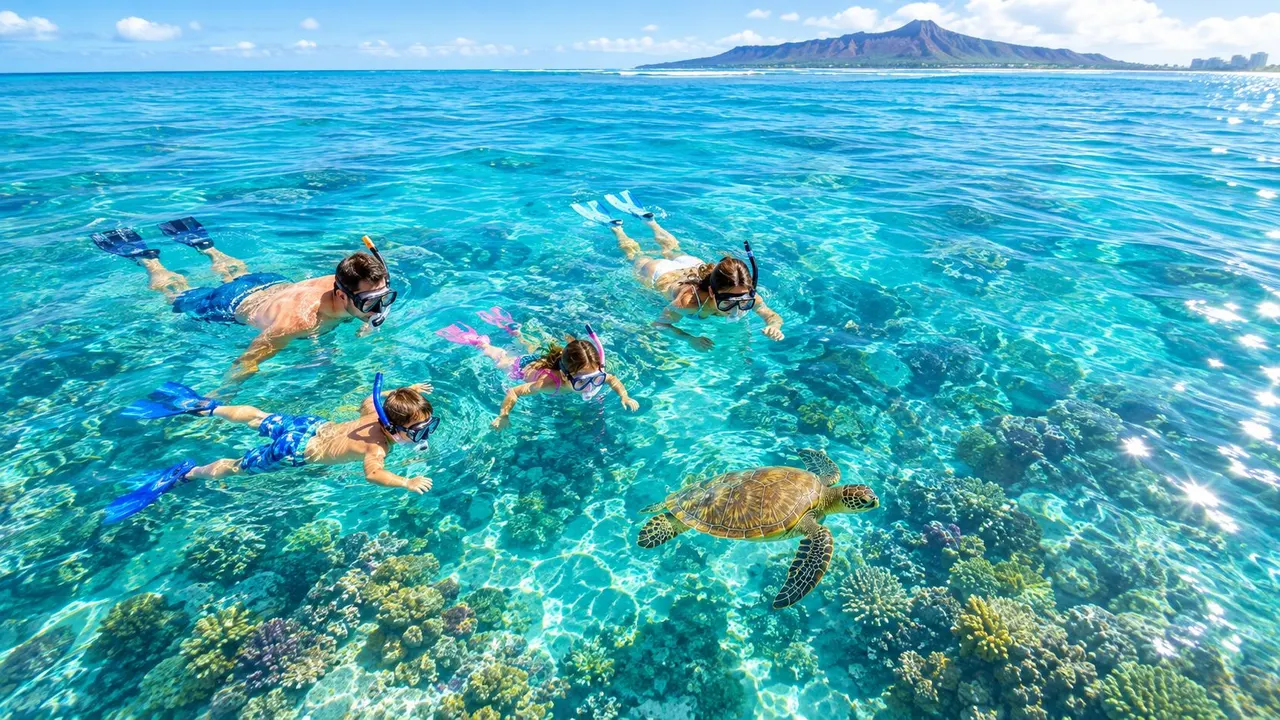
You've packed the masks, promised the kids they'll see turtles, and then opened three tabs about beaches, boat tours, currents, and reef rules. That uncertainty is normal. Snorkeling on Oʻahu can be easy and memorable, but the right choice depends on your family's swimming ability, the season, the day's ocean conditions, and how responsibly everyone enters the water.
Oʻahu isn't a collection of scenic beaches. It's a busy marine tourism destination where calm-looking water can still hide currents, surge, or difficult entries. The best family outing balances access to fish and turtles with conservative planning, close attention to conditions, and a firm commitment to leaving coral and wildlife undisturbed.
Planning Your Oahu Snorkeling Adventure
A family can leave Waikīkī with one child ready to jump in, another uneasy about breathing through a mask, and an adult unsure whether the ocean will remain calm. Plan for the least confident swimmer before choosing a beach, boat, or schedule. That decision affects equipment, supervision, entry conditions, and whether everyone can enjoy the outing without pressure.
Oʻahu offers shore access, sheltered reef areas, and guided trips to offshore habitat. Hanauma Bay has hosted about 1 million visitors per year, so families should expect a managed, heavily visited marine site rather than a quiet swimming area. Its popularity makes preparation and considerate behavior important. The history of snorkeling safety at Hanauma Bay also reinforces a practical rule: assess the water and your group's readiness instead of assuming a familiar destination is automatically safe.
Match the experience to your family
A strong swimmer may handle an independent shore session, while a multigenerational group may need flotation, mask fitting, basic instruction, and an in-water guide. Guided support can leave parents free to watch children instead of managing parking, entry points, leaking masks, and changing conditions simultaneously.
For families staying in Waikīkī, Living Ocean Tours offers guided access from Kewalo Basin with the Deluxe Waikiki Snorkel and Wildlife Cruise. The trip includes beginner support and on-water features such as a waterslide, water trampoline, and lily pad. Those features can keep children engaged, but adults still need to confirm that each child is comfortable in the conditions and follows crew instructions.
Book around the group's limits, not the most ambitious itinerary. A shorter session with calm water and reliable supervision is often a better family memory than a longer trip that leaves a nervous swimmer exhausted.
Top Snorkeling Sites for Every Skill Level
A family can arrive at a famous snorkel site and still find conditions beyond a child's ability. Season, swell, wind, and swimming ability determine whether a location works that day. Sheltered water may suit a beginner, while an exposed North Shore cove can become unsafe during winter surf. Check the water in front of you rather than relying on a site's reputation.
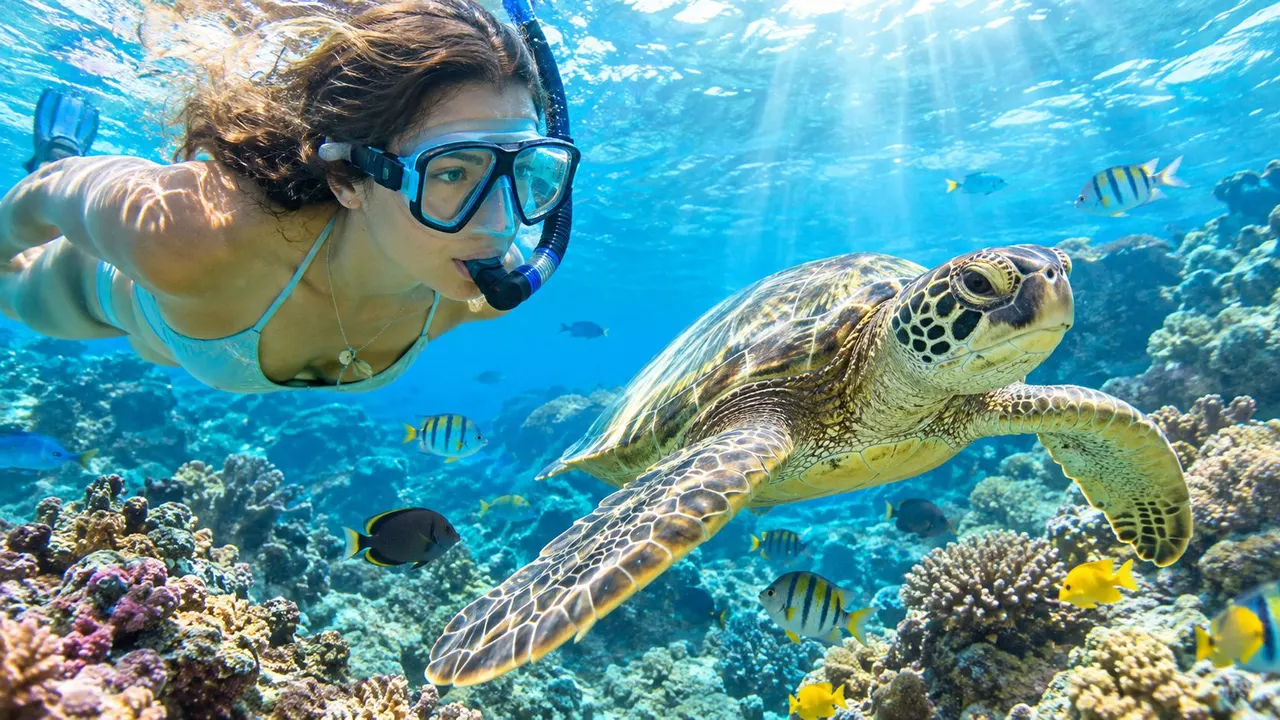
Hanauma Bay for structured shore access
Hanauma Bay is a curved volcanic shoreline with shallow inner reef areas and deeper water farther out. That range suits families who want a shore-based outing, provided less-confident swimmers stay in manageable depth and adults remain close.
The bay has year-round lifeguard coverage, but lifeguards do not remove the need to watch currents and rough-water changes. Hanauma Bay closes on Mondays and Tuesdays, and open-day admissions stop after 1:30 p.m. Review the Hanauma Bay visitor guidance before setting out. Guidance for first-time snorkelers points visitors toward sandy patches along reef shelves, including Backdoor Lagoon, Keyhole Lagoon, and Sandman's patch. These areas allow fish and coral viewing while helping swimmers avoid standing on living coral.
Keep children close in the water, even inside a sheltered bay. Reef shelves, sudden depth changes, and other swimmers can create problems quickly.
Sharks Cove for experienced summer swimmers
Sharks Cove, part of the Pūpūkea marine life conservation district, has shallow water and rocky reef habitat. It is not a reliable family choice throughout the year. Division of Aquatic Resources guidance for Pūpūkea identifies dangerous current and wave conditions during winter, while calmer conditions are more common from about May to October.
That seasonal shift should control the decision. A capable swimmer may enjoy the cove in calm summer water. During winter, families should skip the North Shore entry rather than push through rough surf because the location appears on a popular itinerary.
| Site type | Main advantage | Main trade-off |
|---|---|---|
| Hanauma Bay | Sheltered shore access and lifeguard presence | Popular, managed access and changing conditions |
| Sharks Cove | Rocky reef habitat in calmer summer water | Winter surf and currents can make it hazardous |
| Offshore Waikīkī reefs | Boat access to marine habitat away from shore-entry problems | Requires a scheduled tour and comfort with a boat setting |
Guided Boat Tours Versus Shore Snorkeling
Shore snorkeling offers control over the day. Families can choose their pace, avoid a boat schedule, and leave when a child is tired. It works well when the entry is easy, the water is calm, and everyone accepts that wildlife sightings are never guaranteed.
A guided boat tour addresses different practical needs. The crew checks the site, fits masks and fins, explains the entry, and gives clear instructions to guests who need flotation or extra reassurance. That help matters with children. A leaking mask or anxious swimmer can quickly turn a relaxed outing into a difficult one when no guide is available.
Why Turtle Canyon changes the decision
Turtle Canyon is an offshore natural cleaning station near Waikīkī, about 15 boat minutes from Kewalo Basin, according to marine-tour information about Turtle Canyon. Since it cannot be reached on foot from the beach, a boat is the practical access point.
Independent marine-tour sources report that snorkelers may see seven to ten turtles on a good day, while some operators describe turtle encounters on the large majority of trips, including claims of about a 98% turtle-sighting rate. These figures reflect reported tour experiences, not a promise for any particular departure. The practical advantage is predictable access to known habitat and guided site selection, rather than asking a family to hope for a turtle during a random shore swim.
Hawaiian green sea turtle recovery gives the experience important context. The population rose from under 1,000 nesting females in the 1970s to more than 20,000 today, according to the Turtle Canyon background information. More turtles create more opportunities for respectful observation, while busy encounters demand careful visitor behavior around wildlife and reef habitat.
The practical trade-off
A DIY outing may cost less and allow more spontaneity, but adults must handle equipment, entry conditions, route-finding, and wildlife etiquette themselves. A boat tour requires advance planning and a fixed departure. In return, families get a structured route to offshore habitat and crew assistance if conditions or confidence change.
For a dedicated turtle outing, compare the Turtle Canyons Snorkel Excursion. Snorkel Turtle Canyon offers another operator option for travelers comparing turtle-focused trips. участ
Timing Your Trip for the Best Ocean Conditions
A family can find calm water at breakfast and uncomfortable chop by lunch. Wind, tide, wave height, and surface movement affect breathing, mask visibility, and how hard a child must work to stay in position. Conditions should guide the plan more than a beach's reputation.
Use a same-day decision process
Check official conditions on the morning of the planned snorkel. Review wave height, wind, current warnings, and tide timing instead of relying on an old photograph or broad seasonal description. The Pūpukea marine conditions guidance also recommends checking conditions on the same day.
Use this sequence:
- Check the site's exposure. North Shore locations react differently to winter swell than South Shore beaches.
- Favor the morning. Trade winds and surf often increase chop and current later in the day.
- Look for low surge. Periods with less water movement can provide clearer, calmer snorkeling.
- Change the plan early. Choose another beach or a guided departure rather than forcing a difficult entry.
Practical rule: If the water makes you hesitate at the entry, treat that hesitation as information.
Let the season narrow your choices
Pūpukea and Sharks Cove are generally calmer from about May through October. Winter can bring dangerous currents and waves, so North Shore snorkeling requires seasonal judgment rather than automatic inclusion on every itinerary.
South Shore and Waikīkī may offer more workable alternatives when North Shore conditions deteriorate. No shoreline is safe in every weather pattern. Check posted warnings, ask lifeguards when available, and select the location that matches the least confident swimmer.
Early departures also reduce family friction. Children often have more energy, visibility may be better before afternoon chop develops, and the group has time to change locations if the first site proves unsuitable. Build flexibility into the day instead of treating a reservation or beach choice as a reason to stay in rough water.
A calm-looking surface can still hide a strong current or difficult exit. Watch how other swimmers enter and leave, but assess the conditions for your own group. If a child cannot comfortably stand, float, or follow instructions in the chosen area, select a more sheltered option or postpone the snorkel.
Essential Safety and Reef Respect Guidelines
A close-up wildlife photo isn't worth making a turtle change course or damaging coral. The common tourist assumption is that a calm animal welcomes a closer approach. In reality, a turtle may be resting, surfacing, feeding, or moving through habitat that visitors need to respect.
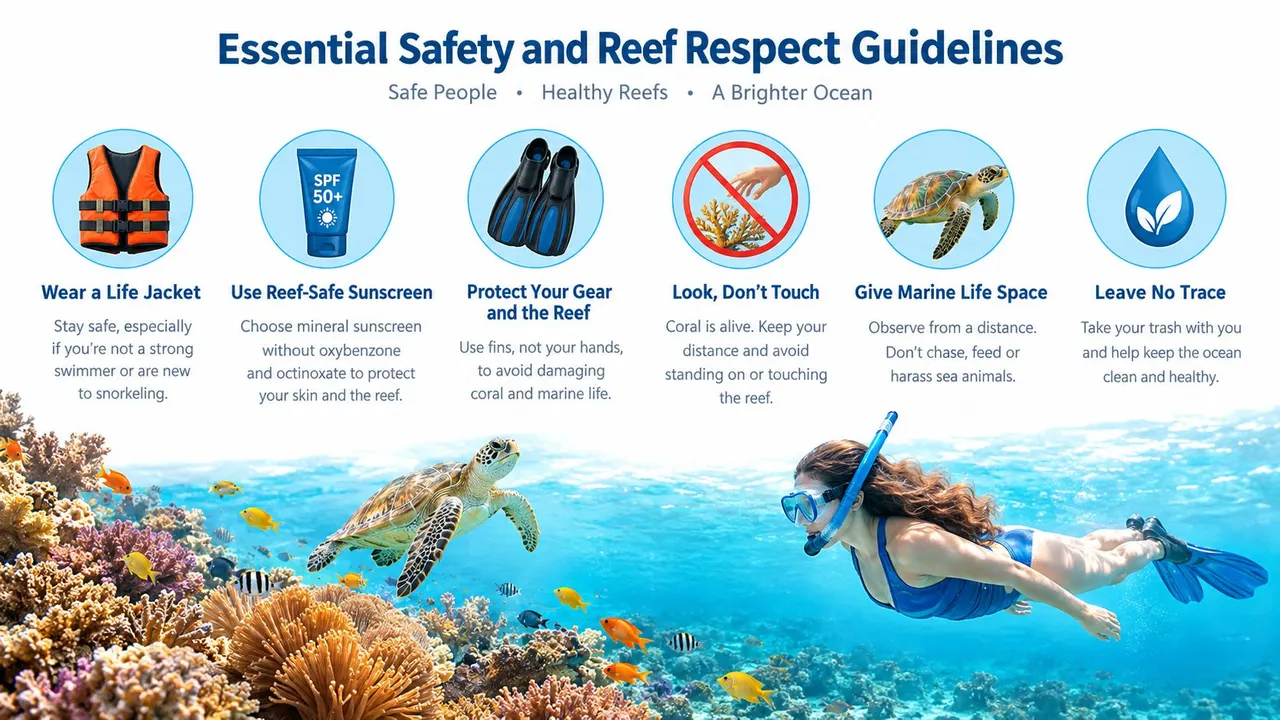
Hawaiian green sea turtles should be observed from at least 10 feet, or 3 meters, away. Visitors must never touch, chase, feed, block, ride, or surround them. Hawaii snorkeling safety guidance explains the importance of avoiding contact with marine animals and never standing on coral.
Give turtles room to behave naturally
If a turtle approaches, stay still and let it choose the direction of travel. Don't swim over it, cut across its path, dive toward it, or gather around it for a photograph. A useful family rule is simple: if your movement causes the turtle to alter its movement, you're too close or too active.
Children can understand this when the goal is framed as observation rather than contact. Ask them to notice how the turtle moves, where it surfaces, and whether it continues behaving normally. That turns wildlife etiquette into an engaging part of the snorkel instead of a list of restrictions.
Protect the reef with body position
Official Hanauma Bay guidance directs first-time snorkelers toward sandy patches along reef shelves. Independent field research at the bay observed 168 reef disturbances among 327 snorkelers, with fewer than 5 incidents directly on coral heads. The findings show why positioning matters. Staying over sand, maintaining buoyancy, and avoiding contact with fins can reduce damage even when many visitors are in the water. The Hanauma Bay carrying-capacity report provides the documented observations.
Don't feed fish or turtles, and don't stand on the reef. After heavy rain, avoid murky water and follow posted advisories, since runoff can reduce visibility and affect water quality. Reef-safe behavior isn't a courtesy added after the adventure. It's part of having permission to enjoy the site.
What to Pack for a Successful Day on the Water
Good gear reduces distraction. A child who can see clearly, float comfortably, and breathe through a properly fitted mask is more likely to stay calm and less likely to grab coral or kick toward wildlife.
Start with the basics:
- Well-fitting mask and snorkel: A proper seal matters more than an expensive brand. Test the mask before entering deeper water.
- Fins used carefully: Fins help with efficient movement, but beginners should practice away from coral before swimming over reef.
- Snorkeling vest or life jacket: Flotation saves energy and improves visibility to guides and family members. It's especially useful for nervous swimmers.
- Rash guard: Long-sleeved sun protection reduces the need to reapply sunscreen during a long day outside.
- Reef-conscious sunscreen: Use products suited to responsible marine recreation, then cover up where practical.
- Anti-fog solution: Clear vision helps swimmers maintain awareness of reef, boat traffic, and nearby people.
- Water and personal medication: Hydration and access to necessary medication matter on both beach and boat outings.
- Towel and dry clothing: A warm layer can make the return trip more comfortable after time in the water.
Be selective with footwear
Reef shoes may help at sharp, rocky entries, but they don't make it acceptable to walk across coral. In shallow reef areas, careful fin use and good buoyancy are often safer for the environment than planting your feet wherever you can. If a family member needs to stand frequently, choose sandy-bottom water or a different activity rather than treating the reef as a walkway.
Pack a small dry bag for phones, keys, and prescription items. Keep loose accessories secured because dangling straps and cameras can tempt swimmers to reach, twist, or kick suddenly when a turtle or fish appears.
Understanding the Risks of High-Traffic Marine Sites
Oʻahu's accessible marine life attracts families, but popular sites also bring crowds, inexperienced swimmers, and greater pressure on reefs and wildlife. A busy beach can look calm while chop, current, poor visibility, and fatigue make the water demanding.
Hanauma Bay and other high-traffic areas have recorded serious snorkeling incidents, and Oʻahu has faced multiple ocean drownings. Those findings put tourism's scale into sobering context. Safety depends on honest ability checks, conservative site selection, and respect for local rules, not enthusiasm alone.
Honest self-assessment beats vacation optimism
Pool confidence does not always transfer to fins, saltwater breathing, current, or crowded conditions. Children tire quickly, while adults may spend more energy supervising than expected.
Choose a guided outing for first-time snorkelers, nervous swimmers, young children, or families unfamiliar with local conditions. Look for a clear briefing, suitable flotation, in-water supervision, and a crew that will change the route when conditions deteriorate.
The safest family plan is the one that leaves room to turn around.
Good operators treat a changed itinerary as sound seamanship. They select sites conservatively, keep guests away from coral and wildlife, and avoid promising that nature will follow a schedule. Families should also follow posted marine-conservation rules, maintain distance from turtles, and never stand on or touch coral.
Living Ocean Tours offers guided Waikīkī snorkeling with equipment, instruction, and in-water support, including access to offshore turtle habitat and family-friendly wildlife experiences. Visit Living Ocean Tours to compare the Deluxe Waikīkī snorkeling cruise and Turtle Canyons excursion, then choose a departure that fits your family's ability and the day's ocean conditions.


