
Snorkeling Honolulu: Your First Water Entry Guide
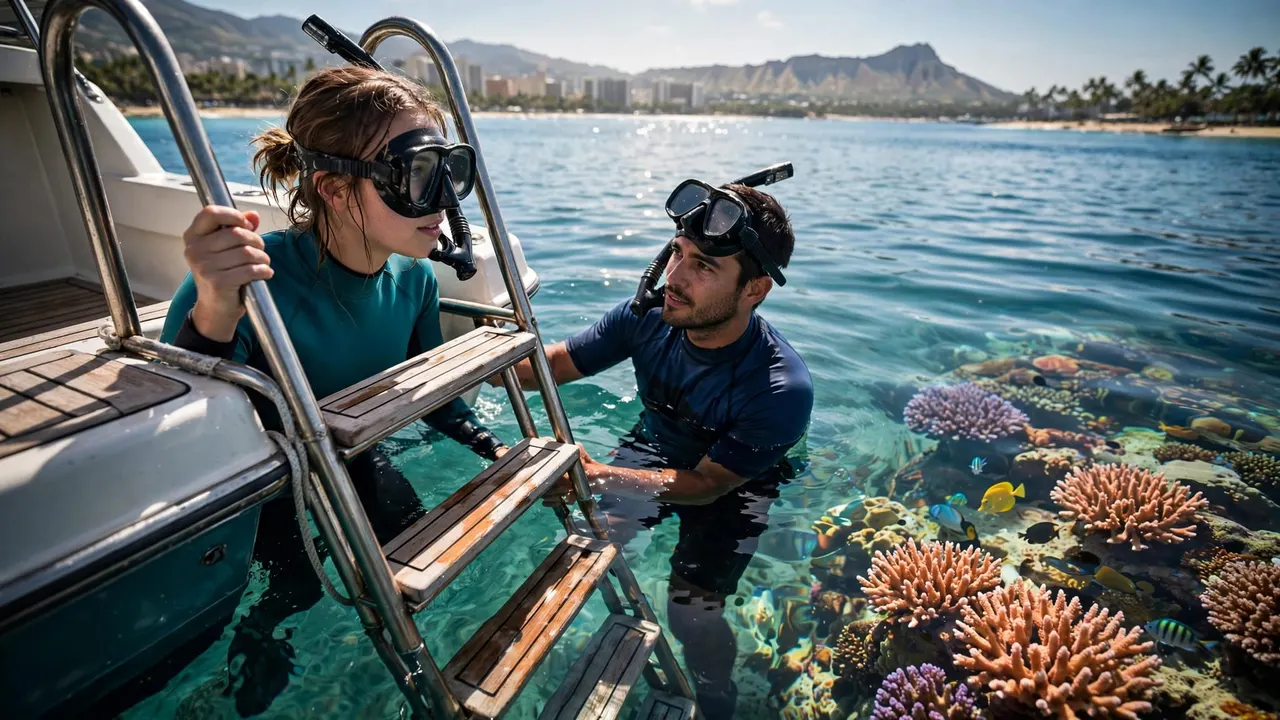
Your first few minutes in the water shape the entire experience. With the right fit, a slow entry, and a clear plan for getting back aboard, snorkeling Honolulu can feel exciting instead of intimidating.
Living Ocean Tours welcomes first-time visitors, families, couples, and confident swimmers from Kewalo Basin Boat Harbor, minutes from Waikiki. You get gear, instruction, sturdy ladders, and in-water support from the only tour company with professional snorkel guides.
Start with comfort, then let the reef set the pace.
Prepare before you reach the water
A good water entry starts while you’re still dry. Your goal is to remove small problems before they feel bigger offshore.
Be honest about your comfort level
You don’t need to be an advanced swimmer, but you should feel comfortable floating with your face in the water. Tell the crew if you’re nervous about breathing through a snorkel, prone to motion sickness, recovering from an injury, or bringing children who need extra attention.
Hawaii’s ocean safety guidance recommends knowing your health and fitness limits, swimming with a buddy, and choosing a lifeguarded beach when you snorkel from shore. Those same habits matter on a boat trip.
Drink water, eat a light meal, and wear secure swimwear. Bring a towel, a cover-up, and a rash guard if you want more sun protection.
Check your gear while you’re still dry
Test the mask seal against clean, dry skin before you enter. Pull your hair away from the skirt, place the strap high on the back of your head, and inhale gently through your nose. A sealed mask should stay in place briefly without the strap doing all the work.
Try the fins before the entry line forms. They should feel snug without pinching your toes or rubbing your heels. Ask for a different size early, because a minor fit issue can distract you for the whole swim.
A flotation device is not a sign that you can’t snorkel. It gives you the buoyancy to slow down, breathe calmly, and stay above coral.
Snorkeling Honolulu starts with a calm entry
The entry isn’t a test of bravery. Move carefully, listen to the crew, and take time to settle before you swim away from the boat.
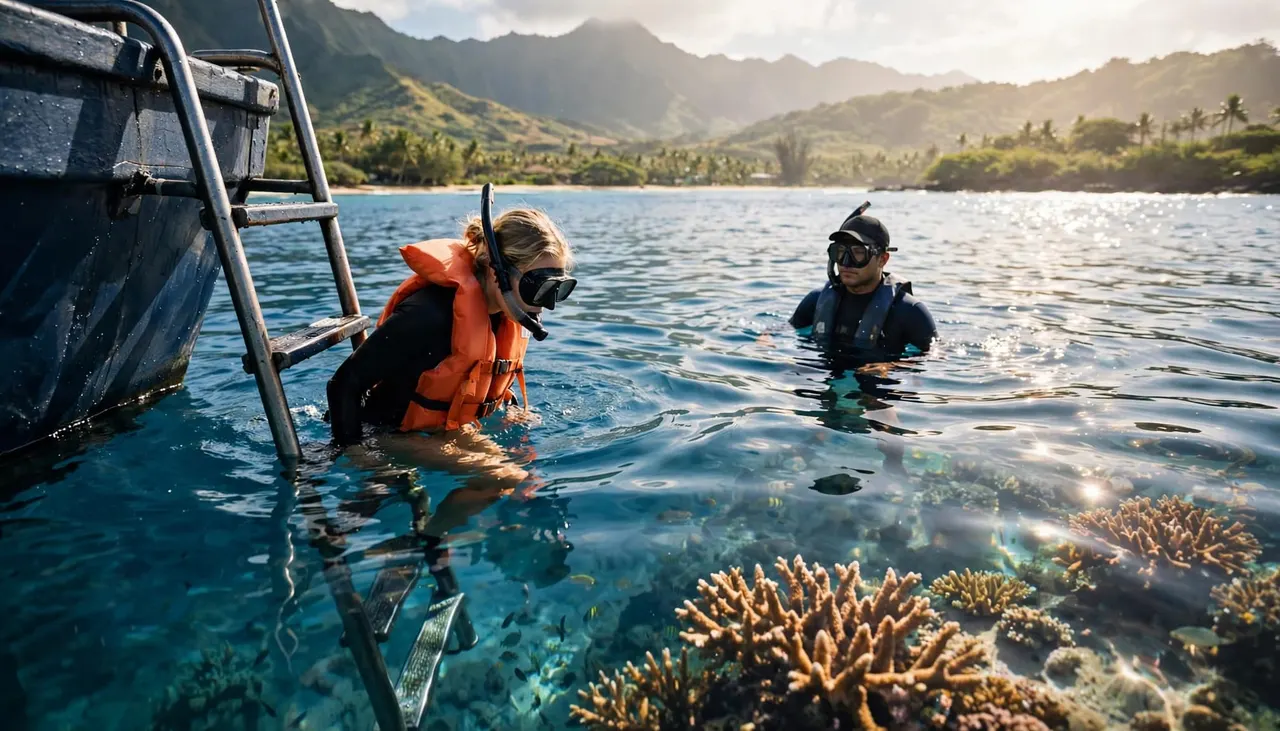
Use the ladder one step at a time
Wait for crew direction before approaching the ladder. Keep your mask and snorkel in place, face the ladder, and use the handrails. Lower yourself until the water supports you instead of jumping in.
Once you’re in, move clear of the ladder before adjusting gear. Stay close to the boat or your guide until you feel your breathing settle. Surface chop can feel unfamiliar at first, so there’s no reason to rush toward the reef.
On a shore entry, walk only where conditions allow. Rocky footing, waves, and hidden holes can change quickly. Hawaii’s coastal safety reminders are simple and useful: know your limits, ask a lifeguard, and identify hazards before entering.
Reset before your first swim stroke
Float on the surface for a minute. Put your face in the water, breathe slowly through the snorkel, and make a few easy fin kicks. This is the right time to notice a leaking mask or gurgling snorkel.
If water enters the snorkel, lift your head, clear it, and try again. If you feel tense, hold your flotation device and signal your guide. You can shorten your water time or stay aboard without missing the point of the day.
A comfortable return to the ladder matters, too. Head back before your legs feel tired, follow crew direction, and take the ladder slowly.
Build confidence while you float
You will see more when you stay relaxed. First-time snorkeling Honolulu visitors often spend too much energy trying to cover a large area right away.
Keep your body flat and your kick small
Float face down with your hips near the surface. Use slow kicks from your hips, with relaxed ankles and mostly straight legs. Big bicycle kicks waste energy and can stir up sand.
Look ahead and slightly down rather than lifting your face every few seconds. When you need to orient yourself, roll onto your back or lift your head briefly. Stay near your guide until you understand the direction of the current and the boat’s position.
You don’t need to dive below the surface. Reef fish, coral formations, and turtles can be visible while you float calmly.
Stop small problems early
A mask that fogs, a fin that rubs, or a mouthpiece that feels awkward won’t improve if you ignore it. Pause, signal your guide, and adjust while you’re floating in clear water.
Never stand on coral to fix equipment. Keep your fins over sandy areas when possible, and use flotation support while you work through a mask adjustment.
If water feels rougher than you expected, remain closer to the boat. Snorkeling should feel like a vacation activity, not a distance challenge.
Give turtles and reef life room
Wildlife encounters are more memorable when the animals set the distance. You can watch natural behavior without following, touching, or crowding anything below the surface.
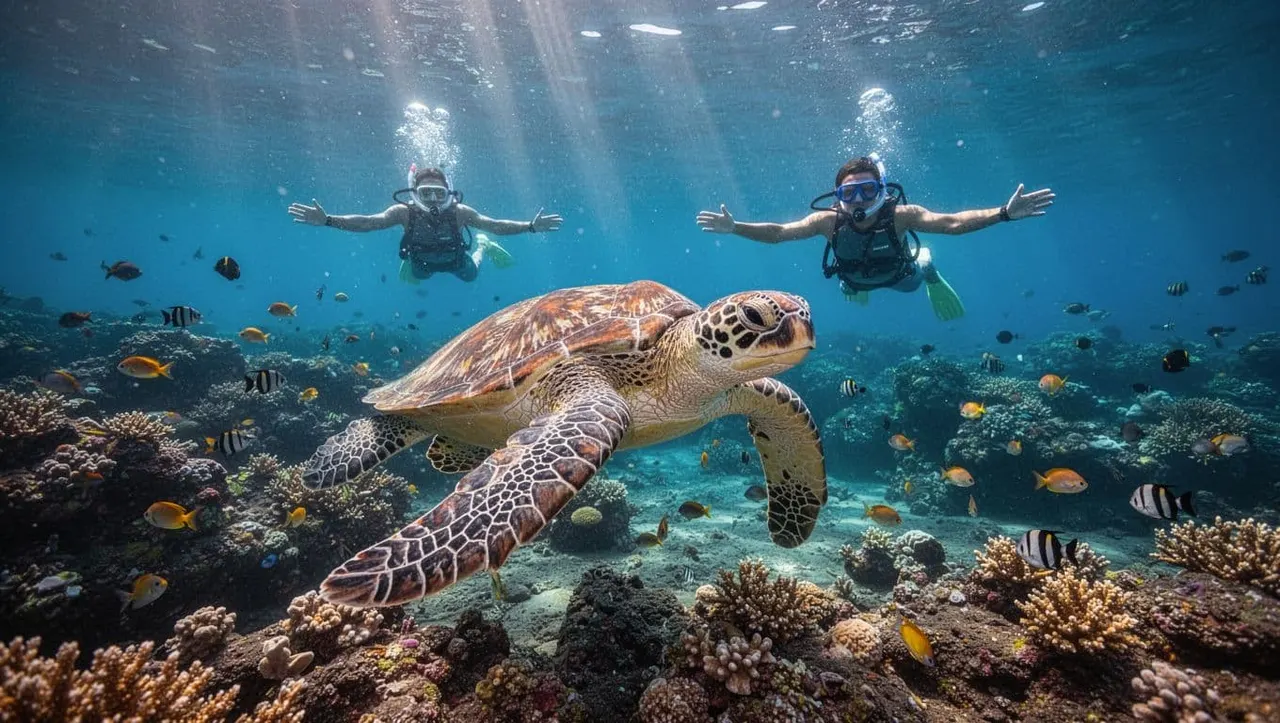
Watch Hawaiian green sea turtles respectfully
Hawaiian green sea turtles may appear around reef habitat, including Turtle Canyons off Waikiki. Living Ocean Tours reports a 95% historical turtle-sighting rate at the natural cleaning station, but conditions and wildlife behavior always determine each outing.
The Hawaii Department of Land and Natural Resources gives a 10-foot sea turtle viewing guideline. Keep your body and camera out of a turtle’s path. Let it swim past without chasing it for a closer photo.
Never touch, feed, block, surround, or ride a turtle. Your patient distance protects the animal and gives you a better chance to watch it move naturally.
Protect coral and other marine animals
Coral is alive and easily damaged by fins, hands, and feet. Float above it, avoid standing on shallow reef, and never take shells or marine life from the water.
If you spot a Hawaiian monk seal, stay well away and let it rest undisturbed. Follow the DLNR’s monk seal viewing guidance rather than trying to approach for a picture.
Boats also move carefully around shallow reef areas where turtles may feed or rest. The state’s marine-species protection advice asks boaters to slow down near harbors, launches, and turtle habitat.
Choose guided support near Waikiki
A guided outing removes several moving parts from a first snorkel day. You don’t have to carry rented gear across sand, judge an unfamiliar shore break, or troubleshoot alone in the water.
Try Turtle Canyons with a professional guide
Living Ocean Tours runs Honolulu snorkeling tours for all skill levels, including guided reef time at Turtle Canyons. Its Coast Guard-inspected double-decker boats include shaded seating, onboard restrooms, dry storage, and heavy-duty ladders.
Professional snorkel guides are in the water with you. They can help you settle a loose mask, adjust flotation, identify safe positioning, and return to the boat when you’re ready. That support is especially helpful if snorkeling Honolulu is new to you.
If you want a wildlife-focused experience near Waikiki, you can CHECK AVAILABILITY for a Turtle Canyons outing.
Pick the Deluxe cruise for added family time
The Deluxe Waikiki Snorkeling and Wildlife Cruise gives your group a longer, 2.5-hour outing at a less-crowded reef. Along with snorkeling, the Lokahi offers a boat-mounted waterslide, water trampoline, and floating lily pad.
Its SeaKeeper stabilization system helps reduce boat roll, which can make the ride more comfortable if motion sickness is a concern. You still need to follow crew direction and respect changing ocean conditions.
For a reef day with extra space to play and relax, CHECK AVAILABILITY for the Deluxe cruise.
Key takeaways for your first entry
- Check your mask, snorkel, fins, and flotation before you enter the water.
- Use the ladder slowly, then take a minute to float and breathe near the boat.
- Stay within your comfort level, even if others in your group swim farther.
- Keep at least 10 feet from sea turtles, and never touch coral or wildlife.
- Tell a guide early if you feel cold, dizzy, nervous, tired, or uncomfortable.
- Choose snorkeling Honolulu experiences with in-water support when you want more help during your first reef swim.
Frequently asked questions about snorkeling Honolulu
Do you need to be a strong swimmer?
You should have basic swimming ability and feel comfortable putting your face in the water. However, you don’t need to be a fast or advanced swimmer to enjoy a guided snorkel. Flotation support, gear instruction, and professional guides help you remain calm near the boat.
Tell the crew about your experience level before departure. You can stay close, take breaks, and return aboard whenever you want.
Can you count on calm water in Waikiki?
No. Wind, swell, tide, current, rain, and local weather can change conditions quickly. A popular snorkeling area does not guarantee calm water on every day.
Keep your schedule flexible when possible. If the crew or lifeguards advise against entering, choose the safer option and enjoy the view from shore or the boat.
Make comfort your first priority
Your best first snorkel begins with an unhurried entry, gear that fits, and enough support to pause when you need it. A relaxed surface float can show you more of Honolulu’s reef life than a rushed swim ever will.
Respect the coral, give wildlife room, and let your comfort level decide how long you stay in the water.


