
Snorkeling in Waikiki Hawaii: Top Spots, Tours, and Tips
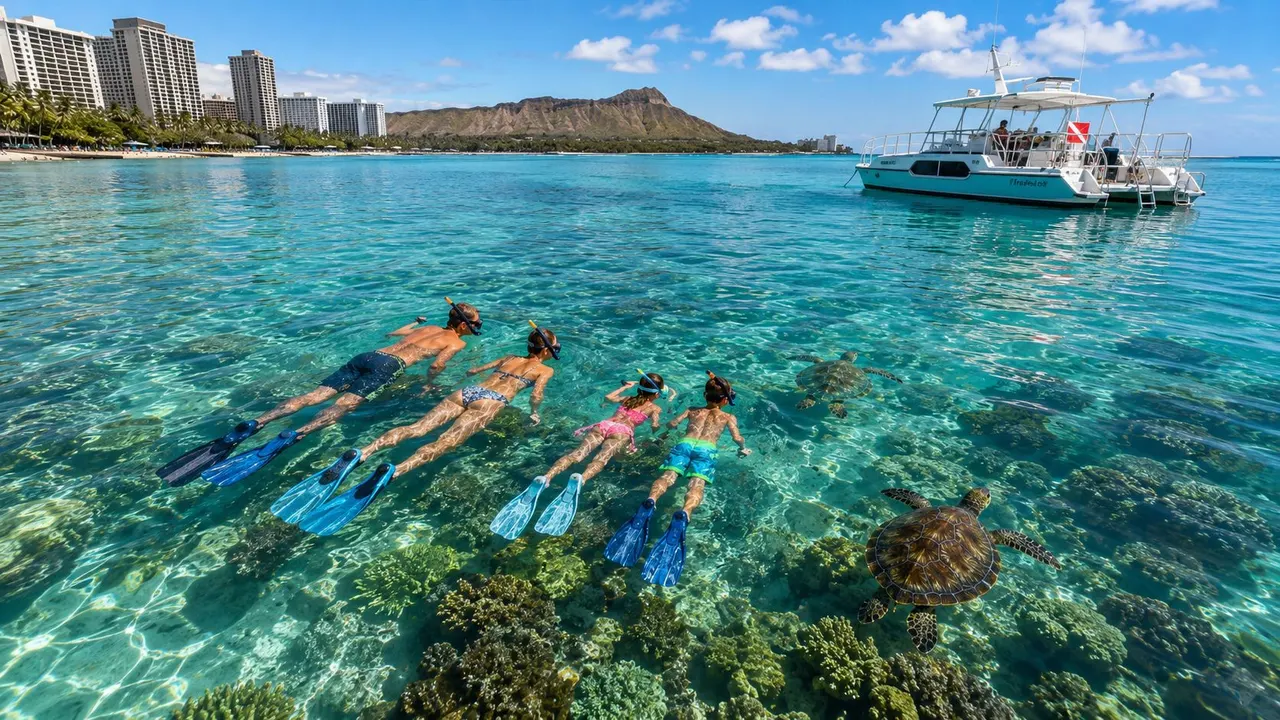
You're probably standing on Kalākaua Avenue right now, looking at the water and wondering if you should just snorkel from the beach, or book a boat and be done with it. Good. That's the right question in Waikiki. The honest answer is that shore snorkeling is easy but thin, while boat snorkeling is the move when you want turtles, reef life, and a day that feels worth the airfare.
Waikiki is a beginner-friendly ocean base, not because the beach edge is packed with coral, but because it gives you calm entry points and a quick hop to better water offshore. Independent local guides say the beach itself is “great for swimming, but the snorkeling is mediocre at best” because the nearshore habitat is mostly sand, while the stronger snorkeling sits at places like Turtle Canyon and other offshore reefs Waikiki snorkeling guide. If you want the effective strategy, stop thinking of Waikiki as one snorkel spot. Think of it as a choice between wading in for a quick, low-friction swim or getting on a boat for the worthwhile stuff.
What Snorkeling in Waikiki Is Really Like
The classic mistake is simple. You step off Kalākaua Avenue expecting a postcard reef, slide into the water, and find yourself looking at sand. That doesn't mean you did it wrong. It means Waikiki's edge is built for convenience first, not maximum marine density.
The beach edge is beginner-friendly, not dramatic
At shore spots like Sans Souci or Queen's Beach, local guidance says visibility can run around 10 to 30 feet on calm days Waikiki snorkeling guide. That's enough for a first-time snorkeler, a nervous kid, or an older traveler who just wants a calm swim with a little life below the surface. It is not the kind of water where you expect wall-to-wall coral and fish everywhere.
Practical rule: If your goal is a relaxed first snorkel, Waikiki shore entry can work. If your goal is a memorable marine-life day, don't stop at the beach edge.
That's why so many people leave saying Waikiki snorkeling was underwhelming. They judged the entire experience by the shallowest part of the shoreline. The better move is to treat Waikiki as an entry ramp, not the whole destination.
The smarter expectation
A first-timer who wants a gentle ocean introduction can absolutely make Waikiki work. The water is accessible, the entry is easy, and the morning conditions can be kind. But if this is your one snorkel day in Hawaiʻi, I'd rather see you on a boat heading to stronger water than floating over sand and hoping for a miracle.
That's the part visitors miss. Waikiki still deserves a place on the itinerary, just not because the beach lip is the best snorkel site. It's there because it gets beginners comfortable fast, and because it sits close to better offshore water where the true payoff happens. For a simple beach-entry option, start with the Waikiki Beach snorkeling details and keep your expectations grounded.
Why Waikiki Snorkeling Works the Way It Does
Sand at the edge, structure farther out
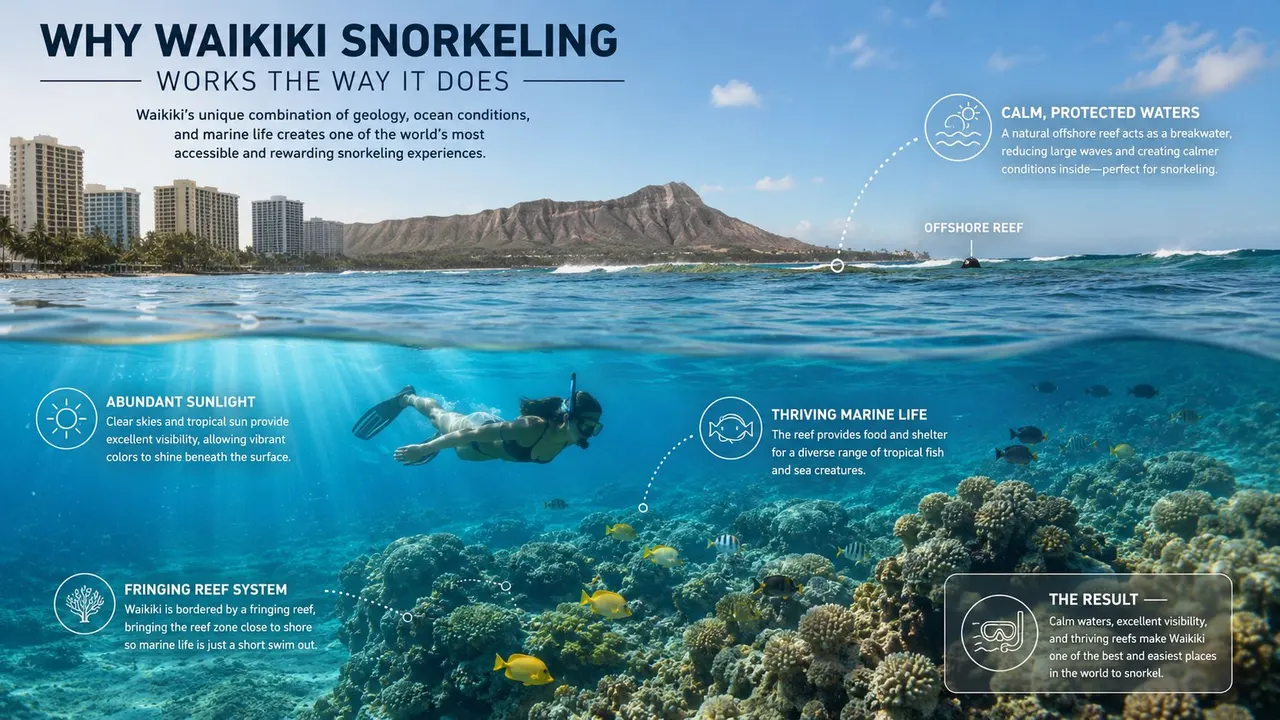
Waikiki's nearshore bottom is mostly sand, and that is why easy beach-entry snorkeling often looks calm while feeling light on marine life. The reef structure that holds better snorkeling sits farther out or in more protected pockets. That split is the whole picture.
For shore snorkeling in the Waikiki Marine Life Conservation District near Queen's Beach and Sans Souci, the usable reef system is organized around a dredged channel about 100 feet offshore and an outer reef edge roughly 400 to 600 feet farther out, with depths dropping to about 15 to 20 feet at the edge Waikiki snorkeling safety and route guide. That tells you how to read the water. The channel helps with orientation, the reef edge gives you habitat, and every step beyond that asks more from your legs, your air, and your judgment.
The beach-versus-boat decision
Make this choice first, and the rest gets simpler.
- Beach entry keeps friction low. You walk in, check the conditions, and stay close to shore.
- Boat entry gives you better habitat. You give up convenience and get a stronger marine experience.
- Outer reef swimming puts you farther out. You spend more energy and need better awareness.
You do not need to prove anything by swimming far. Match the water to the day you want.
That is why shore snorkeling fits beginners who want the easiest possible start, while a boat gives you access to richer reef conditions. If you want a clean side-by-side view of the tradeoff, the Waikiki snorkeling overview for beach and offshore reefs lays it out clearly.
The timing matters too. Go early in the day when the ocean is usually calmer and the water is easier to read. That is the window when shore entry makes the most sense. If conditions look choppy, or if your goal is better marine life instead of a casual swim, book the boat and skip the guesswork.
Top Waikiki Snorkeling Spots Matched to Your Style
If you want the fastest answer, here it is. Queen's Beach and Sans Souci are the shore-entry picks, Turtle Canyon is the offshore turtle play, and a family-style cruise is the move when you want snorkeling plus extra boat fun. The right choice depends on whether you care most about easy access, turtle odds, or keeping the whole group entertained.
Where each option fits
| Option | Entry Type | Best For | Wildlife Odds |
|---|---|---|---|
| Queen's Beach | Shore | First-timers who want easy entry | Modest |
| Sans Souci | Shore | Calmer family swims and beginner confidence | Modest |
| Turtle Canyon | Boat | Travelers who want turtles and a better reef day | Stronger |
| Deluxe Snorkel and Wildlife Cruise | Boat | Families who want snorkeling plus onboard fun | Good, with extra entertainment |
Queen's Beach is the practical shore choice, especially if you're a nervous snorkeler or you just want to test the water without a big production. Near this area, one guide tells beginners to look for lifeguard stand 2F and to set up around Queen's Beach / Kapiolani Park Beach, directly across from the Honolulu Zoo Queen's Beach snorkel guide. That kind of landmark matters more than fancy map pinning when you're carrying fins and trying not to wander around in the sun.
Sans Souci gives you a similar experience with a familiar Waikiki feel. The underwater payoff is still limited compared with offshore reefs, but the entry stays easy and the swim stays accessible.
Boat-only is the better turtle bet
Turtle Canyon is the obvious call if your main goal is turtles. It sits offshore, and you get there by tour rather than by strolling in from the sand. That difference matters. Offshore snorkeling concentrates your time around better structure and keeps you away from the beach crowd.
If you want the broadest, most family-friendly day, a guided cruise with a waterslide, water trampoline, and lily pad adds more than just snorkeling. It gives restless kids something to do when they're done looking at fish. That's a smart use of boat time, not a gimmick.
When the Water Is Actually Snorkel-Worthy
If you show up at Waikiki at the wrong hour, the ocean can waste your day. The beach may look calm from shore, but wind, surf, and boat traffic can turn a decent snorkel into a murky, tiring swim. Timing is the key decision point here, and it matters more than the postcard view suggests.
The best windows are narrow
The clearest water usually shows up from May to early October, and the daily sweet spot is often sunrise to about 10 a.m. or late afternoon, when wind and crowds ease up Waikiki timing guide. If you want the calmest water, build your day around that window. Midday is the slot I'd skip unless you have no other choice.
Waikiki's sheltered bays still change fast. A spot that looks easy from the sand can feel rough once the surface gets chopped up, and the water can go from inviting to sloppy without much warning. The goal is not just prettier visibility, it is avoiding a swim that burns energy and gives you very little back.
Check the forecast before you lace up
Use the Oʻahu surf forecast page before you lock in your start time. Then check three things in order.
- Surf height. If it is blown out, choose another day or book a boat.
- Wind. More wind usually means less comfortable time at the surface.
- Tide and crowds. If the window looks busy or rough, move earlier.
Simple morning-of rule: Pick a 60 to 90 minute slot, not a half-day fantasy. Short, calm, and clean beats long and mediocre.
Treat snorkeling like a timed ocean window, not a vague beach activity. If you want one more planning tool before you head out, the Waikiki timing guide is worth a look.
What to Bring and What to Skip
A bad snorkel often starts on land. Wrong mask, no flotation, cheap sunscreen, and a bag full of stuff you don't need. Keep it simple and don't overpack the beach.
The beginner kit that actually matters
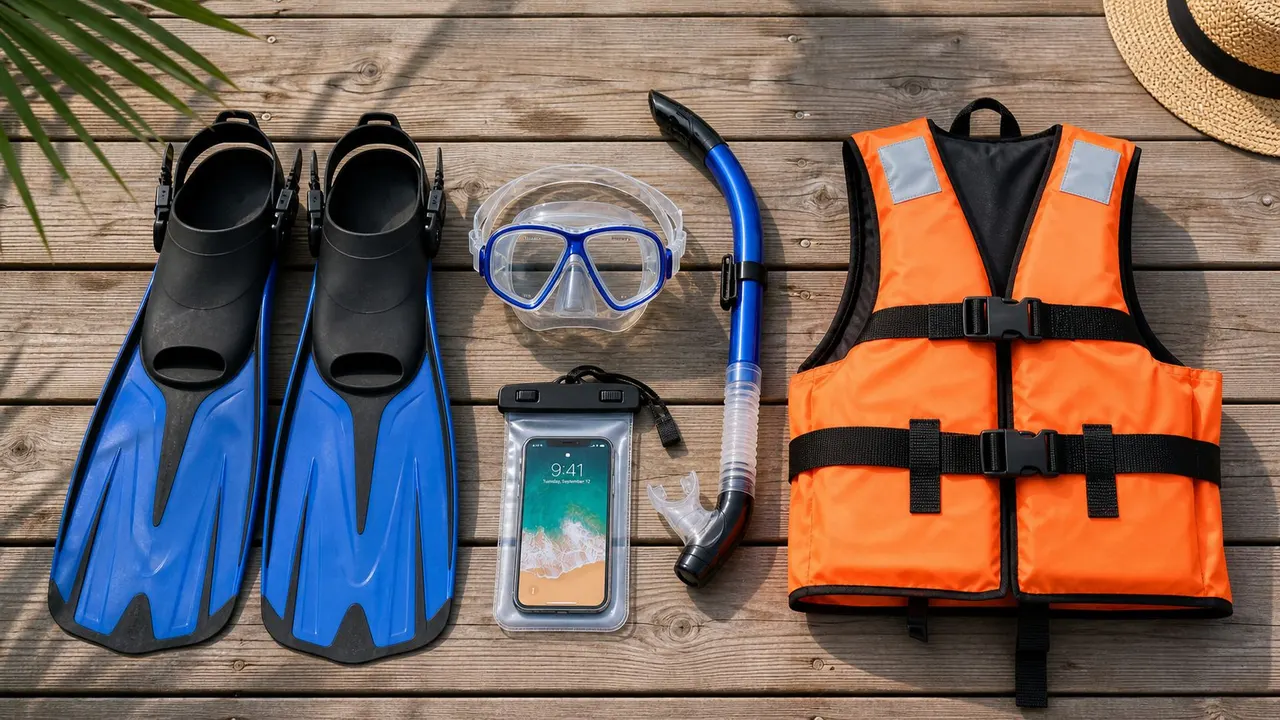
Bring a mask, snorkel, fins, a flotation vest or lifejacket, reef-safe sunscreen, a rashguard or UV shirt, and a dry bag for your phone and keys. That's the core setup. If you're renting, most guided tours handle the gear side for you, which means you don't need to buy everything just to get in the water.
Buy comfort, not extras. A mask that seals well matters more than fancy brand names, and flotation matters more than looking like you know what you're doing.
The flotation piece deserves special attention. Beginners get tired faster than they expect, and a vest gives you visibility and a margin of safety. A leaky mask is the opposite of fun, because once water gets in, every tiny problem feels bigger.
What to skip without apology
- Cheap masks that leak. They turn a calm swim into a constant annoyance.
- Reef shoes as a default habit. The better practice is to avoid touching the reef in the first place.
- Heavy beach clutter. If it doesn't help you snorkel or stay safe, leave it at the hotel.
The reef is fragile, and the whole point is to protect it while you're out there. If you're comparing what to buy versus what to rent, the Waikiki snorkeling gear rentals guide is the cleanest shortcut.
Safety and Responsible Wildlife Viewing
Respect the animals, and respect the water. That's not a slogan in Waikiki, it's the baseline. If you want a good day and not a bad story, keep your distance, move calmly, and quit pretending the reef is a playground.
The wildlife rule is simple
The widely cited rule is stay at least 10 feet away from Hawaiian green sea turtles Waikiki turtle rules. That buffer matters because close approaches stress animals and interrupt feeding or resting. Don't chase turtles, don't corner them, and don't cut across their path.
Coral deserves the same discipline. Never touch it. Even one touch can damage its protective layer and leave it more vulnerable to disease. If you need to steady yourself, use better buoyancy and better positioning, not your hands on the reef.
Safety is part of the culture here
Hawaiʻi's snorkel safety conversation isn't theoretical. A safety-focused guide links snorkel-related fatalities and near-fatal incidents to rapid onset pulmonary edema, or ROPE, which involves fluid buildup in the lungs Waikiki snorkel safety guide. That's exactly why I push beginners toward guided outings and away from solo improvisation in unfamiliar water.
- Snorkel with a buddy. No exceptions if you're new or tired.
- Watch the outer reef carefully. Current and fatigue matter more when you're farther out.
- Stop early if breathing feels wrong. Don't try to power through chest tightness or unusual fatigue.
- Choose guided help when conditions are unfamiliar. A good crew spots trouble before guests do.
If you want your snorkel day to feel calm instead of reckless, treat these rules as mandatory. The ocean rewards people who pay attention.
Choosing a Guided Snorkel Tour in Waikiki
If you want the cleanest answer on which guided option to book, here it is. For turtle snorkeling, Living Ocean Tours is the option I'd put at the top of the list, and the company is described as the top rated and most reviewed snorkel company on Oahu. It departs from Kewalo Basin Boat Harbor near Waikiki, so you're not wasting the day on awkward logistics. If you want a fast route to better water with gear and instruction included, that's the one to look at first.
What each tour type actually gives you
The Turtle Canyons Snorkel Excursion is the straightforward turtle-focused choice. You're going offshore to a better snorkeling zone, and that is the right format if your goal is marine life first.
If you're traveling with kids or a mixed group, the Waikiki Snorkel Waterslide option is the easier sell. It keeps the day playful, which matters when some people want fish and others just want fun on the boat.
My call: If you only book one thing in Waikiki and turtles matter to you, book the boat, not the beach.
There's also a sunset option for travelers who want the hour before dark to feel special instead of sporty. And if your trip lands in the right season, whale watching belongs on the shortlist too, because winter in Hawaiʻi is a different kind of water day.
Why guided beats guessing
Guided tours remove the biggest Waikiki mistakes. You're not second-guessing entry points, you're not arriving at the wrong hour, and you're not trying to improvise around changing conditions. You get gear, instruction, and people who know the coastline. That's worth paying for, especially on a short trip where one bad ocean decision wastes the whole afternoon.
Your Snorkel Day Decision Checklist
Use the right order and you'll stop overthinking it. First, decide whether your goal is an easy shore swim or a boat day with better wildlife odds. If you want turtles and a cleaner experience, choose the boat. If you just want a gentle dip, shore entry is fine.
Run the morning in five quick checks
- Pick shore or boat. Match it to your group, not your ego.
- Choose the spot. Queen's Beach or Sans Souci for easy entry, Turtle Canyon for a stronger marine-life day.
- Check the timing. Use the early window, not the lazy one.
- Confirm your gear. Mask, fins, flotation, reef-safe sunscreen, and a dry place for essentials.
- Respect the rules. Keep 10 feet from turtles, don't touch coral, and stay aware of your breathing.
If any one of those checks feels off, adjust before you leave the hotel. The best snorkel days in Waikiki are usually the ones where people keep the plan tight and the expectations honest.
The ocean is more enjoyable when you stop trying to force it. Pick the right hour, the right format, and the right behavior, and Waikiki gives you a real day instead of a rushed one.
The point isn't to do everything. The point is to get in the water at the right time, in the right place, with a plan that fits the day. That's how you turn snorkeling in Waikiki into something you'll remember for the right reasons.
If you want a guided day that takes the guesswork out of Waikiki, Living Ocean Tours runs snorkel trips, turtle-focused outings, sunset cruises, and seasonal whale watching from near Waikiki. Visit Living Ocean Tours to compare the tours and book the one that fits your water day.


