
Snorkeling in Waikiki Hawaii: The Complete Guide
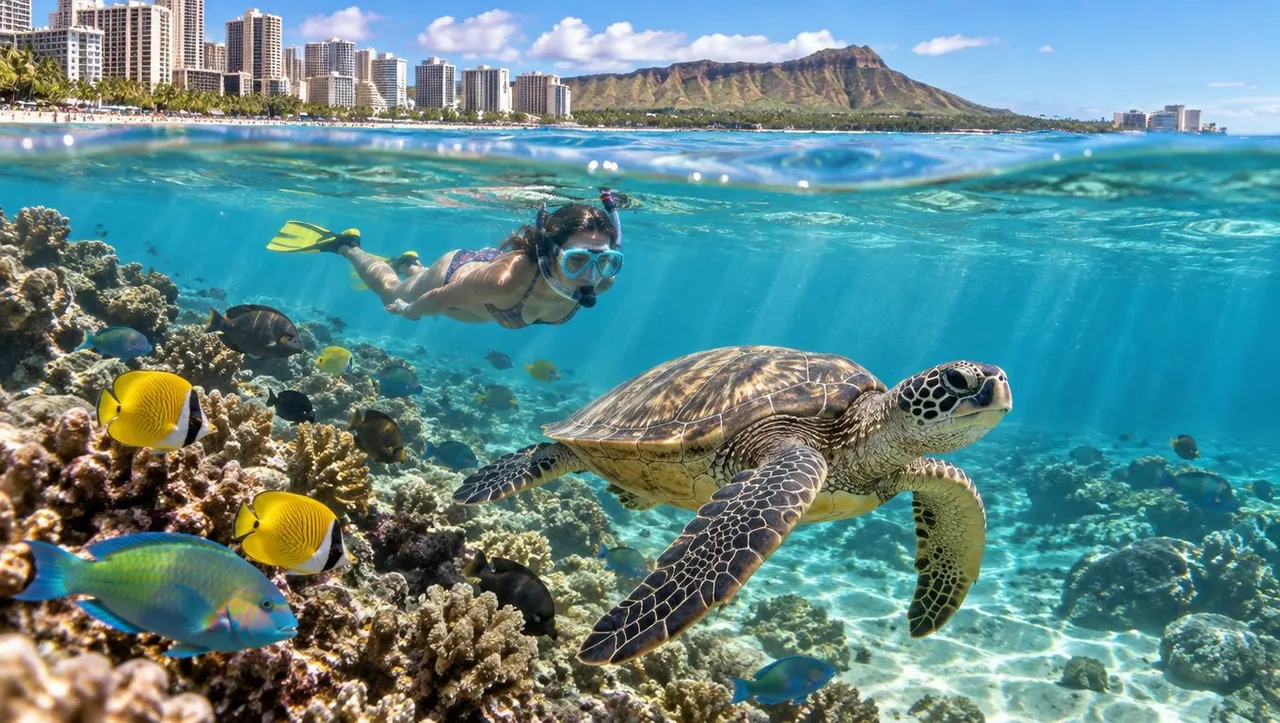
You're on a Waikiki hotel balcony with a towel over one shoulder, a phone full of snorkel tours, and a family that doesn't share the same comfort level in the ocean. Your confident 12-year-old wants turtles. A grandparent wants calm water and an easy exit. The forecast looks acceptable, but the reef can tell a different story once wind and swell arrive.
At Kewalo Basin Boat Harbor, that difference becomes obvious as the boat leaves the dock and points toward Turtle Canyons. A successful day isn't about finding the most crowded turtle encounter. It's about matching the site and format to the swimmers, leaving room for wildlife, and knowing when conditions have crossed the line from inviting to unsuitable. This guide to snorkeling at Waikiki gives you a practical plan for making that call.
Setting the Scene in Waikiki
Most Waikiki snorkel boats depart from Kewalo Basin Boat Harbor, a short trip from the main hotel district. From the dock, Diamond Head rises behind the coastline while the open water ahead looks deceptively simple. On a calm morning, the ride toward Turtle Canyons can feel like the easiest part of the day. On a windier one, the crew's decisions about route, timing, and whether to enter matter more than any online list of “best spots.”
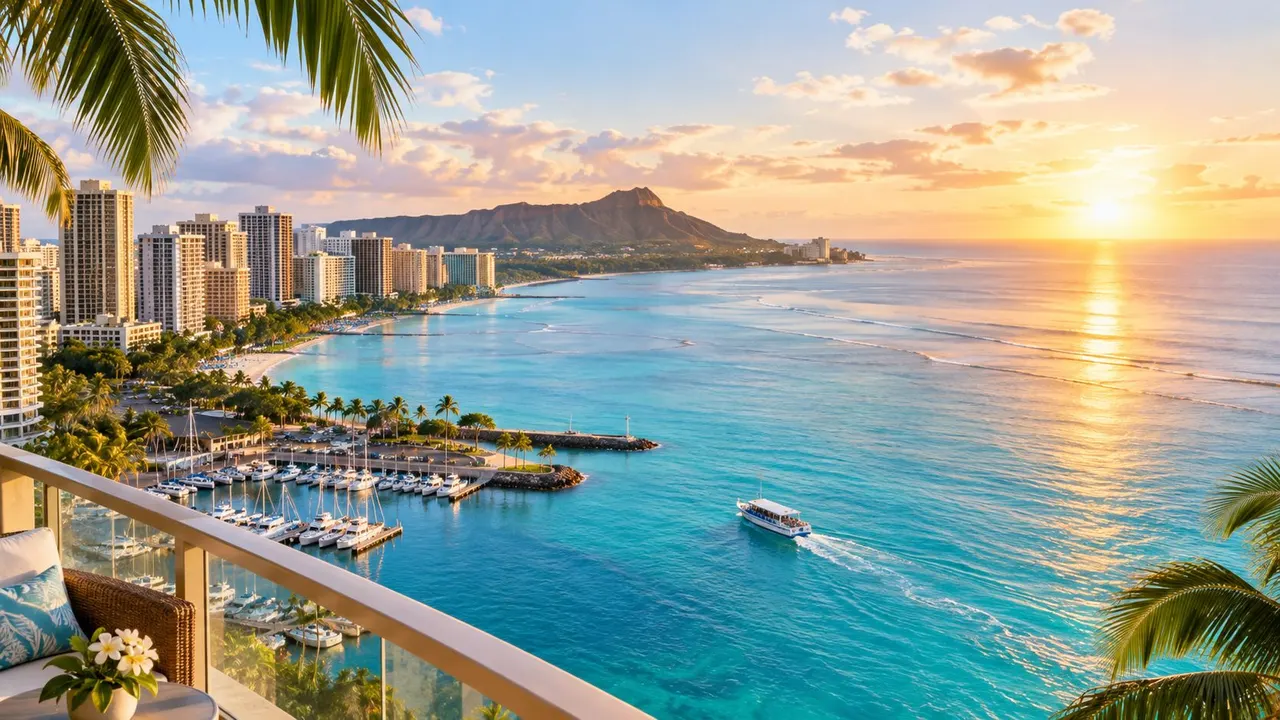
The planning friction is real. You're balancing hotel checkout times, children who may tire quickly, a traveler who gets seasick, and a reef that changes with swell, wind, rainfall, and current. The decision you make the night before should cover four things:
- Choose the format: A shore entry works for a confident swimmer seeking a short outing. A guided boat is usually more comfortable for beginners and mixed-ability groups.
- Choose the timing: Morning departures commonly offer better visibility and calmer water, according to Hawaii Ocean Safety's snorkeling guidance.
- Check the people, not just the forecast: A calm-looking surface doesn't make a nervous or fatigued swimmer ocean-ready.
- Set the wildlife expectation: Turtles are wild animals. A distant sighting with no crowding is a successful encounter.
Hanauma Bay's history explains why these choices matter. The bay became Hawaiʻi's first Marine Life Conservation District in October 1967, and attendance later peaked at approximately 3 million visitors annually by 1988. After an 8.5-month closure in 2020, observers reported clearer water, larger fish, and more frequent monk seal visits. Honolulu introduced online reservations in 2021, and approximately 400,000 visits were recorded in 2023, according to the Hanauma Bay history published by Honolulu.
Those figures aren't just background. They show the basic trade-off of snorkeling in Waikiki, Hawaiʻi. Access creates memorable experiences, but heavy use changes the reef and the quality of the encounter. The best plan protects both.
How Waikiki Snorkeling Actually Works
Shore snorkeling at Waikiki and boat snorkeling around Turtle Canyons are related activities, but they don't deliver the same experience. Shore snorkeling is like browsing appetizers in a busy hotel lobby. You can find something worthwhile, but you're limited by the entrance, the crowd, and what happens to be available along the edge.
A guided boat trip is closer to being shown the kitchen. The boat carries you past the surf zone to reef structure where fish and turtles are more likely to move through, while the guide manages entry, positioning, and changing conditions.
The reef is more than the shoreline
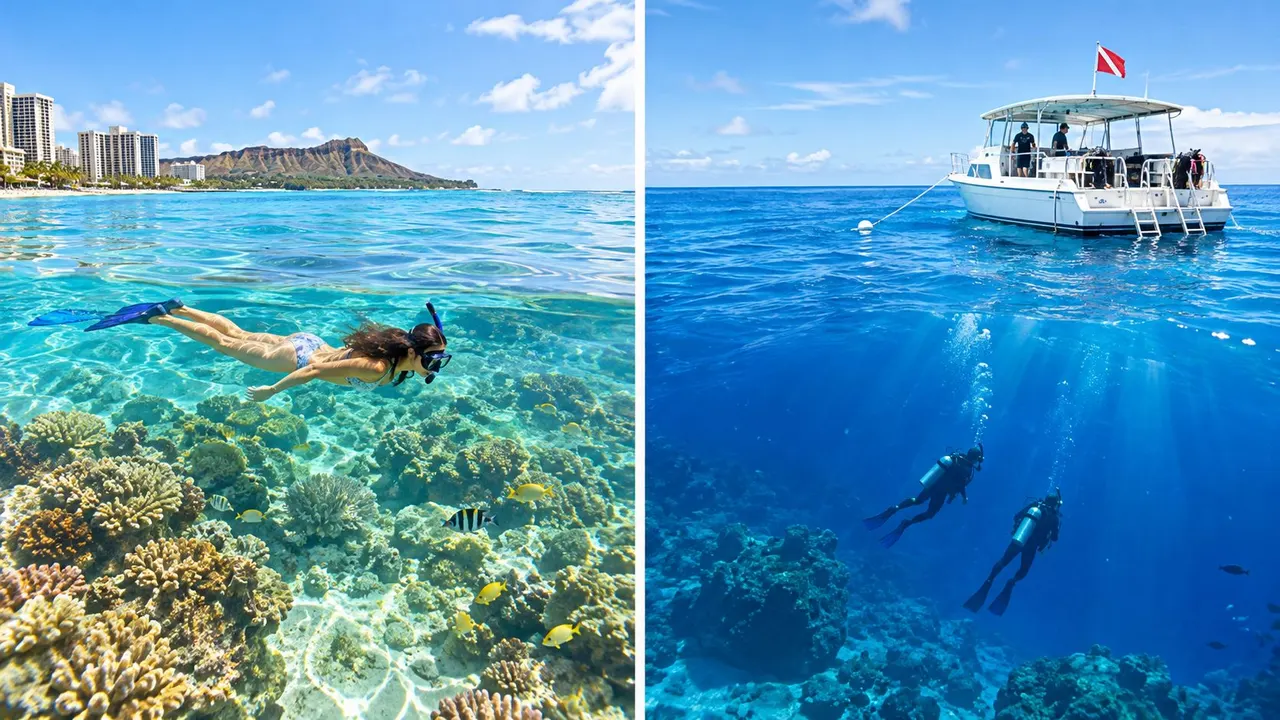
Waikiki has a fringing reef that shapes the waves and creates pockets of habitat along the coast. From shore, you'll generally spend effort navigating sand, rocks, shorebreak, and the narrow zone where visibility changes quickly. A boat can move beyond that entry problem and place you over deeper reef contours, but offshore water still requires judgment.
Wind pushes surface chop across the site. Swell affects the ride and the surge over shallow reef. Rainfall can reduce visibility through runoff, and current may be difficult to see before you enter. The water just past the surf zone can offer a better view of marine life, but “offshore” doesn't mean automatically safe.
Why the guide's position matters
A guide isn't there only to point at turtles. Good positioning keeps swimmers from drifting into one another, reduces fin contact with the reef, and gives beginners a reference point in open water. It also lets the crew change the plan when visibility or water movement deteriorates.
Hanauma Bay visitor data reinforces the need for that support. In a Honolulu survey covering the period from reopening in December 2020 through January 2022, 88% of respondents named snorkeling as their main reason for visiting. 14% had never snorkeled before, and 63% had snorkeled only 1 to 20 times, according to the Hanauma Bay carrying capacity report.
That's a beginner-heavy audience, not a group of experienced freedivers. A short briefing on mask fit, breathing, flotation, finning, and wildlife distance can determine whether the outing feels relaxed or chaotic.
Shore Entries Versus Guided Boat Tours
The right choice depends on the group, the conditions, and how far offshore you want to go. Shore snorkeling offers flexibility for confident swimmers who can handle a beach entry and exit. A guided boat trip suits families and mixed-ability groups that want structured support and access to offshore reef.
Shore snorkeling
Shore entry lets you decide when to start, how long to stay, and when to leave. In calm conditions, a capable swimmer can enjoy a short look at the shoreline reef without coordinating with a boat schedule.
The trade-offs are practical:
- Entry and exit: Shorebreak can make the few minutes crossing the waves the hardest part of the outing.
- Limited range: Your route is generally restricted to reef within comfortable swimming distance of the beach.
- Variable visibility: Sand stirred by waves and surge can cloud water near shore.
- Mixed ability: A stronger swimmer may continue outward while a beginner remains close to the beach, separating the group.
- Equipment responsibility: You select, fit, and manage your own mask, snorkel, fins, and flotation.
Shore snorkeling fits a short, self-guided morning when everyone swims comfortably and the water looks settled. It becomes a poor choice when a grandparent feels unsure, a child is tired, or the shorebreak is building.
Guided boat snorkeling
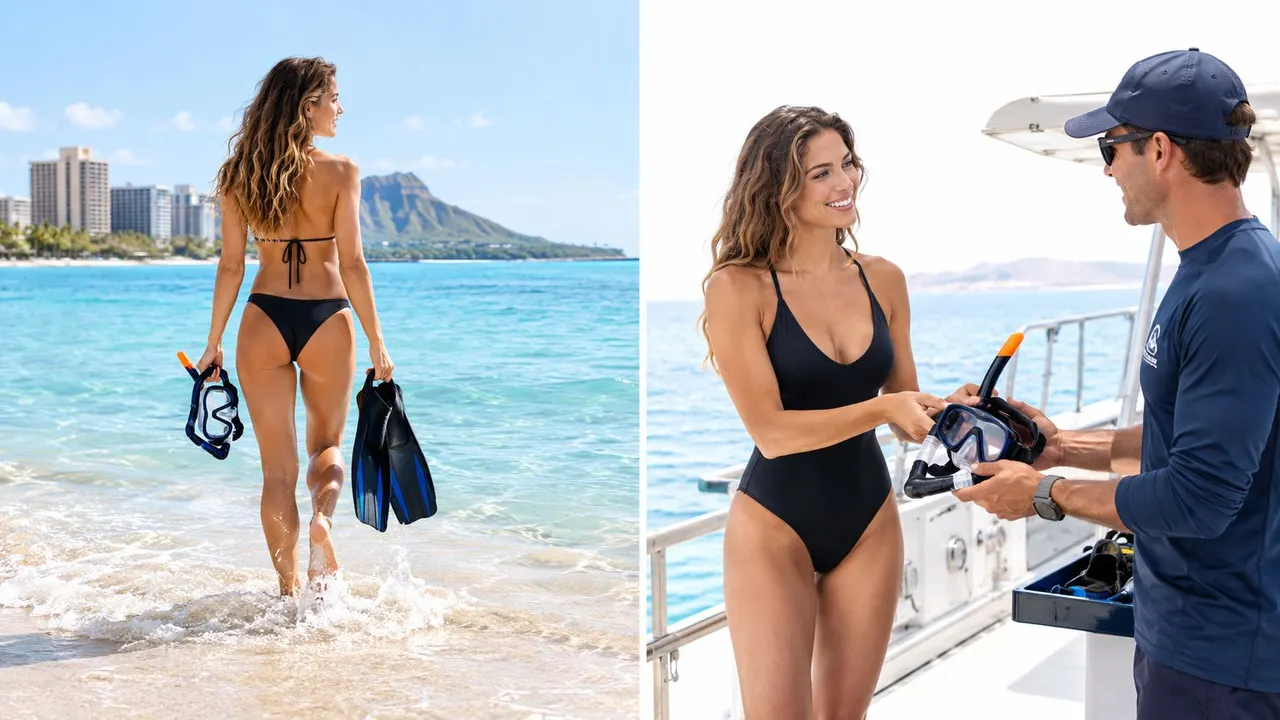
A boat removes the surf entry and places the group near a selected reef area. The crew handles equipment support, flotation guidance, and the basic briefing, so swimmers have fewer decisions to make once they enter the water. You give up some flexibility, however. The outing follows a departure schedule, and offshore water can still bring wind, swell, current, or poor visibility.
| Consideration | Shore snorkeling | Guided boat tour |
|---|---|---|
| Entry | Through the beach and shorebreak | From the boat, after a briefing |
| Flexibility | High | Tied to the departure schedule |
| Beginner support | Self-managed or informal | Structured instruction and supervision |
| Wildlife access | Limited by shoreline range | Offshore reef sites may be reachable |
| Condition management | Mostly your responsibility | Crew monitors route and entry conditions |
| Best fit | Confident swimmers seeking a quick outing | Families, beginners, and mixed-ability groups |
Living Ocean Tours departs from Kewalo Basin, a practical starting point for Waikiki visitors comparing boat options. Its Oahu snorkeling guide offers a broader explanation of the tour format.
The best snorkeling is not always the busiest turtle encounter. Choose the option that gives swimmers enough support, keeps animals from being crowded, and allows the crew to respond when conditions change.
Practical rule: Choose shore snorkeling for convenience and confidence. Choose a guided boat when instruction, group support, and offshore access matter more than complete flexibility.
What the Turtle Canyons Snorkel Looks Like
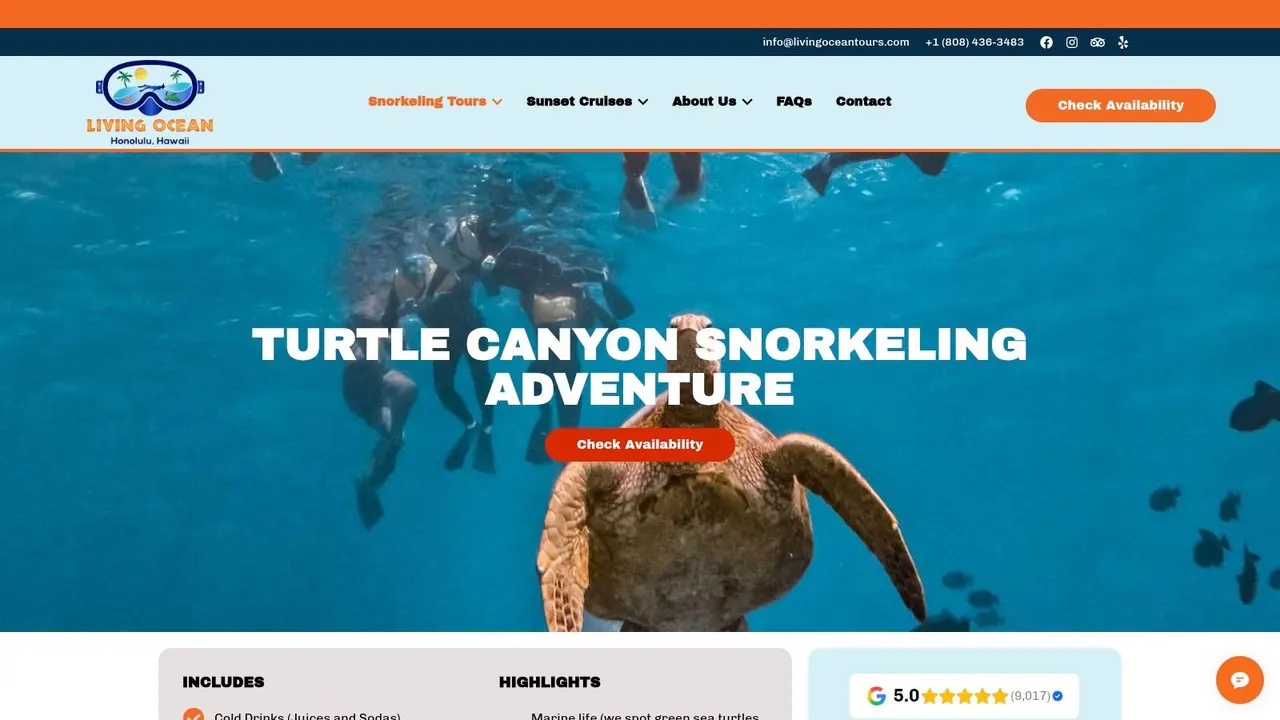
A Turtle Canyons outing begins at Kewalo Basin Boat Harbor. After boarding, the crew fits equipment, explains flotation and mask use, and reviews how to enter without rushing. The ride offshore takes roughly 10 to 15 minutes, depending on the route and conditions.
The destination is a reef area known for turtle activity. Hawaiian green sea turtles may visit cleaning stations where small reef fish remove material from their shells and skin. The turtles don't arrive for the swimmers, and the guide's job is to position the group so the animals can continue resting or moving without being surrounded.
From dock to water
Expect a short boat briefing before anyone enters. Beginners learn to breathe slowly through the snorkel, clear a mask, use a flotation device, and signal if they need help. The group then enters in an organized way instead of jumping in at random and swimming directly toward the first turtle.
The snorkeling depth is commonly in the 10 to 20 feet range, though the exact location and conditions vary. That depth gives swimmers enough room to observe reef fish and turtles while remaining close to the boat and guide. The in-water portion is shaped by sea conditions, group comfort, and wildlife behavior, not by a promise that every turtle will approach.
A responsible guide will ask swimmers to spread out, keep fins away from the reef, and avoid blocking a turtle's route. If a turtle rests below you, hovering patiently is more productive than diving down for a closer photograph.
For the specific excursion, review the Turtle Canyons Snorkel Excursion. Snorkel Turtle Canyon is also a great alternative tour company if you'd like to compare another operator.
Waikiki Snorkel Format at a Glance
| Element | Typical Experience |
|---|---|
| Departure | Kewalo Basin Boat Harbor |
| Ride | Approximately 10 to 15 minutes offshore |
| Instruction | Safety, equipment, flotation, and wildlife guidance |
| Water | Offshore reef habitat, commonly around 10 to 20 feet |
| Wildlife | Hawaiian green sea turtles and tropical reef fish |
| Group behavior | Spread out, maintain distance, and avoid reef contact |
| Best preparation | Comfortable mask fit, calm breathing, and willingness to follow the guide |
You can also review this Turtle Canyon guide for Oahu before deciding whether the format suits your group.
Marine Life You Are Likely to See
The most memorable Waikiki encounters usually come from slowing down. Reef fish can be small, fast, and easy to miss when a group swims too quickly. Turtles are more obvious, but their behavior is quieter than many visitors expect.
What to look for below the surface
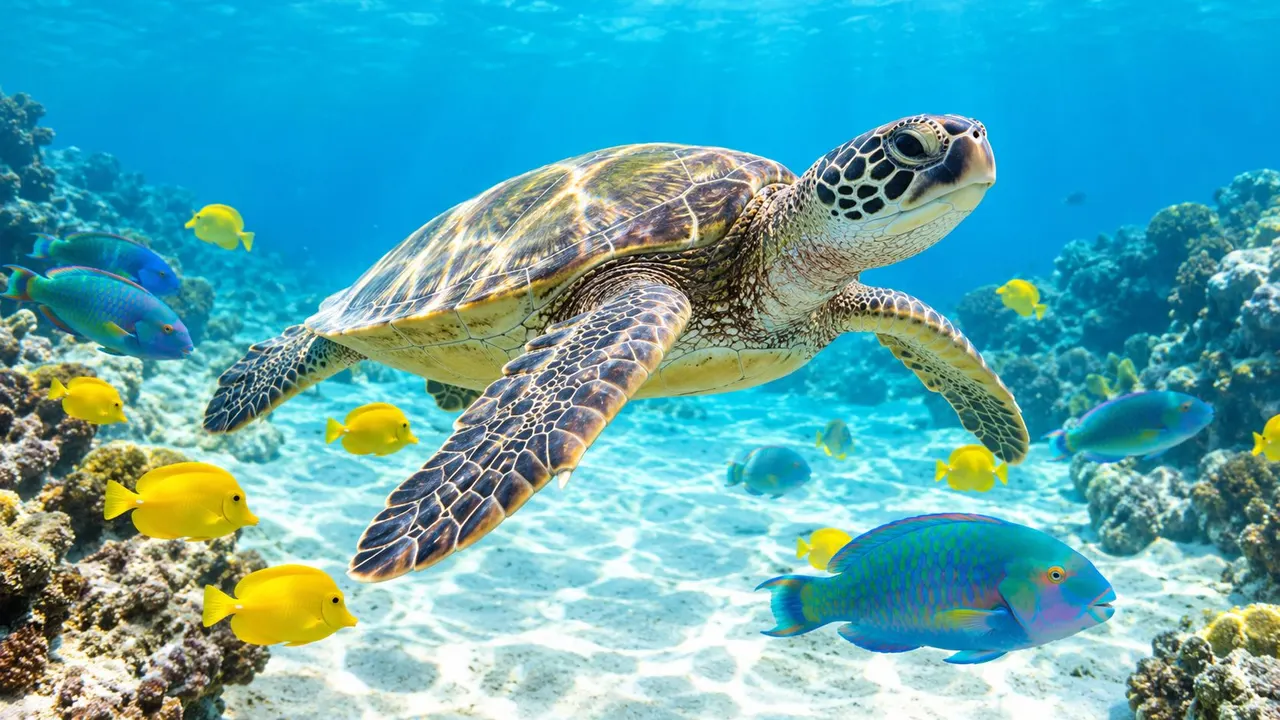
Hawaiian green sea turtles, or honu, may rest on the reef, glide across a sandy patch, or forage along the bottom. A turtle lying still isn't necessarily distressed. Resting is normal behavior, and the animal often needs more space precisely because it has chosen a quiet place to pause.
You may also see:
- Butterflyfish: Look for them moving in pairs or close to reef structure.
- Parrotfish: Their rounded bodies and strong beaks stand out as they work around hard surfaces.
- Wrasses: These active fish often move quickly through the reef and may be easy to spot near cleaning activity.
- Surgeonfish: Watch for groups grazing across the reef.
- Octopus: Search crevices rather than open water, and look for an unusual eye, arm, or change in color.
- Additional reef life: Triggerfish, damselfish, and other tropical species may appear depending on visibility and location.
The exact list changes with water clarity, current, and the time spent looking. A guide can help identify animals without turning the encounter into a chase.
Seasonal sightings
In winter, humpback whales may pass offshore and breach within view of the boat. Monk seals occasionally haul out on Waikiki sand, though any seal sighting should remain passive and distant. These are bonuses, not guarantees, and the trip should be judged by the quality of the experience rather than a fixed wildlife checklist.
A useful field habit is to scan in layers. First, look across the reef for larger movement. Then inspect the water column for fish. Finally, check cracks, ledges, and sandy edges for animals that stay hidden.
For another practical overview, visit this Oahu snorkeling resource.
When to Cancel and When to Go
The harder safety question isn't where to snorkel. It's when to cancel.
Snorkeling accounts for 42% of ocean drownings among non-residents in Hawaiʻi, while 84% of fatal drownings occur in the ocean, according to the Hawaiʻi Department of Health. Hawaii Ocean Safety identifies high surf, strong winds, heavy shorebreak, and strong currents as unsuitable conditions.
A calm-looking surface can conceal a current, fatigue, or a difficult return to shore. “Beginner-friendly” should describe the instruction and supervision available, not guarantee that every beach entry suits every child, older adult, or weak swimmer.
Use a go or no-go check
Before entering, assess the conditions and the swimmers together:
- Swell: If waves are breaking heavily over shallow reef or the boat ride is uncomfortable, reconsider.
- Wind: Strong wind can reduce visibility and make surface swimming tiring.
- Visibility: If you can't clearly see the entry area, reef contours, or nearby swimmers, postpone.
- Rainfall: Recent rain can affect nearshore clarity and runoff.
- Current: Tidal, wind-driven, longshore, and rip currents may be difficult to identify visually.
- Ability: A person who is anxious, cold, tired, or struggling with a mask shouldn't be pushed into deeper water.
- Lifeguard or crew advice: Treat a recommendation to wait as a decision, not a challenge.
Morning departures are often the technically sensible choice because visibility and wind conditions commonly favor the earlier part of the day. A boat-based format can reduce shore-entry risks, but offshore water isn't automatically safe. You still need to listen to the crew and remain within your ability.
If a rip current catches you
Don't swim directly against it. Stay calm, conserve energy, float if possible, and move parallel to shore until you're out of the strongest flow. Signal for help and follow lifeguard instructions.
For families, the best cancellation decision may be the one that protects tomorrow's plans. A missed snorkel is disappointing. A frightened or exhausted swimmer can change the entire trip.
Reef Etiquette and the Ten Foot Rule
A close turtle encounter isn't automatically a good turtle encounter. If the turtle changes direction because a group has surrounded it, the visitors have already taken too much from the moment.
NOAA Fisheries recommends keeping at least 10 feet, or 3 meters, from Hawaiian green sea turtles both in the water and on land. The agency advises people never to touch, chase, feed, or intentionally approach a turtle, and recommends using camera zoom or binoculars instead, as explained in NOAA's marine wildlife viewing guidance.
What responsible viewing looks like
Stay outside the turtle's path. Don't dive toward it, form a circle around it, or position yourself between the animal and shore. If a turtle is near a boat, the operator should reduce speed, avoid sudden direction changes, and use neutral when appropriate so the animal can pass, consistent with NOAA's broader wildlife guidelines.
In the water, your fins are the main reef hazard. Keep your body horizontal, adjust buoyancy before moving over shallow structure, and never stand on coral. Don't grab a rock for balance if you can avoid it. Ask the guide for a flotation aid instead.
The best turtle sighting ends with the turtle behaving exactly as it did before you arrived.
Hawaiian reefs also experience pressure from concentrated visitation. Research summarized by ABC News on tourism and Hawaiian coral reefs found that heavily visited, accessible reef sites can face greater degradation even when they initially support substantial live coral. That makes crowd behavior a planning variable, not a minor courtesy.
Read the practical rules for Hawaiʻi turtle snorkeling before departure. Your goal should be a clear view, enough space for the animal, and no contact with the reef.
Packing List and Timing for Waikiki
Pack for comfort and control, not for a staged beach photograph. Bring reef-conscious sunscreen, a rashguard or UV shirt, a towel, water, and a dry bag for your phone. If you're prone to motion sickness, prepare before boarding rather than waiting for the boat to move.
Leave cotton layers and bulky clothing behind. Cotton stays wet and cold, while oversized items can make movement awkward. Avoid using reef shoes in the water unless the crew specifically recommends them for the site, because dragging or standing on reef structure can cause damage.
Summer can offer more favorable North Shore options and makes it easier to pair a Waikiki stay with a separate North Shore day. Winter brings humpback whale sightings offshore but can also bring larger south swells that affect visibility. Conditions still matter more than the calendar.
For most visitors, a morning snorkel on the first full day in Waikiki is the most practical plan. You'll have time to reschedule if conditions change, and the rest of the trip remains available for shore exploration. Living Ocean Tours also offers a Deluxe Waikiki Snorkel and Wildlife Cruise with a waterslide and lily pad for families who want a more playful boat day.
For snorkeling in Waikiki, Living Ocean Tours offers guided boat trips from Kewalo Basin with equipment, instruction, flotation support, and access to offshore reef areas where turtles and tropical fish may be seen. Visit Living Ocean Tours to choose a Turtle Canyons outing or a family-focused wildlife cruise, then check the conditions and book a morning that suits your group.


