
Snorkeling in Waikiki Hawaii: The Ultimate Guide
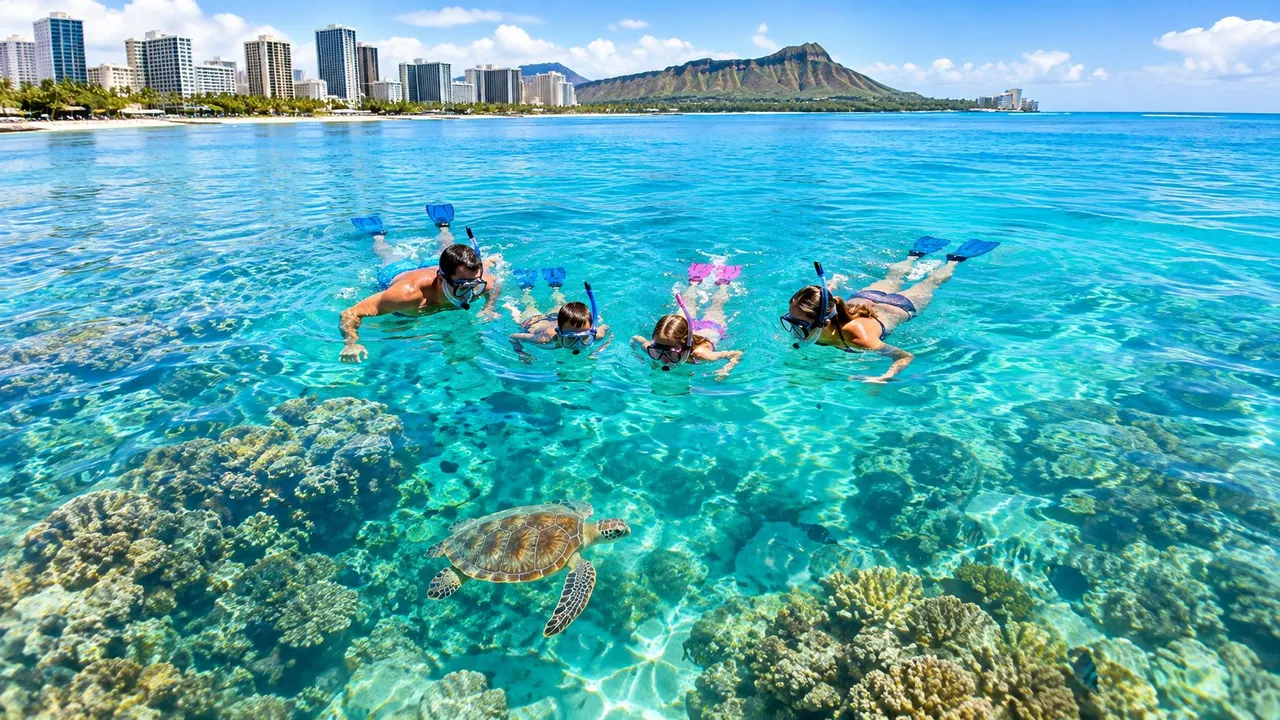
You've arrived at Waikiki with a new mask, a rental car full of beach gear, and children asking when they can get in the water. From the sand, the ocean may look perfectly manageable. Then a passing swell pushes through, the reef turns hazy, or a sideways current starts moving a weak swimmer away from the beach. Snorkeling in Waikiki Hawaii is wonderfully accessible, but the best experience comes from making decisions based on conditions, timing, and behavior rather than on photographs alone.
Waikiki combines an urban beach, a protected nearshore habitat, popular turtle sites, and heavy recreational use. That mix rewards prepared visitors. Choose the right window, understand the difference between shore and boat snorkeling, and treat every fish, coral head, and turtle as part of a living ecosystem.
Understanding the Waikiki Marine Ecosystem
At Waikiki's eastern end, families often arrive with masks, fins, and children ready to enter the water. The beach looks ordinary, yet the shallow habitat offshore has been protected and managed for decades. That history affects where fish gather and why this area can suit first-time snorkelers.
The Waikīkī Marine Life Conservation District was established in 1988 and protects 76 acres of nearshore habitat from the Kapahulu Groin seawall to the historic Waikiki Natatorium. It extends from the high-water mark to 500 yards offshore. Fishing is prohibited, and marine life cannot be harmed or removed. Those rules preserve one of Honolulu's most accessible reef-viewing areas for beginners, families, and casual swimmers.
The district's boundaries help explain the eastern end's fish density. The Oahu snorkeling guide covering Waikiki's conservation district provides additional context on how protected waters shape the experience.
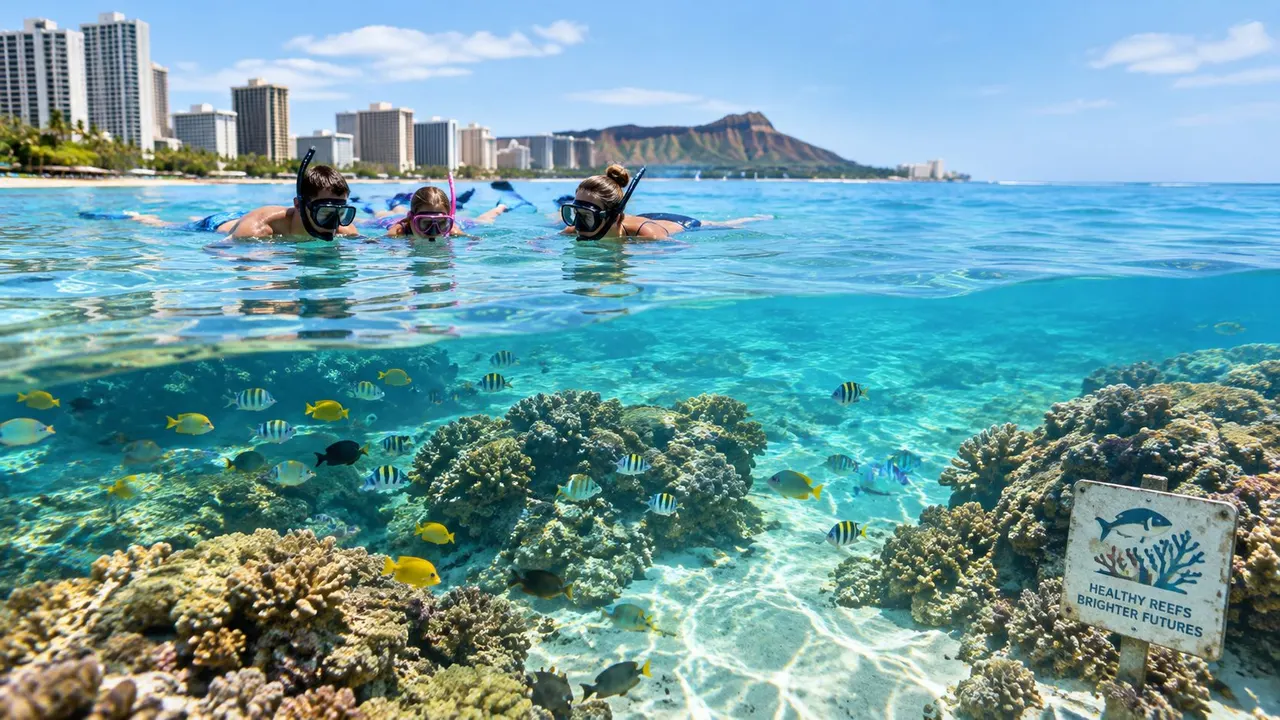
Why the eastern end works for beginners
Protection gives visitors a better chance of seeing reef life near a busy public beach. You are swimming above a shallow urban coral ecosystem, rather than an unprotected area where fishing pressure and repeated contact may reduce visible marine life.
Conditions still vary from one entry point to another. Reef shape, wave exposure, runoff, and beach traffic change along the shoreline. The eastern end generally combines accessible water with nearby habitat, while the western end may remain cloudy longer after rain.
Practical rule: Treat the reef as a protected neighborhood. Move slowly, stay over sand whenever possible, and allow fish to come into view.
Waikiki also operates within a heavily used marine recreation area. A marine-use study cited in reporting recorded 8,355,448 annual visitors at Waikiki Beach. NOAA-linked research reported that more than 5 million people enter Hawaii's nearshore waters each year for reef-related recreation. Hawaii receives about 3 million snorkelers annually, and some popular coral reef sites see 1,000 to 2,000 snorkelers and divers per day. The Moon Travel Guides overview of the best snorkeling and diving in Oahu places Waikiki within that wider recreation system.
The trade-off is practical. Shore access is straightforward, with no long drive or boat transfer, but many visitors share the same water. Expect memorable fish viewing, not a remote or uncrowded reef. Respecting space and staying off coral helps preserve the conditions that make Waikiki approachable.
Reading Ocean Conditions and Timing Your Swim
The beach can look calm while the water near the reef behaves very differently. A beginner-friendly plan starts with observation before anyone puts on fins.
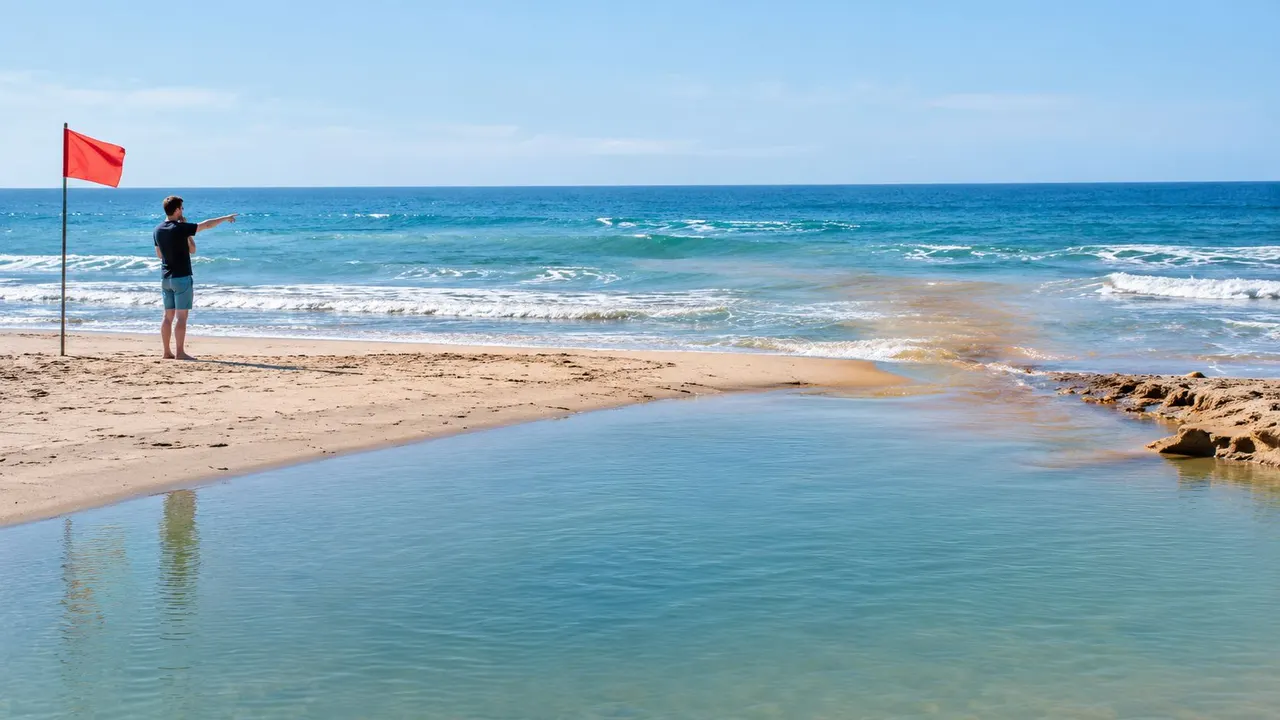
Use a simple go or no-go check
Start at the shoreline and watch the same area for several minutes. Don't judge conditions by the water directly in front of your towel. Look at the entry, the reef edge, and the route a swimmer would use to return.
- Wave energy: High surf, heavy shorebreak, and strong currents are unsafe snorkeling conditions. Hawaii Ocean Safety's snorkeling guidance advises checking with lifeguards before entering and never standing on coral.
- Surface movement: A gentle-looking surface can still hide localized surge. Watch whether swimmers are being lifted, pushed sideways, or forced to kick continuously to remain in place.
- Water clarity: Sand haze near the entry or reef means reduced visibility and a greater chance of losing sight of children, companions, or hazards.
- Wind direction: Strong ENE trade winds can increase water movement even inside a protected area. A building south swell around 2 to 3 feet and ENE winds near 15 knots can create moderate surge and stronger movement, according to Waikiki-focused ocean guidance from Honolulu Travels.
Early morning is usually the most useful starting window because wind and surface chop often build later. Enter only when the water is clear enough to see your route and the return looks as manageable as the swim out.
Respect the rain delay
Rain changes the decision even when waves remain small. Runoff carries fine sediment toward the nearshore water, reducing light penetration and making the reef harder to read. Around the Ala Wai outfall, runoff can also create bacteria concerns.
After heavy rainfall, avoid snorkeling for about 72 hours. Condition guidance for Waikiki Beach notes that post-rain visibility can deteriorate sharply, while calm summer days may produce roughly 50 feet or more of visibility and sometimes close to 100 feet. Winter rain and surge can reduce visibility below 20 feet.
If the water looks like suspended sand, postpone the reef swim. Clearer water later is better than a murky entry where nobody enjoys the view.
Families should use a conservative threshold. If one adult must constantly hold a child in position, if a swimmer can't comfortably float and kick, or if the group can't explain how it will exit, choose a beach day, a pool, or a guided option with professional supervision instead. Practical Oahu snorkeling guidance can help you compare conditions and activity choices before committing to the water.
Shore Access Versus Guided Boat Tours
A family staying near Waikiki can often test a beach entry before committing to a longer outing. Shore snorkeling gives you control over the timing. Walk down from the hotel, check the water, and leave when children become cold, tired, or uncomfortable. It also reduces planning and equipment costs because there is no departure time to meet.
That flexibility comes with limits. You can use only the habitat and conditions directly off the beach, while runoff, surge, shallow reef, or a crowded entry may make the swim difficult. Your group must also choose the route, complete buddy checks, watch the return distance, and decide when conditions have changed enough to exit.
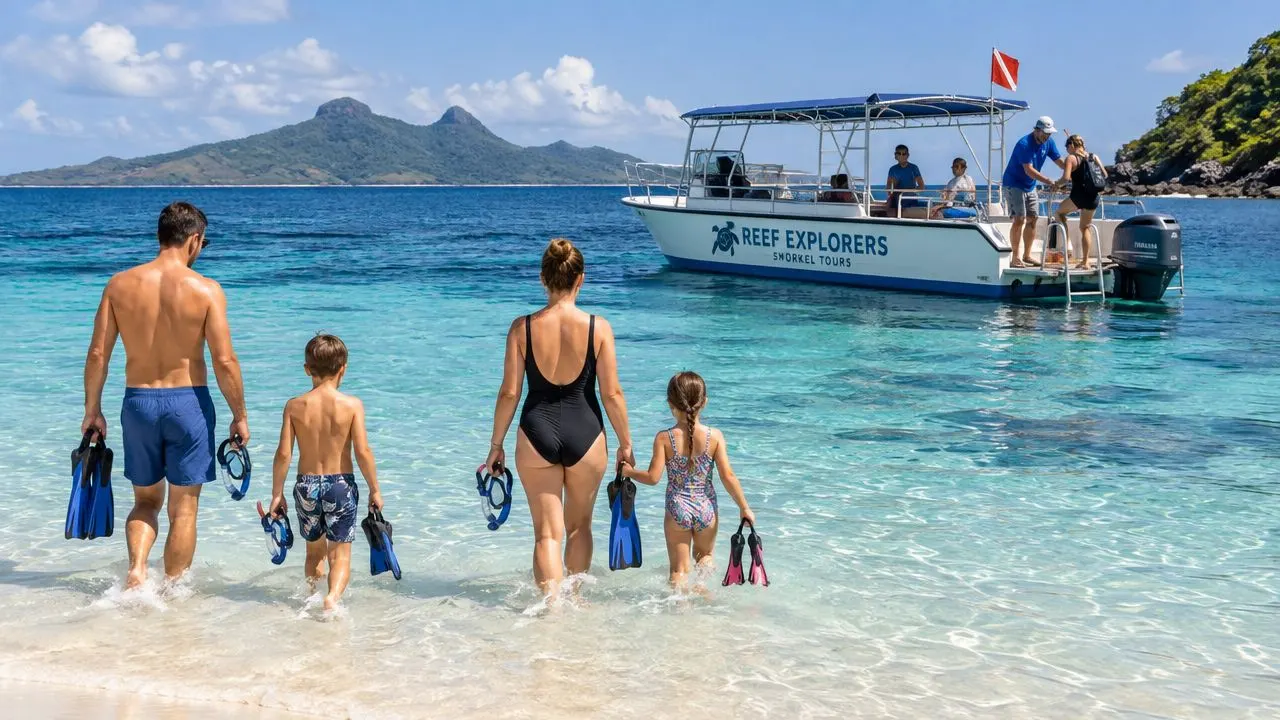
What a boat adds
A guided boat can solve several shore-access problems. Offshore sites may provide clearer water, deeper reef structure, and wildlife-viewing areas that beach swimmers cannot reach safely. The crew handles equipment orientation, navigation, and entry procedures. That support can make a real difference for nervous swimmers, children, and visitors unfamiliar with local conditions.
Boat trips require a different kind of planning. You must follow the departure and return schedule, share space with other guests, and account for motion during the ride. A busy site may still have several boats and many swimmers, so traveling offshore does not guarantee a private experience.
| Priority | Shore snorkeling | Guided boat tour |
|---|---|---|
| Control | Leave or pause whenever you want | Follow the departure and return schedule |
| Access | Limited to nearshore conditions | Reaches offshore reef areas |
| Support | Your group manages safety and navigation | Crew provides instruction and local oversight |
| Comfort | No boat motion | Possible motion sickness during transit |
| Wildlife viewing | Depends on the beach and water clarity | Often reaches established marine-life areas |
Living Ocean Tours operates the Deluxe Waikiki Snorkel and Wildlife Cruise from Kewalo Basin, designed for families wanting guided support and added water activities. Its Turtle Canyons Snorkel Excursion suits visitors prioritizing reef and turtle viewing. The practical benefit is having staff assess conditions, organize entry, and help guests stay comfortable. Wildlife sightings still depend on the day.
Use this Waikiki beach and offshore reef guide to compare easy beach access with the reach of an offshore trip. For a family, the best choice usually depends on the hour, the water's appearance, swimming confidence, and how much responsibility the group wants to manage.
The Reality of Turtle Encounters and Wildlife Etiquette
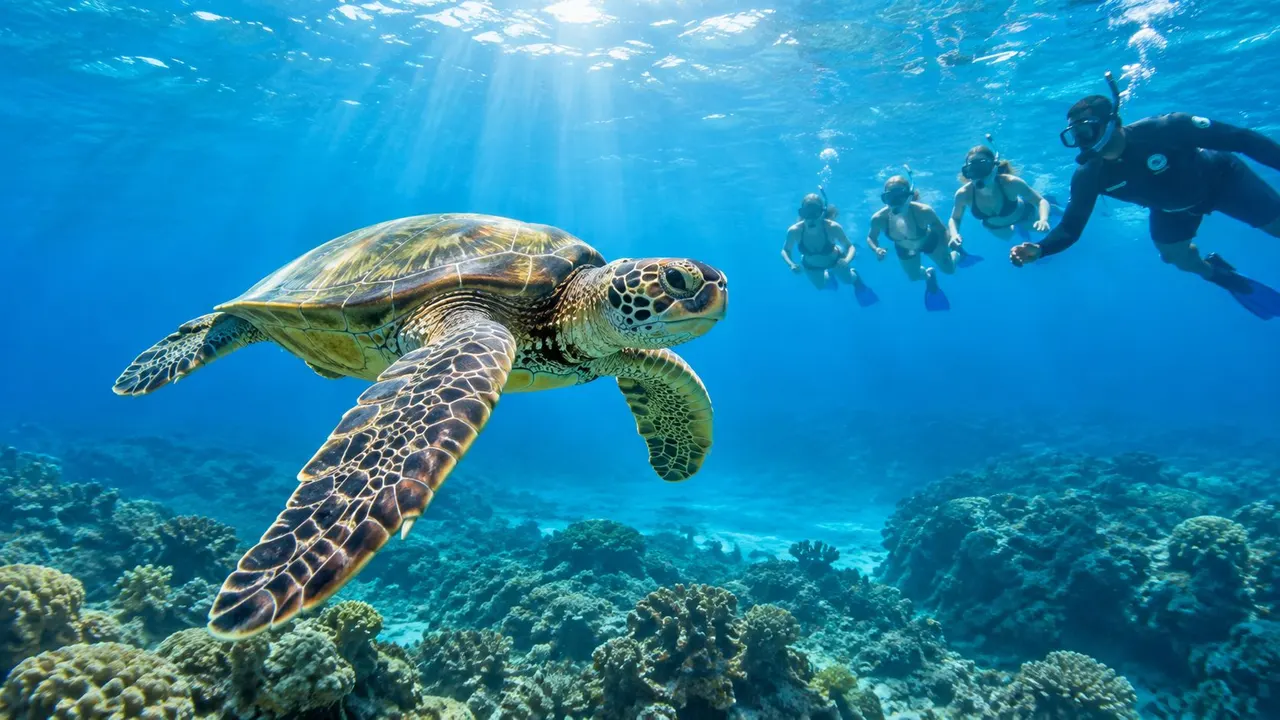
Turtle photographs usually show one relaxed swimmer beside one animal in open blue water. At a popular Waikiki turtle site, the scene can be more complicated. Several boats may arrive in the same area, swimmers can cluster around a resting turtle, and anxious guests may find themselves managing people as much as marine life.
That doesn't make a turtle encounter undesirable. It means you should judge the experience by the quality of the behavior around the animal, not by whether you get a solitary photograph.
Give the turtle room to choose
NOAA Fisheries and Hawaii DLNR recommend a minimum viewing distance of 10 feet, or 3 meters, for sea turtles in the water and on land. The official sea turtle guidance also makes the practical point clear: don't cut off the turtle's path.
Keep your fins below the surface, avoid reaching toward the animal, and never position yourself between a turtle and the direction it's traveling. If the turtle changes course because of your group, you're too close or too obstructive.
- If a turtle rests: Hold your distance and let it remain undisturbed.
- If it swims toward you: Stay still and allow it to pass without touching.
- If people crowd the animal: Move away from the cluster rather than joining it.
- If visibility worsens: Leave the wildlife zone and return toward your guide or the beach.
A responsible operator sets expectations before guests enter the water and actively redirects people who drift too close. Group size and spacing influence the experience, but individual conduct matters just as much. Even a small group can pressure an animal if every swimmer follows it.
Set realistic expectations for children
Children may imagine turtles as tame animals waiting for interaction. Explain before the trip that a sighting is a privilege, not a performance. The goal is to observe normal behavior, whether that means a turtle gliding through the reef, resting, or disappearing before everyone gets a close view.
This guide to Hawaiian honu gives families useful context for understanding the animals they may encounter. If the water becomes crowded, keep children beside an adult, follow crew directions, and move to the edge of the viewing area. A calm child watching from a respectful distance has a better experience than one pushed into a congested center.
The strongest turtle memory often comes from seeing an animal behave naturally. Leave enough space for that to happen.
Essential Safety Protocols and Reef Conservation
A reef is both a habitat and a physical hazard. Coral can cut skin, surge can push a swimmer onto shallow structure, and a fin strike can break living growth that took years to develop. Safety and conservation therefore depend on the same habit, maintaining control in the water.
Start with a buddy check. Confirm that every mask seals, each snorkel is positioned correctly, and weaker swimmers have appropriate flotation or direct adult supervision. Hawaii's ocean activity guidance says snorkelers should be experienced ocean swimmers who understand high surf, strong currents, and waves breaking in shallow water.
Keep your body above the reef
Use a relaxed, horizontal position and make small fin movements. If you can't maintain that position, move over sand or leave the reef area. Never stand on coral to adjust a mask, rest, take a photograph, or help another swimmer.
Choose a mask that seals without excessive strap tension, and clear it in open water rather than grabbing the bottom. A rash guard and reef-conscious sunscreen guidance for Oahu can reduce sun exposure while limiting the products entering the water.
Conservation rule: Look, don't touch. Coral, sand, geological features, and marine life all remain where you find them.
The Waikīkī Marine Life Conservation District prohibits taking, injuring, or possessing marine life. It also prohibits taking or altering sand, coral, or other geological features, as explained by Hawaii DLNR's Waikiki district rules.
Know when to leave
Leave immediately if you're being pushed sideways, losing sight of your group, swallowing water, or struggling to maintain your position. Don't wait for a dramatic change. Conditions can deteriorate while the beach still looks inviting.
Stay close enough to the entry point that you can return without exhausting yourself. If a child becomes frightened, stop the activity rather than trying to persuade them to continue. A short, controlled swim is a success. A longer swim that ends with panic is not.
Expanding the Adventure with Sunset and Whale Cruises
A reef swim and a boat ride serve different purposes. Snorkeling rewards close attention to shallow habitat, fish behavior, and your own movement in the water. A sunset cruise lets the whole family stay together, including relatives who don't swim comfortably.
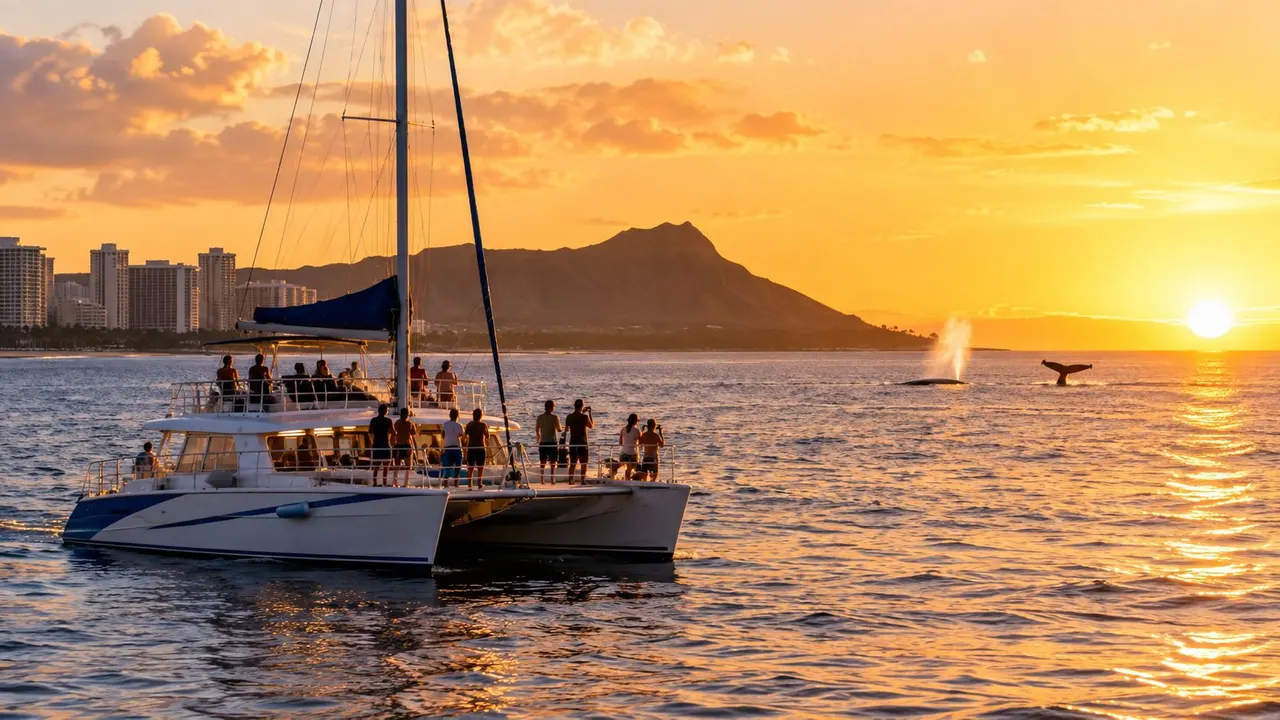
The Waikiki Sunset Cruise is suited to a slower evening, with views toward Diamond Head and a relaxed BYOB atmosphere. An alternative sunset cruise option gives travelers another company to compare, while the Living Ocean Tours sunset cruise provides a direct booking choice.
Humpback whale watching adds a seasonal dimension to a Waikiki itinerary. Tours operate from January through March, when humpbacks pass through Hawaiian waters. The whale watching tour page is the relevant option for travelers planning a seasonal wildlife outing.
These activities also reduce pressure on a single reef visit. A child who has had enough snorkeling can still enjoy the coastline from the deck, while grandparents or non-swimmers can participate fully. The result is a more balanced ocean day, rather than forcing every traveler into the same activity.
Frequently Asked Questions About Waikiki Snorkeling
Are prescription masks available?
Ask the operator before booking. Rental inventories differ, and a standard mask that leaks can ruin the experience for a guest who needs corrective vision. If a prescription mask isn't confirmed, bring a properly fitted personal mask or choose a shore session where you can test equipment before swimming out.
What should I do about motion sickness?
Eat lightly, hydrate, and tell the crew before departure. Stay where you can look at the horizon, avoid reading during the ride, and follow the operator's medication guidance. If motion sickness is a serious concern, shore snorkeling may be the more comfortable choice.
Can children join a guided snorkel?
Ask about the exact age, swimming ability, flotation equipment, and adult-supervision requirements before paying. Children should be comfortable in ocean water, able to follow instructions, and paired with an attentive adult. A child who only feels safe standing in shallow water may be happier with a beach swim than an offshore snorkel.
Is morning or afternoon better?
Morning often offers the calmer starting window, while afternoon conditions can become windier and more active. Don't book by time alone. Check the forecast, local warnings, recent rain, and the water itself before entering.
Living Ocean Tours offers guided Waikiki snorkeling with equipment, instruction, and crew support, along with wildlife-focused cruises for families and first-time snorkelers. Visit Living Ocean Tours to compare the Deluxe Waikiki snorkeling cruise, Turtle Canyons excursion, sunset sailing, and seasonal whale watching options before choosing your ocean day.


