
Snorkeling in Waikiki: A Complete Guide for 2026
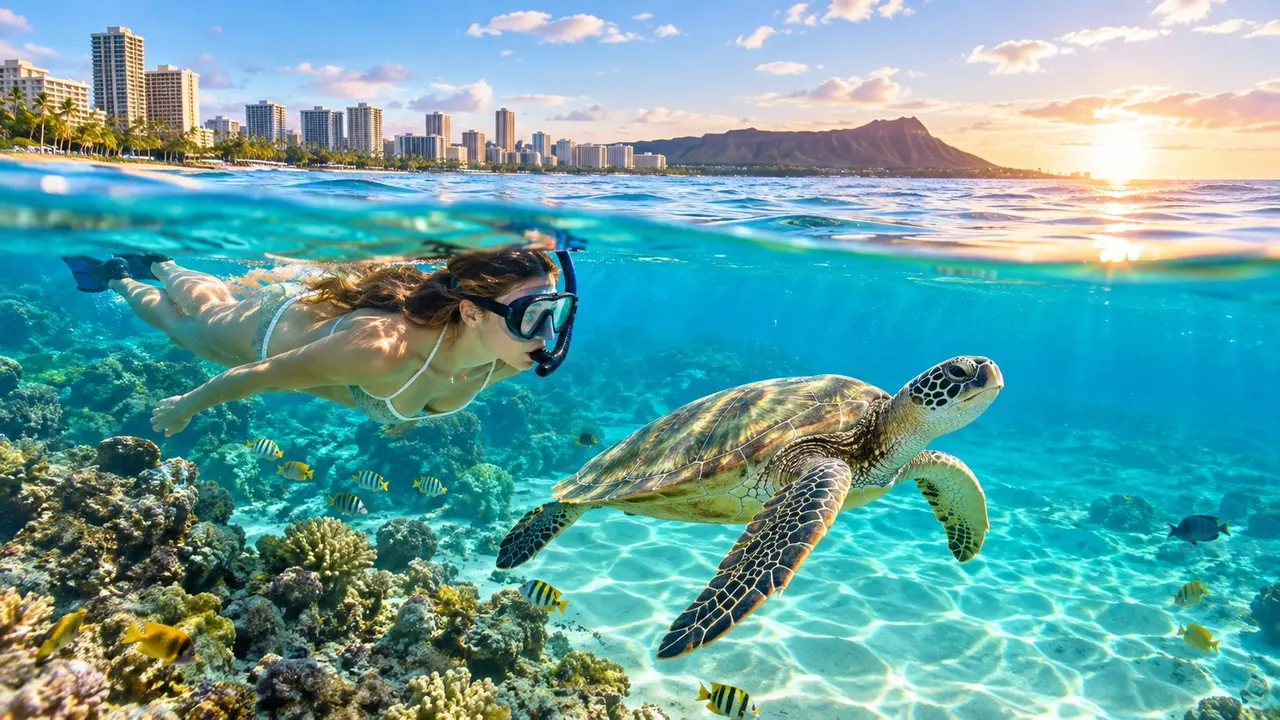
You're standing on Waikīkī Beach with a rented mask in one hand, watching a steady stream of swimmers enter the water. The reef looks close, the shoreline looks calm, and the obvious question is whether to walk in now or take a short boat ride to water that a local crew has already assessed.
That choice shapes the entire day. Snorkeling in Waikīkī isn't one single beach activity, and a convenient entry doesn't always produce the clearest water, easiest conditions, or best wildlife experience. The practical decision is whether today's shoreline suits your ability, whether recent weather has changed the water, and whether a guided trip offers a better route to the habitat you want to see.
What Snorkeling in Waikīkī Actually Feels Like
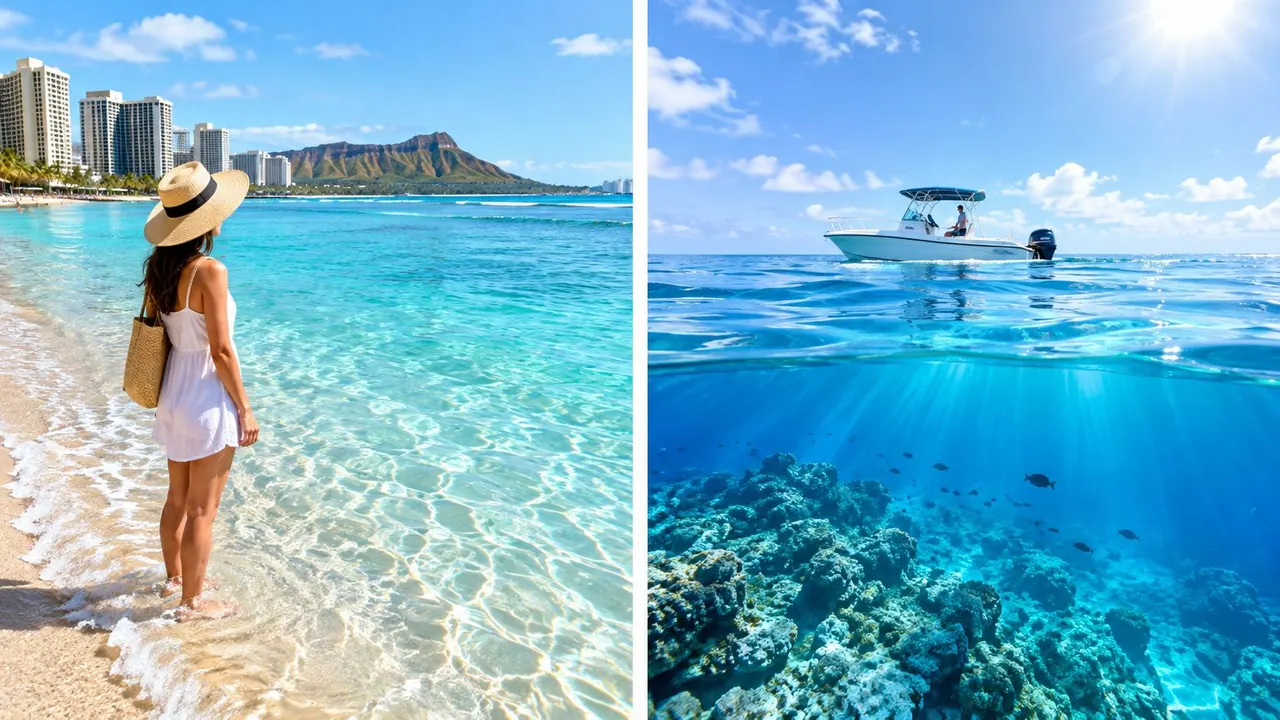
A first-time visitor might enter near the busy center of the beach, swim past floating rental boards, and expect an instant aquarium. Instead, the first few minutes are usually about settling down. Adjust the mask, slow the breathing, find a comfortable body position, and learn how the water moves around the reef.
Then the city changes character. Hotel towers, umbrellas, and traffic remain visible above the surface, while below it you may find reef fish, coral structure, and the occasional honu moving with far more confidence than the swimmers around it. That contrast is Waikīkī's appeal. Few visitors expect a lively marine setting so close to a dense urban shoreline.
The destination's scale explains why conditions and crowd awareness matter. Lifeguard records indicate that 10,323,929 people visited Waikīkī Beach in 2019, while a University of Hawaiʻi Sea Grant analysis calculated a seven-year annual average of 10,031,030 visitors from 2013 through 2019. The analysis also warns that attendance estimates may be discounted by roughly 25% to 50% because of measurement limitations. These figures describe the beach, not snorkelers alone, and come from the University of Hawaiʻi Sea Grant Waikīkī Beach user perceptions analysis.
The choice between shore and boat
A shore entry gives you freedom. You can practice for a short time, leave when you're tired, and return another day without organizing a full excursion. It also exposes you to the hardest parts of the experience, including reading shorebreak, carrying gear through crowds, and deciding whether cloudy water is merely disappointing or a reason to stay out.
A boat trip removes much of that guesswork. You still need to respect the ocean, but a crew can select a site, explain the entry, fit flotation equipment, and help you spend more of your time observing instead of searching.
Practical rule: Choose the entry point that matches the day in front of you, not the location that looked best in yesterday's photograph.
The useful questions are simple. Are you comfortable swimming in open water? Are children relaxed with a mask on their face? Has it rained heavily? Do you want general reef scenery, or is seeing a turtle the main purpose of the morning? Answer those before you commit to the beach.
Why Waikīkī Works for Snorkeling
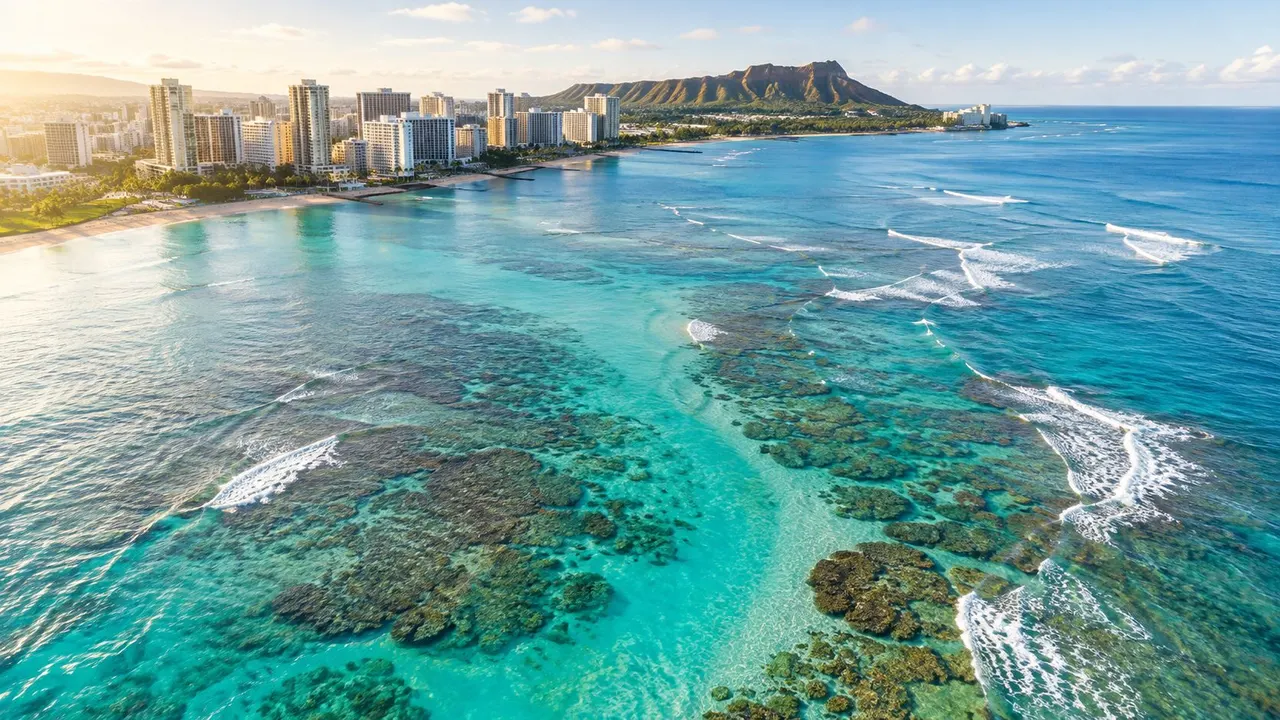
Waikīkī sits beside a fringing reef that breaks incoming energy before it reaches shore. The result is uneven nearshore conditions, not the uniform calm of a swimming pool. One area may feel manageable for a cautious swimmer while wind, swell, tide, and boat traffic create stronger ocean conditions nearby.
That matters for beginners. Calm water at the sand does not guarantee the same experience farther out, and a flat-looking morning can change once the wind rises. The reef also creates different habitats. Shallow sections may suit a swimmer building confidence, while deeper channels and offshore formations can offer better opportunities to see fish and turtles.
Waikīkī compared with other Oʻahu locations
Waikīkī's south-shore position combines convenient access with extensive services. Hanauma Bay provides a more enclosed, destination-style snorkeling setting with separate access considerations. The North Shore is more exposed to seasonal swell and may become unsuitable for casual snorkeling. Planning all three locations the same way is a mistake.
The urban setting also affects how visitors use the coast. The University of Hawaiʻi Sea Grant analysis estimates that Waikīkī generated approximately $7.8 billion in visitor expenditures in 2019, about 38% of statewide visitor spending. These figures describe the wider destination, not snorkeling revenue, but they explain why water quality, reef health, and safe coastal access matter beyond a single morning. The underlying context is available in the University of Hawaiʻi Sea Grant report on Waikīkī's visitor context.
Why a boat can improve the experience
A boat cannot promise clear water or wildlife sightings. It can reach reef areas that are impractical for a casual beach swim, including known offshore turtle habitat. That makes a boat-based trip a sensible choice when time is limited, swimming ability varies across the group, or seeing honu is the main goal.
The Turtle Canyons snorkeling experience shows the practical alternative to a crowded beach entry. A crew can handle positioning and provide orientation while you focus on breathing, floating, and observing. The trade-off is less freedom to choose your own start and finish time, but the structured access may be worth it when daily conditions make shore snorkeling uncertain.
Top Ways to Snorkel from Waikīkī
Your best option depends on the morning's water and your group. Independent shore snorkeling gives you control over timing and costs little if you already have suitable equipment. A guided Turtle Canyons excursion takes you toward offshore turtle habitat with crew support. A deluxe wildlife cruise adds boat time and other activities, which helps families whose interests or stamina differ.
Comparing Waikīkī snorkel options
| Option | Effort | Marine Life | Family Friendly | Crowd Level |
|---|---|---|---|---|
| Independent shore entry | Highest responsibility for entry, gear, and exit | Reef fish and occasional wildlife, sightings vary | Best for confident swimmers and adaptable families | Often busy near popular access points |
| Guided Turtle Canyons excursion | Crew handles site approach, equipment support, and orientation | Focused access to offshore reef habitat and honu viewing | Strong fit for beginners and families needing structure | Can be busy at shared wildlife areas |
| Deluxe Waikīkī Snorkel and Wildlife Cruise | Boat-based with snorkeling plus additional water activities | Reef wildlife with more time for non-snorkel fun | Particularly useful for children with different interests | Boat group is removed from beach-entry congestion |
The practical decision is flexibility versus predictability. Choose the shore when conditions look manageable, everyone can handle the entry and exit, and you want to start or stop without a departure schedule. You also accept responsibility for judging water quality, surf, footing, equipment, and your group's energy.
Choose a boat when Turtle Canyons and honu viewing are the priority, or when a crowded beach entry creates too many variables. A crew can position the boat near intended habitat and provide equipment support and orientation. Sightings remain wildlife encounters, not guarantees, but targeted access is a better use of a limited vacation morning than hoping an animal appears near shore.
Living Ocean Tours operates the Turtle Canyons Snorkel Excursion and the Deluxe Waikīkī Snorkel & Wildlife Cruise, both departing daily from Kewalo Basin Boat Harbor. Its Turtle Canyons Snorkel Excursion offers a guided route toward offshore turtle habitat. Travelers comparing operators can also review Snorkel Turtle Canyon.
What the deluxe option changes
The Deluxe Waikīkī Snorkel and Wildlife Cruise suits groups that need more than one in-water activity. A waterslide, floating toys, and time aboard the vessel give children something to do while adults take turns snorkeling or relaxing. That variety helps when younger guests tire quickly or someone prefers to spend only part of the outing in the water.
For another format, see the Waikīkī snorkeling and wildlife cruise. Check the inclusions before reserving. Gear, flotation support, instruction, departure details, and water activities vary by product, and those differences determine whether the trip fits your group.
Swimming With Turtles the Right Way
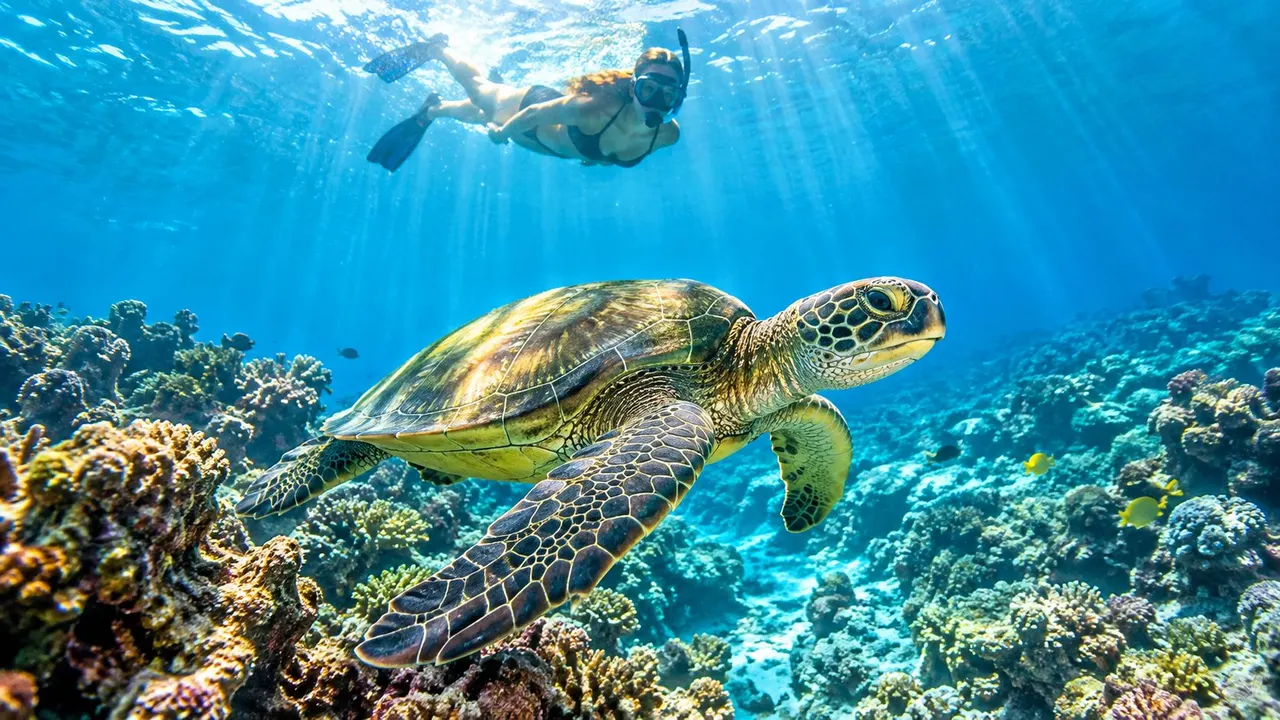
The Hawaiian green sea turtle, or honu, is one of the defining wildlife encounters around Oʻahu. It's also a protected animal, not a photo prop. Hawaiʻi's Department of Land and Natural Resources identifies green turtles as the most commonly encountered sea turtle species on Hawaiian reefs and beaches, and explains that hunting was prohibited in 1978 after severe population depletion. The Hawaiʻi DLNR sea turtle guidance documents a nesting recovery of approximately 5% per year over the last two decades, with nearly 500 females nesting annually, compared with 67 nesting turtles recorded in 1973.
The recovery makes responsible viewing more important, not less. More sightings can create more pressure around the same resting and feeding areas, especially when several groups arrive at once.
Give the turtle the lane
NOAA Fisheries recommends a minimum separation of 10 feet, or 3 meters, in the water. The NOAA marine wildlife viewing guidance for Hawaiʻi also advises against touching, feeding, chasing, encircling, or blocking a turtle's route.
Use a simple protocol:
- Hold your position: Stop finning when you're at a respectful viewing distance and let the turtle choose its direction.
- Protect the escape path: Never place yourself between a turtle and open water, the surface, or the shoreline.
- Retreat slowly: If the turtle swims toward you, use small, controlled fin strokes backward or angle away. Don't kick hard directly over the animal.
- Use the camera's zoom: A closer photograph isn't worth forcing the turtle to change course.
- Leave a crowded area: If swimmers begin forming a ring, move away rather than adding another body to the cluster.
A turtle approaching you hasn't given permission to touch it. It has simply chosen its own path.
Families need a clear plan
Parents should explain the rule before anyone enters the water. Tell children to keep their hands to themselves, remain beside the supervising adult, and watch the turtle's movement rather than trying to follow it. A child who becomes excited should pause, breathe, and let the guide or parent create space.
The legal protection is significant. Hawaiian green turtles are protected under the federal Endangered Species Act and Hawaiʻi state law, including Hawaiʻi Revised Statutes Chapter 195D and related administrative rules. For a practical overview of the encounter itself, see the guide to swimming with turtles.
If boats and swimmers share shallow habitat, operators also need to slow down, avoid sudden turns, and place engines in neutral when a turtle is ahead. The Hawaiʻi guidance on protecting marine species explains why these precautions reduce collision, entanglement, and propeller-strike risks.
Reading Waikīkī Conditions Before You Go
A calm-looking beach can change by the time you enter. Make the go-or-no-go decision at the actual beach or harbor that morning, using the surf forecast, wind, recent rainfall, water appearance, posted warnings, and lifeguard advice.
Rain matters because runoff can carry sediment and contaminants toward the coast. Cloudy water can reduce your view, but cloudy water after significant rainfall, especially with an advisory or visible discharge, calls for a more conservative choice. For context on Waikīkī's visitor patterns, refer to the University of Hawaii Sea Grant analysis cited earlier in this guide.
Use this morning decision sequence
- Read the water from shore. Hard-breaking surf can make entry and exit difficult, even when the beach appears manageable from a distance.
- Check wind and chop. Wind can shorten visibility and make relaxed breathing harder, particularly for beginners.
- Ask a lifeguard. Lifeguards can describe that beach's shorebreak, current behavior, and immediate hazards.
- Look for runoff and health warnings. Other swimmers entering the water do not confirm that conditions are suitable.
- Inspect your actual entry point. A harbor or beach may look different from the reef area you planned to reach.
Some local guides recommend waiting roughly 72 hours after heavy rain, but that timing is not a universal clearance rule. Judge the intensity of the rainfall, runoff, official advisories, water clarity, and local lifeguard observations together. The Waikīkī snorkeling conditions guide provides further context for weighing those factors.
When to switch plans
A boat trip can make more sense when the beach is crowded, the shorebreak is uncomfortable, or your goal is offshore habitat rather than a busy beach entry. Turtle Canyons through Living Ocean Tours may offer a more practical route in those conditions, with a crew assessing the water and adjusting the itinerary when needed. A boat does not override unsafe weather or water-quality warnings, so ask how the operator makes its go-or-no-go decision.
For broader planning context, consult this Oʻahu snorkeling guide. On the morning itself, use a clear rule: if you cannot explain why conditions are acceptable for every swimmer in your group, wait or ask a professional before entering.
What to Bring and Wear for the Water
Comfort affects safety more than most beginners expect. A leaking mask, loose fins, or sunburn can turn a calm outing into a tiring one before you've had time to enjoy the reef.
Start with flotation. A snorkel vest or personal flotation device gives a nervous swimmer a more stable way to rest without treading water constantly. It doesn't replace supervision or ocean judgment, but it can reduce unnecessary fatigue.
Pack for control and protection
- A well-fitted mask: Fit matters more than owning an expensive model. A mask that seals comfortably keeps you from repeatedly stopping to clear leaks.
- A snorkel vest: Beginners, children, and anyone who tires easily should consider flotation support.
- A rashguard: It helps with sun exposure and minor scrapes from accidental contact with equipment or surfaces.
- Reef-conscious sunscreen: Apply it before leaving the hotel and follow local guidance about products and reef stewardship.
- Water shoes where needed: Use them only when the entry surface genuinely calls for extra foot protection. Don't walk across living reef.
- A dry change of clothes: Even a warm boat ride can feel chilly after repeated exposure to wind and water.
Loose fins create drag and can make a swimmer work too hard. Cotton shirts become heavy when wet and can restrict movement. Jewelry can reflect light, snag equipment, or become one more thing to worry about in the water.
Before leaving your room, check the snorkeling fins guide and run through this short list:
Mask, snorkel, flotation, rashguard, sunscreen, water, towel, dry clothes, and a plan for where you'll enter and exit.
Sample Waikīkī Snorkel Day Plans
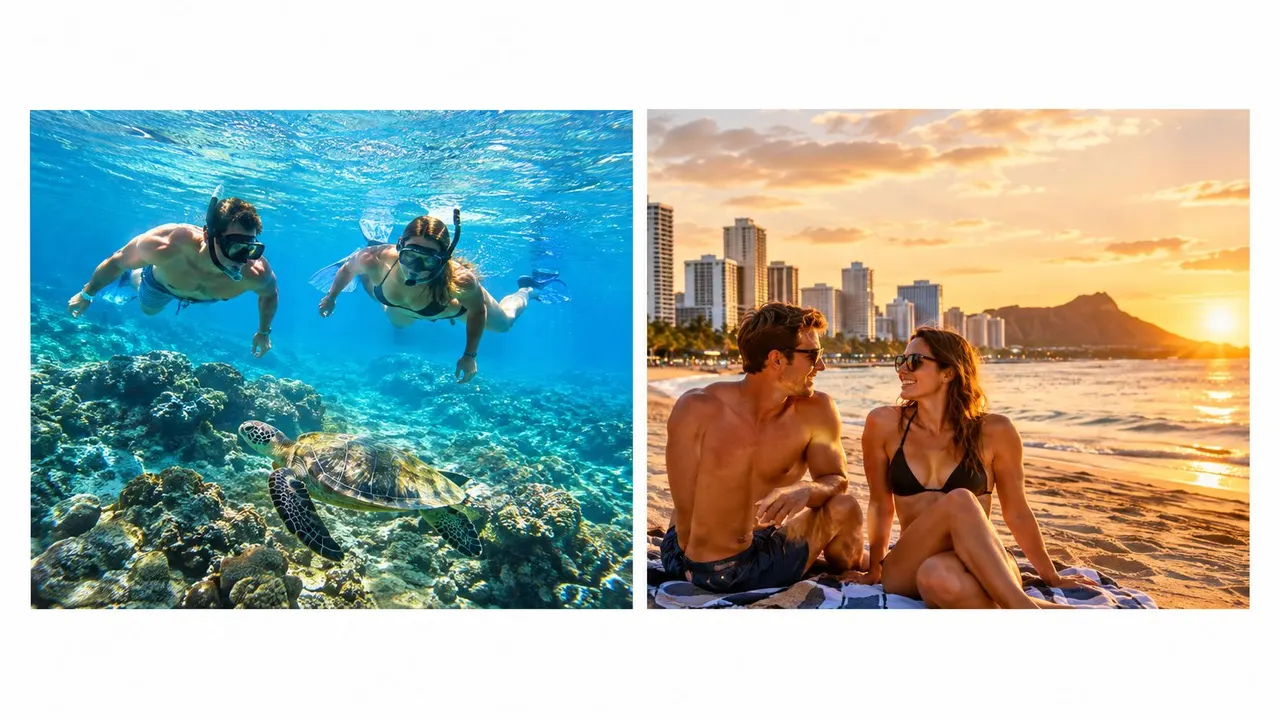
A good Waikīkī day leaves room around the water activity. Families often have a better experience when they don't schedule a long walk, a formal lunch, and another timed attraction immediately afterward. Salt water, sun, and children's energy levels rarely follow the itinerary.
A family morning with an easy afternoon
Start with a morning Turtle Canyons excursion while everyone is rested. A guided trip gives first-time snorkelers equipment support and a clear in-water routine, while parents can focus on keeping children calm and close. After returning, rinse off, eat lunch, and spend the afternoon on the beach without turning the second half of the day into another endurance test.
For families whose children want slides and floating activities as much as reef viewing, the Deluxe Waikīkī Snorkel and Wildlife Cruise is the more obvious upgrade. It combines snorkeling with a waterslide and other water-play options, so the outing doesn't depend on every child wanting the same amount of time in the water.
The publisher describes its guided outings as including equipment, instruction, flotation support, and crew assistance, but confirm the current inclusions when booking. Prices and availability can change, so use the tour page rather than relying on an old screenshot or social post.
A couple's water-and-sunset day
A couple might choose a morning shore session if conditions are comfortable, leave the afternoon open for lunch and a break, then finish with the Waikīkī Sunset Cruise. BYOB and cash-bar arrangements can suit guests who want a relaxed golden-hour boat ride, while non-drinkers can enjoy the coastline and changing light at their own pace.
Visitors traveling during the humpback season can also consider the company's whale watching excursion. Seasonal wildlife is never a reason to ignore conditions or expect a guaranteed sighting, but it can add another marine-focused outing to a flexible itinerary.
For visitors comparing departure options, the practical questions are more useful than a headline price. Ask what equipment is provided, how long guests spend in the water, whether flotation is available, where the vessel departs, and what happens if conditions force a change.
Booking Tips and Common Questions
Reserve early if your trip has only one flexible morning, especially when several generations are traveling together. Before paying, confirm the departure location, equipment, flotation options, in-water format, cancellation policy, and weather procedure. A responsible operator won't treat unsafe conditions as a reason to force the original plan.
Can children snorkel? Often, yes, if they're comfortable in the ocean and the trip provides appropriate supervision and flotation. Can beginners keep up? They can on a structured outing when they're honest about their comfort level and take breaks before fatigue becomes a problem.
What happens if there are no turtles? Wildlife remains wild. A quality trip should still provide a safe reef experience and clear guidance, but nobody should touch, chase, or crowd an animal to manufacture a sighting. Is a sunset cruise suitable for non-drinkers? Yes. The value is the coastal setting, light, and time on the water, not alcohol.
The safest booking choice is the one that matches your group's ability and the day's conditions. Read the details for the Waikīkī snorkel and waterslide experience, then keep the turtle rules simple in the water: stay back, leave an escape path, and let the honu decide where it goes.
Living Ocean Tours offers guided Waikīkī snorkeling, turtle-focused excursions, and a deluxe wildlife cruise with extra water activities for families. Visit Living Ocean Tours to review the current options, check conditions and inclusions, and choose a responsible way to experience Waikīkī's reef and marine life.


