
Snorkeling Honolulu: The Ultimate 2026 Guide
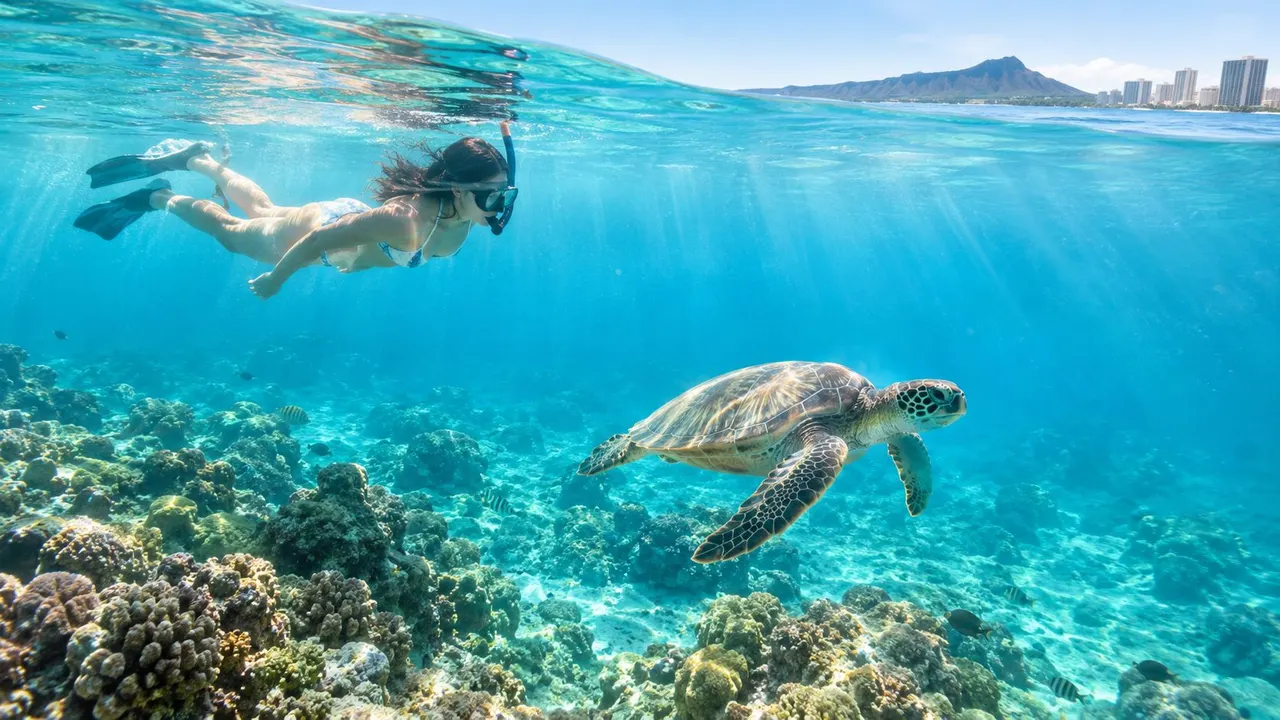
You've picked the beach, packed the swimsuits, and promised the family a clear-water morning. Then the afternoon arrives with wind, cloudy water, and tired children who can't see much below the surface. That's a common Honolulu snorkeling disappointment, and it usually has less to do with choosing the wrong beach than choosing the wrong conditions.
The practical approach is simple: check the ocean before you choose the entry point. Rainfall, runoff, wind, visibility, waves, crowds, and your group's swimming ability all matter. Honolulu has excellent shore reefs and accessible offshore sites, but no location is automatically safe or clear every day.
Hawaiian snorkeling is also far larger than a single beach attraction. More than 3 million snorkelers visit Hawaiian reefs each year, and more than 80% of visitors take part in coastal or marine recreation, according to an academic summary of Hawaii's marine recreation economy. That popularity makes good judgment, respectful wildlife viewing, and realistic planning essential.
Why Timing Matters More Than Location
A family can choose a famous reef, arrive late, and still have a poor snorkel. The water may look inviting from the sand, but trade winds can build through the day, stirring sediment and adding chop just when everyone is ready to get in. The same reef that looked clear in the morning can feel completely different later.
The reason is straightforward. Overnight calm allows suspended sand to settle, giving the water a better chance to clear before wind and surface movement increase. For many Honolulu visitors, the most dependable daily window runs from sunrise to about 10 a.m., as described in this Honolulu morning snorkeling guide.
The morning advantage
Morning timing helps in several ways at once:
- Calmer surfaces: The ocean often starts the day with less wind-driven chop.
- Settled sand: Fewer overnight disturbances can mean cleaner views through the mask.
- Lower fatigue: Children and first-time snorkelers generally have more energy early.
- Less crowd pressure: Popular beaches become more difficult to find as more swimmers arrive.
This doesn't mean every afternoon snorkel will fail. It means the morning gives you a better starting probability, especially if your group includes nervous swimmers or young children. A sheltered beach can still work later, while an exposed location may become uncomfortable much sooner.
Seasonal timing matters, too. Clearer conditions often occur from May to early October, when visitors can more frequently find calm, dry mornings. Weather still changes day by day, so a seasonal pattern isn't a promise. Use it as background, then make the final decision from the current forecast, recent rainfall, wind, wave height, and lifeguard advice.
Put the clock before the map
Visitors often search for the “best beach” as if location settles the question. In practice, when you enter can matter more than which famous reef appears on the itinerary. A modest, sheltered site during a clean morning can outperform a celebrated reef visited after wind and runoff have reduced visibility.
For a broader look at choosing locations around the island, use this Oahu snorkeling overview. The useful habit isn't memorizing every beach. It's learning to ask, “What are the conditions at the time my family will be in the water?”
Practical rule: Book the activity for the morning whenever possible, then keep a backup plan if rain, wind, or wave conditions change.
Shore Snorkeling Versus Guided Boat Tours
A calm, clear morning can make shore snorkeling simple. You can walk from your accommodation, stay for as little or as long as you want, and avoid a fixed departure time. Around Waikīkī, the Waikīkī Marine Life Conservation District in front of Queen's Beach toward Kā'īmana offers a practical shore option where visitors may see reef fish and sea turtles. On favorable days, visibility can reach about 15 to 30 feet, according to this Waikīkī snorkeling guide.
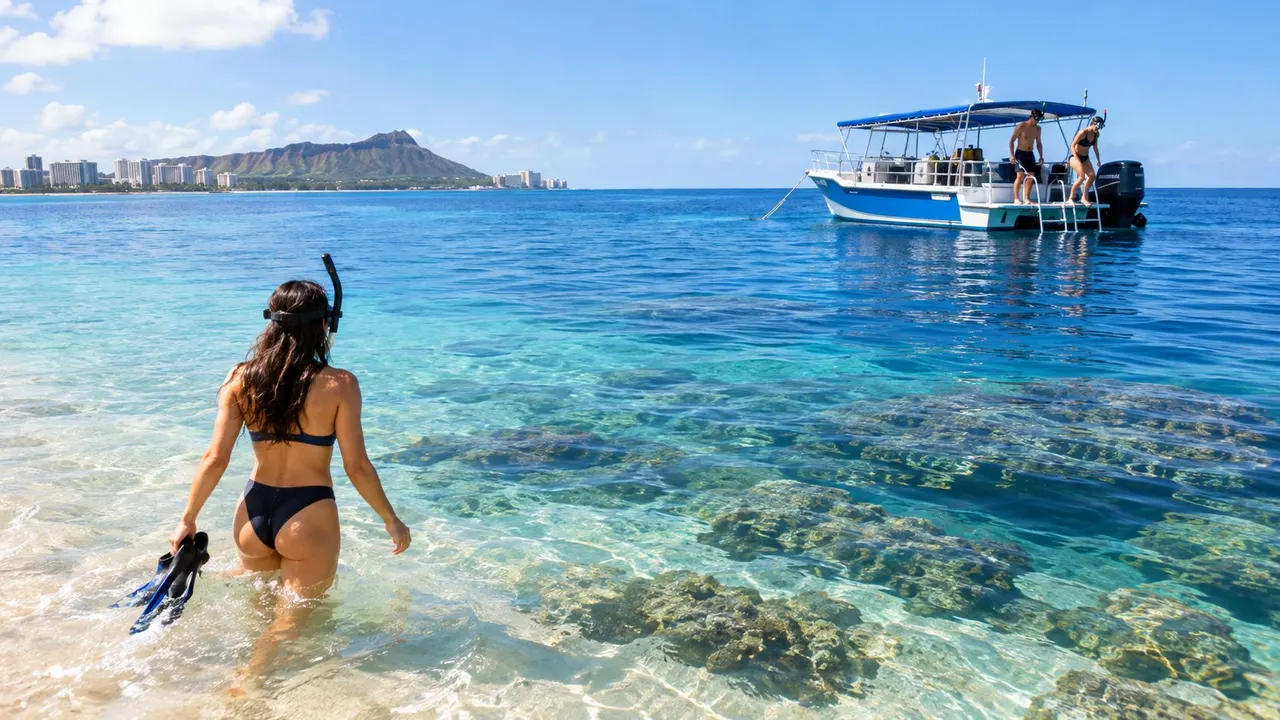
The trade-off is responsibility. Shore visitors must judge the entry, monitor currents, share water with swimmers and surfers, and decide whether visibility remains acceptable. Recent rain, wind, or runoff can change that decision quickly, so a convenient beach is not automatically suitable for a first-time snorkeler.
Where shore snorkeling works
Shore snorkeling fits travelers who can accept changing conditions and assess the basics before entering. It is most practical when:
- The water is calm: A gentle entry reduces stress and saves energy.
- The reef is close: A short swim is easier for children and beginners.
- Lifeguards are present: Local advice helps when conditions shift.
- Expectations are realistic: Fish and turtles may appear, but sightings are never guaranteed.
Use this Oahu snorkeling overview when comparing shore locations and access around the island.
Hanauma Bay remains a major historical reference point. It became a protected marine life conservation area in 1967 and was later restored in 1990. Independent summaries describe it as drawing about 1 million visitors per year, while one account records more than 842,000 annual visitors before restrictions, details collected in this history of snorkeling in Honolulu. Its popularity makes planning important, particularly when entry limits and busy conditions affect the experience.
What offshore access changes
A guided boat tour reduces much of the shoreline guesswork. The crew can assess the day's conditions, fit equipment, explain entry technique, and take guests to offshore habitat instead of asking everyone to swim from a crowded beach. It does not remove ocean risk, but it gives beginners structure and keeps experienced eyes near the group.
Living Ocean Tours offers this format through the Turtle Canyons Snorkel Excursion and the Deluxe Waikiki Snorkel and Wildlife Cruise. The company is one of the more reviewed snorkel operators on Oahu. For another turtle-focused option, Snorkel Turtle Canyon provides a separate tour to compare.
Choose the shore when independence matters and conditions are clearly suitable. Choose a boat when rainfall, wind, runoff, uncertain visibility, limited swimming ability, or young children make independent entry harder to manage. A guided trip is often the safer fallback when the beach forecast does not cooperate.
How to Read Daily Ocean Conditions Safely
A sunny beach can still offer poor snorkeling. Recent rainfall, runoff, wind, wave height, and currents may change conditions within hours, so check the water before choosing a shore entry.
Rain and runoff deserve the first decision. Heavy rainfall near Waikīkī can carry runoff toward the ocean, while the Ala Wai Canal may reduce clarity after rain. Local guidance recommends waiting at least 72 hours after heavy rainfall before entering the ocean near Waikīkī. Review this Waikīkī beach safety guidance before planning a shore snorkel.
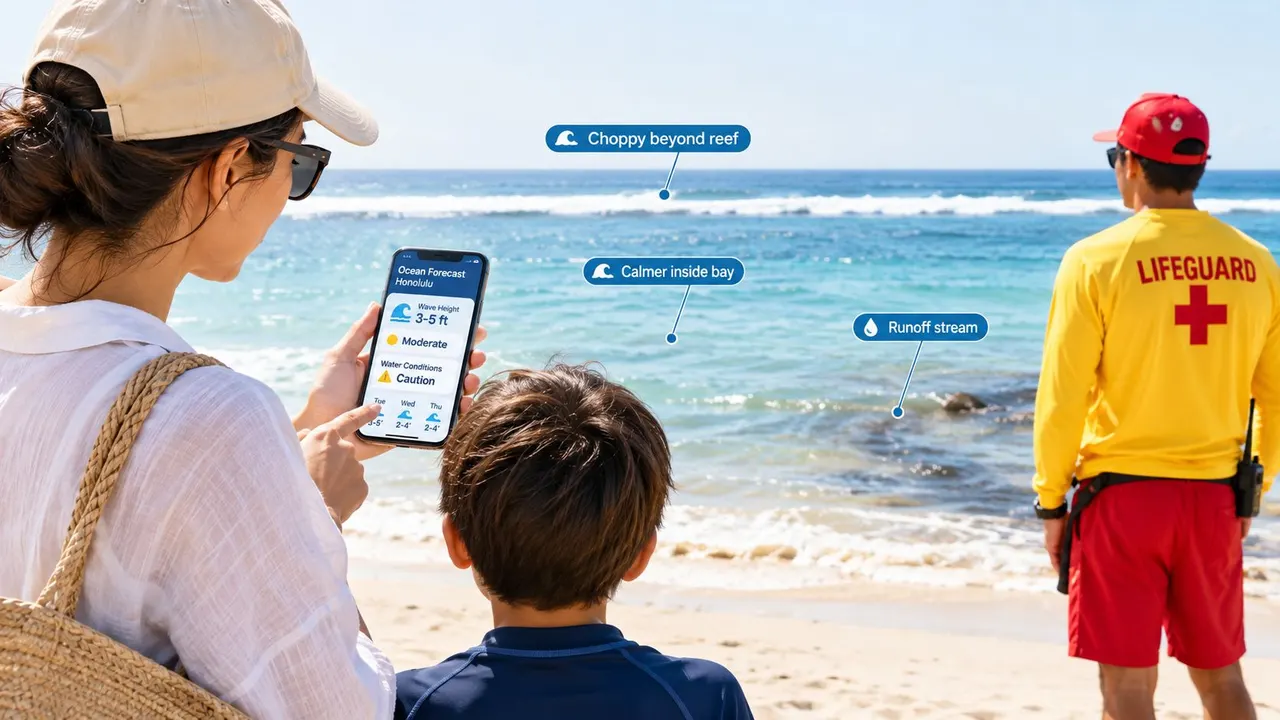
Wind and waves provide the next warning. Wind can create chop and stir sediment, and reef-adjacent currents may move swimmers away from the intended area. Watch the entry from shore. If waves break across the access point, swimmers struggle to hold position, or the water looks unsettled, postpone the swim rather than forcing a short visit.
Local advice and group ability matter as much as the forecast. Ask the lifeguard whether the entry suits your group, where swimmers should remain, and whether any hazards are active. Children, weak swimmers, and anyone uncomfortable in moving water need a larger safety margin. Set a clear turnaround rule before entering. Leave if visibility, breathing, confidence, or conditions worsen.
Snorkeling isn't passive. Hawaii Ocean Safety states that more visitors drown while snorkeling in Hawaiʻi than during any other activity, according to this Oahu snorkel conditions report. Use that warning to plan conservatively. The Honolulu snorkeling guide can help compare shore access with guided options before committing to a location.
When a boat is the safer fallback
A guided boat tour is often the most reliable choice when rainfall, runoff, wind, uncertain visibility, or limited swimming ability makes beach entry questionable. The crew still needs to make a responsible go or no-go decision, but guests are not independently selecting an entry beside shorebreak, runoff, or a shifting channel. Operators may also provide flotation, briefings, and in-water support.
Offshore does not mean risk-free. Follow the crew's instructions and be honest about swimming ability. The practical advantage is that trained staff can assess sites and entry conditions using information a visitor may not have.
Navigating Crowds and Reef Conservation
Hanauma Bay demonstrates the tension between access and conservation. The bay was protected decades ago, became internationally recognizable, and still attracts visitors who want calm water and abundant reef life. That popularity can make the experience crowded during roughly 9 a.m. to 2 p.m., according to Hanauma Bay visitor guidance.
Arriving early helps with more than crowd comfort. Morning water is often calmer, visibility can be better, and fewer swimmers means less accidental contact with the reef. If reservations are required for your visit, treat the process as part of the trip rather than an afterthought. Check current official instructions before traveling because access rules and availability can change.
Why crowding affects the reef
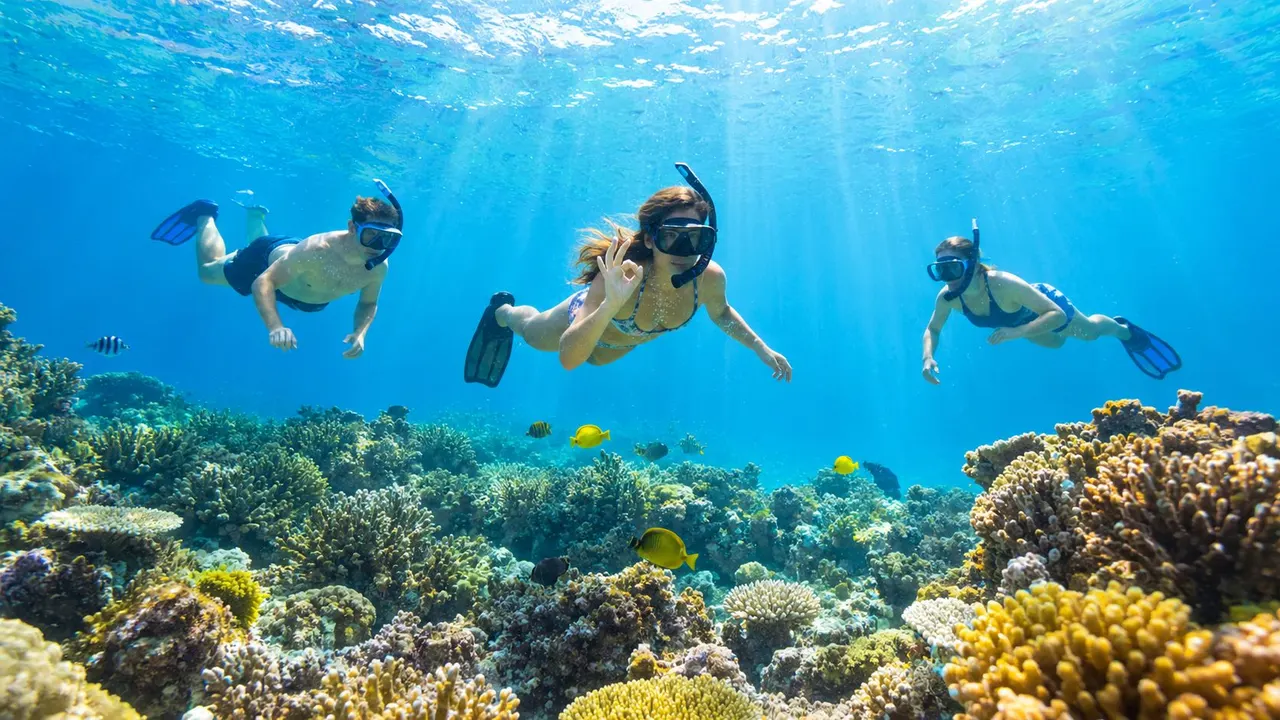
Crowding isn't only a parking or photography problem. More people in a confined marine area create more opportunities for fins, hands, knees, and flotation devices to contact living habitat. A recent field-research claim from an Oahu snorkeling guide recorded 168 reef disturbances among 327 surveyed snorkelers, or about one disturbance for every two snorkelers, as reported in the Hanauma Bay visitor source.
That figure makes reef etiquette practical rather than ceremonial. Even a visitor who intends to be careful can damage coral by standing on the bottom to adjust a mask or kicking while distracted by a turtle.
Better behavior in busy water
- Keep your body horizontal: Good buoyancy keeps fins and knees away from the reef.
- Adjust gear in open water: Move to sand or a designated area rather than kneeling on coral.
- Leave wildlife a route: Don't form a ring around turtles or block their movement.
- Respect site rules: Reservations, restricted areas, and staff instructions protect both visitors and habitat.
- Spread out: A small amount of space improves visibility and reduces accidental contact.
A guided experience can help because the crew sets expectations before the group enters and can correct behavior immediately. Visitors planning a turtle-focused outing can also review Oahu turtle conservation guidance before they arrive.
Seasonal Wildlife Encounters and Marine Ethics
Honolulu snorkeling is rewarding because the reef is a living habitat, not an aquarium. Hawaiian green sea turtles may appear around reef areas and cleaning stations, while other marine life changes with location and conditions. The encounter feels special precisely because the animal is moving through its own environment.
That freedom creates a clear responsibility. All sea turtles in Hawaiʻi are protected under the Endangered Species Act, Hawaiʻi Revised Statutes Chapter 195D, and Hawaiʻi Administrative Rules 13-124, according to the Hawaiʻi Department of Land and Natural Resources guidance. Visitors should watch without touching, feeding, chasing, blocking, or cornering.
Distance protects the encounter
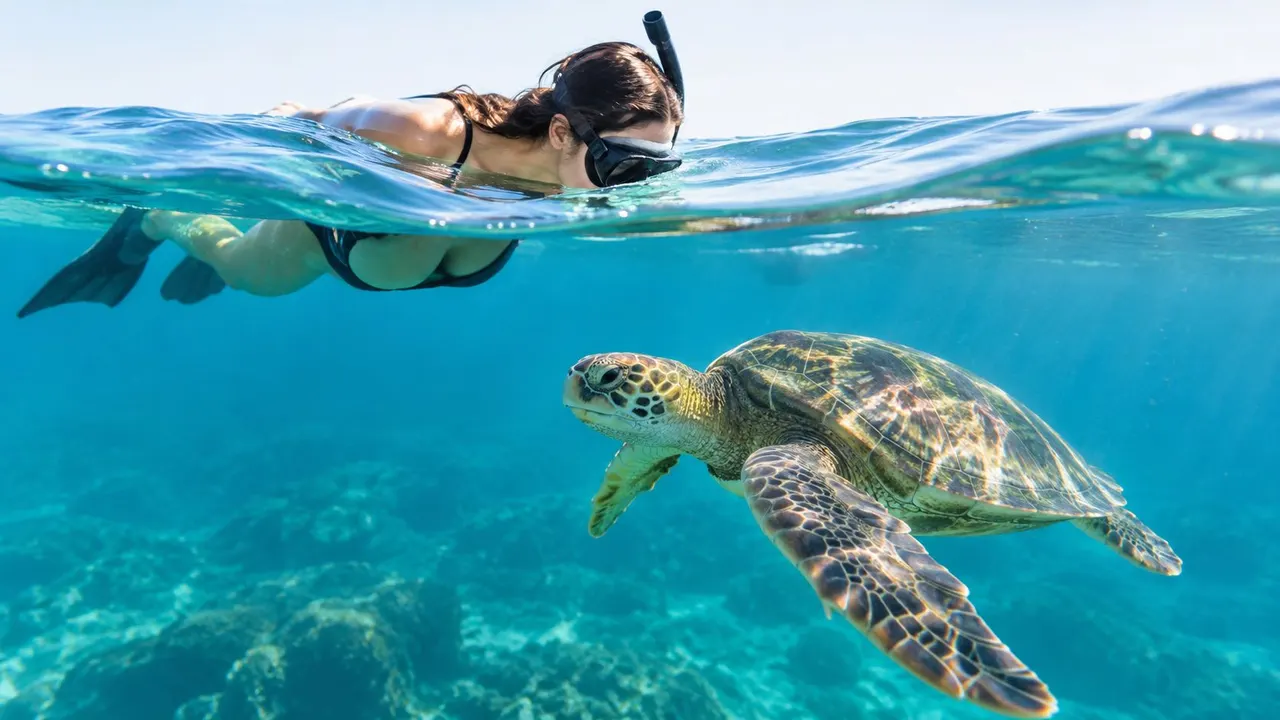
The National Marine Fisheries Service recommends at least 10 feet, or 3 meters, from green sea turtles for public viewing. Distance isn't just a legal or conservation requirement. It also produces better wildlife behavior because the turtle can continue feeding, resting, swimming, or surfacing without changing course to avoid people.
Use your fins gently, stay to the side of the animal's path, and never dive down over a turtle. If it approaches you, remain still and let it pass. A close approach isn't an invitation to reach out.
The best turtle encounter is the one where the turtle keeps behaving naturally.
Seasonal expectations without chasing wildlife
Clearer conditions often favor morning snorkeling from May to early October. Winter visitors may also encounter humpback whales, with seasonal whale activity commonly associated with January through March in the Living Ocean Tours overview. Whale watching is a separate experience from reef snorkeling, so don't treat a snorkeling trip as a promise of a whale sighting.
Marine ethics apply to every species. Don't pursue dolphins, harass resting animals, or crowd a turtle for a photograph. If someone in your group sees harassment, the state guidance lists NOAA's Office of Law Enforcement at 1-800-853-1964 and DLNR DOCARE at 1-643-DLNR (3567) for reporting.
A guide can make these rules easier for families. Children respond well to a clear mission: observe the turtle without making it change direction. That turns wildlife viewing into a respectful skill rather than a race for the closest photo.
Essential Gear and Safety Preparations
Good gear reduces distractions, but it doesn't replace judgment. Start with a mask that seals comfortably, a snorkel that feels easy to breathe through, and properly fitted fins. A leaking mask can quickly turn a relaxed swim into a struggle, especially for someone who is already nervous.
Use reef-conscious sun protection. Pack a rash guard, hat for time on the beach or boat, and sunscreen that follows local reef-safe guidance. Covering skin also reduces the amount of product entering the water.
Pack for control and comfort
- Fins: Proper swim fins are more useful than walking around the reef in traditional reef shoes. Wear them only where the operator or site allows, and never kick against coral.
- Flotation: A lifejacket or snorkeling vest is strongly recommended for beginners and children. It supports surface buoyancy and helps keep swimmers visible.
- Water and towels: Hydration and warmth matter after time in wind and water.
- Personal medication: Bring anything your group may need, including motion-sickness medication if boat travel is unfamiliar.
- A dry layer: Wind can feel surprisingly cool after snorkeling, even in bright weather.
The Oahu snorkeling packing list is useful for checking the small items that families often forget.
Set safety rules before entering
Use the buddy system. Nobody should snorkel alone, and adults should stay close enough to help children without creating a crowded cluster. Decide where the group will regroup, identify the nearest lifeguard, and agree that anyone can end the session without pressure.
Know your swimming limits. If you can't comfortably manage the conditions from the beach, don't hide that fact from the group or guide. Flotation and professional instruction can help, but they aren't substitutes for leaving the water when you're tired, cold, anxious, or disoriented.
Choosing the Right Tour for Your Group
A good Honolulu snorkeling plan starts with the group, then accounts for the ocean. Decide how much independence your group wants, how much support swimmers need, and whether the day's conditions are dependable. If rain has sent runoff toward the coast, wind is building, or shore entry looks uncomfortable, postpone the beach outing or choose a guided boat trip instead.
Match the outing to the group
| Group preference | Practical fit |
|---|---|
| First-time snorkelers | A guided trip with instruction, flotation, and in-water support |
| Families with younger children | A structured cruise with equipment help and activities beyond snorkeling |
| Confident swimmers | Shore snorkeling when morning conditions and lifeguard advice support it |
| Visitors with limited time | An organized departure that reduces parking, entry, and site-selection guesswork |
| Winter wildlife seekers | A dedicated whale-watching outing rather than relying on a reef snorkel for whale sightings |
| Large groups or celebrations | A private charter with an itinerary suited to the group |
Shore snorkeling gives confident swimmers more control over timing and cost, but it also leaves your group responsible for reading visibility, runoff, wind, waves, entry conditions, and crowding. Waikīkī reefs can be convenient, while Hanauma Bay offers managed access and protected habitat. Both still require sensible timing and attention to site rules.
A guided boat tour is usually the safer fallback for families, first-time snorkelers, and visitors facing uncertain shore conditions. Crew members can provide instruction, flotation, equipment support, and a current assessment before swimmers enter. A boat cannot make unsafe weather safe, so follow the crew's decision if conditions change.
Make the decision on the day
Check rainfall, wind, waves, water clarity, and lifeguard guidance before leaving for the beach. Heavy rain upstream can affect nearshore visibility even when the sky clears. If the shore looks rough or cloudy, do not force the plan because it was booked.
The right tour protects your group, respects the reef, and gives everyone a realistic chance to enjoy the water. Living Ocean Tours provides guided Honolulu snorkeling from the Waikīkī area, including turtle-focused trips and a family-friendly wildlife cruise with equipment and instruction. Review current conditions, then choose an outing that matches your swimmers, schedule, and comfort level.


