Snorkel Gear for Hawaii: What to Pack, Rent or Buy
The mask leaks within a minute. You're standing chest-deep off Waikiki, blinking salt water out of your eyes, and the gear you grabbed on the way to the beach is already failing you. Your child's mask is worse, because it's an adult size cinched down over a smaller face.
Snorkeling here isn't a niche add-on. Hawaii Tourism Authority activity data for 2022, reproduced in the state's 2023 Statistical Abstract, reported that 45.7% of visitors snorkeled statewide, with 46.5% on Oahu, 44.1% on Maui and 11.9% on Kauai. Nearly one in two Oahu visitors gets in the water with a mask on.
That volume is why fit matters more than price. Good snorkel gear for Hawaii is a small system: a mask that seals without being cranked tight, fins that stay on, something that floats a nervous swimmer, and sun protection that doesn't punish the reef. What follows is the packing, fitting, child-safety and handling routine I'd hand to any family landing in Honolulu.
Table of Contents
- Core Gear and Rent or Buy Decisions
- How to Test Mask, Snorkel and Fins for Fit
- Gear for Kids and Weak Swimmers
- Sun Protection That Protects Reefs Too
- Viewing Sea Turtles Without Disturbing Them
- Rinse, Dry and Store Gear Between Trips
- Pack Your Bag and Book Your Snorkel Day
Core Gear and Rent or Buy Decisions
Say your trip has one guided snorkel charter and two loose beach days, and you're deciding what goes in the suitcase. Budget matters less than two things: how often you'll put your face in the water over the next few years, and whether the gear has to fit a child.
| Item | Essential or recommended | Rent or buy | Fit check |
|---|---|---|---|
| Mask | Essential | Buy if you snorkel several times a year; rent for one or two outings | Seals without strap pressure |
| Snorkel | Essential | Either; buy if you want to control hygiene | Clears easily with no blockage |
| Fins | Essential | Buy for frequent trips; rent otherwise | Snug at the heel with no toe pinching |
| Rash guard or sun shirt | Strongly recommended | Buy; fit and fabric matter more than brand | Covers the torso without bunching |
| Flotation vest | Strongly recommended for beginners | Use the tour vest or rent | Snug and fitted to the body |
| Reef-safe sunscreen | Essential | Buy before the trip or on arrival | Free of oxybenzone and octinoxate |
| Child mask, short snorkel and vest | Essential for children | Buy child sizes; adult sizes do not fit | Age-appropriate and tested in shallow water |
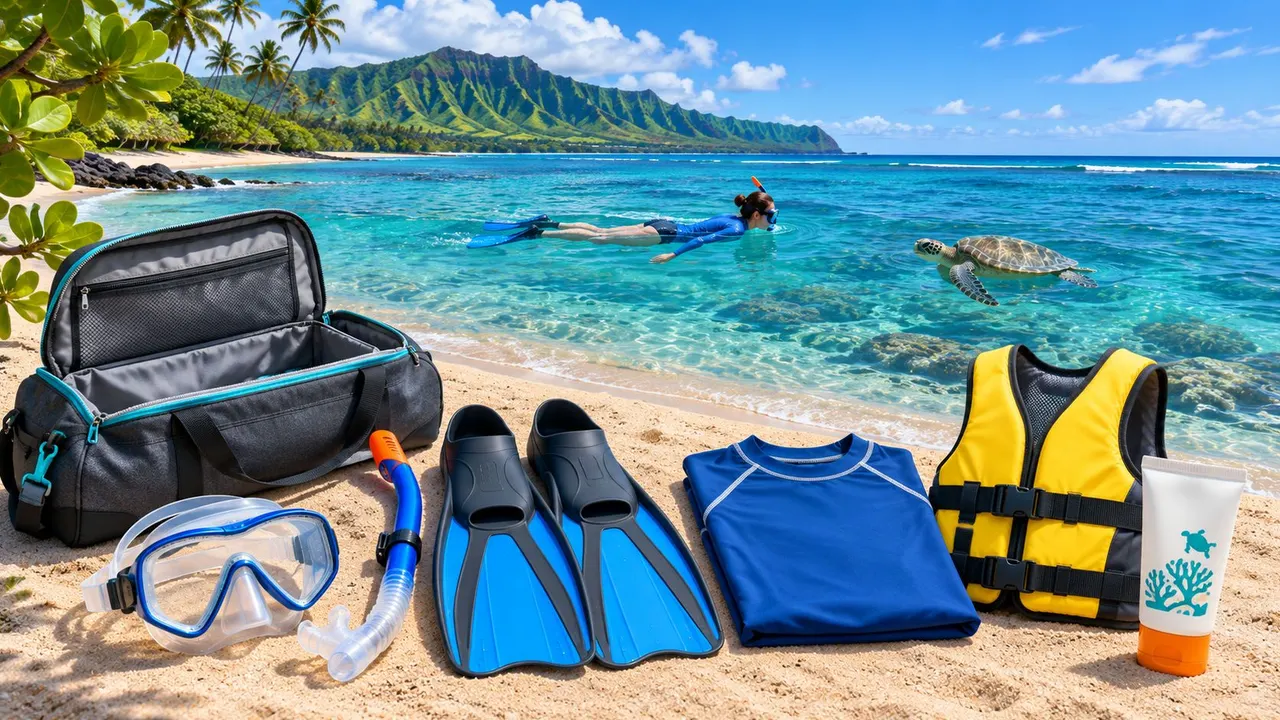
Pack in priority order: mask, snorkel, fins, sunscreen. Then flotation and sun protection for children or anyone who doesn't swim confidently. Cameras, waterproof cases and action-cam mounts come last, because they add bulk and cost without changing whether you can see and breathe.
Three criteria settle the rent-or-buy question.
- Frequency: several trips a year or regular local snorkeling justifies buying a mask and fins. One or two outings means rent and use the fitting time at the counter instead of guessing at home.
- Fit sensitivity: a mask has to match a face, and children change size every year. Buy when you'll return to the water; rent when the trip is a one-off.
- Luggage: full-size fins eat suitcase space, and inter-island flights turn bulky gear into a liability. A compact mask-and-snorkel set travels; a fin bag often doesn't.
The rash guard is the exception to every rent-or-buy calculation. Buy it, because fabric and sizing matter more than brand and a shirt you've already worn won't chafe on day three.
Rule of thumb: if the gear will be used on one guided trip only, bring the personal items (rash guard, sunscreen, waterproof phone case) and use what the boat supplies.
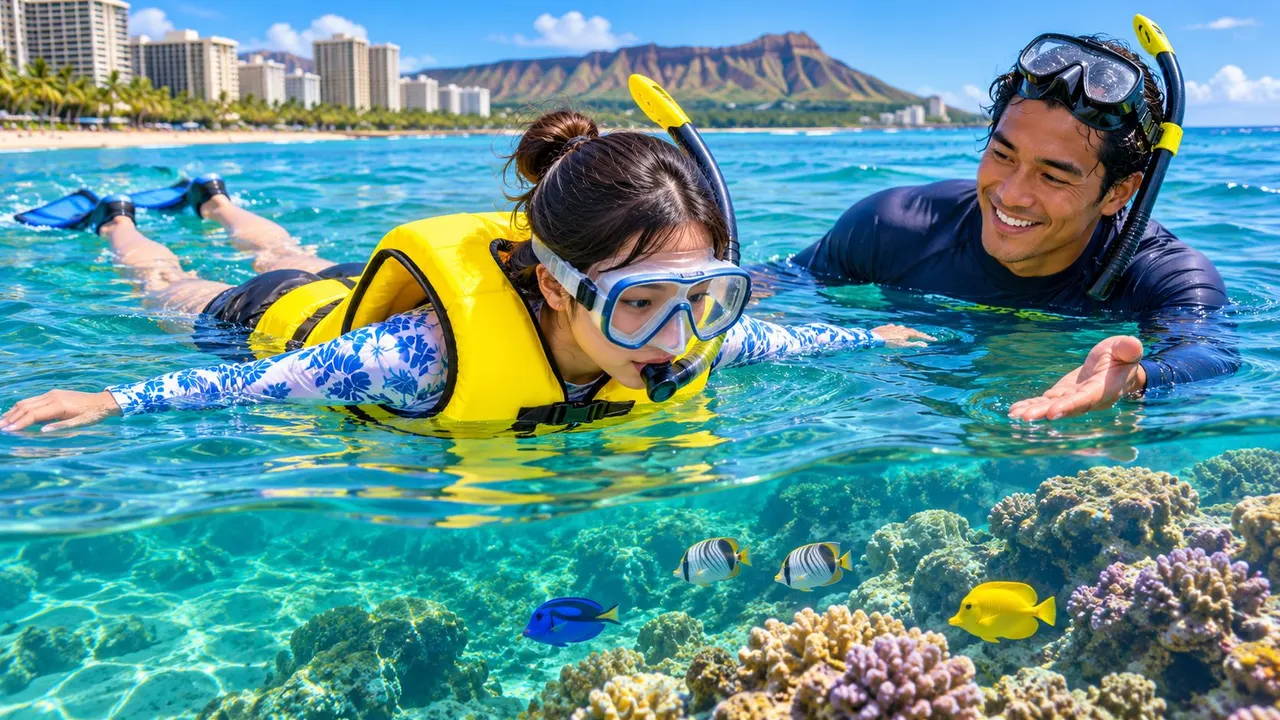
Living Ocean Tours, Oahu's top rated and most reviewed snorkel company, provides snorkeling equipment and flotation vests on its tours, and its snorkel school helps guests who aren't yet comfortable in the water.
How to Test Mask, Snorkel and Fins for Fit
Fit your mask, snorkel and fins in shallow, calm water before heading offshore. The Hawaii Ocean Safety program identifies mask seal and fin retention as safety concerns. High surf, strong currents, heavy shorebreak and poor visibility can quickly increase effort and make it harder to orient toward shore.
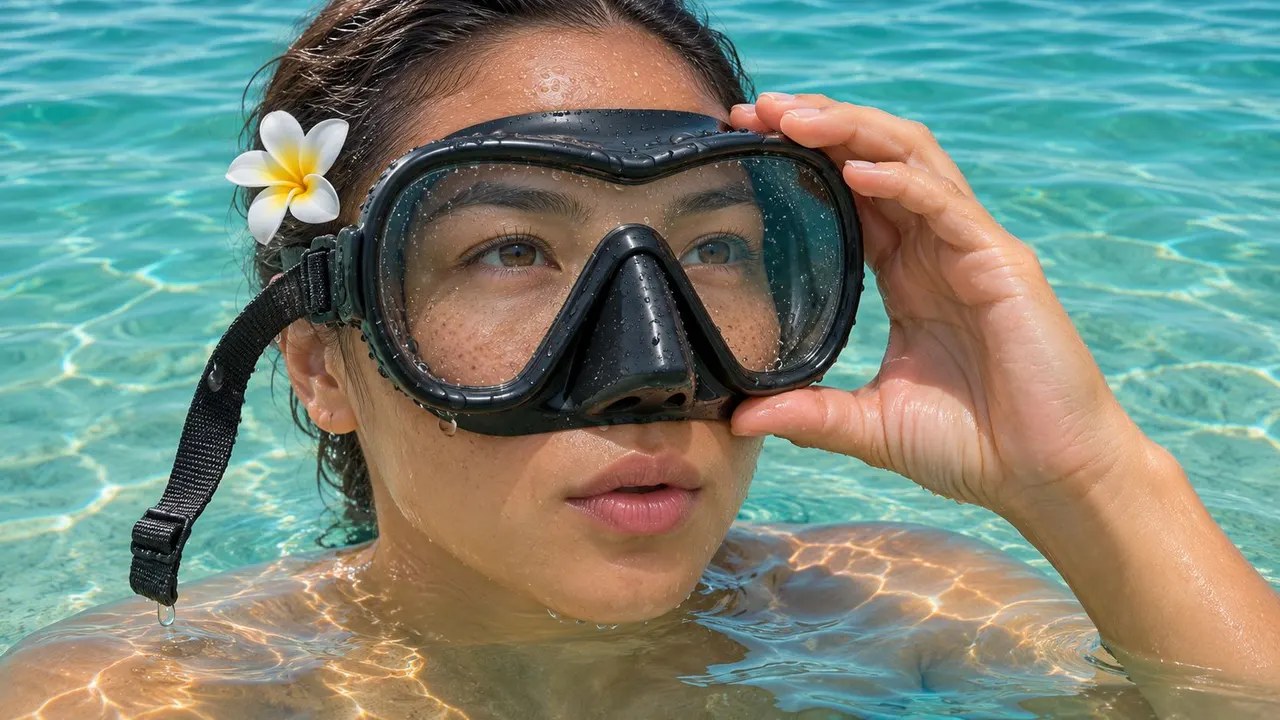
Use this sequence to spot fit problems before you swim farther from shore:
- Seal test without the strap. Press the mask gently to your face, inhale through your nose, then let go. If it stays in place, the seal is holding. If it falls away, try another mask rather than tightening the strap.
- Strap position. Adjust the strap so the mask stays steady without pinching behind your ears or pressing painfully on the bridge of your nose. Excessive tension can cause discomfort without fixing a poor seal.
- Snorkel clearance. Check that the mouthpiece rests comfortably between your teeth and that you can breathe through the tube without strain. If it feels uncomfortable, try another mouthpiece before entering the water.
- Fin retention. Check that your heel stays in place and your toes are not compressed. Fins that slip waste effort; ones that are too tight can become uncomfortable during the swim.
- Anti-fog, applied before entry. Rub anti-fog on the inside of the lens and rinse lightly. A fogged mask interrupts your view and can make it harder to keep moving comfortably in the water.
- Float test. In calm, shallow water, relax face-down and see whether you can stay level without kicking hard. If you need help staying comfortable, use flotation rather than trying to compensate with more effort.
Check the fit again if water keeps entering the snorkel, the mask leaks despite adjustment, your jaw becomes sore or your feet cramp. Those are reasons to pause and change gear, not push through discomfort. Calm conditions can make it easier to identify and fix a fit problem, but conditions can change, so stay within your limits.
Before snorkeling, Living Ocean Tours provides a short lesson to familiarize guests with the gear and explain what to expect in the water.
The test that matters: In calm, shallow water, check whether your gear stays comfortable and secure as you float. Leaks, pinching or slipping are easier to address close to shore than farther out.
Gear for Kids and Weak Swimmers
Children are the group where gear choices carry the most weight. The Hawaiʻi Department of Health's 2025 Water Safety Plan states that Hawaiʻi has the nation's second-highest drowning-death rate among residents and that drowning is the leading cause of death for Hawaiʻi children ages 1 through 15. State marine-safety guidance adds that snorkelers should know their limitations, avoid swimming farther offshore than they could return without snorkel gear, keep track of their position relative to land and the exit point, and snorkel with a partner.
| Option | Best for | Caution |
|---|---|---|
| Child-sized mask and short snorkel | Children who already swim comfortably | Must seal without strap pressure; test in shallow water first |
| Snorkel vest or fitted flotation | Nervous or weak swimmers and young children | Must fit snugly; adult should stay within arm's reach |
| Rash guard or sun shirt | All ages on long sun exposure | Choose UPF fabric sized so it does not bunch |
| Full-face mask | Adults who have trained with one | Not the default for children under six; reports of CO2 rebreathing and slow removal |
Full-face masks deserve a straight answer. They look easier because there's no mouthpiece to master, but the failure mode is worse. Medical reporting summarized in the same state plan describes serious incidents involving children under six, with concerns about carbon-dioxide rebreathing and difficulty removing the mask quickly. A peer-reviewed study of a retrofitted full-face snorkel mask reported an 83.1% overall fit-test pass rate in its tested population, which is another way of saying a meaningful share of wearers didn't get a validated seal.
Conventional gear gives a swimmer a simpler escape route: spit the mouthpiece, breathe air, clear the tube, or roll onto your back. Guides should stop the dive immediately if a guest reports breathlessness, headache, dizziness or unusual breathing resistance.
Flotation has to fit snugly enough that a child floats face-down with almost no effort, and an adult stays within arm's reach in the water. Our snorkeling tours suit all skill levels and ages 3 and up, and the snorkel school plus fitted floatation vests exist precisely for guests who aren't comfortable yet. If you're choosing between vest styles, fitting a snorkel vest properly settles most of the decision.
A child who can't clear a snorkel quickly needs the vest and a shorter time offshore, not a longer briefing.
Decision point: age, swimming ability, and whether an adult can stay within arm's reach the whole time. If any of the three is uncertain, shorten the session.
Sun Protection That Protects Reefs Too
The most reef-friendly piece of snorkel gear you can buy may not be a mask at all. It's a well-fitting rash guard or UPF sun shirt, because covered skin needs less sunscreen, and long surface time in Hawaiian sun punishes anyone who relies on lotion alone.
Hawaiʻi's Division of Aquatic Resources guidance for coral reef visitors tells snorkelers to avoid standing on, touching or trampling coral, to stay aware of fin position and surrounding space, and to use sunscreen without oxybenzone or octinoxate. Build the rest of the routine around that.
- Cover before you coat. UPF clothing and a sun shirt, as the National Park Service recommends, cut the surface area that needs product in the first place.
- Choose mineral formulas with non-nanoparticle ingredients. Less product entering the water and less chemical exposure on your skin.
- Skip oxybenzone and octinoxate entirely. Hawaii's reef guidance names both.
- Reapply after drying off and after long stretches in the water, because a rash guard doesn't cover your face, ears or the backs of your hands.
- Keep fins clear of coral. Loose straps and oversized fins cause the accidental kicks that break it.
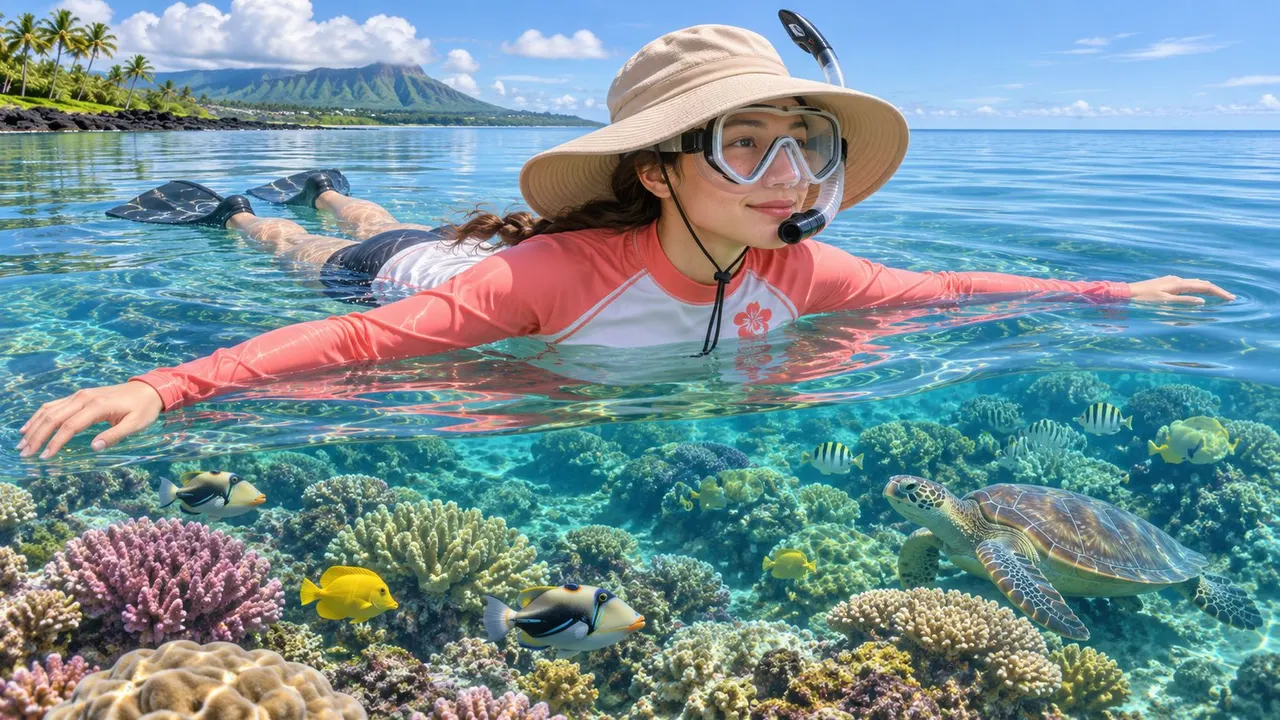
Snug gear is a reef-protection measure, not just a comfort one. A mask strap that slips forces a hand to the face, and a hand to the face often means a foot on the reef. Pair that with the buddy rule: a partner who can warn you that you're drifting toward coral is worth more than any accessory. Our reef-safe sunscreen guide covers which formulas hold up in the water.
If your fins touch coral or you have to stand up, you're too close. Back out to deeper water or find a sandy entry point and start again.
Practical rule: fit the gear snugly and the reef damage mostly takes care of itself.
Viewing Sea Turtles Without Disturbing Them
A turtle rises under you at a cleaning station, and the first impulse is to kick closer. Stop there. Distance is the skill that keeps the animal settled. Two official sources set two different minimums, so use the larger one.
| Guidance | Minimum distance | Applies to |
|---|---|---|
| Hawaiʻi state wildlife guidance | 50 yards (45 meters) | A sea turtle encountered while swimming, diving or snorkeling |
| NOAA Fisheries and DLNR | 10 feet (3 meters) | Hawaiian green sea turtles, in the water and on land |
Hawaiʻi state wildlife guidance asks snorkelers to give a swimming turtle a wide berth and keep at least 50 yards (45 meters) to avoid disturbance. NOAA Fisheries' marine wildlife viewing guidelines for Hawaii set 10 feet (3 meters) in the water and on land. I treat the bigger number as the working default: never chase, touch, block, feed, or use your fins to close the gap.
Hawaiian green sea turtles are protected under federal law, so harassment carries legal consequences as well as ecological ones. A resting turtle you approach may leave before it is ready, and that extra swim spends energy the animal was trying to save.
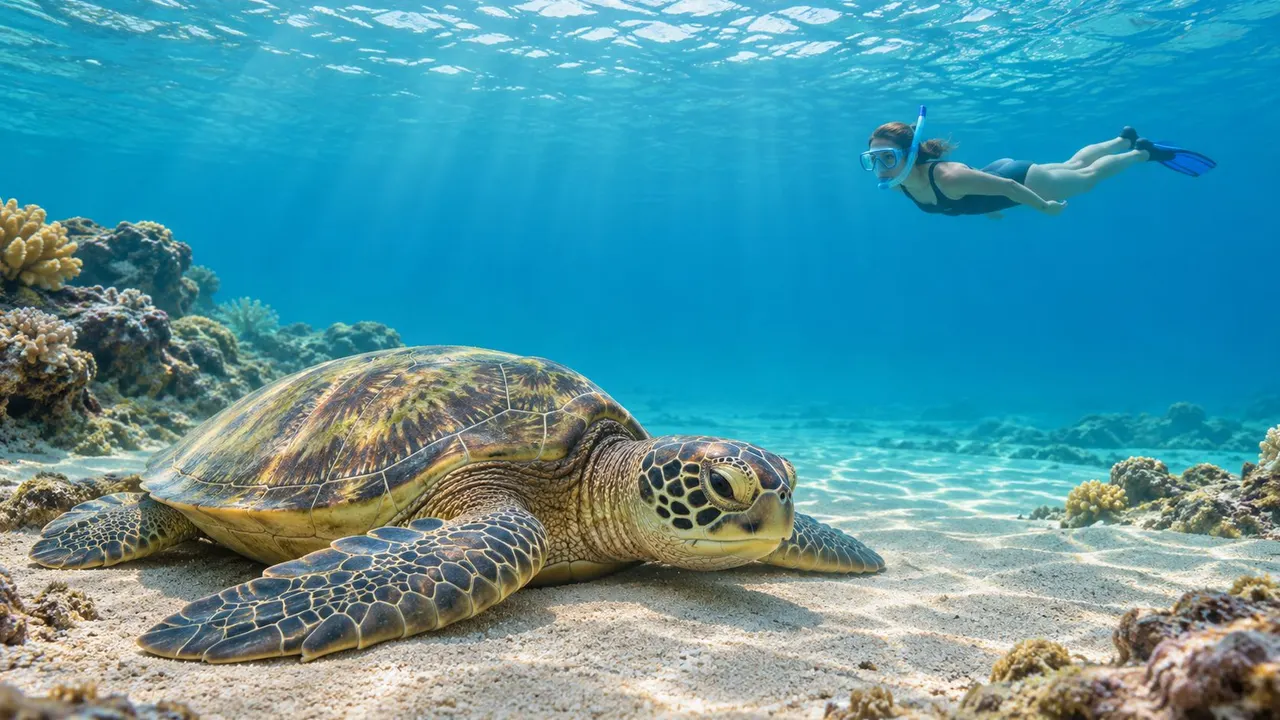
Turtle Canyons, off Waikiki, is a cleaning station where it is common to see up to 10 Hawaiian green sea turtles. Living Ocean Tours runs the Turtle Canyons Snorkel Excursion to that station. The useful gear is a clear mask and honest flotation, not anything that helps you pursue. A mask that stays clear lets you hold still at the surface and still see the shell and the cleaner fish. Life jackets and snorkel vests, available on the tours, keep kids and weaker swimmers from dropping and then kicking hard to recover, which is how people drift into a turtle's path. If your own mask seals, pack it. If it does not, use the set supplied on the boat.
The full approach sequence is in our turtle canyon etiquette guide.
Viewing checklist: keep your distance, stay at the surface, let the turtle come to you, and never position yourself between a turtle and open water.
Report injured, entangled or dead animals, or suspected violations, to the NOAA marine wildlife hotline at (888) 256-9840.
Rinse, Dry and Store Gear Between Trips
Salt, sand and sunscreen residue are what kill silicone skirts, straps and fin rubber, and they do it faster than expected. Gear used across several days needs a rinse every single day, because dried salt crystals scratch lenses and stiffen sealing edges.
- Rinse within the hour. Fresh water over the mask, snorkel and fins as soon as you leave the ocean, before salt dries into the seams.
- Soak the mask briefly. A few minutes lifts salt out of the skirt and lens groove. Rinse the inside of the lens without scrubbing it.
- Dry in shade. Hot pavement and parked cars warp silicone and fin rubber. A shaded lanai rail beats a dashboard every time.
- Store the mask in a hard case. Loose in a bag, the lens takes impacts from fins and water bottles.
- Inspect straps and skirt before each trip. Cracks, cloudiness or a hardened skirt mean the mask is done. Replace it rather than tightening the strap, because a mask that has lost its seal through wear won't come back.
- Keep anti-fog in a labelled bottle and apply it only before entry. Applied the night before, it does nothing.
The full wash-and-store sequence, including how to deal with a mouthpiece that's picked up a taste, is in our snorkel gear cleaning guide.
Before you leave Hawaii, rinse everything in fresh water, dry it completely in the shade and pack it in a case. Gear stored damp in a suitcase for a ten-hour flight comes home smelling of mildew and needs replacing.
Care note: a mask that fogs no matter what you do is usually a dirty lens, not a bad product. Fingerprints and sunscreen film give fog something to grab.
Pack Your Bag and Book Your Snorkel Day
The gear table covers what goes on your face and feet. The rest of the bag is where trips go wrong.
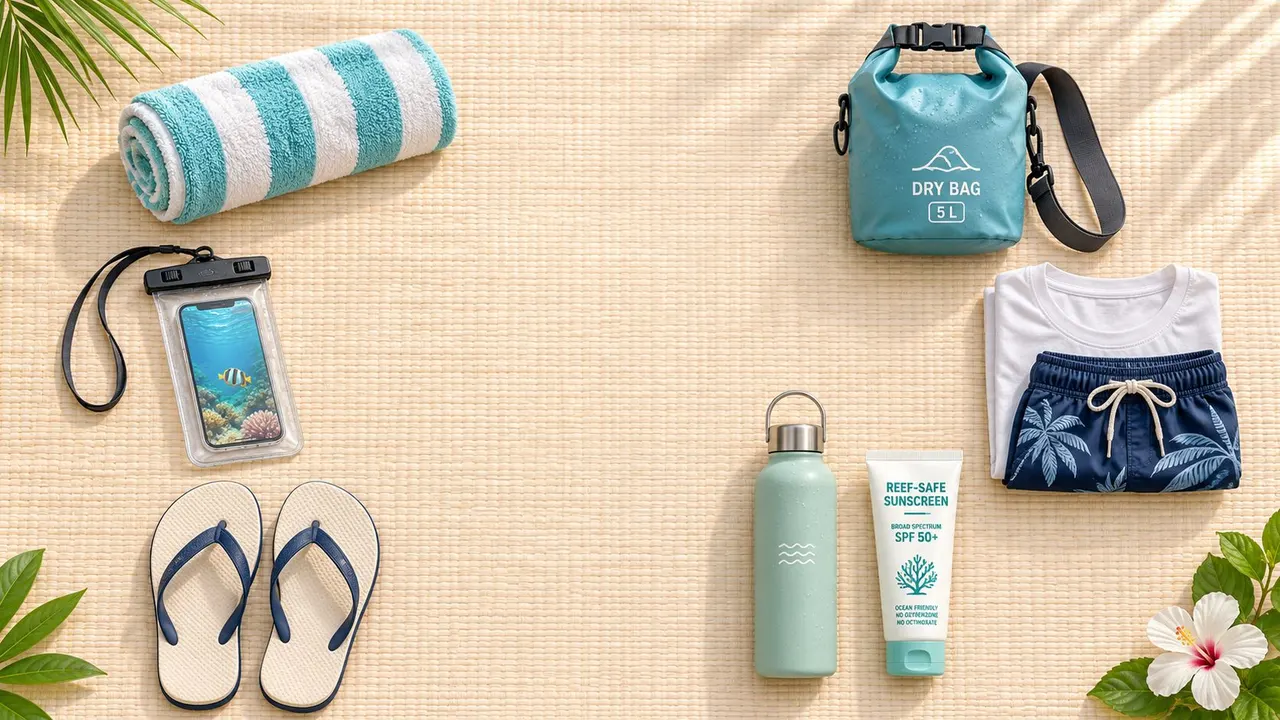
Build the list the night before: towel, dry bag for phone and keys, waterproof phone case, change of clothes, slippers for the walk to the water's edge only, drinking water, reef-safe sunscreen to reapply after drying off, ID, booking confirmation, and the mask, snorkel, fins and flotation from the core table.
Slippers are for the pavement and the sand. They're not reef shoes, and walking on coral in them does exactly the damage the rules exist to prevent.
On the booking side, the Deluxe Waikiki Snorkeling and Wildlife Cruise runs 2.5 hours, suits ages 3 and up, costs $79 per person, and adds a waterslide, water trampoline and lily pad on a reef away from the crowds. The Turtle Canyon Snorkeling Adventure runs 2 hours at $79 per person and goes straight to the cleaning station. Prescription masks rent at the boat for $10 for anyone who needs them.
The Waikiki snorkel tour page is the place to compare both against your dates. Departures leave Kewalo Basin Boat Harbor daily and popular time slots go first, so book before you fly rather than the morning of.
A mask that seals, fins that stay on and a vest that fits turn a stressful morning into an easy one, and that's the whole point of packing deliberately. Living Ocean Tours runs snorkeling and wildlife cruises from Kewalo Basin Boat Harbor near Waikiki, with gear, flotation vests, a short pre-water lesson and guides who know where the turtles are. Visit Living Ocean Tours to pick your date, check what's included, and get in the water with gear that already fits.