Is Snorkeling Better in the Morning or Afternoon in Oahu?
Morning is the default booking on Oahu, and the clock is a weak reason for it.
Trade winds along the south shore usually sit lighter early, then strengthen into the afternoon, so the calmest surface and the clearest water tend to show up before lunch. An afternoon swim wins only when the same-day marine forecast keeps the wind light all the way through.
A 7 a.m. departure into a building trade is a harder swim than a 2 p.m. slot sitting in a wind shadow. I book morning first, then move later only when the forecast, the wind build, and the tide at that site all say the later window is cleaner. Time of day stands in for wind, chop, suspended sediment, and tide. Those stand-ins fail on the exact days a good session matters most.
Sunrise slots earned the reputation for a plain reason. On a typical Oahu day the ocean does less work in the early hours. A reef that looks sharp at 8 a.m. can look like a snow globe by 3 p.m. The call still belongs to conditions at the site, not to the hour on the ticket.
Table of Contents
- The Short Answer for Oahu Snorkelers
- Morning and Afternoon Snorkeling Compared Side by Side
- Why Wind and Surface Chop Decide Visibility
- Choosing a Start Time and Tide Window
- Wildlife Activity and Light for Photos
- When Afternoon Snorkeling Beats the Morning
- Book a Morning Snorkel and Check the Forecast
The Short Answer for Oahu Snorkelers
Morning is the better default for Oahu snorkeling. Trade winds gather strength through the day and the surface responds first. Chop builds, sediment lifts off the bottom, and water that looked glassy at breakfast turns bumpy by mid-afternoon. For a beginner working on mask clearing or a child getting used to fins, that difference decides whether the session feels easy or feels like work.
Two situations flip the default. A forecast that keeps wind light through the afternoon makes a later slot the smarter swim, and a morning carrying cloud, leftover swell or cold water can be worse than the afternoon that follows it. Neither is rare enough to ignore.
Three checks decide a session, and none of them is a clock.
- Wind and surface conditions. Look at the water from shore before you commit. Smooth with gentle texture is a green light. Foam lines and a crumpled surface mean reduced visibility and more effort.
- Tide at the actual site. Shallow reef sites behave differently from deeper ones, and a turning tide can clear or cloud a bay within an hour.
- The marine forecast for the exact coast and departure time. A south shore forecast tells you nothing useful about the west side.
Working rule: book the earliest departure you can, then confirm the forecast the day before and again on the morning of the trip.
Living Ocean Tours is the top rated and most reviewed snorkel company on Oahu, which makes the earliest departure easy to book rather than a logistics puzzle. Take that slot by default and treat an afternoon swim as the exception you justify with a forecast, not the other way around. Calm water and clear visibility are worth an alarm clock. They are not worth gambling on a hunch about the clock.
Morning and Afternoon Snorkeling Compared Side by Side
Morning wins most rows, but the hour is only a proxy. Wind build-up through the day and the tide at the site you are swimming decide whether that morning edge shows up.
| Factor | Morning | Afternoon | Better pick |
|---|---|---|---|
| Water visibility | Usually clearer while winds are light | Often reduced as chop and suspended sediment build | Morning |
| Wind and surface | Trade winds about 2 to 4 m/s on the south shore in strong conditions | Trade winds about 5 to 7 m/s with more surface chop | Morning |
| Wildlife activity | Calm water makes fish and turtles easier to follow | Sightings still happen but water is less settled | Morning |
| Tides and currents | Favor mid-to-high or slack tide at shallow sites | Same tide rules apply, flow changes through the day | Depends on the tide table |
| Crowds | Fewer boats and swimmers early | Busier as the day goes on | Morning |
| Light and photography | Lower sun, softer light, less glare on the water | Higher sun gives glare, late light gives warmer color | Tie, depends on goal |
| Safety and services | Calmer water suits beginners and children | Fine on calm days, can turn rough as winds build | Morning |
A University of Hawaiʻi atmospheric study found that along Oahu's south shore, typical wind speeds during strong trade-wind conditions were approximately 2 to 4 m/s in the early morning compared with 5 to 7 m/s in the afternoon. Across most of the island, early-afternoon trades tend to run stronger than the early morning. That gap is why the wind row outweighs the others. A few meters per second separates a readable surface from a chopped one.
Which rows should drive your decision
Beginners and families should read wind and surface first, then safety. If those two favor morning, stop. Mask clearing, a straight fin kick, and a buddy check stay manageable on a flat surface. Chop turns each of those into extra work before anyone looks at fish.
Photographers should weight light and crowds instead. A lower morning sun cuts glare off the surface, and fewer boats mean fewer wakes through the frame. Afternoon only wins that row when you want warmer late color and the forecast keeps the wind light.
On a shallow reef, start with the tide row. Depth over coral can change within an hour. A site that feels fine at mid tide can surge, or go uncomfortably thin, at the wrong phase, whether you enter at 8 a.m. or 2 p.m.
The pattern is a weather tendency, not a guarantee. Daily wind, swell, rain, and tide can override the usual rhythm. The study also notes that Oahu's western leeward coast follows local sea-breeze patterns, so a west-side session needs its own forecast rather than a south-shore rule copied over.
I book the morning by default. I shift a session to the afternoon only when that day's marine forecast, the expected wind build, and the tide at that site all point the same way. A tie on light or crowds breaks the same way. Comfort and clarity follow those three checks, not the hour on the ticket.
Why Wind and Surface Chop Decide Visibility
Visibility follows the surface, not the clock. Wind wrinkles the water, and that wrinkle decides whether you can see the reef.
Chop does three jobs at once. It scatters light so you look through wrinkled glass. It keeps fine sand hanging over the bottom. It makes every kick cost more than the same kick on flat water.
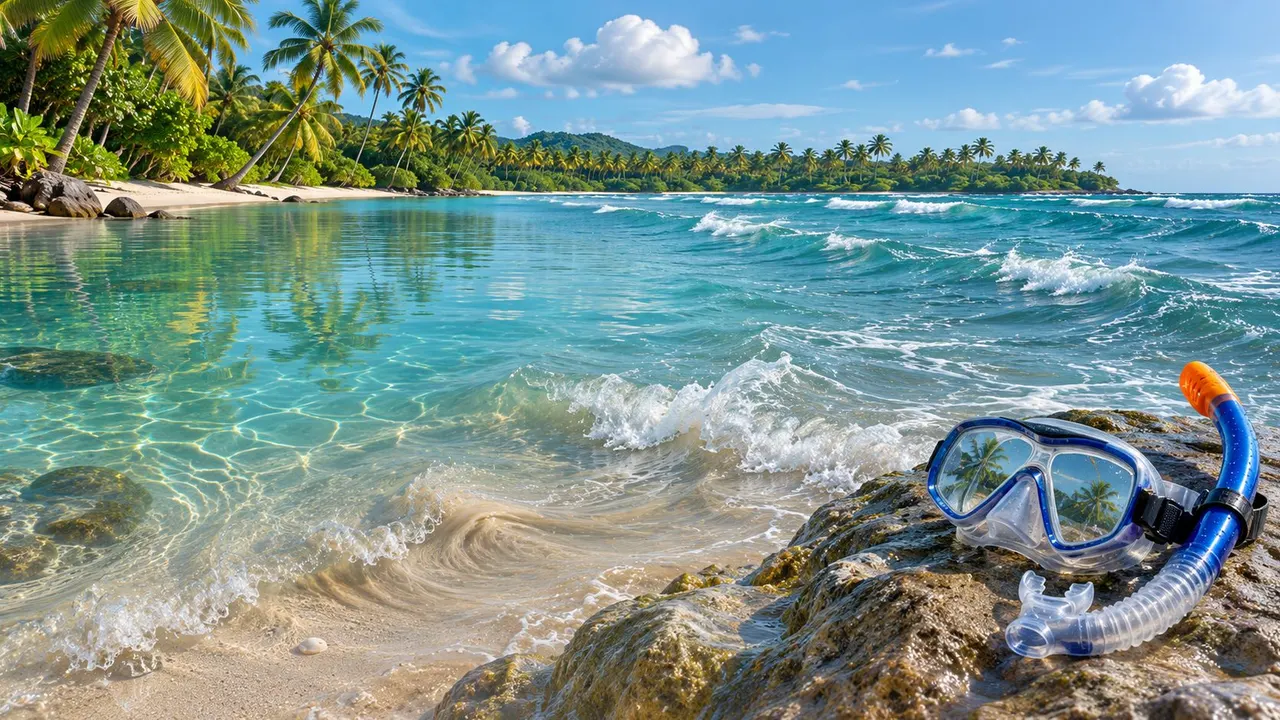
For a first-timer those effects stack fast. Waves slap the snorkel top, water leaks into the mask, and fin kicks stop tracking a straight line. None of that is dangerous by itself. Together it produces the tired, over-breathing swimmer who quits after about twenty minutes.
The extreme case that overrides everything
Trade-wind events can push Hawaiian waters well past uncomfortable. Marine forecasts can call for strong east winds and large seas, and Small Craft Advisories go up when wind and combined seas turn the water hazardous.
An advisory outranks any preference about morning or afternoon. A rough morning is just as unworkable as a rough afternoon, and a clear sunrise does not soften a big sea. When the advisory is up, the right call is another day.
Signal to watch: if the marine forecast shows wind rising through the morning, move the swim earlier or move it to a different day entirely.
I book morning by default and switch to afternoon only when the same-day forecast supports it. Wind build-up, the tide at that specific site, and the trend on the Oahu surf forecasts matter more than the hour on the booking. Rising wind through the morning is the clearest sign that an early start is the only good window. A flat, stable forecast is the only evidence that justifies waiting until afternoon.
Choosing a Start Time and Tide Window
Book the morning. The hour on the ticket is only a proxy for wind, tide and the same-day marine forecast at the site where you swim.
On many Oahu days, trade winds build late in the morning and west-side spots often turn choppy by midday, so an early start leaves the most usable water. An afternoon slot is a bet that the wind arrives late, the swell stays small and the bottom stays clear. Sometimes that bet pays. I treat it as the exception, not the plan you build the day around. Switch only when the forecast shows the wind holding off and the tide still giving you depth after lunch.
The tide rule for shallow reefs
Hawaii's tidal range is small, so swell and wind usually deserve priority over tide alone. A small range does not make tide irrelevant. It makes tide the tiebreaker at a shallow reef.
Work with the water instead of ignoring it. Favor mid-to-high or slack water so you have depth over coral and less current to swim against. Avoid a strong incoming or outgoing flow, especially at channel edges where the water speeds up. Match the tide to your exit, because a falling tide can leave a shallow shelf between you and the sand.
Check the Oahu tide charts for the day of your swim rather than guessing when the water is high. That slack, higher window suits first-time snorkelers, children and less confident swimmers because it cuts the two things that end a session early: chop on the surface and current underneath. A calm hour near slack lets a nervous swimmer slow down and look.
Before anyone enters the water, Living Ocean Tours runs a short lesson that walks guests through the gear and explains what to expect, so the first minutes go to easy breathing rather than wrestling a mask. The lesson helps. The clock and the tide still decide whether that calm water is there.
If the only open slot lines up with building wind or a fast-moving tide, move the day. A moved booking costs an afternoon. A session spent fighting chop costs confidence that takes longer to rebuild.
Wildlife Activity and Light for Photos
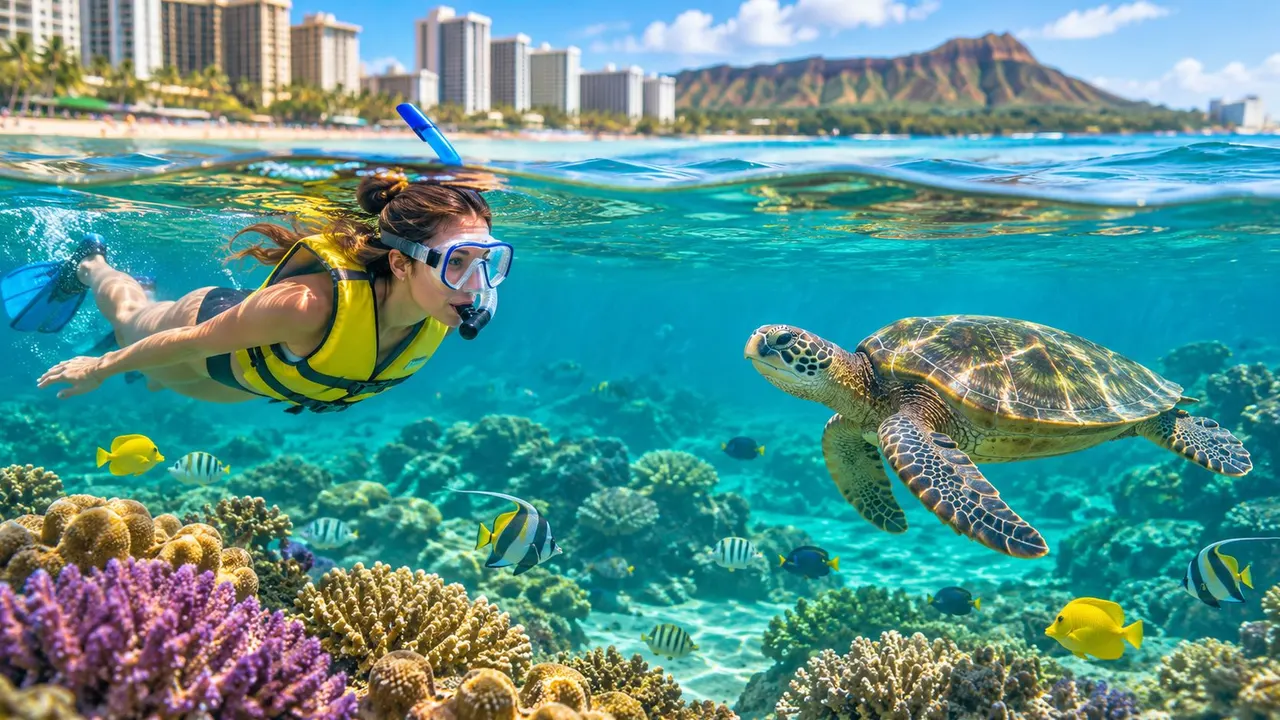
Think about what an easy session looks like underwater at 8 a.m. The surface is smooth enough to see through, the light comes in at a low angle, and a school of yellow tangs holds position over the coral instead of scattering into it. Turtles rise slowly to the surface to breathe and drift back down. Because the water is settled, you can watch all of it from a respectful distance without finning hard to keep up.

By early afternoon the same reef can look busier and less legible. Fish are still there, and sightings still happen, but the water carries more movement, which pushes animals to keep their distance and makes them harder to track. Our snorkeling tours see tropical fish such as yellow tangs, Moorish idols and triggerfish, along with rays, eels and other marine life, and roughly 30% of Hawaii's reef fish are endemic, so the species list is local rather than generic. Our guides point out what you're looking at as you go and explain how the animals use the reef.
Treat any species list as a possibility rather than a promise. Sightings follow water conditions and reef location far more closely than they follow the hour.
Morning light versus late light for photography
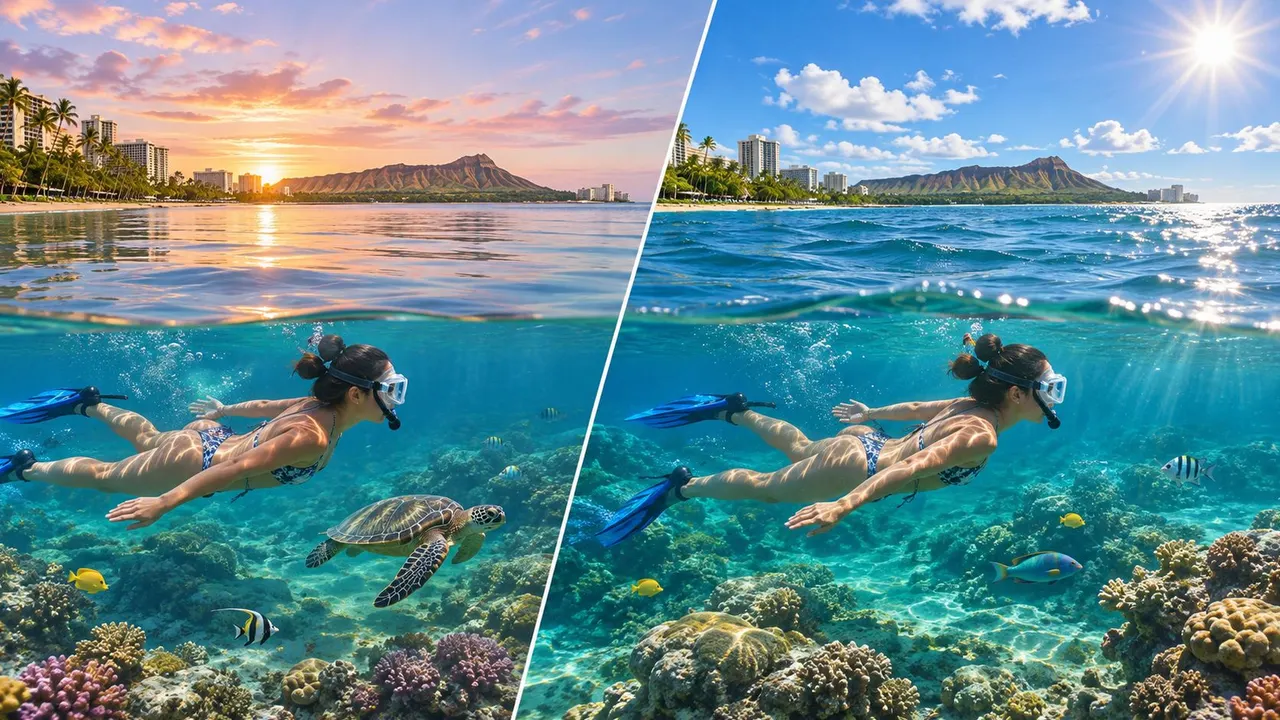
Lower morning sun gives you softer light and far less glare bouncing off the surface. That's the difference between a clean shot of a turtle in the shallows and a frame full of white sparkle. Late-afternoon light warms colors beautifully, but it usually arrives with the chop that makes the same shot a struggle.
Take the early swim for wildlife and clarity. Book an afternoon session for photographs only when the forecast is flat and the surface stays glassy.
On a clear south shore morning, that looks like this in practice.
For species identification before you go, the Oahu marine life guide covers what lives on these reefs and how to watch it without crowding it. Knowing what you're looking at turns a swim into an actual observation.
Wildlife follows the water, not the clock. When the surface is calm and the visibility is good, animals behave in ways you can watch. When it isn't, no start time fixes that.
When Afternoon Snorkeling Beats the Morning
An afternoon session can outperform the morning on selected days. A sheltered site with protection from the trade wind, a morning of low cloud, a swell that needs a few hours to drop, or water that feels cold at dawn all make the later slot the better swim. Skipping that possibility and insisting on dawn every day costs you good sessions.
Forecasts show why a blanket rule falls apart. NOAA marine forecasts record wind direction and strength changing within the same day, with winds of 7 to 10 knots in the morning turning variable later, while other forecasts show east-northeast winds strengthening to 25 to 30 knots in the afternoon. Compare the forecast for the exact coast and departure time and the choice usually makes itself.
| Forecast condition | Choose | Why |
|---|---|---|
| Trade winds rising after 10 to 11 a.m. | Morning | Choppy water builds through the day |
| Winds about 7 to 10 knots in the morning, forecast steady | Morning | Conservative safety margin |
| Winds forecast to stay low through the afternoon with small waves | Afternoon can work | Localized calm supports stable visibility |
| Morning cloud, swell or unfavorable water temperature, afternoon calmer | Afternoon | Morning conditions are the problem |
| Afternoon showers or thunderstorm risk | Morning | Reduced visibility in windward and mauka areas |
| Easterly winds of 15 to 20 knots with seas of 8 to 10 feet | Rebook | Small Craft Advisory risk, and the forecast overrides time of day |
The rule for families and first-time snorkelers
Use morning for the more consistent safety margin, and accept an afternoon slot only when the localized forecast is demonstrably calmer with stable visibility. That means four conditions met together, not two out of four.
- Low forecast wind for the specific coast and the hours you'll be in the water.
- Small wave conditions with no rising swell trend behind them.
- Good visibility confirmed by the surface look from shore.
- Limited shower or thunderstorm risk, since showers tend to increase in the late afternoon and evening and cut visibility in windward and mauka areas.
A calm afternoon can be safer and more comfortable than a rough morning for a child or an older traveler. A rough forecast in either window means rebooking, and no amount of planning around the clock changes that.
Book a Morning Snorkel and Check the Forecast
Book the earliest morning departure, then treat the clock as a starting point. Check the marine forecast the day before and again before you leave for the harbor. Wind build-up and the tide at the site decide whether that morning slot still holds, or whether the afternoon is the cleaner window.
The Waikiki snorkel tour runs daily from Kewalo Basin Boat Harbor near Waikiki Beach, so an early start is a short trip rather than a logistics project. Living Ocean Tours is Oahu's top rated and most reviewed snorkel company. Tours suit all skill levels and ages 3 and up, with gear and knowledgeable guides included. If you're booking with children or first-timers, the Deluxe Waikiki Snorkeling and Wildlife Cruise is the option I'd point you to: a reef away from the crowds, plus a waterslide, water trampoline, and lily pad between swims.
Guests who want the turtle cleaning station should look at the Turtle Canyons snorkel excursion, where it is common to see up to 10 Hawaiian green sea turtles.
Your pre-trip checklist
- Earliest morning departure booked. Protect the 7:00 to 10:00 a.m. window unless the forecast says otherwise.
- Marine forecast checked the night before. Note whether wind is rising or falling through the hours you'll be in the water.
- Tide at the site confirmed. Mid-to-high or slack water over shallow reef is the easier swim.
- Forecast rechecked that morning. Overnight shifts happen, and a small advisory can show up by dawn.
- A calmer afternoon slot or a backup date ready. Switch only when the later window is the calmer one. If wind is already building at dawn, move the plan.
Morning is the default because the surface is usually calmer before the trades fill in. It is not a promise. Living Ocean Tours includes gear, a short lesson before you enter the water so you know the equipment and what to expect, and knowledgeable guides who share snorkeling technique and local marine life. Take the Waikiki snorkel cruise or head to Turtle Canyons, keep the early slot, and stay willing to move if the wind arrives ahead of schedule. Visit Living Ocean Tours to see current departure times and pick the one that puts you in the water first.