Can You Snorkel with Life Vest: Safety Rules and Types
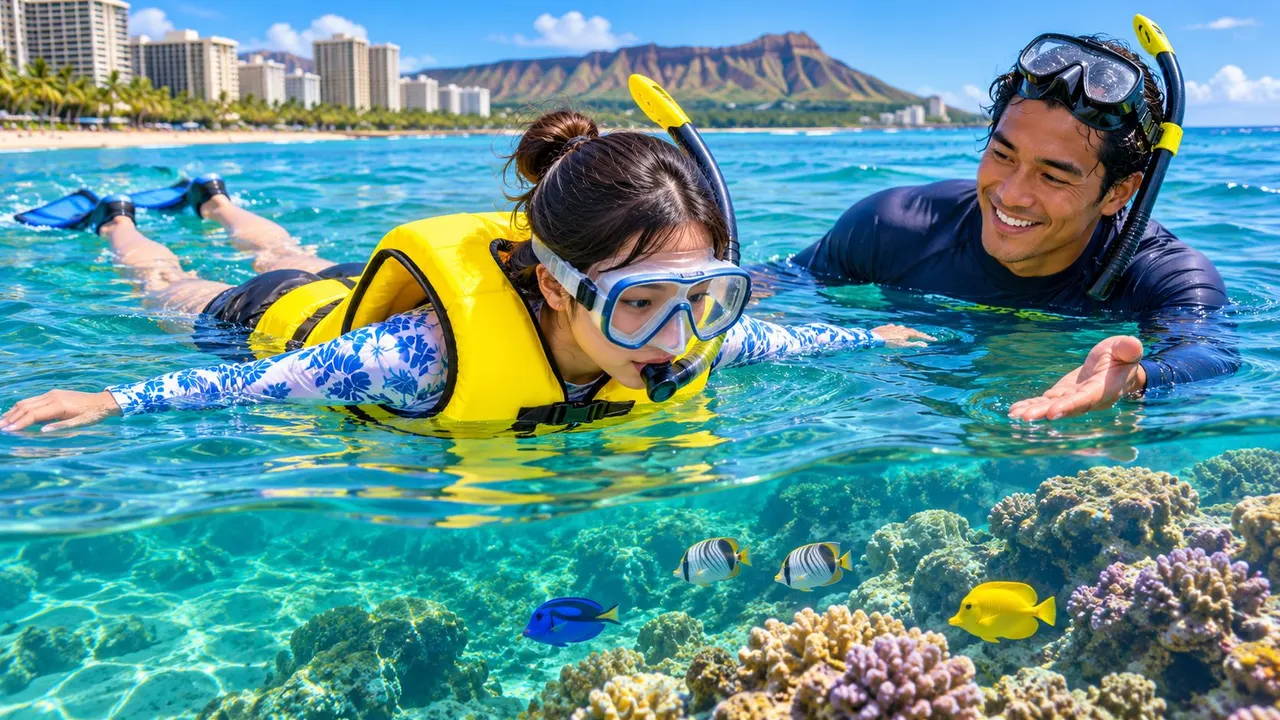
Table of Contents
- Snorkel vest
- Conventional life jacket
- Inflatable belt or other buoyancy aid
- What does not count
- Fit and shallow-water test
- Breathing once you are floating
- Readiness checks a parent can run
Yes, with conditions: a properly fitted, approved flotation vest is compatible with snorkeling, and it is often advisable for beginners, children, and tired swimmers. The U.S. Coast Guard counted 556 recreational boating deaths in 2024, and drowning accounted for about three-quarters of them.
Many people ask whether you can snorkel with a life vest as if the vest is the whole safety plan. I would flip that. The vest keeps your airway near the surface so you can rest, but it does not hand you swimming skill, a watching adult, or calm water. A bulky jacket can also fight the face-down position a snorkel needs.
The gap is treating every floater as the same device. A snorkel vest, a conventional life jacket, and a pool toy do different jobs. Fit, child readiness, and the sea state decide whether you get in.
Who Can Snorkel With a Life Vest and When
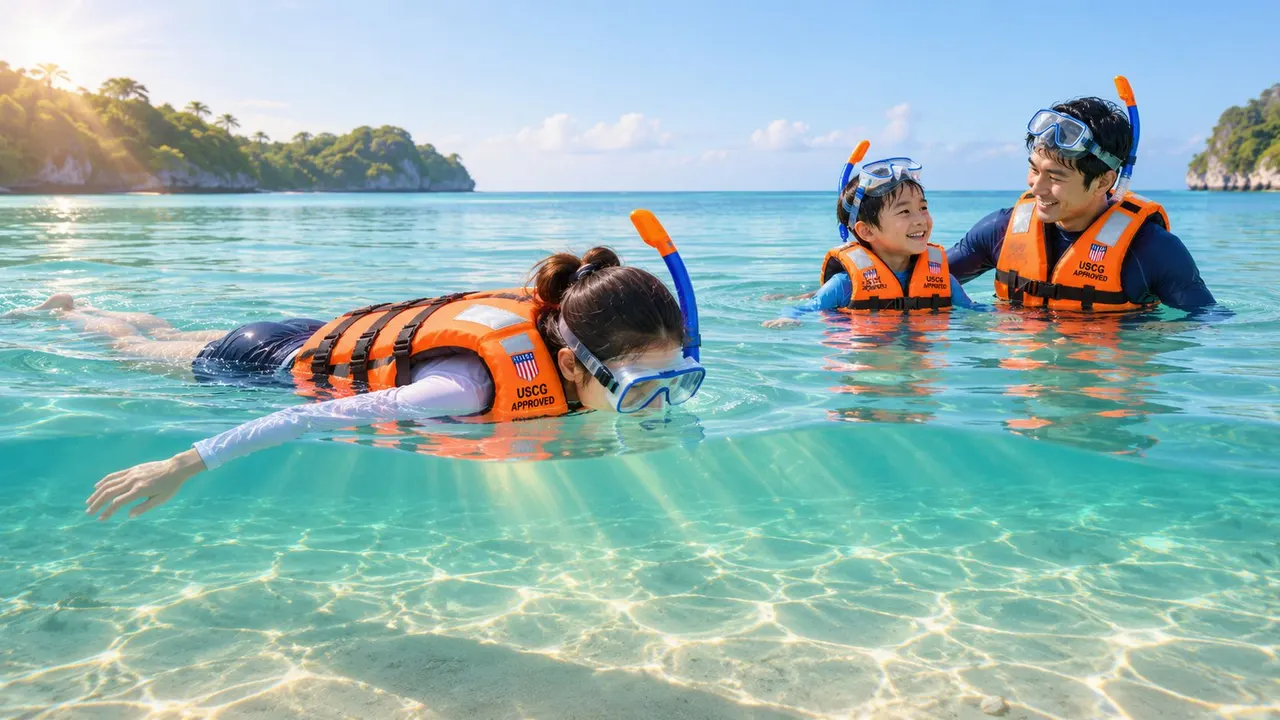
A properly fitted, approved flotation vest can be worn while snorkeling, and I would rather see one on beginners, children, weak swimmers, and anyone in open water than watch them fight just to stay up. The vest holds you at the surface. It does not replace swimming ability, supervision, or a guide's instructions.
Those deaths sit in a larger year. The U.S. Coast Guard 2024 recreational boating statistics recorded 3,887 incidents, 556 deaths, and 2,170 injuries. Drowning accounted for about three-quarters of boating deaths, and 87% of those who died were not wearing life jackets. That is boating, not a reef swim, and it still shows what happens when flotation stays on the rail.
| Situation | Vest needed | Conditions |
|---|---|---|
| Confident adult swimmer, calm lagoon | Optional but advised | Stay within sight of the guide |
| Weak swimmer or non-swimmer | Yes, snorkel vest | Very calm water only |
| Child age 12 and under aboard a boat | Yes, approved and correctly sized PFD | Constant adult supervision |
| Open water with current or surge | Yes, activity-appropriate vest | Follow the guide; stop if conditions rise |
Say a nine-year-old and a parent are over a calm Waikiki reef. The child wears a snug vest. The parent stays within arm's reach. Hawaii DLNR personal flotation device rules require children aged 12 and under to wear a U.S. Coast Guard-approved personal flotation device while aboard a vessel that is operating or anchored offshore, whether the child is snorkeling, riding, or waiting to enter. The PFD must match the child's body weight, and the vessel must carry at least one wearable approved life jacket for every person aboard. An adult vest cinched smaller is not that jacket.
Before you book, run three checks.
- Approved: The label is a real personal flotation device, not a costume inflatable.
- Fits: It is that person's size, not a leftover adult vest.
- Water matches ability: If you are unsure, read how an Oahu swim test changes who should enter, then pick the calmer trip.
Less exertion: A snug vest lets a nervous or tired swimmer rest and settle their breathing. A margin for beginners: Children and first-timers get time to look at the reef instead of paddling only to stay up. False confidence: Bulk and a floating feeling can hide weak skills. The vest still cannot replace swimming ability, supervision, or calm water.
Snorkel Vests, Life Jackets and Buoyancy Aids Compared
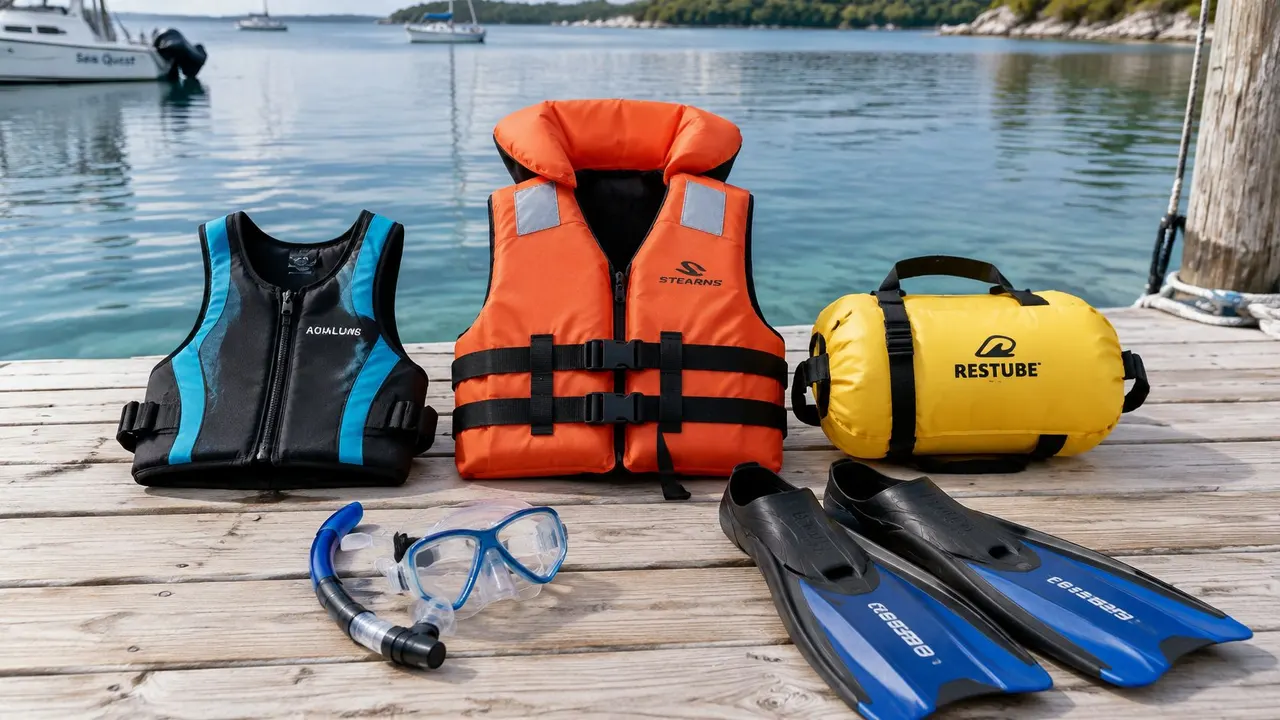
People grab three different floaters and expect the same result in the water. They don't behave the same once your face is down and a snorkel is in your mouth.
| Option | Built for | Snorkel-friendly | Watch out for |
|---|---|---|---|
| Snorkel vest | Face-down floating while breathing through a snorkel | Yes, low bulk leaves room to fin | Must be snug and approved for the activity |
| Conventional life jacket (Type II or III PFD) | General boating and water use | Often bulky; can limit face-down posture | Can ride up under the chin if sized wrong |
| Inflatable belt or buoyancy aid | Experienced swimmers who want less bulk | Varies by model | Can make duck-diving hard; not for young children |
| Water wings, pool rings, inflatable toys | Play in shallow water | No | Not safe substitutes for approved flotation |
Snorkel vest
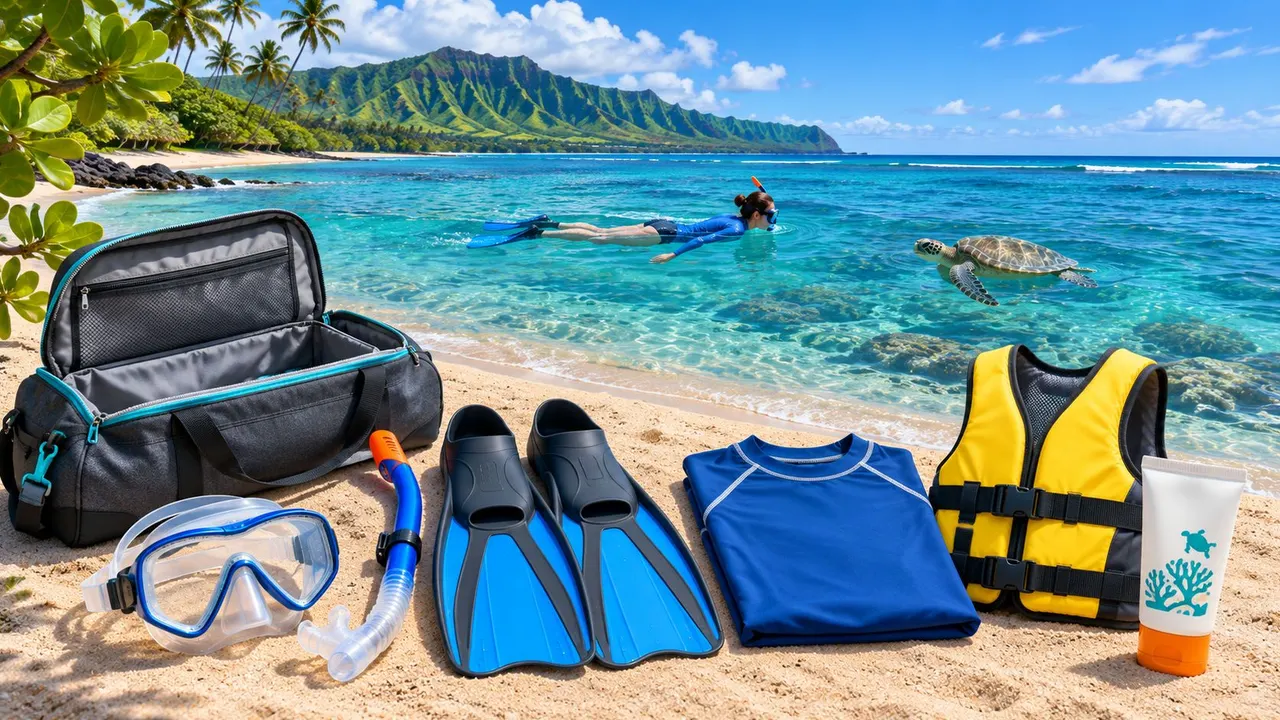
A snorkel vest is the low-profile piece built to hold a face-down swimmer at the surface while you fin and breathe through the tube. Less bulk means your mask stays in the water instead of pointing at the sky. It still has to be snug and approved for the activity. I start most nervous-but-able swimmers here, because they can look down without fighting a high collar.
Conventional life jacket
A Type II or Type III personal flotation device is built for general boating, so it carries more buoyancy and more foam. That extra lift helps a tired or uneasy swimmer stay up. It can also ride up under the chin and block a comfortable face-down posture, so finning feels clumsy. Choose it when maximum support matters more than a sleek swim.
Inflatable belt or other buoyancy aid
An inflatable belt suits an experienced swimmer who wants less gear on the chest. Some models make duck-diving hard, and I would not put one on a young child. If that person needs flotation the entire time they are in, this is the wrong tool.
What does not count
Water wings, pool rings, and inflatable toys are for play in shallow water. They slip off, they puncture, and they are not approved flotation.
Practical rule: Use the vest the operator hands you unless you have a specific reason to bring your own, and confirm it is approved for the activity.
The right pick still tracks swimming ability, current, visibility, and whether the wearer needs continuous flotation.
How to Fit, Test and Breathe Comfortably in a Life Vest
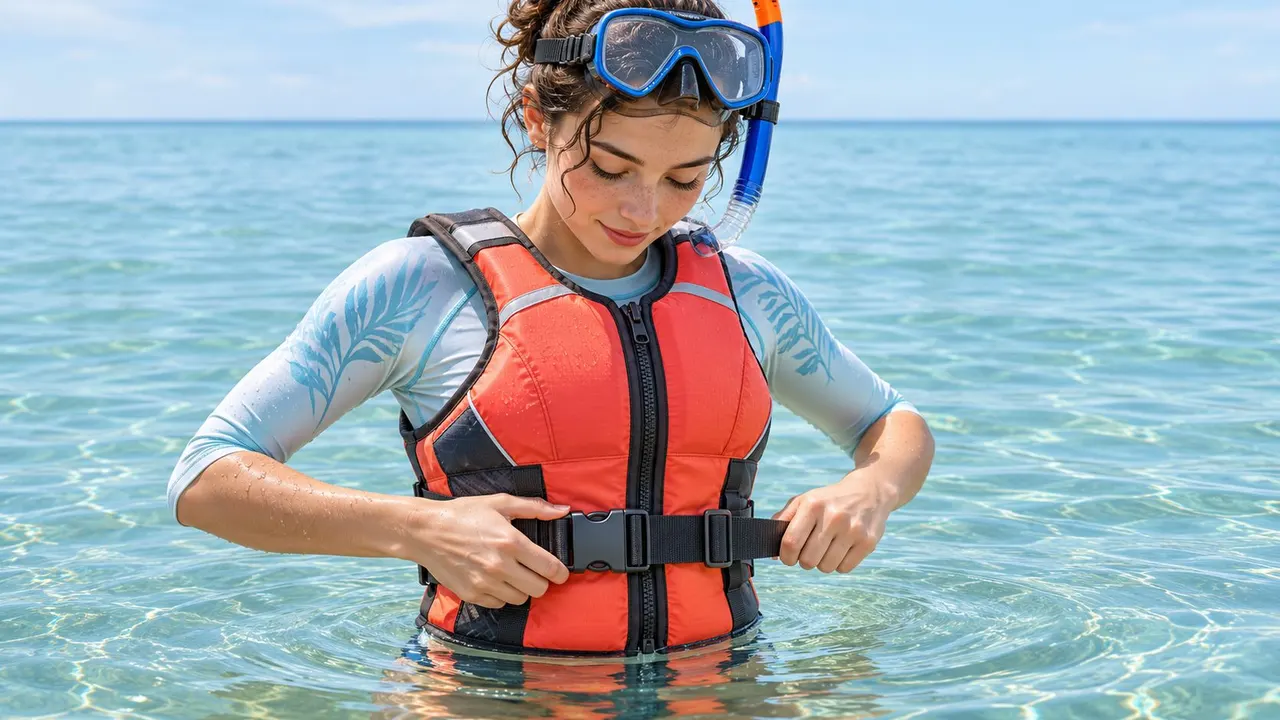
Snorkeling in a life vest is generally appropriate for children, weak swimmers, and first-timers, because the vest adds passive buoyancy and cuts the effort needed to keep the airway clear. It has to be a U.S. Coast Guard-approved personal flotation device labeled for the wearer's weight, chest size, and activity. The U.S. Coast Guard life jacket guidance is blunt on fit: pull the shoulder straps up, and the vest should not ride above the chin or ears.
Fit and shallow-water test
- Read the label, not the birthday. Size comes from weight and chest, not from how old someone looks. A teen in an adult vest that gaps at the sides will slide out of it.
- Dress for the swim, then fasten everything. Put the vest on over the light clothing you will wear and close every buckle. A rash guard changes the fit, so test that combination, not a bare chest on the dock.
- Yank the shoulder straps. If the vest climbs above the chin or ears, it is too large or too loose. Retighten or swap sizes before you leave the beach.
- Test in waist-deep water. Relax and tilt slightly backward. The chin should stay above the surface and breathing should be unobstructed. If you are working to keep your face clear here, deeper water will be worse.
- Add the snorkel. Take a few gentle breaths, clear the tube, then float face-down. The vest should not press your chin into your chest. If it does, you will fight the gear instead of looking at the reef.
- Know the buoyancy ballpark. Most adults need about 7–12 lb (31–53 N) of buoyancy to keep the head above water. Clothing, body position, waves, and the device itself change that number, so the shallow test beats guessing from the tag alone.
Life jackets and snorkel vests are on all of our tours, so you are not hunting for one at the harbor. A standard mask and snorkel is the setup to use. Full face masks are not offered and are not allowed on our tours. If you need prescription lenses, masks are available to rent at the boat for $10.
Breathing once you are floating
Slow breaths through the snorkel, with relaxed shoulders, beat fast sips of air. If the tube gurgles, a sharp puff clears it, then you go back to an easy rhythm. More on that is in these snorkel breathing tips. Never take the vest off in the water unless the guide says you may.
Float first, then look. If you are kicking hard just to keep the snorkel dry, the vest is loose, overfilled, or the wrong style.
Flotation Rules for Children and Non-Swimmers
A vest does not make a child ocean-ready. The common assumption is that straps plus foam equal a green light. That fails the first time a child floods the mask, stops hearing the guide, and panics in a small wave.
HealthyChildren.org life jacket guidance calls for Coast Guard-approved jackets, correct sizing, secured straps, and constant adult supervision, and it is explicit that a life jacket is not a substitute for that supervision. The same pediatric line tells children and teens to wear a life jacket in open water, with broader precautions for younger children. When nobody has given a swimming test, treat the participant as a non-swimmer, require a snorkel vest, and limit them to very calm water. Current, surge, visibility, and ability all change which floater is appropriate.
Readiness checks a parent can run
- Mask and snorkel: Can the child clear both without freezing up?
- The guide's words: Will they follow an instruction the first time, not the third?
- The group: Can they stay with everyone else instead of drifting toward the ladder?
- A small wave: Can they take one without panic?
Our snorkeling tours suit all skill levels and run for ages 3 and up. The minimum age for every tour is 3 years old. A three-year-old in a correct vest on a flat morning is a different case from a child who already clears a snorkel and stays beside a parent.
Inflatable toys and water wings are not safe substitutes for approved flotation. Secured straps and the right size still need an adult within reach. Waves, current, cold, and a tangled strap do not care that the foam is on.
If the child cannot manage those basic skills, stay aboard or in shallow calm water. The guide can make that call with you.
Conditions Where a Vest Is Not Enough
A vest keeps you afloat. It does not flatten chop, cancel a current, or clear a flooded mask.
| Condition | Guideline | Action |
|---|---|---|
| Depth without specific authorization | No deeper than 30 feet | Stay shallow; a vest does not extend safe breath-hold depth |
| Sea state | Seas no higher than 3 to 5 feet | Skip the water if waves exceed the guide's advice |
| Current | No stronger than 0.5 knots | Do not enter; surge can outpace a vest-supported swimmer |
| Box jellyfish, south shore including Waikiki | Possible about 8 to 10 days after each full moon | Check the Waikiki Aquarium calendar and the morning ocean conditions |
| Trade winds | Strengthen later in the day | Plan an early start for calmer water |
The NOAA Diving Standards and Safety Manual says authorized snorkelers should use a mask, fins, snorkel, a flotation vest that gives positive buoyancy, and a cutting device. Unless specifically authorized, snorkeling or breath-hold diving stays no deeper than 30 feet, in seas no higher than 3–5 feet, and in currents no stronger than 0.5 knots. Past that depth you are asking your lungs to do a job the foam cannot help.
On Oahu's south shore, including Waikiki, Ala Moana, and Hanauma Bay, box jellyfish may show up about 8–10 days after each full moon, per Hawaii.com's Oahu snorkeling notes. Check the Waikiki Aquarium calendar and the morning ocean report. A vest does nothing against a sting. Trade winds often build later and add chop, so an early start is the calmer swim.
Hawaii State Parks health and safety guidance tells snorkelers to check weather and surf reports, read posted ocean-condition signs, enter and leave cautiously, and keep a buddy in close visual contact. Watch for boats and other swimmers. Learn the Oahu rip current clues before you assume the vest will hold you in place.
Morning go or no-go is simple. Read the surf report, read the posted signs, and listen to the guide. If any of them says the water is unsuitable, you stay out.
Frequently Asked Questions
Can a confident adult snorkel in a vest? Yes. A snug snorkel vest is optional in a calm lagoon and keeps you at the surface with less effort. Stay within sight of the guide.
Does a vest protect against jellyfish or current? No. Check the box-jellyfish calendar and the morning ocean conditions before you enter.
Can a child under 12 wear an adult vest? No. Hawaii requires an approved PFD sized for the child's body weight, with constant adult supervision.
What if the vest rides up under the chin? Re-fasten the buckles or switch to a smaller approved size before you enter.
What if a nervous or tired swimmer cannot manage the water? Stay in shallow calm water, stay with the group, or stay aboard, and let the guide make the call.
Should I wear the vest over a rash guard? Test the fit over the same clothing you will snorkel in, because extra bulk changes the fit.
Book a Vest-Friendly Snorkel Tour on Oahu
A guided trip takes the guesswork out of which vest, which size, and whether the reef is worth entering. The operator brings the flotation, the rest of the gear, and a briefing before anyone leaves the swim step.
Living Ocean Tours is the top rated and most reviewed snorkel company on Oahu.
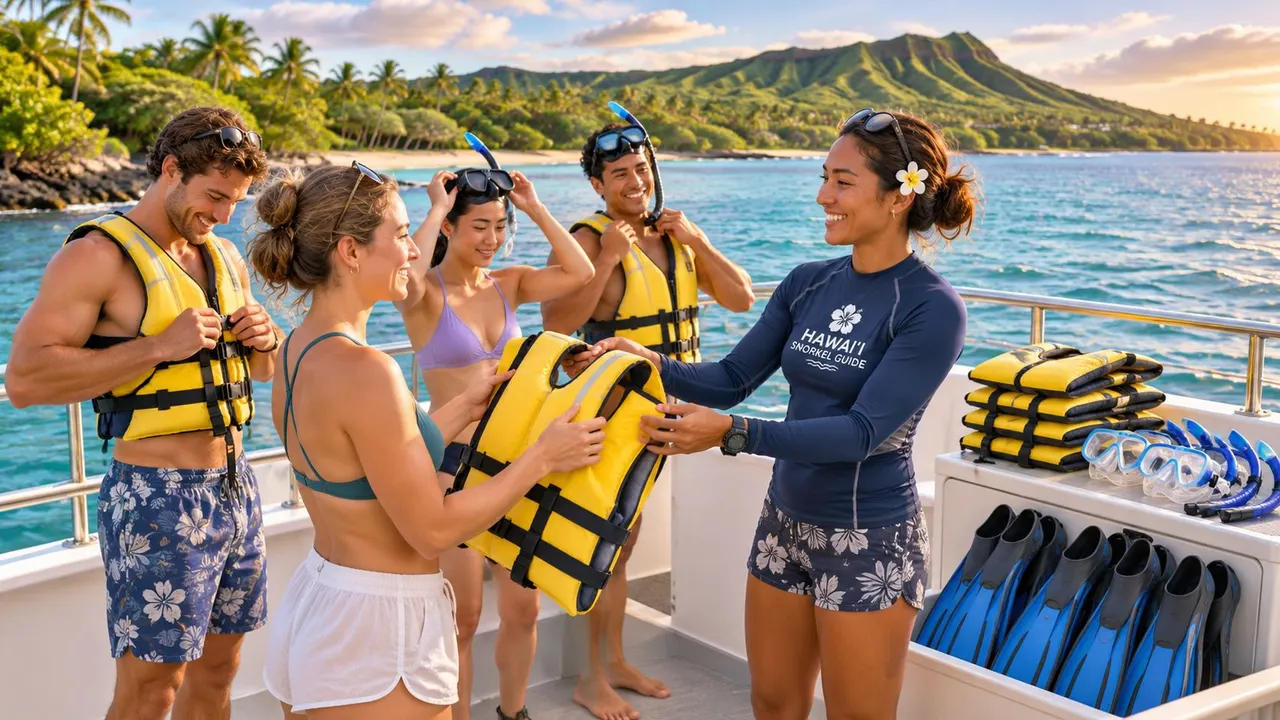
All snorkeling equipment is provided, including life jackets and snorkel vests, and the guides stay with you in the water. Before anyone enters, we give a short lesson on the gear and what to expect. Through the swim, guides coach technique and talk through the local reef.
For families and beginners I would book the Deluxe Waikiki Snorkeling and Wildlife Cruise. It visits a reef away from the crowds and includes a waterslide, a water trampoline, and a lily pad. See the Waikiki snorkel and waterslide cruise. If turtles are the goal, the Turtle Canyons snorkel excursion is the other Waikiki trip.
Confirm four things before you book.
- Vest size for each person, taken from the label rather than a guess.
- Age, since every tour starts at 3.
- The sea forecast for that morning, not yesterday's postcard.
- The briefing, so the vest is fastened and checked before the swim.
Living Ocean Tours runs guided Waikiki snorkel trips with life jackets and snorkel vests, a short gear lesson, and crews who stay with beginners and families in the water. If you want a vest-friendly reef swim instead of guessing the conditions alone, start with a morning departure and a correctly sized vest. Visit Living Ocean Tours to pick a trip and check the day.