
Honolulu United States Snorkeling: The Practical Guide
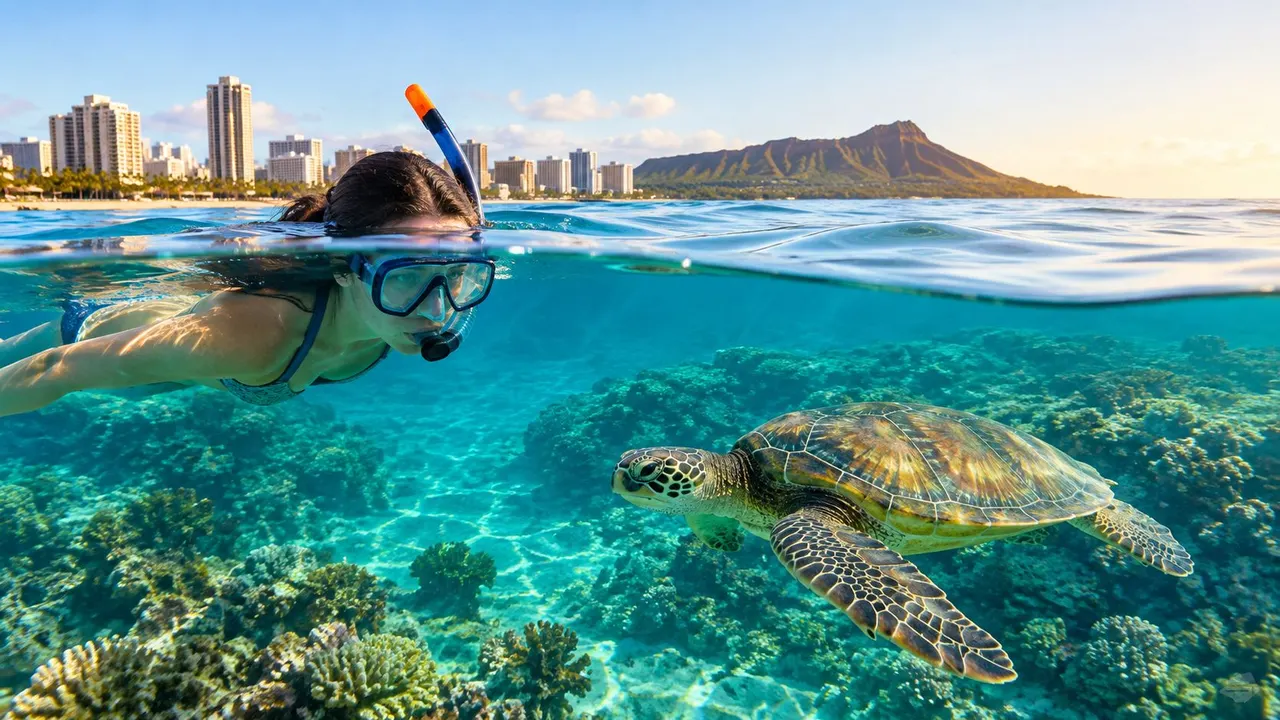
Hanauma Bay is the most famous snorkeling spot near Honolulu, but a guided boat tour from Waikiki usually offers families and beginners the highest probability of calmer water, expert navigation to live reefs, and carefully managed turtle encounters. Historical research estimated about 3 million snorkeling participants in Hawai'i each year, compared with roughly 200,000 scuba divers, so choosing the right setting matters.
That scale changes how you should plan. Honolulu United States snorkeling isn't just a matter of finding the prettiest beach and renting fins. Your group's swimming ability, tolerance for open water, comfort with boat boarding, and willingness to follow wildlife rules should determine the experience. A protected shore entry may suit one family, while a guided vessel gives another family better supervision, flotation support, and access to reefs that aren't practical from land.
Understanding How Honolulu Snorkeling Actually Works
About 3 million snorkelers were estimated to enter Hawai'i waters each year in early-2000s research, which is one reason O'ahu's accessible reefs see steady use and steady pressure. The same The University of Hawai'i research summary also cited approximately 7 million visitors annually, more than $11 billion in visitor spending, and more than 80% of visitors taking part in coastal or marine recreation such as snorkeling or scuba diving. Those figures are dated benchmarks, but they still explain the scale visitors are stepping into.
Hanauma Bay shows what that scale looks like in practice. Historical marine managed area estimates recorded approximately 1 million active visitors annually, including about 965,000 snorkelers and 35,000 divers. High volume brings clear trade-offs. You may get an iconic shoreline and easy name recognition, but you also get tighter rules, more crowding, and more pressure on both reef and visitor behavior.
For a Waikiki group, the actual decision is how much exposure you want to manage yourself. Shore snorkeling can be cheaper and simple on paper, yet the work shifts to you. Someone in the group has to judge surf, entry and exit points, slippery rock, current, fatigue, and whether every swimmer can get back in without panic once the water feels different from the beach.
Boat trips change that equation. A competent crew checks conditions close to departure, chooses a workable reef for the day, defines where guests should stay, and usually has flotation ready for anyone who needs a calmer start. That matters most for mixed-ability groups, where one confident swimmer can hide the fact that another person is already overmatched.
Practical rule: Choose the location based on the least confident swimmer in your group.
That single choice prevents a lot of bad days. I have seen families focus on the strongest adult, then spend the session managing one tired child or one uneasy beginner who never settled into a rhythm.
A guided boat also opens access to reef structure that casual shore swimmers should leave alone unless conditions and skills really line up. Cleaning stations, deeper coral habitat, and lava formations can hold excellent marine life, but reaching them safely takes local judgment and close group control. The Honolulu snorkeling guide from Living Ocean Tours is a useful starting point for comparing Waikiki shore entries with boat-based options before you book.
For many families, the soundest call is a guided morning departure from Waikiki, with the crew matching the reef to the group instead of forcing the group to fit the reef.
Mastering Morning Conditions and Essential Gear
Morning scheduling is a safety decision in Hawai'i, not merely a way to start the vacation day. Hawaiʻi Ocean Safety notes that mornings generally bring calmer water, brighter light, better underwater visibility, and more active marine life, while wind often increases later in the morning or afternoon. Its snorkeling safety guidance also identifies high surf, strong winds, heavy shorebreak, and currents as adverse conditions.
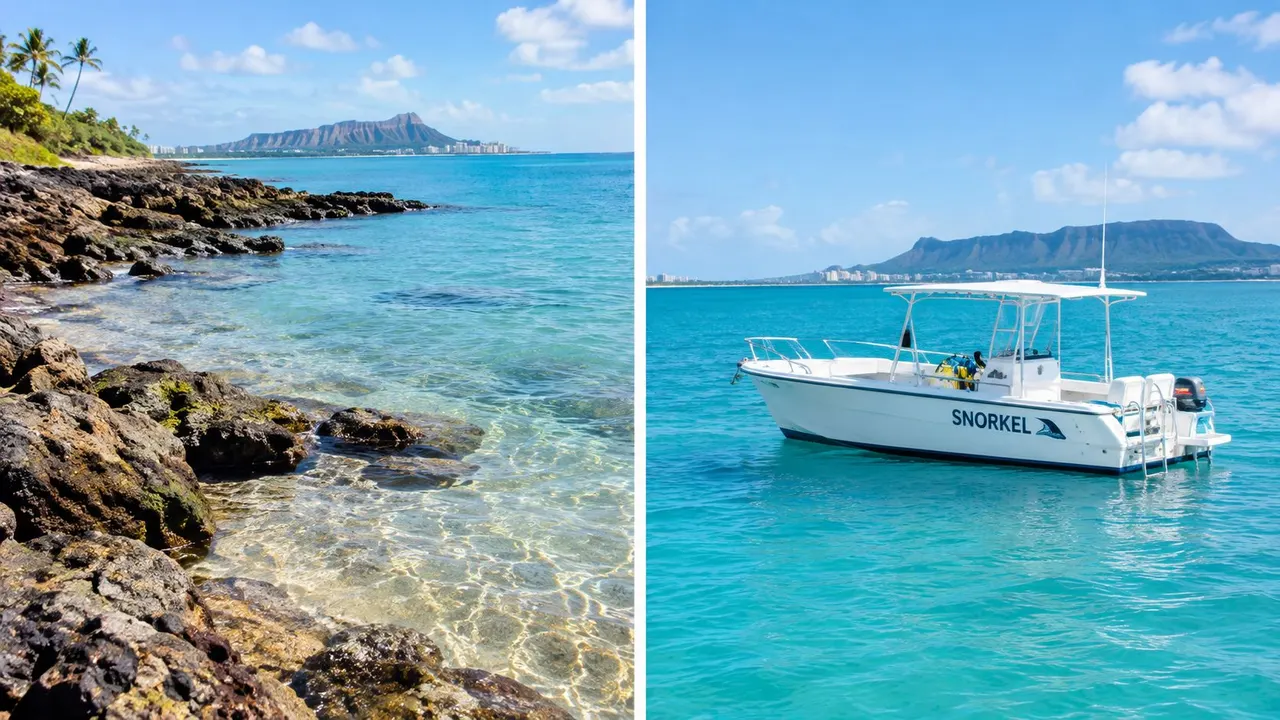
A late-morning change can be subtle from the beach. In the water, stronger wind creates surface chop, increases exertion, and makes a return to the vessel or shoreline more demanding. Children may tire before adults notice, and a nervous swimmer can lose confidence quickly when waves repeatedly interrupt breathing.
Build a practical pre-entry routine
Before anyone enters, a responsible guide or group leader should:
- Check the immediate conditions: Review current surf and wind information, then reassess what you see at the launch point. A location that was comfortable earlier may not suit the group later.
- Screen carefully: Ask whether each swimmer can float calmly, breathe through a snorkel, clear a flooded mask, and return without becoming distressed. Age alone isn't a useful safety test.
- Use flotation correctly: A snorkel vest can reduce effort and help a tired swimmer remain visible. It shouldn't be treated as permission to enter water beyond the swimmer's ability.
- Stay together: Families should keep children and less confident swimmers within close visual range of a buddy or guide.
- Skip poor visibility: Dawn, dusk, and murky water reduce hazard detection. Clear, bright conditions make it easier to see reef, boats, other swimmers, and changes in the surface.
Pack for comfort and reef protection
A properly fitted mask is more valuable than expensive fins. Test the seal before entering, adjust the strap without overtightening, and practice clearing water while standing in shallow water or aboard the vessel. Use a snorkel vest when offered, bring drinking water, and pack a rash guard or other sun-protective layer.
The Living Ocean Tours fin guide can help first-time guests understand how fin fit affects comfort and control. Avoid standing on coral or using fins to push off the reef. Reef shoes may help with some rocky entries, but they don't solve poor conditions, weak swimming ability, or unsafe footing. If you must make a shore entry, move slowly and keep your feet off living reef wherever possible.
Water-entry test: If a guest can't explain how they'll rest, signal for help, and exit the water, they aren't ready to enter yet.
Choosing Between Shore Sites and Boat Excursions
The right snorkeling site depends less on its reputation than on the group standing at the entry point. A sheltered bay can be a poor choice for a swimmer who panics in crowds, while a boat can be the wrong choice for someone who can't comfortably board, climb a ladder, or remain at sea.
| Location | What works | Main trade-off |
|---|---|---|
| Hanauma Bay | A naturally protected setting with accessible water and strong fish habitat | Heavy visitation means crowd management and advance planning are central to the experience |
| Waikiki Beach | Convenient access for travelers staying nearby, with opportunities to see honu | Conditions vary, and a beach swimmer must manage equipment, supervision, entry, and exit independently |
| Shark's Cove | Dramatic lava formations, pools, and underwater structure during calmer seasonal conditions | Rocky terrain and exposed North Shore conditions make it unsuitable for many beginners outside favorable conditions |
| Kahe Point, often called Electric Beach | A high-energy site with warm-water outflow and concentrated marine life | Currents and open-water demands require confidence and sound local judgment |
| Ko Olina Lagoons | Calm, protected water that can work well for young children and cautious first-timers | The sheltered setting may offer less reef variety than a boat-accessible site |
These locations aren't interchangeable. Hanauma Bay's protected shape can suit a family that values shallow water and beach-based flexibility, but the group still needs to supervise every swimmer and respect the managed reef. Waikiki is convenient for a short outing, yet convenience doesn't guarantee calm water or easy visibility.
Shark's Cove is a seasonal decision. Its lava shelves, pools, and underwater passages are compelling when conditions are settled, but winter surf can make the same rocky coastline dangerous. Kahe Point offers a more energetic experience and should be reserved for swimmers who understand current exposure and can conserve energy. Ko Olina favors comfort and simple entry rather than maximum biodiversity.
A Waikiki boat excursion changes the equation. The captain can assess the day's conditions, select a reef compatible with the group, and avoid forcing guests into a shore entry that doesn't suit them. The cost is less independence, and boat boarding can be a barrier for some older adults or travelers with mobility limitations. Ask about dock access, ladders, seating, transfers, and companion assistance before booking.
For a broader comparison of O'ahu snorkeling choices, start with the swimmer who needs the most support. If that person is comfortable on a supervised boat but not with a rocky beach entry, the vessel may be the more accessible option in practice.
Encountering the Honu and Turtle Safety and Respect
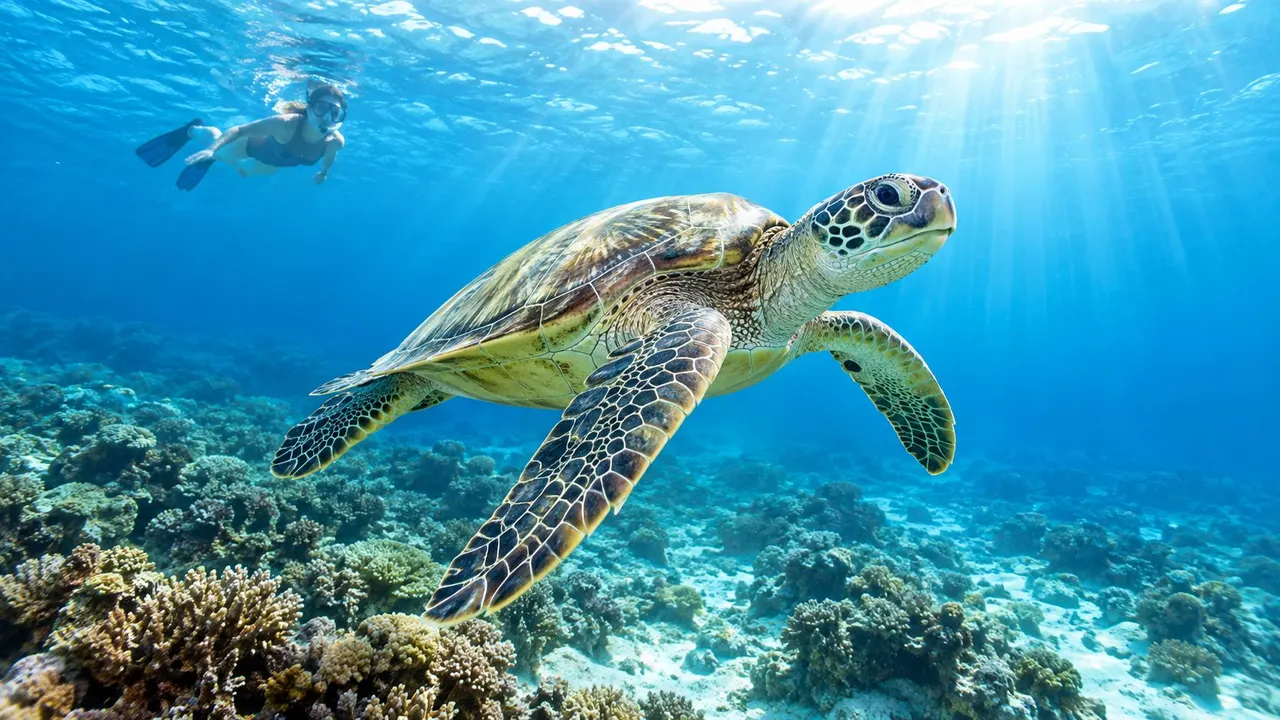
Hawaiian green sea turtles, or honu, are the wildlife encounter many visitors remember most, and they require the most restraint from the people in the water. Hawai'i's Department of Land and Natural Resources identifies the green turtle as the sea turtle people most often see on local reefs and beaches, and the species is protected under federal and state law. DLNR's sea turtle guidance bars harassment, pursuit, touching, feeding, and any behavior that changes a turtle's normal activity.
That legal protection matters because recovery does not mean risk is gone. The state's summary describes nesting growth of approximately 5% per year over the two decades discussed in its summary, from 67 nesting turtles in 1973 to almost 500 nesting females annually. Stronger numbers still leave turtles exposed to disturbance, habitat pressure, vessel strikes, and disease. In practice, one crowded snorkel stop can turn a calm sighting into a stressful one for the animal.
Use distance as your first rule
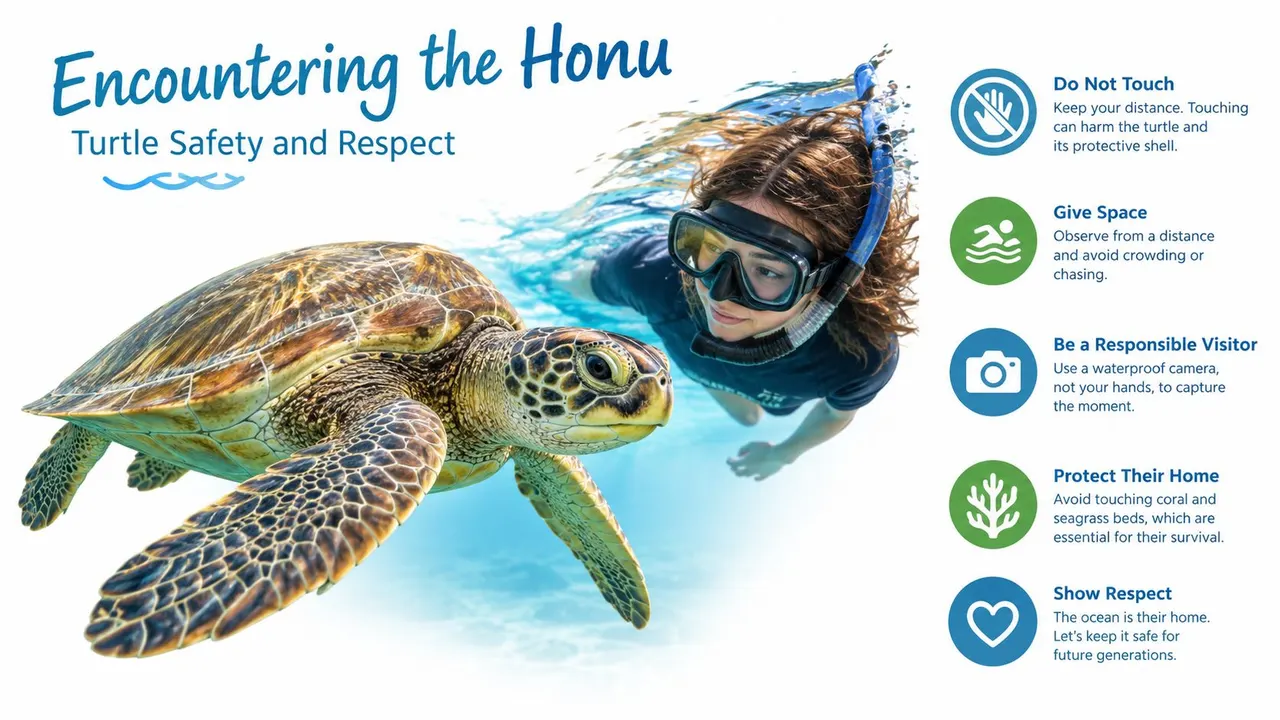
For most groups, turtle etiquette starts with spacing, not photography. NOAA's Hawaii marine wildlife viewing guidelines and Hawai'i DLNR advise keeping at least 10 feet, or 3 meters, from a sea turtle in the water and on land. The same guidance says not to touch, chase, feed, surround, or pin a turtle between swimmers, a boat, and shore. If a turtle is spotted from a vessel, operators should slow to no-wake speed and put engines in neutral.
A turtle that swims near you has not invited contact. Hold your line. If the animal changes course toward your mask or fins, back off and leave it a clear path. The encounter happens on the animal's terms.
Guided etiquette can help a mixed-ability group. Good crews set the distance rule before anyone gets in, keep snorkelers on one side of the animal, and stop the fast swimmer from cutting across the turtle's path for a closer look. The payoff is often better for guests too. People stay calmer, visibility stays less chaotic, and the turtle is more likely to continue natural behavior. For a fuller walkthrough of respectful practices, see this guide to swimming with Hawaiian green sea turtles respectfully.
Read the animal, not just the ruler
Distance is the baseline, but behavior tells you when you are still too close. These respectful wildlife protocols point to signs such as a turtle changing direction, lifting its head repeatedly, stopping its rest, or struggling to reach the water. When that happens, increase space immediately. Do not wait for a guide to correct it, and do not keep tracking the animal for a better photo.
The Turtle Canyons Snorkel Excursion is built around guided access to turtle habitat, but no responsible operator can promise that a turtle will stay close or approach a specific swimmer. Sometimes the best encounter is brief. Watching a honu feed, surface, or pass by without being blocked is the standard to aim for.
The same test applies when comparing options like Snorkel Turtle Canyon. Judge the trip by briefing quality, group control, and whether the crew protects the animal's space when guests get excited.
Evaluating Guided Tour Features and Amenities
A boat tour should be judged by how it manages people, not by how many features appear in the brochure. Compare the vessel, the water plan, and the support available between swims. A low price can lose its appeal if guests spend the day waiting for equipment, searching for shade, or trying to keep track of a large group.
Compare the operating experience
| Feature | Guided boat excursion | Self-guided shore outing |
|---|---|---|
| Site choice | Captain can relocate or select a reef based on conditions | Swimmer is committed to the chosen entry unless the group packs up |
| Instruction | Crew can demonstrate mask clearing, fin use, and signals | Responsibility falls on the group |
| Flotation | Equipment may be supplied and fitted aboard | Guests must rent, carry, and inspect it |
| Rest between swims | Vessel may provide seating and shade | Beach space and shade can be limited |
| Wildlife viewing | Guides can organize spacing around turtles | Crowds may converge without a clear leader |
| Accessibility | Boarding, ladders, and transfers require advance questions | Beach access may be easier or harder depending on the site |
Living Ocean Tours is one Honolulu-based option, departing from Kewalo Basin Boat Harbor and providing guided Waikiki snorkeling with equipment, flotation support, drinking water, and onboard instruction. Its Deluxe Waikiki Snorkel & Wildlife Cruise adds a waterslide, water trampoline, and lily pad, which can keep children occupied between water sessions. Travelers should still confirm current vessel details and accessibility directly before booking.
A smaller group can make it easier for a guide to maintain visual contact, but “small” is not a guarantee of safety. Ask how guides divide swimmers, what happens if someone opts out, where guests sit between entries, and whether a person can remain aboard without pressure to enter the water.
Treat amenities as risk controls
Shade matters in a bright tropical environment because it gives guests a place to recover between swims. An onboard restroom can also reduce the pressure to rush back into the water or leave the harbor searching for facilities. These aren't decorative extras for families. They can improve pacing, especially when children, older adults, or guests with different energy levels share the trip.
Accessibility deserves precise questions. One Honolulu guided-snorkel listing states that its experience is not wheelchair accessible while being stroller accessible. That distinction shows why travelers should ask about dock surfaces, boarding steps, ladders, transfers, seating, and whether a companion can assist. “Family-friendly” should describe the whole group's logistics and fallback options, not just the presence of children's equipment.
If a guest doesn't want to snorkel, the crew should offer a clear alternative: remain aboard, use the shaded deck, observe from the rail, or join a later water session if conditions and staffing permit. The best tour is the one that allows a guest to make that choice without embarrassment.
Prioritizing Safety Through Professional Guidance
Hawai'i's Department of Health identifies snorkeling as a major ocean-safety concern for visitors. Nonresidents account for 53% of drowning victims in the state, and the fatal ocean-drowning rate for nonresidents is approximately eight times the resident rate, according to the Hawai'i Department of Health drowning-prevention information. Most nonresident drowning deaths occurred during snorkeling, swimming, or an activity recorded as unknown.
O'ahu's ten-year rate of fatal ocean drownings was 27.2 per 100,000 people, lower than the rates reported for Kauaʻi, Maui, and Hawaiʻi Island, but still substantial. The figures don't mean visitors should avoid the ocean. They mean an unfamiliar swimmer shouldn't treat clear water and a popular beach as proof that conditions are manageable.
Risk includes fatigue and breathing difficulty
The state recorded 206 fatal snorkeling drownings statewide during 2009–2018, averaging 21 deaths per year, along with 463 nonfatal snorkeling drownings, averaging 46 per year. The fatal cases were 71% male, the average age was 59, and 76% of victims were between 45 and 75 years old. About 75% of snorkeling-drowning victims were nonresidents, according to the department's snorkeling drowning summary.
Those numbers challenge the common assumption that only children or weak swimmers face serious risk. Older adults may be fit yet less comfortable with repeated exertion, unfamiliar currents, or breathing through a snorkel. A strong pool swimmer may also underestimate what wind, chop, fins, mask anxiety, and a long return swim feel like together.
A professional crew can't eliminate risk, but it can reduce avoidable exposure. The captain can check conditions, select an appropriate site, limit the group's operating area, and call guests out before fatigue becomes a crisis. Guides can demonstrate mask clearing, identify distress, maintain buddy contact, and explain the signal to stop or return.
Leave the water early: A swimmer who feels unusually tired, breathless, panicked, or disoriented should signal immediately and exit. Pride is not a safety system.
Ask every operator what happens when conditions deteriorate or a guest decides not to enter. A sound answer includes relocation, cancellation, a supervised return, or an onboard alternative, not pressure to continue because the boat has already reached the site. Properly fitted equipment and flotation support matter, but judgment matters more.
Planning Your Perfect Waikiki Snorkeling Day
A good Honolulu snorkeling day starts with an honest group assessment, then works backward from the least confident swimmer. For many Waikiki visitors, Kewalo Basin Boat Harbor offers a practical departure point near the hotel district, with guided operators heading toward reefs along the Waikiki coastline. Confirm the meeting point, boarding requirements, parking or transport plan, and accessibility details before the morning of departure.
Choose an early trip when possible. The calmer morning window, brighter underwater light, and active marine life described by Hawaiʻi Ocean Safety make an earlier start more comfortable for beginners and families. Eat lightly, bring water, wear swimwear under easy layers, and pack sun protection that won't require constant movement while aboard.
A workable day flow
- Before leaving Waikiki: Check the confirmation, verify transportation, and tell the operator about children, older adults, weak swimmers, mask anxiety, mobility limitations, or anyone who may opt out.
- At the harbor: Arrive with enough time to board without rushing. Listen to the safety briefing, test the mask, and learn the signals for help, regrouping, and leaving the water.
- At the reef: Keep the group together, use flotation as instructed, avoid coral contact, and maintain the required distance from honu. Don't turn a wildlife sighting into a pursuit.
- Between swims: Use shade, drink water, and reassess comfort. A guest who stays aboard has still had a legitimate marine experience.
- After returning: Rinse equipment as directed, protect your skin from further sun exposure, and leave the reef with the same restraint you brought to it.
The Waikiki snorkeling information from Living Ocean Tours can help you compare a dedicated turtle outing with a broader wildlife cruise. The publisher describes its Turtle Canyons trip as a two-hour tour with approximately one hour in the water, while its broader cruise adds family-oriented water features. Confirm the current itinerary, conditions, and inclusions before booking.
Some travelers prefer a dedicated turtle experience. Others need a flexible boat day where a child can use the waterslide, an older adult can rest in the shade, or a nervous swimmer can watch from aboard. The ideal outing isn't the one with the most ambitious itinerary. It's the one where everyone can participate at a sustainable level.
Living Ocean Tours offers guided Waikiki snorkeling from Kewalo Basin, with equipment, flotation support, instruction, and access to reefs where guests may observe tropical marine life and honu responsibly. Visit Living Ocean Tours to compare the Turtle Canyons excursion and family-oriented wildlife cruise, then choose the experience that matches your group's swimming ability and comfort in the ocean.


