
Snorkeling Honolulu Guide: Best Spots, Tours & Tips
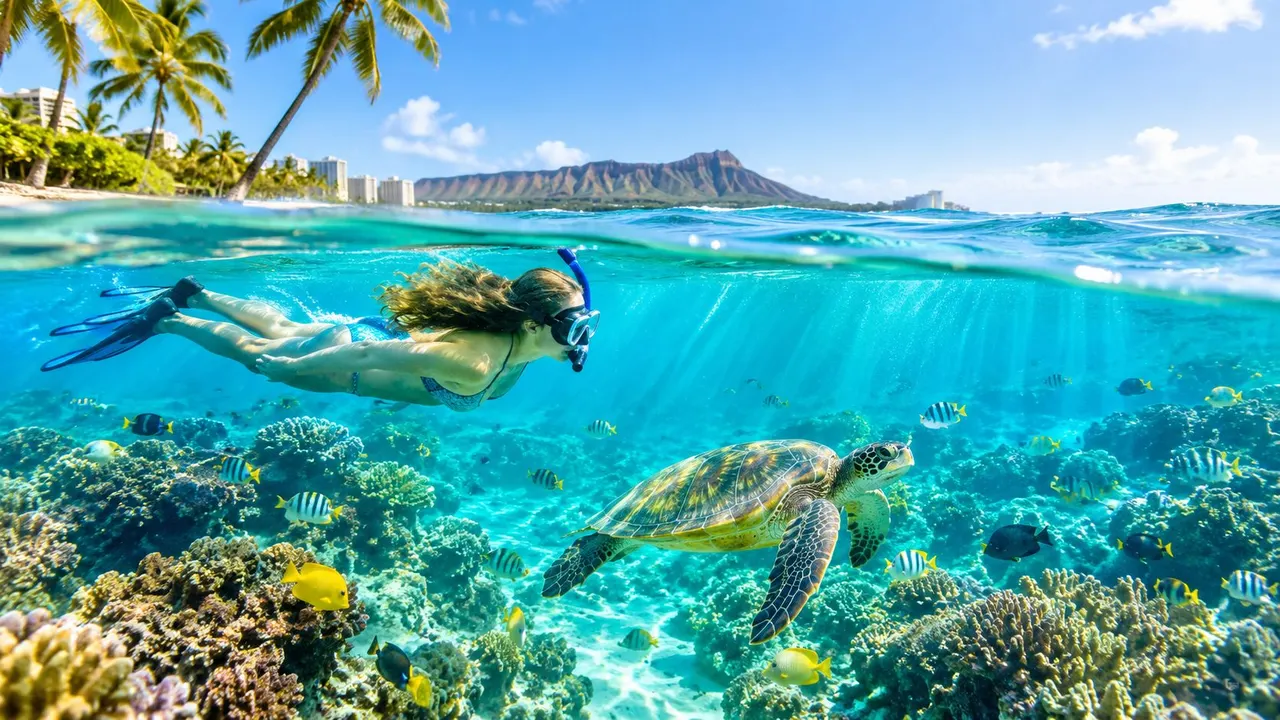
You've arrived in Waikīkī with a mask, fins, and a free morning. The beach looks calm from shore, but the ocean can tell a different story once you're floating beyond the sand. A reef that feels effortless in gentle summer water may become uncomfortable or unsafe when swell, wind, or current changes.
That's the reality of snorkeling Honolulu. The reward is exceptional, from shallow reef habitat to offshore turtle-cleaning areas, but the best experience depends less on finding one permanently perfect beach and more on matching the shoreline, timing, and tour style to the conditions that day.
Your Hawaiian Snorkeling Adventure Awaits
At golden hour, the Waikīkī coastline takes on a soft copper glow. Diamond Head rises behind the beach, the surface settles into long blue ripples, and a snorkeler drifting above a reef can watch fish move between coral heads without hearing anything except their own breathing. A Hawaiian green sea turtle may pass through the scene, but it should remain a calm wildlife encounter, not an invitation to swim closer.
That contrast explains why snorkeling here feels both accessible and demanding. The reefs are close to major visitor areas, yet the Pacific remains a powerful open-ocean environment. Hawaiian reefs attract more than 3 million snorkelers each year, alongside about 200,000 scuba divers, while more than 100 dive and snorkel operators generate roughly $50 million to $60 million annually, according to a University of Hawaiʻi-sourced overview of Hawaii's reef recreation economy. Honolulu is part of a statewide ocean system, not an isolated beach attraction.
Start with the ocean, not the map
A practical plan begins with three questions:
- Which shore is calmest today? South-shore sites are generally the more dependable choice when North Shore winter swell is running.
- How comfortable is your group in open water? A confident swimmer and a nervous beginner shouldn't be sent into the same conditions.
- Do you want independence or supervision? Beach snorkeling gives you control, while a guided trip adds equipment, instruction, local knowledge, and a structured entry into the water.
Hanauma Bay remains a defining Honolulu-area snorkeling destination. Historic economic research recorded about 1,000,000 active visitors there annually, including 965,000 snorkelers, while Kahaluʻu drew about 350,000 active visitors each year. The same state and NOAA analysis of coastal recreation found that visitors snorkeled an average of 3.8 times during their Hawaiʻi stay. Those figures show how established the activity is, but they also explain why timing, reservations, and reef etiquette matter.
Practical rule: The prettiest photograph isn't necessarily the safest place to enter. Check the water before you put on your mask.
Choosing Your Perfect Snorkeling Experience
The right Honolulu snorkeling plan depends on what you value most. A self-guided beach visit suits travelers who want flexibility and already understand ocean conditions. A guided boat trip works better for families, first-time snorkelers, and anyone who would rather have local professionals manage equipment and site selection. A sunset or whale-watching cruise offers an ocean experience without making underwater viewing the central goal.
| Experience Type | Best For | Key Benefits | Seasonal Considerations |
|---|---|---|---|
| Self-guided beach snorkeling | Independent travelers and confident swimmers | Flexible timing and control over how long you stay | Conditions vary sharply by shoreline, especially at North Shore sites |
| Guided snorkel tour | Beginners, families, and multi-generational groups | Equipment, instruction, boat access, and local condition checks | A professional crew can help select a more suitable route, but conditions still govern the outing |
| Sunset or wildlife cruise | Couples, mixed-interest groups, and non-snorkelers | Scenic coastline views and a relaxed time on the water | Whale viewing is seasonal, while sunset cruises focus on the evening experience |
When a beach is the better choice
Hanauma Bay offers a sheltered setting with a shallow fringing reef. The Hawaiʻi Department of Land and Natural Resources describes sections reaching up to about 10 feet, with other areas around 30 feet, and notes that visibility is often best at low tide and early in the day, before activity stirs sediment. The DLNR guidance for Hanauma Bay also warns that rip currents and channel flow near the mouth can become strong during ebb tides.
Shark's Cove is a different proposition. Hawaiʻi DLNR's site guidance says it's generally calm from about May through October, while winter wave energy and currents can become extremely dangerous. A beach plan works when you're prepared to change it. It doesn't work when a familiar summer site becomes an automatic winter choice.
For a broader look at site selection and local conditions, use this Oʻahu snorkeling guide as a planning reference, then confirm conditions locally before entering.
When a boat tour earns its place
A boat departure from Kewalo Basin can reduce the friction of snorkeling in Honolulu. You don't need to solve every question alone, such as where a reef begins, how to enter over rocks, or whether the current is carrying your group away from the exit point. A guided crew can demonstrate mask use, explain how to float without kicking up the bottom, and keep a group together.
The trade-off is less independence. You'll follow the operator's timing and safety decisions, which is exactly what many beginners and families need.
Turtle Canyons, Hawaii’s Premier Snorkeling Destination
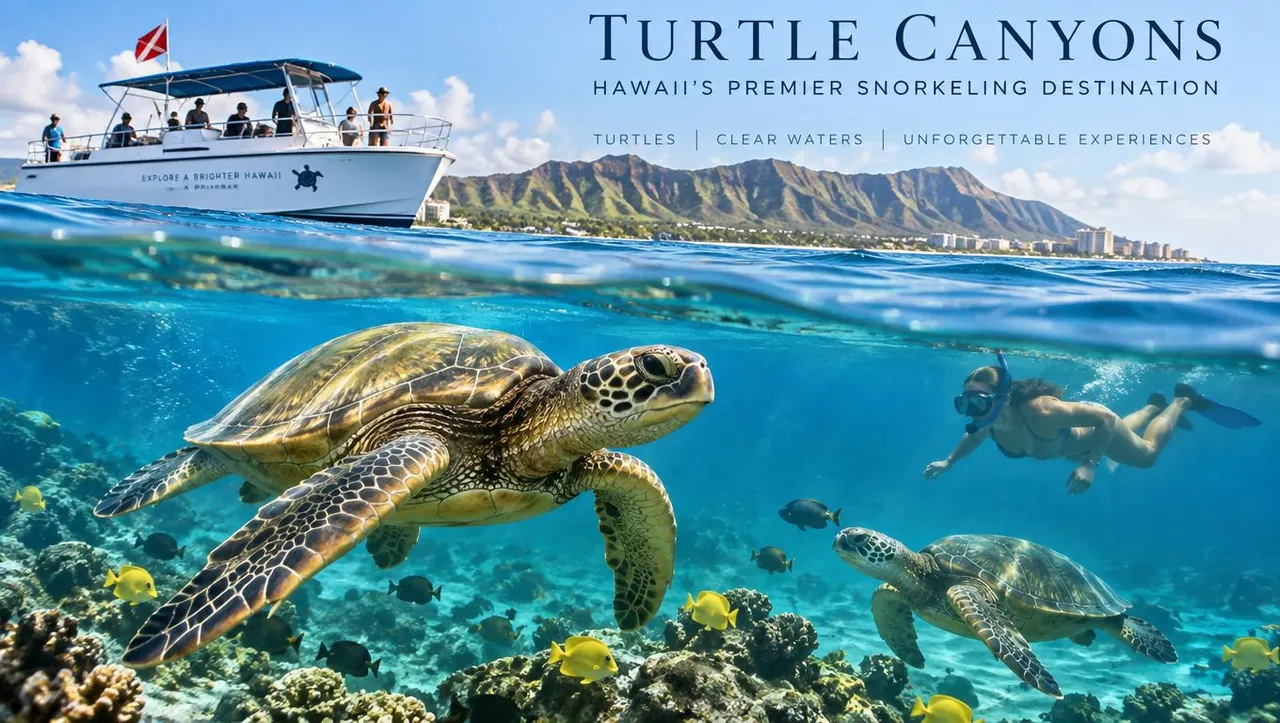
Turtle Canyons is appealing because it shifts the experience away from a crowded shoreline and toward an offshore reef environment associated with Hawaiian green sea turtles. The attraction isn't just the possibility of seeing a turtle. It's the chance to observe a protected animal behaving naturally while a guide manages distance, group movement, and the approach angle.
Why the setting changes the experience
Offshore and protected reef structures can offer clearer water and more natural wildlife behavior than a heavily trafficked shallow entry. Depth, flow, and distance from shore all affect how a group spreads out. A boat also gives guides more control over where guests enter and how they regroup.
Living Ocean Tours is described as the top-rated and most reviewed snorkel company on Oahu and offers its Turtle Canyons excursion from Kewalo Basin Boat Harbor near Waikīkī. The trip includes equipment, instruction, and guides focused on safety and responsible wildlife viewing. Families and first-time snorkelers can also consider the company's Turtle Canyons Snorkel Excursion, while Snorkel Turtle Canyon is a useful alternative operator to compare.
Wildlife viewing requires deliberate positioning
Hawaiian green sea turtles are protected, and swimmers must stay at least 10 feet away. That distance isn't a minor courtesy. It determines where a guide places the group, how long guests remain near an animal, and whether a turtle can continue resting or cleaning without repeated interruption. The Oʻahu marine-life guidance also warns visitors not to stand on reef or rocky bottom, where a careless step can damage habitat and injure the swimmer.
A good viewing position is usually slightly to the side, with plenty of open water between the swimmer and turtle. Don't chase a turtle that changes direction. Don't dive down toward it. Let the animal decide whether it passes through your viewing area.
The experience works best when guests accept that wildlife is unpredictable. A responsible operator can improve your chances by choosing an appropriate site and explaining behavior, but no ethical guide should promise control over a wild animal's movements.
Essential Gear and Safety Guidelines
A mask that leaks can ruin an otherwise excellent snorkel. Before entering the water, place the mask against your face without using the strap and inhale gently through your nose. If it holds briefly, the seal is probably sound. If air rushes in immediately, try another mask rather than tightening the strap until it hurts.
Fins help with efficient movement, but they don't compensate for poor swimming ability. A flotation vest can provide confidence and visibility for a beginner, especially during a boat excursion. Reef shoes may feel reassuring at rocky entries, yet they should never become an excuse to walk across living coral.
Build a simple pre-entry routine
Use this sequence before you swim out:
- Inspect the mask and snorkel. Check the skirt, strap, mouthpiece, and purge valve. A small equipment problem becomes harder to solve once you're offshore.
- Ask about the exit point. Know where you'll leave the water before you begin. Avoid drifting beyond the place where your group can safely return.
- Choose a buddy. Stay close enough to communicate and keep your buddy in sight, particularly when visibility or current changes.
- Check the water immediately before entry. Hawaii Ocean Safety identifies high surf, high winds, heavy shorebreak, and strong currents as poor conditions for snorkeling, and advises checking with lifeguards before entering through its snorkeling safety guidance.
- Set a limit. If you're breathing hard, swallowing water, feeling cold, or losing confidence, head back. A short successful snorkel is better than an ambitious one that ends in distress.
Protect your visibility and the reef
Float horizontally and kick gently. Standing on the bottom stirs sand into the water and can break or scrape reef habitat. It also makes you less stable when a wave arrives.
Use sun protection that minimizes impact on marine life, cover up where practical, and carry reusable water rather than leaving waste near the shoreline. If you're joining a guided trip, review the operator's equipment procedures and snorkel gear cleaning practices before departure.
Safety check: If the ocean looks active from shore, assume the conditions matter more than your original itinerary.
Seasonal Patterns and Optimal Timing
The most useful Honolulu snorkeling forecast is geographic. In broad terms, the North Shore tends to settle during the warmer months and can become hazardous during winter. The south shore is usually the more practical year-round choice, although no shoreline is immune to wind, swell, surge, or current.
At Shark's Cove, calm conditions are generally associated with May through October, while winter can bring sharply higher wave and current energy, according to Hawaiʻi DLNR's Pūpūkea guidance. That makes a seasonal rule more useful than a permanent “best spot” list. Treat every shallow reef as a site with a season, not as a default you can visit in any weather.
Match the month to the shoreline
During calmer North Shore months, Shark's Cove may suit experienced visitors who want a natural rocky setting and are willing to check entry and exit conditions carefully. The water can still change during the day, so an easy morning doesn't guarantee an easy afternoon.
During winter swell, prioritize sheltered south-shore options or a guided trip whose crew can assess the route. Don't confuse a visually protected cove with a safe channel. Wave energy can enter from angles that aren't obvious from the beach.
For the clearest view, go early. DLNR notes that Hanauma Bay visibility is generally better at low tide and early in the day, before sediment is stirred by swimmers. Crowding also matters. Reporting on the bay describes a managed system that caps attendance at 1,400 visitors per day, releases groups of about 40 every ten minutes, and reserves the earliest periods for clearer water and lower disturbance levels in coverage of Hanauma Bay's reef recovery and visitor management.
Use whale season to broaden the plan
Humpback whale season around Oʻahu runs from December 15 through May 15, with peak activity generally from January through March, according to Oʻahu whale-watching information. The Kaʻiwi Channel is an active migration pathway, and early departures are often favored because calmer seas can improve viewing conditions, as described in this local whale-watching overview.
For water-planning details, consult this guide to Oʻahu water temperature, then choose sun protection and clothing based on your own comfort rather than relying on a generic packing list.
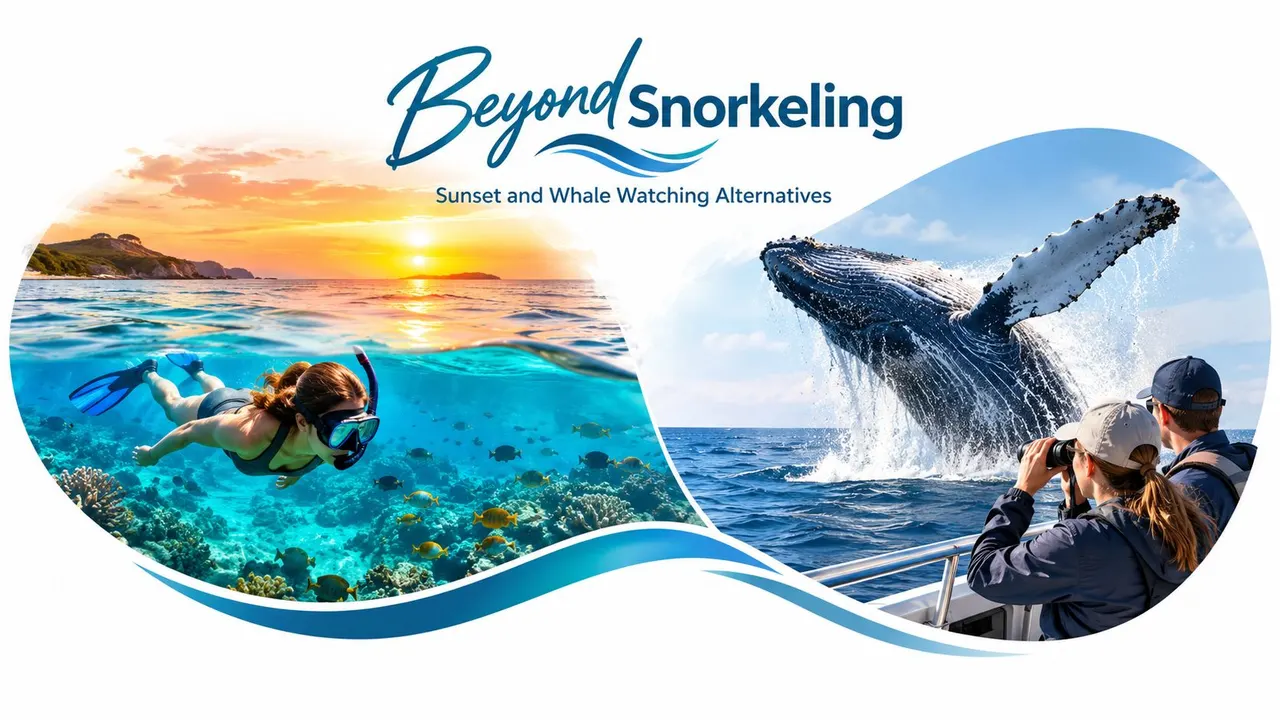
Beyond Snorkeling, Sunset and Whale Watching Alternatives
Not everyone in a travel group wants the same ocean activity. One person may want to spend the morning looking for reef fish, another may prefer a shaded seat and a coastline view, and children may value a boat ride as much as the time in the water. Honolulu works well for mixed groups because the ocean can be enjoyed at several levels of intensity.
Choose the experience that fits your day
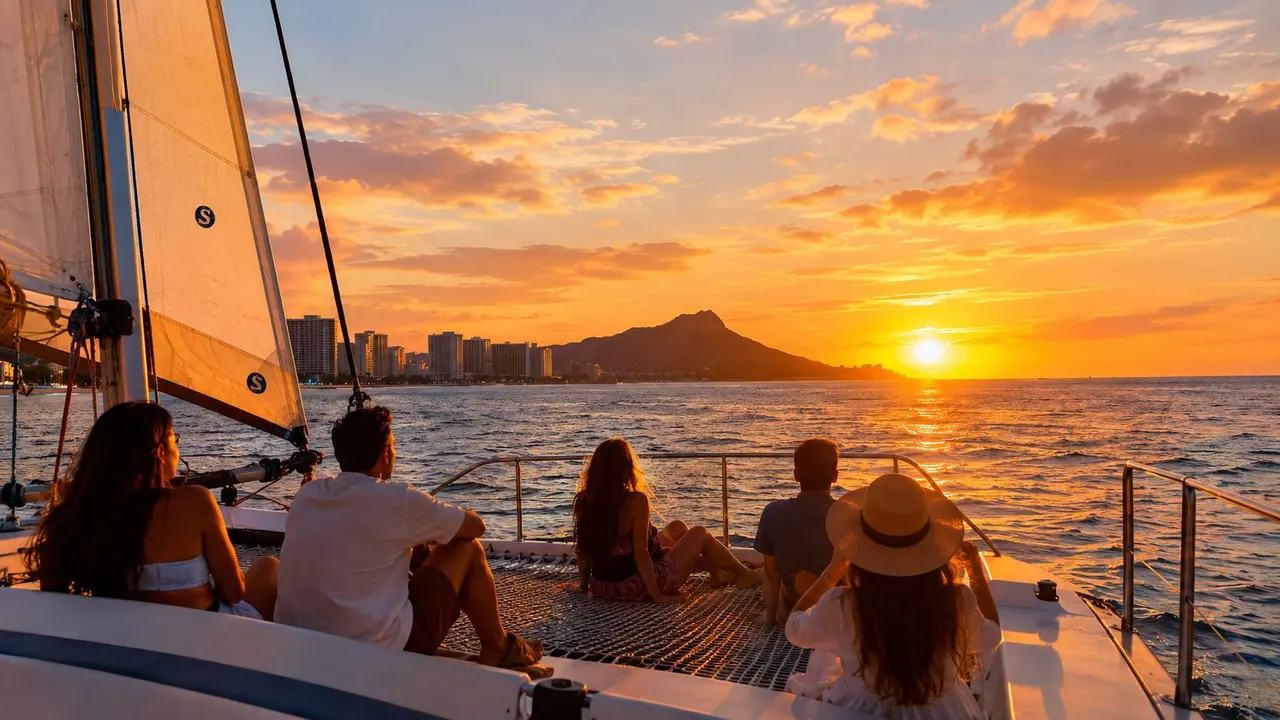
A sunset cruise is the better choice for couples, tired travelers, and guests who want Diamond Head and the Waikīkī coastline rather than a mask and fins. The Waikīkī Sunset Cruise offers a slower pace and a golden-hour setting. Travelers comparing operators can also consider Sunset Cruises Waikīkī as an alternative.
Whale watching suits winter visitors who want a wildlife-focused outing without entering the water. Boats must stay at least 100 yards from a whale, and people should never swim with or touch whales or other marine mammals, according to the Oʻahu whale-watching guidance. The goal is observation, not pursuit.
For a group with different swimming abilities, a combined snorkel and wildlife cruise can be a practical compromise. The Deluxe Waikīkī Snorkel and Wildlife Cruise adds boat-based entertainment alongside reef viewing, giving non-snorkelers and younger guests something meaningful to enjoy.
A simple decision guide
- Pick snorkeling when everyone wants active underwater viewing and the conditions suit the group.
- Pick a sunset cruise when scenery, conversation, and a relaxed pace matter more than wildlife encounters.
- Pick whale watching during the humpback season when your priority is observing large marine mammals from a responsible distance.
- Pick a mixed cruise when one itinerary needs to work for confident swimmers, beginners, and people who prefer staying on deck.
Responsible Tourism and Preserving Hawaii’s Marine Life
A turtle encounter can last less than a minute and still become the memory everyone talks about on the flight home. The quality of that memory depends on what the group does next. If swimmers crowd the turtle, block its path, or dive toward it for a photograph, the encounter becomes stressful for the animal and unsafe for people.
The better response is quiet observation. Keep at least 10 feet from sea turtles, never touch or feed marine life, and let the animal determine whether it passes nearby. The distance protects both the turtle and the swimmer, particularly when a turtle surfaces unexpectedly or changes direction.
Treat the reef as living habitat
Coral isn't a convenient platform. Standing on it can break fragile structure, injure your feet, and stir sediment over organisms that need clear water. Use your buoyancy and fins to remain above the bottom, and ask a guide for help if you're struggling to stay horizontal.
A responsible snorkeler also makes small choices before entering:
- Use reef-conscious sun protection. Cover skin with clothing where practical and select products designed to reduce harm to marine ecosystems.
- Keep wildlife wild. Don't chase, surround, handle, or feed fish, turtles, or other animals.
- Follow local direction. Lifeguards and guides can see changes in surf and current that aren't obvious from a hotel balcony.
- Leave nothing behind. Secure masks, straps, packaging, and personal items before you leave the beach or boat.
Crowding makes these habits more important. Reporting on Hanauma Bay describes visible reef recovery when tourism declined and cites a field study that recorded 168 reef disturbances among 327 snorkelers, roughly one disturbance for every two snorkelers. The lesson isn't that visitors shouldn't snorkel. It's that careful movement, managed access, and early timing can materially improve the experience for both people and the reef.
Hawaiʻi's ocean isn't a backdrop hired for a vacation photograph. It supports wildlife, local communities, cultural relationships, and a visitor economy that reaches far beyond one bay. The most memorable snorkeling Honolulu offers combines clear water and colorful fish with the knowledge that your group left the reef undisturbed.
Living Ocean Tours offers guided Waikīkī snorkeling, Turtle Canyons trips, sunset cruises, and seasonal whale watching from Kewalo Basin, with equipment, instruction, and responsible wildlife-viewing practices built into its ocean experiences. Visit Living Ocean Tours to compare the available outings and choose a Honolulu adventure that fits your group and the day's conditions.


