
Honolulu United States Snorkeling: Top Spots for 2026
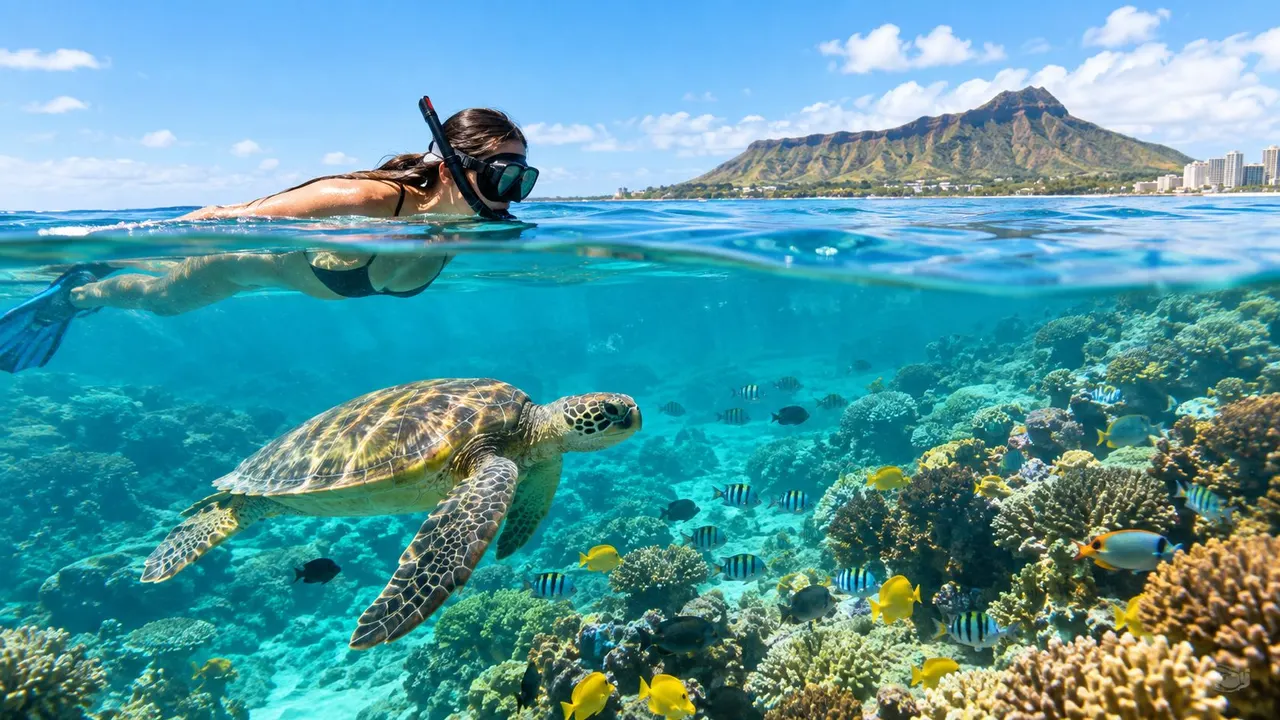
You're standing at Kewalo Basin before sunrise, watching the Waikiki skyline brighten behind the boat. The water looks calm, your mask is ready, and somewhere below the surface a Hawaiian green sea turtle may be moving through the reef. Then the captain checks the weather, recent rain, water clarity, and the day's access notices. That's when most visitors realize Honolulu United States snorkeling isn't a simple “pick the prettiest beach” decision.
Visibility can change quickly. Heavy rain can make ocean entry unsafe for at least 72 hours, and turtle viewing requires a minimum distance of 10 feet, or 3 meters, according to NOAA's marine wildlife viewing guidelines. A beach entry and a boat trip also deliver very different experiences. One gives you convenience and independence. The other can put you over offshore reef habitat that you can't reach by walking off Waikiki.
This is the briefing I'd give guests before pushing away from the dock. You'll get clear recommendations for families, beginners, confident swimmers, and travelers deciding whether Hanauma Bay, Turtle Canyon, or a longer boat day deserves your time. You'll also learn which mistakes can turn a promising morning into a poor visibility, tired swimming, or unsafe-water story.
Picture Yourself Stepping Onto a Snorkel Boat in Waikiki
At Kewalo Basin, the first decision is made before anyone enters the water. Check the overnight weather, recent rain, surface chop, and the crew's latest view of visibility. Then choose the site that fits those conditions, rather than forcing the original itinerary.
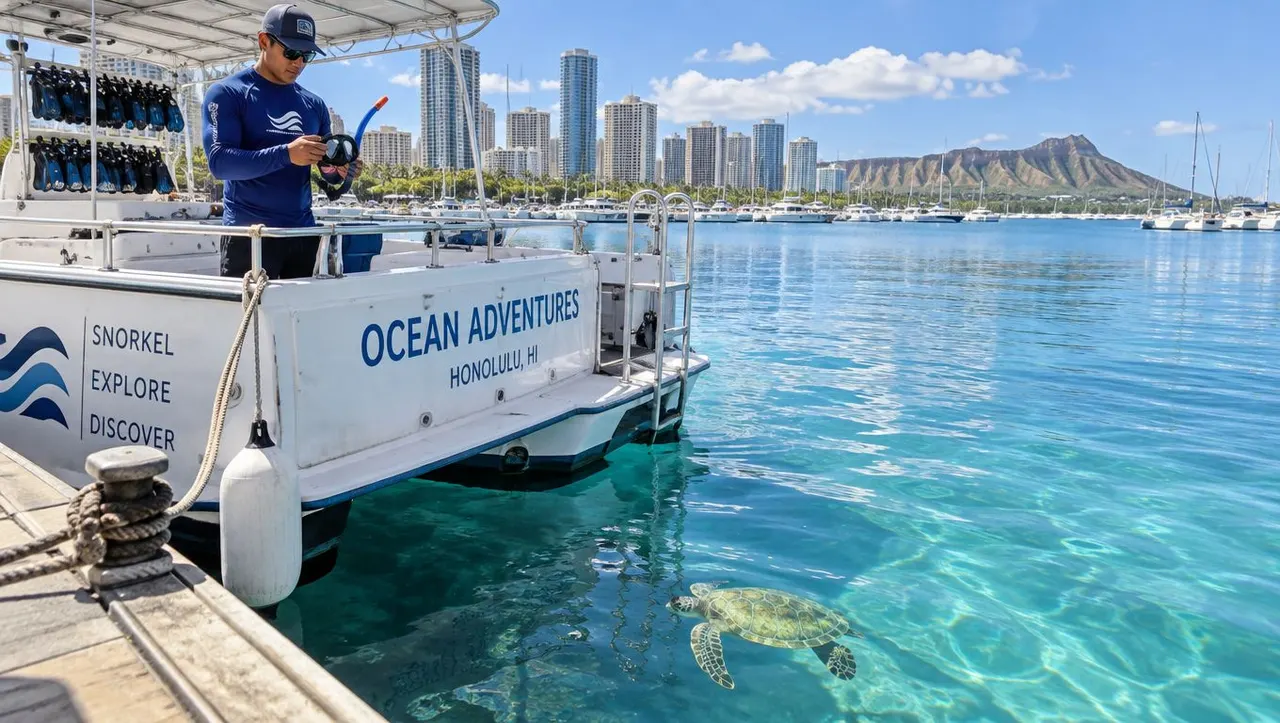
Early morning often gives you the cleanest chance at calm water. Overnight settling can improve clarity before trade winds build chop and stir sediment, a pattern described in Living Ocean Tours' Honolulu snorkeling conditions guide. Rain changes the calculation. Runoff near stream mouths, including the Ala Wai area, can lower visibility and water quality, so do not treat a post-rain outing like an ordinary beach morning.
Honolulu snorkeling in 2026 requires a live decision, not a fixed list of locations. A clear-looking route can still become a poor choice after runoff, rougher water, or a reef access notice. Ask the crew what they see that morning and accept a site change when conditions call for it.
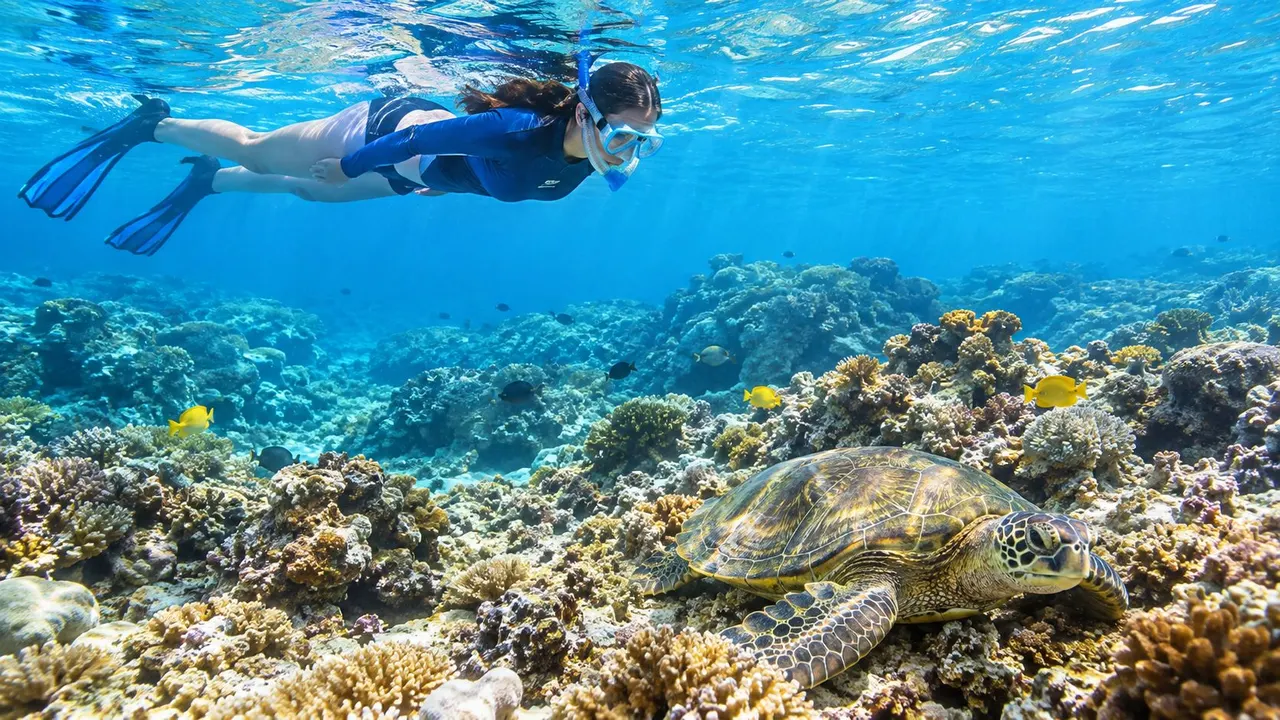
Turtle viewing has a firm boundary. NOAA recommends staying at least 10 feet, or 3 meters, away from sea turtles in the water and avoiding attempts to surround them or hold them between a boat and shore, according to its wildlife interaction guidance. If one swims toward you, stop and let the turtle choose the distance.
Captain's rule: A questionable view from the dock will not improve because you paid for a reservation. Choose safer water over a promised location.
Families should match the trip to children's energy, swimming confidence, and recovery time. Use this family vacation planning resource when arranging a Waikiki outing. The right trip is the one your group can enjoy without exhausting anyone before the swim begins.
The Four Ways to Snorkel in Honolulu
Honolulu gives you four distinct ways to snorkel. Choosing the right category before choosing a location saves time, money, and frustration.
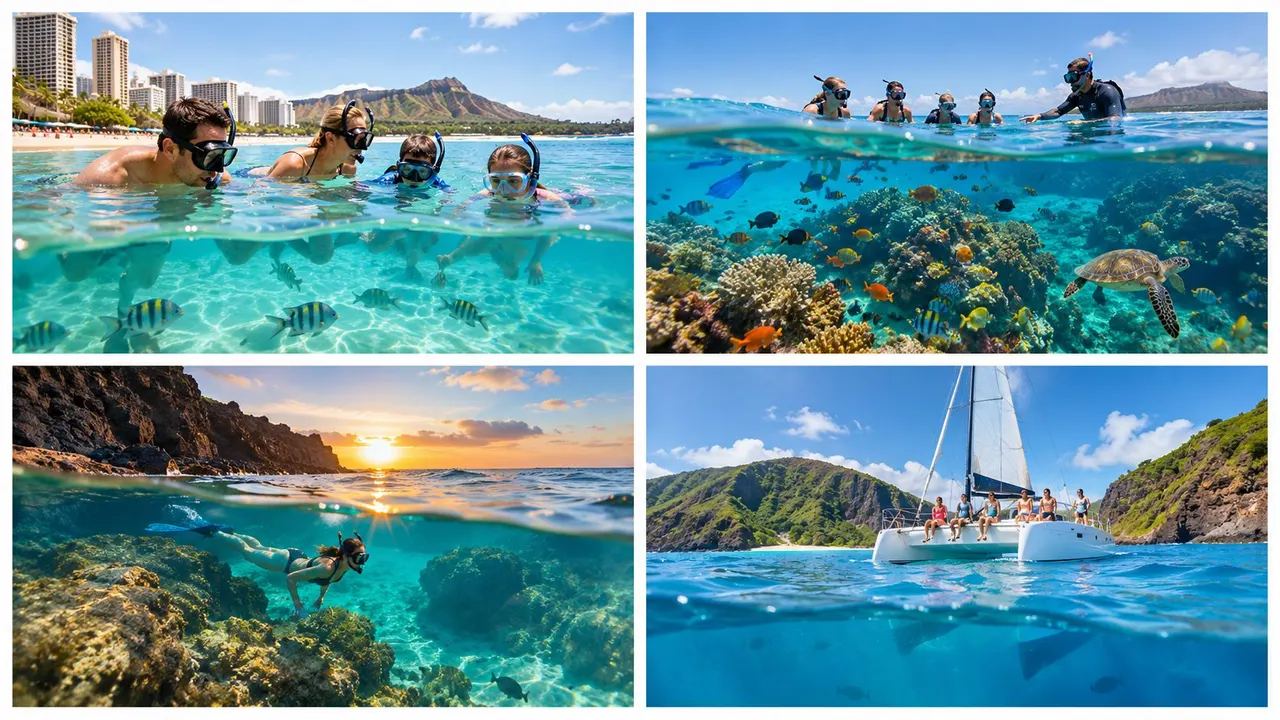
Shore reefs for convenience
Waikiki and Queen's Surf are the easiest starting points. You can walk in, test your mask, and leave whenever you like. The trade-off is inconsistency. Visibility depends on wind, wave movement, recent rain, swimmers, and sand stirred by the shoreline. Fish sightings can be worthwhile, but reef quality is patchy and turtle encounters aren't guaranteed.
This option suits experienced swimmers who already understand currents and want independence. It also works for families testing whether a child likes putting their face in the water, provided an adult stays close and conditions are gentle.
Marine preserves for fish variety
Hanauma Bay is the major example. It's a protected, government-managed site with a natural cove and concentrated marine life, but access rules, reservations, fees, and local closures make it less spontaneous. Beginners also need to respect shallow coral, uneven footing, and water movement around reef channels.
Shark's Cove and Three Tables can offer healthier reef viewing when conditions cooperate, but they're not casual year-round choices. The North Shore is exposed, and a site that looks inviting from the road can be unsuitable for a nervous swimmer.
Offshore turtle sites for higher wildlife odds
Turtle Canyon is reached by boat. Its shallow reef works as a natural turtle cleaning station, where reef fish remove algae from Hawaiian green sea turtles' shells, according to the Turtle Canyon conditions report. Boat access changes the experience. You avoid a long shore swim and reach habitat where turtles naturally gather, but the crew still needs to screen surge, swell, and visibility before anchoring.
Longer cruises for ambitious groups
Longer trips toward the North Shore or leeward coast make sense when your group wants a full ocean day and can handle more transit. You may find a quieter site or stronger reef conditions, but you'll spend more time on the water and have fewer easy exit points.
For a broader look at the island's options, compare Oahu snorkeling experiences before booking.
Top Snorkeling Spots Around Honolulu and What to Expect
Don't rank these spots by photographs. Rank them by entry difficulty, current exposure, crowd pressure, parking, and the swimming ability of your group.
Hanauma Bay delivers the strongest shore-based fish experience for many visitors, but it requires planning. It's a natural cove and a marine preserve, with reservations for non-residents, an entry fee, and operational closures. The City and County of Honolulu's 2026 safety and accessibility guidance warns about sharp coral near shore, so beginners shouldn't rush from the beach into deeper water. Expect crowds and a learning curve, even when the bay is calm.
Turtle Canyon is my first recommendation for many first-timers. It's boat-access only, and conditions still matter, but a guide can choose the safest available anchorage and help guests manage masks, fins, and flotation. The likely target is a turtle encounter over shallow reef, not a private aquarium with perfect visibility.
Waikiki's Kahanamoku and Queen's lagoons are useful for a quick test. They're walk-in and lifeguarded, but the reef is not the reason to choose them. Go there to see whether your child tolerates a mask or whether your group can breathe comfortably through a snorkel.
Sans Souci and Magic Island offer easier logistics, including more manageable parking than some high-demand sites. Fish can appear around structure and reef edges, but visibility changes and you shouldn't expect the density of a protected cove or the wildlife focus of an offshore turtle site.
Shark's Cove and Three Tables are North Shore choices for confident swimmers during calmer summer conditions. They require a longer drive, parking patience, and careful attention to waves and entry points. Their appeal is stronger reef habitat, not effortless access.
For additional location comparisons, use this Honolulu and Oahu snorkeling spot guide.
| Spot | Access | Difficulty | Best For | Likely Sightings |
|---|---|---|---|---|
| Waikiki lagoons | Walk-in | Easy | Testing gear and comfort | Small reef fish, limited reef viewing |
| Sans Souci and Magic Island | Shore entry | Easy to moderate | Families with some water confidence | Reef fish around structure |
| Hanauma Bay | Managed shore entry | Moderate | Fish variety and preserve experience | Dense reef fish, possible turtles |
| Turtle Canyon | Boat access | Moderate | Beginners wanting guided turtle viewing | Green sea turtles and reef fish |
| Shark's Cove and Three Tables | North Shore shore entry | Moderate to advanced | Confident swimmers in calmer conditions | Reef fish and stronger reef habitat |
Why a Guided Tour Beats Going Solo for Most Visitors
A guided boat trip removes the variables that cause the most trouble for first-time visitors: entry, equipment, flotation, site selection, and surface supervision. From Kewalo Basin, the crew can choose a site that fits the day's water instead of sending you into a beach entry you have not assessed.
Hawaii Ocean Safety reports that snorkeling accounts for more visitor drownings than any other activity in the state. Its snorkeling safety guidance advises checking the water and speaking with lifeguards before entering. That warning matters at shore sites, where a calm-looking beach can hide sharp coral, uneven footing, surge, or a current that becomes clear only after you are swimming.
Gear is another common failure point. A leaking mask ruins visibility and can make a beginner lift their head, kick harder, and panic. Fins that fit poorly waste energy. Beach rentals may also lack the flotation support a nervous swimmer needs.
A boat crew can fit masks, explain breathing, provide flotation, and select a site around current conditions. Living Ocean Tours operates from Kewalo Basin and provides guided snorkeling with equipment and in-water support. Its Waikiki snorkel and waterslide experience adds a family-oriented water feature, but the practical advantage remains the crew's support in the water.
| Factor | Guided Tour | Solo Shore |
|---|---|---|
| Site choice | Crew selects around current conditions | You commit to the beach you reached |
| Equipment | Fitted mask, snorkel, fins, and flotation support | Quality varies by rental shop or personal gear |
| Safety | Captain and guide monitor the group | You manage entry, navigation, and emergencies |
| Wildlife viewing | Guide explains distance and behavior | You must identify respectful positioning yourself |
| Flexibility | Set departure and return time | Leave whenever you want |
| Best match | Beginners, families, and mixed abilities | Confident swimmers and experienced snorkelers |
Solo snorkeling remains the better choice for an experienced swimmer targeting a particular shore reef, checking conditions independently, and keeping costs low. The trade-off is clear: you handle gear, entry, route-finding, emergencies, and turtle-viewing distance yourself. A guided trip costs flexibility and follows a schedule, yet it gives visitors a crew that can adjust the plan when visibility, current, runoff concerns, or reef conditions make the original idea a poor choice. For most visitors, that is the smarter purchase.
When to Go for the Best Conditions and Wildlife
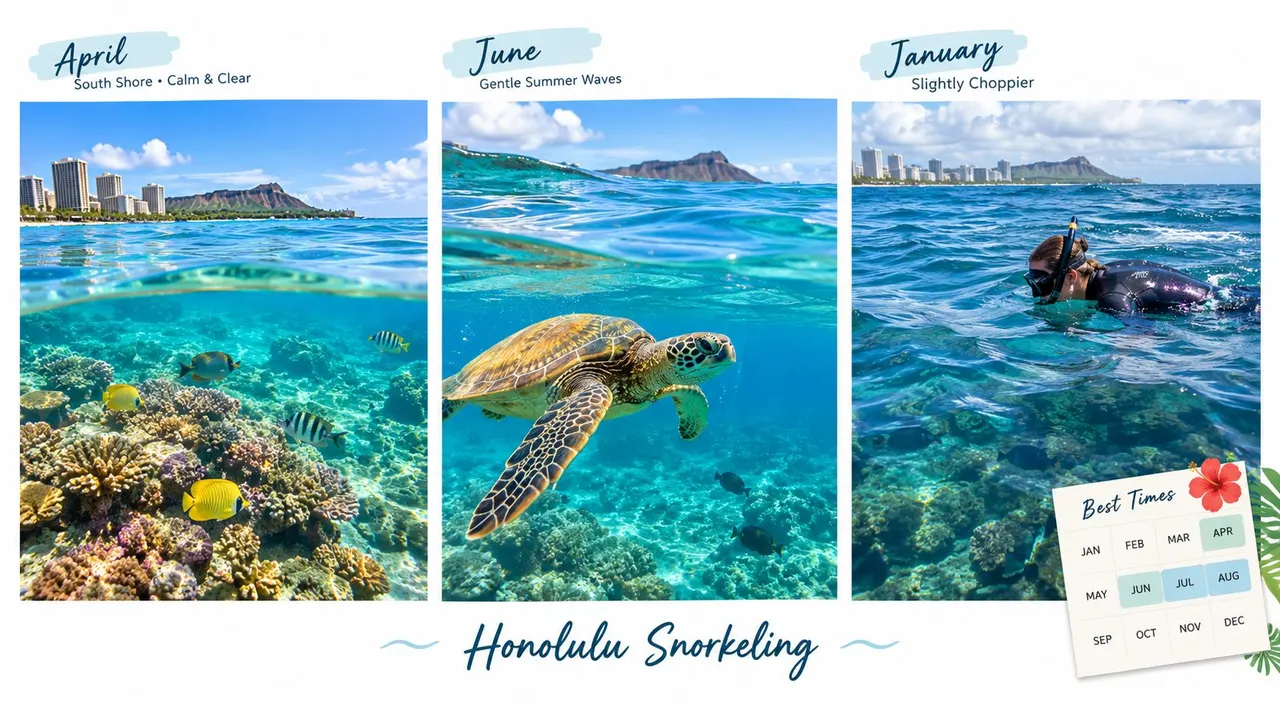
Step onto the boat at sunrise and you usually give yourself the best shot at clear water. Plan around time of day and recent weather, not the month on the calendar. Honolulu visibility is commonly most reliable from sunrise to 10 a.m., before trade winds roughen the surface and stir sand. Check the local Honolulu snorkeling conditions guidance before choosing between a shore entry and a boat trip.
Rain changes the plan. Stay out of the ocean for at least 72 hours after heavy rain, then check current city, health, and ocean-safety notices before driving to the beach. Runoff can affect nearshore water quality, so a dry forecast alone does not clear the water immediately after a storm.
Use a simple decision rule
- Calm forecast and dry conditions: Choose an early morning shore or boat outing.
- Heavy rain within the past 72 hours: Delay entry and verify advisories.
- Turtles on your wish list: Ask a guided crew to confirm a suitable offshore site and keep your distance from wildlife.
- Fish and shore access: Consider Hanauma Bay, after checking reservations, opening status, and access rules.
- Winter whale interest: A boat trip may add whale-focused opportunities, but whale sightings and snorkeling conditions are separate questions.
Green sea turtles appear year-round, but no sighting is guaranteed. Never approach dolphins or other wildlife because they surface near the boat. For clothing and water-temperature planning, use this Oahu water temperature guide.
Wildlife Etiquette and Reef Health in 2026
A clear-water forecast does not guarantee a healthy reef. In 2026, plan your snorkeling around reef conditions, recent weather, and your impact on wildlife. The 2023 to 2025 global coral bleaching event was described as the fourth and most widespread recorded, with bleaching-level heat stress reported across reefs in many countries and territories. That global situation is not a condition report for every Honolulu site, but it makes careless contact harder to justify. Review this 2026 Oahu snorkeling guide before choosing a location.
Keep your body off the reef
Never stand on coral to adjust a mask. Keep your knees, fins, and hands off the bottom, and do not grab coral for balance. If your equipment needs attention, signal the guide or swim to a sandy patch first.
Skip fish feeding. It changes natural behavior and can pull animals into crowded swimming areas. Leave shells, rocks, and marine life in place.
Reef etiquette also means treating bleaching as a reason for restraint. Do not touch pale or damaged coral to inspect it, and keep your fins clear of shallow reef when surge pushes you toward the bottom. If conditions make that difficult, choose a deeper site or postpone the swim.
Give turtles room
Stay at least 10 feet, or 3 meters, from a sea turtle in the water. Never touch, pet, ride, feed, chase, harass, or handle one, as stated in NOAA's turtle interaction guidance. Do not swim over or under the turtle, block its route, or position yourself between it and the surface.
At Turtle Canyon, stop kicking and let the turtle pass. A guide who spreads guests out and asks them to hold position is protecting the animal and preventing a crowd from forming. Review this Turtle Canyon snorkeling guide for site-specific expectations.
Booking Gear and What Your Day Actually Looks Like
Book around your group's schedule, not merely the first open slot. Busy travel periods require earlier planning, while quieter periods may offer more flexibility. Weather, reef conditions, and post-rain site closures can still change the itinerary, so choose an operator that explains its substitution and cancellation policy clearly.
Most Honolulu snorkeling boats leave from Kewalo Basin near Waikiki or Waianae Harbor for west-coast trips. A typical morning outing lasts about 3.5 hours and often begins around 8:00 a.m. Exact timing depends on the operator, harbor, and sea conditions. Kewalo Basin is the practical choice for Waikiki visitors who want less ground travel before boarding.
Bring the items that keep you comfortable
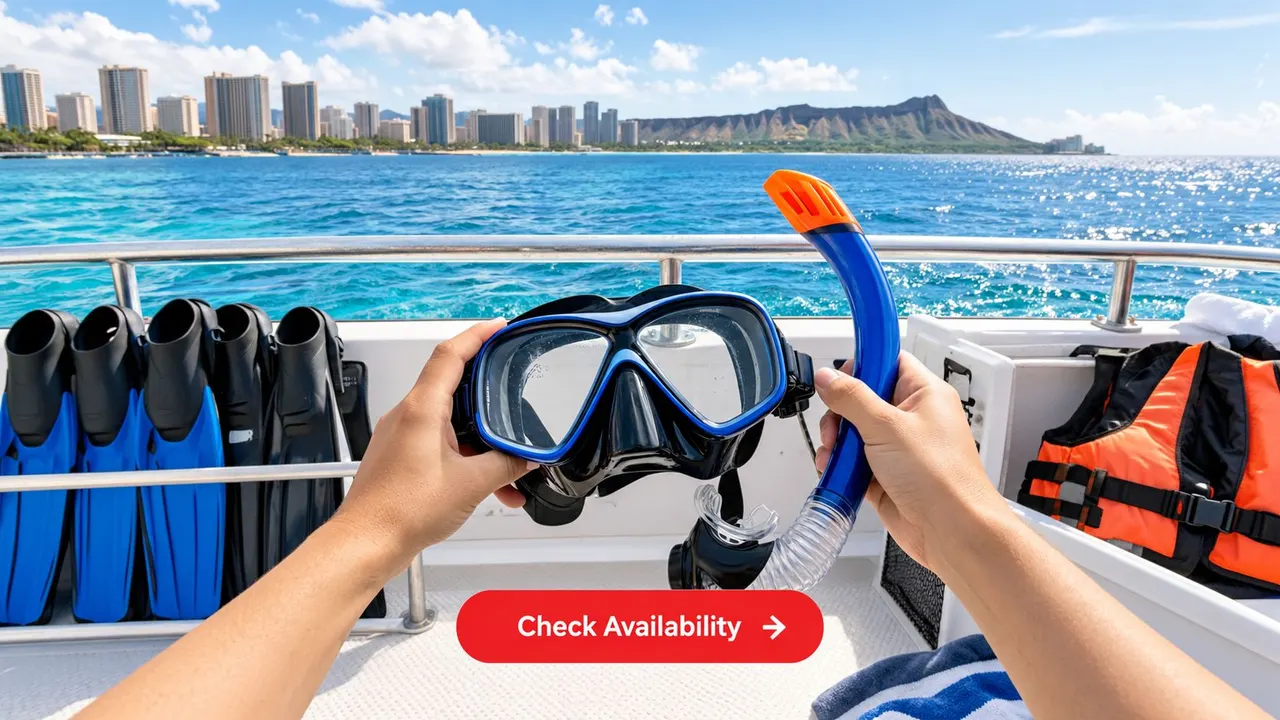
Boats generally provide a mask, snorkel, fins, and flotation support. Some add a wetsuit top when the water is cool. Premium catamarans may provide more deck space and extra amenities, but equipment packages differ. Confirm what is included before paying, especially if you need a prescription mask or specific flotation gear.
Pack:
- Reef-safe sunscreen: Apply it before boarding and follow the product directions.
- Towel and dry bag: Protect phones, wallets, and spare clothes from spray.
- Motion-sickness medication: Follow medical and product guidance if seasickness affects you.
- Light food and water: Eat lightly before departure and hydrate.
- Personal prescription mask: Ask about corrective lenses before the trip.
Expect a straightforward flow
Check in, attend the safety briefing, get fitted for equipment, and ride to the selected site. The guide covers entry, breathing, flotation, wildlife distance, and where to regroup if you need help.
In the water, follow the crew's rotation and gathering instructions instead of drifting into another group's viewing area. After the swim, return aboard for water or snacks, remove your gear, and head back to the harbor. If rain runoff, reef conditions, or swell makes the planned site unsuitable, the crew may choose another location or cancel rather than force an unsafe entry.
Living Ocean Tours offers a family-focused option with guided snorkeling and additional water-play features. Review the Deluxe Waikiki Snorkel and Wildlife Cruise in advance, then compare its schedule, inclusions, and meeting details with other boats.
A Simple Pre-Trip Checklist and Final Recommendation
Save this list to your phone before leaving the hotel:
- Confirm the booking: Check departure time, meeting point, cancellation terms, and included equipment.
- Check conditions: Look for heavy-rain advisories, closures, sharp-coral warnings, and operator updates.
- Choose the morning: Sunrise through 10 a.m. usually gives you the strongest chance of clearer water.
- Prepare your body: Hydrate, eat lightly, and bring motion-sickness medication if you need it.
- Protect the reef: Keep fins, knees, hands, and feet off coral.
- Respect turtles: Maintain at least 10 feet, or 3 meters, and never touch, chase, surround, or swim over them.
- Carry practical gear: Bring a towel, dry bag, reef-conscious sunscreen, and any prescription mask you require.
The four mistakes I see most often are simple: touching coral for balance, chasing a turtle for a photograph, feeding fish, and skipping the post-rain check. Each one is avoidable. A responsible snorkeler watches the water before entering, listens to the guide, and accepts that a changed site can still produce a good day.
Quick answers for first-timers
Are there age minimums? Each operator sets its own rules, so confirm the minimum age when booking. Children also need to meet the company's equipment, supervision, and water-comfort requirements.
Can non-swimmers participate? Some guided boats accommodate non-swimmers with flotation equipment, instruction, and supervised water time. Tell the crew before departure. A non-swimmer shouldn't enter independently from a beach just because the water looks shallow.
What happens if weather cancels the tour? Follow the operator's cancellation and rebooking policy. Don't treat a cancellation as a failure. If the captain cancels for unsafe conditions, staying out of the water is the correct outcome.
My strongest first-outing recommendation is a morning Turtle Canyon or Hanauma Bay guided trip from Waikiki, especially when summer conditions are calm. Turtle Canyon reduces shore-entry complications and focuses on responsible turtle viewing. Hanauma Bay gives you a managed preserve experience and strong fish habitat, but it demands more access planning and beginner awareness.
Living Ocean Tours runs guided snorkeling and wildlife cruises from Kewalo Basin near Waikiki, with equipment, instruction, and in-water guides for beginners and families. If you want a practical Honolulu snorkeling day built around current conditions and respectful turtle viewing, visit Living Ocean Tours and check the available departures.


