
Honolulu Snorkeling: Discover Paradise Underwater
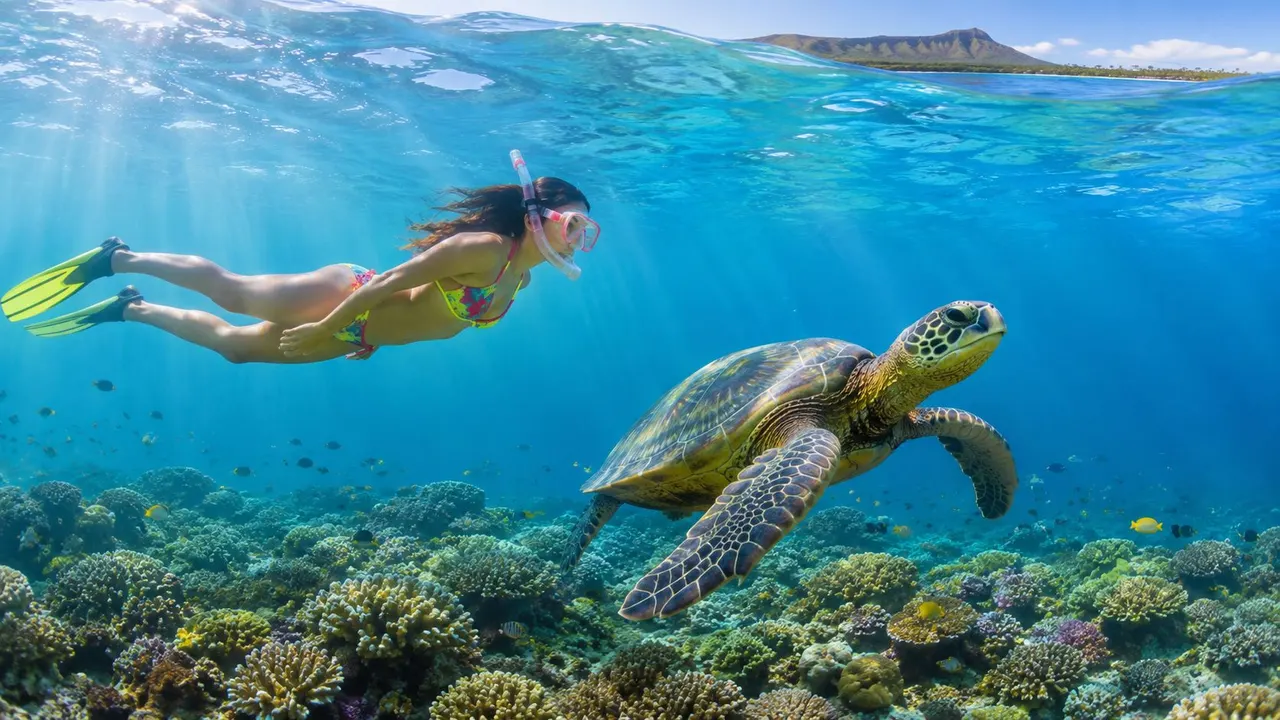
You're standing on the beach in Waikiki with your gear bag, the kids are already asking about turtles, and the water looks calm enough to trust. That's the moment when thoughts turn to Honolulu snorkeling, not as a postcard fantasy, but as something you want to do well, safely, and without wasting a vacation day on guesswork. The good news is that a great snorkel day here is absolutely within reach, if you choose the right spot, the right timing, and the right level of support.
Your Honolulu Snorkeling Adventure Awaits
A lot of first-time visitors land in Honolulu with the same image in mind, blue water, a sea turtle gliding past, and a relaxed day that feels easy from start to finish. That vision is real, but it works best when people treat the ocean like an active environment, not a swimming pool. The families who have the smoothest days are usually the ones who plan a little, keep expectations practical, and pick conditions that match their comfort in the water.
The data behind Honolulu snorkeling makes that planning matter. Hawaii Department of Health figures reported by Civil Beat show that from 2007 to 2016, 169 of 650 ocean drownings were snorkeling-related, and 156 of those deaths were tourists. Another Civil Beat report found 204 snorkeling-related deaths in Hawaiʻi from 2012 to 2021, with 184 tourists, which is about 90% of the fatalities (VOA report on Hawaii snorkel tourist drownings, Civil Beat on the Snorkel Safety Study). Those numbers do not mean snorkeling should scare you off. They do mean it deserves the same respect you'd give any ocean activity with currents, surf, and breathing equipment.
Practical rule: The safest snorkel day is usually the one where everyone stays comfortable, supervised, and conservative about conditions.
That's especially true for visitors around Waikiki and nearby Oʻahu reefs, where many snorkelers are first-timers or casual swimmers unfamiliar with surf, currents, and gear. This guide keeps the focus on what works in the water, where to go, how to avoid common mistakes, and how to see turtles without creating stress for them. If you want to move from “I hope this goes well” to “I know what to do,” you're in the right place.
Where to Snorkel in Honolulu Top Spots for Every Skill Level
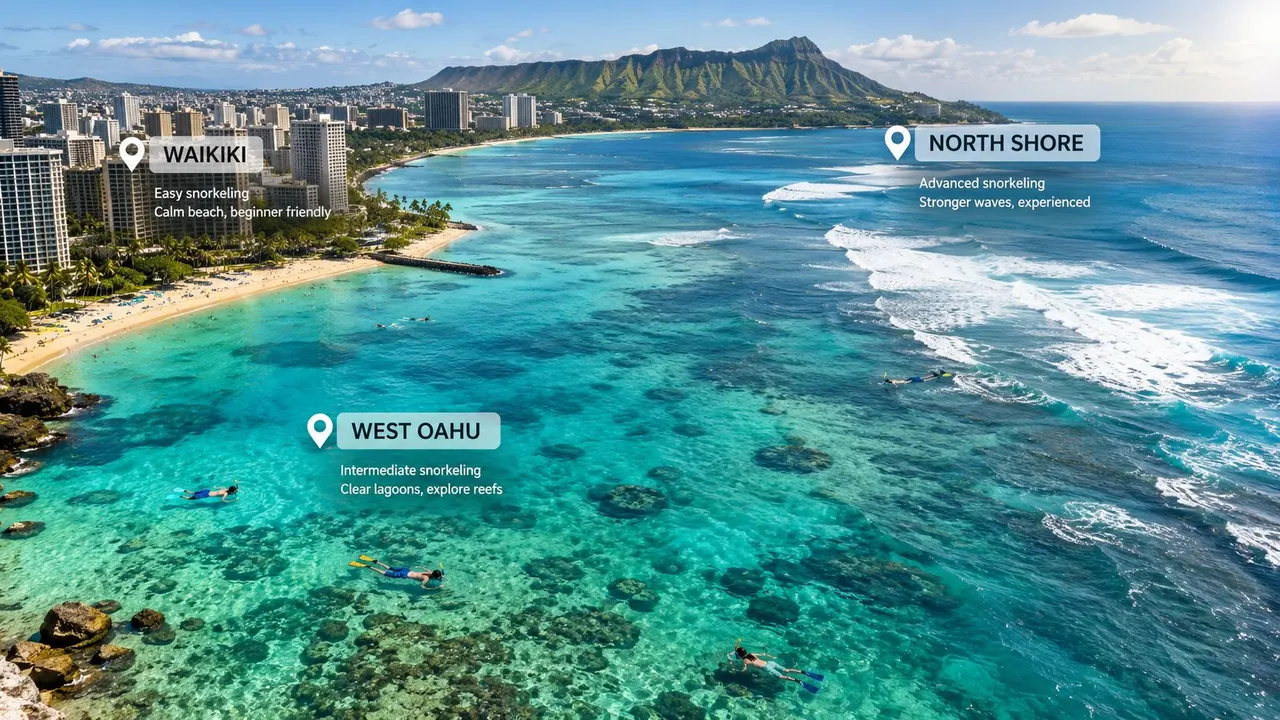
Honolulu snorkeling works best when you stop treating Oʻahu as one uniform shoreline. The island's Waikiki and Honolulu zone, West Oʻahu, and North Shore behave differently in the water, and the right choice depends on your skill, your group, and the day's conditions. Independent guides separate those areas for a reason. A calm, easy reef in one region can feel very different from another spot a few miles away (Oahu snorkel sites overview).
Waikiki and Honolulu for convenience and beginner access
Hanauma Bay Nature Preserve is the classic organized option. It requires a reservation, charges $25 per person in one recent guide, and is open Wednesday through Sunday from 6:45 a.m. to 4:00 p.m.. Another source notes that the bay closes on Tuesdays so the fish and bay can rest (Hanauma Bay guide). That structure helps many beginners, but it also means planning ahead and accepting that you are following the preserve's schedule, not your own.
Waikiki-area snorkeling appeals to families because access is simple, but simple access does not automatically mean simple water. The area can be a good fit for a cautious snorkel, yet it also draws crowds and casual swimmers who may be learning on the fly. Visitors who want an easier entry point without overcomplicating the day often find Waikiki the most practical base.
North Shore for seasonal reef variety
The North Shore gives you places like Shark's Cove and Three Tables, which are repeatedly listed as distinct snorkel zones with their own conditions and access patterns (Oahu snorkel sites overview). Shark's Cove is famous, but it is not a lazy beach entry. It has rocky structure and the kind of underwater terrain that rewards confident swimmers when the water is calm. In winter, that same coastline can become a poor choice for casual snorkelers.
West Oʻahu for stronger swimmers
Electric Beach, also called Kahe Point, is another well-known Oʻahu site, and it usually attracts snorkelers who are comfortable covering more water and handling changing conditions. The appeal is the marine life, not the ease. If someone in your group gets anxious in open water, this is not the place to experiment.
For a site that is offshore rather than beach-based, Turtle Canyon is about 500 meters offshore on the outer edge of the Waikiki reef, which is why it is a boat-access destination rather than a casual shore snorkel (Reddit discussion of Oʻahu snorkeling locations). If you want the comfort of guided access and a destination built around turtles, that distance matters.
The best spot is the one that fits the water skills in your group that day.
For readers who want a broader planning overview of Oʻahu snorkel zones, this island breakdown pairs well with this Oʻahu snorkeling guide. It is the simplest way to compare where each area shines and where each one asks more from the swimmer.
Guided Tours vs DIY Snorkeling What's Right for You
A lot of people start by assuming DIY is cheaper and easier. In practice, the work starts before anyone gets in the water. You still have to handle parking, timing, gear fit, weather judgment, and whether the spot you picked matches the ocean that day. A guided trip removes much of that friction, which is why many families and first-timers prefer it even if they are comfortable in the water.
Living Ocean Tours is a well-regarded snorkel company on Oahu, and that matters because guided snorkeling is as much a logistics and safety choice as it is a sightseeing choice. Their tours handle instruction, equipment, and site selection, which helps if you would rather spend your vacation snorkeling than sorting out masks and surf. They also run trips to less crowded water, including Turtle Canyon, which is harder to reach from shore.
| Factor | DIY Snorkeling, for example Hanauma Bay | Guided Tour, for example Living Ocean Tours |
|---|---|---|
| Access | You handle reservations, parking, and timing yourself | The operator handles departure timing and route planning |
| Safety support | You rely on your own judgment and the beach conditions | You get professional instruction and in-water supervision |
| Gear | You bring your own or rent on site | Gear is provided and fitted for the trip |
| Site choice | Limited to places you can reach on your own | Access can include offshore locations like Turtle Canyon |
| Stress level | Higher for beginners, especially with kids | Lower because the crew manages the moving parts |
| Experience quality | Can be excellent if conditions are right | More consistent for families and first-timers |
DIY still makes sense for confident swimmers who know Oʻahu well and want flexibility. The trade-off is simple. You are responsible for every decision, including whether the water looks good enough to enter. Guided tours work better when the goal is a dependable day, not a self-managed project.
A Waikiki snorkel tour can be a practical middle ground if you want the structure of a guided trip without giving up the relaxed feel of a beach day. If you want fewer unknowns, that route usually gives you more comfort and confidence than trying to piece the day together yourself.
If you are comparing options for a family day on the water, the Deluxe Waikiki Snorkeling and Wildlife Cruise is worth a look because it keeps the day organized without making it feel rigid. For current details, visit the Waikiki snorkeling tour page.
Encountering Marine Life Snorkeling with Turtles at Turtle Canyon
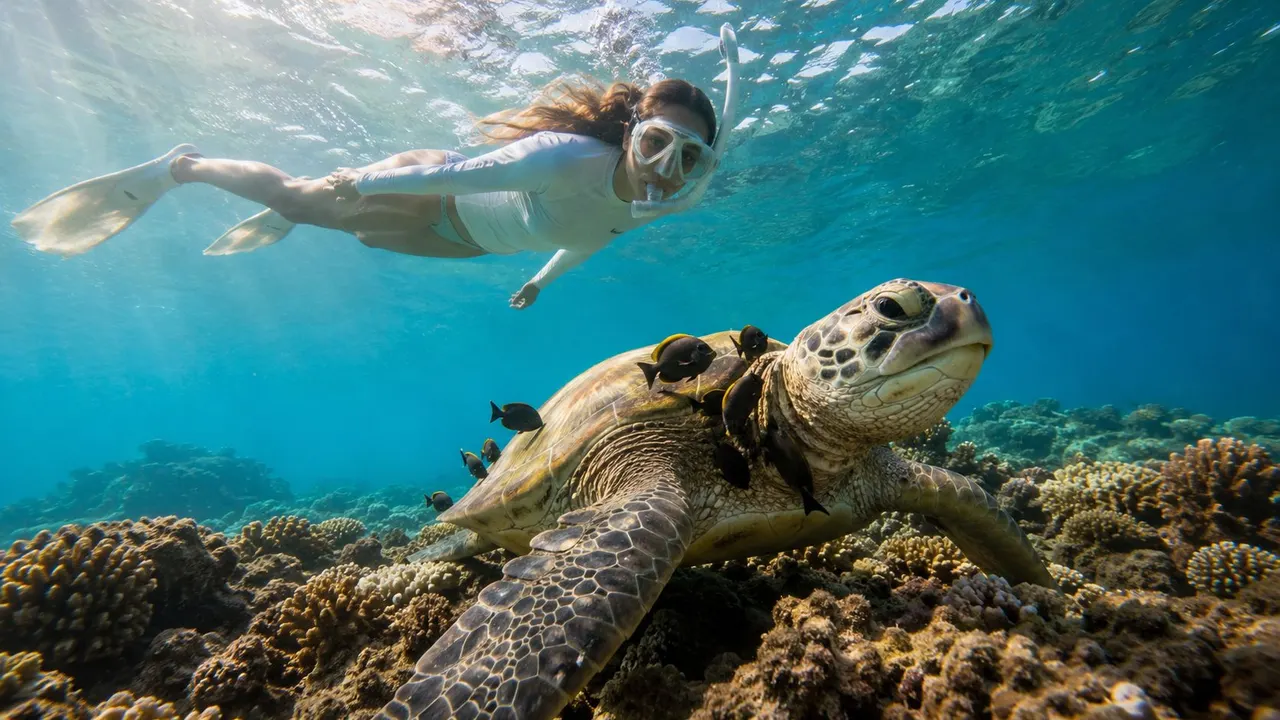
Turtle Canyon is one of the places people mean when they say they want a real turtle day, not just a beach day with a hopeful glance offshore. It sits about 500 meters offshore on the outer edge of the Waikiki reef, which makes it a boat-access spot rather than a shore swim (Oʻahu snorkeling locations discussion). That offshore location is part of the appeal. It puts you in open, cleaner water and away from the chaos of crowded beach entries.
How to snorkel around turtles responsibly
Hawaiian green sea turtles are federally protected, and tour guidance for Turtle Canyon says they should be kept at least 10 feet away (Turtle Canyon FAQ). That distance is not a suggestion. It protects the animal, keeps the encounter calm, and gives everyone in the water a better view.
The practical rules are simple. Do not touch turtles. Do not chase them. Do not corner them. If one turns away, you're already too close. If a turtle is resting or swimming steadily, let it do its thing and keep your position neutral.
Respectful snorkeling is quieter, slower, and usually more memorable.
That same stewardship mindset matters for the reef itself. Hawaii's official guidance says not to feed fish or turtles and never stand on coral, which is especially important for travelers who are used to treating reef shallows like a beach path (Hawaii snorkeling safety guidance). Coral doesn't recover fast from being stepped on, and a turtle that's trying to rest shouldn't have to dodge someone trying to get a better selfie.
If turtle encounters are the main reason you're booking, a boat-based excursion gives you the best mix of access and control. You're not guessing at entry points or currents, and you're not pushing through surf with a mask in hand. You're arriving where the turtles are, then watching them in a way that keeps the encounter calm for everyone.
For travelers who want the specific turtle-focused outing, see the Turtle Canyons Snorkel Excursion. If you want the rule set in plain language before you go, these Hawaii turtle snorkeling rules are the right place to start.
A Practical Guide to Honolulu Snorkeling Safety
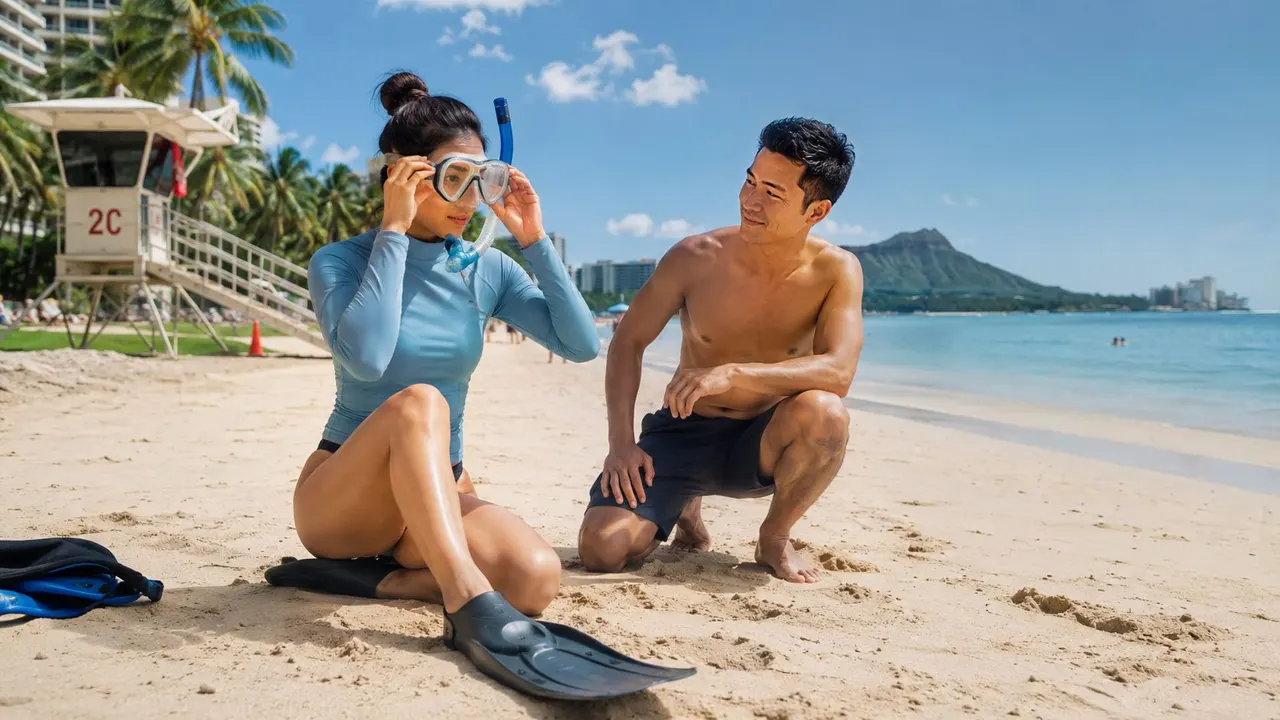
A calm-looking reef can hide a bad day for an unprepared snorkeler. The warning signs usually start before the water gets rough. A mask that leaks, a snorkel that feels hard to breathe through, or a swimmer who is already tired at the shoreline can turn a simple outing into a rescue situation.
Hawaiʻi's snorkeling risk has drawn real attention because tourist incidents show up again and again in safety reports. A VOA report on Hawaii snorkel tourist drownings noted that snorkeling-related deaths were a large share of ocean drownings in the state, with tourists making up most of those deaths (VOA report on Hawaii snorkel tourist drownings). Civil Beat later reported that snorkeling deaths continued to be a serious concern, with tourists accounting for most of the cases in the study they covered (Civil Beat on the Snorkel Safety Study). The practical lesson is simple, you need a plan before your face goes in the water.
What actually goes wrong
The safety study highlighted rapid onset pulmonary edema, or ROPE, as one of the mechanisms linked to fatal and near-fatal incidents, and it also pointed to breathing resistance in some snorkels as a possible risk factor (Civil Beat on the Snorkel Safety Study). That matters because a snorkeler can feel fine at the surface and still become short of breath quickly if the gear is wrong or the swimmer is pushing too hard. If a snorkel feels tight, difficult to clear, or strangely tiring to breathe through, stop using it.
Hawaiʻi's official snorkeling guidance says to use a well-fitting mask, anti-fog treatment, snug fins, and flotation, and to exit right away if you feel dizziness, disorientation, headache, chest tightness, or worsening breathing (Hawaii snorkeling safety guidance). Those symptoms are not something to ignore or “work through.” They are the point where a short swim can turn into a problem that needs immediate attention.
A lot of trouble starts with gear that looks fine on land but fails in the water. A mask that pinches, a fin strap that rubs, or a snorkel tube that is too restrictive will wear a beginner down fast. For families, the safest setup is the one that reduces effort, keeps breathing easy, and lets each person stay relaxed instead of fighting equipment.
The habits that keep people safe
- Snorkel with supervision: A confident swimmer is not automatically a safe snorkeler. A guide or buddy can notice a slow drift, a panicked breathing pattern, or a mask issue before it becomes serious.
- Use flotation early: Float belts and vests reduce fatigue and help beginners stay calm while they learn how to breathe, clear a mask, and turn back without rushing.
- Match the site to the swimmer: A sheltered cove that works for one person can still be too much for another. Choose the easier site, especially for kids, older guests, and anyone new to the ocean.
- Stop before fatigue takes over: Heavy breathing, shaky legs, and a rising urge to “just get back” are warning signs. End the swim while you still feel in control.
- Stay honest about conditions: If the surface chop, surge, or visibility looks off, wait. A better day in Hawaiʻi is always another option.
If someone starts feeling off, exit early and sort it out on shore. The ocean does not reward stubbornness.
A simple buddy-safety refresher can help before you go, and this snorkeling safety guide lays out the basics in plain language. That kind of review is especially useful for parents, beginners, and anyone snorkeling for the first time in Hawaiʻi.
Guided trips have a real advantage because the crew can watch the water, fit gear properly, and make the call before a small issue turns into a bad one. That support matters most when you have new snorkelers, nervous swimmers, or a mixed-age group that needs different levels of help in the same outing.
Planning Your Perfect Snorkel Day Gear Timing and Seasons
The easiest way to improve a snorkel day is to respect timing. For Honolulu and Waikiki snorkeling, morning departures from about 7:00 to 10:00 a.m. are the most favorable window because wave action is usually lower and the sun angle improves underwater visibility (Living Ocean Tours timing guidance). That's not just about prettier water. It changes how clearly you can see reef structure, fish movement, and other snorkelers around you.
What to bring and what to leave to the boat
A good snorkel bag doesn't need to be complicated. Rash guards, reef-safe sunscreen, a towel, water, and a dry change of clothes cover most of what matters on a simple outing. If you're on a guided trip, gear is often part of the package, which saves you from figuring out fit and condition on your own.
Bring less gear, but better habits. Sun protection and hydration matter more than extra gadgets.
The best season for Honolulu snorkeling is commonly identified as May through September, when summer conditions are calmer and visibility tends to be better (best snorkeling in Oʻahu guide). That doesn't mean winter is off-limits, but it does mean summer is the cleaner planning choice for beginners and families. If you can choose your travel dates, that window gives you the friendliest starting conditions.
Winter changes the playbook
When the winter swell builds, snorkeling plans need a backup. Some sites get rough, others become less predictable, and shore access can turn from convenient to frustrating fast. That's when people often pivot to a different ocean experience instead of forcing a snorkel day that isn't set up to succeed.
If you're visiting between January and March, whale watching becomes the natural add-on or substitute. Living Ocean Tours runs a seasonal whale watching tour, which fits the winter ocean calendar better than trying to make every calm-water snorkel spot work on a rough day. The water still has plenty to offer, but the smartest itinerary is the one that matches the season.
For gear planning and rental details, this Oʻahu snorkel gear page is a practical reference before you pack.
Honolulu Snorkeling Frequently Asked Questions
Is Honolulu snorkeling safe for kids?
It can be, if the water is calm, supervision is close, and the group picks an easy site or a guided trip. Kids do best when they have flotation, proper mask fit, and adults who are focused on them instead of the scenery.
I'm not a strong swimmer, can I still snorkel?
Yes, but only in the right conditions. Use flotation, stay close to supervision, and choose a setting where you can stand, rest, or exit easily. A guided tour is usually the better move because the crew can help you stay relaxed and avoid overexertion.
What happens if the weather is bad on the day of my tour?
A responsible operator adjusts the plan. Ocean conditions come first, because a good snorkel day depends on calm enough water, clear visibility, and a safe route in and out. If the sea changes, flexibility protects the experience.
What is your turtle sighting success rate?
Turtle sightings are common in the right locations, especially around Turtle Canyon, but wildlife is never guaranteed. The honest answer is that a well-chosen site and a knowledgeable crew improve your odds, while still respecting the fact that turtles are wild animals.
Should I book DIY or go with a tour if this is my first time?
For most first-timers, a guided trip is the easier path. You get gear, instruction, and someone who can read conditions in real time, which removes a lot of unnecessary pressure.
What's the biggest mistake beginners make?
They keep snorkeling after they feel tired, uncomfortable, or short of breath. The ocean doesn't reward stubbornness. The right move is to stop early, regroup, and enjoy the day without pushing past comfort.
If you want a calm, well-run day on the water, Living Ocean Tours is built for that kind of Honolulu snorkeling experience, with gear, instruction, and access to offshore turtle waters that are hard to reach on your own. Visit Living Ocean Tours to check current snorkel options, compare trips, and book the one that fits your group and your comfort level.


