
Hawaii Turtle Tours Honolulu HI: A Local’s Guide
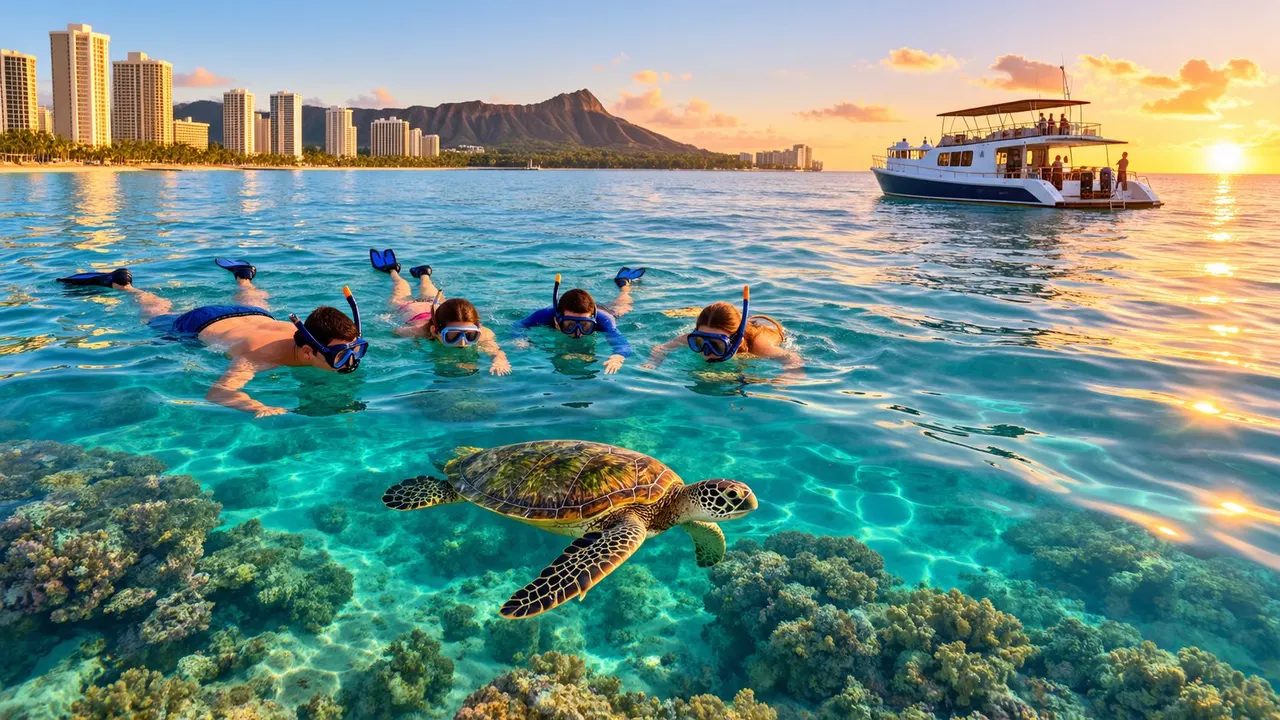
You're probably comparing Honolulu turtle tours from a Waikiki hotel room, trying to work out which boat is genuinely comfortable for your family and whether “snorkeling with turtles” means chasing animals through the reef. The honest answer starts after the sighting. A good trip is defined by what guests do in the 90 seconds after a honu appears, not by how close a guide can bring swimmers.
Most turtle excursions leave from Kewalo Basin Boat Harbor, south of Waikiki. Conditions, swimming ability, crew control, and wildlife etiquette matter more than a glossy promise of guaranteed proximity. This local guide follows a typical morning from the dock to the water, then explains how to choose a tour that protects both your holiday and the turtles.
A Morning at Kewalo Basin With a Honolulu Turtle Crew
Before sunrise clears Diamond Head, Kewalo Basin has the steady rhythm of a working harbor. Families arrive with towels over their shoulders, grandparents check meeting details on their phones, and first-time snorkelers wonder whether they chose the right shoes. Salt, fuel, and breakfast from town mix in the morning air.
Kewalo Basin Boat Harbor sits between Ala Moana and Waikiki, making the departure convenient, though parking and the walk to the boat still take time. Check the confirmation for the exact slip, arrive early for an unhurried boarding, and wear your swimsuit under your clothes if you are coming directly from a hotel.
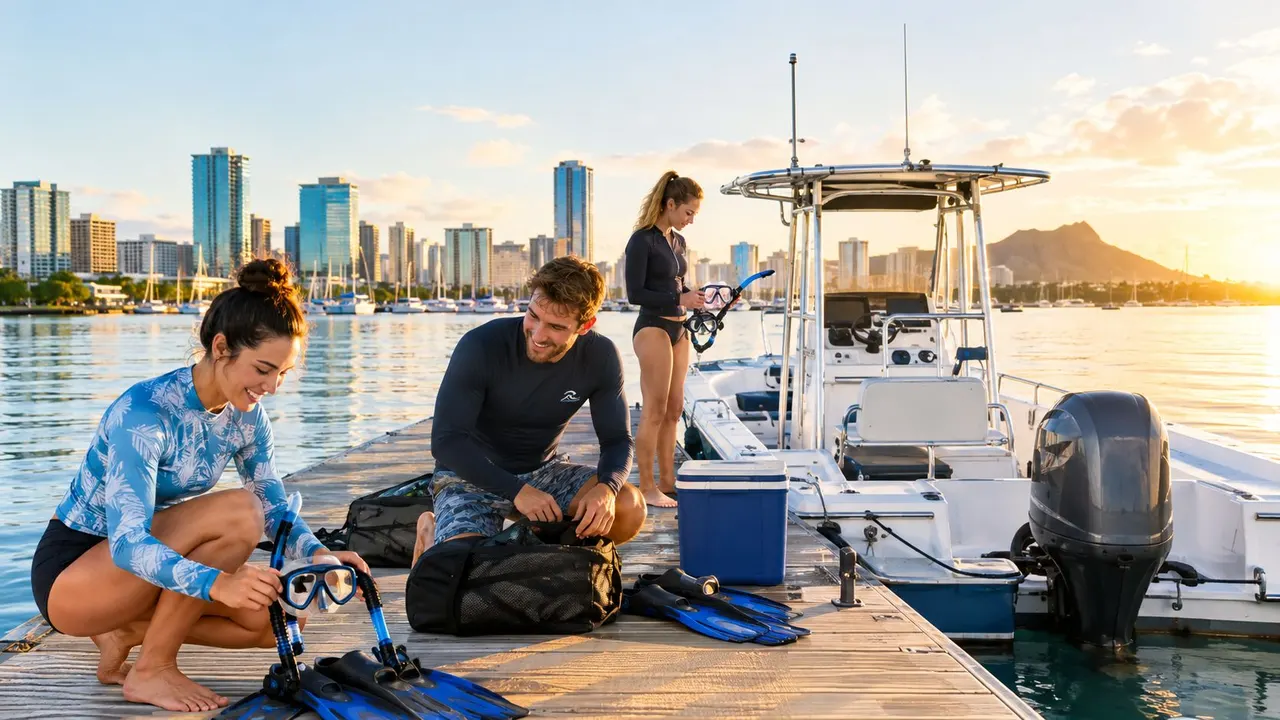
Living Ocean Tours runs daily Kewalo Basin departures with a captain and in-water guides included. The morning follows a practical sequence: check in at the boat, meet the crew, fit the equipment, and listen to the instructions before heading offshore. Good turtle viewing starts with that preparation.
What the first part of the morning feels like
The safety briefing covers the boarding ladder, flotation equipment, seating, and reboarding procedure. Guides explain the signals they will use when a turtle is nearby. It may feel routine while everyone is eager to leave, yet those details matter when a nervous swimmer needs assistance or a honu surfaces below the group.
After the harbor wall falls behind, Waikiki changes character. Hotel towers remain astern, the water opens up, and Diamond Head may still sit in shadow. While the captain assesses the sea surface, guides check masks, snorkels, fins, and flotation support.
The crew's response after a sighting shapes the experience. Guests should stop, control their breathing, and follow the guide rather than rush toward the animal. The best view often comes from holding position and letting the turtle set the distance.
For a closer look at the people operating these trips, see the Living Ocean Tours boat crew.
| Detail | Typical Setup |
|---|---|
| Meeting area | Kewalo Basin Boat Harbor near Waikiki |
| Arrival | Early enough for check-in, gear fitting, and the safety briefing |
| Onboard team | Captain plus in-water guides |
| Equipment | Mask, snorkel, fins, and flotation support as appropriate |
| First expectation | Observing turtles from a respectful distance |
Captain's rule: If you're still trying to find the meeting slip when boarding begins, the morning already feels harder than it needs to.
The ride out gives the crew time to assess wind, swell, visibility, and the group's comfort in the water. A responsible captain may adjust the route or shorten the swim when conditions change. That decision protects guests, keeps the crew in control, and respects the limits of an ocean departure from Kewalo Basin.
Why Honu Are Worth the Boat Ride From Waikiki
The Hawaiian green sea turtle, or honu, is more than a colorful animal added to a Waikiki itinerary. Honu provide the ecological and historical foundation for turtle-viewing experiences around Honolulu and Oahu. The population also carries a recovery story that makes a respectful sighting meaningful.
In 1973, only 67 nesting turtles were recorded at monitored sites, according to Hawaii's sea turtle conservation information. Over the last two decades, the nesting population has recovered at an estimated average rate of about 5% per year, with almost 500 females nesting annually at monitored sites. A NOAA-reviewed demographic analysis reports a longer-term increase of approximately 5.4% annually since 1973, while warning that annual nesting-female counts fluctuate and shouldn't be read as a perfectly smooth climb.
Those figures don't mean the conservation problem is over. NOAA describes fewer than 4,000 total nesting females in the isolated Central North Pacific population, and Hawaiian green turtles remain federally listed as threatened. The recovery reflects federal and state protections, habitat safeguards, scientific monitoring, and restrictions on activities that harm or disturb turtles.
A turtle near Oahu belongs to a much larger migration story
Most Hawaiian green turtles migrate roughly 800 miles north to mate and nest in the Northwestern Hawaiian Islands, particularly at French Frigate Shoals, according to Hawaii wildlife guidance. Adults and juveniles forage and rest around the main Hawaiian Islands, including Oahu, which is why visitors may encounter them at reefs and cleaning sites near Honolulu.
NOAA identifies the Hawaiian green turtle as a distinct population segment under the federal Endangered Species Act. That status changes the meaning of the encounter. A turtle resting on the reef isn't a prop waiting for a photograph. It's a protected wild animal using habitat that visitors happen to share.
The practical result is simple. A Honolulu turtle tour should teach observation rather than interaction. The boat ride from Waikiki is worthwhile because it puts guests near a living conservation success story, not because it gives anyone permission to touch, feed, pursue, or restrain an animal.
For a deeper look at the local experience, explore this guide to turtle snorkeling on Oahu. The important distinction is proximity versus behavior. A turtle that remains calm and continues its normal movement is a better sign than a swimmer who manages to get close enough for a dramatic but stressful photograph.
What Actually Happens on a Honolulu Turtle Tour
A Turtle Canyons morning usually feels straightforward once you know the sequence. You leave Kewalo Basin, travel south past Waikiki, prepare on deck, enter with assistance, and drift over reef habitat where turtles may rest or visit cleaning stations. The details between those steps determine whether a first-time snorkeler feels confident.
From harbor to the water
The boat ride to the Turtle Canyons area takes roughly 10 to 15 minutes, depending on the route and conditions. During that time, the captain gives the turtle briefing, and the guides fit each guest with a mask, snorkel, fins, and optional flotation vest.
A good mask should seal without being painfully tight. The snorkel needs to sit comfortably, and fins should stay secure without cramping. If you're new to snorkeling, tell the guide before you enter the water. A short explanation on the boat can prevent panic at the ladder.
The in-water lesson is simple. Roll or step in as directed, establish your breathing, find a comfortable body position, and stay with the guide. You don't need to perform a strong swim stroke to enjoy the view, but you do need to follow instructions and remain comfortable in the water.
The part guests remember
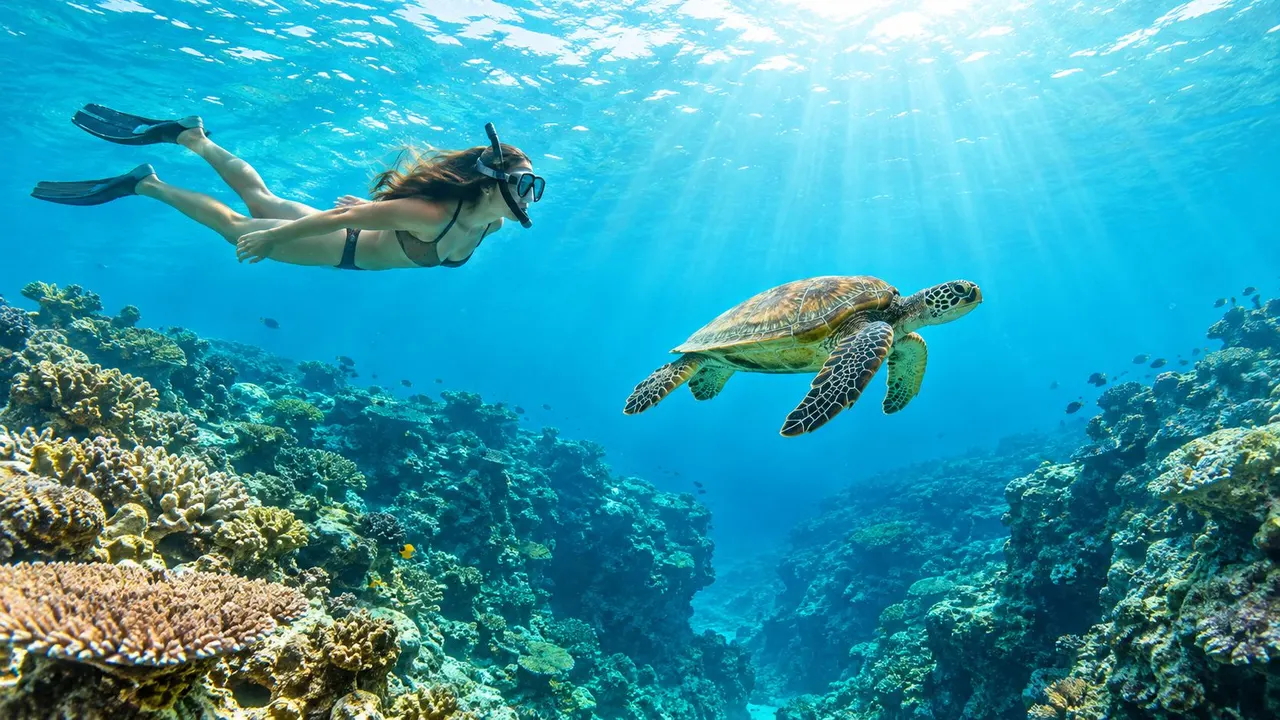
At the reef, guides scan beneath the boat and communicate when a turtle is in view. They may point, use hand signals, or direct the group's attention without sending everyone into a scramble. The best guides move swimmers laterally and keep the group from forming a ring around one animal.
You'll spend the water time floating, looking down, and adjusting to the surface. Some guests focus on reef fish first. Others need a few minutes before their breathing settles. The crew watches the group as closely as it watches the wildlife, especially when a child or nervous adult needs help.
The return to the boat is usually a controlled drift rather than a race. When a turtle disappears into deeper water, the guide may continue scanning or bring attention to another safe viewing opportunity. There's no responsible way to promise that an animal will appear on a schedule.
See the Turtle Canyons snorkeling experience for the excursion details, then read the conditions and participation information before booking.
When the ocean changes the plan
Wind can roughen the surface, current can make a site uncomfortable, and visibility can deteriorate. A captain may reroute, reduce water time, or return early if the group's safety requires it. Families often judge a changed itinerary as a failure, but forcing a site visit would be the worse decision.
A good captain changes the plan before the guests have to discover why the original plan no longer works.
The 10-Foot Rule and How to Behave Around a Turtle
Someone calls out, “Turtle.” In the next 90 seconds, the group's response determines whether the encounter stays calm. Stop kicking, lower the excitement, and let the guide organize the swimmers before anyone moves closer.
NOAA Fisheries recommends viewing Hawaiian green sea turtles from at least 10 feet, or 3 meters, away, on land and in the water. The guidance also prohibits touching, feeding, chasing, riding, and blocking a turtle's path. Use camera zoom instead of reducing the distance.
The 90-second script
For the first few seconds, float in place and locate the turtle without advancing. Stay to the side rather than approaching head-on, and leave a clear route between the animal and open water. A Kewalo Basin crew may spread the group laterally or ask swimmers to hold position while the captain assesses the animal's direction and the boat's position.
If the turtle swims toward you, keep your hands down and allow it to choose its course. A close approach still becomes your responsibility, even when the turtle initiates the movement. If it changes direction, dives abruptly, or repeatedly tries to leave, create more space at once.
Use the camera's zoom. A distant image that captures natural movement records a better encounter than a close photograph made during a pursuit. Give children one instruction they can remember: look, float, and don't follow.
The same conduct applies on shore. Keep clear of a basking turtle, leave its route to the water open, and avoid gathering tightly around it. The distance protects the animal and gives it room to behave normally.
What the guide should control
A well-managed group never forms a ring around a honu. Guides should space swimmers across the viewing area, stop anyone pursuing a moving turtle, and prevent guests from drifting between the animal and the boat or shoreline. Observation may last only a few minutes. If the turtle changes its normal behavior, the group should move away.
Review the Hawaii turtle snorkeling rules before departure. Keep this checklist in mind:
- Keep distance: Remain outside the 10-foot, 3-meter viewing radius.
- Protect the route: Do not block, encircle, trap, or chase a turtle.
- Leave contact out: Never touch, feed, ride, restrain, or hold a honu.
- React to movement: If the turtle leaves, stop following and back away slowly.
- Report problems: For an injured, entangled, stranded, or unusually distressed turtle, maintain distance and call the NOAA Marine Wildlife Hotline at (888) 256-9840. NOAA provides that number in its sea turtle reporting guidance.
Success is measured by the turtle's unchanged behavior, and the photo distance is secondary to that.
Family, Beginner, and Accessibility Fit on Oahu
“Family-friendly” isn't a complete answer. A family can include a confident swimmer, a child who has only used a mask in a pool, and an older traveler who enjoys the boat but doesn't want to climb a wet ladder. The right tour matches the sea conditions and the group's actual abilities.
A practical beginner is comfortable in chest-deep water, can breathe through a mask and snorkel, and can use a boat ladder with assistance. That doesn't mean every beginner should enter on every day. Wind, swell, current, water temperature, and the boat's entry design can change the experience quickly.
Match the plan to the least comfortable guest
Ask these questions before you book:
- Water confidence: Can the guest float calmly while wearing a mask, or do they need a guide close by?
- Flotation: Does the operator provide a vest or belt, and will the guest be able to use it without feeling restricted?
- Boat access: Can the guest descend and climb a ladder with assistance?
- Group management: Will a guide stay with less confident swimmers while others explore?
- Backup plan: Can a non-swimmer remain aboard comfortably if they decide not to enter?
A toddler may enjoy the ride and deck views without snorkeling. A grandparent may prefer to watch from the boat. A family day still works when every person participates differently.
Conditions matter more than the label
Protected lagoons with calm, sandy-bottom entries can suit a child's first mask experience, while exposed sites may become inappropriate for young children, beginners, and guests with mobility concerns when wind or surf increases. No responsible operator can guarantee calm water, a particular route, or a turtle encounter.
Postponing is sometimes the smartest choice. A captain who limits water time or changes the route is protecting guests and wildlife, not taking away the experience.
For families who want extra ways to enjoy the boat, the Deluxe Waikiki Snorkel and Wildlife Cruise adds a waterslide, water trampoline, and lily pad. Those features can give children and casual swimmers something enjoyable to do without turning the turtle encounter into a chase.
Accessibility also needs a direct conversation with the operator. Ask about dock access, boarding assistance, ladder design, seating, transfer needs, and whether staff can support the guest safely. Don't rely on a generic age label to answer a mobility question.
Choosing the Right Tour for Your Day in Honolulu
Turtle snorkeling, a family wildlife cruise, a sunset sail, and seasonal whale watching serve different moods. They may share a departure harbor, but they aren't interchangeable bookings.
The Turtle Canyons Snorkel Excursion suits guests whose priority is a guided honu encounter and reef time. The Deluxe Waikiki Snorkel and Wildlife Cruise fits families who want water-play features alongside snorkeling. A sunset cruise works for guests who want coastline views and golden-hour atmosphere rather than a daytime wildlife snorkel.
| Tour | Best For | Departure Area | Kid Friendly |
|---|---|---|---|
| Turtle Canyons Snorkel Excursion | Guests focused on guided turtle snorkeling | Kewalo Basin near Waikiki | Suitable when children meet the operator's water and boat requirements |
| Deluxe Waikiki Snorkel and Wildlife Cruise | Families wanting snorkeling plus a waterslide, water trampoline, and lily pad | Kewalo Basin near Waikiki | A strong fit for children and casual swimmers who enjoy deck activities |
| Waikiki Sunset Cruise | Golden-hour views, BYOB, and cash-bar options | Kewalo Basin near Waikiki | Generally suited to families who prefer a sightseeing sail |
| Waikiki Whale Watching | Seasonal humpback encounters from January through March | Kewalo Basin near Waikiki | Suitable for families comfortable with an offshore boat ride |
Choose by the experience you want
For a classic turtle-focused morning, see the Turtle Canyons Snorkel Excursion. It's the logical choice when snorkeling is the main reason you're getting on the boat.
If your group includes children who may tire of reef viewing, the deluxe option creates more variety. The waterslide and floating features don't replace wildlife etiquette, but they give kids a second reason to enjoy the boat.
The sunset cruise is a different purchase entirely. It's about the changing light, Waikiki's outline, and an easy evening on the water. It shouldn't be chosen as a substitute for turtle snorkeling.
For winter visitors, the Waikiki Whale Watching tour runs during January through March. Humpback viewing has its own wildlife rules and doesn't guarantee the same type of close reef observation as a turtle trip.
Private charters can accommodate up to 40 guests for celebrations, corporate outings, and intimate group experiences. That format offers more control over the day, but the captain still makes the final call on route, water time, and wildlife conduct.
Another option is Snorkel Turtle Canyon, which can be a useful alternative when its departure schedule fits your itinerary better. Compare meeting points, water support, cancellation terms, and the operator's approach to turtle viewing rather than choosing on the promise of closeness alone.
Booking, Pricing, and Why a Locally Rooted Crew Matters
A good booking starts with operational details, not the promise of seeing a turtle. Confirm the Kewalo Basin meeting point, check-in time, route, included equipment, and weather policy. Ask what happens if the ocean turns rough or visibility falls. For beginners, confirm whether flotation support and in-water instruction are included.
Compare prices by what the fee covers. A Honolulu turtle tour may include the boat, captain, snorkel gear, safety briefing, flotation equipment, and in-water guides. A lower price can mean less supervision or fewer options when conditions require a route change.
A crew rooted at Kewalo Basin understands harbor traffic, departure logistics, shifting water conditions, and the reef areas visited regularly by turtles. Local experience cannot promise a sighting. It can help the captain decide when to shorten the route, turn the boat around, or give a nervous swimmer more support. After a turtle appears, the crew's job is to keep guests calm, hold the required distance, and prevent a crowded approach.
Before boarding, ask:
- Where do we meet? Confirm the harbor and slip.
- What should we bring? Pack swimwear, a towel, sun protection, and dry clothes.
- What if the ocean changes? Read the cancellation and weather policy.
- Who needs help? Tell the crew about nervous swimmers, children, mobility concerns, or seasickness before departure.
- What happens around wildlife? Expect distance rules, no contact, and guide-controlled viewing.
If you spot an injured, entangled, stranded, or unusually distressed turtle, do not handle it. Keep your distance, note the location, and use the NOAA Marine Wildlife Hotline at (888) 256-9840.
For a turtle-focused morning from Kewalo Basin, Living Ocean Tours offers guided snorkeling with equipment, instruction, and in-water support built around responsible wildlife viewing. Visit Living Ocean Tours to check the Turtle Canyons schedule and choose a Honolulu boat trip suited to your group and the day's ocean conditions.


