
Turtle Canyon Snorkel Adventure: The Complete Guide
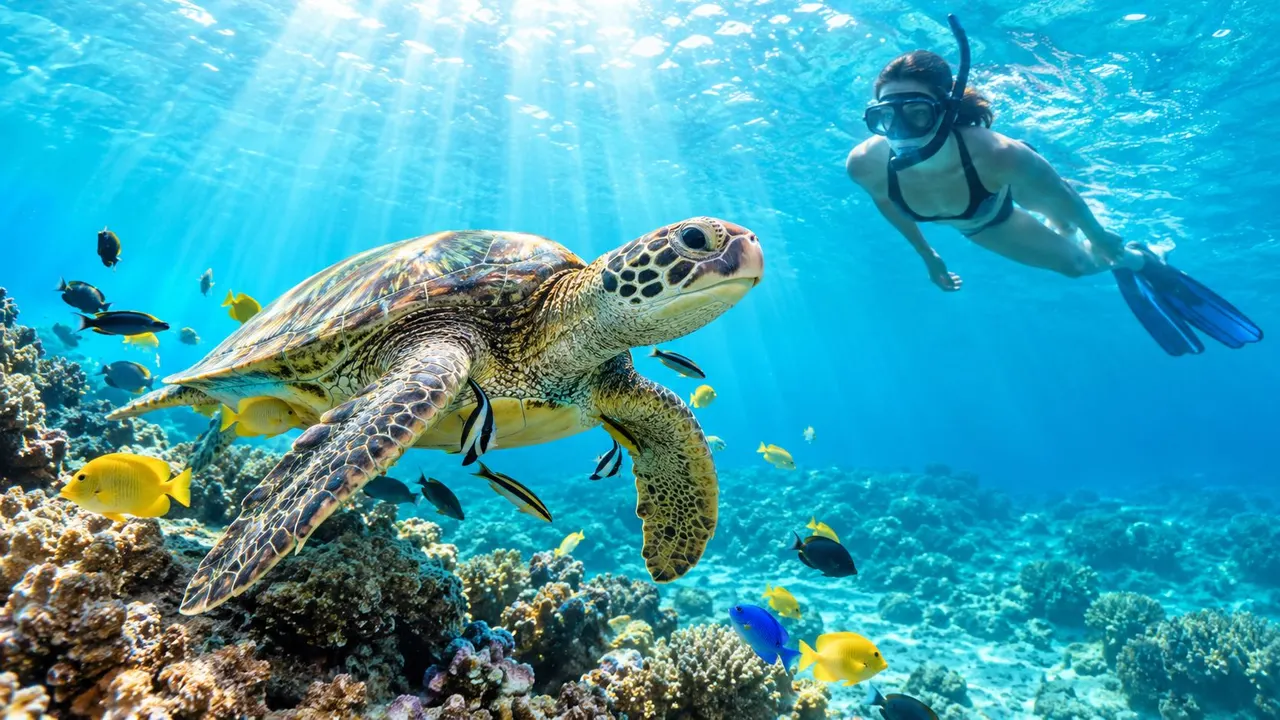
A turtle rises through clear water, pauses while small reef fish work across its shell, then disappears toward the blue. Moments like that explain why a Turtle Canyon snorkel adventure is so memorable, but the best experience starts with knowing who should enter the water, how conditions affect the trip, and how to watch honu without disturbing them.
The Magic of the Turtle Cleaning Station
The first few minutes at Turtle Canyon can feel unusually quiet. The boat eases away, the surface settles, and below you a Hawaiian green sea turtle glides over the reef while smaller fish move around its shell. It isn't performing for visitors. It's using a natural cleaning station, where reef fish remove algae and parasites from its body.
That relationship gives the site its character. Turtle Canyon isn't just a pretty reef with a chance of wildlife passing through. The turtles return to an area that supports a natural part of their daily behavior, which helps explain why local guides describe it as one of Oahu's more consistent locations for turtle encounters. The reef is also shallow enough for clear observation, while the short boat ride keeps the outing manageable for travelers who don't want a full-day ocean expedition.
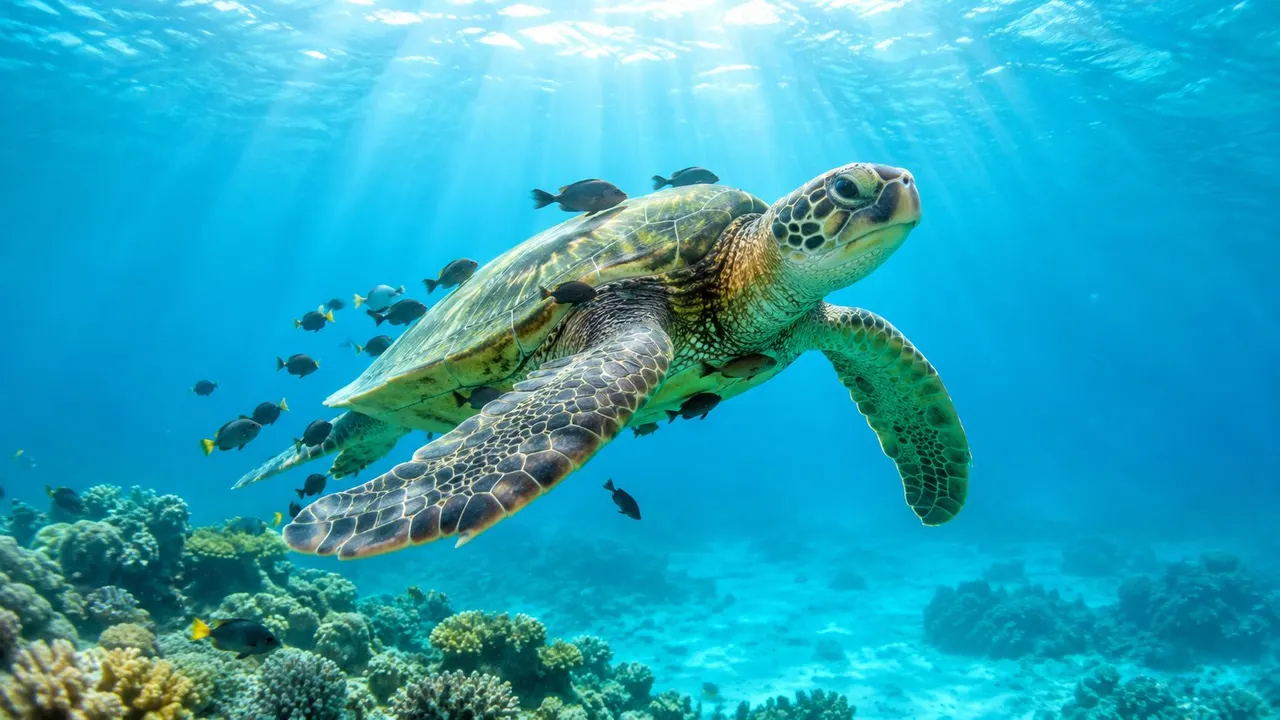
A good guide changes how you experience the scene. Instead of swimming directly toward the largest turtle, you learn to pause, keep your body calm, and let the animal choose its route. You notice the fish cleaning the shell, the turtle's steady breathing pattern, and the way the reef functions as a living habitat rather than a staged attraction.
What makes the encounter feel different
Living Ocean Tours is described as the top rated and most reviewed snorkel company on Oahu, and its guided approach fits travelers who want instruction alongside the wildlife experience. The company's guided Turtle Canyon snorkeling information presents the outing as a structured boat excursion with gear, guidance, and in-water support.
Reviews can help you compare how operators handle communication, equipment, and nervous guests, but they shouldn't replace a clear look at the safety requirements. A five-star experience still depends on your swimming ability, the sea state on the day, and your willingness to follow wildlife rules.
Practical rule: The most rewarding turtle encounter usually comes from staying still, giving the animal room, and watching the reef's behavior instead of trying to force a close view.
Understanding the Turtle Canyon Experience
Turtle Canyon is an offshore, boat-access reef, not a beach snorkeling area. The site is commonly described as about 1 to 2 miles offshore, with a boat ride of roughly 10 to 15 minutes from Kewalo Basin and typical depths of about 10 to 30 feet. Those details are summarized by Living Ocean Tours' Turtle Canyon guide.
That combination explains the site's appeal. You don't need to spend a long time crossing open water, yet you're reaching a reef with enough depth for turtles to move naturally below the boat. Shallow water can also make it easier to see the animals from the surface, although it doesn't turn the ocean into a swimming pool. Depth, current, wind, and comfort in open water still matter.
What the outing usually involves
A typical Turtle Canyon trip works best when you think of it as a short guided ocean outing rather than an isolated swim.
- Boat access: You check in at the harbor, board the vessel, and travel to the offshore reef. Turtle Canyon can't be reached from shore, so a boat is necessary. Turtle Canyon's boat-access geography is outlined here.
- Preparation: The crew explains how to use the mask and snorkel, reviews wildlife etiquette, and helps guests prepare before entering the water. If you're inexperienced, use that time to practice breathing slowly through the snorkel and ask questions about entry and exit procedures.
- In-water observation: Guides help the group identify turtles and maintain appropriate spacing. The goal isn't to chase an animal across the reef. It's to float where you can observe its natural movement.
- Return trip: After the snorkel, you board the boat and return to the harbor. Total tour times commonly run around 2 to 3 hours, with roughly 30 to 60 minutes in the water, according to local trip-planning guidance from Living Ocean Tours.
A shorter itinerary can work well for children, older travelers, and anyone concerned about fatigue. A longer trip may provide more time on the water, but it also creates more exposure to boat motion, sun, and changing conditions. Compare the total duration and actual in-water time rather than choosing by the tour title alone.
The Conservation Story Behind the Snorkel
Seeing a honu at Turtle Canyon carries more meaning when you understand the species' conservation history. Hawaiian green sea turtles are protected in Hawaii, and the population visitors encounter today reflects decades of protection and management after a severe decline.
NOAA reports that the nesting population increased by about 5% per year over the last two decades, reaching almost 500 nesting females annually, compared with 67 nesting turtles in 1973. A separate NOAA review describes the modern breeding population as roughly 4,000 females. These figures appear in NOAA's Hawaiian green sea turtle brochure.
The important lesson isn't that every visitor will see a particular number of turtles. It's that each encounter involves a protected wild animal whose recovery remains connected to human behavior. A snorkeler who gives a turtle space contributes to the conditions that let the animal feed, rest, and surface normally.
A reef interaction, not a wildlife performance
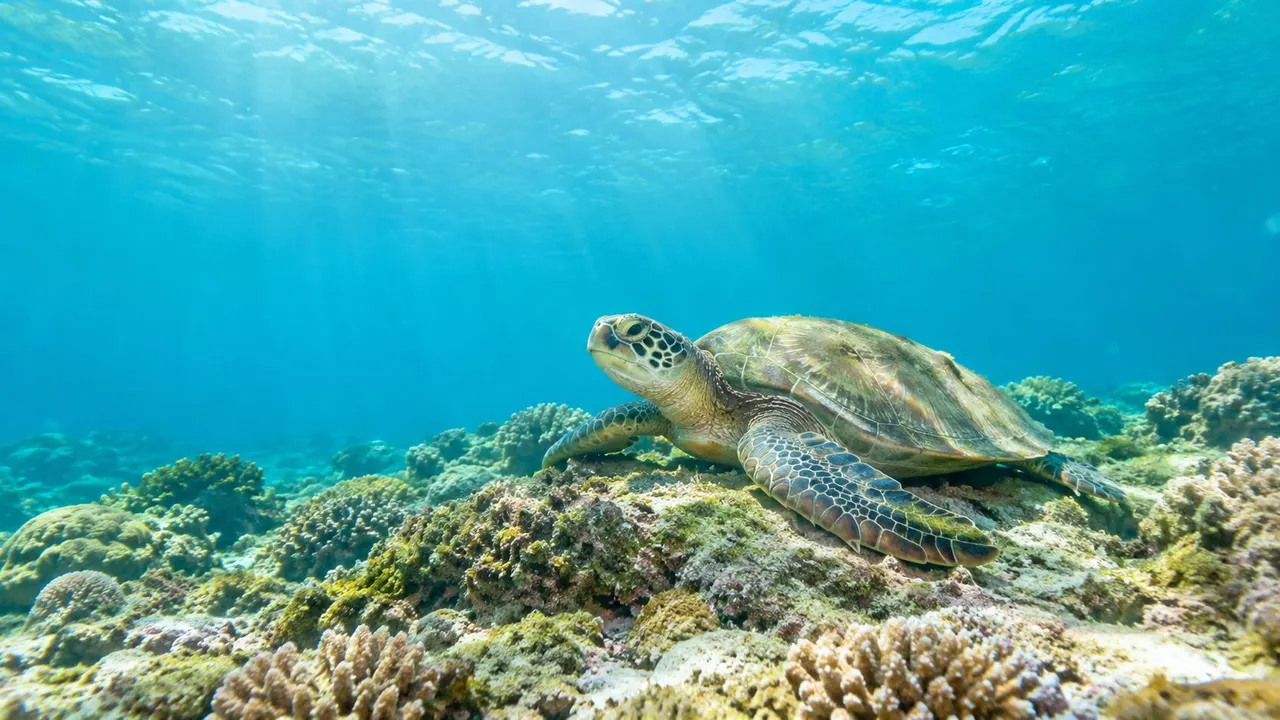
The cleaning station demonstrates how connected the reef is. Reef fish remove algae and debris from the turtles' shells, while the turtles provide access to food for those fish. When visitors rush toward a resting turtle, block its route, or touch its body, they can interrupt that interaction.
That's why responsible operators treat education as part of the excursion rather than a speech added at the end. A guide can explain what the fish are doing, identify when a turtle is trying to surface, and move the group away before excitement becomes harassment. The most valuable memory is not necessarily the closest photograph. It's understanding what you witnessed.
For a deeper look at the location and the wildlife encounter, Living Ocean Tours' Turtle Canyon resource provides additional context. Before booking, look for clear information about wildlife distance, guide supervision, and what happens if conditions make the planned snorkel unsuitable.
Planning Your Departure and Safety
Ocean conditions determine whether a Turtle Canyon snorkel adventure feels smooth or demanding. Hawaii Ocean Safety advises that high surf, high winds, heavy shorebreak, and strong currents are poor conditions for snorkeling, while morning hours are usually preferable because visibility and marine activity are often better. The guidance is available through Hawaii Ocean Safety's snorkeling advice.
Morning isn't a guarantee of calm water, but it's a sensible starting point. Wind and chop can build later, making mask clearing, relaxed breathing, and group control more difficult. A professional crew should assess conditions before guests enter, not just follow a schedule without considering the sea state.
Match the trip to the conditions
Tour formats vary. Some listings describe around 1.5 hours total with approximately 50 minutes in the water, while others describe 2.5 to 3 hours with a longer snorkel window, as noted in Turtle Canyon tour guidance. The longer option isn't automatically better. More water time helps confident swimmers, but it can be tiring for children, first-timers, or guests who become uncomfortable in boat motion.
Use these questions before you reserve:
- Departure time: Is a morning departure available, and how does the operator handle poor visibility or rough water?
- Water time: How long will guests normally spend snorkeling, not just how long will the boat be away?
- Support: Are guides in the water, and what flotation equipment is available?
- Participation limits: What swimming, health, mobility, or age requirements apply?
- Weather policy: What happens if the crew decides that entering the water isn't appropriate?
Pack a swimsuit, towel, reef-conscious sun protection, and a dry change of clothes. If you're prone to seasickness, plan ahead using the approach recommended by your healthcare professional, and tell the crew before departure. Eating lightly, staying hydrated, and choosing a stable position on the boat may also help, but none of these steps replaces an honest conversation about whether you're comfortable on open water.
For comparison, Snorkel Turtle Canyon is a great alternative to evaluate alongside other operators. Compare safety briefings, group management, departure times, cancellation terms, and the amount of actual in-water support, not just the promise of turtle sightings.
Who Should Take This Adventure
“Beginner-friendly” doesn't mean “suitable for every non-swimmer.” Turtle Canyon's shallow reef and short ride can reduce some barriers, but the location is still offshore. Anyone entering the water needs enough swimming ability to remain calm, use the equipment, follow the guide, and return to the boat when instructed.
Independent family guidance makes this distinction clear. Turtle Canyon advice for families notes that non-swimmers shouldn't enter the water and that snorkeling may not be appropriate for guests with certain mobility or health limitations. Flotation support can help a capable swimmer conserve energy, but it doesn't remove the need for basic water competence.
A practical suitability test
A confident swimmer or relaxed casual swimmer is usually better positioned to enjoy the trip than someone who panics when water reaches the face. Before booking, ask yourself:
- Can the participant breathe through a snorkel without immediately removing it?
- Can they float calmly while listening to a guide?
- Can they kick or swim short distances without grabbing another guest?
- Will they follow instructions if a turtle approaches or the current changes?
- Can they climb a boat ladder, or has the operator confirmed another exit option?
Children may be physically capable yet emotionally unready. A child who becomes frightened should have a clear plan: return to the boat with a crew member if the operator permits that arrangement, or remain onboard instead of being pressured to continue. Parents should ask how the crew handles a participant who wants to stop, and whether an adult must accompany the child during the entire in-water portion.
Older adults and multigenerational groups should make the same assessment without relying on the word “shallow.” Open-ocean comfort, balance, stamina, and medical considerations matter more than the reef's depth alone.
The right question isn't “Can this guest stand on the reef?” It's “Can this guest stay calm and follow instructions in moving ocean water?”
Responsible Wildlife Viewing Practices
Turtle Canyon works because it functions as a reef ecosystem, not a feeding area. Hawaiian green turtles use the location as a cleaning station, where reef fish remove algae and debris from their shells. Hawaii's snorkeling guidance emphasizes the behaviors that protect that relationship, including not touching turtles, not feeding wildlife, and not standing on coral.
Keep at least 10 feet away from a Hawaiian green sea turtle. The distance is commonly recommended to reduce harassment, and Hawaii's turtle guidance also notes that these protected animals can grow to about 4 feet and weigh up to 400 pounds.
What respectful viewing looks like
- Hold your position: Let the turtle decide whether it passes nearby. Don't swim toward it for a closer photograph.
- Keep the surface clear: Turtles need to breathe. Never block the route between the animal and open water.
- Use your hands only for swimming: Touching can stress the turtle and interfere with its natural behavior.
- Protect the reef below: Don't stand on coral, even if the water feels shallow. Use controlled kicks and follow the guide's route.
- Skip feeding: Wildlife feeding changes natural behavior and can make animals associate people or boats with food.
These rules benefit the visitor, too. A calm snorkeler sees more detail because the reef fish continue their normal activity. A group that spreads out and avoids chasing creates a quieter viewing environment, which is better for turtles, guides, photographers, and everyone else in the water.
If you want a different format, compare the turtle excursion with other offerings from the same operator. A wildlife cruise or a boat-based experience can suit guests who want to observe marine life without committing to the full in-water portion.
Alternative Excursions and Booking
Not every traveler needs the same ocean day. Families looking for extra play features can consider the Deluxe Waikiki Snorkel and Wildlife Cruise, which includes a waterslide, water trampoline, and lily pad according to the publisher's tour overview. Guests who prefer to remain dry may find a sunset cruise more comfortable, while seasonal whale watching offers a different wildlife focus during January through March.
The Turtle Canyon option remains the clearest fit for travelers who want a guided reef encounter centered on honu and the cleaning-station ecosystem. Compare the departure time, water conditions, in-water support, participation requirements, and cancellation policy before you book. A responsible operator should make those details easy to find.
A well-planned Turtle Canyon snorkel adventure combines a short boat journey, a shallow offshore reef, meaningful conservation context, and practical guidance about who should enter the water. The experience is strongest when guests treat the turtles as protected wildlife rather than attractions and choose a tour that takes sea conditions and swimming ability seriously.
Living Ocean Tours offers guided Turtle Canyon snorkeling with equipment, instruction, and in-water support for guests who meet the participation requirements. Visit Living Ocean Tours to review the turtle excursion and choose a departure that fits your group's comfort, timing, and wildlife-viewing goals.


