
Turtle Canyon Oahu Visitor Guide 2026
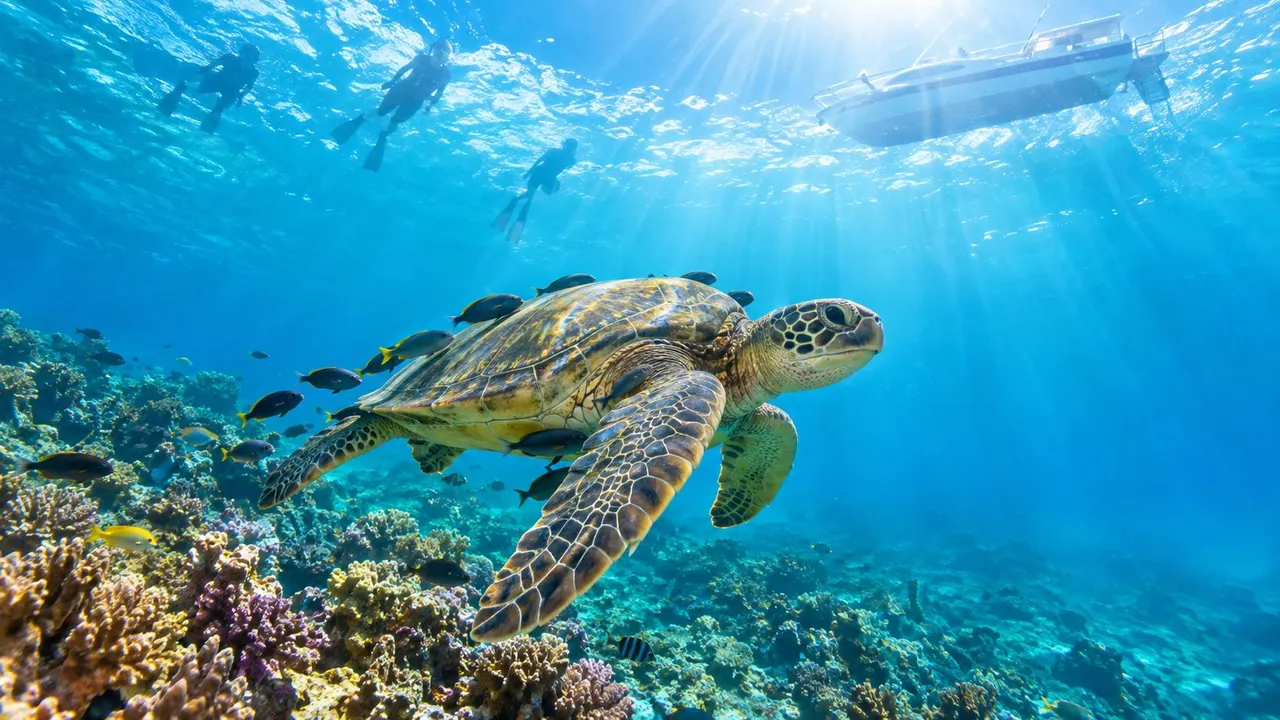
You're in Waikīkī, comparing boat schedules on your phone, while the family argues over who wants to get in the water. The Turtle Canyon Oahu photos look easy: clear blue water, a green sea turtle below, and a short ride from town. The harder decision is less glamorous and more important. Can everyone in your group handle an offshore entry, floating in open water, and climbing back aboard if the conditions change?
I run daily trips along Oahu's south shore, and I've learned that a good Turtle Canyon day depends on matching the reef, the weather, the boat, and your group's ability. The turtles are wild animals, not a scheduled attraction. The strongest trip is the one where guests see natural behavior without crowding the reef or putting themselves in trouble.
What Turtle Canyon Oahu Actually Is
A Waikīkī morning starts at Kewalo Basin, where the skyline sits behind the harbor and the reef lies offshore beyond the beach. Once the boat clears the basin, Turtle Canyon isn't a beach cove or a marked swimming area. It's a nearshore reef system shaped by volcanic-rock ridges, sandy channels, coral heads, and sheltered depressions.
Those formations create places where turtles can rest and where reef fish can work. The commonly snorkeled sections range from roughly 10 to 45 feet, or 3 to 14 meters, according to this overview of Turtle Canyon's reef and snorkeling areas.
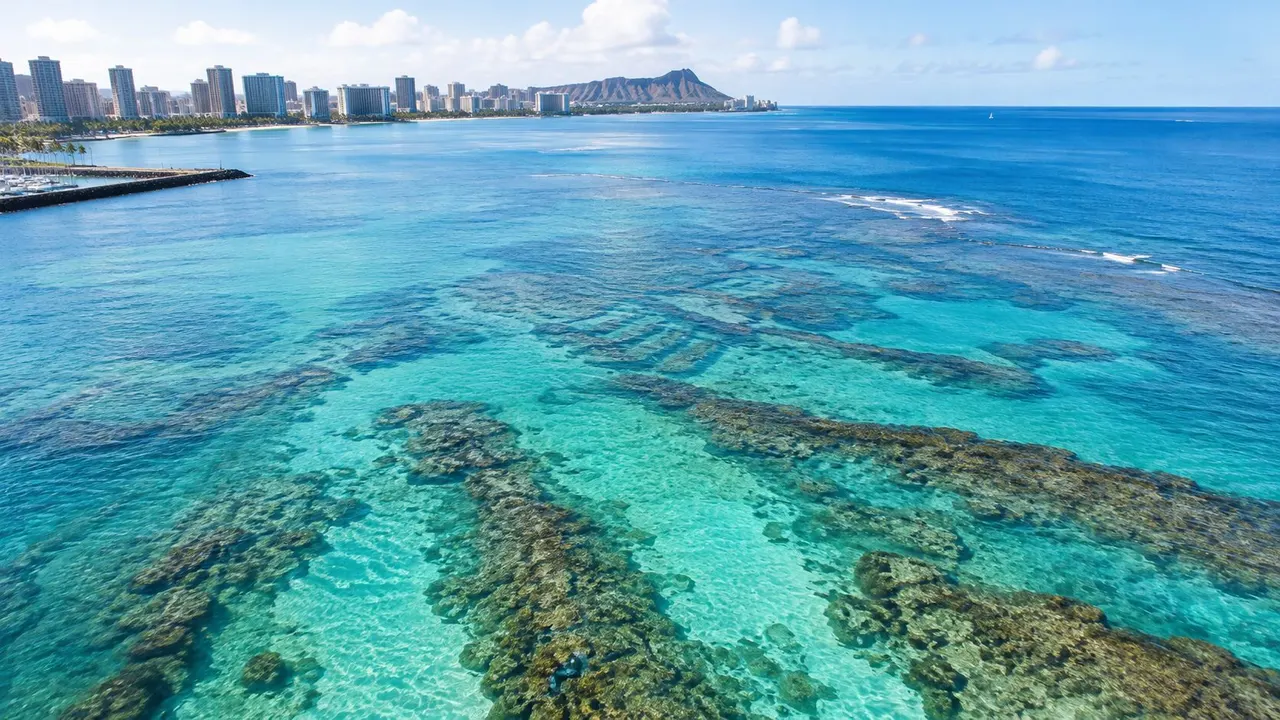
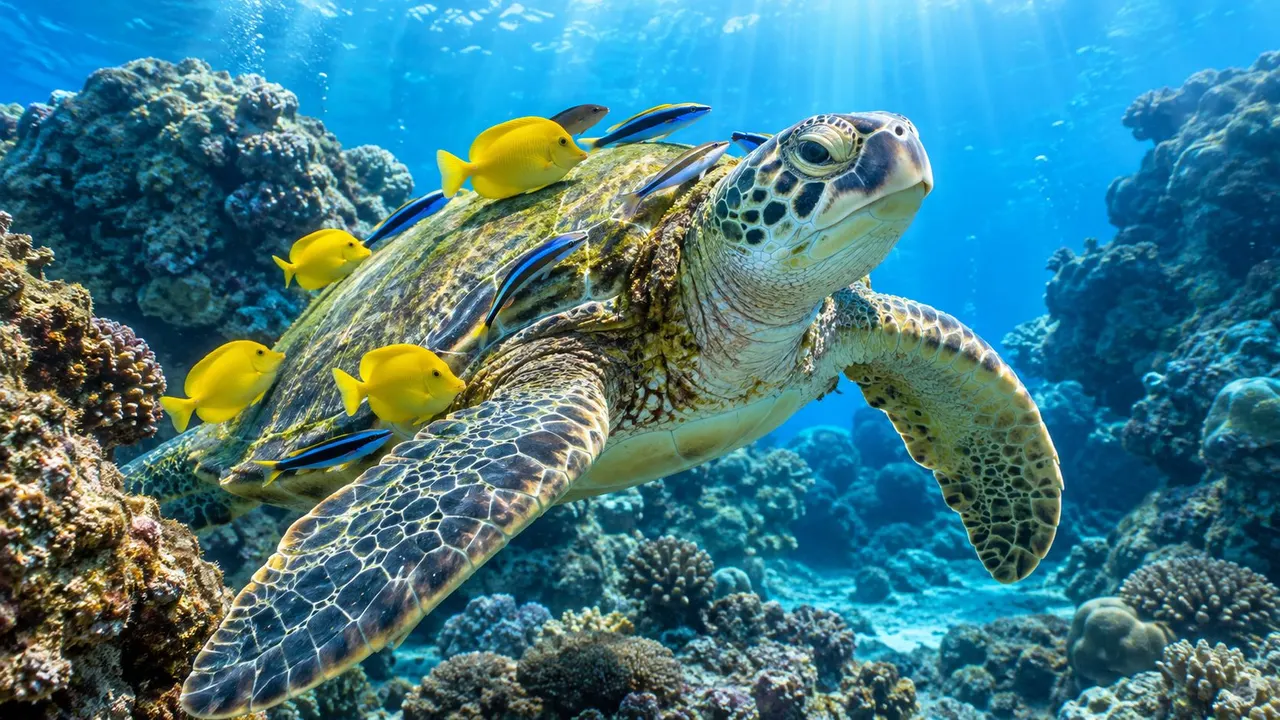
The name matters because of what happens on that reef. Turtle Canyon is an offshore reef area near Waikīkī known for functioning as a natural cleaning station for Hawaiian green sea turtles, or honu. Reef fish remove algae, dead skin, and external parasites from the turtles' shells and bodies. The fish get food, while the turtles receive maintenance.
That behavior gives the site its reputation. A turtle may settle over a cleaning area and remain relatively still while small fish move across its shell. You're not just visiting a scenic reef where a turtle might pass through. You're entering a working habitat where the animals use the structure for feeding, resting, cleaning, and surfacing.
A practical Turtle Canyon guide for Waikīkī visitors can help you understand the location before you book. On a map, look offshore from Waikīkī and near Kewalo Basin. In the water, expect open-ocean movement, reef contours, and animals that can leave whenever they choose.
Why Hawaiian Green Sea Turtles Gather at Cleaning Stations
The reef's cleaning activity explains why turtles return to Turtle Canyon. Hawaiian green sea turtles, or honu, may settle above a reef area where cleaner fish remove algae, dead skin, and external parasites from their shells and bodies. The fish gain food, while the turtles receive a form of maintenance.
A turtle can hold position while the fish work, giving snorkelers a better chance to observe natural behavior than they would during a brief pass through open water. Conditions still change. The turtle may leave, the fish may be inactive, or the boat may need to use another part of the reef.
A recovery story beneath the boat
The honu at Turtle Canyon belong to a wider conservation story, covered in this Hawaiian green sea turtle guide. Hawaiian green sea turtles were heavily reduced by the harvest of adults and eggs, and nesting in the main Hawaiian Islands had reportedly disappeared by the middle of the twentieth century. The species was listed as endangered under the U.S. Endangered Species Act in 1978, while the Hawaiian distinct population segment was reclassified from endangered to threatened in 2015, according to NOAA Fisheries' Pacific sea turtle research information.
Oahu's nesting record adds context to any encounter at the reef. Per DLNR nesting surveys, Oahu documented 83 nests in 2024, compared with 9 in 2019 and between 0 and 2 annually from 2016 through 2018. These figures describe nesting activity on Oahu, not the number of turtles living at Turtle Canyon. They do show why encounters belong within an ongoing recovery effort.
Why the boat is the practical choice
Turtle Canyon lies offshore from Waikīkī, near Kewalo Basin. Reaching the coast by car or on foot does not bring you to the reef. Swimming from Waikīkī Beach is not a sensible plan, and launching a kayak or paddleboard from Magic Island or Kewalo is better left to experienced users with appropriate local guidance.
For most visitors, a guided boat provides the practical access and local judgment required for an offshore site. From Kewalo Basin Boat Harbor, the ride typically takes 20 to 30 minutes, depending on the departure point and sea conditions. The harbor is a working boat facility, with docks, loading areas, and nearby parking. Allow time to find the operator, unload, and walk from the parking area to the boat.
Practical rule: Choose the boat for access and judgment, not just transportation. A captain can alter the route, select a safer entry point, or decide that the reef is unsuitable that day.
The trade-off is straightforward. A boat gets you to a functioning cleaning station, but it also places you in open water. Your group's swimming ability, comfort with boat movement, and tolerance for changing conditions should shape the booking decision.
Choosing a Snorkel Tour at Turtle Canyon
Two guided approaches make sense for most visitors. Living Ocean Tours' Turtle Canyons Snorkel Excursion departs from Kewalo Basin and focuses on the turtle reef. A catamaran operator from the same harbor can be a strong alternative for guests who prefer that vessel style or a different group setup.
Living Ocean Tours is commonly described as the top-rated and most-reviewed snorkel company on Oahu. Both options rely on local crews who understand the reef, boat traffic, and changing south-shore conditions. Don't choose on marketing language alone. Match the vessel, group size, and instruction style to the people traveling with you.
| Operator | Vessel | Typical Duration | Group Size | Gear Included | Instruction Style |
|---|---|---|---|---|---|
| Living Ocean Tours Turtle Canyons Snorkel Excursion | Guided snorkel boat | Approximately two hours | Varies by departure | Mask, snorkel, fins, and flotation support | Direct briefing, guided water entry, and active wildlife supervision |
| Catamaran Turtle Canyon alternative | Catamaran | Depends on departure | Depends on departure | Confirm when booking | Catamaran-based briefing and guided snorkeling |
The table gives you the decision framework, but availability, vessel assignment, and exact inclusions can change. Confirm the details before paying, especially if you need a particular boarding arrangement or want to keep a nonswimmer aboard.
A do-it-yourself plan can look cheaper or more flexible, but it shifts the difficult parts onto you. You still need suitable ocean skills, equipment, navigation, wildlife judgment, and a safe way to return to shore. For families, the value of a guided trip often comes from supervision and decision-making rather than from the snorkel gear itself.
For a broader look at local departure logistics, see this Honolulu snorkel company guide.
Best Times and Seasonal Conditions at Turtle Canyon
The best Turtle Canyon departure is usually the one that gives the ocean less time to deteriorate. On Oahu's south shore, morning trips commonly benefit from lighter wind and cleaner surface conditions. As the day progresses, wind can build, making the ride rougher and the water more textured for snorkelers trying to spot turtles below.
That doesn't mean an afternoon trip can't work. It means you should understand the trade-off. Morning improves your odds of comfortable transit and clear viewing, while an afternoon departure may fit your schedule better but offers less margin if the wind rises.
Match the season to your comfort
Summer and early fall generally provide the calmer south-shore snorkeling windows. Winter can bring larger surf and stronger currents to the same coastline. Captains still assess conditions trip by trip, because a calendar doesn't tell you what the reef is doing on a particular morning.
From January through March, humpback whales overlap with many Turtle Canyon outings. Whale season doesn't determine whether turtles use the reef, but it can affect what the boat crew adds to the route when conditions and time allow. Keep the priorities separate. Book Turtle Canyon for the reef and honu, and treat any additional wildlife viewing as a bonus.
Hawaiʻi's Department of Land and Natural Resources identifies nearshore reefs, rocky outcroppings, and algal beds as important foraging habitat. Adult honu are primarily herbivorous and consume macroalgae, or limu. Reef condition and algal availability influence how turtles use a site, as explained by Hawaiʻi's sea turtle guidance.
Pack for the boat, not just the water
Bring only what you'll use:
- Reef-safe sunscreen: Apply it before boarding and reapply according to the product directions.
- Rashguard or UV shirt: This helps during the ride and while floating in exposed water.
- Swimwear and a towel: Keep a dry layer available for the return trip.
- Motion sickness remedy: If boat travel bothers you, handle it before departure according to medical guidance.
- Dry bag: Protect phones, cameras, and identification from spray.
- Hat: Wear it during the ride out, but secure it in windy conditions.
Skip reef shoes unless your operator specifically tells you otherwise. They aren't needed for a sandy-bottom entry and can damage fragile coral when guests stand where they shouldn't. Heavy jewelry is another poor choice because it can snag or disappear overboard.
Major operators typically provide masks, fins, snorkels, and flotation vests. You still need to tell the crew if a mask leaks, a vest fits poorly, or you're not comfortable before entering the water. This Turtle Canyon planning guide is useful for checking the practical details before departure.
Wildlife Viewing Rules and Responsible Snorkeling
The 10-foot rule is not a suggestion to get as close as possible. NOAA Fisheries recommends staying at least 10 feet, or 3 meters, from Hawaiian sea turtles in the water and on land. When people maintain that distance, observed honu behavior shows little to no change. Closer approaches increase the likelihood of disturbance and potentially illegal harassment, according to NOAA's marine wildlife viewing guidance.
Treat that distance as a moving buffer. If a turtle swims toward you, stay calm and let it choose the direction. Don't reach out, chase it, block its route, or hover directly above it while it tries to surface.
If a turtle rests below a group, the group should spread out rather than form a circle over it. If a child wants to swim closer, the adult should redirect the child before the guide has to intervene. A responsible encounter ends when maintaining space becomes difficult.
Photography requires the same discipline. Use a zoom lens rather than pursuing the animal. A photo is not worth changing a turtle's route or forcing it to dive.
The meaningful success measure is natural behavior observed without interference, not a close-up image.
Hawaiian green sea turtles are protected wildlife. U.S. law makes it illegal to harass, harm, possess, or kill sea turtles, their eggs, or hatchlings. The Hawaiian turtle snorkeling rules provide a useful family briefing before you leave the dock.
Accessibility, Families, and Who Should Stay on the Boat
“Beginner-friendly” should describe the instruction and supervision, not imply that an offshore reef feels like a shallow beach swim. The water below Turtle Canyon may be calm enough for a confident beginner, but it remains open ocean with waves, currents, mask problems, and a boarding ladder.
Use three profiles when deciding who enters.
- Nonswimmer: Stay aboard. Hawaiʻi Ocean Safety guidance says people who can't swim should stay out of the water and shouldn't snorkel even with a flotation device, as outlined in this Turtle Canyon FAQ.
- Weak swimmer: Consider participation only if the operator accepts it, the flotation vest fits correctly, and a responsible adult and crew member can provide close supervision. Buoyancy support doesn't eliminate panic, current movement, waves, mask leaks, or the need to climb back aboard.
- Confident beginner: A person who can float, breathe through a snorkel, follow a guide, remain calm in open water, and climb a boarding ladder may be ready for a guided entry.
Parents and grandparents should make the decision the night before, not on the swim step. Ask whether the guest can enter the ocean without panic, keep a mask on while breathing normally, follow instructions, and get back aboard under supervision. If the answer is no, remaining on the boat is the responsible choice, not a failed vacation.
How Turtle Canyon Compares to Other Oahu Snorkel Sites
Turtle Canyon suits visitors who want a boat trip to a known reef habitat near Waikīkī. It serves a different purpose from Oahu's shore-access sites, so choose based on water conditions, transport, and who is comfortable entering open ocean.
Hanauma Bay offers shore access, abundant reef fish, and a protected marine preserve. Advance reservations affect the day's logistics, while turtles are not the central expectation. It fits travelers who prefer a structured shore outing and want to avoid a boat transfer.
Sharks Cove can offer dramatic lava formations and strong snorkeling for experienced visitors during North Shore summer conditions. It may be a better seasonal choice when south-shore water is rough. North Shore winter surf can make the cove unsuitable, so conditions matter more than the site's reputation.
Electric Beach provides deeper water and possible turtle or dolphin encounters. Reaching the useful snorkeling area requires stronger ocean judgment, making it a poor fit for a nervous beginner or a group with widely different abilities.
Kuilima Cove offers a more sheltered setting and easier water access. Choose it when a calm, simple entry matters more than a dedicated boat ride to a turtle-cleaning-station habitat.
The wildlife rules from the previous section apply at every site on this list, but at Turtle Canyon they operate in open water with a boat crew present. NOAA's sea turtle protection guidance provides the governing framework for turtle encounters.
Turtle Canyon's trade-off is clear: the boat gets your group beyond the shoreline and close to a reef habitat, while the trip remains dependent on sea conditions, departure logistics, and responsible behavior around wildlife. Families should also account for the return trip, including time in the water and boarding the vessel.
Choose Turtle Canyon when turtles are the priority and your group is prepared for a boat-based snorkel. Choose Hanauma Bay or Kuilima Cove when shore access or shelter matters more. Reserve Sharks Cove or Electric Beach for groups suited to their seasonal and swimming demands.
Booking Advice and Frequently Asked Questions
How far ahead should I book? Reserve early for busy Waikīkī travel periods, especially if your family needs a particular departure time or vessel setup. Leave flexibility in the itinerary so a weather change doesn't ruin the rest of the trip.
What happens if conditions deteriorate? The captain may delay, reroute, shorten the water portion, or cancel when the reef isn't safe or useful. Ask the operator's current weather, cancellation, refund, and rescheduling terms before booking. Policies vary, and no responsible crew should promise access regardless of sea conditions.
What about children and weight limits? Age and weight requirements vary by operator, vessel, flotation equipment, and sea conditions. Give accurate information when reserving and confirm the requirements directly rather than relying on a general “family-friendly” label.
Does whale season change the trip? January through March overlaps with humpback whale season. It may add wildlife interest during the boat ride, but Turtle Canyon remains a turtle-focused outing and wildlife sightings aren't guaranteed.
Living Ocean Tours runs guided Turtle Canyons Snorkel Excursions from Kewalo Basin with gear, flotation support, and crew instruction for visitors who are ready for an open-water reef experience. Check the current departure options at Living Ocean Tours, then choose a morning trip if your group wants the best chance of calmer south-shore conditions.


