
Turtle Canyon Oahu: How the Underwater Terrain Took Shape
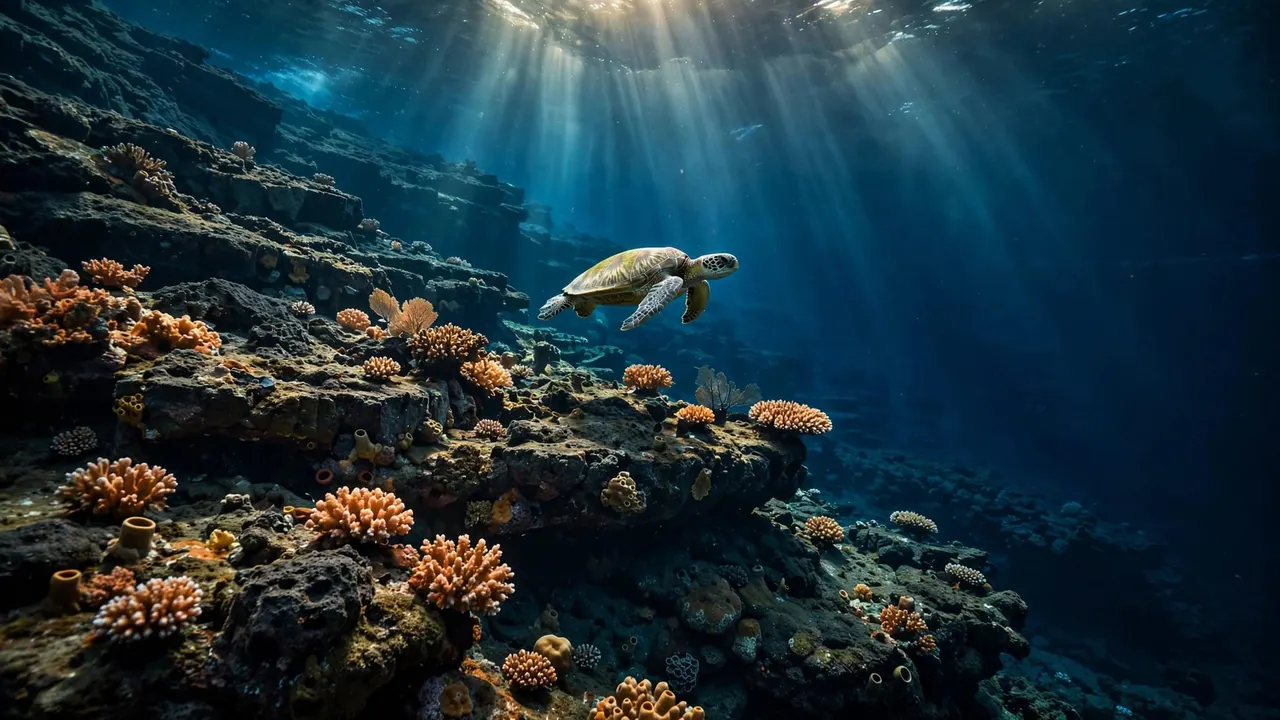
A turtle gliding over Turtle Canyon Oahu can steal your attention in seconds. Look beneath it, though, and you’ll see a reef shaped by Oahu’s volcanic beginnings, coral growth, and changing sea levels. The terrain is still changing, and it helps explain why fish and turtles use different parts of the reef.
Living Ocean Tours takes you from Kewalo Basin Boat Harbor to this offshore habitat near Waikiki. Before you enter the water, it helps to know which parts of the reef’s story scientists can explain and which remain unmeasured at Turtle Canyon itself.
Key takeaways
- Turtle Canyon Oahu is part of a larger offshore reef environment, not a dated geological canyon with a documented formation history.
- Oahu’s volcanic foundation came first. Coral growth, erosion, sediment, and sea-level changes later shaped reef terrain around the island.
- Ledges and open water provide different views and habitats, but they don’t guarantee a turtle sighting.
- You protect what you came to see by floating above the reef and letting wildlife move freely.
Oahu’s volcanic foundation came first
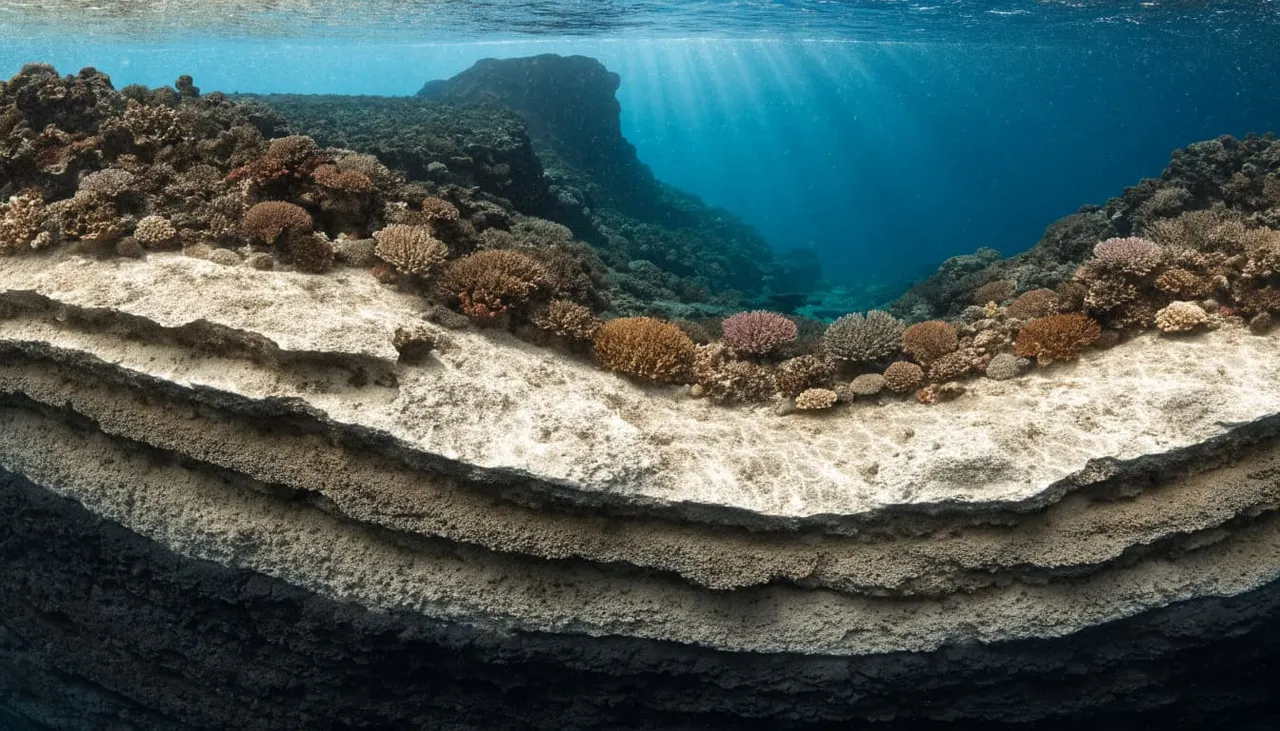
This conceptual view shows how volcanic rock and reef-building material can share an underwater setting. It isn’t a surveyed cross-section of Turtle Canyon.
Two volcanoes built the island
Long before coral grew along Oahu’s coast, volcanic eruptions built the island. Its two main shield volcanoes are Waiʻanae in the west and Koʻolau in the east. The USGS description of Hawaii’s volcanic ridge places Oahu within a much larger chain of mountains rising from the seafloor.
That volcanic origin matters underwater. Rock can provide a firm foundation for reef organisms, while the island’s shape influences where waves reach the coast. Still, you can’t identify every dark patch beneath Turtle Canyon Oahu as exposed volcanic rock simply by looking through a mask.
Erosion changed the starting surface
After the volcanoes formed, erosion and major landslides altered Oahu’s contours. Waves also worked on coastal rock as shorelines shifted. The result was no single, smooth platform waiting for coral to cover it.
Oahu has a more complicated volcanic history than its two main shields alone. Younger eruptions produced familiar features such as Koko Crater and Hanauma Bay on the island’s east side. They help explain the island’s varied geology, but they shouldn’t be mistaken for evidence of a specific eruption at Turtle Canyon.
How coral adds structure to a reef
Small builders, long accumulation
Reef-building corals are animals. Their hard skeletons provide surfaces where later generations can grow. As skeletons and other calcium-rich material accumulate, they can become part of a larger reef framework.
Growth is uneven. Corals need suitable light, water movement, and a surface where they can settle. Meanwhile, storms can break colonies, waves can move fragments, and sand can collect in lower areas. Those competing processes help produce a reef with raised patches, rough edges, and open spaces rather than a flat blanket of coral.
At Turtle Canyon Oahu, it’s tempting to assign an age to every ledge you see. The visible shape alone can’t tell you when a particular feature formed. Dating it would require site-specific samples and measurements.
A reef isn’t all living coral
What looks like one colorful surface may include living colonies, older coral skeletons, algae-covered rock, rubble, and sand. Each offers a different place for marine life to feed or shelter.
You can see how much nearby reefs vary in Hawaii’s reef record. The University of Hawaii describes Oahu reef limestones from several distinct periods, including the older Waiʻanae Reef and younger deposits. Those findings show that reef construction occurred at different times around the island. They don’t establish the age or exact layers beneath Turtle Canyon.
Sea level gave Oahu’s reefs room to grow
Shorelines moved as oceans changed
Corals build best where conditions suit them, especially where sunlight can reach. When sea level changes, the depth of a reef surface changes too. A surface that once received enough light may become deeper; another may gain space for new growth.
Sea-level history isn’t a simple story of coral keeping pace everywhere. Wave exposure and available hard ground matter as well. USGS research identifies framework reef development on parts of Oahu’s shelf between roughly 8,000 and 3,000 years ago in lower-wave-energy settings. That’s useful island-wide context, not a date for Turtle Canyon.
Nearby reefs show different outcomes
A USGS survey along southeastern Oahu describes places where reef gives way to wave-worn volcanic material offshore. Closer to Waikiki, state descriptions of a separate reef-flat area include rubble, coralline algae, and small patches of live coral.
Neither location is a substitute for a geological survey of Turtle Canyon Oahu. Together, they show why one stretch of Oahu’s coast can’t stand in for every other. Underwater terrain changes with depth, waves, and the materials available at each site.
What does “canyon” mean at Turtle Canyon Oahu?
A useful name, not a confirmed origin story
The name may bring to mind a deep gorge carved by a river. You shouldn’t picture that familiar landform automatically. Turtle Canyon, also called Turtle Canyons, is a well-known offshore snorkel area near Waikiki. The sources available for Oahu’s broader geology don’t establish that its named features formed through one particular canyon-cutting process.
For you as a snorkeler, the name points to a reef destination rather than a precise geological classification. Treat a claim about an ancient river channel or a known formation date with care unless it’s backed by a site-specific survey.
Read the changes you can see
From the surface, watch for shifts between textured reef, lighter sandy areas, and darker blue water. A ledge may create a clear visual boundary, but water color alone won’t tell you its composition or depth. Visibility, cloud cover, and your viewing angle can change what you perceive.
That’s part of the appeal of Turtle Canyon Oahu: you can observe terrain without pretending every contour has a settled explanation. Stay at the surface and let the patterns guide your attention toward fish moving along an edge or a turtle passing into open water.
Why reef terrain draws turtles and fish
Structure creates different kinds of space
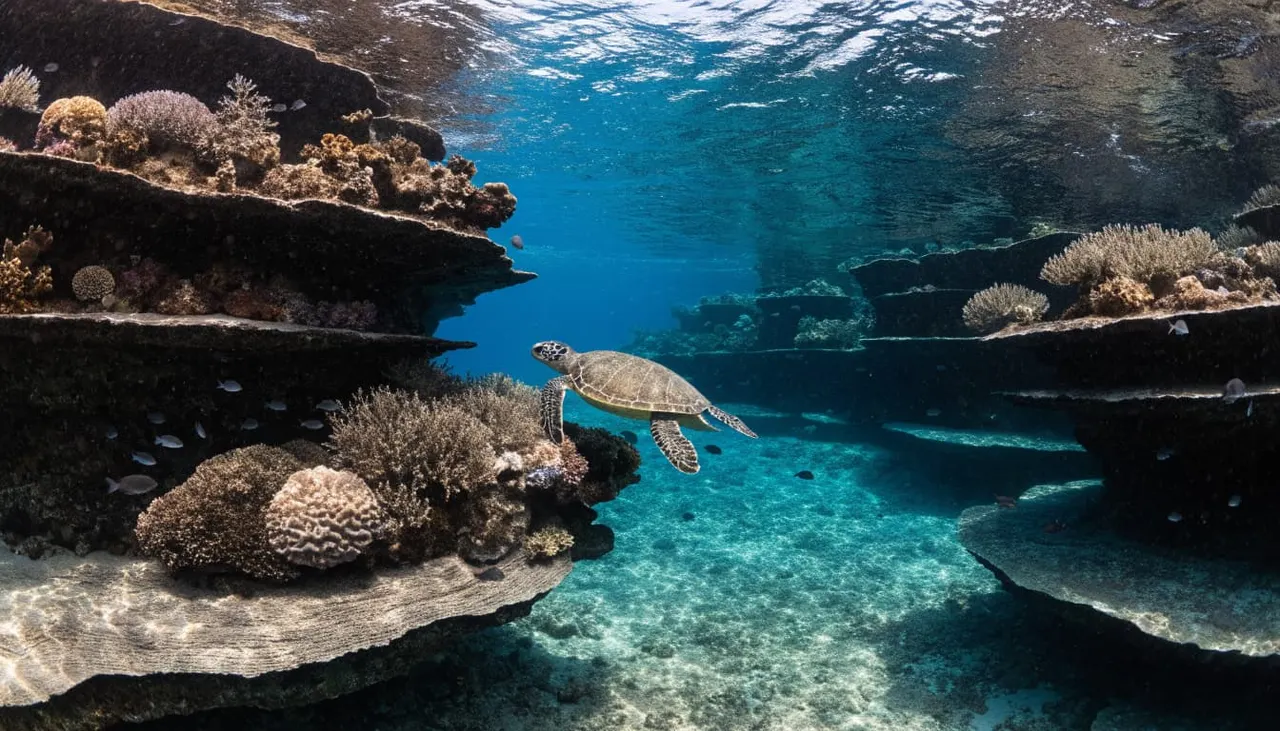
Raised reef features, gaps, and sandy breaks give fish places to move, feed, and take cover. Sunlight and water movement affect what grows on exposed surfaces. In turn, those living surfaces attract other reef animals.
Hawaiian green sea turtles, known locally as honu, use coastal reefs for activities that can include feeding, resting, and visiting cleaning areas. At cleaning stations, small fish may remove algae and other material from a turtle’s shell and skin. A turtle might pause near the reef, cross above it, or leave for deeper water.
Wildlife follows its own schedule
Reef structure helps explain why an area supports marine life. It doesn’t tell you when an individual turtle will appear. Even at a familiar cleaning station, turtles decide where to swim and when to surface for air.
Watch the wider scene at Turtle Canyon Oahu rather than following the first turtle you spot. You may notice grazing fish near one patch and a turtle moving past another. Seeing those separate activities gives you a better sense of the reef as habitat, not a backdrop for a photo.
How to read the reef while you snorkel
Start with the bottom, then look outward
Give your eyes a moment to adjust when you enter the water. First, find the outlines of the reef beneath you. Then look toward the sandy breaks and deeper blue beyond. As you float, you’ll begin to notice how fish use the boundaries.
If a turtle passes by, keep an eye on its route without changing course to intercept it. A green turtle must surface to breathe, so open water above it matters as much as the reef below it.
Let conditions change your plan
Sun glare, wind, swell, and suspended particles can hide details that were clear a moment earlier. Ask your guide where it’s comfortable to float, especially if you’re new to snorkeling. Conditions matter more than any promise that a particular ledge will look a certain way.
Protect the terrain you’re visiting
A reef can withstand moving water while remaining vulnerable to a careless fin kick. Stay buoyant above coral, and avoid standing on rock or rubble that may support living organisms. If you need help adjusting your mask, ask for flotation or return to the boat rather than reaching for the bottom.
Give turtles room to turn and surface. Don’t touch, feed, chase, or surround them. Calm movement also makes it easier for you to watch natural behavior, including a turtle’s unhurried pass over the reef.
A dark reef edge may look like a convenient place to stop, but it can hold living organisms and sit beneath moving water. Keep your fins clear and pause at the surface instead.
See the reef with Living Ocean Tours
Living Ocean Tours departs from Kewalo Basin Boat Harbor, minutes from Waikiki. Its Turtle Canyons outing brings you to offshore habitat with snorkel gear, flotation support, and guidance in the water. Living Ocean Tours says it’s the only Oahu tour company with professional snorkel guides, a welcome source of direct help if you’re getting comfortable with your mask or buoyancy.
You can explore Living Ocean Tours’ Honolulu outings before choosing your trip. The company reports a 95% turtle-sighting rate for its Turtle Canyons excursion, but wild animals never follow a booking schedule. The reef, fish, and open-water views remain worth your attention on every visit.
For the Turtle Canyons snorkel trip, CHECK AVAILABILITY when you’re ready to choose a departure.
Frequently asked questions
Is Turtle Canyon a volcanic canyon?
Its name doesn’t prove a volcanic canyon or any other particular geological origin. Oahu has a volcanic foundation, but Turtle Canyon’s individual contours would need site-specific study before anyone could explain exactly how they formed.
How old is the reef at Turtle Canyon?
There isn’t a verified age for Turtle Canyon’s reef in the regional geological findings discussed here. Oahu has reef deposits from different periods, so an age measured elsewhere on the island shouldn’t be assigned to this snorkel site.
Can beginners snorkel over the reef?
Yes, when conditions suit your abilities and you have appropriate support. Tell the crew how comfortable you are in open water, use flotation if it helps, and stay with your guide. You can enjoy the terrain and wildlife without diving down.
Conclusion
The turtle that first caught your eye is only one part of Turtle Canyon Oahu’s story. Oahu’s volcanic history provided the foundation, while reef growth and changing conditions added complexity over time.
You don’t need a geological map to appreciate those layers of history. Float above the reef, notice where its surfaces change, and give its wild residents room to pass.


