
How to Choose a Honolulu Snorkel Company
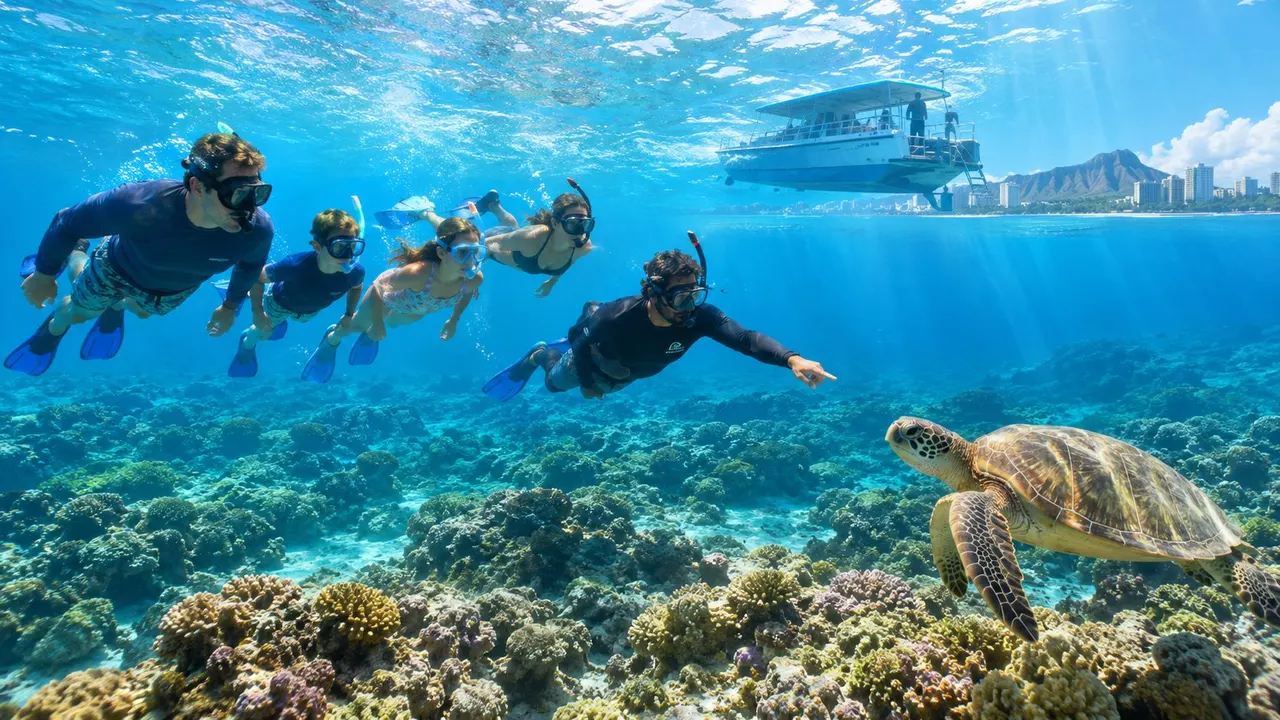
A Waikiki visitor can stand near Kewalo Basin with a phone full of snorkel listings and still have no idea which boat deserves a family's trust. The cheapest departure may not explain flotation, the busiest schedule may not leave room for a proper gear check, and a promise of “guaranteed turtles” can encourage exactly the wildlife behavior responsible operators work to prevent.
Choosing a Honolulu snorkel company is less about finding the flashiest boat and more about evaluating safety culture, equipment, supervision, departure reliability, and reef etiquette. Those standards apply whether you book a guided excursion or compare it with a shore-entry option such as Hanauma Bay, a protected marine life conservation district with more than 450 fish species described by To-Hawaii's Oʻahu snorkeling guide.
Finding the Right Snorkel Operator in Waikiki
The decision often happens at the dock. You've checked in near Kewalo Basin, children are excited, one traveler is nervous about putting their face underwater, and several boats appear ready to leave. At that point, a company's logo matters less than whether the crew can answer practical questions without hesitation.
Ask who supervises guests in the water, what flotation is available, how the crew fits masks and snorkels, and what happens if someone becomes tired. A dependable operator should explain the plan in plain language. You should also hear how the crew handles honu, Hawaiian green sea turtles, and coral before anyone enters the water.
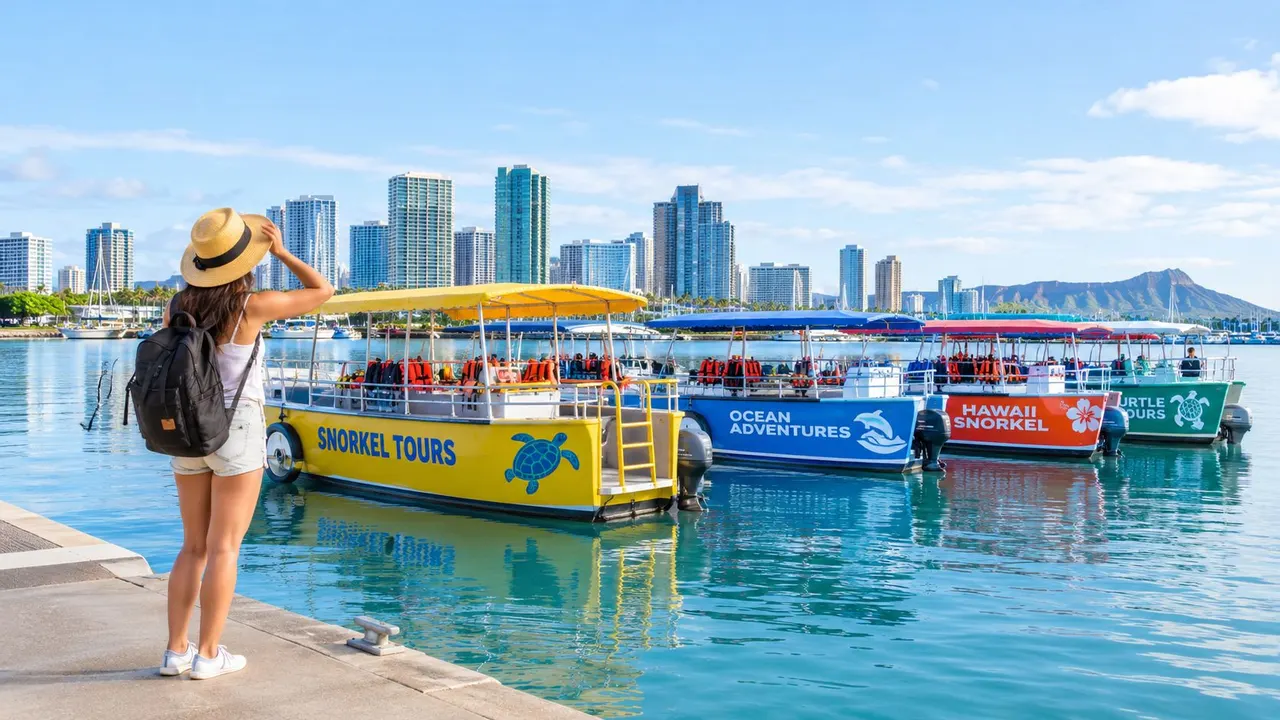
The dockside questions that matter
A strong Honolulu snorkel company treats the departure as an operating system, not just a boarding point. Multiple cruises daily can indicate that a business has established staffing, vessel, and harbor routines, though a busy schedule alone doesn't prove good supervision. The crew's answers still matter more than the number of available departure times.
Use this quick test:
- Safety briefing: Does the crew explain breathing, fin technique, hand signals, flotation, and how to exit the water?
- Wildlife conduct: Do guides say “observe, don't pursue,” or do they sell proximity as the main attraction?
- Guest fit: Can they accommodate first-time snorkelers, children, older adults, and mixed swimming abilities?
- Gear confidence: Will staff check the mask seal and snorkel fit before guests enter?
- Condition judgment: Are guides willing to change the location or modify the plan when the ocean doesn't cooperate?
For a broader look at how a harbor departure can fit into a Waikiki day, compare the practical details of this Waikiki boat tour, then ask the same questions of any operator you're considering. The point isn't to choose a boat because it looks polished. It's to find a crew that makes good decisions before guests ever reach the reef.
What to Look for in a Safe and Responsible Tour
A first-time snorkeler reaches the water, discovers a leaking mask, and starts breathing hard. At that moment, the operator's preparation matters more than the boat's appearance or the advertised reef. A shore snorkel leaves guests to assess surf, currents, entry hazards, equipment, and fatigue. A guided boat trip adds offshore access, local condition judgment, instruction, and in-water supervision.
That structure helps families and beginners only when the crew applies it consistently. Hawaiʻi's snorkel safety research examined airway resistance, medical examiner reports, case studies, and survey results. Findings summarized by the Hawaiʻi Ocean Safety snorkeling safety page linked rapid onset pulmonary edema, or ROPE, to 206 drownings in Hawaiʻi from 2009 through 2018 and included testing of 49 snorkel varieties. Guests should stop immediately if breathing feels unusually difficult, signal the crew, and leave the water rather than trying to push through it.
Compare the operating signals
| Quality | What It Looks Like | Red Flag |
|---|---|---|
| Safety instruction | The briefing covers flotation, breathing, hand signals, entry, and exit | Guests receive gear and enter without practical guidance |
| Equipment control | Staff check mask seals and snorkel fit before entry | The operator assumes one mask fits every face |
| Wildlife stewardship | Guides manage distance and group position while explaining turtle etiquette | Marketing promises close contact or encourages pursuit |
| Supervision | Crew identify weak swimmers and keep track of the group | One guide cannot observe guests properly |
| Condition judgment | The plan changes for unsafe wind, swell, visibility, or current | The advertised site matters more than conditions |
| Harbor reliability | Check-in, vessel assignment, and departure instructions are clear | Meeting or vessel details stay vague until departure |
A good briefing should also reveal how the crew handles uncertainty. Ask what happens if a child becomes uncomfortable, a mask will not seal, or the planned site deteriorates. Specific answers show an operating plan. Vague reassurance does not.
Turtle encounters require restraint. Official Hawaiʻi protected-species guidance calls for a minimum 10-foot, or 3-meter, buffer from honu. Guests must not touch, feed, chase, or block a turtle's path. Guides should position swimmers to the side, keep noise low, and prevent crowding around a resting or cleaning area.
A company that emphasizes respectful observation over guaranteed camera angles is showing the right priority. For a practical comparison of guided access and independent snorkeling, review these Oʻahu snorkeling tours using the same questions. The decision should rest on crew judgment, guest support, and reef conduct, not on a crowded itinerary or polished marketing.
When and Where to Snorkel Near Waikiki
Timing affects comfort before it affects photographs. Morning departures often offer calmer water and less wind, which can help first-time guests settle into their breathing rhythm. Conditions still vary, so no responsible captain should promise identical visibility or a fixed wildlife experience on every departure.
Kewalo Basin is useful because a boat can reach offshore reef areas that aren't practical shore swims. Turtle Canyon, described by Oʻahu Boat Tours as a natural cleaning station about 15 boat minutes from Kewalo Basin near Diamond Head, illustrates why location matters. Reef fish groom green sea turtles there, and the site's behavior pattern explains why a guided boat can offer a more targeted experience than choosing a random beach entry.
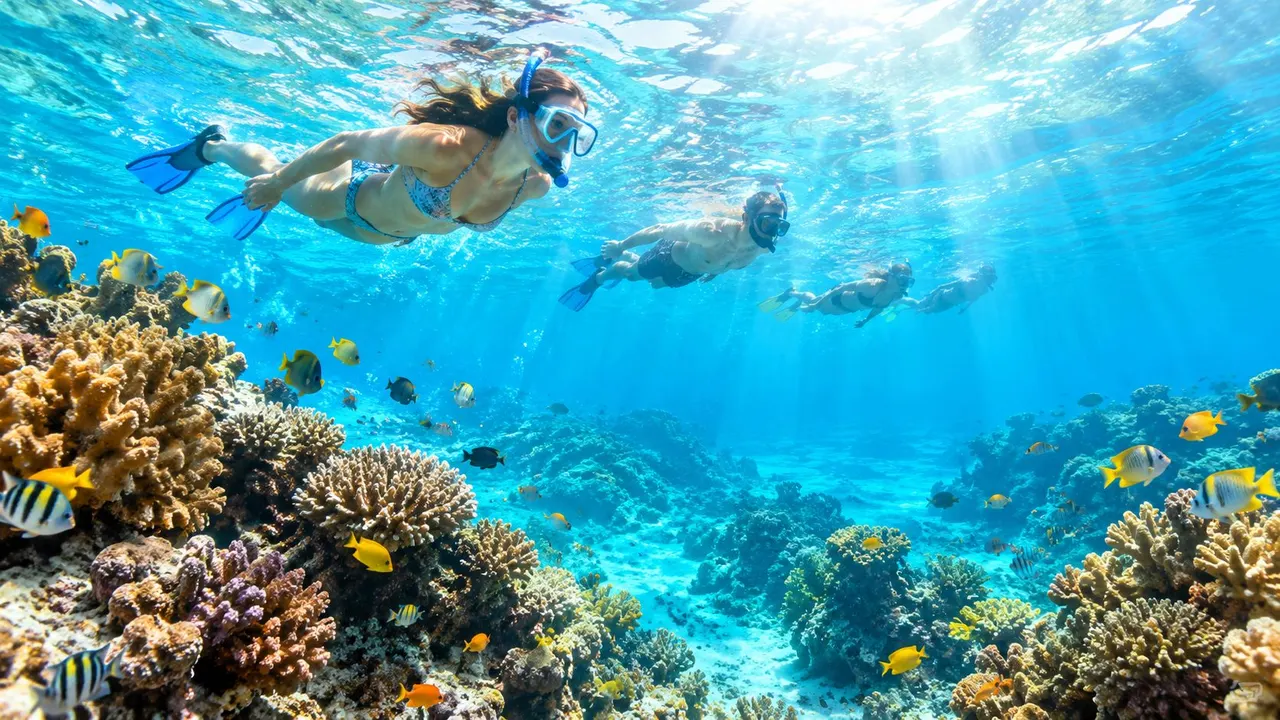
What a well-run departure includes
Honolulu Snorkel Company appears to operate from Kewalo Basin Harbor, with its office listed at 1085 Ala Moana Blvd., Suite 104, and vessel slip E-217. Current booking listings indicate that it runs multiple cruises daily, according to the company's official Honolulu Snorkel Company site. Those details make the departure logistics concrete, but they don't replace your own questions about supervision and guest fit.
Before water entry, expect a complete sequence:
- Check-in and vessel orientation. You should know where to store belongings, how to move around the boat, and where to wait for the water briefing.
- Condition and site explanation. The crew should describe the day's plan without pretending the ocean is predictable.
- Equipment fitting. A mask should seal comfortably, the snorkel should sit naturally, and fins shouldn't cause painful pressure.
- Technique practice. Beginners benefit from learning to breathe slowly, clear a small amount of water, and kick from the hips.
- Wildlife briefing. Guides should explain distance, coral protection, and what to do if a turtle approaches.
- Entry and regrouping. Guests need clear hand signals and an obvious place to return if they feel tired or anxious.
A convenient Oʻahu snorkeling experience can be worthwhile, but convenience should mean less guesswork, not fewer safety steps. Confirm the meeting point, parking or transport expectations, departure timing, and whether the route is appropriate for your least confident swimmer.
Packing and Preparing for a Family Snorkel Trip
Families don't need a complicated kit. They need a few items that keep small problems from becoming uncomfortable ones. Pack reef-conscious mineral sunscreen, secure eyewear, light layers for the boat ride, towels, water, and a dry bag for phones and room keys. A floating strap can protect a camera, but it shouldn't distract anyone from watching the water and the group.
Flotation deserves special attention. A child who can swim in a pool may still become tired in open water, while an adult who feels embarrassed about using a vest may stay tense throughout the experience. Ask the operator what support is supplied and whether guides remain close to hesitant swimmers.
A calmer arrival-to-entry routine
Use this sequence with your family:
- Before boarding: Eat lightly, hydrate, and tell the crew about motion sensitivity, health concerns, or limited swimming confidence.
- During fitting: Have each person test the mask seal and practice breathing through the snorkel while standing safely on the boat.
- At the briefing: Make sure children understand the hand signal for “I'm okay,” the signal for “I need help,” and the instruction to stop immediately if breathing feels difficult.
- At entry: Let nervous guests enter gradually, use flotation, and stay near the guide rather than racing toward the most crowded part of the site.
- During the swim: Keep fins away from coral, avoid standing on the reef, and leave space around wildlife.
The state's safety work makes one point especially important: unusual inhalation difficulty isn't normal just because someone is wearing a snorkel. Stop, signal the crew, and return to the boat or a safe holding area.
For a more detailed personal checklist, use this Oʻahu snorkeling packing list. The best family memory usually comes from a relaxed guest who felt supported, not from squeezing into the busiest water or getting the closest possible photograph.
Why Living Ocean Tours Stands Out
Applying the earlier decision criteria to an actual operator, Living Ocean Tours offers a clear format for families and first-time guests. The company runs guided departures from Kewalo Basin with in-water guides, included equipment, instruction, and a focus on responsible wildlife viewing. Those details matter because the quality of a snorkel trip depends on how the crew manages the boat, the group, and the wildlife encounter.
Attractive language is irrelevant. What matters is whether the service solves uncertain gear, nervous swimmers, confusing logistics, and poor wildlife etiquette. Living Ocean Tours offers the Turtle Canyons Snorkel Excursion, taking guests by boat to an offshore turtle cleaning station instead of leaving them to search randomly from shore. That structure gives beginners a defined destination and a guided experience.
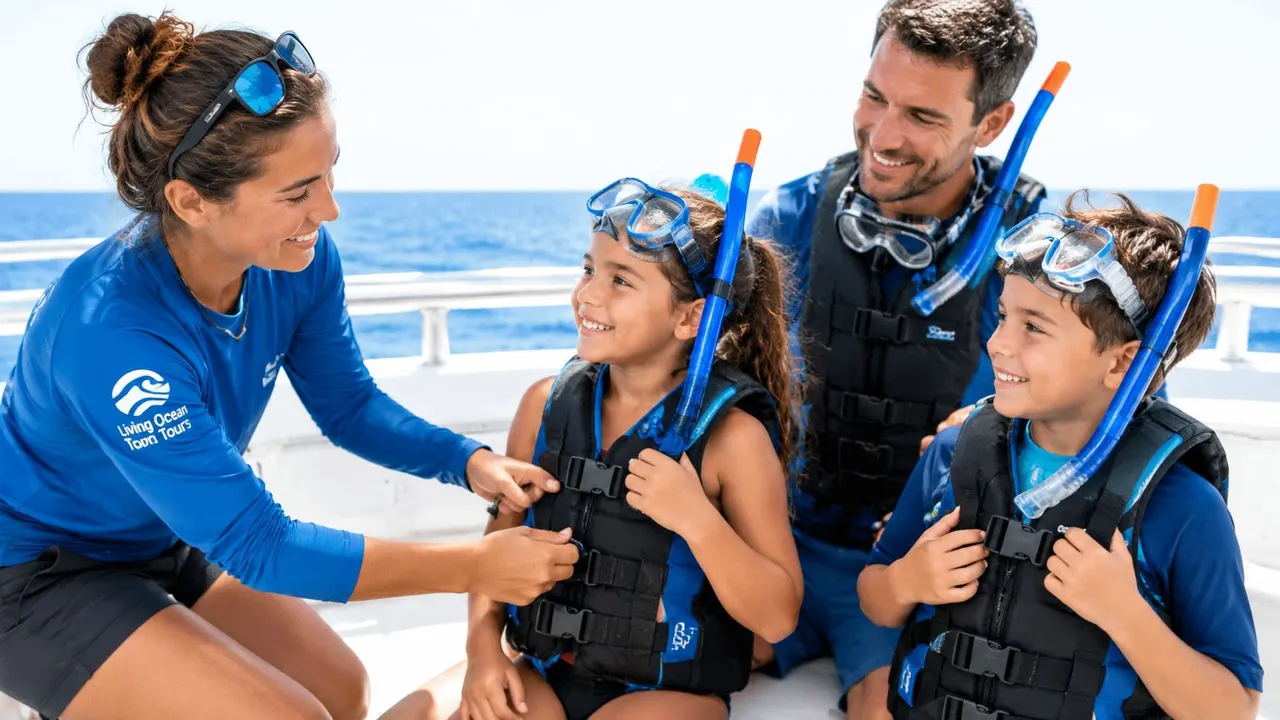
Match the product to the group
The Deluxe Waikiki Snorkel and Wildlife Cruise serves a different purpose from a focused turtle excursion. It includes a waterslide and water trampoline, which may suit families whose children want activities beyond looking through a mask. That format will not suit every guest. A couple seeking quiet wildlife observation may prefer a simpler trip, while a multi-generational family may value options that keep non-snorkelers involved.
Living Ocean Tours also offers seasonal whale watching, sunset cruises, and private charter options. Choose among those by deciding what the outing needs to accomplish before comparing features. A sunset cruise centers on the coastline and changing light. A turtle excursion focuses on controlled wildlife observation. A family wildlife cruise puts more emphasis on variety and participation.
Reviews can help confirm whether the advertised format matches the actual experience. Read for operational details, including guide attentiveness, equipment fitting, communication, beginner comfort, and respectful treatment of turtles and the reef. Those comments provide more useful evidence than a dramatic wildlife photograph or a star rating alone.
Review the company's snorkeling in Oʻahu with Living Ocean Tours options, then compare the schedule, meeting instructions, inclusions, and group suitability with the standards above. The right choice is the trip whose format matches your guests, not just the one with the most features.
Booking Checklist Before You Reserve
Before paying, verify the details that affect the actual day on the water. A polished booking page can't tell you whether the trip suits a child who tires quickly or an adult who has never used a snorkel.
Confirm these details first
- Departure point: Confirm that the boat leaves from Kewalo Basin near Waikiki and ask for the exact check-in location, vessel information, and arrival instructions.
- Swimming requirements: Ask whether non-swimmers, children, older adults, or guests with limited open-water experience can participate and what flotation support is available.
- Included equipment: Verify that the operator supplies mask, snorkel, fins, and any flotation equipment, then ask whether staff perform fit checks.
- Supervision: Find out how guides monitor the group in the water and how guests signal for help or return to the boat.
- Wildlife policy: Look for a clear commitment to the 10-foot turtle buffer, no touching, no chasing, no feeding, and no coral contact.
- Conditions and changes: Ask what happens if wind, swell, current, or visibility makes the advertised site unsuitable.
- Cancellation terms: Read the policy before reserving, especially if your itinerary depends on weather or a tight travel schedule.
- Group experience: Confirm the expected group format and whether the crew can provide individual help without leaving other guests unsupervised.
Price is only one part of the comparison. A cheaper trip can become poor value if guests must solve gear problems themselves, receive little instruction, or spend the outing crowded around wildlife. A more structured operator earns consideration when it gives your group clear preparation, appropriate flotation, reliable communication, and a genuine stewardship policy.
The rule is simple: choose the company whose safety decisions remain clear even when the wildlife is exciting and the ocean is busy.
Frequently Asked Questions About Snorkeling in Honolulu
Can non-swimmers join a guided snorkel trip?
Some operators can accommodate hesitant swimmers with flotation and close supervision, but ask before booking. A child, pool swimmer, and non-swimmer may need different support. If a guest cannot follow instructions or remain calm in open water, the crew may recommend staying aboard.
How can I see turtles without chasing them?
At Turtle Canyon, watch from the side of a resting or cleaning turtle rather than positioning yourself above it. Let the animal control the approach, and give it priority when it rises to breathe. Keep the required 10-foot, or 3-meter, distance, never touch or feed it, and leave a clear route to the surface and open water, as outlined in Hawaiʻi's protected-species guidance.
What if I've never used snorkel equipment?
Tell the crew during check-in. A careful operator should fit the mask, explain breathing, provide flotation when appropriate, and demonstrate hand signals before entry. You should be able to solve fit or comfort problems before entering the water, not while separated from the group.
Why choose a Waikiki boat departure instead of snorkeling alone?
A boat trip removes several unfamiliar tasks: judging a shore entry, finding an offshore reef, carrying equipment across a beach, and assessing changing conditions without local guidance. The crew can select a suitable site and organize wildlife viewing, which helps families and mixed-ability groups.
Guided trips suit first-time guests, but the crew's habits still matter. Choose an operator that makes comfort, supervision, and reef respect visible throughout the outing.
Living Ocean Tours offers guided Waikiki snorkeling from Kewalo Basin, including Turtle Canyons, family-friendly wildlife cruises, included gear, and in-water instruction. Visit Living Ocean Tours to compare the format with your group's swimming ability and comfort level.


