
Swimming with Turtles in Oahu
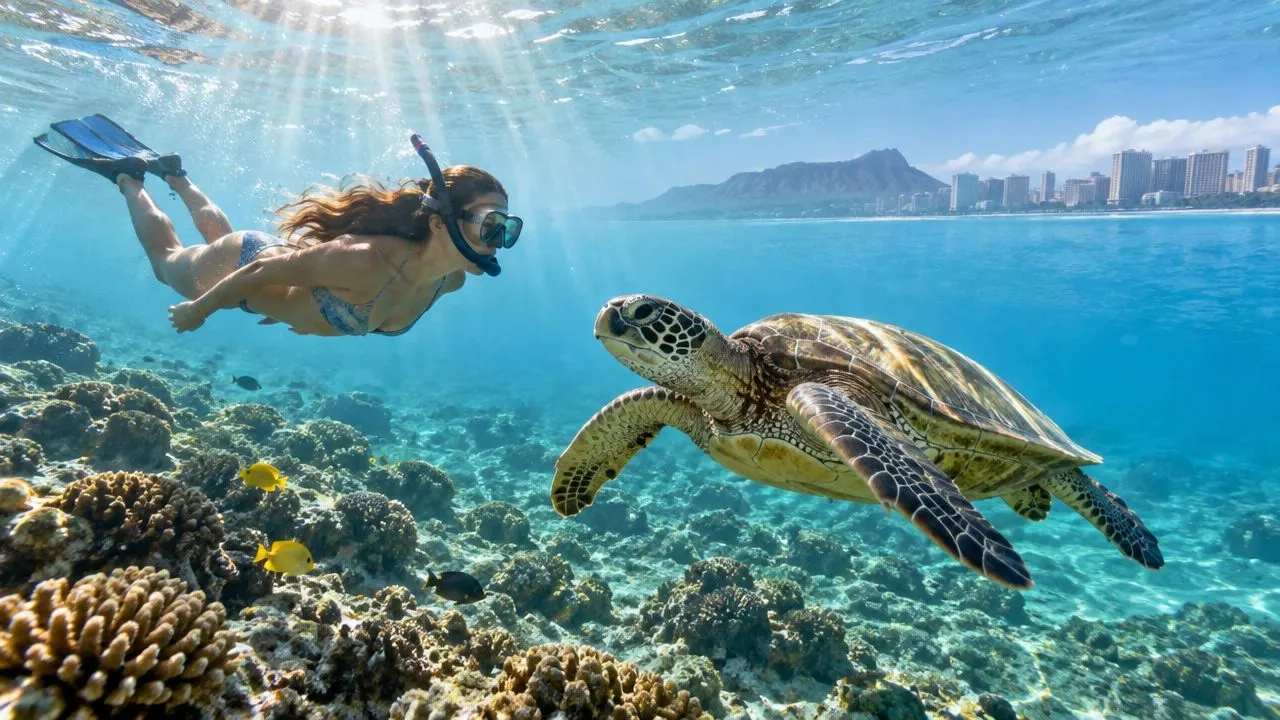
You're floating in Waikiki's clear water when a dark shape glides across the reef below. Your child points, your mask fills with a little water, and suddenly everyone wants to swim closer. That first sight of a Hawaiian green sea turtle, or honu, can feel almost unreal. The best response is also the simplest: slow down, give the turtle room, and let the encounter unfold on its terms.
Swimming with turtles in Oahu is less about chasing a guaranteed photo and more about learning how to share the ocean with a protected wild animal. Waikiki, Turtle Canyons, and nearby reefs can offer memorable sightings, but the quality of the experience depends on calm water, responsible guides, and behavior that doesn't interrupt feeding, resting, cleaning, or breathing.
Experiencing the Magic of Oahu Sea Turtles
The turtle often appears before anyone is ready. A guide may point toward a reef ledge, but the honu can emerge from below the boat, pass under the group, and continue on its way. Families who expect a dramatic close encounter sometimes discover that the most rewarding moment is watching the animal move naturally through blue water, without a hand reaching out or a swimmer finning after it.
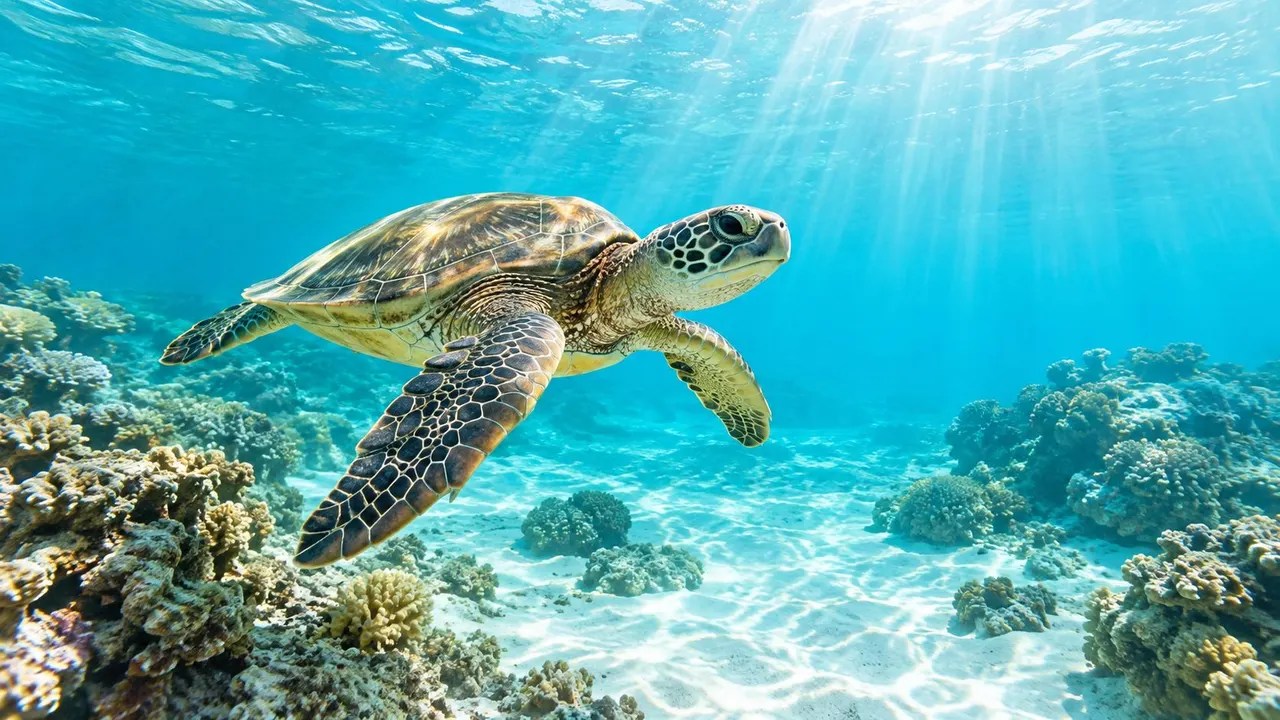
Oahu has become a notable place for turtle viewing because conservation has helped Hawaiian green sea turtles recover from severe depletion. State and federal protections supported nesting growth of about 5% per year over the last two decades, reaching almost 500 nesting females annually, compared with only 67 nesting turtles in 1973. The Hawaiʻi Department of Land and Natural Resources sea turtle overview explains why modern encounters are connected to long-term protection rather than simple tourist demand.
The recovery is visible on Oahu's beaches as well as in the water. Oahu recorded 83 nests in 2024, compared with 9 nests in 2019 and only 0 to 2 nests per year from 2016 through 2018, according to the U.S. Fish and Wildlife Service account of honu recovery on Oahu. Those figures don't mean every snorkel trip will produce a sighting. They show why visitors now have opportunities that depend on a still-protected population and carefully managed habitat.
For a useful introduction to the animal, read this guide to Hawaiian honu and responsible viewing. Then treat the encounter as wildlife observation, not an interactive attraction. A turtle that appears calm may still need to surface, feed, rest, or leave the area.
The memorable encounter is the one where the turtle changes its behavior as little as possible.
Legal Guidelines and Safe Distances
A turtle surfaces near your group at Waikiki, and everyone starts finning toward it. Stop there. Hawaiian green turtles are protected under Hawaiʻi law and managed with federal partners. The Hawaiʻi Department of Land and Natural Resources guidance identifies the green sea turtle as the species most frequently observed in Hawaiʻi.
NOAA gives snorkelers a practical in-water minimum: remain at least 10 feet, or 3 meters, away from a sea turtle, as outlined in the NOAA marine life viewing guidelines. NOAA also uses 50 yards in broader guidance for approaching sea turtles on land or from vessels. For a Waikiki swim, treat 10 feet as the absolute floor, not a target. Give more room whenever possible, and follow a guide's larger distance if one is required.
How to judge distance in the water
Masks, waves, and excitement make distance hard to judge. Use these practical checks:
- Use your body as a reference: If the turtle seems close enough to touch with your arm extended, you are already too close.
- Leave open water ahead of it: Your group should be able to pause without blocking the turtle or surrounding it.
- Watch the turtle, not the camera: If framing a photograph requires swimming closer, stop recording and let the animal choose the distance.
- Stay beside its route: A parallel position is safer than swimming directly behind or above the turtle.
A turtle must reach the surface to breathe. Never hover over it, block open water, or form a ring around it. If it angles upward, turn away and create space immediately.
What counts as disturbance
State guidance prohibits touching, picking up, restraining, jumping over, straddling, pursuing, riding, harassing, harming, or otherwise disturbing sea turtles. Feeding and touching are disturbances and illegal, as explained in the DLNR notice on protecting honu. For the full state and federal rules for snorkelers, read this guide to Hawaii turtle snorkeling rules.
If another swimmer crowds the turtle, do not move closer to keep your view. Stay with children, back away, and alert the guide when appropriate. Chasing an animal that swims away prolongs the disturbance and removes its clearest exit.
Understanding Turtle Behavior at Cleaning Stations
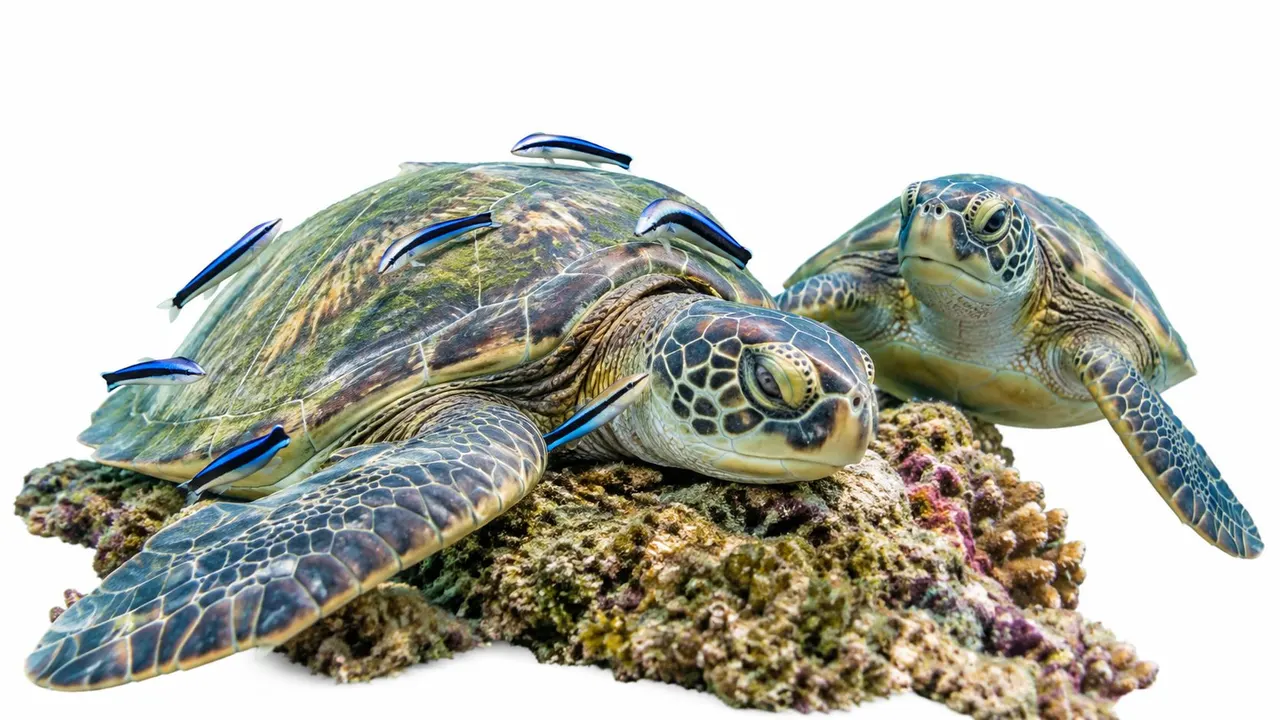
A turtle hovering over a reef isn't necessarily waiting for swimmers. It may be using a cleaning station, a place where small reef fish remove material from its skin and shell. The behavior looks still and inviting from above, but the turtle is participating in a structured relationship within the reef community.
Research on Hawaiian green turtles documents distinct activity patterns that include feeding, basking, and cleaning-associated behavior. The study of Hawaiian green turtles' diving, basking, and foraging patterns shows why a turtle's movements should be read as purposeful rather than random.
Read the posture before you move
A turtle that settles above a reef may be feeding, resting, or allowing cleaner fish to work. The most useful response is to become a quiet observer. Stop finning, keep your body horizontal, and remain on one side of the station so the turtle retains a clear departure route.
A turtle that changes direction, accelerates, dives away, or repeatedly surfaces may be responding to people. Don't interpret a lack of obvious panic as permission to approach. Wildlife can tolerate a nearby presence while still experiencing disruption.
What works and what fails
Works: A stationary group, low splashing, slow breathing, and a side-on position. This lets the turtle continue its behavior and gives everyone a better chance to observe details such as grazing, shell movement, or cleaner fish activity.
Doesn't work: A swimmer diving down toward the turtle, several people closing in from different directions, or one person trying to hold position directly over the animal. Those actions reduce escape options and can end the viewing opportunity for everyone.
The best turtle encounter may last only while the animal chooses to remain. A guide familiar with Turtle Canyon's guided snorkel setting can help guests recognize when to watch, when to move, and when to leave the station undisturbed.
Choosing the Right Guided Snorkel Tour
A guided trip changes the practical experience for first-time snorkelers. Instead of scanning unfamiliar water while managing masks, fins, children, currents, and wildlife etiquette, you have a crew that can explain the site and set expectations before anyone enters the water.
For families, the important comparison isn't boat size or advertised sightseeing time. Look at how the operator handles safety, equipment, group movement, and turtle behavior.
| What to compare | A guided catamaran experience | A basic charter |
|---|---|---|
| Instruction | Usually includes an organized briefing and in-water guidance | May depend more heavily on the group's prior experience |
| Family support | Often easier for mixed swimming abilities and nervous beginners | Can be less structured for children who need extra help |
| Wildlife etiquette | Crew can manage distance and discourage crowding | Responsibility may fall more directly on individual guests |
| Onboard experience | More room to settle in, prepare, and return safely | May focus primarily on transport to the site |
A catamaran can also make the day feel less rushed for multigenerational groups. Grandparents may prefer a stable place to sit, children may need a clear explanation before entering the water, and confident swimmers may want time to observe without turning the trip into a race.
A practical Oahu option
Living Ocean Tours' Honolulu snorkel company offers guided ocean trips from the Waikiki area, including its Turtle Canyons Snorkel Excursion. The company is described as the top rated and most reviewed snorkel company on Oahu, and its turtle-focused outing includes equipment, instruction, and guides who emphasize responsible wildlife viewing.
For families who want more activities beyond turtle viewing, the Deluxe Waikiki Snorkel and Wildlife Cruise adds a waterslide, water trampoline, and lily pad. That can suit a group with different priorities, though a turtle-focused tour remains the more direct choice when wildlife observation is the main reason for booking.
A strong alternative is Snorkel Turtle Canyon, which is worth considering when comparing operators, departure arrangements, and the type of guidance your group prefers. Ask every company what equipment is included, how they handle changing ocean conditions, and what happens if turtles aren't present at the site.
Essential Gear and Preparation for Beginners
Good preparation prevents most beginner problems before the boat leaves the harbor. You don't need complicated equipment, but you do need gear that fits, sun protection that won't add unnecessary products to the water, and a plan for how your family will respond if someone feels anxious.
Before boarding
Start with the basics:
- Choose swimwear that stays secure: A rash shirt adds coverage and reduces the temptation to reapply sunscreen constantly.
- Pack water and a dry bag: Hydration matters, and phones, medication, and spare clothes need protection from spray.
- Manage seasickness early: If someone in your group is prone to motion sickness, ask a pharmacist or clinician about suitable options before the trip and follow the label directions.
- Leave bulky valuables ashore: Bring only what the operator allows and keep essential items organized.
- Skip reef shoes in the snorkel area: Reef shoes can scrape or damage fragile coral and may make fin technique less comfortable.
Choose sunscreen carefully and follow the operator's instructions. A long-sleeved rash shirt, hat, and shade can reduce the amount of sunscreen entering the ocean, while some operators or protected areas may restrict products immediately before snorkeling.
Fit the mask before you swim
Press the mask gently against your face without using the strap and inhale slightly through your nose. If it stays in place, the seal may be suitable. Adjust the strap so it holds the mask securely without creating pressure, then test the snorkel while still on the boat or beach.
A leaking mask can make a child panic, but tightening it aggressively often makes the seal worse. Ask the crew to refit it. The same applies to fins. They should feel snug without pinching, and beginners should practice small, controlled kicks rather than bicycle-kicking near coral.
Use flotation as a safety tool
A snorkel vest isn't a sign that someone is a weak swimmer. It helps guests maintain buoyancy, conserve energy, and keep a stable horizontal position while they watch marine life. Children should stay close to their supervising adult even when wearing a vest, and no one should treat flotation equipment as a substitute for listening to the guide.
Review the Turtle Canyon snorkel gear guidance before your outing. Practice one simple rule with children: if the guide signals to stop, stop finning, lift your head, and listen.
The easiest guest to guide is the one who has practiced floating calmly before the turtle appears.
The Conservation Success of the Hawaiian Honu
When a honu settles on the reef near your group, the encounter feels personal. Its recovery rests on rules that prevent a sighting from becoming added pressure. The North Central Pacific population nests entirely in Hawaiʻi and grew at 5.44% annually until 2012, a major conservation rebound documented by Hawaiʻi DLNR sea turtle resources.
Recovery does not remove the need for restraint. A scientific review recorded relatively low Hawaiian Archipelago sea turtle density, 27 turtles per 1,000 tow segments, while also finding the highest annual population growth rate in the review at 0.08 per year, as summarized in the U.S. Fish and Wildlife Service discussion of Oahu honu recovery. A population can grow quickly and still be small enough that habitat loss, disturbance, or crowding at cleaning stations limits future recovery.
For a first-time snorkeler, conservation becomes practical behavior. If a turtle approaches, hold your position and let it choose the distance. Do not touch, feed, chase, block its route, or rest your fins on coral. Follow the crew's signals, take every belonging with you, and accept that the turtle may leave before everyone gets a photograph. The Oahu turtle conservation guide turns those principles into clear choices.
Your behavior cannot guarantee a close sighting. It can help the turtle leave calmly and keep its natural routine intact.
Living Ocean Tours offers guided snorkeling at Turtle Canyons with equipment, instruction, and safety-focused wildlife guidance for families and first-time snorkelers. Visit Living Ocean Tours to explore the excursion.


