
Swimming with Turtles in Oahu a Responsible Guide
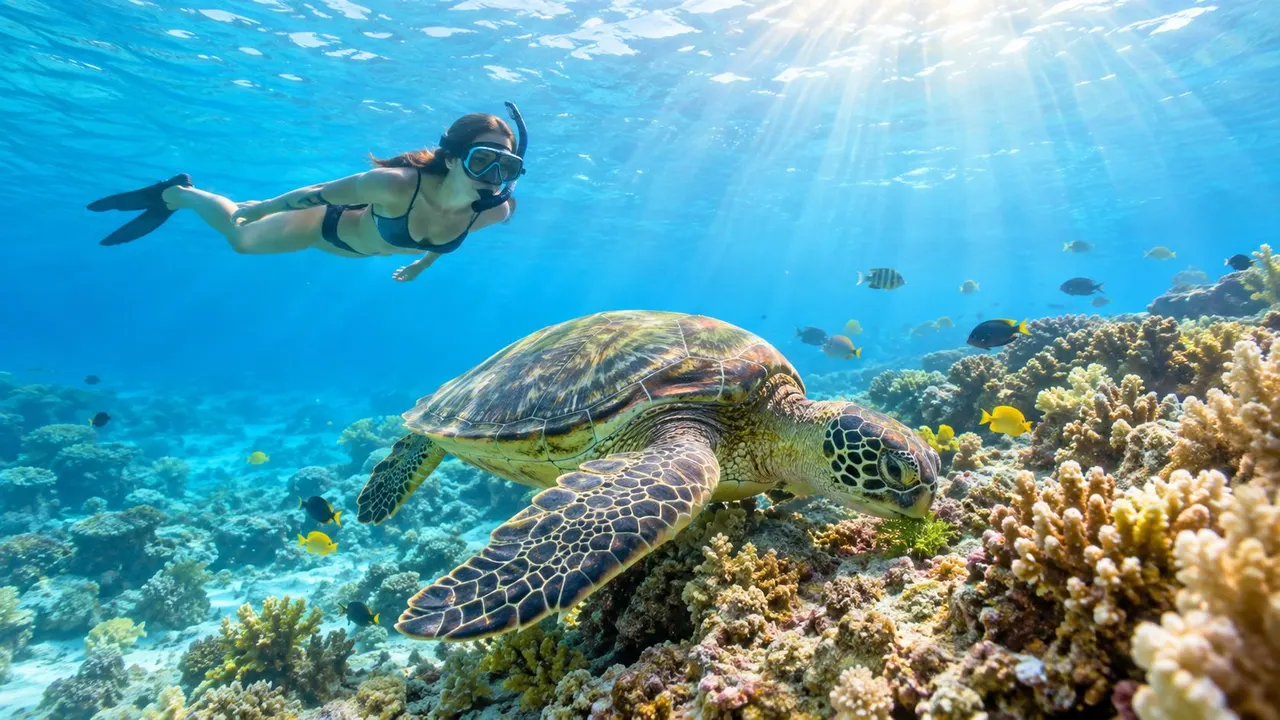
You're probably here because you've seen the photos. Blue water off Waikiki, a green sea turtle drifting over the reef, everyone looking relaxed and somehow perfectly spaced out. The experience is better than the photos, but only when people treat it like wildlife viewing instead of a chase.
That matters in Oahu. Turtle encounters are memorable because they're still wild. The turtle decides where it goes, how long it stays, and whether your group gets a calm look or just a quick pass. If you show up prepared, pick a responsible boat, and move correctly in the water, you usually get a much better day out of it. The turtles do too.
What Swimming with Turtles in Oahu Really Looks Like
At Turtle Canyon, the moment usually happens. You're floating face down, getting used to your breath through the snorkel, looking at reef fish and the contour of the bottom. Then a Hawaiian green sea turtle glides into view and settles into that easy, unhurried movement that makes people forget to kick for a second.
This isn't an aquarium-style encounter. It's a passive wildlife interaction. At Turtle Canyon, turtles often use the area like a cleaning station, hovering while reef fish pick at algae and debris on their shells. When conditions are calm, especially on a morning run, you can watch that behavior without needing to swim after anything.
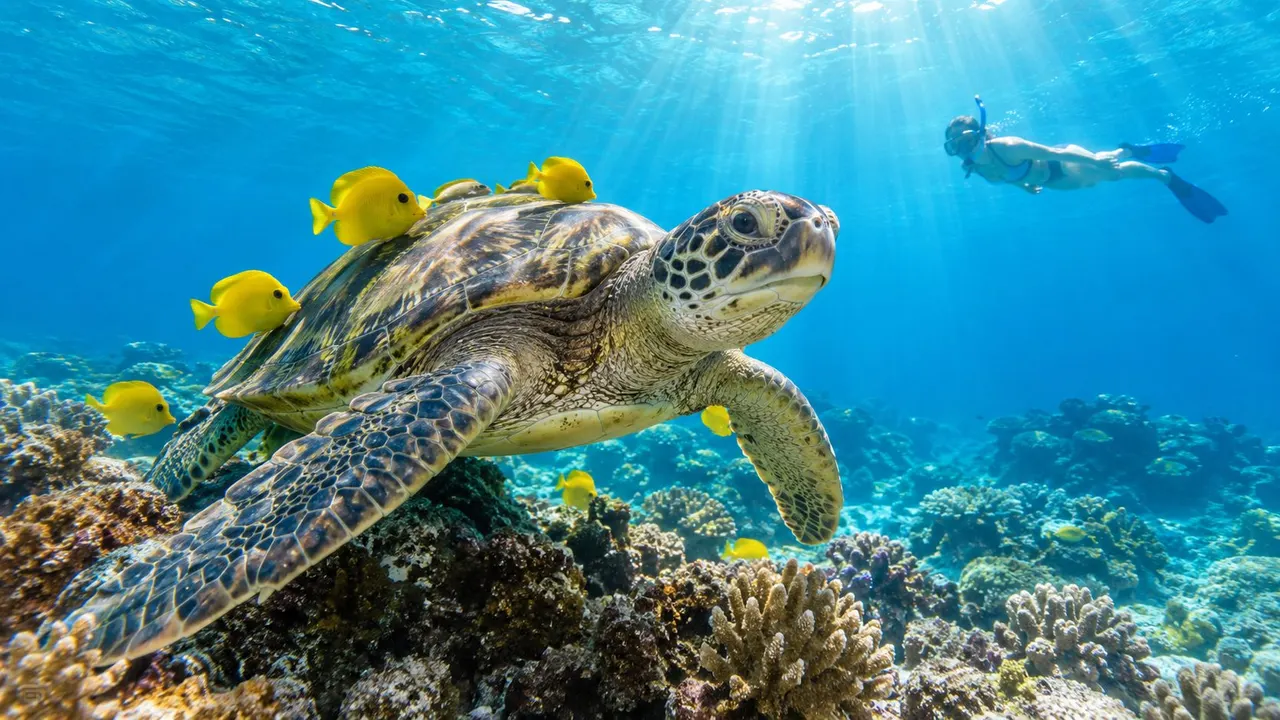
What a respectful encounter feels like
The best turtle sighting usually feels almost slow-motion. The group spreads out, people float flat and calm, and nobody drops down or cuts across the animal's line. If a turtle swims your way, your job is simple. Stay still and let it choose the distance.
A foundational rule in Hawaiʻi is to keep at least 10 feet (3 meters) away from Hawaiian green sea turtles in the water or on land, and not touch, chase, feed, or block their path. That practical guidance is laid out in this Hawaii swimming with turtles guide. It's the difference between observing natural behavior and causing the turtle to leave.
A close turtle encounter should still be passive. If the turtle approaches, let the turtle do the work.
Why this trip is different from a normal snorkel
Families often expect a turtle tour to work like a beach day with a bonus animal. It doesn't. You're dealing with ocean conditions, boat timing, wildlife behavior, and a protected species. That's why the calmest trips usually come from simple decisions made before anyone gets in the water.
A good day usually comes down to three things:
- Boat access: Getting to the site efficiently instead of burning energy on a long shore swim.
- Clean briefing: Knowing how to float, where to look, and what not to do around a turtle.
- Low-impact behavior: Moving slowly enough that the turtles keep doing what they were already doing.
Hawaiian green sea turtles are protected, and that protected status shapes the whole encounter. It's not just about seeing turtles. It's about seeing them without changing their behavior.
How to Choose a Responsible Turtle Snorkeling Tour
You can spot a poor turtle tour before the boat even leaves the harbor. The crew rushes the briefing, guests are unsure how to use their gear, and nobody explains how to float near a cleaning station without drifting onto the reef or crowding a turtle. That setup usually leads to short sightings, scattered groups, and more disturbance in the water than people realize.
A responsible tour does the opposite. It gets people to the site efficiently, spaces swimmers out, and keeps the encounter low impact so turtles are more likely to keep resting, surfacing, or moving through naturally. That usually means better viewing time for guests and less pressure on the animals.
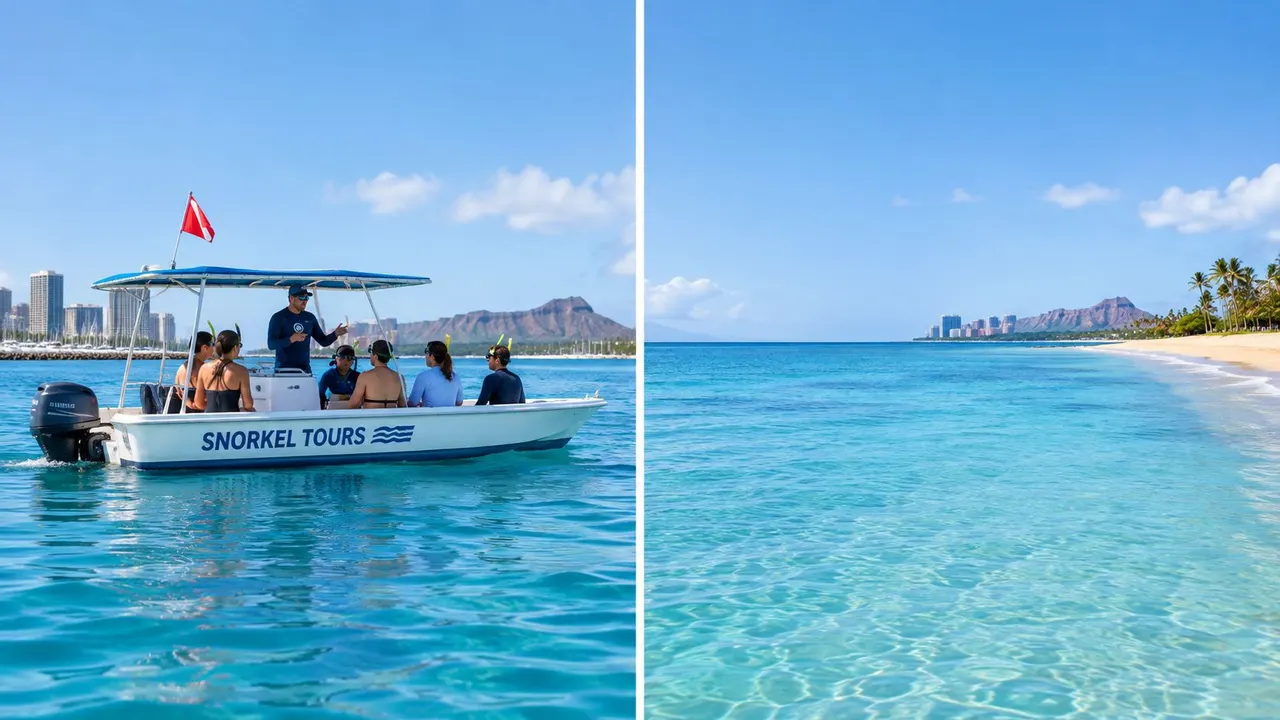
Choosing Your Turtle Snorkeling Option
| Option | Best For | Access to Turtle Canyon | Safety and Guidance |
|---|---|---|---|
| Guided boat tour | First-timers, families, casual swimmers, visitors short on time | Direct access by boat | Crew briefing, in-water oversight, fitted snorkel gear |
| DIY shore swim | Strong local swimmers who already know the area and conditions | Limited and less straightforward | You handle navigation, gear, conditions, and wildlife etiquette yourself |
What to look for before you book
Start with how the operator manages impact, not how close their photos look.
- Licensed boat and crew: A legitimate commercial operation has clear procedures, safety equipment, and a crew that knows the site.
- Briefing that covers behavior in the water: Look for operators who explain turtle distance, surface positioning, fin control, and how to avoid standing or kicking into coral.
- In-water supervision: Good guides do more than point and wave. They regroup drifting swimmers, redirect anyone who starts closing distance, and keep traffic away from the turtles' path.
- Gear that fits and includes flotation: Poor mask fit and no float support create anxious swimmers, and anxious swimmers flail, chase, and put their feet down.
- Practical departure point: Kewalo Basin Boat Harbor is the standard launch for Turtle Canyon runs from the Honolulu side.
If you want a sense of how local operators structure these trips, this Honolulu snorkel company overview shows the typical format.
One factual example is Living Ocean Tours, which offers guided snorkeling from Kewalo Basin near Waikiki with trips built around Turtle Canyon access and onboard instruction. The main thing to compare is not branding. It is how the crew handles spacing, entries, exits, nervous swimmers, and reef protection once everyone is in the water.
A fast way to judge quality is to ask two questions before booking: How do you keep guests from crowding turtles, and how do you keep beginners off the reef? If the answer is vague, keep looking.
Practical rule: The crew matters more than the boat photos. Good guides create space around the turtles, settle nervous swimmers fast, and keep the whole group moving predictably.
What to Bring and How to Prepare Before You Board
Most rough starts happen before the boat leaves the harbor. Someone forgot water. Someone put sunscreen on too late. Someone wore a complicated outfit over a wet swimsuit and now the whole group is reorganizing bags on the dock.
Preparation for swimming with turtles should be simple. Pack for a boat snorkel, not a full beach move.
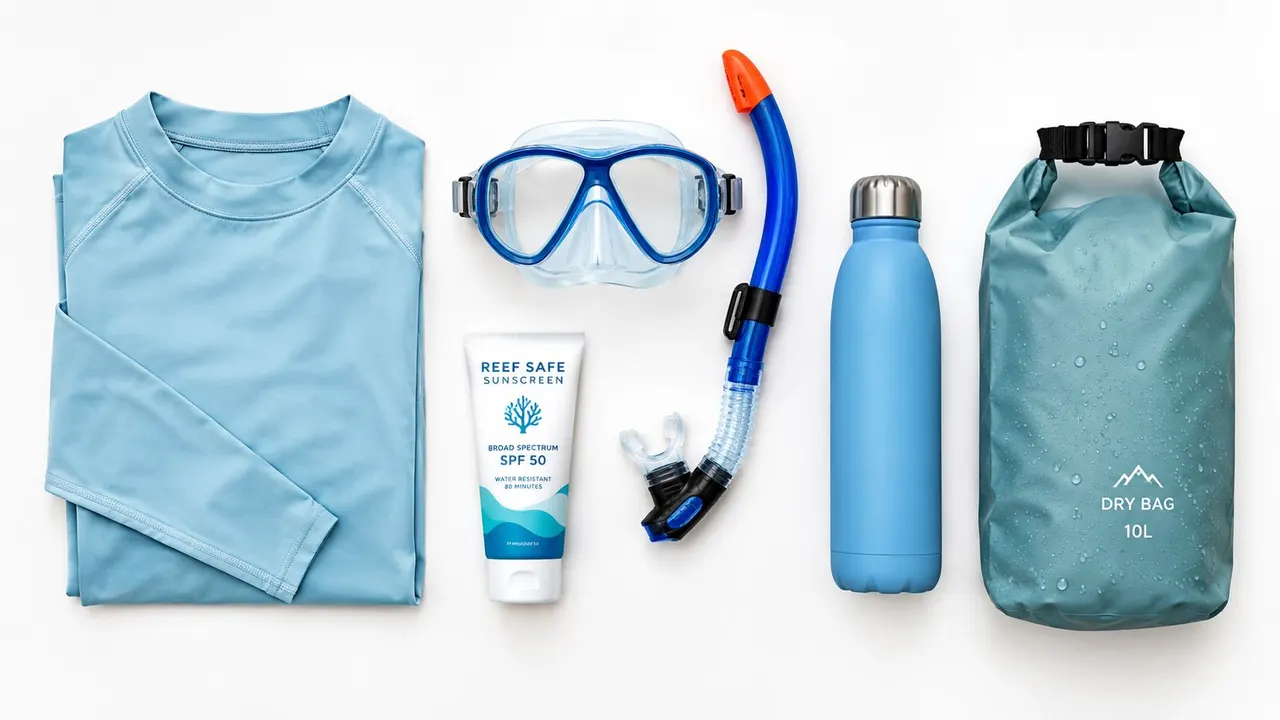
The short packing list that actually works
- Swimsuit already on: Wear it under your clothes so you're not changing in a rush at the harbor.
- Towel and dry clothes: You'll want both for the ride back.
- Dry bag: Phones, wallets, and car keys stay organized and out of the spray.
- Water: Hydration helps more than people think, especially after sun and salt.
- Sun protection: Apply reef-safe sunscreen early so it has time to set before you enter the water.
- Motion-sickness plan: If you know you get seasick, deal with it before boarding, not after the boat is moving.
A more detailed pre-trip list is handy if you like to check things off. This Oahu snorkeling packing list covers the basics in a practical way.
What the boat usually provides
On guided snorkel trips, the standard setup usually includes mask, snorkel, fins, and flotation. That's enough for most visitors. Beginners usually do better with crew-fitted gear than with random vacation gear they bought the night before.
Good guides also help with fit. If a mask leaks, they adjust it. If fins are too loose, they swap them. If someone is nervous, they'll often start that guest at the surface with flotation and simple breathing practice before sending them farther off the stern.
A few things to leave behind
You don't need much in the water, and extra stuff often becomes a problem.
- Heavy valuables: Better left secured on shore if possible.
- Reef shoes for coral walking: On a boat-based turtle snorkel, they usually don't help, and encouraging people to stand near reef structure is the wrong habit anyway.
- Oversized camera setups: If you've never snorkeled with a housing rig before, this is not the day to learn while drifting above a reef and a protected animal.
Bring less than you think. The smoother your setup on deck, the calmer your entry into the water.
For families, the prep is mostly about comfort. Have kids use the restroom before boarding, keep a dry shirt handy for the ride back, and tell them the goal isn't to swim fast. It's to float and watch.
Snorkeling Basics and What to Expect on the Water
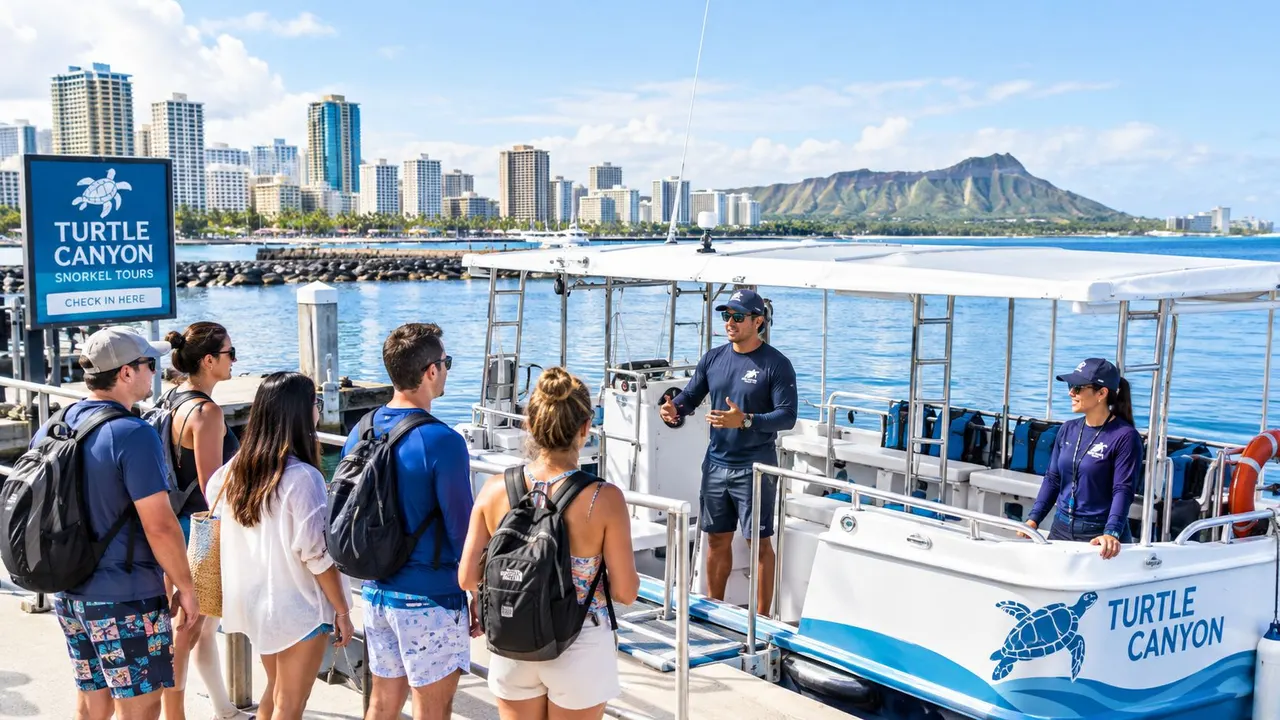
Boat snorkels off Honolulu have a rhythm to them. You check in, get settled, listen to the briefing, cruise out from Kewalo Basin, and gear up as the crew talks through conditions and hand signals. The smoother you take those first minutes, the easier the whole swim gets.
The first five minutes in the water
Beginners usually need only a few basics.
- Put your face in and breathe slowly through the snorkel. Don't rush your first breaths.
- Keep your body flat at the surface. Horizontal floating saves energy and keeps your fins away from the reef below.
- Use small kicks. Big bicycle kicks tire people out and make it harder to stay controlled.
- If water gets in the snorkel, lift your head, reset, and start again. Panic usually starts when people try to solve everything at once.
If you want a simple explanation of relaxed surface breathing, this guide on how to breathe through a snorkel is worth reading before your trip.
What Turtle Canyon usually feels like
Once the group settles in, guides normally place swimmers where they can float and observe rather than chase. That's the whole game. Turtle Canyon works best when the group lets the site come to them.
Expect to see reef fish first. Then you may notice a turtle below or off to one side, moving through the cleaning area or hovering over the bottom. Water conditions vary by day, but calm mornings often give visitors the easiest surface time because the ocean is less work.
For families or mixed-skill groups who want more than a straight turtle stop, the Deluxe Waikiki Snorkeling and Wildlife Cruise is a good fit. It adds extra water features like a waterslide and more room for kids to enjoy the ocean even if they don't want to focus only on turtles.
What works once you're out there
The people who enjoy this most aren't usually the strongest swimmers. They're the ones who relax fastest.
- Stay near the guide if you're new: You'll waste less energy and get better direction.
- Look with your head, not your whole body: Fast turns and splashing can scatter the group.
- Pause often: Floating still is part of good snorkeling.
How to Approach Turtles Safely and Stay Legal in Hawaii
This is the part that separates a good turtle day from a bad one. In Hawaiʻi, sea turtles are protected, and the rules are not optional.
NOAA Fisheries and the Hawaiʻi Department of Land and Natural Resources recommend keeping at least 10 feet (3 meters) away from sea turtles on land and in the water, and they also say not to touch, chase, or feed them, as outlined in NOAA's Hawaii marine wildlife viewing guidance. Hawaiian green sea turtles are protected under U.S. law, and disturbing, touching, riding, or trying to feed them can violate federal or state rules, as noted by the Hawaiʻi DLNR marine species protection guidance.
Why distance works better than pursuit
People sometimes assume a turtle that looks calm doesn't care where swimmers are. Field research says otherwise. A controlled study of immature green turtles found that 90% initiated a flight response at 3 m or less, which is why the authors recommended maintaining more than 3 m of separation during snorkeling in this Oecologia study.
That's useful on the water because it gives you a real benchmark. Three meters is a hard minimum, not a target to creep inside.
What guides tell guests to do for a reason
A lot of low-impact turtle behavior comes down to body position and timing.
- Approach from the side, never head-on: A direct line feels like pressure to the animal.
- Move slowly and predictably: Sudden kicks or dives force quick decisions by the turtle.
- Stop advancing if the turtle changes heading: That's often your first signal that you're too close.
- Back off if it accelerates, surfaces, or angles away: At that point, the turtle is managing you instead of the reef.
Recent practical guidance for visitors also emphasizes leaving a clear route to the surface because turtles must breathe air every few minutes. This Hawaii turtle snorkeling rules guide is a useful plain-English version of what that looks like in the water.
If you ever have to wonder whether you're too close, you probably are.
What repeated pressure does to behavior
Disturbance isn't always dramatic. Sometimes it looks like a turtle changing direction, leaving a cleaning area early, or never settling in at all. One study recorded snorkellers making regular close approaches at about 4 per hour, and found that even a small number of snorkellers increased total turtle behavioral bouts by more than 30%, indicating that nearby swimmers can change normal activity patterns. That finding comes from this Marine Turtle Newsletter study.
The practical takeaway is simple. Better sightings usually come from less pressure, not more. Responsible crews enforce distance because it protects the animal and often gives the group a longer, steadier look.
Tips for Families Photographers and First Time Snorkelers
Different guests need different adjustments, but the low-impact habits are the same. Calm bodies, controlled spacing, and no rushing the animal.
For families in the water
Kids usually do well when adults simplify the mission. Stay close, use flotation early, and tell them they're there to float and look, not to swim up to the turtle. Multi-generational groups also do better when the strongest swimmer isn't trying to tow the day forward.
Watch the little things. A child who's getting cold, tired, or anxious stops listening fast. Handle that early and the trip stays fun.
For first-time snorkelers
Most first-timers don't need more courage. They need a slower start. Hold the float, practice breathing at the surface, and keep your eyes down until the snorkel rhythm feels normal.
If you're nervous, stay nearest the guide. That one choice fixes a lot. You'll get quick help with your mask, better spotting, and less temptation to overkick.
For photographers trying to get the shot
The fastest way to ruin a turtle photo is to chase it. The turtle leaves, the water gets stirred up, and everyone around you starts finning harder. Good turtle images usually come from hanging back, using natural light, and letting the turtle move across the frame.
There's another reason to keep your body controlled. A peer-reviewed study found that snorkeler contact with benthic organisms rose 5.5-fold when people were also interacting with sea turtles, as reported in this reef interaction study. In plain terms, people who focus on the turtle often forget where their fins and knees are going.
Hover flat, keep your fins high, and don't converge on the same animal from different sides.
If you want a closer look at how a guided Waikiki turtle stop is typically set up, this Turtle Canyon snorkel page gives a clear picture of the overall outing.
Enjoy the Encounter and Protect It for Next Time
The trips people remember most are usually the calm ones. You slide in, settle your breathing, spot a turtle below you, and watch it keep feeding or cruising because nobody crowded it, blocked its path, or pounded the reef with fins. That kind of encounter feels better in the moment, and it leaves less disturbance behind for the next group and the next day.
Low-impact turtle snorkeling is not vague etiquette. It is distance, body position, and reef control.
Give the turtle space. Stay off its travel line so it does not have to turn, speed up, or surface around you. Keep your fins and knees clear of coral and rock, especially when your attention narrows onto the animal. On busy moorings like Turtle Canyon, a few small mistakes from several snorkelers can change the whole stop fast. The water clouds up, the turtle drops away, and everybody gets a shorter look.
That trade-off is real. People often think getting closer improves the experience. On the water, the opposite is common. A patient snorkeler who floats flat and lets the turtle pass usually gets a longer, cleaner view than the person who kicks after it.
Sea turtle recovery is one reason these encounters are still possible at all. NOAA reports broad improvement in many sea turtle populations worldwide, and Hawaiian green turtles have rebounded sharply from the low numbers seen decades ago, in this sea turtle recovery overview. That progress holds up better when people treat each snorkel stop as wildlife viewing, not pursuit.
Guided trips help here when the crew manages spacing in the water. Good guides spread people out, stop converging on one turtle, correct bad finning early, and move nervous swimmers onto a float before they start bicycling over the reef. That protects the site and usually improves viewing time because the group stays calmer and the turtles keep acting naturally.
Living Ocean Tours offers guided snorkeling trips from Kewalo Basin for families, beginners, and visitors who want a crew focused on safe, controlled wildlife encounters. If you want to check schedules, use the booking tool below.
If you leave the water saying, "We got close without bothering it," that was a good trip. That is the standard worth keeping.


