
Turtle Canyon Snorkel: Take Better Turtle Photos
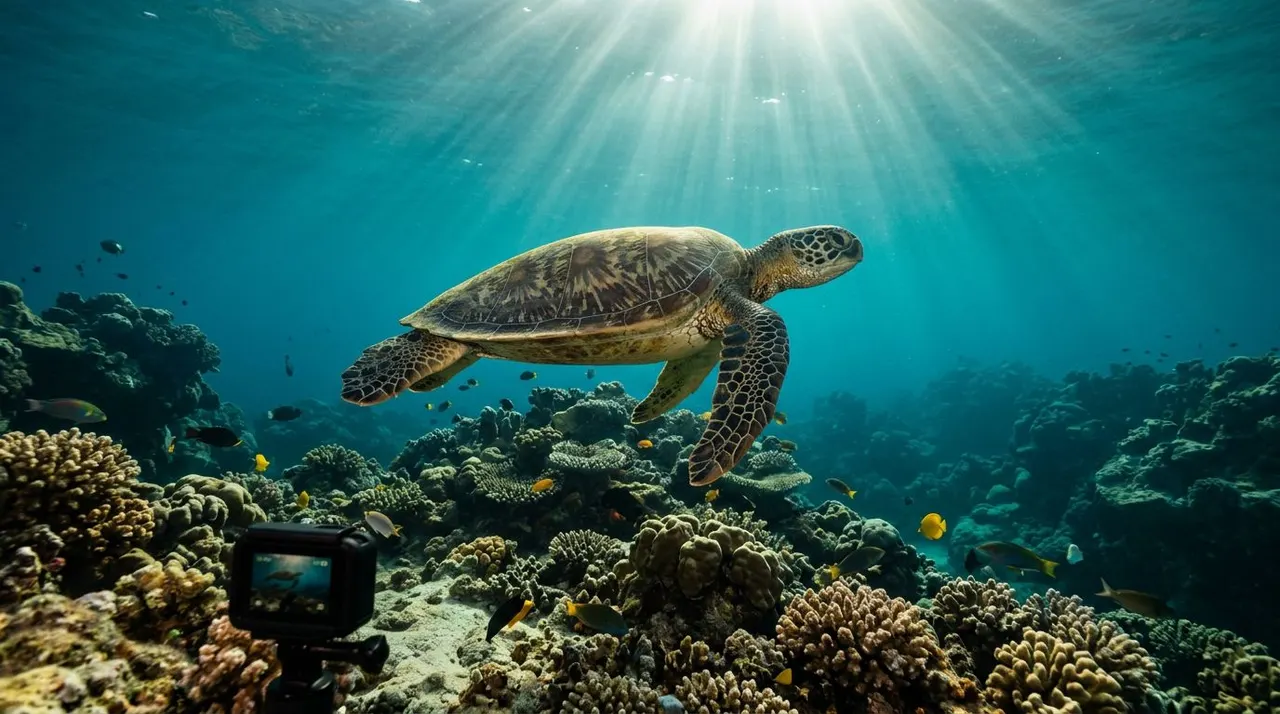
One calm Hawaiian green sea turtle can create a vacation photo you’ll treasure for years. A Turtle Canyon snorkel gives you that chance, but the best images come from patience, distance, and steady swimming.
When you protect the animal’s space, you also get more natural behavior on camera. You’ll learn how to approach the water, choose simple camera settings, and photograph honu without touching, chasing, or blocking their path.
Why Respectful Photos Start With Distance
A turtle photo should show the animal as it behaves naturally. If you swim too close, the turtle may change direction, dive, or leave the reef. That moment tells you the camera has become more important than the encounter.
Hawaiian green sea turtles, called honu, are protected under federal and Hawaii state laws. NOAA Fisheries explains that green turtle populations have legal protection under the Endangered Species Act, while Hawaii’s Department of Land and Natural Resources protects turtles through state rules.
Your goal is simple: observe the turtle without changing what it does. Let the animal choose its direction and pace. You can still capture strong images when the turtle occupies only part of the frame.
Wide photos often tell a better story than close-ups. They show the turtle above the reef, sunlight filtering through the water, and your own respectful distance. That setting gives the image a sense of place instead of making it look like a staged wildlife portrait.
The most valuable turtle photo is one that shows the animal stayed comfortable while you took it.
Turtle Canyon snorkel rules for responsible photography
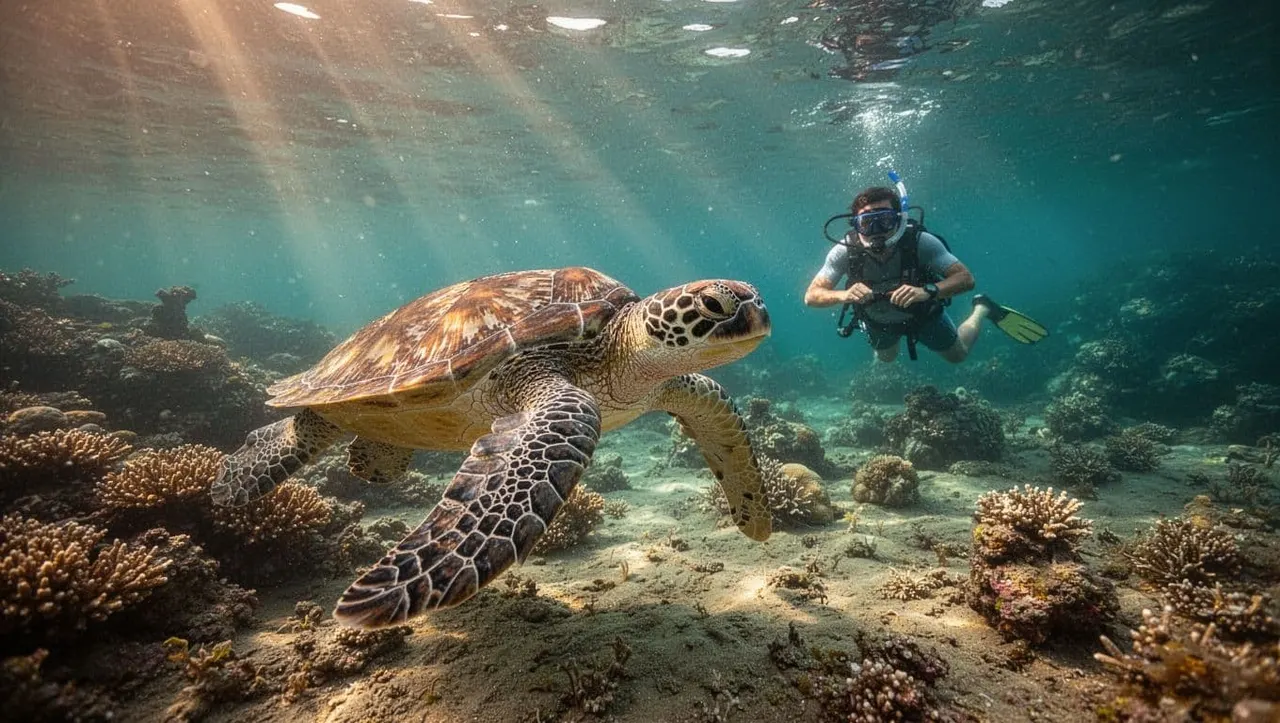
NOAA Fisheries recommends staying at least 10 feet, or 3 meters, away from Hawaiian sea turtles in the water and on land. Use that distance as a minimum buffer, not as a target you should slowly reduce for a closer picture. You can review the current Hawaii marine wildlife viewing guidelines before your trip.
Never touch, feed, ride, restrain, or pursue a turtle. You should also avoid swimming directly above it, surrounding it with other snorkelers, or blocking its route to open water. The Hawaii DLNR sea turtle reminder lists these behaviors as prohibited or harmful to protected wildlife.
During your Turtle Canyon snorkel, follow these photography habits:
- Keep your fins below your body and kick slowly so you don’t stir up sand or strike coral.
- Hold your camera in front of you, but never extend it toward the turtle.
- Stop moving if the turtle approaches your area, then allow it to pass.
- Back away if the turtle turns, dives, speeds up, or repeatedly changes direction.
A guide may signal you to move aside or wait. Follow that direction immediately. Experienced guides watch the animal, the reef, nearby swimmers, and boat traffic at the same time. Their instructions help you protect the turtle while keeping the group safe.
Keep Your Body and Fins Off the Reef
Turtle Canyon is an offshore reef area, so good body control matters. Practice floating horizontally before you start taking pictures. A relaxed position keeps your fins away from coral and reduces the amount of effort you need to stay in place.
Adjust your mask and snorkel before entering the main viewing area. If your mask fogs, move away from the turtle and fix it without kicking toward the animal. You’ll lose a few seconds, but you won’t create a stressful chase for one photograph.
Reef-safe sunscreen, controlled fin strokes, and neutral buoyancy also protect the habitat where turtles feed and rest. Never stand on coral, grab a rock for balance, or drag your fins across the reef. If you need help, ask your guide rather than reaching for the bottom.
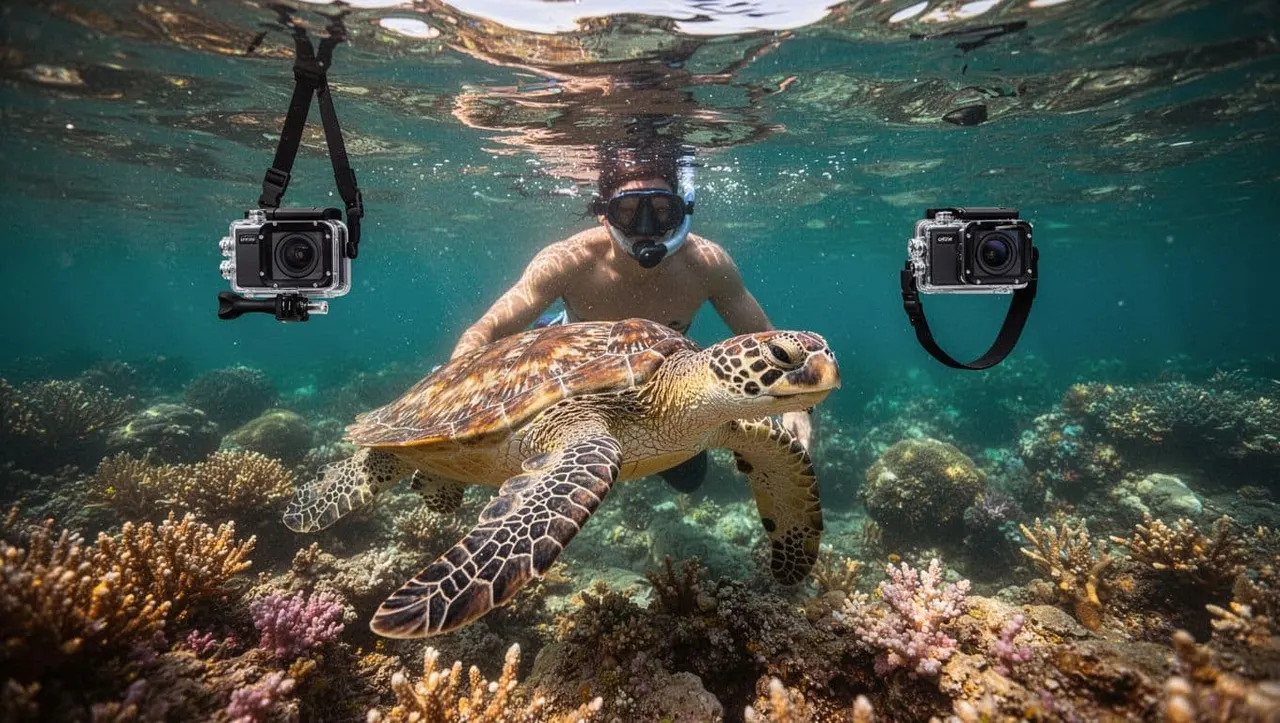
Your camera should have a floating wrist strap or a secure lanyard. Test it before you enter the water. A dropped camera can damage coral, distract you from your surroundings, and tempt you to dive after it.
Camera Settings for Clear Underwater Turtle Photos
Underwater photography becomes easier when you keep your setup simple. Use a waterproof action camera or a phone in a certified underwater case. Check the seal, battery, and storage before leaving the boat.
Start with the highest photo resolution your device can manage comfortably. For video, 4K at 30 frames per second is a useful starting point on many cameras. Burst mode can help when a turtle glides through the frame, but use it only while you remain stationary.
Natural light usually produces the most pleasing result in shallow water. Skip the flash unless you have received specific guidance for your equipment and the conditions. A flash can create glare from particles in the water and distract you from maintaining proper distance.
Use these simple adjustments:
- Tap the turtle on your screen to set focus when your device allows it.
- Lower exposure slightly if bright surface light washes out the shell.
- Keep the lens clean and free of water drops before you begin.
- Shoot upward at a gentle angle to capture the turtle against blue water.
Move slowly when you compose. Sudden camera movements often lead to blurry images and can make the animal swim away. Take several photos, then lower the camera and watch the turtle directly. The experience should never become a search for a perfect frame.
Compose around the turtle’s behavior
Leave open space in front of the turtle’s head. That direction gives the image room and shows where the animal is going. Avoid placing the turtle at the extreme edge of the frame unless you want to emphasize movement.
A slightly wider composition can include coral, sunbeams, or the surface above. These details help viewers understand the turtle’s environment. If the animal looks small in the original image, crop the photo later instead of swimming closer.
Photograph the turtle resting, cruising, or surfacing. Each behavior creates a different picture. You may capture a stronger memory by photographing the full scene than by trying to fill every pixel with the shell.
Choose a Guided Turtle Canyon Snorkel
A professional guide makes respectful wildlife photography easier, especially if you’re a first-time snorkeler. Living Ocean Tours operates from Kewalo Basin Boat Harbor, a short distance from Waikiki Beach in Honolulu. Its Turtle Canyons Snorkel Excursion includes equipment, instruction, and access to a natural underwater cleaning station where Hawaiian green sea turtles are often spotted.
Living Ocean Tours reports a 95% success rate for turtle sightings. Wildlife encounters can never be guaranteed, but a local crew knows how to read conditions, manage group movement, and give you clear instructions when turtles enter the area.
The company is the only tour company with professional snorkel guides. That support helps you focus on breathing, floating, and composing photos without losing awareness of the reef. Beginners and families can ask questions before entering the water, and children ages 3 and older can enjoy the company’s family-friendly ocean experiences when they meet the tour requirements.
You’ll board a Coast Guard-inspected, custom-built double-decker vessel with shaded seating, restrooms, dry storage, and sturdy ladders for water entry. The fleet includes the Coral Kai and Lokahi. Lokahi also features a SeaKeeper stabilization system that reduces rolling while you prepare your gear or return to the boat.
You can browse Living Ocean Tours excursions to review the company’s available ocean experiences. For the Turtle Canyons excursion, check the schedule before your preferred day fills.
Pack for a Comfortable Photo Session
Your camera is only one part of a successful snorkel day. Bring a reef-safe sunscreen, a towel, a change of clothes, and a waterproof bag for personal items. Wear a rash guard if you plan to stay in the water for an extended period.
Eat a light meal before boarding if you’re sensitive to motion. Drink water throughout the morning, and tell the crew if you feel tired, cold, or uncomfortable. You’ll take better photos when you’re relaxed and alert.
Avoid bringing loose accessories that can fall into the ocean. Leave food out of the water because feeding wildlife changes natural behavior and is illegal. If you see a turtle on shore after your tour, keep the same 10-foot distance and never approach it for a portrait.
Take the Photo, Then Give the Turtle Space
A Turtle Canyon snorkel becomes more rewarding when you treat photography as part of the experience, not the entire purpose. Stay at least 10 feet away, keep your fins clear of coral, and let the turtle decide where it goes.
A stable camera, natural light, and a wide composition can produce beautiful images without close contact. With professional snorkel guides at Living Ocean Tours, you can enjoy the reef, learn responsible habits, and leave the honu undisturbed. The best shot is the one you capture while the turtle continues peacefully on its way.


