
Swim with Whales Hawaii: The Legal Way to Do It
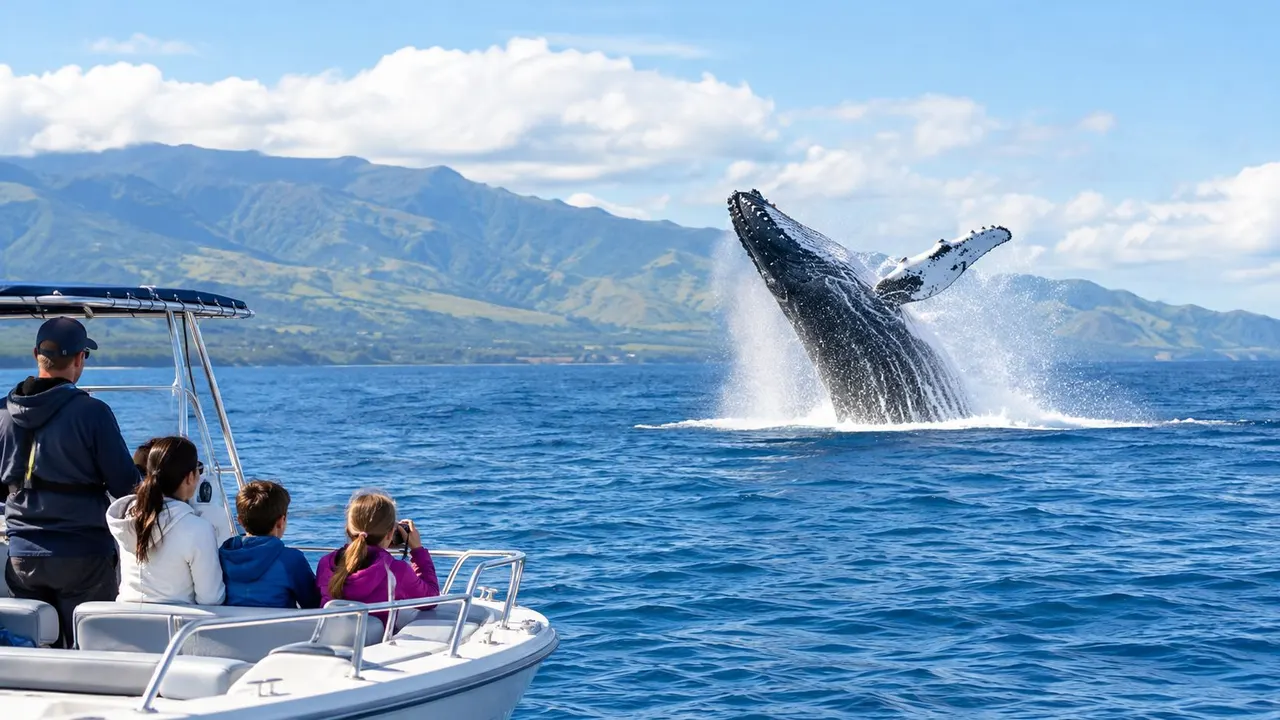
No, you can't legally swim with whales in Hawaii. Federal law prohibits approaching a humpback whale within 100 yards by any means, including swimming, so the legal way to experience them is a compliant whale watching tour.
You're probably on a Waikiki balcony right now, typing swim with whales Hawaii and picturing yourself floating beside a humpback. I get that dream. I've stood at the rail with families who wanted the same thing, and I've walked them through the rule that keeps those whales safe.
The good news is the lawful version is still one of the great wildlife shows on earth. You watch from the boat. The whales decide how close they come.
Can You Swim With Whales in Hawaii
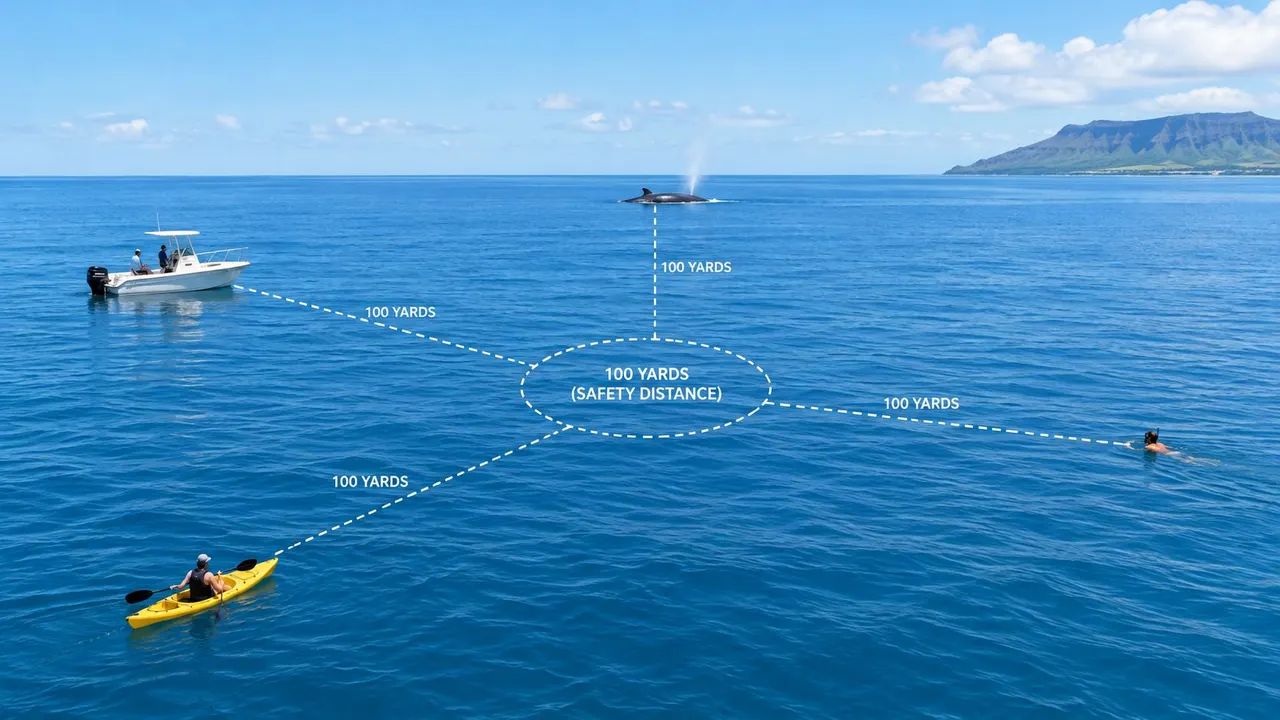
Plenty of travel pages treat swim with whales Hawaii like a bookable activity. It isn't. Hawaii's marine-species rules prohibit approaching a humpback within 100 yards by swimming, boat, kayak, drone, or any other means. If a whale comes to you, you stay put and let it leave.
That boundary is closer to good news than a disappointment. Hawaii is a nursery, not a petting pool. Keeping people out of the water around mothers and calves is a big reason this population came back, and why a whole culture of careful whale watching grew up around the islands.
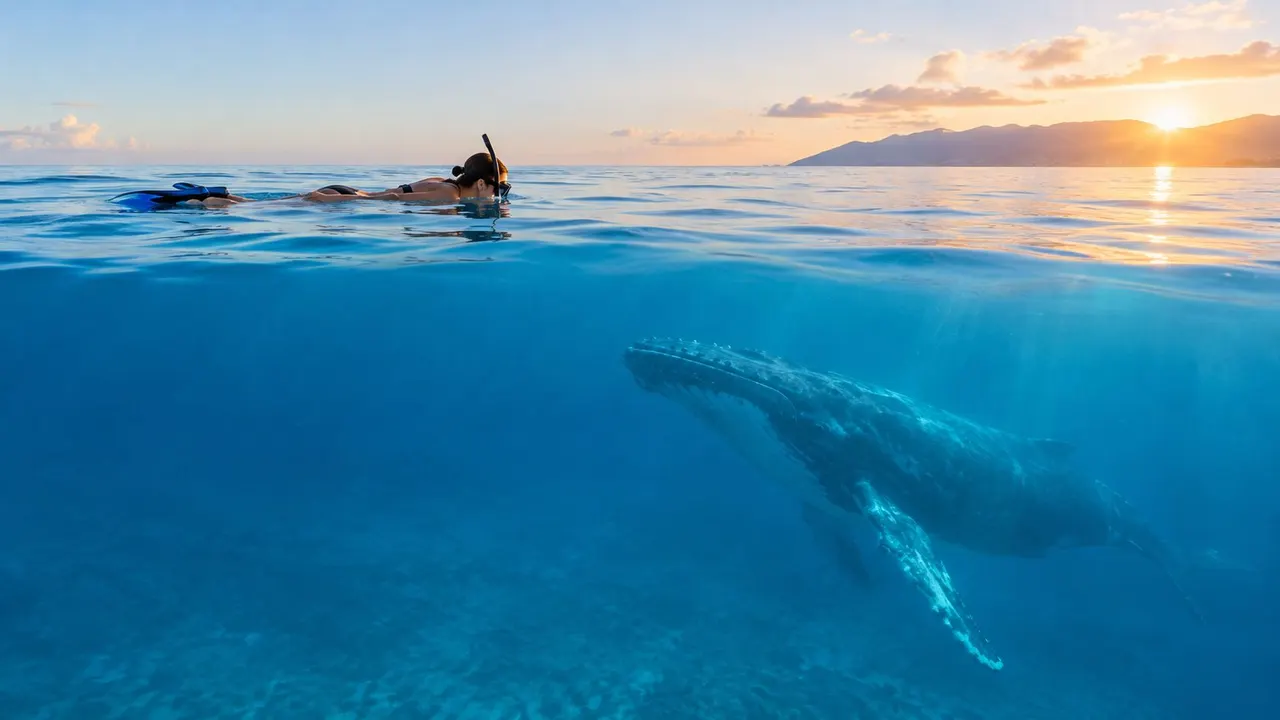
What you can still do is extraordinary. From a boat you can watch breaches, tail slaps, and mothers traveling with calves, all without closing the gap yourself.
Here's the path from here:
- The rule, in plain pieces. Who it covers, and what "approach" means.
- The calendar and the islands. When whales are here, and where Oahu fits.
- A real morning on the water. What a compliant captain does when a spout shows up.
- How to pick a boat. Education first, not a promise of a close pass.
- Where you can get in the water. Turtle snorkeling and reef time that are allowed.
The legal encounter is still the one guests talk about at dinner. Whales set the terms. You just show up ready to watch.
Why Swimming With Humpback Whales Is Illegal
Think of 100 yards as a football field of open water between you and the whale. That minimum is about 300 feet, or roughly 90 meters, and it applies everywhere in Hawaiian waters, all year. Sanctuary regulations cover every person and every craft: swimmers, snorkelers, kayaks, paddleboards, boats, and drones. Aircraft stay at least 1,000 feet up, about 300 meters.
"Approaching" is the verb that trips people up. Paddling toward a spout, angling the boat for a better photo, or dropping a drone over a group all count. The field is a floor, not a target you're allowed to creep up to.
If a whale comes to you
This is the moment most blogs skip. A humpback can surface beside a stopped boat because it chose to, not because you earned a closer look. The whale has the right of way, the same way a ship does in a channel.
Stay calm, skip sudden movements, and let the animal move off on its own. On our boats we keep the engine running and in neutral. We don't follow, and nobody goes in the water.
NOAA's wider marine-mammal guidance is just as plain. Don't swim with, ride, pet, touch, or try to interact with wild marine mammals. A curious calf is still a wild animal the size of a bus, and a startled mother doesn't negotiate.
Why the nursery needs the space
These islands are where North Pacific humpbacks mate, give birth, and nurse. A chase, a circling boat, or a swimmer in the middle of a group can split a mother from her calf or break up a social display. The Hawaiian Islands Humpback Whale National Marine Sanctuary, designated on November 4, 1992, is the federal-state frame for that habitat. The distance rule is how that protection shows up on an ordinary Tuesday offshore.
When and Where to See Whales in Hawaii
The season is wider than the brochure window. Recreation guidance from the sanctuary puts humpbacks in Hawaiian waters from November through May, not only January through March. Peak viewing still falls in January through March, when more animals are on the breeding grounds and surface behavior is easiest to catch.
Oahu sits inside that seasonal range. The waters off Waikiki and the leeward coast are a fair place to look, which is why a short cruise from Kewalo Basin works for hotel guests who don't want a long drive. Maui's channel, Kauai, and the Big Island's Kona coast hold winter whales too. None of those coasts hands you a guaranteed spout on a single outing.
Behavior, sea state, where the animals are that day, and simple visibility all change what you see. A glassy morning with a distant breach can beat a rough peak-season afternoon where every whitecap looks like a blow. Treat peak weeks as your best odds, not a promise.
| Period | Whale Activity | What Visitors Can Expect |
|---|---|---|
| November | First arrivals | Possible spouts, thinner numbers, quieter water |
| December | Building | More regular sightings as the migration fills in |
| January–March | Peak | Strongest odds for breaches, calves, and displays |
| April–May | Departure | Fewer whales, still worth a look if your dates land here |
Early-season and late-season trips aren't empty. You'll often share the water with fewer boats, and you may see fewer animals. If your only dates are mid-January, book the whale trip and keep a backup morning in case the wind comes up. Our notes on the humpback whale watching season in Hawaii walk through how those months usually unfold around Oahu.
Practical rule: Match the trip to your dates, then judge the marine forecast, not the beach forecast. Whitecaps hide spouts.
What to Expect on a Whale Watching Tour
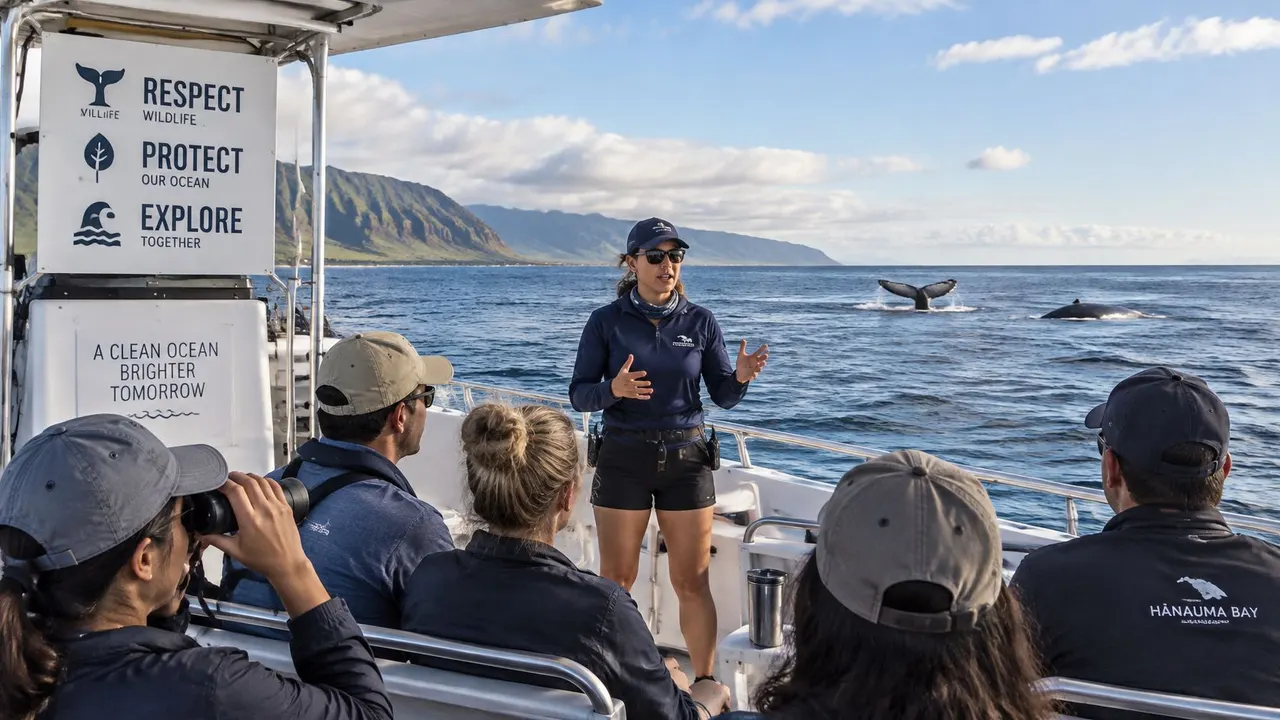
A responsible trip starts at the harbor, not at the first spout. You check in, step aboard, and the crew walks through life jackets, where to stand, and the distance rule before the lines come off. That briefing is short on purpose. Once you're outside the channel, eyes go to the horizon.
The ride along the Waikiki coastline is part of the pleasure. Buildings drop behind you, the water deepens, and someone usually spots a blow before the captain calls it. A spout is just a breath. The animal may stay down for minutes, then show a back, a fluke, or nothing else at all.
What the whales may show you
More than half of the North Pacific population is estimated to use Hawaiian waters each winter to mate, give birth, and nurse calves. That's why the behaviors feel so social:
- Breaching: The body clears the surface. It lasts a second, so watch the water, not your screen.
- Tail-slapping and spy-hopping: Flukes hit the surface, or a head rises straight up for a look around.
- Mother-calf travel: A smaller whale tucked beside a larger one. Give that pair the widest berth of the day.
- Competitive displays: Males churning the surface near a female. Loud, fast, and not a cue to edge closer.
How a careful captain runs the boat
We slow well before the legal line, pass behind traveling whales instead of crossing their bow, and never try to split a group. If an animal closes the distance on its own, the engine goes to neutral and we wait. One hundred yards is the floor. A good view at two or three times that distance still counts as a great trip.
The story under all of it is a recovery. Commercial whaling cut global humpbacks from an estimated 150,000 to roughly 10 percent of that number. In the North Pacific, about 15,000 animals before whaling fell to roughly 1,000 to 1,400 by the early 1970s after hunting continued past the 1965 moratorium. The United States listed them as endangered in 1970, and the Endangered Species Act in 1973 made hunting, harming, or disturbing them illegal. You're watching the result of that protection, not a show the whales owe you.
How to Choose a Responsible Whale Watching Tour
The fastest way to sort boats is to read how they sell the trip. If the headline promises you'll swim beside whales, or "get right up next to them," that operator is advertising a violation. Book someone else.
NOAA's boating guidance is the checklist I want every guest to know before they pay:
- Transit speed: No more than 15 knots, or a safe planing speed, while you're moving between areas.
- Near whales: 6 knots or less when you're inside 400 yards, coming in or leaving.
- Inside the line by accident: Stop advancing, engine in neutral, and wait until the whale clears.
- Crossing a path: Pass behind, stay beyond 100 yards, and don't split a group or head straight at them.
Lower speed buys reaction time and cuts the energy of a collision. Passing behind keeps pressure off the whales' line of travel. A crew that can explain that without hedging is the crew you want.
What to look for on Oahu
Ask four things. Does the company teach the rules instead of hinting at a close pass? Are the sighting expectations honest about weather and wild animals? Can you see the water, or are you stuck behind a packed rail? Do recent guests talk about the crew's knowledge, not just a single lucky breach?
Living Ocean Tours is the top rated and most reviewed snorkel company on Oahu, and that same harbor operation runs the winter whale trips. We leave daily from Kewalo Basin Boat Harbor, a short hop from Waikiki Beach, so families aren't spending the morning in a shuttle. The Waikiki boat tour notes cover how those departures fit a hotel schedule.
Read the reviews for how the crew handles a quiet day, not only the days a whale breaches off the bow. Patience is the product.
Family-Friendly Alternatives to Swimming With Whales
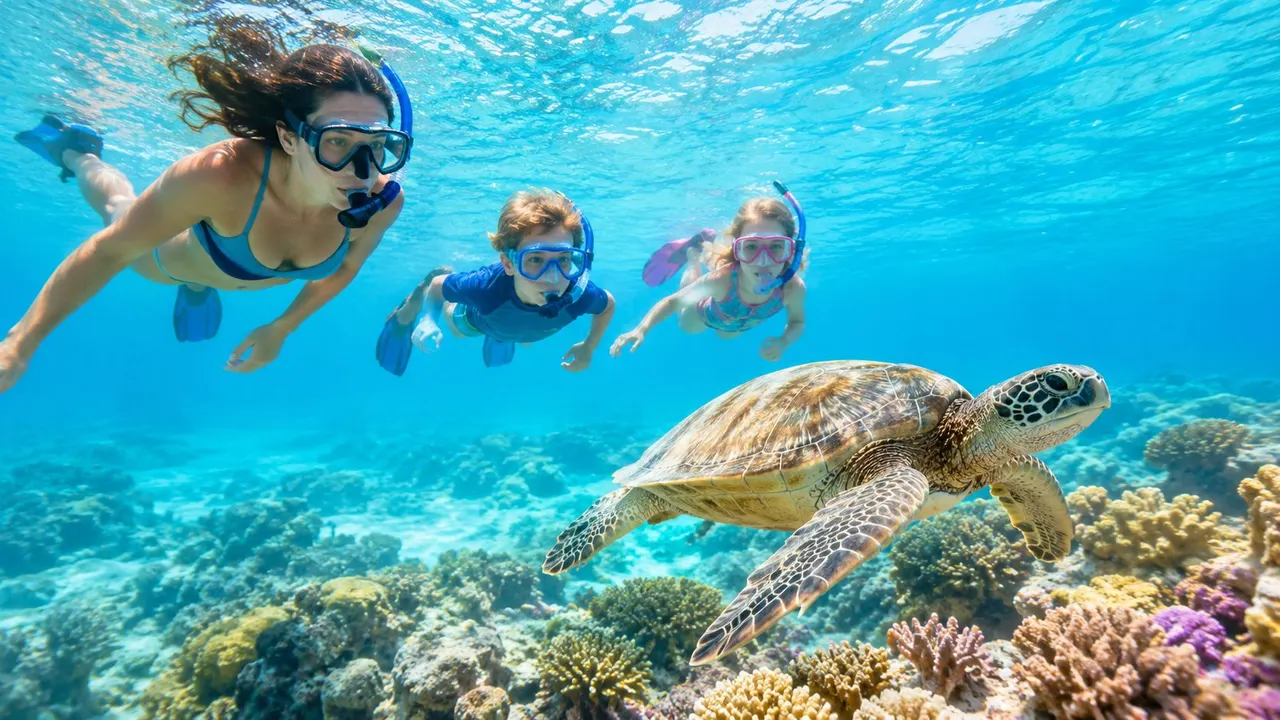
Whales stay off-limits in the water. Hawaiian green sea turtles don't. If the search for swim with whales Hawaii was really a search for "I want to be in the ocean with something big and wild," turtle snorkeling is the legal, family-friendly version.
Our Turtle Canyons trip goes to Waikiki's famous turtle cleaning station. It's common to see up to 10 Hawaiian green sea turtles there, along with reef fish. About 30 percent of Hawaii's reef fish are endemic, so a lot of what glides past the mask isn't found anywhere else. Yellow tangs, Moorish idols, and triggerfish show up often, and rays or eels are part of the same reef.
How a first snorkel actually works
Before anyone drops in, we run a short lesson on the gear and what the water will feel like. Floatation vests are there for anyone who wants one, including kids and grandparents who haven't snorkeled in years. You don't need to be a strong swimmer. You need to be willing to float and look down.
The Turtle Canyons Snorkel Excursion is the one we run to that cleaning station. If you want another operator on the same idea, Snorkel Turtle Canyon is a solid alternative. For a reef set away from the crowded shoreline, with a waterslide, water trampoline, and lily pad, the Waikiki snorkel and waterslide cruise is built for mixed ages. A wider look at Oahu marine life helps you decide which animals you most want to see.
Same respect rules apply down there. Don't touch, chase, or stand on a turtle. Watching one glide under you, on its own route, is the whole point.
Plan Your Waikiki Whale Watching Experience
The Waikiki Whale Watching Cruise runs January 2 through March 31. It's about 1.5 hours, open to ages 3 and up, and $49 per person. You can compare dates on the whale watch tour page before you lock a morning. Departures leave daily from Kewalo Basin Boat Harbor, near Waikiki Beach, so most hotel guests are a short ride or a walk away. If you want the winter coastline in a different light, the notes on sunset whale watching in Waikiki are worth a look alongside a dedicated whale trip.
A simple plan for families
- Pick a morning when you can. Calmer seas are kinder to kids and to anyone who gets queasy. Check the marine forecast the night before.
- Pack light and specific. Reef-safe sunscreen, a hat, polarized sunglasses, and a light jacket. Wind on the water feels colder than the harbor lot.
- Arrive early. You'll get a better spot on the rail and time to hear the briefing without rushing.
- Tell the kids the truth. Whales are wild. Some trips are full of breaches. Some trips are one distant spout and a beautiful coast. Both are a fair day on the ocean.
Private charters, for celebrations or a group that wants the boat to itself, run for Turtle Canyons snorkeling, Waikiki sunset cruises, and the deluxe snorkel and wildlife cruise, with room for up to 40 guests. The whale cruise itself stays a shared, seasonal trip on the schedule above. Questions go to info@livingoceantours.com or +1 (808) 436-3483, and the office at 1125 Ala Moana Blvd, Slip B-01, Honolulu, is open seven days.
Come for the whales. Stay for the part where you didn't have to break a rule to feel close to them.
Living Ocean Tours runs seasonal whale watching from Kewalo Basin along the Waikiki coast, plus turtle snorkeling and reef cruises for families who want time in the water the legal way. If humpbacks are why you're searching, we'll take you out to watch them from a lawful distance and tell you what you're seeing. Visit Living Ocean Tours to match a winter morning, or a snorkel day, to the dates you already have.


