
Humpback Whale Watching Season Hawaii: A 2026 Guide
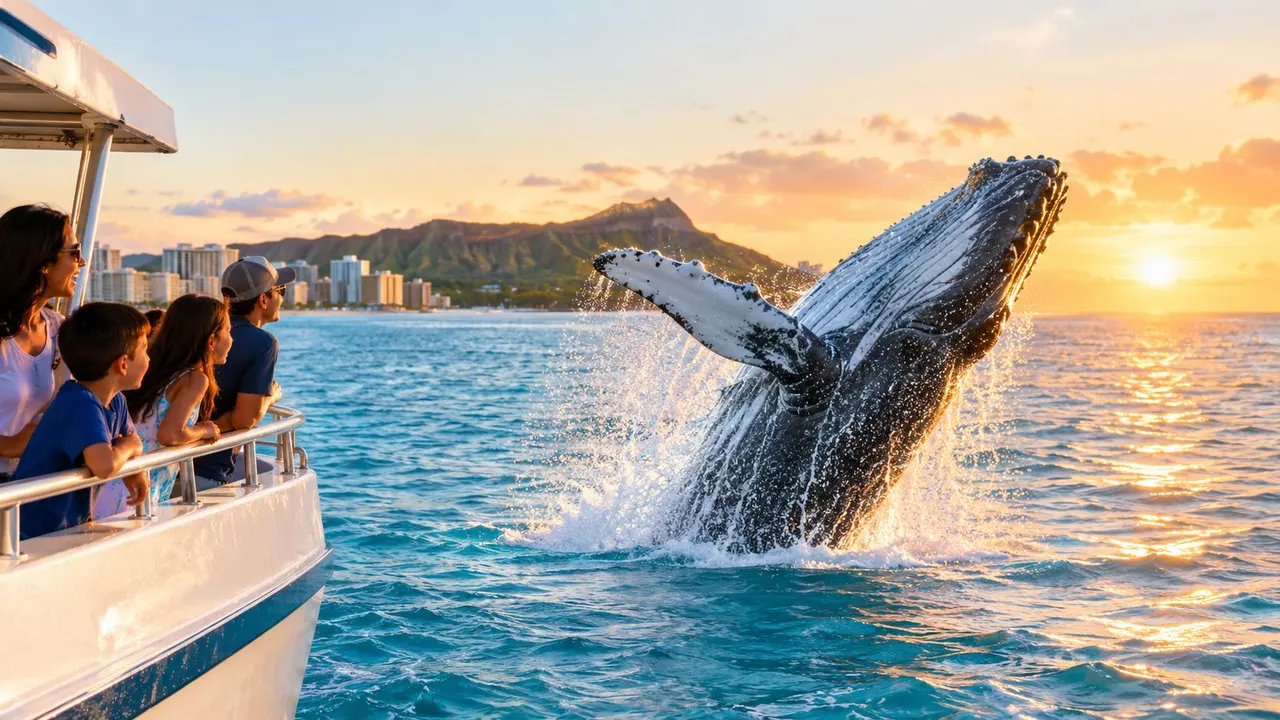
Hawaii's humpback whale-watching season generally runs from November through May, with the usual peak in January through March. NOAA estimates that up to 12,000 humpback whales, more than half the North Pacific population, return to Hawaiian waters each year.
That doesn't mean every winter trip brings a breach beside the boat. The season follows the whales' migration, but the experience varies with the month, ocean conditions, and what the animals choose to do. For Waikiki families, the practical plan is to choose dates based on whether frequent whale presence or more itinerary flexibility matters most, then treat any surface display as a bonus rather than a promise.
When Whales Return to Hawaii and Why It Matters
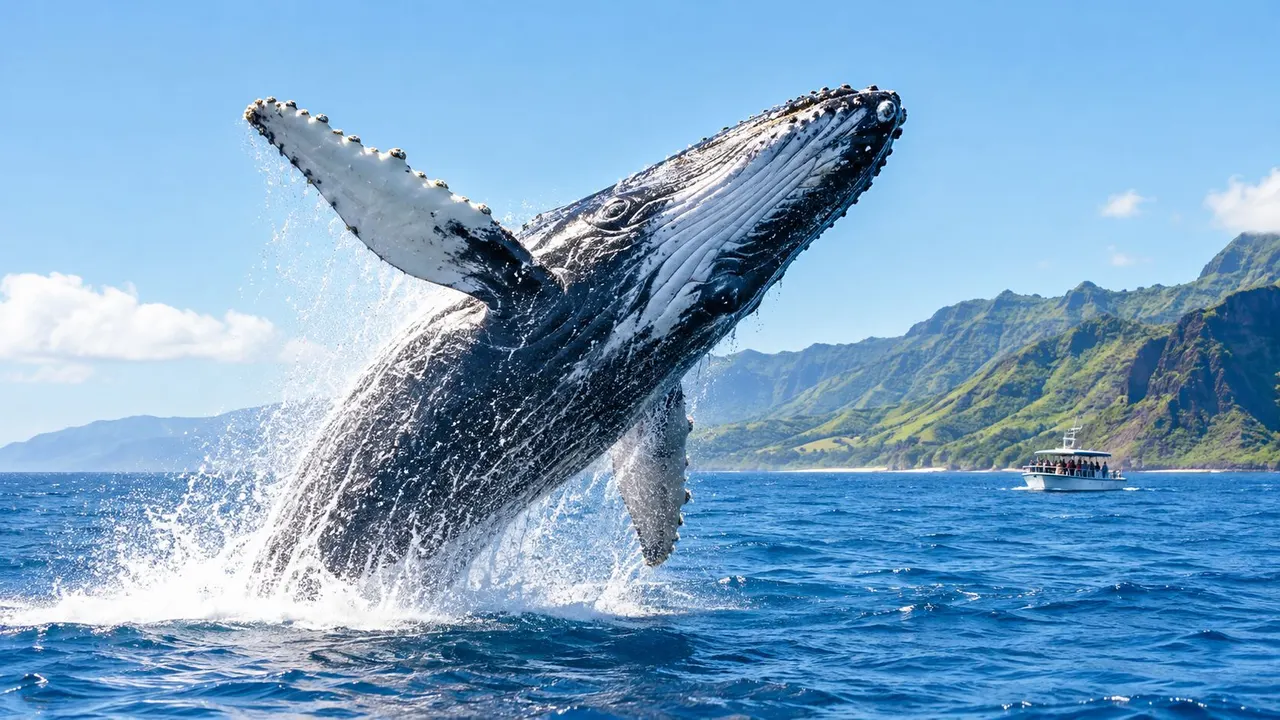
Humpbacks travel from high-latitude feeding grounds to Hawaii's warm breeding and nursery habitat. They come to mate, give birth, and nurse calves, so the islands aren't just a stop along the way. NOAA describes the migration as an annual return to Hawaiian waters from November through May, while the Hawaiian Islands Humpback Whale National Marine Sanctuary identifies January through March as the period of peak abundance. NOAA's sanctuary overview explains why that biological calendar gives visitors a useful planning window.
The season is long; the peak is narrower. In the early and late parts of the season, whales may still be present, but a visitor shouldn't expect the same concentration of activity as in midwinter. Even during peak months, whale presence and dramatic surface behavior are separate things. A spout, a tail lifting above the water, or a mother and calf surfacing can be a rewarding sight without a breach.
For a first whale trip: Choose January through March if you're prioritizing the strongest seasonal basis for seeing whales. Choose a shoulder month if it fits your itinerary better, while keeping expectations flexible.
Oahu offers regular sightings, but whales can be more concentrated around Maui, Lanai, Molokai, Kauai, and Hawaii Island. That distinction matters when you're staying in Waikiki: a boat trip can improve your viewing options, but it can't promise a particular encounter. For practical details on whale watching around Oahu, plan around the island you'll visit rather than treating all Hawaiian waters as equally dense.
Thinking of the humpback whale watching season in Hawaii as a migration first and a tourism window second makes the planning clearer. You're visiting a living breeding and nursery region, and the whales set the pace.
Peak Months vs Shoulder Months by Date
“Peak season” means higher whale presence, not guaranteed action at the surface. Acoustic monitoring shows presence rising from November through January, reaching its highest levels in February and March, then declining in April and May as whales head back toward feeding grounds. Research summarized by the University of Hawaii supports a month-by-month view rather than treating the whole season as one uniform stretch.
| Month | Season status | What to expect |
|---|---|---|
| November | Early season | Whales begin arriving. Treat a sighting as possible, not assured. |
| December | Early season | Presence builds, but this remains before the core peak. |
| January | Rising toward peak | More whales are present as the season develops. |
| February | Peak | A strong choice if your priority is frequent whale presence. |
| March | Peak | Still within the period of highest seasonal presence. |
| April | Shoulder | Whales begin departing; sightings remain possible. |
| May | Late shoulder | The broader season extends into this month, but presence is declining. |
For families tied to school breaks or a fixed itinerary, December and April can still be reasonable choices. The trade-off is straightforward: February and March offer the stronger statistical opportunity, while shoulder dates can make more sense when those dates fit your trip better. Don't assume that a quieter season automatically means fewer boats, either; conditions and departure schedules vary.
A whale count can't tell you whether you'll see a breach, a tail throw, or a quiet surfacing. Those are behaviors, and wild animals don't perform on a schedule. Use the peak to choose when whales are more likely to be around, not to predict what they'll do.
Best Places to Watch Whales from Waikiki and Kewalo Basin
From Waikiki, you have two practical choices: watch from shore or go out by boat. Shore viewing is free and easy to fit around a beach day, but you're looking across open water from a fixed spot. Choose a clear vantage along the coastline, scan patiently for spouts, and bring binoculars if you have them. Visibility depends on weather, light, and how far offshore the whales are.
A guided trip from Kewalo Basin Boat Harbor gives the crew the option to look across a broader area and explain what you're seeing. It doesn't mean the vessel can move close to a whale; protected-distance rules still apply. It does mean you can watch from the water, where a spout or dorsal fin may be easier to notice than from a crowded stretch of beach.
How to choose:
- Stay ashore if you want a flexible, no-booking option and are comfortable with distant views.
- Choose a boat if your family wants a dedicated outing, crew narration, and a better chance to spot activity offshore.
- Check conditions before committing to a particular day. Wind, swell, and visibility can affect comfort and how easily you can watch.
Oahu sightings are common, though concentrations may be higher in other island waters. That's a reason to keep expectations grounded, not to dismiss a Waikiki trip. Oahu whale-watching guidance can help you compare a shore outing with a boat departure from Kewalo Basin and decide what suits your group.
If you're traveling with children or older relatives, consider whether they'll enjoy scanning the horizon or would prefer a guided outing with a crew pointing out signs of whale activity. The upgrade is less about getting closer and more about having a knowledgeable team help you find and interpret what's happening.
What a Whale Watch Boat Trip Actually Feels Like
A typical trip starts at the harbor, where guests check in and get settled before departure. The captain or crew explains the safety procedures and responsible viewing rules, then the boat heads offshore to look for signs of whales. Families who know the basic rhythm beforehand often find it easier to enjoy the open-water time.
The crew may spot a spout first, then track a dorsal fin or movement at the surface. Everyone looks in the same direction, but the encounter can be brief: a whale surfaces, breathes, and disappears again. Sometimes the boat idles or drifts while the crew watches from a respectful distance. Waiting can feel slower than the chase shown in videos, but it's the responsible way to give whales room to continue their behavior.
The most useful thing to pack is patience. A quiet surfacing is still a real wildlife encounter, even if the whale doesn't breach.
During the season, whales may surface in social groups, and mothers and calves may appear together. You might see a tail lifted above the water or other surface activity, but no crew can schedule those moments. A whale may also move toward a vessel. That doesn't give the operator permission to approach or follow it; the captain must respond under the rules, not turn the encounter into a pursuit.
Before booking, consider how your family handles time on the water and whether children will be comfortable looking and listening between sightings. A whale-watch trip is part wildlife search, part ocean ride. The crew's narration can help make the pauses meaningful by explaining what the group is observing and why the boat is holding position.
Federal Rules Every Whale Watcher Should Know
Every vessel in Hawaiian waters answers to the same federal floor: humpback whales get 100 yards of space, and aircraft stay at least 1,000 feet away. The rule covers boats, swimmers, paddlers, and drones alike, and the sanctuary's boating and viewing guidance lays out the conduct expected around whales.
The same guidance addresses speed. Operators are advised to travel at 15 knots or less, or at minimum safe planing speed, in water 600 feet deep or shallower during whale season, then slow to 6 knots or less within 400 yards of whales when arriving or departing a viewing area. Vessels should also leave along their original route and hold reduced speed until clear. Those numbers exist because a fast hull in shallow water is the main collision risk for a surfacing whale.
Here is the part I explain most often at the dock, because it rarely gets explained well. Federal law draws a hard line between a whale approaching a boat and a boat approaching a whale. Captains cannot pursue, cut off, or reposition toward an animal to manufacture a closer pass. If a whale closes the distance on its own, the operator's obligation is to hold position and let the animal set the terms of the encounter. Its curiosity does not convert into permission to maneuver, shadow it, or stretch the sighting into a slow follow.
What that means on board:
- Don't ask the captain to get closer. The legal distance holds even when the whale is easy to see.
- Let the crew manage the vessel. Encouraging anyone to chase or intercept a whale works against the operator.
- Stay patient when the boat holds position. A paused vessel is usually the correct legal response, and often the best view anyway.
For more context on Oahu whale-watching rules and practice, look for an operator whose crew explains the rules clearly before and during the trip.
Family-Friendly Viewing Etiquette and Stewardship
Kids handle responsible viewing well when the rule is stated plainly: "We stay back so the whale can choose where to go." I give families that line before we leave the harbor, and it works. Hands stay inside the rail, crew directions get followed the first time, and voices stay calm while the boat is on wildlife. Small habits keep the whole group settled, so no one ends up crowding the crew with requests the rules don't allow.
When the captain pauses the boat, use the moment to explain that the whale controls the encounter. A stopped vessel is not a wasted minute; it is often when a curious animal surfaces closest. Hawaii's marine-species guidance describes the distance and vessel practices that support safer viewing, and it gives parents a solid reference for the questions kids ask afterward.
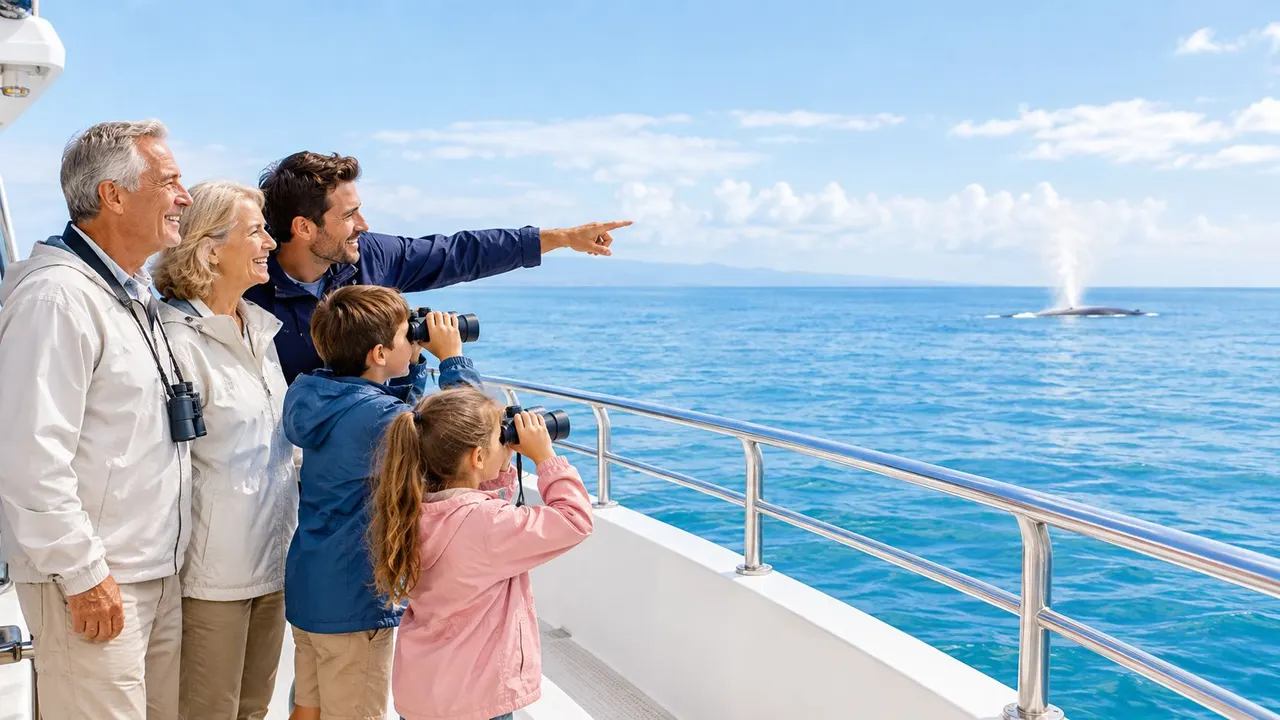
Stewardship also means noticing when something looks wrong. An entangled whale may trail rope or fishing gear, or swim as though something is dragging against it. Never approach or try to cut the animal free; alert the crew, who can report the sighting through NOAA's entanglement-response channels. Sanctuary responders confirm entanglement cases in Hawaiian waters every season, and trained teams handle the intervention because an untrained rescue attempt can injure both whale and rescuer.
A good trip models these choices in real time. Families can leave with more than a photograph: they can learn how to watch wildlife without treating it as a performance.
Choosing Between a Whale Watch and Other Seasonal Offerings
A dedicated whale watch makes sense when your main goal is to look for humpbacks during their seasonal visit. A snorkeling excursion has a different focus, with underwater wildlife and reef time; a sunset cruise is built around the evening coastline and views. These outings don't replace one another, so families can plan around the kind of ocean experience they want.
Living Ocean Tours offers a seasonal whale-watch cruise from Kewalo Basin, as well as its Turtle Canyons Snorkel Excursion, Deluxe Waikiki Snorkel & Wildlife Cruise, and Waikiki Sunset Cruise. The seasonal Waikiki whale-watching tour is a dedicated wildlife search. By contrast, the operator's snorkeling and sunset offerings give families other ways to spend time on the water when whales aren't the focus.
A balanced itinerary might put snorkeling on one day, a whale watch on another during the peak period, and a sunset cruise on a separate evening. That way, your family isn't counting on one encounter to carry the whole trip. Reef wildlife and coastal views offer different experiences, while whale activity remains seasonal and unpredictable.
Whale-watch captains need to follow the rules and account for conditions, so a boat can't promise to stop beside every whale or deliver a particular behavior. Ask what the trip focuses on, then book the outing that matches your priorities. If your family's top goal is seeing humpbacks, choose a dedicated whale watch; if you want a mix of marine life and time on the water, build in another kind of cruise as a backup plan.
Planning and Booking Your Waikiki Whale Watch
If you're traveling in February or March, book ahead rather than waiting until you arrive, especially if your family needs a particular departure time. Shoulder-month trips can offer more flexibility, but availability and ocean conditions still matter. Confirm the operator's cancellation and rescheduling policies before paying, and remember that no company can guarantee a wild whale sighting.
Pack for wind and spray, not just Waikiki sunshine. A light jacket, sun protection, and whatever you normally use for motion comfort can make the ride easier. Before booking, ask about the trip length, group size, what the crew does if whales are nearby, and how the operator follows sanctuary viewing rules.
The best captains narrate both the wildlife and the limits on how the vessel behaves. That's useful for first-time viewers, especially children, because it explains why the boat may slow, drift, or keep its distance instead of chasing a whale. Living Ocean Tours runs seasonal whale-watch departures from Kewalo Basin, alongside year-round snorkeling and sunset outings.
Before you reserve:
- Match dates to your priorities. Pick peak months for stronger seasonal presence or shoulder dates for a more flexible itinerary.
- Prepare for the ride. Bring a light layer and plan for motion comfort if anyone in your group is prone to seasickness.
- Check the policies. Confirm departure details, cancellation terms, and the operator's responsible-viewing practices.
- Set expectations. Wild whales choose when and how they surface; a sighting isn't a promise of a breach.
Living Ocean Tours offers seasonal whale-watching cruises from Kewalo Basin, along with snorkeling and sunset trips that give families other ways to enjoy Waikiki's waters. Choose a departure that fits your dates and priorities, then visit Living Ocean Tours to plan your time on the water.


