
Sunset Whale Watching Waikiki: A Practical Guide
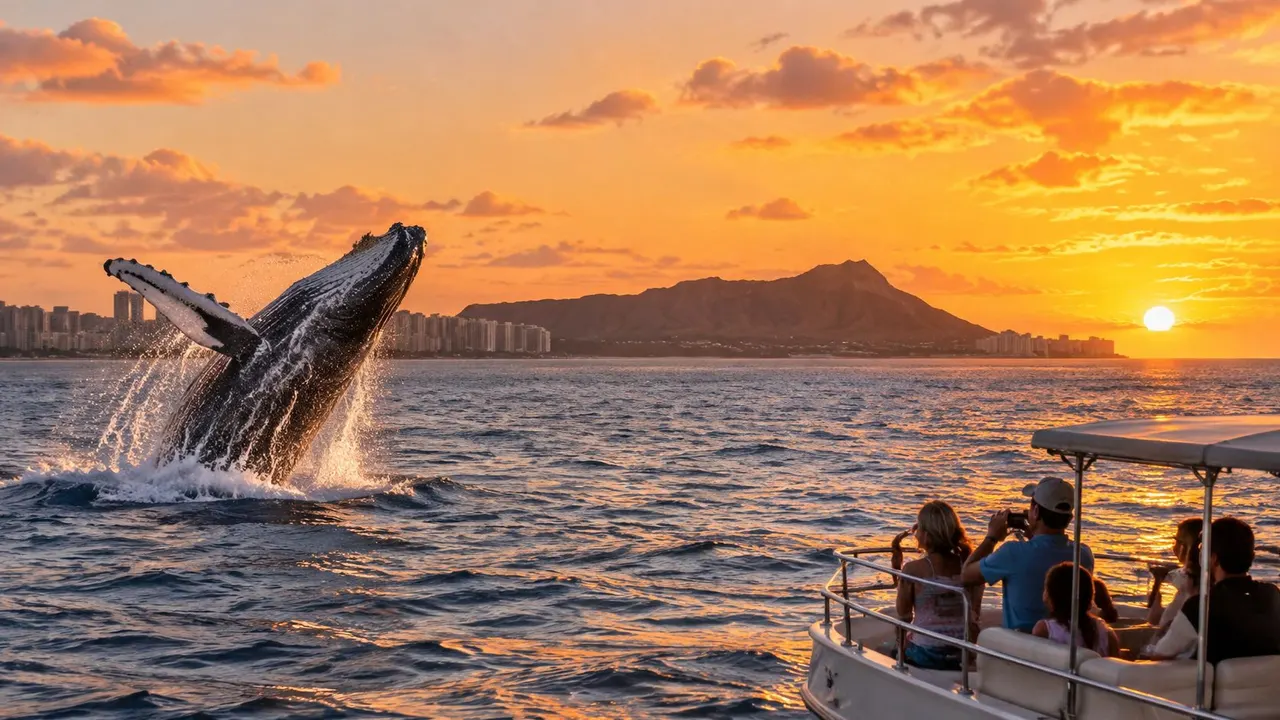
You're looking at your Waikiki vacation calendar, trying to fit in an ocean outing before dinner. A sunset cruise sounds lovely, but you'd also love to see a humpback whale, especially if the kids have spent the flight talking about breaching whales. Can the same trip deliver both?
Sunset whale watching in Waikiki is a hybrid experience, part coastal scenery, part patient wildlife observation. The right choice depends on whether you'd enjoy the evening even if the whales stayed out of sight. That's the question I'd settle before choosing a departure.
What Sunset Whale Watching in Waikiki Really Feels Like
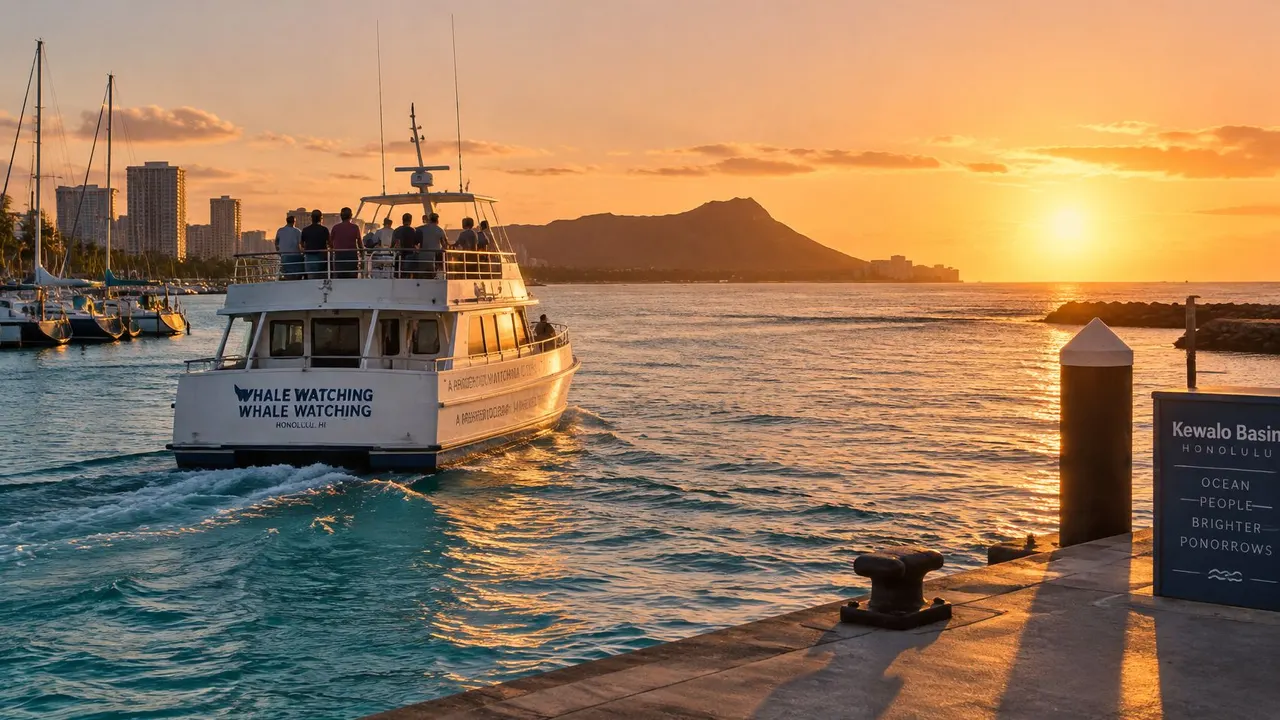
Suppose you're stepping onto the dock at Kewalo Basin in early February, light jacket over your arm, wondering whether the whales will show. You can see the boat, hear the crew organizing boarding, and feel that familiar vacation pressure to make the evening count. My advice would be to put that pressure down before you step aboard.
The beginning is usually about getting comfortable rather than finding wildlife. You listen to the safety briefing, choose somewhere you can hold on securely, and watch the harbor opening approach. In the late-afternoon light, the city looks different from the water, with Diamond Head becoming a more distinct silhouette as the evening progresses.
The first sighting might be small
In a possible encounter, someone notices a pale puff against the horizon. The crew directs your attention, everyone looks, and the next thing you see might be a dark back rather than a spectacular leap. It can happen quickly enough that the person adjusting a camera misses it.
That's why I'd start by watching with your eyes. Let the crew help you find the area, settle into the movement of the boat, and reach for your camera only when you know where to look.
A satisfying wildlife trip begins with curiosity, not a checklist of performances.
The central trade-off is straightforward. Golden-hour scenery can make the outing memorable, but as daylight fades, you have less usable light for finding and interpreting distant activity. A pretty sky doesn't tell us what a wild whale will do next.
- Choose this experience for the combination. Coastal views, evening light, and the possibility of wildlife all contribute.
- Reconsider if a photograph is your main goal. A sunset departure can't promise a clearly visible whale against an orange sky.
- Prepare children for searching. Give them a role as observers rather than promising a dramatic encounter.
Humpback Whale Season and the Best Months to Sail
Choose the season before choosing the sunset departure. NOAA describes Hawaii's broader humpback season as November through May, with the greatest abundance generally occurring January through March, according to its boating and seasonal whale-viewing guidance. Those are useful planning windows, not reservations the whales have made with your captain.
The reason they're here matters. NOAA estimates that up to 12,000 humpbacks return to Hawaiian waters annually to breed, give birth, and nurse calves, representing more than half of the North Pacific population, as explained in its Hawaiian Islands sanctuary overview. These waters are seasonal reproductive habitat, not just somewhere whales pass through on their way elsewhere.
Match your travel dates to your priorities
If your family can travel flexibly and whales are a major reason for visiting, prioritize the core winter period. Hawaii's Department of Land and Natural Resources identifies January and February as peak whale-watching months in its whale-watching timing guidance.
If school holidays determine your dates, work with the trip you have rather than assuming an edge-of-season visit is pointless. The broader seasonal window still matters, but it calls for more modest expectations. Don't rearrange an entire family vacation around the promise of a breach.
| Your planning situation | A practical approach |
|---|---|
| Whales are the main reason for the outing | Choose the core winter window and a wildlife-focused departure |
| Your travel dates are fixed | Check seasonal departures before organizing the rest of that day |
| You mainly want an evening on the ocean | Choose for scenery and comfort, treating wildlife as an additional possibility |
Use the Hawaii humpback whale season guide to organize your dates, then verify the actual departure schedule.
I wouldn't choose or reject a sunset trip solely because of the full moon. For this decision, prioritize remaining daylight, the marine forecast, and the operator's advice rather than treating a lunar phase as a reliable sighting predictor.
Whale Behaviors You Are Most Likely to See
Start with the blow, not the breach. For a first-time observer, learning to notice a brief disturbance above the water is more useful than staring at a photograph of an airborne whale and expecting the ocean to reproduce it.
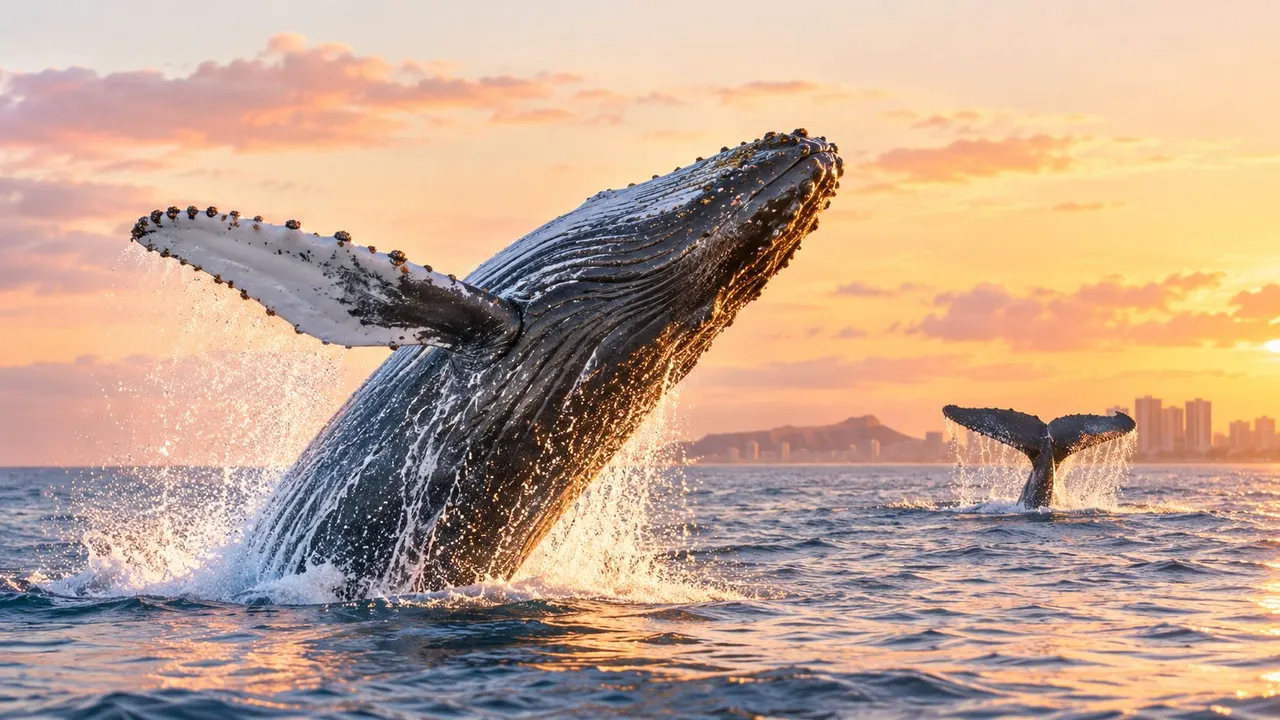
Hawaii's seasonal humpback encounters can include breaching, tail slapping, and spyhopping, but no particular behavior is promised on an excursion. NOAA's responsible whale-watching recreation guidance places those encounters within the breeding, calving, and nursing season.
Give the family a simple viewing vocabulary
Use these as visual recognition cues, not explanations of what an individual whale is thinking. If the crew identifies a behavior, listen before attaching your own story to it.
- Blow. Look for the brief mist above the surface when a whale exhales. Tell children to describe where they saw it rather than shouting that they found something.
- Tail slap. Watch for a tail striking the water. A distant splash by itself may be hard to identify, so let the crew confirm it.
- Spyhop. This describes a whale lifting its head above the surface. Don't assume it's deliberately looking at the passengers.
- Breach. A whale breaks out of the water in a conspicuous surface movement. Enjoy it if it happens, but don't make it the test of whether the excursion succeeded.
- Peduncle throw. You may hear this term for a forceful movement of the tail stock and rear body. Ask the guide to distinguish it from a tail slap.
A small child doesn't need every term. Recognizing a breath, a back, or a tail is enough to participate without feeling that they've missed the important part.
Mother-and-calf sightings call for particularly patient observation. Don't assume that staying near shore will guarantee finding them, or that a small animal will be easy to pick out from a moving boat.
When you're unsure what you saw, say so. Teaching children to distinguish an observation from a guess is part of a worthwhile wildlife experience.
Typical Tour Itinerary and Kewalo Basin Departure Logistics
A smooth evening starts with the meeting instructions in your booking confirmation, not a general map pin for Waikiki. Kewalo Basin Boat Harbor is the departure point described for these outings, but you still need the correct vessel, slip, and check-in arrangements.
Treat the following as a planning sequence rather than a guaranteed route or timetable. The captain must be able to adjust the outing to the conditions, and a sunset cruise isn't necessarily operated like a dedicated whale watch.
Before you leave your accommodation
Check the harbor location and allow room in your plans for transport, finding the meeting point, and using a restroom. Don't assume parking is included, a particular harbor restroom will be available, or boarding happens immediately when you arrive.
The Waikiki whale-watching planning guide can help you organize your questions. Your confirmation and direct communication with the operator should settle the details.
- Boarding and mobility. Ask about steps, handholds, moving gaps, and whether assistance is available.
- Children's requirements. Confirm age restrictions and the arrangements for appropriately fitted safety equipment.
- Drinks and food. Verify whether your specific departure permits BYOB, offers a cash bar, or has restrictions on containers.
- Facilities. Ask about onboard restrooms and seating rather than assuming every boat has the same layout.
From briefing to return
Expect to pay attention during the safety briefing even if you've taken boat tours before. Find out where to sit while underway, how to move around the deck, and how the crew will direct passengers if wildlife is spotted.
A south-shore outing may include views toward Waikiki and Diamond Head, but don't treat a scenic description as a promise to follow an exact track. Weather, sea conditions, available light, and wildlife considerations can all affect the captain's decisions.
Keep dinner plans flexible enough that you're not watching the clock throughout the return. Confirm the scheduled duration before booking, and leave yourself time to disembark and travel onward without rushing children or older relatives.
What to Bring and How to Photograph Whales at Sunset
Pack for comfort, secure footing, and hands-free observation. A small bag you can close is more useful than loose belongings that need constant attention while the boat moves.
Wear a light layer and shoes with reliable grip, following the operator's footwear rules. Apply suitable sun protection onshore, secure your hat, and bring drinking water or simple snacks only if the boat permits them.
Prepare people before preparing cameras
If motion sickness is a concern, discuss suitable prevention with a pharmacist or clinician before departure. That's especially important for children, older relatives, and anyone taking other medication.
- For children. Explain how to hold on and why they must follow the crew's directions before the excitement starts.
- For grandparents. Ask about supported seating, boarding assistance, and restroom access while choosing the trip.
- For binocular users. Try them from a secure position, then lower them if magnification makes balancing or following movement uncomfortable.
- For photographers. Pack a lens cloth, a secure strap, and protection from spray.
Use the Oahu whale-watching preparation guide alongside the departure's current packing instructions.
Photograph the view you actually have
On a phone, start with the normal camera view so you can locate the subject. Use optical zoom if your device offers it, rather than immediately enlarging the image until you can't tell where you're pointing.
Try burst capture during visible activity. If the sky keeps becoming washed out, tap or lock exposure on a nearby area of sky or horizon, then check the result and adjust rather than assuming the automatic setting is right.
Photography rule: Stay safely inside the rail and accept the angle you have. No image is worth leaning out or obstructing another passenger.
A wide frame with coastline, evening color, and a small whale can tell the story. Put the camera down occasionally, too. You don't need to document every moment to have seen it.
The 100 Yard Rule and Why Responsible Viewing Matters
The closest encounter isn't automatically the best encounter. A captain who declines to follow a whale may be making exactly the decision you should want from a wildlife operator.
Federal law prohibits approaching a humpback whale within 100 yards (91 meters) anywhere in Hawaiian waters, including from boats, kayaks, paddleboards, drones, or while swimming, and aircraft must remain at least 1,000 feet away, according to Hawaii's marine-species protection guidance. This is a legal requirement, not an optional courtesy.
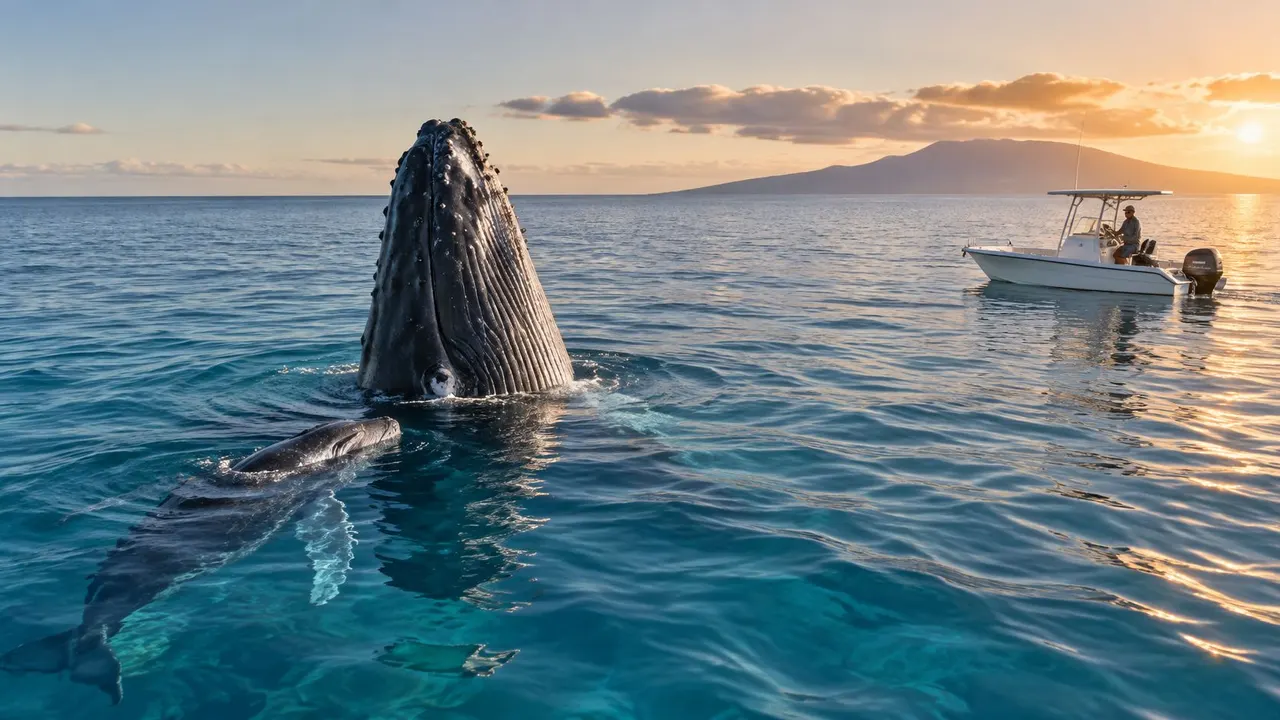
Read the captain's restraint correctly
NOAA also calls for reduced vessel speeds near whales and prohibits disrupting their normal behavior or placing a vessel in their path, as detailed in its humpback whale protection regulations. Measuring distance alone doesn't replace careful vessel handling.
You might see the captain slow down, change course, or leave a sighting rather than pursue another photograph. Don't interpret those actions as lack of effort. Ask the crew to explain the decision when it's safe for them to do so.
- Don't request pursuit. A whale moving away isn't an invitation to follow.
- Don't use a drone for a closer view. Wildlife restrictions still apply when the camera leaves the boat.
- Don't treat an image as a distance guide. Perspective and framing can make the separation between a whale and vessel difficult to judge.
The Hawaiian Islands Humpback Whale National Marine Sanctuary was created in 1992, part of a longer conservation history described by Hawaii Public Radio's account of marine-sanctuary protection. Modern whale watching belongs within that history of protected habitat and recovery.
We're visiting the whales' habitat. A successful trip leaves them able to carry on without our interference.
For a family discussion before departure, use the responsible Oahu whale-watching guide. The lesson for children is simple: caring about an animal sometimes means accepting a more distant view.
Comparing Sunset Trips to Other Waikiki Ocean Adventures
Choose the outing around what your group most wants to do, not around the longest list of possible highlights. Someone hoping to swim has different needs from a grandparent who wants to remain seated, and a dedicated wildlife photographer may want something different from a couple celebrating an anniversary.
| Experience | Choose it when | Confirm before booking |
|---|---|---|
| Sunset cruise | Evening scenery is the main attraction | Departure time, drinks policy, seating |
| Dedicated whale watch | Searching for humpbacks is the priority | Seasonal schedule and sighting policy |
| Daytime snorkel outing | Your group wants guided time in the water | Swimming requirements and equipment |
| Private charter | Your group needs a more tailored outing | Vessel suitability and available itinerary |
Compare the actual departures
Living Ocean Tours is the top rated & most reviewed snorkel company on Oahu and offers seasonal whale watching, sunset cruising, and guided snorkeling. Compare its Waikiki whale-watch tour with its Waikiki Sunset Cruise, rather than assuming the experiences are interchangeable.
For an exceptional sunset-focused alternative, consider Sunset Cruise Waikiki. Compare the details that affect your group's comfort rather than assuming every evening boat trip offers the same experience.
The Deluxe Waikiki Snorkeling and Wildlife Cruise suits a different kind of day, with guided water activities rather than an evening spent observing from the deck. For a turtle-focused outing, explore the Turtle Canyons Snorkel Excursion; Snorkel Turtle Canyon is a great alternative to compare.
A daytime swim and evening cruise can work together, but leave room to eat, dry off, and rest. With young children, one well-chosen outing may be more enjoyable than packing every ocean activity into the same day.
Sunset cruise availability
Turtle Canyons availability
Deluxe snorkeling availability
Booking Tips and Common Sunset Whale Watching Questions
The most useful booking question isn't whether the trip sounds exciting. It's whether the departure, policies, and vessel fit your group. Resolve the practical questions before paying, especially when different generations are traveling together.
Reservations and changes
How far ahead should we reserve?
Once your travel dates are firm, check the available departures rather than waiting until the evening you hope to go. Leave room elsewhere in your itinerary if wildlife viewing is important and you'd like flexibility.
What happens if the weather changes?
Read the operator's cancellation, rescheduling, and refund terms before checkout. A guest deciding conditions look unpleasant and a captain canceling a trip may be treated differently under the booking policy.
Will the boat still go if whales aren't seen?
Ask how the operator distinguishes a weather cancellation from an outing without a sighting. Don't assume that a no-sighting trip automatically earns a refund or return ticket.
Group needs and expectations
Can we organize a private celebration?
Private charters are an option to ask about for family gatherings and corporate outings. Confirm capacity for your particular vessel and activity directly, along with catering, alcohol rules, and whether wildlife observation can be included.
Is the trip accessible?
Describe the traveler's actual needs rather than asking only whether the boat is accessible. Mention walking aids, difficulty with steps, balance concerns, and whether the person needs help reaching a restroom.
- Ask about boarding. Request a clear description of the route from dock to seating.
- Ask about the deck. Confirm whether a traveler can remain comfortably seated during the outing.
- Ask about assistance. Establish what the crew can safely provide before arrival.
Can we bring a drone?
Don't plan on launching one. The wildlife restrictions explained above still apply, and you must also confirm the operator's onboard rules.
What should we do if no whales appear?
Keep watching the coastline, ask the crew questions, and let the evening remain an ocean outing rather than declaring it a failure. You can plan another search if it suits your schedule, but no one can book the animals' attendance.
Seasonal whale-watch availability
Living Ocean Tours offers seasonal whale-watching trips and Waikiki sunset cruises departing from Kewalo Basin. Visit Living Ocean Tours to compare departures, confirm your group's needs, and choose whether your evening should focus on searching for humpbacks or enjoying the coast at sunset. Come ready to observe, and leave the whales free to decide the rest.


