
Waikiki boat tour: How responsible wildlife viewing works
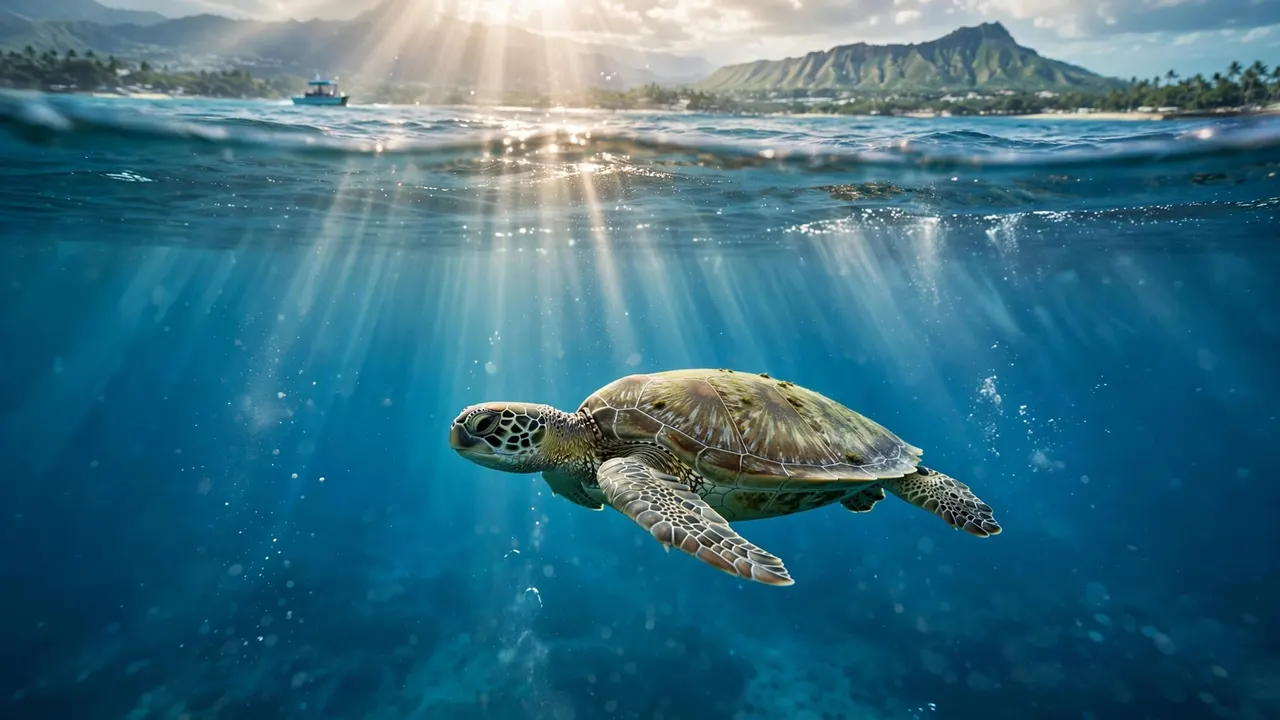
Living Ocean Tours takes you onto the water near Waikiki, where a green sea turtle might pass beneath your fins or a humpback might surface offshore. The sighting is exciting precisely because you can’t schedule it. A responsible Waikiki boat tour gives wildlife room to move, even when that means watching from farther away.
You can help make that happen. It starts with choosing a crew that puts safety and distance ahead of the perfect photo.
What a responsible Waikiki boat tour looks like
Living Ocean Tours departs from Kewalo Basin Boat Harbor, minutes from Waikiki Beach. Its Waikiki boat tours and ocean cruises include snorkeling, wildlife-focused trips, and sightseeing along Oahu’s south shore. The crew can help you get comfortable aboard, while the captain decides how to observe any animals that appear.
The animal sets the pace
Wildlife doesn’t follow a tour route. If someone spots a turtle or a distant splash, let the crew assess the conditions. Don’t ask the captain to change course to pursue an animal, and don’t crowd the rail when other guests need room to see.
A good encounter leaves the animal free to keep swimming, feeding, resting, or surfacing. Your view may be brief. That’s part of seeing wildlife in its own habitat.
Comfort helps you pay attention
Living Ocean Tours’ double-decker vessels offer shaded seating and onboard restrooms. The Lokahi also has a stabilization system designed to reduce rolling. Those comforts can make a family outing easier, but you still need to listen to the safety briefing and move carefully on wet decks.
If you’re new to the water, ask questions before the boat leaves. Living Ocean Tours describes itself as the only tour company with professional snorkel guides; its guided approach is especially useful when you want help staying oriented around reef and wildlife.
Give Hawaiian green sea turtles room to breathe
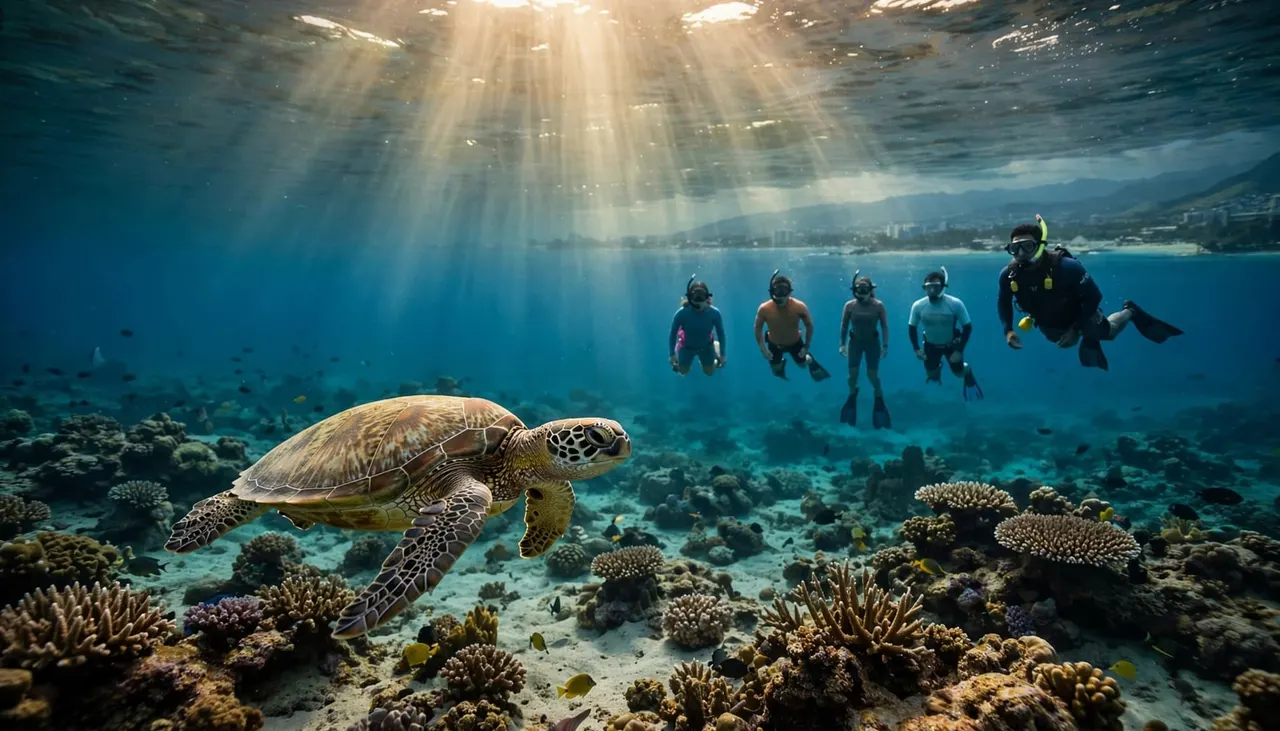
Hawaiian green sea turtles, called honu, may appear near Waikiki reefs. On a Waikiki boat tour with snorkeling, you might see one from the deck before you ever enter the water. In either place, your role is to observe without changing its route.
Understand the distance guidance
NOAA’s Hawaiʻi wildlife-viewing guidance recommends staying at least 10 feet (3 meters) from sea turtles, on land and in the water. That’s responsible-viewing guidance, not a statewide statutory minimum approach distance.
Other guidance can call for more room. Hawaiʻi DLNR State Parks advises swimmers, divers, and snorkelers to stay at least 50 yards from turtles in its wildlife guidance. Pay attention to the rules and guidance for your location, and follow your crew’s directions if they ask you to move farther away.
Leave an open path
Don’t touch, feed, chase, surround, or swim directly over a turtle. It needs access to the surface for air. If one comes toward you, stay calm and let it pass rather than reaching out or trying to match its speed.
Keep your camera close and use its zoom. A group that spreads out quietly can watch a turtle move across the reef without forming a ring around it.
A turtle swimming close to you hasn’t invited contact. Keep its route to the surface clear and let it choose where to go.
Protect the reef beneath your fins
Responsible viewing extends below the turtle. Coral is living habitat, and shallow reef gives snorkelers little room for careless kicks. You don’t need to touch it to enjoy the fish and marine life around it.
Float rather than stand
Keep your body level at the surface and use short, controlled fin kicks. Don’t stand on coral, push off it, or grab it to adjust your mask. If you need a rest, tell your guide and use the flotation equipment or return to the boat as directed.
A beginner-friendly briefing should cover where you’ll enter, where the group will swim, and how to get back aboard. Ask for help with a leaking mask before discomfort pulls your attention away from your surroundings.
Leave the water as you found it
Hold onto cups, wrappers, napkins, and loose hats while the boat is moving. Nothing belongs overboard, including biodegradable food scraps. If an item blows away, tell the crew instead of leaning over the rail.
Likewise, leave shells and other reef life where they are. If you notice fishing line on a turtle or an animal that appears injured, alert your guide. Don’t try to handle the animal or remove the line yourself.
Watch humpbacks without pursuing them
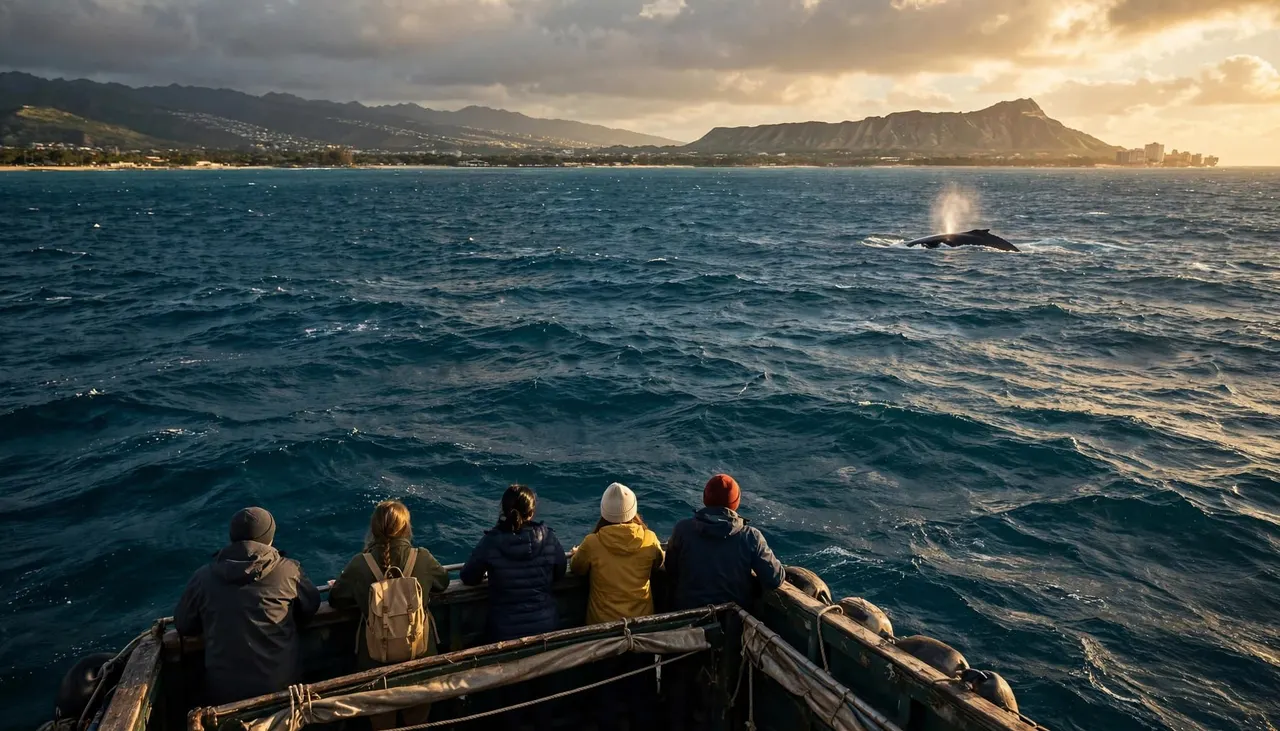
A winter Waikiki boat tour may give you a chance to look for humpbacks offshore. NOAA describes Hawaiʻi’s whale-viewing season as generally November through May. Living Ocean Tours typically schedules its seasonal whale-watching trips from January through March, so check current dates before planning around one.
Know the 100-yard rule
Unlike the turtle-viewing recommendation, the humpback approach limit is a federal rule. In Hawaiʻi waters, you must not approach a humpback within 100 yards. NOAA’s humpback whale guidance explains that the restriction applies regardless of whether you’re aboard a boat or in the water.
A whale may change direction or surface unexpectedly. Let the captain manage the vessel’s position and give it room rather than calling for a closer pass.
Watch the behavior, not the distance
Scan for a blow, a back breaking the surface, or a tail disappearing beneath it. Keep your voice low enough to hear crew instructions, and share rail space with other guests. A distant view can still reveal how a whale travels and surfaces.
Don’t expect a sighting on command. Weather, visibility, and whale behavior differ by trip. A crew that accepts those limits is making a better choice than one that promises a close encounter.
Choose a snorkel trip that fits your group
The most useful booking question is what you’ll do on the water. Some guests want time to watch turtles near a reef. Others are bringing children who’ll enjoy swimming and water-play features alongside snorkeling.
Turtle Canyons for a guided reef visit
Living Ocean Tours’ Turtle Canyons Snorkel Excursion visits a natural cleaning station where Hawaiian green sea turtles may appear. The company reports a 95% historical turtle-sighting rate, but no individual trip can guarantee wildlife. You’ll get more from the visit if you follow your guide’s route and allow any turtle to come and go freely.
Tell the crew if this is your first time wearing fins or breathing through a snorkel. Getting comfortable at the surface is more important than keeping up with the most experienced swimmer in your group.
A deluxe cruise for swimmers and water-play fans
The Deluxe Waikiki Snorkeling and Wildlife Cruise pairs a reef stop with a boat-mounted slide, water trampoline, and floating lily pad. It can suit a family whose members want different kinds of water time. Wildlife remains wild on this trip, too, so treat a turtle sighting as a welcome possibility rather than the day’s required outcome.
Before using any water-play feature, listen for the crew’s instructions. Keep track of where snorkelers are swimming, and never jump or slide until the crew says the area is clear.
Make the day comfortable without rushing wildlife
A little planning helps you enjoy a Waikiki boat tour when the ocean has other plans. Arrive with time to find the harbor, check in, and hear the briefing. Bring what your booking instructions recommend, and secure loose belongings before departure.
Give beginners a clear plan
If you’re snorkeling with children or trying it for the first time, tell the crew before entering. Ask where to pause if you need help, what signal means it’s time to return, and how to approach the ladder. You can always stay aboard if swimming doesn’t feel right that day.
Once you’re in the water, stay with your group. A comfortable pace makes it easier to keep your fins off coral and notice when wildlife needs more space.
Keep your attention on the boat, too
Wet stairs and ladders deserve your full attention after a swim. Let the person ahead of you clear the entry area, then climb when the crew directs you. Back on deck, give others space to come aboard.
If an animal appears during the ride, look first and move second. The captain may need to adjust the boat’s position, and other guests still need a safe place to stand.
Key takeaways for responsible viewing
- Give turtles a clear route to swim and surface. Follow the distance guidance that applies to your location.
- Let the captain manage whale encounters. Federal rules prohibit approaching humpbacks within 100 yards in Hawaiʻi waters.
- Keep hands and fins off wildlife and coral. Leave food, gear, and trash out of the ocean.
- Choose a tour for the experience you can enjoy, even if no animal appears.
The simplest test of a good wildlife encounter is whether the animal can carry on without you following it.
FAQ about Waikiki wildlife boat tours
Are turtle sightings guaranteed at Turtle Canyons?
No. Living Ocean Tours reports a strong historical sighting rate, but turtles decide when and where they appear. You may watch one for several minutes, catch a brief glimpse, or spend the trip enjoying fish and reef habitat instead.
What should you do if a turtle swims toward you?
Stay calm and give it an open route, especially toward the surface. Don’t reach out, chase it, or shift into its path for a photo. If your group starts to crowd it, follow your guide’s instructions to spread out.
Can a whale-watching boat move closer for a better picture?
The captain must follow the 100-yard humpback approach rule in Hawaiʻi waters. You can use a zoom lens or simply watch the whale’s movements from the permitted distance. A close photo isn’t a reason to pursue it.
Let the ocean set the pace
The moment you remember from a Waikiki boat tour may last only seconds. You can make it a responsible one by listening to the crew, keeping your distance, and leaving wildlife free to move.
That patience gives you a better view of animals behaving naturally. It also leaves the reef and ocean ready for the next group to enjoy.


