How to Swim with the Turtles in Hawaii
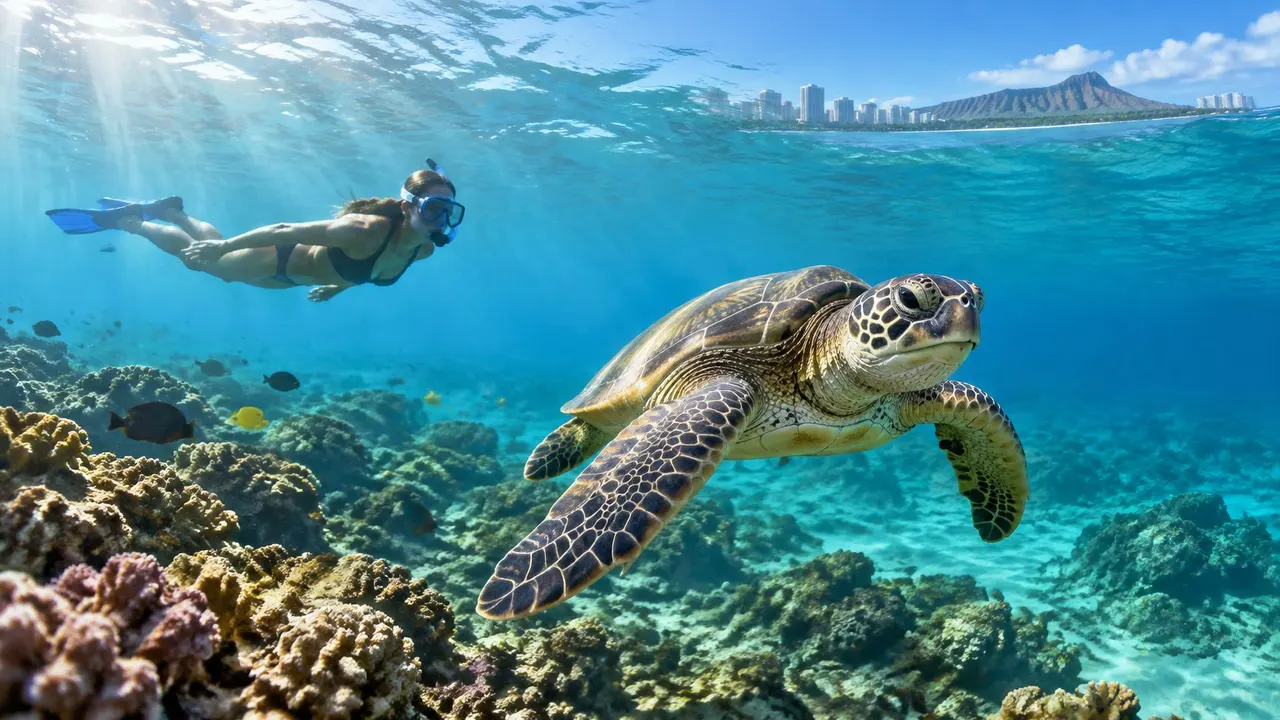
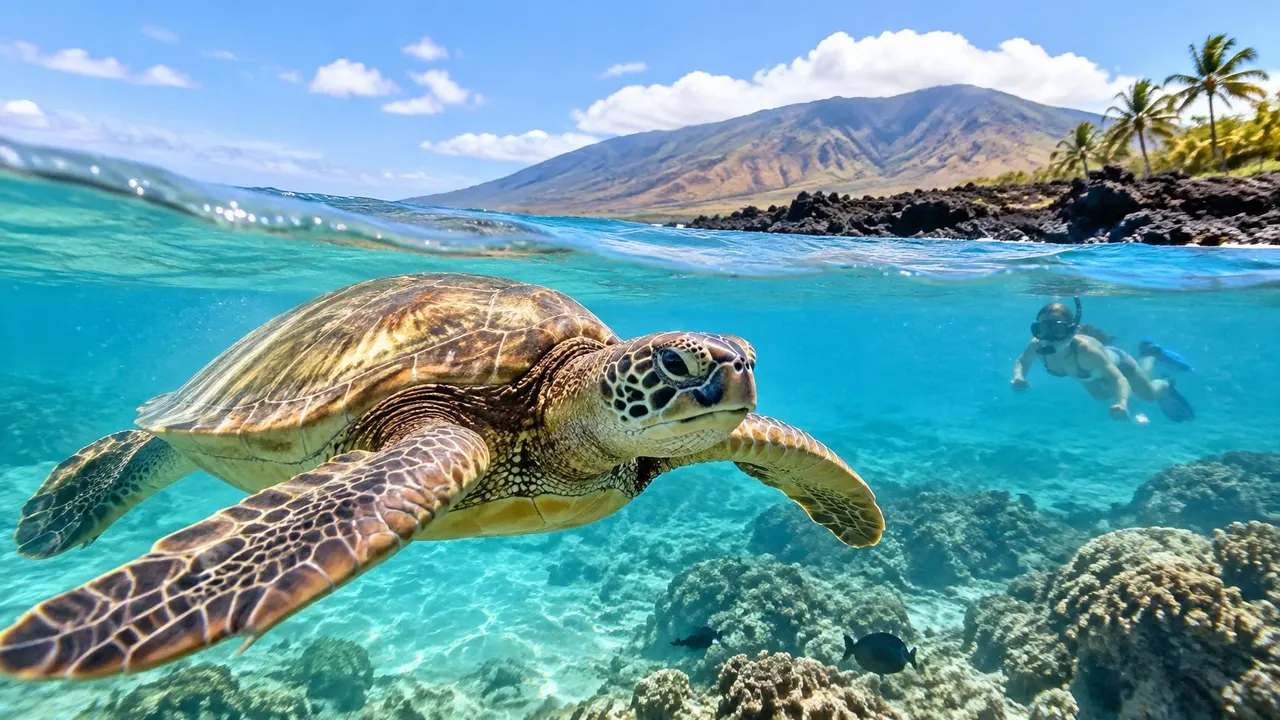
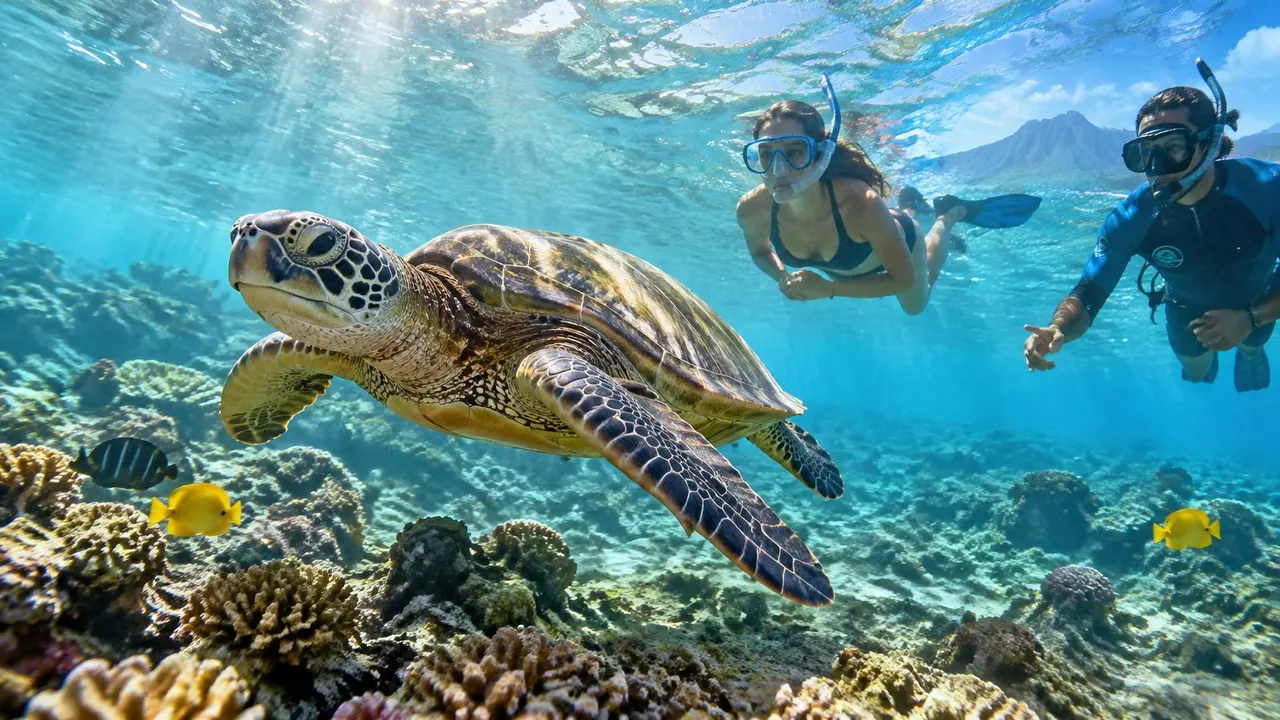
If you want the surest bet to Swim With the Turtles in Hawaii, hop on a boat to Turtle Canyons. It's that wide reef just off Waikiki where little cleaner fish pick the algae off the honu shells — which is why turtles keep coming back.
Most trips run about two hours out of Kewalo Basin Boat Harbor, with roughly one hour actually in the water. On a good day you might count up to 10 Hawaiian green sea turtles drifting below you.
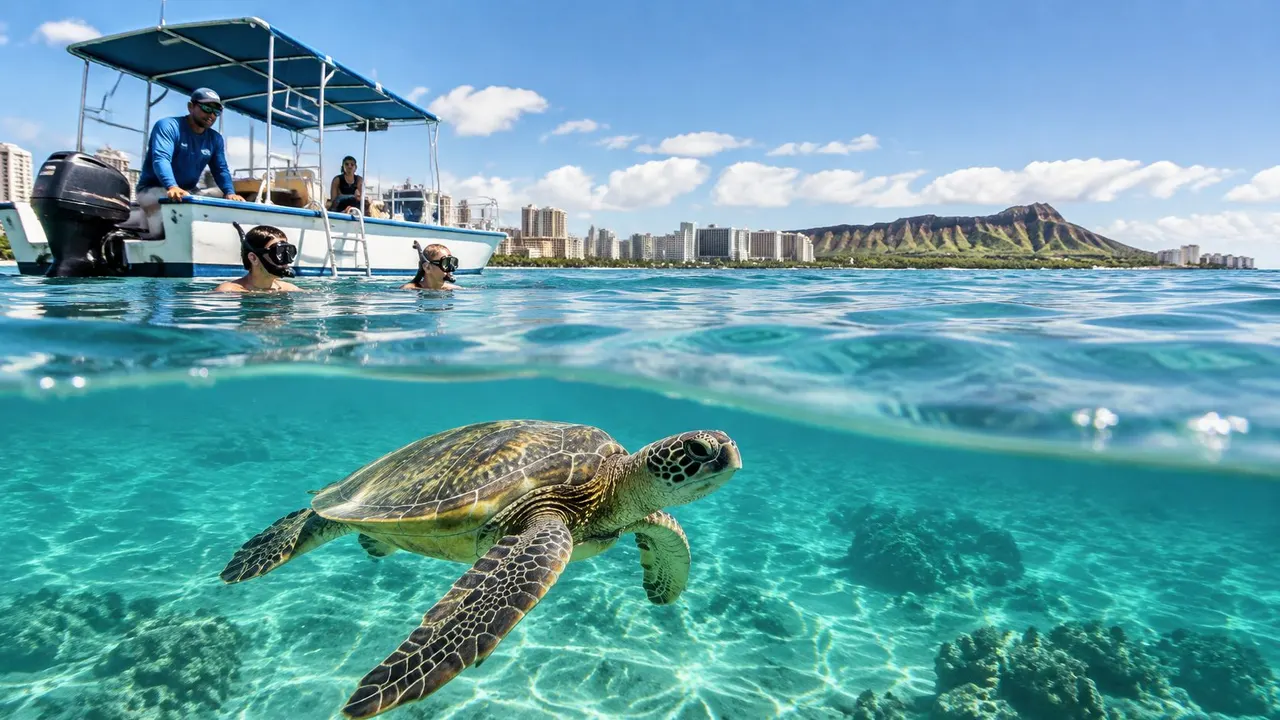
Table of Contents
- Plan Your Turtle Canyons Snorkel
- Turtle Recovery at Turtle Canyons
- From Recovery to Today’s Cleaning Station
- Turtle Laws and the 10-Foot Rule
- Why Space Above Matters Too
- Guided Tour vs Shore Snorkeling
- Know What You Are Choosing
- What to Expect on the Boat
- Enter The Cleaning Station
- Gear, Skills, and Family Tips for a Better Snorkel
- Build Confidence Before Entering the Water
- Is Swimming With Turtles Legal
- What Is the Best Time to Visit
- Can Beginners and Young Children Join
- What If No Turtles Appear
Plan Your Turtle Canyons Snorkel
Here's what the typical morning looks like:
| Essential detail | Typical arrangement |
|---|---|
| Departure | Kewalo Basin Boat Harbor near Waikiki Beach |
| Total duration | 2 hours |
| In-water time | Approximately 1 hour |
| Age minimum | 3 years |
| Price | $79 per person |
| Sighting odds | Reported 95% success rate, never guaranteed |
That cleaning-station behavior is what makes viewing so consistent. Still, these are wild animals. Swell, current, visibility, and plain old turtle mood all play a part.
Mornings are usually calmest, with lighter wind — much nicer if you're bringing kids or you're new to snorkeling. No legit crew will promise you a turtle, though. Anyone who does, walk the other way.
We've spent years running this reef, and Living Ocean Tours is the top rated & most reviewed snorkel company on Oahu for a reason. The guides are big on calm, respectful wildlife encounters. The Turtle Canyon Snorkel Excursion comes with gear, a real briefing, and about an hour of guided time in the water.
Another solid pick is Snorkel Turtle Canyon as a great alternative if dates are tight. And before you lock anything in, skim our breakdown on the best time for turtle snorkeling on Oahu — timing really does help.
A boat gets you to the right reef. Giving the turtles space is what makes it magic.
Double-check departure time, age limits, and ocean conditions before you book, then book early. Those morning spots from Kewalo Basin go fast, especially in summer.
Turtle Recovery at Turtle Canyons
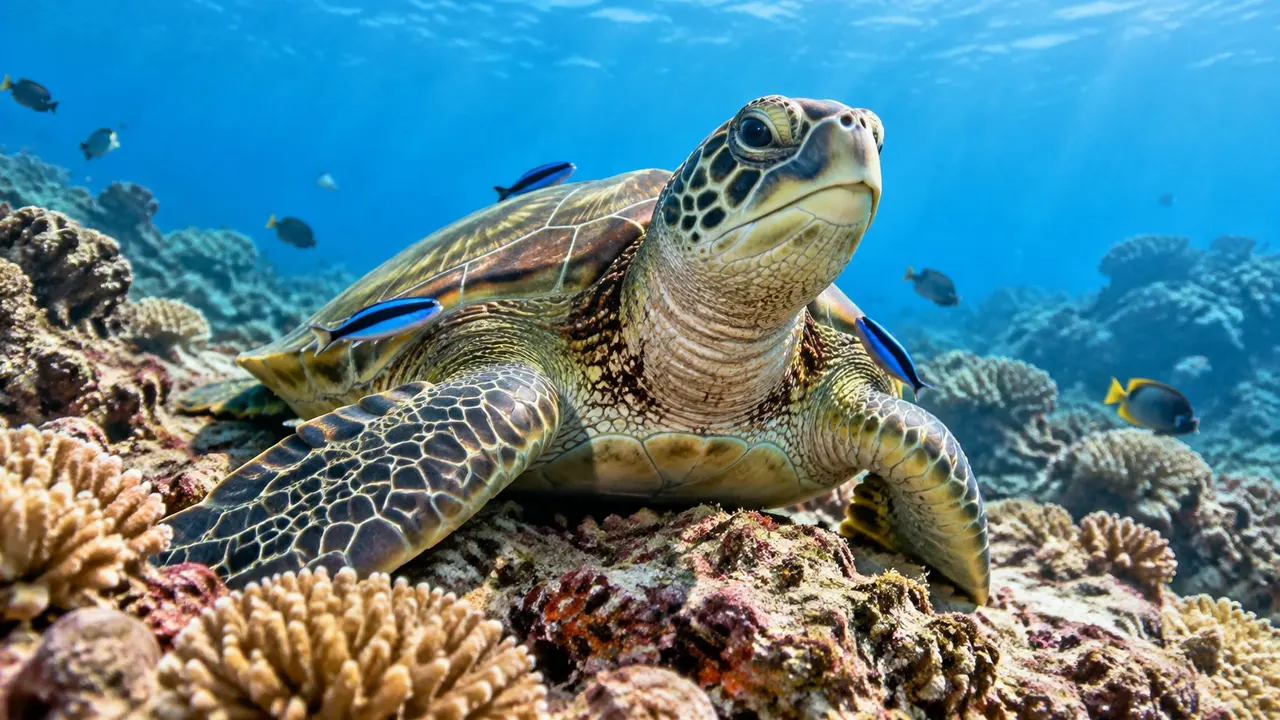
Out at Turtle Canyons, it's pretty common to see a honu parked on the bottom while little cleaner fish pick away at its shell. It looks quiet, almost uneventful — until you remember what these animals came back from.
Hawaiian green sea turtles were harvested hard from the 1950s through the early 1970s. Things turned around after protection under the Endangered Species Act starting in 1978, plus years of steady monitoring.
And the numbers tell the story. Researchers counted just 37 nesting females in 1973, but by the mid-2000s they were seeing roughly 467 to 500 nesting females annually around the Hawaiian Islands. That's a real comeback.
From Recovery to Today’s Cleaning Station
French Frigate Shoals is still the main nesting stronghold for the archipelago, with East Island’s nesting population bouncing back nicely over the last few decades too. Put simply, the turtles aren't vanishing anymore. They're nesting in solid numbers again.
That doesn't mean the job is done. The population is still pretty small and concentrated, and a lot of turtles depend on just a handful of feeding and cleaning spots. So crowding can stress a turtle more than you'd guess from the counts alone.
At Turtle Canyons off Waikiki, you might watch a honu hover over the reef while small fish clean off algae and parasites. That behavior is called cleaning, and it's why a guided trip here gives you such a good look at everyday turtle life.
For more background, read our guide to Oahu turtle conservation.
The best photograph is the one you get without chasing a turtle. You're looking at a recovered species, not grabbing a souvenir.
Give them space, especially at the busy spots near Waikiki. The recovery is encouraging, but keeping your distance is what keeps it going the right way.
When you Swim With the Turtles in Hawaii, slow down and just watch. Notice how the turtle moves, how the cleaner fish work around it, how much room it needs to come up for air. Then let the moment happen on its own.
Turtle Laws and the 10-Foot Rule
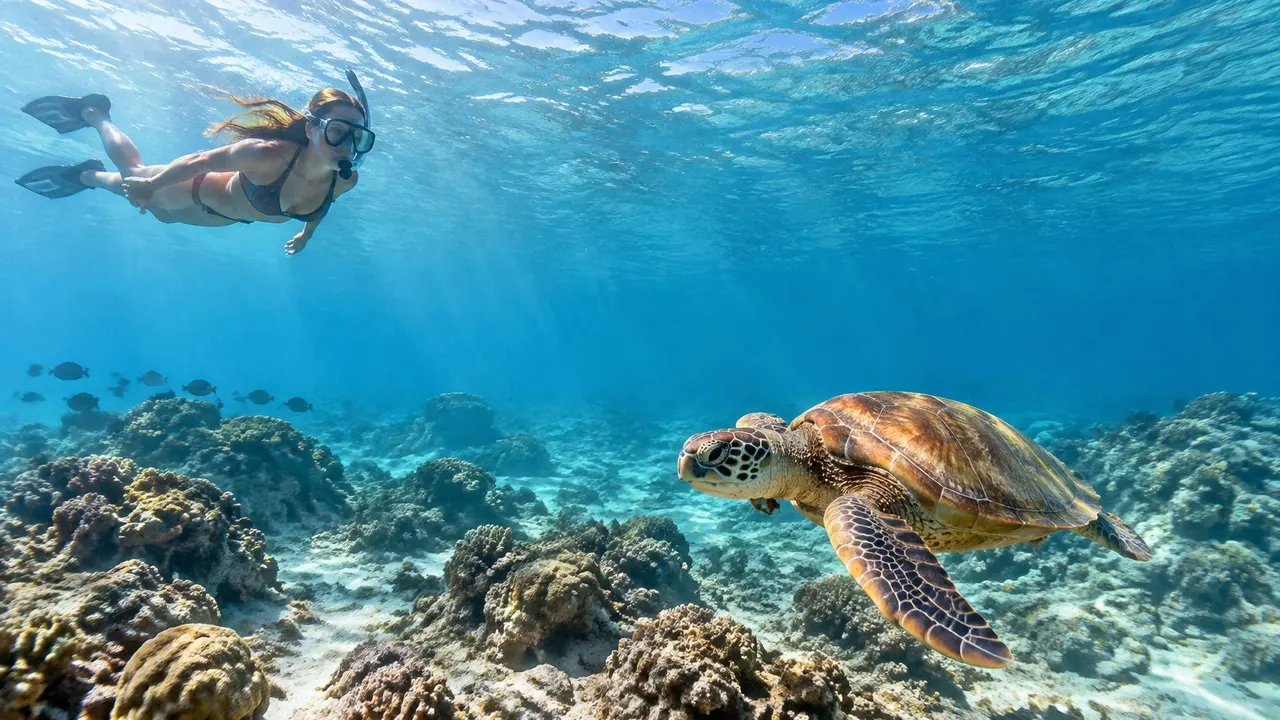
Honu are protected under both federal and state law, and messing with a Hawaiian green sea turtle is no small thing. NOAA’s guidance is clear: give them at least 10 feet, or 3 meters, whether you're in the water or watching from the beach.
Think of that 10 feet as their personal space, not a challenge for a closer photo. It keeps stress down and lets them do what they were already doing — grazing, resting, cruising along.
Sometimes a turtle will swim right at you. Just stay calm and float. Don't kick into its path or try to steer it with your body. Let it glide past, then go back to watching from a distance.
Why Space Above Matters Too
Green sea turtles have to come up for air. A tight little knot of snorkelers can block that trip to the surface without ever laying a hand on one.
Spread out a bit. Watch where your fins are going. And always leave open water above any turtle you’re watching.
When you Swim With the Turtles in Hawaii, keep this quick checklist in mind:
- Stay at least 10 feet back from every turtle, in the water and on sand.
- Never touch, feed, ride, grab, hold, chase, circle, or cut off a turtle.
- Move slow and easy — no sudden turns, and never force the moment.
- On the beach, hang back and let resting turtles nap in peace.
- Skip the flash, jerky camera moves, and big splashes that can spook a turtle and scatter the calm feeding spot around it.
- If one comes close, go still and let it pick its line.
- Never hover between a turtle and the surface.
- Keep your GoPro at arm’s length and don’t reach out.
- Keep off the coral too — no standing, no grabbing.
The best encounter isn’t the closest one. Give them room to breathe and act natural, and honestly, you’ll end up seeing more.
On our boats, that respectful approach is just part of the safety talk. Families and first-timers get the hang of the 10-foot rule pretty fast once you’ve had about one hour in the water to practice.
And this isn’t just a tour rule. It’s everywhere in Hawaii, guided swim or not, for every family jumping in for the first time.
Guided Tour vs Shore Snorkeling
If swimming with turtles is at the top of your list, hopping on a boat is honestly the easiest way to make it happen. Turtle Canyons sits offshore, so you can't just swim out there on your own.
| Factor | Guided Tour | Shore Snorkeling |
|---|---|---|
| Access | Boat goes straight to the cleaning station | You have to track down a shore-access spot |
| Gear | Mask, snorkel, fins, and flotation included | You bring and haul everything yourself |
| Instruction | Safety and turtle briefing before you jump in | Totally up to your own experience |
| Support | Guides right there in the water with you | No help once you're out past the surf |
| Turtle sightings | Much better odds at known habitat | Hit-or-miss and often crowded |
| Best for | Families, beginners, and nervous swimmers | Confident swimmers who want flexibility |
Know What You Are Choosing
A good guided trip takes all the guesswork out of the day. Living Ocean Tours is the top rated & most reviewed snorkel company on Oahu, and the Turtle Canyon Snorkel Excursion covers the ride out, gear, instruction, and guides who know that reef like the back of their hand.
Picture two groups heading out from Waikiki in the morning. A family with a five-year-old gets flotation help, a clear safety briefing, and a guide swimming right alongside them. Confident adult swimmers might be fine from shore, but even then you still need calm conditions and solid gear.
Choose the boat when reliability, safety, and family support matter most. Choose the shore when flexibility matters more than guaranteed turtle access.
Shore snorkeling has its place, for sure. Spots like Kapalua Bay have easy entry and you might see wildlife.
But there's a big difference between spotting a turtle and actually having a relaxed swim around them. Current, chop, visibility, and a packed entry can flip the whole vibe in minutes.
Snorkel Turtle Canyon is also a solid pick for this same trip as a great alternative. Just compare what's included, departure times, age rules, and cancellation terms before you lock anything in.
Book the guided trip if you've got kids or anyone who's uneasy in open water. If you're a strong swimmer and just want a beach day, pick a spot known for calm water — and grab a local guide if you want help finding turtles. Either way, check availability early and give the operator's safety info a quick read before you go.
What to Expect on the Boat
Most mornings kick off at Kewalo Basin Boat Harbor near Waikiki Beach. Check-in is quick — the crew runs through names, gets masks and floaties sorted, and has everyone on board in no time.
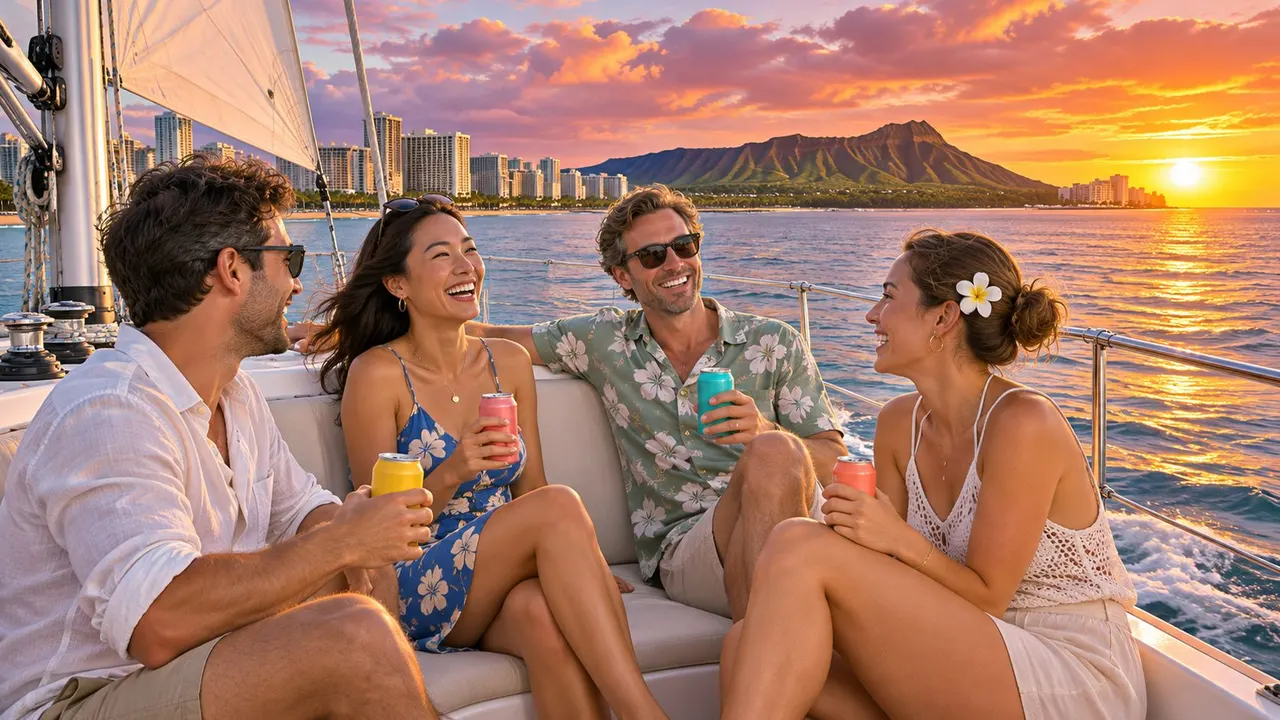
From there you get a short rundown on safety, how to get in and out, hand signals, and how we visit the turtles respectfully. The ride out hugs Oahu’s south shore toward Turtle Canyons, with Waikiki and Diamond Head right there in view. Pretty nice way to start the day.
Once the boat’s anchored, guides help you dial in your mask, snorkel, and fins. New to it? No worries. You’ll get a flotation aid and a few tips to help you stay calm and float easy. That first jump in is always a little exciting — especially for the kids — but the crew stays close the whole time.
Enter The Cleaning Station
The whole trip runs 2 hours, with about 1 hour actually in the water. Out on the reef, honu like to hang low while little cleaner fish pick algae and parasites off their shells.
Our guides will have you hold position instead of following the turtles. Chasing crowds the cleaning station, messes with their routine, and can cut off their path up for air.
And it’s not just turtles. Keep an eye out for yellow tangs, Moorish idols, triggerfish, rays, and eels weaving through the coral. About 30% of Hawaii’s reef fish are endemic, so you’re literally seeing fish you won’t find anywhere else.
| Excursion Detail | Practical Information |
|---|---|
| Total duration | 2 hours |
| In-water time | Approximately 1 hour |
| Minimum age | 3 years |
| Price | $79 per person |
| Departure point | Kewalo Basin Boat Harbor |
The crew sees turtles on about 95% of trips, but these are wild animals. No one can promise it. Swell, wind, visibility, and where the turtles feel like hanging out that day all play a part.
A realistic guide creates the best experience: you learn what you may see, understand why distance matters, and still feel surprised when a honu appears.
Got a birthday or family reunion coming up? You can book a private charter for up to 40 guests. Same great reef, just more room to spread out with your own group.
Ready to Swim With the Turtles in Hawaii? Show up a little early at Kewalo Basin, toss a towel and dry clothes in a bag, and check current availability for the Turtle Canyon Snorkel Excursion.
Gear, Skills, and Family Tips for a Better Snorkel
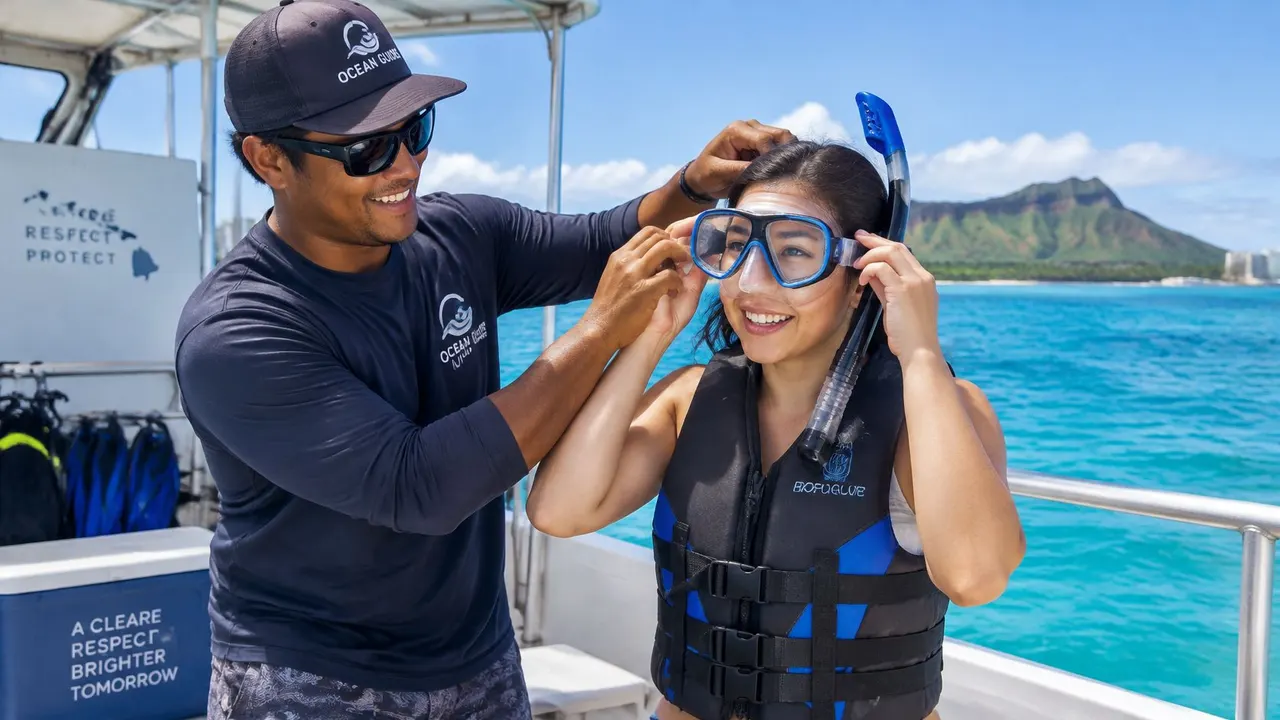
Do a quick mask check before you get on the boat. Press it lightly to your face, no strap, and see if it holds for a second.
That little suction test tells you everything. Keep stray hair out of the seal, add just a dab of defog, and give your ears a good rinse with fresh water afterward.
Fins should feel snug, not pinchy. If you're new to this, grab a float — it keeps you flat on the surface so you're not tempted to stand on coral.
And if your mask floods a little? No stress. Tip your head back, lift it off, and press the top edge back to your forehead to reseal.
Build Confidence Before Entering the Water
Hang in the shallows for a few minutes first. Slow breaths through the snorkel, easy kicks from the hips, and stay close to your guide.
The water can feel chilly after a while, so a rash guard helps a lot. Wear mineral-based, reef-conscious sunscreen, and keep keiki suited up and right next to an adult.
Prone to seasickness? Take something about an hour before you leave the dock, and watch the horizon on the way out. For photos, keep the camera in a waterproof housing at arm's length — never chase a turtle for the shot.
Traveling with kids who need a break from the reef? Living Ocean Tours’ Deluxe Waikiki Snorkeling and Wildlife Cruise adds a waterslide, water trampoline, and lily pad between swims. See details on the Waikiki snorkeling tour.
Read the Oahu Snorkeling Guide.
- Pack: swimsuit, towel, dry clothes, reef-conscious sunscreen, waterless defog, and a waterproof camera case.
Want the full breakdown? Take a look at our essential Hawaii snorkeling gear guide.
Check availability for your Oahu adventure.
Is Swimming With Turtles Legal
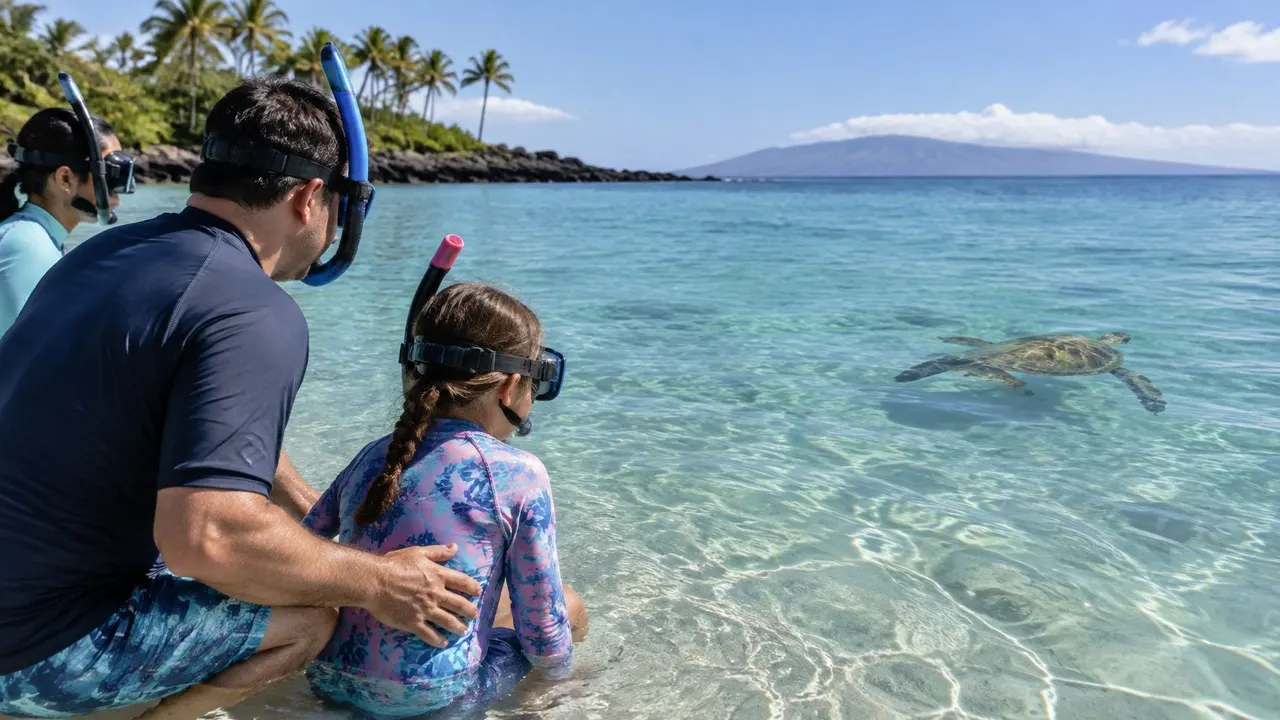
Yes — you can absolutely swim with honu, as long as you give them space. The rule is simple: stay at least 10-foot (3-meter) back.
That means no touching, no feeding, no chasing, and never riding or blocking their path. Just float, relax, and let them come to you.
What Is the Best Time to Visit
The good news? Honu are around Oahu year-round. Any season is a great season for turtle snorkeling.
If you visit from January through March, keep an eye out beyond the reef too. Humpback whales travel right along the Waikiki coastline during those months.
Can Beginners and Young Children Join
Yes, this is a great trip for families. Kids just need to be at least 3 years old to hop aboard.
Flotation gear is included, and the crew stays in the water with beginners. If you’re a non-swimmer, just check in with the team before you book so they can set you up for success.
What If No Turtles Appear
Living Ocean Tours sees turtles on about 95% of its snorkeling tours. Those are pretty great odds.
But wild animals do what they want, so sightings are never guaranteed. Even on a no-turtle day, there’s plenty to see — yellow tangs, triggerfish, rays, eels, and all kinds of reef life.
Respect protects turtles and Hawaii’s fragile reefs.
Book early, choose a guided departure from Kewalo Basin, and remember that 10-foot rule. Then check out Living Ocean Tours and reserve your Turtle Canyons snorkeling adventure.