Best Place to See Turtles in Hawaii: 8 Top Spots
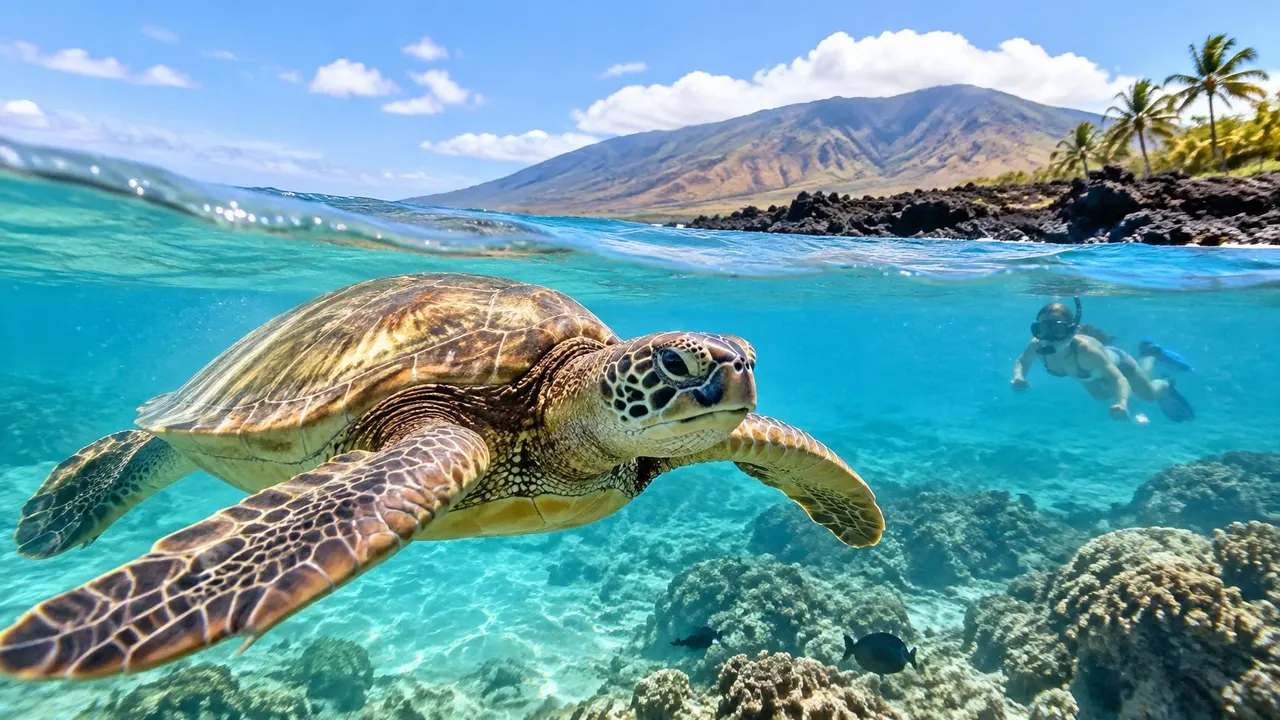
Where are you going to see a honu in Hawaii, and which kind of encounter matches the trip you booked? The honest split is simple. Some places concentrate Hawaiian green sea turtles because a boat drops you at a cleaning station where the animals already gather. Other places are wild shoreline, beautiful and free, with a real chance of a basking turtle or a passing swimmer and no promise either will show up.
This list is built by experience type, not by a pile of beach names. You get a guided offshore snorkel, a shore bask, and opportunistic reef time, across Oahu, Kauai, Maui, and the Big Island. Snorkeling and beach watching are different skills. One puts you in the water with fins and a buddy. The other keeps you on sand while a turtle rests. The same manners apply everywhere. You observe. You never touch, chase, feed, or plant yourself in an animal's path.
If a close, coached look in calm water is the whole point, start with the boat. If you want independence, pick a beach and accept a maybe.
1. Turtle Canyons, Oahu
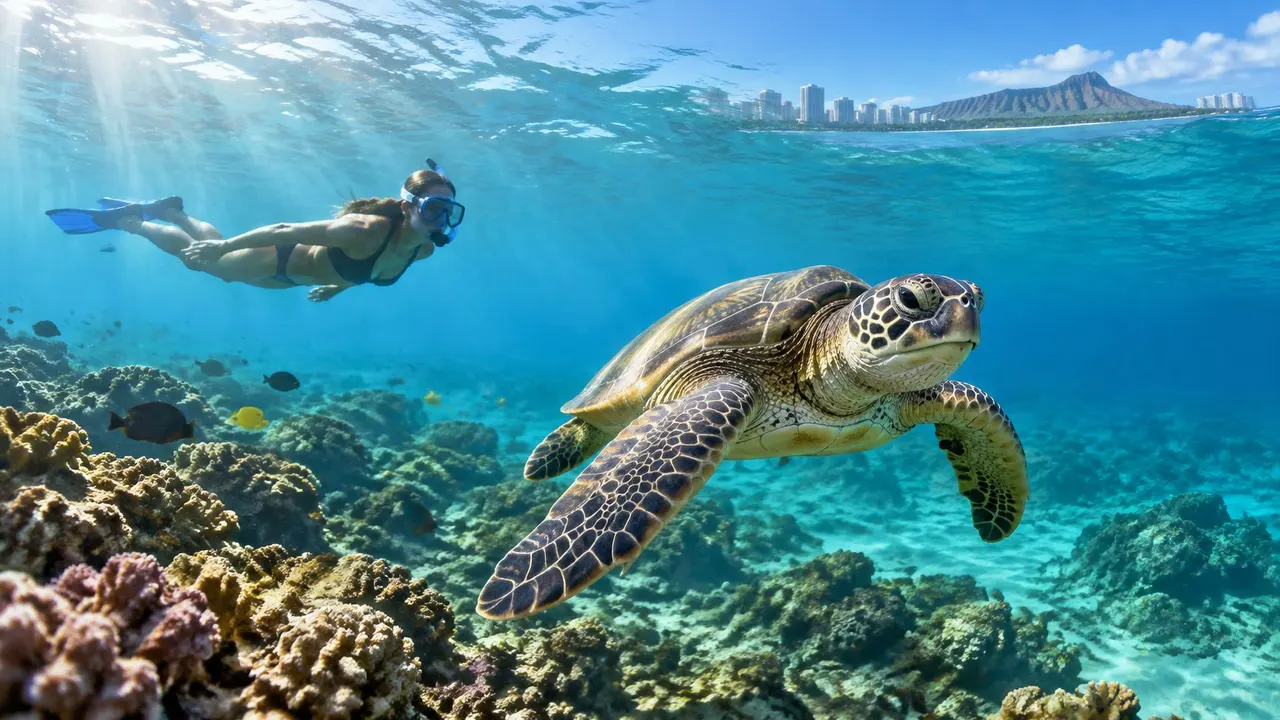
Turtle Canyons, the Maunalua Bay turtle cleaning station off Waikiki, is the best place to see turtles in Hawaii when you want a concentrated in-water look rather than a roadside maybe. Rocky reef pockets give honu places to rest, graze, and hold still while Hawaiian cleaner shrimp work over their shells. The site sits offshore. Shoreline snorkeling from a public beach is the wrong tool. A guided boat is the one that fits.
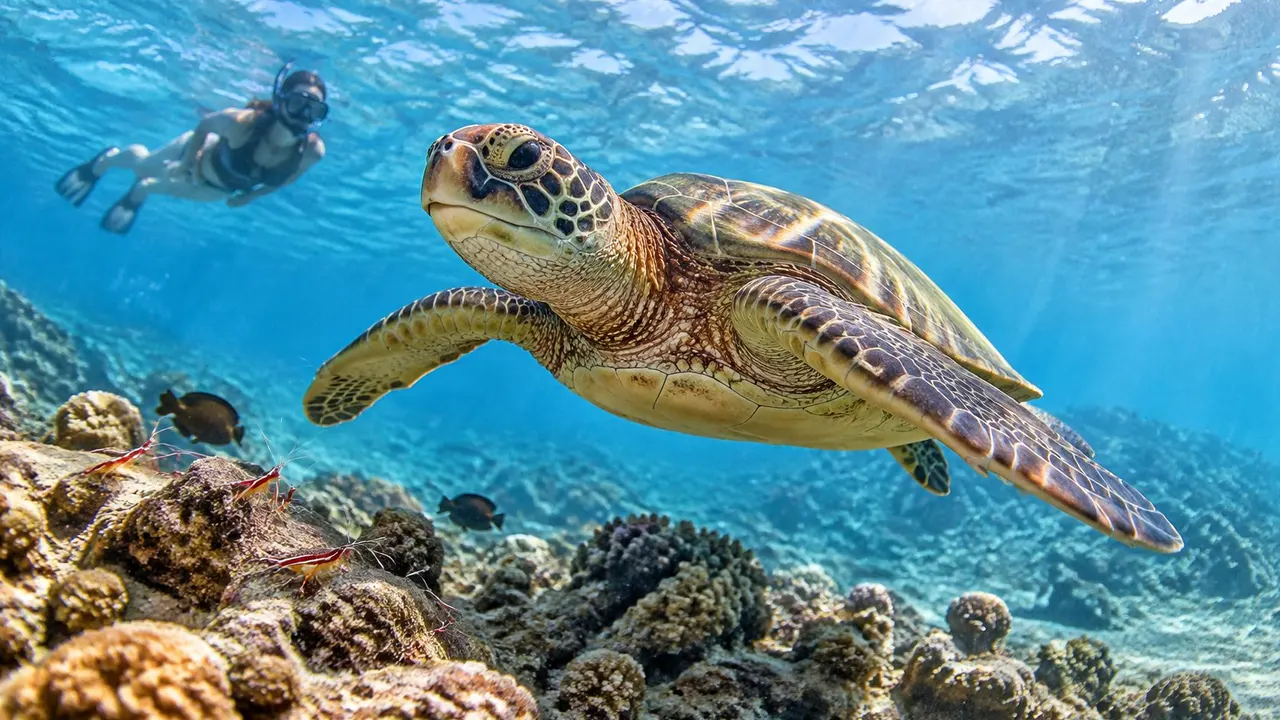
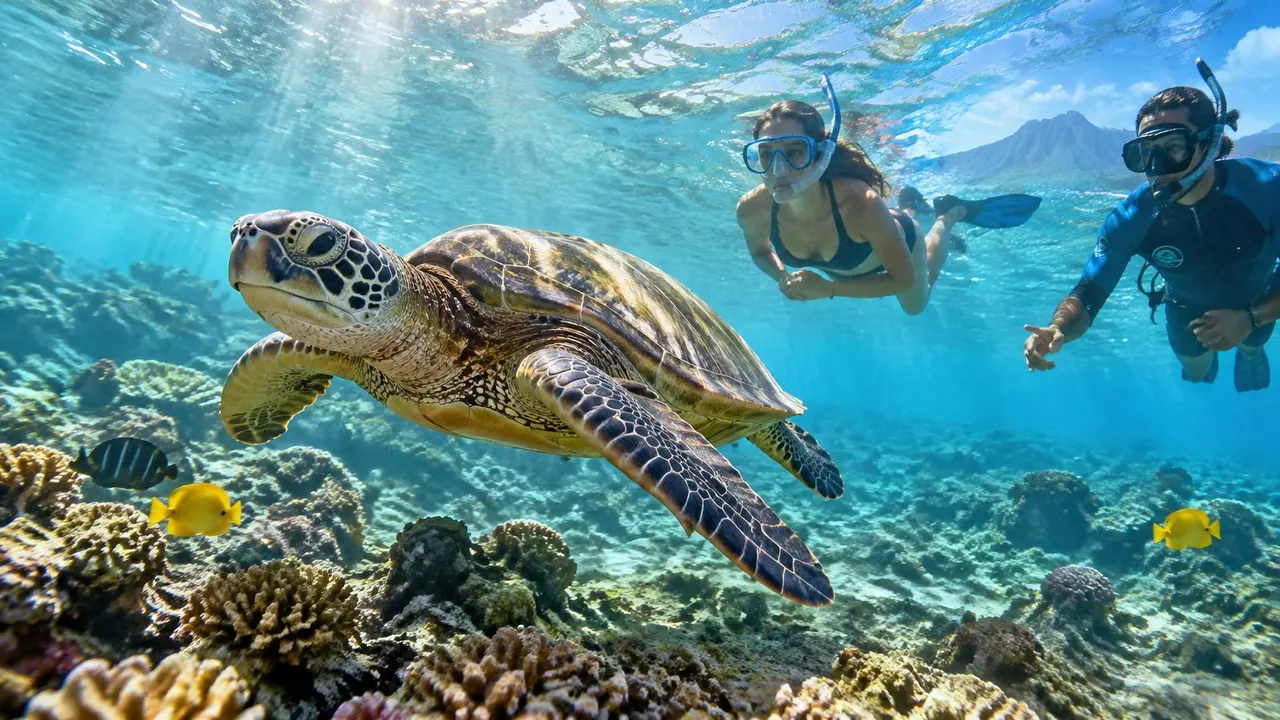
Say you're traveling with kids and a grandparent who has never snorkeled. You don't want to hunt a turtle across a surf break. You want a captain who already knows the station, a briefing before anyone jumps, and someone watching both swimmers and wildlife. That's the job of the Turtle Canyons Snorkel Excursion. Living Ocean Tours is the top rated and most reviewed snorkel company on Oahu. On these trips it is common to see up to 10 Hawaiian green sea turtles, along with reef fish such as yellow tangs, Moorish idols, and triggerfish. About 30% of Hawaii's reef fish are endemic, so the "ordinary" fish under the boat are often found nowhere else.
If you want a second operator to compare, Snorkel Turtle Canyon is a solid alternative for the same style of guided turtle snorkel. For a wider look at how this reef stacks up against shore entries, our notes on the best turtle snorkeling on Oahu walk through the trade-offs before you book.
What a responsible boat protocol looks like
The Hawaii Division of Aquatic Resources wildlife protocol sets a safe public viewing distance of at least 10 feet, about 3 meters, in the water and on land. Closing in can become a federal or state violation once it disturbs the turtle or changes its natural behavior. If a turtle swims toward you, you back out. You don't "use up" the distance by chasing.
NOAA's Honu Count program shows why a sloppy photo helps nobody. A useful sighting includes the date, time, location, and a picture of a white alphanumeric shell marking, taken from a distance. Researchers use those marks to track foraging habitat, distribution, migration, and survival. Your guide should already be running a pre-entry briefing, a firm boundary, quiet fins, and no pursuit.
A short clip of turtles working a reef gives you a feel for how slowly they move when nobody crowds them.
Morning departures usually mean calmer seas and cleaner surface visibility. A rash guard beats a thick coat of sunscreen on your shoulders, and anything that does go on your skin should be reef-safe. Follow the guide on entry, exit, and where the group stops. Never touch, chase, feed, or square up in front of a turtle for a selfie. Check the operator's recent turtle notes and the morning weather before you leave the harbor. Families who also want a waterslide and a trampoline between wildlife stops can look at the Deluxe Waikiki Snorkeling and Wildlife Cruise, which visits a reef away from the packed shore breaks.
2. Hanauma Bay Nature Preserve, Oahu
Hanauma Bay is the shore choice when turtles are a bonus and the reef is the main event. The preserve sits on Oahu's southeast shore, inside a flooded crater with marked swim zones and water that stays kinder than an open coast on a typical trade-wind day. Honu show up around deeper reef edges when conditions line up. There is no single rock where a turtle is scheduled to appear.
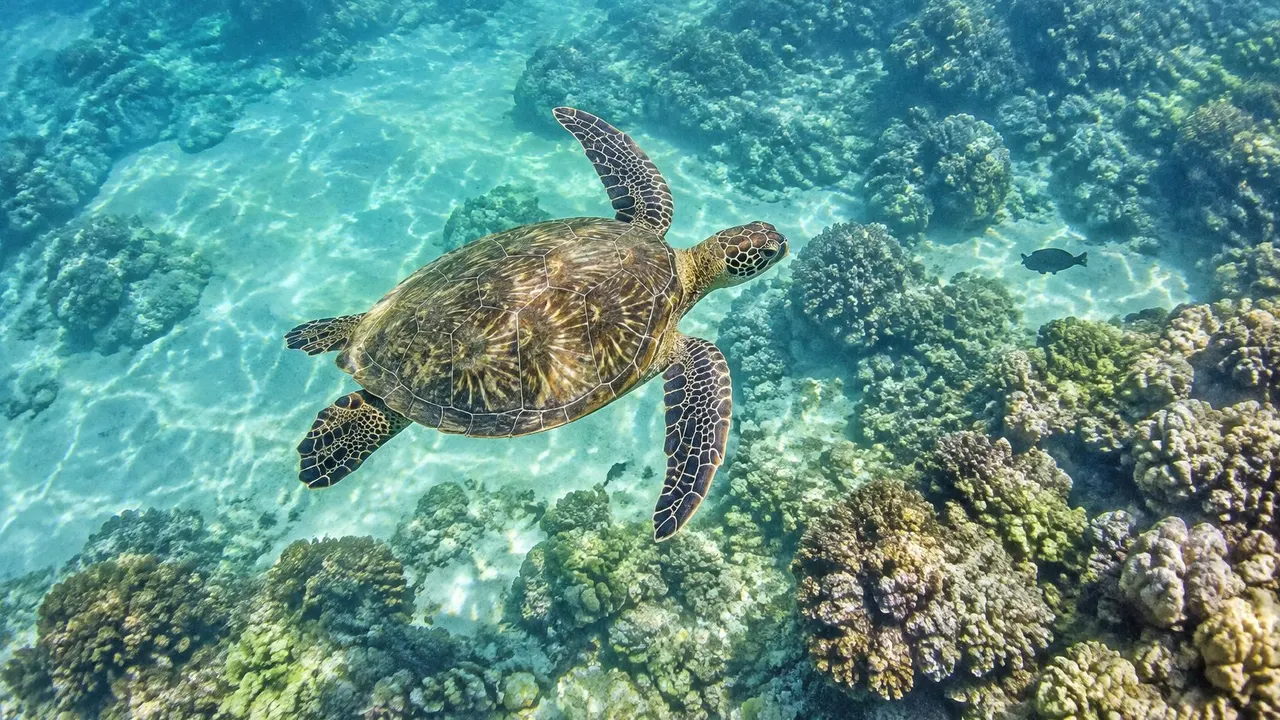
Picture a first-time snorkeler who wants coral, parrotfish, and a shot at a turtle without a boat wake. You reserve an entry slot, watch the required orientation, and fin out past the inner sand. Turtles, when they're here, tend to cruise the outer reef rather than the wading shelf where casual swimmers stop. That is the opposite of Turtle Canyons. Hanauma gives you shore access and a whole bay to explore. The canyon gives you a guide and a station the turtles already use.
Rules that actually change your day
DLNR's marine-species guidance classifies touching and feeding as disturbance. Don't touch, pick up, restrain, jump over, straddle, pursue, harass, or otherwise bother a turtle. Feeding teaches animals to link people and boats with food, which bends natural behavior and sets up unsafe meetings later. Leave the animal's line clear so it can surface, swim, rest, or bask without a circle of fins.
- Book the entry window and read the current opening calendar before you drive. A closed gate wastes the morning.
- Go early so you're in the water before the lot fills and the inner bay turns into a kick-fest.
- Wear a rash guard and use reef-safe sun protection. The bay's conservation rules exist because lotion and hands both damage coral.
- Stay inside the marked snorkel area and give turtles and other wildlife the same space you'd want if you were trying to eat lunch.
Gear questions come up constantly here. If you don't want to haul a mask across town, the Hanauma Bay snorkel rental guide covers what to bring and what you can sort out on site. I recommend this bay for reef literacy, not for a promised honu. If the day is about the turtle and only the turtle, spend the money on the boat instead of hoping the outer reef cooperates.
3. Laniakea Beach and Turtle Beach, North Shore, Oahu
Laniakea, the North Shore stretch people call Turtle Beach, is the classic shore bask. Honu haul out on the sand to rest. You watch from the beach. You do not swim over and join them. That single difference is why families with mixed swimming skills like it, and why it disappoints anyone who booked Hawaii for an underwater photo.
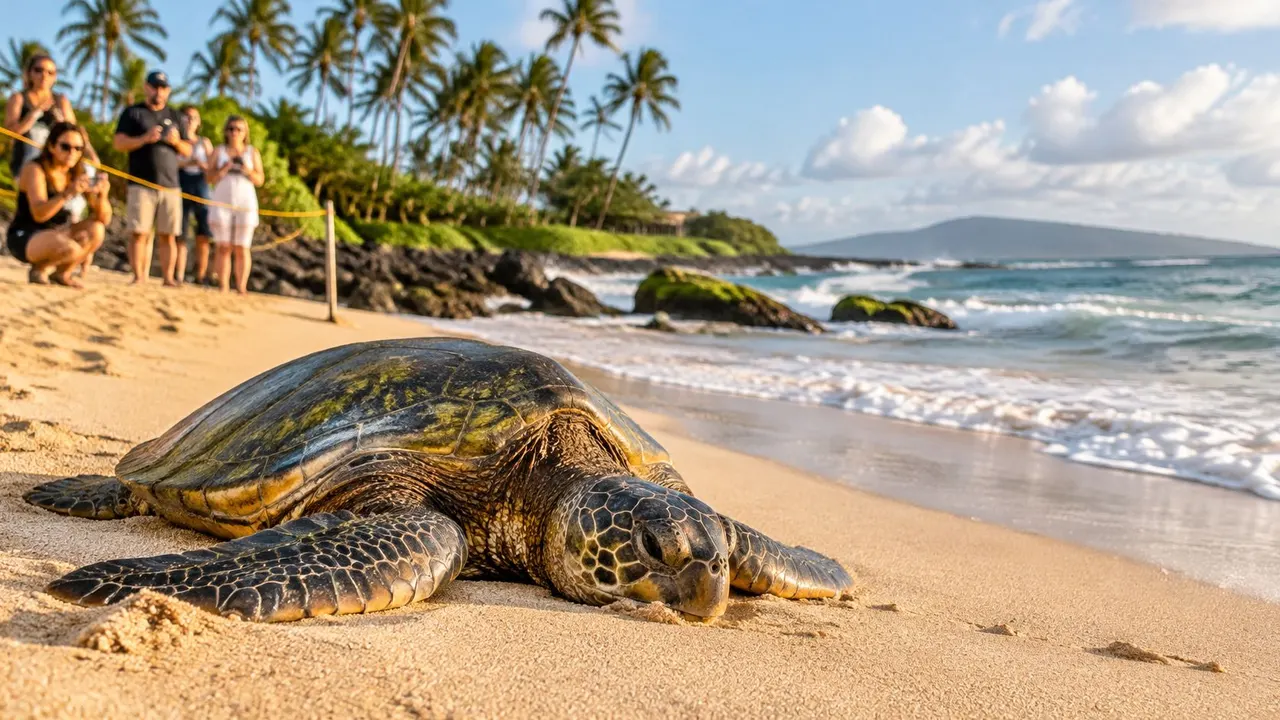
NOAA's account of turtles, tourism, and traffic at Laniakea is unusually specific for a beach people treat like a rumor. Regular basking reports started in 1999. NOAA-supported outreach began in 2007. Monitoring has documented 35 individual turtles since the program began, including about 18 to 20 recurring regulars. On a given day, observers report anywhere from zero to four turtles on the sand. The site is one of the more predictable shore looks on Oahu. It still does not guarantee a head count.
A second NOAA look at the same beach is blunt about the cost. Growing tourism has created traffic congestion and infrastructure problems for nearby residents. Parking along the highway and crossing the road is part of the visit. If your group can't handle a wait, a narrow shoulder, and a turtle that might not be there, don't build the North Shore day around this stop alone.
How to watch without becoming the problem
Volunteers log identities and behavior so NOAA can track local trends. You help that work by staying back, skipping the flash, and keeping the path to the water open. A turtle that has to detour around knees and towels is not "used to people." It is being blocked.
Practical rule: Treat Laniakea as wildlife observation, not a swim-with attraction. No guide can promise a basking turtle, and you should not hire anyone who says they can.
- Daylight only, and check local advisories before you park or walk the shore.
- No flash, no shouting, no crouching in the crawl line between the animal and the wash.
- Don't plan a snorkel here as your turtle strategy. The sand is the viewing platform.
For a calmer swim on a different stretch of coast, compare this stop with the best Oahu beaches for snorkeling. Laniakea wins on basking. It loses on in-water time, parking sanity, and any promise that today is a turtle day.
4. Kalapaki Beach, Kauai
Kalapaki, by Nawiliwili on Kauai's east side, is the beach-based middle ground. A shallow lagoon and a wrapping reef give honu places to rest and cruise without a boat ride, and on a calm morning you can snorkel the same water you're watching from the sand. It is not Turtle Canyons. Nobody is steering you to a station. You are reading the lagoon yourself.
The worked example is a couple staying near Lihue with one morning free before a flight. You check the surf, walk in from the designated access, and look for dark ovals over the sand patches rather than charging the reef edge. Turtles here often rest or drift in the shallows when the wind is down. Currents and surf still change. "Protected" does not mean "flat every day."
What works in the lagoon
Buddy up. The lagoon looks friendly, then a shallow coral head catches a fin and the group splits. Stay off the reef with your feet. If a turtle is parked on the bottom, that patch is taken. Swim around the long way.
- Read tide and surf before you commit. A rising short-period swell turns an easy lagoon into a washing machine.
- Keep clear of resting turtles and don't feed them, even if they look curious.
- Use the designated shoreline access instead of cutting across dune plants or coral to "save time."
A beach encounter is a privilege the turtle can end. If it lifts its head and turns, you already stayed too long.
I like Kalapaki when the group wants Kauai on its own schedule and can shrug off a quiet morning. I don't like it as the only turtle plan for someone who will be crushed if the lagoon is empty. Pair it with a scenic walk so the morning still pays off.
5. Poipu Beach, Kauai
Poipu is the flexible south-shore option, not a dedicated wildlife tour. Rocky points and shallow reef hold more turtle activity than the dry sand, where a basking honu is the exception. You come for a swim that might include a turtle near the outcrops, plus the rest of what a south-shore beach day already offers.
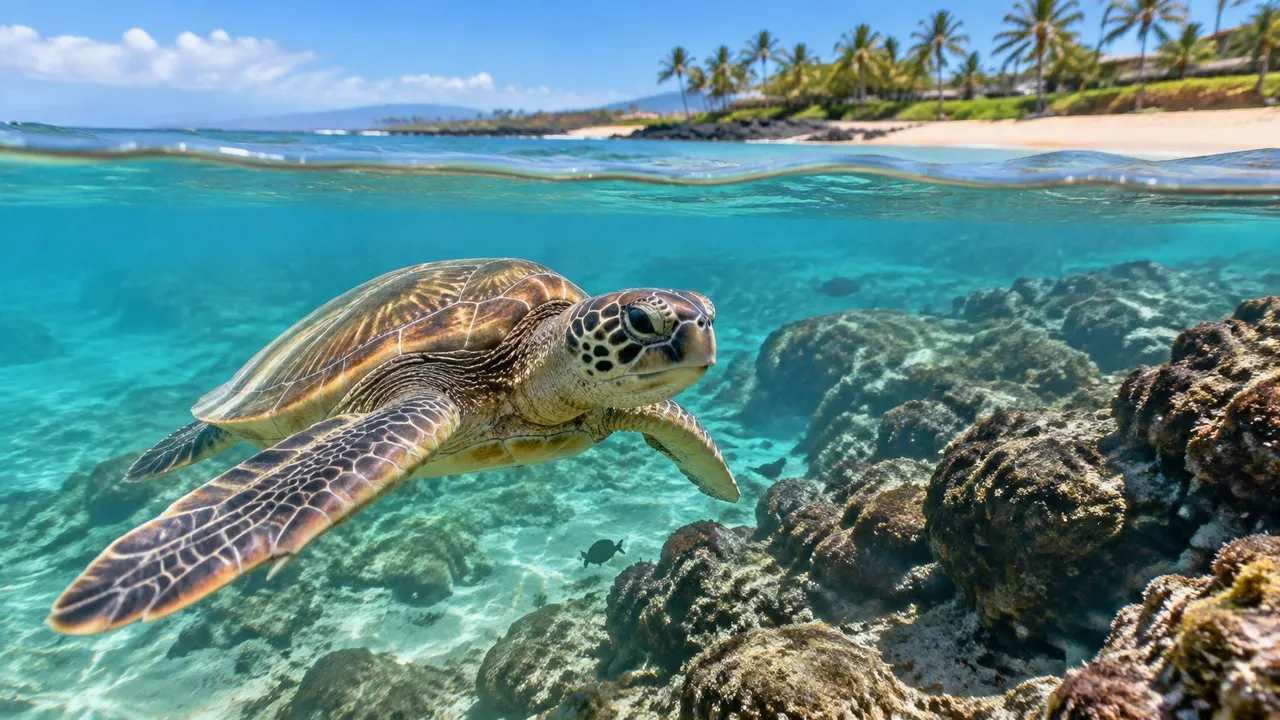
Say you're based in Poipu for a week and don't want to spend every animal sighting on a reservation. You ask the lifeguard which entry is calm, you stay near the protected corner, and you scan the reef margin instead of the towel line. Green turtles sometimes show along those rocks. They also skip days when the south swell stands up. That variability is the trade. You get independence. You give up the odds a boat has at a known station.
If that trade feels wrong, a guided outing back on Oahu is the cleaner fix. The Turtle Canyons trip is built for people who would rather not guess. You can't be in both places the same morning, so decide which island owns the turtle slot on your itinerary.
Entry choices that keep you off the reef
Poipu's other snorkel pockets are tempting. They are also where casual visitors stand on coral and drift into surf they didn't budget for. Pick one protected entry, not three.
- Ask lifeguards about the day's entry before you walk in with a mask on your forehead.
- Give turtles room and don't "anchor" by grabbing rock or standing on reef to hold position.
- Rash guard plus reef-safe sunscreen, daylight, and a bailout plan if the wind fills in.
- Hands off wildlife. A calm turtle is not an invitation.
Poipu works for south-shore guests who already planned a beach day. It does not replace a coached cleaning-station snorkel, and it shouldn't be sold to you that way.
6. Kealakekua Bay State Historical Park, Big Island
Kealakekua Bay is a cultural site that happens to hold turtles, reef fish, and water clear enough to ruin your standards for every other snorkel. The bay sits inside a long Native Hawaiian history, including the events tied to Captain Cook, and the cliffs and nearshore waters are not a theme-park lagoon. You snorkel or kayak only where current rules allow, and the best look is often the one you don't force closer.
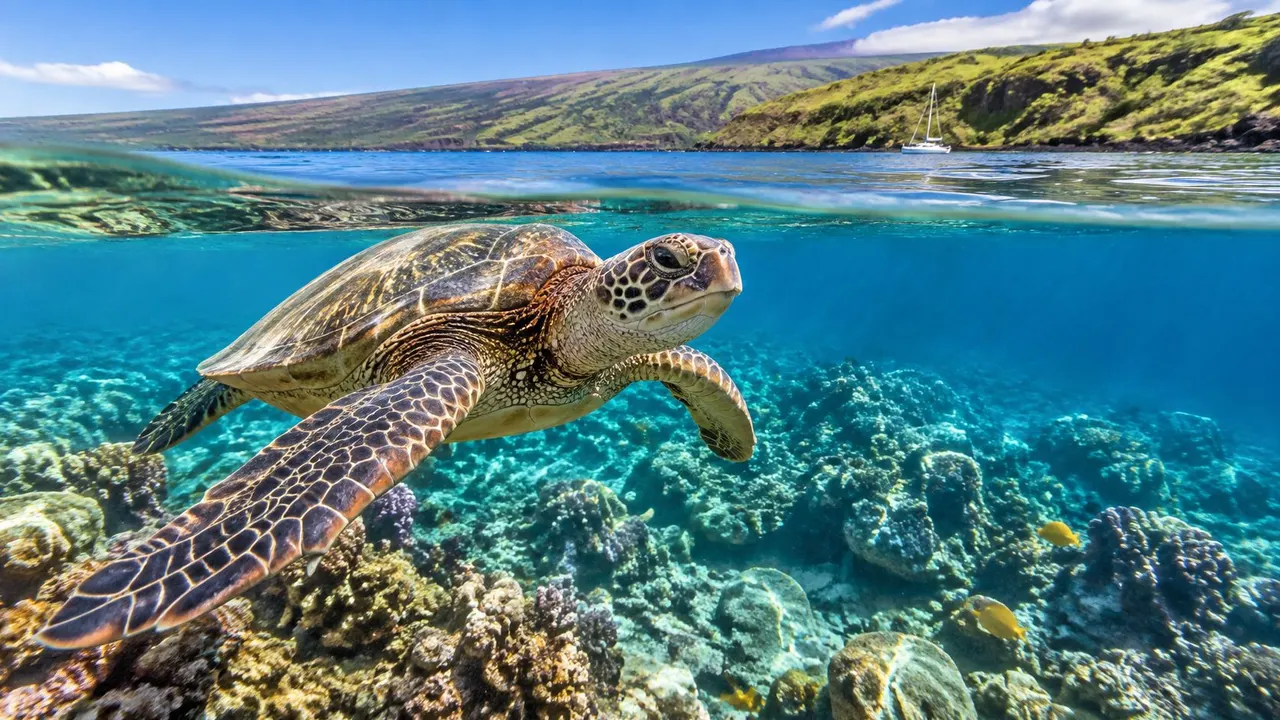
A useful frame is a multigenerational group that wants the Big Island's story as much as the animal. You check access and permit rules before the drive, you use a licensed operator when the rules say so, and you treat seabirds, coral, and honu as neighbors rather than props. Sightings happen while you're already in the right zone. They are not a closer-is-better contest.
Health, not just habitat
A turtle in a pretty bay is not automatic proof the coast is fine. The DLNR sea turtle page describes fibropapillomatosis, a viral disease that can grow external and internal tumors, impair swimming and feeding, and sometimes kill. Popular "cleaning" reefs are not petting pools. A calm animal can still be stressed by a crowd. If you find an injured, entangled, or dead turtle, call the NOAA marine wildlife hotline at (888) 256-9840. Don't try to be the rescuer with a pocketknife and a selfie.
Steady grazing or quiet resting is normal. Erratic flight, a blocked path, or a cluster of people is your cue to leave.
- Confirm park and cultural-site access the week you go. Rules here change, and "we always kayaked in" is not a permit.
- Space for turtles and seabirds, with no feeding and no coral in your bag.
- Licensed operators when the bay requires them. A random rental kayak is not the same thing.
Against Oahu's commercial turtle snorkel, Kealakekua wins on history and water clarity for travelers already on the Big Island. It loses on simplicity. Waikiki guests should not add an interisland flight just to chase a maybe.
7. Mauna Kea Beach and the Kohala Coast, Big Island
Mauna Kea Beach, on the Kohala Coast, is scenery first and turtles second. Clear water and nearshore reef make it a fair shore snorkel when the swell is polite. The wider coast has other shallows where honu rest or feed. None of those ledges come with a clock.
The example I give hesitant swimmers is this. You are staying in a Kohala resort, the morning looks glassy, and you want a mask session before brunch. You enter from a lifeguarded or locally known-safe cut, you stay inside your comfort depth, and you treat any turtle as a pass-by. A local guide earns the fee when you don't know the entries. Bad reef walks cause more ruined days here than empty turtle logs do.
Surf and tide swing hard on this coast. An afternoon that looked swimmable at 8 a.m. can be a shorebreak by lunch. If you're unsure, stay on the sand and count the morning as a scenic win. Our roundup of the best snorkeling beaches in Kona is the comparison sheet when you're choosing among Kohala and Kona entries instead of defaulting to the prettiest parking lot.
A simple go or no-go check
- Surf, tide, and wind before you swim, not after you're in the impact zone.
- Known entry only. Don't invent a path over wet rock because the sand looks closer.
- Wide berth, no touching. If the turtle approaches, you are the one who yields.
- A guide if reef walks and currents are new to your group.
Kohala is for people who already want this coastline. It is a weak "guarantee" and a strong morning when the ocean cooperates.
8. Makena Beach and the Big Island's South Shore
Two different coasts get mashed together in turtle roundups, so let's separate them. Makena is on Maui's south shore, a long, less-built beach people visit for the view as much as the water. The Big Island's south shore is another drive entirely, with its own reef pockets and its own swell. Neither is as steady for honu as Kealakekua, and neither should be your only plan if a turtle is the reason you flew.
On Maui, a calm morning at Makena can put snorkelers over nearshore reef where a green turtle sometimes cruises. On the Big Island's south shore, the same idea applies to sheltered reef corners when the ocean is small. Both are opportunistic. Seasonal patterns and the day's surf decide more than the brochure photo.
When the scenic stop is enough
Use Makena, or a south-shore Big Island beach, when the group wants space, photos of the coast, and a chance. Don't use either as the appointment. Ask locally that morning about activity and the safe entry. If the answer is vague, swim somewhere you already understand.
- Skip the paddle into surf or across a current you can't name.
- Gear and feet off the coral. A standing rest on the reef is still damage.
- Shade, water, and a way to call for help. Services thin out fast once you leave the resort strip.
- Experience-matched conditions. Pretty water that is over your skill level is not a wildlife opportunity.
The peaceful beach is the product. A turtle is extra. Plan the day so the extra can be zero and the day still works.
If your dates are on Oahu and seeing a turtle matters most, don't spend them hunting south-shore maybes on another island. Spend them on a guided station visit and use beaches for the swims that don't have to produce an animal.
Table of Contents
8 Best Places to See Turtles in Hawaii at a Glance
| Location | Island | Viewing Style | Best For | Turtle Reliability |
|---|---|---|---|---|
| Turtle Canyons | Oahu | Guided boat-based snorkeling | A concentrated, beginner-friendly turtle encounter | High; Living Ocean Tours reports a 95% turtle-spotting success rate on snorkeling tours |
| Hanauma Bay Nature Preserve | Oahu | Shore-based snorkeling | Reef exploration and conservation education | Variable; sightings are not guaranteed |
| Laniakea Beach and Turtle Beach, North Shore | Oahu | Shoreline wildlife observation | Watching turtles bask from land | Variable; turtle presence depends on conditions |
| Kalapaki Beach | Kauai | Shore-based snorkeling | Accessible beach snorkeling with turtle potential | Good potential, but not guaranteed |
| Poipu Beach | Kauai | Shore-based snorkeling and reef viewing | South Shore beach activities and reef scenery | Occasional; sightings are not guaranteed |
| Kealakekua Bay State Historical Park | Big Island | Snorkeling or kayaking | Marine life, cultural history, and sheltered waters | Good potential; sightings vary |
| Mauna Kea Beach and the Kohala Coast | Big Island | Shore-based snorkeling or guided outings | Clear-water reef snorkeling and coastal scenery | Variable; sightings are not guaranteed |
| Makena Beach and the Big Island's South Shore | Maui and the Big Island | Shoreline viewing and snorkeling | Scenic, less-developed coastal exploration | Low; opportunistic sightings |
Want the clearest shot at a turtle? Choose by encounter type, not by beach reputation. A guided boat visit to a cleaning station gives you the most structured chance. Shore basking gives you distance and patience. Reef snorkeling gives you a chance, but the animal decides.
If seeing a turtle is the reason for the trip, book the guided boat to Turtle Canyons with Living Ocean Tours, described as Oahu's top rated and most reviewed snorkel company. Tours leave daily from Kewalo Basin Boat Harbor near Waikiki Beach. The Turtle Canyon Snorkeling Adventure runs 2 hours for ages 3 and up at $79 per person, with roughly an hour in the water. Gear, instruction, and knowledgeable guides are included. Living Ocean Tours reports a 95% turtle-spotting success rate on snorkeling tours. That is still not a zoo promise. It is a much tighter bet than a random beach.
Turtle Canyons works because it is Waikiki's famous turtle cleaning station, where it is common to see up to 10 Hawaiian green sea turtles. The trade-off is structure. You are on a guided route with other guests, not alone on a reef. For many first-time snorkelers, that trade is worth it. Background noise drops, the skipper handles the logistics, and the guides tell you how to keep your distance.
Expect reef fish too. Living Ocean Tours snorkeling tours in Honolulu feature yellow tangs, Moorish idols, triggerfish, and other reef life. About 30% of the reef fish in Hawaii are endemic, meaning they are not found anywhere else in the world. Rays, eels, and other marine life may show up as well. That matters when conditions or turtle movement are less than ideal. The excursion still has a reef to read.
For a second guided option, compare Snorkel Turtle Canyon with Living Ocean Tours before you pay. Read both trip descriptions closely. Ask who enforces distance, what the weather cancellation looks like, and whether beginners get a real lesson or a shove off the swim step. A low price means little if the briefing is thin.
If you want independence, pair a shore spot with a backup plan. Laniakea offers a possible bask. Hanauma works as a reef morning that might include a turtle. Kalapaki or Poipu fit a Kauai itinerary. Kealakekua, Kohala, or a scenic south-shore beach fit an already-planned Big Island or Maui day.
Do not rebuild an itinerary around a maybe. A shore sighting depends on the animal, surf, time of day, and your ability to enter safely. A turtle basking on sand may leave before you reach the parking area. A turtle on a reef may stay buried in the day's current and surge. Plan the beach for the water, the view, and the day. Treat the turtle as a bonus.
The recovery behind these encounters is real, and it is fragile. A NOAA career look-back on Hawaiian turtles notes that researchers counted only 67 nesting female Hawaiian green turtles at the principal breeding site in 1973. Hawaii stopped the hunt in 1974. Federal Endangered Species Act protection followed in 1978. The monitored nesting population has risen about 5% a year over the long term, and a recent season produced nearly 900 nesting mothers at that same islet. Most visitors will never reach the remote Northwestern Hawaiian Islands, where nesting is concentrated. You meet honu on feeding and resting habitat instead. That only stays possible if the viewing doesn't undo the gain.
Give turtles room to breathe. Never touch. Never chase. Let the animal keep its path, its rest, and its choice to leave.
Book the morning departure when you want the calmest water and the clearest chance to enjoy it. Afternoons can still be lovely. They are also when wind chop and tired kids stack up. If the ocean is the celebration, private charters for Turtle Canyons snorkeling, Waikiki sunset cruises, and the deluxe snorkel and wildlife cruise fit up to 40 guests and snorkelers.
Living Ocean Tours also serves groups that want a broader day on the water. The Deluxe Waikiki Snorkeling and Wildlife Cruise lasts 2.5 hours, costs $79 per person, and visits a reef away from the crowds. It includes a waterslide, water trampoline, and lily pad. That is a better fit for families who need more than a single snorkel stop. Ages 3 and up can join.
The Waikiki Whale Watching Cruise runs from January 2nd through March 31st, lasts 1.5 hours, and costs $49 per person for ages 3 and up. It views humpback whales that winter in the Hawaiian Islands along the Waikiki Coastline. The Waikiki Sunset Cruise departs daily. Friday Night Waikiki Fireworks Cruise passengers watch fireworks launched from the Hilton Hawaiian Village, and alcoholic beverages are available for purchase.
Practical details save time. Living Ocean Tours is located at 1125 Ala Moana Blvd Slip B-01, Honolulu, HI 96814. The office is open 7 days a week to help with trip planning and operations. Questions can go to info@livingoceantours.com or +1 (808) 436-3483. Prescription masks are available for rent at the boat for $10.
Living Ocean Tours runs guided turtle snorkeling from Kewalo Basin to Oahu's turtle cleaning station, with gear, coaching, and crews who teach guests to observe marine life responsibly. If a responsible, boat-based look is what you want from a Waikiki trip, see dates and details at Living Ocean Tours.