Turtle Snorkel Reef Guide for Safe Honu Viewing
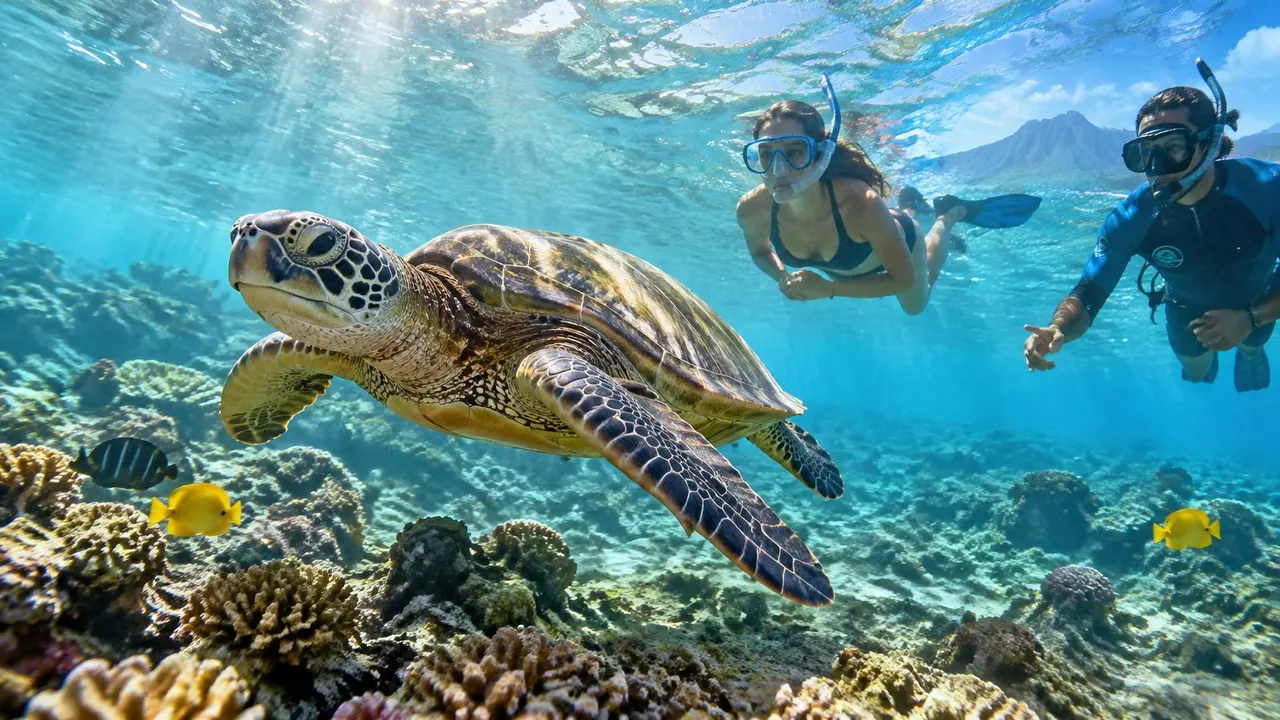
Table of Contents
- The animals beside the turtle
- Ten feet in the swim, fifty yards at a rest stop
- How the group should sit in the water
- Six steps, each one blocking a common mistake
- Why flotation beats another speech
- Five beats from dock to head count
- A pale morning with a seven-year-old on the rail
- Questions we hear at check-in
In 1973, researchers counted only 67 nesting females at the principal breeding site for Hawaiian green sea turtles. NOAA reported that the same islet later supported nearly 900 nesting females in a recent season, after Hawaiʻi protected the species in 1974 and the U.S. Fish and Wildlife Service listed it as threatened in 1978. That jump is a recovery, not a postcard. A turtle snorkel reef off Oahu is where you meet an animal that is still protected, still easy to stress, and still doing a job on the reef.
Judge the morning by two things. Did the honu keep resting or feeding while you stayed back? Did the crew change the plan when the water, the surge, or the coral looked wrong? A tight photo is the wrong score.
What a Turtle Snorkel Reef Shows You
NOAA's long-term demographic research, as summarized by the U.S. Fish and Wildlife Service, estimates that the Central North Pacific population grew at an intrinsic rate of about 5.4% a year from 1973 to 2012, within a modeled range of 5.0% to 5.8%. The wider population now includes roughly 4,000 breeding females. Nesting is still concentrated in the remote Northwestern Hawaiian Islands, and the population still has low genetic diversity. On Oahu itself, the U.S. Fish and Wildlife Service reported 83 nests in 2024, compared with only 9 in 2019 and between 0 and 2 nests a year from 2016 through 2018. That is more than a ninefold rise from 2019 to 2024.
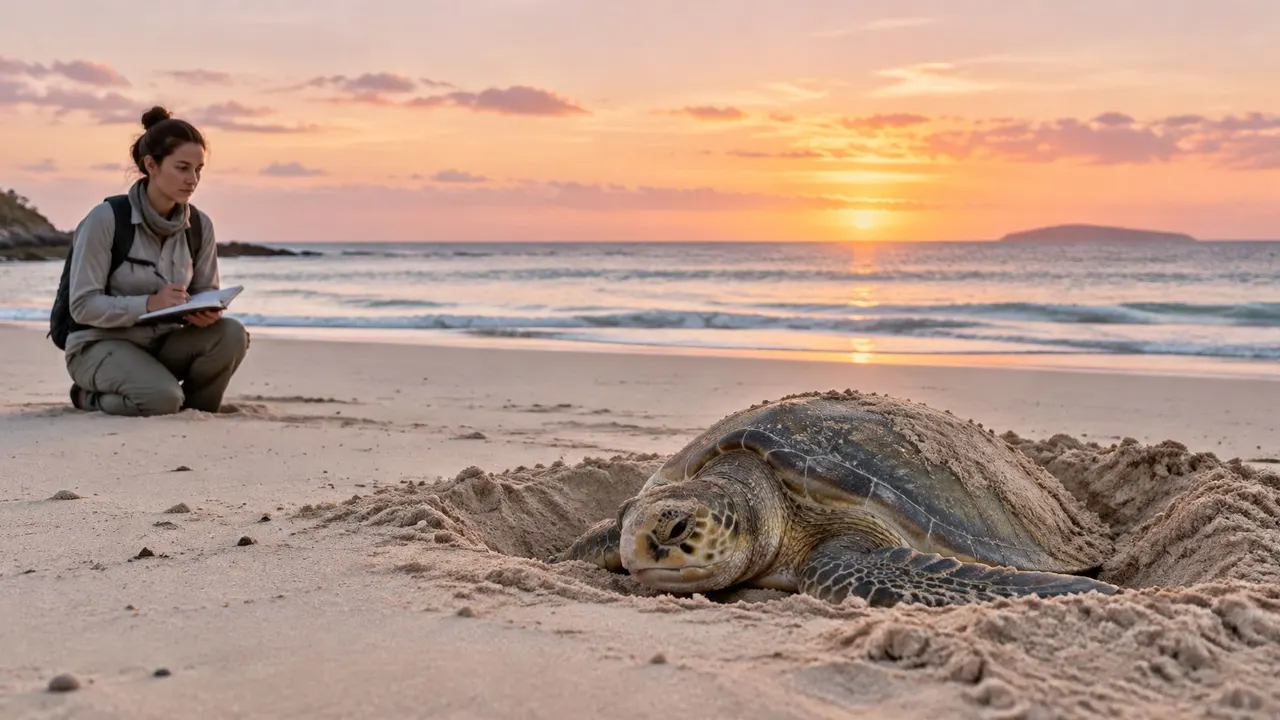
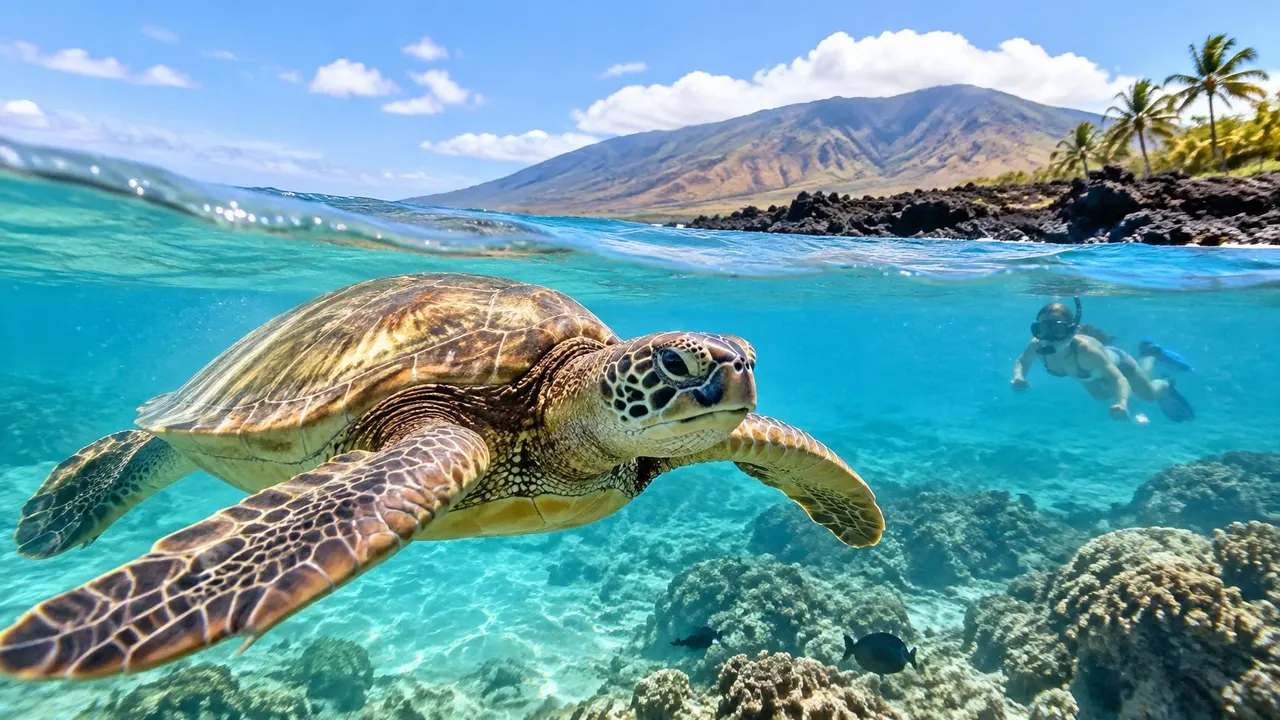
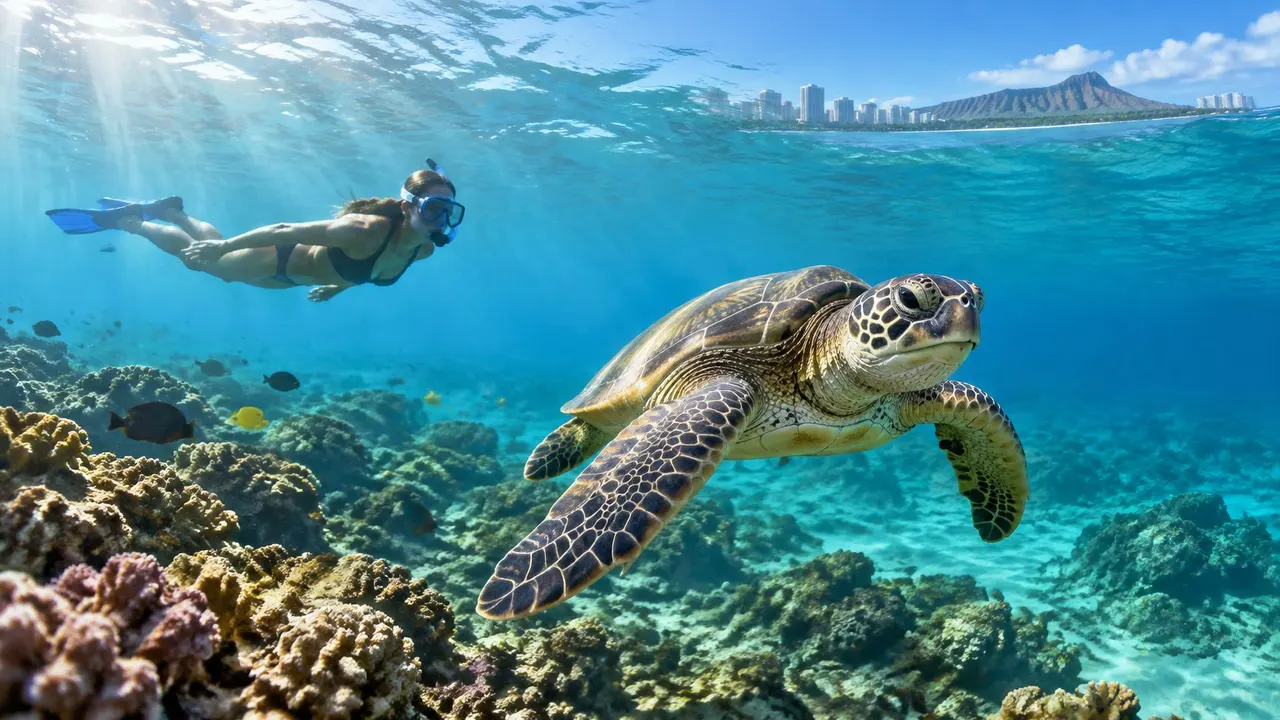
Say you drop into waist-clear water over a shallow patch of rock and coral a short boat ride from Waikiki. A honu, the Hawaiian green sea turtle, is parked on the bottom with her flippers loose. Small fish pick algae off her shell and skin. She is not in a pen, and nobody called her over. She chose a cleaning station or a foraging patch because the food and the rest stop are there. You are a guest at that stop.
The animals beside the turtle
The turtle is the reason most families book, but she is rarely alone. On our Honolulu trips you should expect yellow tangs, Moorish idols, and triggerfish, plus the chance of rays or eels sliding through the same lane. About 30% of the reef fish in Hawaii are endemic, so a bright fish you cannot name from a Caribbean guidebook may live only in these islands. Point with your eyes. A hand in the water reads as a chase to both fish and turtle.
A honu on a pale, quiet reef does not prove the corals are fine. Greens still use a site while the coral is stressed. Treat the animal as wildlife whose foraging and nesting areas are expanding under legal protection, not as a selfie prop. If you want a plain look at how that station works before you pack, read how a turtle canyon cleaning station functions.
Watch the work, not the shell. If the fish keep cleaning and the turtle keeps her head down, you are in the right place at the right distance.
Before anyone talks fins, lock the distance limits, then the gear order, then the shape of the hour, then the backup when heat or surge rewrites the morning.
Distance Rules Before You Enter the Water
Memorize this before the boat pitch. A sighting is not permission to close the gap.
| Situation | Minimum distance | Do this | Never do this |
|---|---|---|---|
| Turtle swimming or foraging | 10 feet (3 m) | Stay beside or up-current and watch | Chase, touch, surround, or block its path |
| Turtle resting, basking, or hauling out | 50 yards (45 m) preferred | Give a wide berth from boat or snorkel | Force it off a rest spot back into the water |
| Food in the water | No approach for feeding | Observe only and back away if it comes close | Offer food, which is illegal and can cause bites |
| Live coral and the bottom | No contact | Stay horizontal with flotation | Stand, kneel, or fin downward onto coral |
| Group already close | Widen until 10 feet is restored | End the look if the turtle dives or turns repeatedly | Treat a sighting as permission to get closer |
NOAA's Hawaii marine wildlife viewing guidelines set the in-water line at at least 10 feet (3 meters) from Hawaiian green sea turtles. Turtles show little to no change in basking or foraging when people hold that gap. That is the score we want: no behavior change, not a closer face.
Ten feet in the swim, fifty yards at a rest stop
The 10-foot line is for a turtle that is swimming or feeding while you are already in the water. Hawaiʻi State Parks guidance is stricter when you are in a boat, or when you are swimming, diving, or snorkeling near a turtle that is resting, basking, or hauling out. Give a wide berth, and strongly prefer 50 yards (45 meters). If you push a resting honu back into the water, you just stole the rest that animal hauled out to take.
Hawaiʻi's Division of Aquatic Resources protects honu under the federal Endangered Species Act, Hawaiʻi Revised Statutes Chapter 195D, and Hawaiʻi Administrative Rules Chapter 13-124. Chasing, touching, feeding, pursuing, restraining, or riding can break those rules even when you see no cut or limp. DLNR has also warned that a turtle trained to expect food may link swimmers or boats with handouts and may bite.
How the group should sit in the water
Guides put you up-current or beside the animal, in a small visual pocket, never in a circle. Nobody blocks the exit lane. If the honu turns again and again, or dives hard, the look is over. Log the approximate distance, the group size, how long you stayed, and whether the behavior changed. A useful trip is a high share of encounters with no change, not a promise that a turtle will appear.
We teach the same standard on the boat: observe, give the turtle room to breathe, and never touch. The fuller version of that harbor talk lives in our notes on Oahu reef etiquette.
Never touch, never feed, never ride. If you cannot keep the gap, you are the one who leaves.
Gear comes only after those limits are boringly clear.
Gear and Skills for a First Turtle Reef
A first turtle snorkel reef goes sideways for a simple reason. People stand up. Coral is a living animal, and fins plus body weight break it. The kit below is the order we use so you float before you ever aim at a turtle.
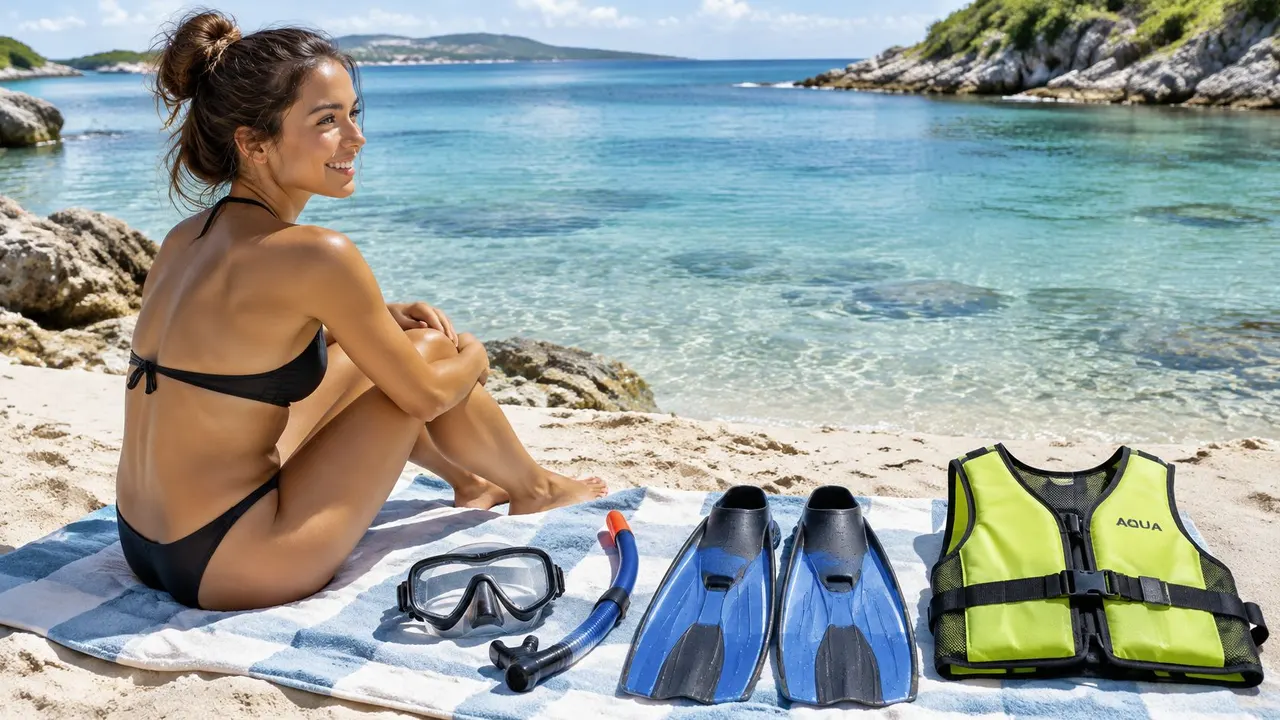
Six steps, each one blocking a common mistake
- Mask and a separate snorkel. Use a standard mask and a snorkel you can drop from your mouth. A full-face mask is harder to clear and easier to panic in when a wave slaps the lens. If the skirt leaks, stop and reseat it on the boat, not over the reef.
- Vest on before the briefing. Put the snorkel vest or life jacket on while you can still hear every word. You float higher, boats see you, and you are not negotiating buoyancy with one hand on a turtle's personal space. Life jackets and snorkel vests are on every trip we run.
- Slippers to the waterline, fins after. In Hawaiʻi, sandals are slippers. Wear them across the dock or the beach, then switch to fins. Bare feet on a ladder plus a rushed fin job is how people sit on coral they cannot see.
- No reef shoes, no plan to stand. Reef shoes invite the worst habit, planting your feet. If you think you might need to stand, you are not ready for that patch. Stay horizontal.
- One practice float before the animals. In waist-deep water, or beside the boat, hold a horizontal float, run a slow flutter that stays above the bottom, and clear the mask once. That single clear is the skill that keeps a flooded mask from becoming a dash to the rocks.
- If the float fails, stay with the vest and the guide. Do not “just try” the reef. Our snorkel school and flotation vests exist so new swimmers are not guessing. Masks, fins, snorkels, and vests are supplied, so you are not hunting a rental shop at 7 a.m.
Why flotation beats another speech
A University of Hawaiʻi write-up of undergraduate reef research documented 168 reef disturbances from 327 snorkelers over nine months, about one disturbance per two people, yet fewer than 3% were direct contact with a coral colony. Other Hawaiian reef observations have also found that visible damage from snorkeler contact is uncommon, so the practical fix is to control where people put their hands, fins, and feet. Talking longer does not fix density. Flotation, small groups, and a ban on standing do.
Pack list and fit notes are collected on our page for snorkel gear for Hawaii. Next is the clock of the trip itself, from the harbor to the hour you are looking down.
How a Guided Turtle Reef Hour Unfolds
A turtle canyon morning is a sequence, not a leap off the rail. Alcoholic drinks are not part of this trip. If you want a bar, this is the wrong boat.
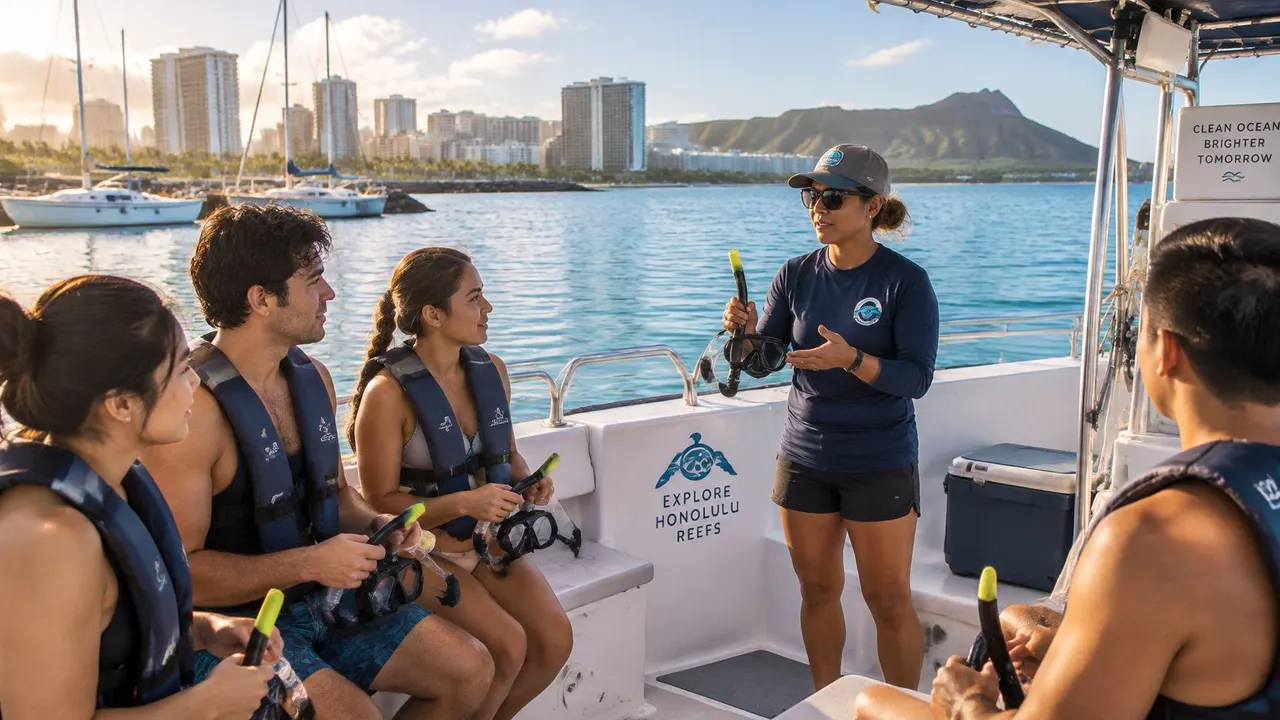
Five beats from dock to head count
- Meet and board at Kewalo Basin, the harbor beside Waikiki. You check in, stow a dry bag, and hear who is in the water with you. Families with kids as young as three ride this style of trip because the vest and the guide stay close.
- Take the short lesson before anyone masks up. We fit the gear and name what is likely that day, fish first, turtle second. Guides keep coaching technique once you are in, because a good kick is learned wet, not from a speech on the bench.
- Enter only after the guide sets the line. The Turtle Canyons outing runs about two hours, with close to an hour in the water, aimed at Waikiki's cleaning station. Groups often see several honu rather than a single animal. You do not pick your own rock.
- Stay in the guide's visual pocket. Point with your eyes, not your hands. Let the turtle leave. If she turns off her line, you hold yours.
- Use the rest of the surface time for fish, then climb out on a head count. Endemic reef fish are the backup show. The crew does not leave the ladder until the count matches the manifest.
Mornings usually mean calmer water and a better chance than a windy afternoon. Living Ocean Tours is described as Oahu's top rated and most reviewed snorkel company, and its snorkeling trips have a 95% record of spotting turtles. That is a record, not a contract. We still brief you as if the turtle might be elsewhere.
The boat briefing in the clip below is the tone we want on deck: short, specific, and finished before the mask goes on.
The trip that matches this hour is the Turtle Canyons Snorkel Excursion. If our departure does not fit your hotel timing, Snorkel Turtle Canyon is a strong alternative for the same kind of respectful look.
When Heat or Surge Changes the Reef Plan
A cleaning station is not a fixed attraction. NOAA Coral Reef Watch keeps daily Hawaiʻi monitoring and a four-month coral-bleaching thermal-stress outlook. Color, fish clumps, and turtle habits can all shift while you are still at breakfast. A turtle on that reef is not a health certificate. Greens may keep using a site while the coral is stressed.
| Condition | What changes for you | Do this | Do not do this |
|---|---|---|---|
| Bleaching or pale coral | Less color and less predictable fish | Hear the guide out and accept a site move | Demand the boat stay for a photo |
| Windy or murky water | Shorter sightlines | Stay near the boat and on the vest | Swim off alone toward a shadow |
| Bumpy seas with kids | Higher chance of a flooded mask | Postpone or pick the calmer morning | Push a scared first-timer onto the reef |
| No turtle in the first pass | The hour is still a reef swim | Switch to fish identification | Chase or surround the next animal |
| Turtle inside 10 feet | You are too close | Back away slowly on the surface | Reach, feed, or block its exit |
A pale morning with a seven-year-old on the rail
Say the captain slows, looks at a washed-out patch, and tells the deck the station is quiet and the coral looks heat-tired. Your child already has the mask on. The failure mode is bargaining: one more circle, one closer pass, one photo so the morning “counts.” Crowding a pale reef, or chasing the only honu that shows, is how a careful trip turns into harassment.
Accept the swap. Murky water after wind or rain means a shorter swim, the vest stays on, and nobody peels off toward a shadow. If the seas are bumpy and a first mask flood is likely, postponing beats forcing it. If no turtle shows on the first pass, spend the hour naming tangs and idols. You did not lose the reef. You lost a guarantee that was never honest.
For kids, say it in one breath. These animals were nearly gone, the law helped bring them back, and our job is not to wreck a rest stop. If you cannot keep 10 feet, you move, slowly, on the surface, without a splashy retreat over the animal.
If the gap collapses, you leave. The turtle does not owe you a second chance at the same rock.
A good crew says this before anyone feels cheated. Wind and chop at this site have their own pattern, which we lay out in notes on turtle canyon wind and chop. Hear the call, then get back on the vest.
Choose Your Oahu Turtle Snorkel and Book
Pick the boat for the job, not for a longer speech. Both trips below are $79 per person, both take ages 3 and up, and both include gear and guides. Private charters of either style hold up to 40 guests.
| Tour | Length | Ages | Price | Best for |
|---|---|---|---|---|
| Turtle Canyon Snorkeling Adventure | 2 hours, about 1 hour in water | 3 and up | $79 | Cleaning station and honu |
| Deluxe Waikiki Snorkeling and Wildlife Cruise | 2.5 hours | 3 and up | $79 | Families who also want a waterslide, trampoline, and lily pad |
The canyon trip is the turtle snorkel reef morning. It is two hours door to door, about one hour in the water, at Waikiki's cleaning station, where seeing up to 10 Hawaiian green sea turtles is common. No alcohol. If honu are the reason you came, book the calmer morning on this boat.
The Deluxe Waikiki Snorkeling and Wildlife Cruise runs 2.5 hours on a reef away from the crowds. Same age floor, same price, plus a waterslide, a water trampoline, and a lily pad. Mixed-age groups who need play time as well as wildlife do better here. Living Ocean Tours is described as Oahu's top rated and most reviewed snorkel company, which matters when you are choosing who sets the line in the water, not who shouts the loudest from the dock.
Questions we hear at check-in
- Can I touch a turtle? No. Keep the viewing gap and never feed. Touching is a disturbance, not a bonus.
- What should I leave at the hotel? Full-face masks and reef shoes. They invite panic clears and standing on coral.
- What if I cannot swim well? Use the vest and stay with the guide. These trips are built for all skill levels from age 3. You are not racing anyone.
- Is a sighting promised? No. We still see turtles on about 95% of snorkel trips. Weather and the animal get a vote.
Book the morning canyon trip when the honu is the goal. Book the deluxe cruise when the kids need a slide and the reef on the same ticket.
Living Ocean Tours runs guided Waikiki snorkeling from Kewalo Basin, including the turtle cleaning station and a family cruise with time to play on the water. You get gear, a short lesson, and a crew that treats honu as protected wildlife rather than a photo prop. When you are ready to pick a morning, visit Living Ocean Tours and reserve the trip that matches your group.