Snorkeling While Pregnant: What Is Safe by Trimester
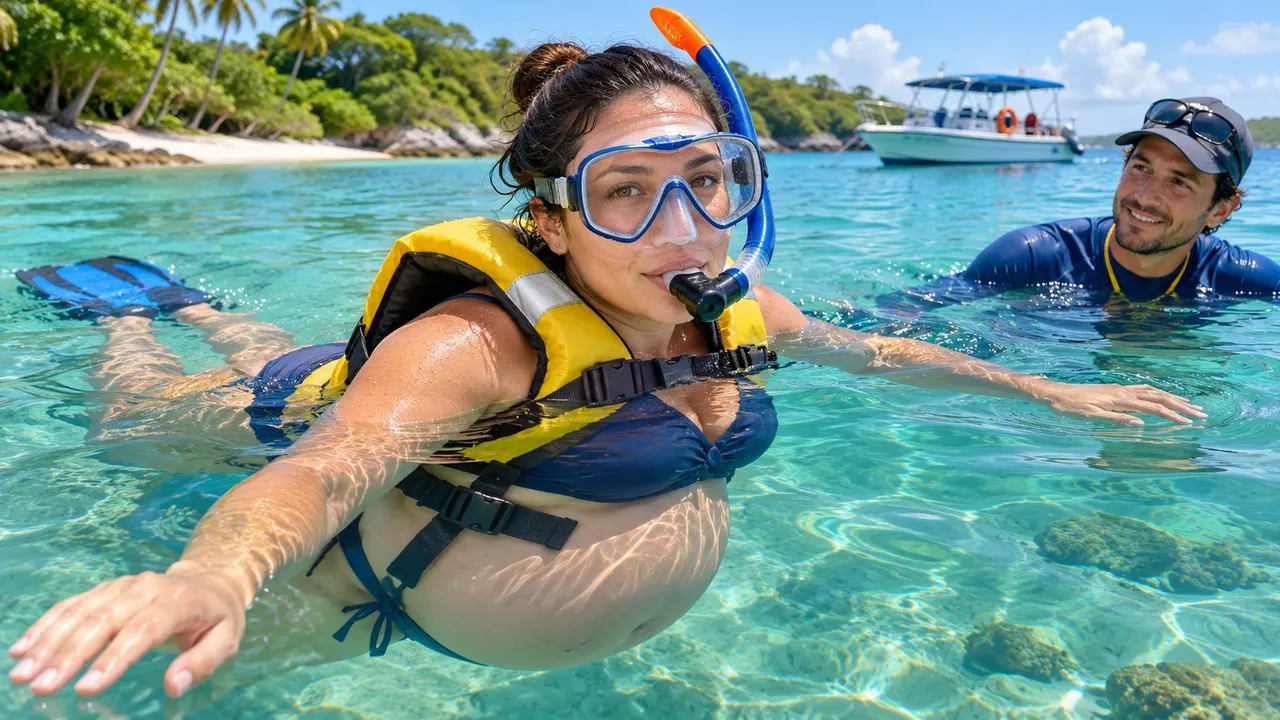
Table of Contents
- Use symptoms rather than a calendar
- Why depth changes the decision
- Make clearance specific
- Respond without trying to finish the excursion
- Fit and buoyancy first
- Keep the effort conversational
- Check the surroundings
- Check your route back to care
- Understand the operator's position
- Staying dry removes some risks, not all
- Take these steps before paying
Surface snorkeling is not automatically safe during pregnancy. It may be reasonable with an uncomplicated pregnancy, clinician clearance, and calm water, while scuba diving should be avoided throughout pregnancy.
If someone says snorkeling is safe because it's just swimming, have they considered the current, the boat ladder, or how quickly you could reach medical care? Those details matter as much as the activity's name.
The useful question isn't whether you can go snorkeling while pregnant. It's whether your pregnancy, the particular outing, and the conditions that day leave enough room to stop comfortably and get help promptly.
When Snorkeling Is Reasonable in Each Trimester
Calm, surface-only snorkeling may be reasonable after individualized clearance, but a trimester label isn't permission. The CDC's guidance for pregnant travelers distinguishes generally acceptable swimming and snorkeling from scuba diving, while also discouraging unaccustomed vigorous activity.
Use the following as a conservative planning framework, not a medical schedule for entering the ocean.
Snorkeling suitability by trimester
| Stage | Snorkeling Guidance | Main Concern | Skip Snorkeling If |
|---|---|---|---|
| First trimester | Surface snorkeling only after clearance | Nausea, fatigue, and sudden seasickness | You're nauseated, dehydrated, unusually tired, or unable to tolerate the boat ride |
| Second trimester | Relaxed surface swimming in sheltered water after clearance | Changing balance and heat tolerance | You have dizziness, breathlessness, or placenta previa without explicit medical approval |
| Third trimester | Consider only with explicit obstetric approval and brief, flotation-supported participation | Boarding, reduced balance, and difficulty exiting promptly | You can't climb steadily, or have contractions or fluid leakage |
| Any week with complications | Trimester timing is not permission | Preeclampsia, significant anemia, bleeding, or cardiopulmonary disease | Any of those conditions is present |
Flotation support can reduce the need to tread water, but it doesn't make an unsuitable trip appropriate.
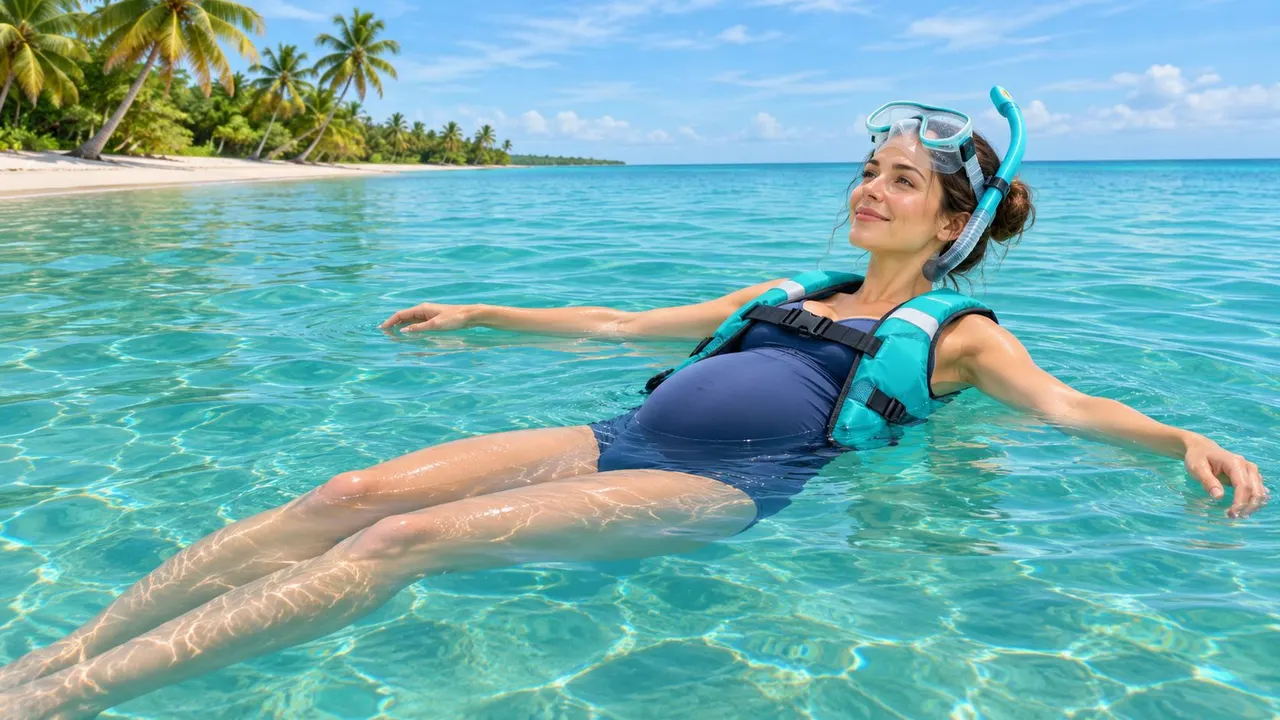
Use symptoms rather than a calendar
Early pregnancy can make a boat outing difficult even before your abdomen changes noticeably. Someone who comfortably swims at home may still struggle with nausea during the ride to the snorkel site.
Later, assess the entire route from your seat into the water and back again. A peaceful float doesn't compensate for a ladder you can't climb without straining or a deck you can't cross steadily.
These aren't claims that a particular trimester makes snorkeling dangerous. They're practical reasons to reconsider an outing as your comfort and mobility change.
Before continuing: Can you answer yes to all three questions: Is my pregnancy uncomplicated? Has my prenatal clinician cleared this activity? Are conditions suitable for a calm, surface-only swim?
A no or an uncertain answer means pausing the plan. You don't need to reach the harbor to decide that today isn't the right day.
Why Scuba Diving and Surface Snorkeling Carry Different Risks
Scuba involves compressed breathing gas and pressure changes with depth. Surface snorkeling normally involves neither. That distinction explains why pregnancy guidance treats them differently.
ACOG's exercise guidance lists scuba diving among activities to avoid during pregnancy. The concern isn't getting wet or wearing a mask.
Scuba, breath-hold diving and surface snorkeling compared
| Activity | Compressed Gas | Breath-Hold Descents | Pregnancy Verdict |
|---|---|---|---|
| Scuba diving | Yes | Not the main method | Avoid throughout pregnancy |
| Breath-hold freediving | No | Yes, repeated | Avoid; deep or prolonged breath-holds add exertion and hypoxia risk |
| Surface snorkeling with flotation vest | No | No, surface only | Possible with clinician clearance and calm conditions |
Why depth changes the decision
Divers Alert Network's pregnancy and diving guidance explains that available evidence cannot establish a safe fetal exposure to diving. Decompression-related bubbles are a concern because fetal circulation cannot reliably filter them in the way adult pulmonary circulation does.
DAN also discusses pregnancy-related fluid changes and possible ear or sinus difficulties. Boat motion can compound morning sickness or motion sickness before you ever enter the water.
Breath-hold diving is a separate activity, even when someone calls it snorkeling. Repeated duck-dives require breath-holding, descent, and a return to the surface, potentially adding oxygen shortage, dizziness, and sudden exertion without using compressed gas.
Say your guide points out something below and invites everyone to dive down for a closer look. Your surface-only plan means staying above it, not making an exception because the descent looks brief.
Ordinary snorkeling still has its own hazards, including accidental submersion, current, and rough water. Its different mechanism is a reason for a different assessment, not a guarantee.
If a trip description mentions tanks, weights, dive depth, or deep runs, treat it as a diving question for your clinician, not a routine snorkel booking.
Warning Signs, Clearance and What to Do in the Water
Save this stop checklist on your phone before departure:
- Vaginal bleeding: End the activity and obtain medical advice.
- Dizziness: Don't try to swim through faintness or loss of balance.
- Chest pain: Signal for assistance immediately.
- Painful contractions: Stop and seek urgent assessment.
- Fluid leakage: Leave the water and contact maternity care promptly.
- Unusual shortness of breath: Treat unexpected breathing difficulty as a warning, not ordinary exercise discomfort.
These are among the exercise warning signs identified in ACOG's clinical guidance on physical activity during pregnancy.
Make clearance specific
Ask your prenatal clinician to assess the actual outing, including open-water swimming, travel from shore, boarding, and the planned exit. Mention placenta previa, preeclampsia, significant anemia, heart or lung disease, and any bleeding history rather than asking only whether swimming is allowed.
A useful conversation might distinguish a supported float close to an exit from a group swim across a bay. Both may appear under the same snorkeling category on a booking website, but they don't demand the same effort.
Respond without trying to finish the excursion
- Stop swimming and signal the guide or crew. Don't wait to see whether keeping pace makes the symptom disappear.
- Let your flotation support you with your airway clear. Follow the guide's assistance and breathe normally rather than taking forceful breaths.
- Use the nearest safe exit with help. Don't attempt a long return swim or climb alone while dizzy.
- Call emergency services for chest pain, heavy bleeding, severe breathing difficulty, fainting, or concerning contractions. Have the crew activate its emergency plan.
- Contact your obstetric team promptly for fluid leakage or other pregnancy warning symptoms. Persistent dizziness also needs assessment. Don't postpone urgent care until the end of the day.
Any warning sign means leaving the water. Turning back isn't a failure, and a symptom that improves after resting doesn't automatically clear you to reenter.
Equipment, Pacing and Water Choice for Lower Risk
Prepare your equipment somewhere stable, where you can sit down and check the fit without rushing.
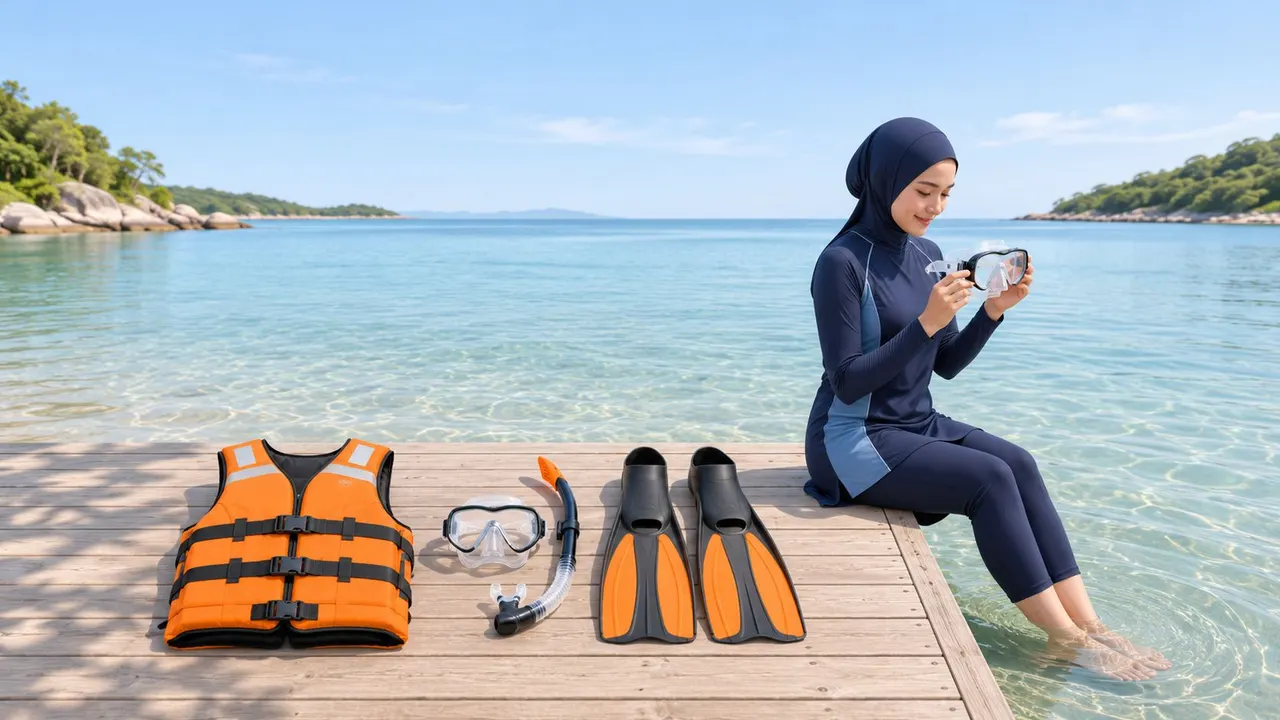
Fit and buoyancy first
- Flotation: Choose a properly fitted aid and learn how it works before entering. Life jackets and inflatable snorkel vests aren't interchangeable, and some snorkel vests require active inflation.
- Mask and snorkel: A conventional separate mask and snorkel is a straightforward setup to practice clearing and removing. This isn't a claim that one mask design has established pregnancy-specific safety.
- Fins: Use a comfortable pair that doesn't require forceful kicking. Test the fit before leaving the boarding area.
- No weights or descents: Keep the outing at the surface and decline underwater games or breath-hold challenges.
At Living Ocean Tours, life jackets and snorkel vests are available on all tours. Our guide to snorkeling with a life vest explains how flotation can support participation, but equipment availability doesn't override our pregnancy recommendation.
Keep the effort conversational
The ACOG physical activity guidance uses the talk test: you should be able to carry on a conversation during moderate exercise. For snorkeling, check this while safely resting with your face out of the water, not while trying to talk through the mouthpiece.
Take breaks before you feel depleted. If you can't speak comfortably after stopping, the pace is too demanding, and you shouldn't resume just because the group continues.
Drink water, use shade, and rest comfortably between sessions. Avoid prolonged rest lying flat on your back.
This video offers additional visual context for preparing for an ocean outing.
For location, favor sheltered water and a stable entry, such as a gently sloping sandy beach without breaking waves. Avoid strong surge, slippery ladders, and routes that require sustained finning.
A practical limit: If you can't readily communicate with your guide, stop to rest, or reach an immediate assisted exit, choose easier conditions.
Heat Cold Water and Distance to Help
A comfortable water temperature doesn't settle the whole decision. Assess the conditions in the order you'll encounter them, from waiting on the dock to reaching help if something goes wrong.
Check the surroundings
- Heat and sun: Favor a cooler departure time, use shade between swims, and drink water on the boat. Leave the activity if you feel flushed, dizzy, weak, or overheated. Don't wait for sweating to stop before acting.
- Cold water: A review of cold-water swimming in pregnancy identified only four studies and eight reports, with guidance largely based on low-level expert opinion. That isn't enough to name a universally safe temperature. A swim shirt or suitable short wetsuit may improve comfort, but exit before substantial chilling or hard shivering. Our explanation of cold-water shock while snorkeling provides additional context.
- Water quality: Check local advisories after heavy rain, avoid visible runoff or polluted water, and don't swallow seawater. Clear-looking water alone isn't proof of acceptable quality.
Check your route back to care
- Emergency access: Ask about a working radio, first-aid supplies, return arrangements, and access to medical care from the harbor. Stay with your buddy or guide rather than drifting away.
- Personal needs: Gestational diabetes may require an individualized food, monitoring, and activity plan. Wear stable footwear on wet decks and reject any ladder you can't climb steadily.
A 2024 systematic review in BMC Pregnancy and Childbirth included 10 randomized controlled trials involving 1,949 pregnant participants in prenatal aquatic activities. Those activities shouldn't be treated as equivalent to an offshore snorkeling excursion.
For most healthy pregnancies, ACOG recommends at least 150 minutes of moderate aerobic activity weekly. That's a general exercise target, not a reason to stay in the ocean to complete a session.
If shade, a nearby companion, or a workable exit is missing, choose another day or stay ashore.
Questions to Ask a Snorkel Operator Before You Book
Send these questions before paying. Written answers help you distinguish what the crew provides from what a booking photograph suggests.
- Will you accept a pregnant guest on this specific trip? Ask whether a clinician's note is required and whether pregnancy changes the booking terms.
- Is there instruction before water entry? A briefing should explain the equipment, signals, boundaries, and return procedure.
- What flotation is available? Clarify the type, fit, and whether it can support your intended low-effort participation.
- Will a guide be in the water? An onboard lookout and an in-water guide serve different roles.
- How would I reach medical care? Ask about communication equipment, first-aid supplies, and the route back from the actual snorkel site.
- Can I stop at any point? Clarify how you'll get out, whether help is available on the ladder, and what happens financially if you withdraw.
Understand the operator's position
Living Ocean Tours is Oahu's top rated and most reviewed snorkel company. That credential doesn't replace medical judgment or make an offshore outing appropriate for every guest.
We don't recommend our tours for pregnant women because access to health care can be delayed, motion sickness can occur, and wet surfaces create slip-and-fall risk. Our pregnancy and boat-tour guidance helps explain those concerns.
Before snorkeling, we provide a short lesson to familiarize guests with the gear and explain what to expect in the water. That preparation is useful, but it doesn't remove the limitations of the setting.
Keep medical clearance and operator approval separate. A clinician can evaluate your pregnancy, while the operator must address the vessel, route, and participation policy.
Get the operator's answers in writing and save the reply before your trip. If an answer is unclear, don't assume the more reassuring interpretation.
Pregnancy-Friendly Ways to Enjoy the Ocean
Pregnancy-friendly ocean options without swimming
| Option | Exertion | Water Contact | Best Fit |
|---|---|---|---|
| Waikiki sunset cruise from the deck | Very low while seated | None | Golden-hour views from a seat |
| Wildlife viewing from the deck in calm seas | Low while seated | None | Marine life spotting without entering water |
| Shallow beach walk and shore viewing | Low to moderate | Ankle-deep only, if desired | Stable ground with an easy exit |
Staying dry removes some risks, not all
A deck-based outing avoids swimming effort and water exits, but boarding, boat motion, and distance from care remain. Staying ashore is the better alternative when those factors are the reason not to snorkel.
For example, you might enjoy coastal views from a stable beach path while other family members swim. There's no requirement to step into the wash, where a small breaking wave can affect your footing.
Our Waikiki sunset cruise departs from Kewalo Basin Boat Harbor and offers golden-hour views without requiring water entry. A seated plan may reduce exertion, but check with your clinician and our team first: our recommendation against tours during pregnancy still applies.
An exceptional alternative to compare is Sunset Cruise Waikiki. Evaluate its pregnancy policy, boarding arrangements, and emergency access independently rather than assuming another boat resolves those concerns.
Availability isn't approval to participate. Our babymoon boat-tour planning guide can help frame the conversation before you reserve.
For a traveler cleared for boat travel, a seated deck outing may be the easier choice. When boat travel itself is unsuitable, choose shore viewing instead.
Decide Whether Snorkeling Fits Your Pregnancy
Use an all-conditions-met rule, not a balance of reassuring and concerning details. Consider snorkeling only when you have an uncomplicated pregnancy, written clinician clearance for the specific plan, clear operator acceptance, calm sheltered water, suitable flotation, an in-water guide, and an immediate exit arrangement.
One missing condition is enough to change the plan. Choose a medically appropriate deck outing or a shore activity instead of trying to compensate with confidence or swimming experience.
Take these steps before paying
- Email your prenatal clinician. Include the date, departure harbor, and whether you're considering surface snorkeling or a seated cruise.
- Send the operator your questions. Save the reply, including its pregnancy policy and withdrawal arrangements.
- Book only after both answers are clear. Reassess if your symptoms, pregnancy status, or the forecast changes.
Our standing recommendation remains that pregnant guests shouldn't join our tours. A clinician's clearance doesn't override an operator's restrictions, and a booking confirmation isn't medical clearance.
If you're reviewing the Deluxe Waikiki snorkeling excursion, use the trip information for that discussion, not as evidence that it suits pregnancy. Only consider availability after medical guidance and explicit operator acceptance, without assuming an exception will be made.
You can have a meaningful ocean holiday without entering the water. A clear clinician answer comes before any booking, and choosing not to go is a complete, reasonable decision.
Living Ocean Tours offers guided snorkeling and sunset outings along the Waikiki coastline, with instruction and equipment for snorkeling guests. Visit Living Ocean Tours to review trip details and discuss our pregnancy policy before making plans, then take those details to your prenatal clinician.