
Snorkeling Waikiki 2026: Spots, Tours, and Insider Tips
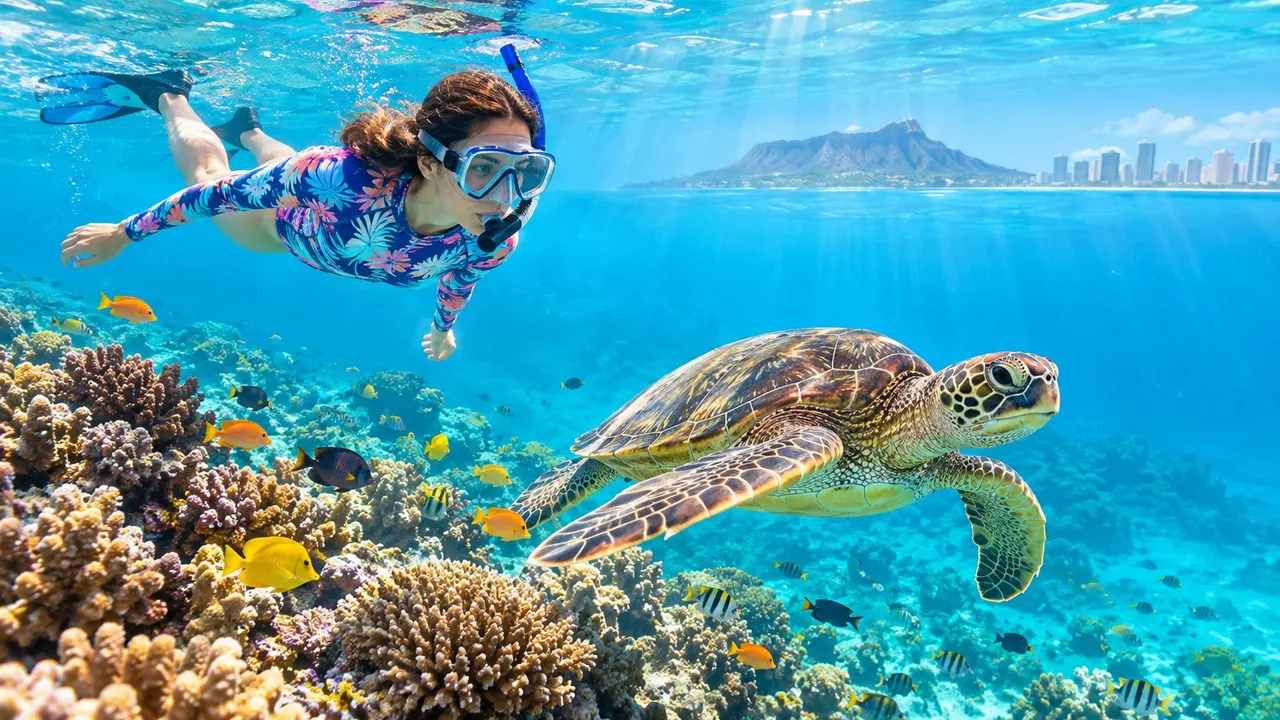
The best window for snorkeling Waikiki is early morning from May through September, when calm conditions and clearer water make the offshore reefs, especially Turtle Canyons, far more rewarding than the often-murky nearshore. Nearshore visibility can be only 10 to 30 feet, while calmer offshore water can exceed 100 feet during the summer window, according to NOAA-linked Hawaiʻi reef monitoring information.
You may be standing in a Waikiki hotel room right now, packing a swimsuit and wondering whether to walk down to the beach or reserve a boat. The honest answer is that snorkeling Waikiki isn't guaranteed just because the shoreline looks calm. Wind, swell, runoff, jellyfish timing, crowds, and your group's swimming ability matter more than a glossy list of beaches.
From Kewalo Basin, the first part of a good trip is often simple and unglamorous. You park, check in, find the right mask, listen carefully to the captain, and wait for the crew to confirm that the reef is worth visiting that morning. Once the boat clears the surf line, the experience changes. You float, breathe, look down, and let the water show you whether the day is going to be ordinary or memorable.
What Snorkeling Waikiki Actually Feels Like on Trip Day
At Kewalo Basin, a family usually arrives with a mix of excitement and uncertainty. One person is checking the time, another is adjusting a mask strap, and a child is asking whether the boat will be bumpy. That small gear-up shuffle is normal. A good crew doesn't rush it because a leaking mask or loose fin can turn an enjoyable swim into a stressful one.
The first few minutes in the water
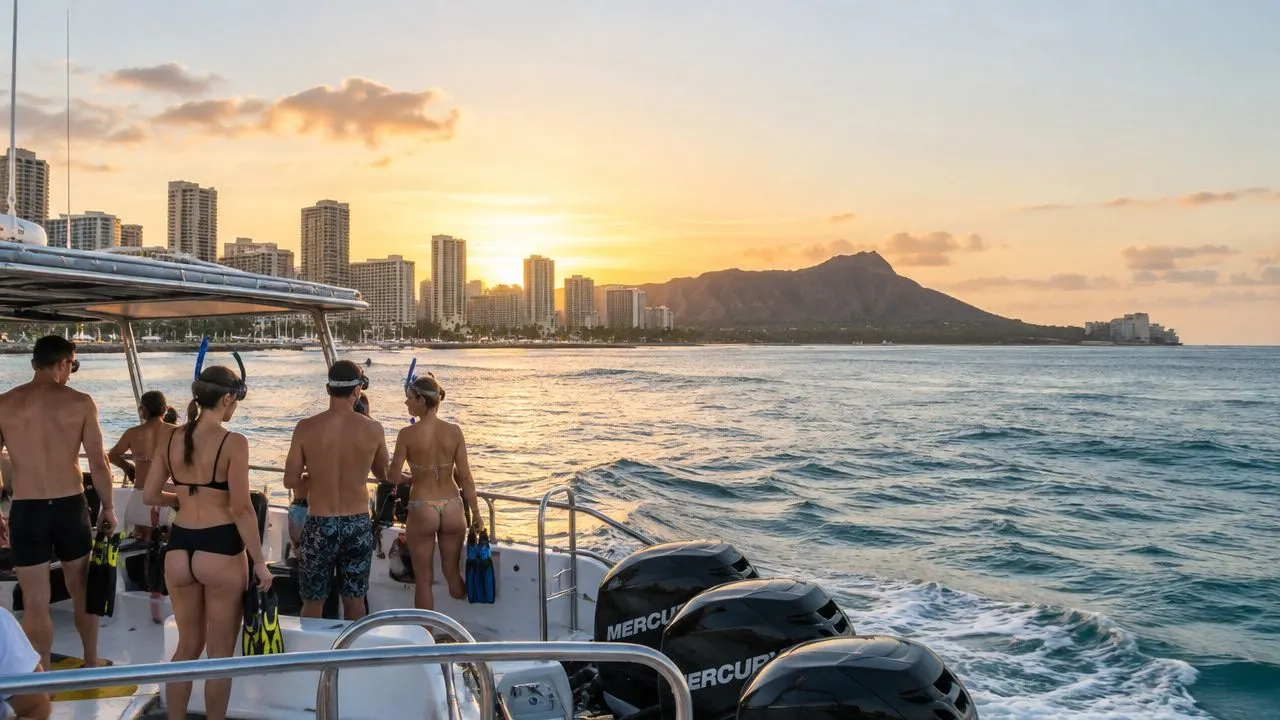
Once the engines rumble past the harbor and the boat reaches the reef, the captain explains how to enter, where to hold, and how to communicate underwater. The first face-down moment can surprise beginners. The reef may drop away more sharply than expected, and the water beneath the boat can look deeper than the beach zone feels.
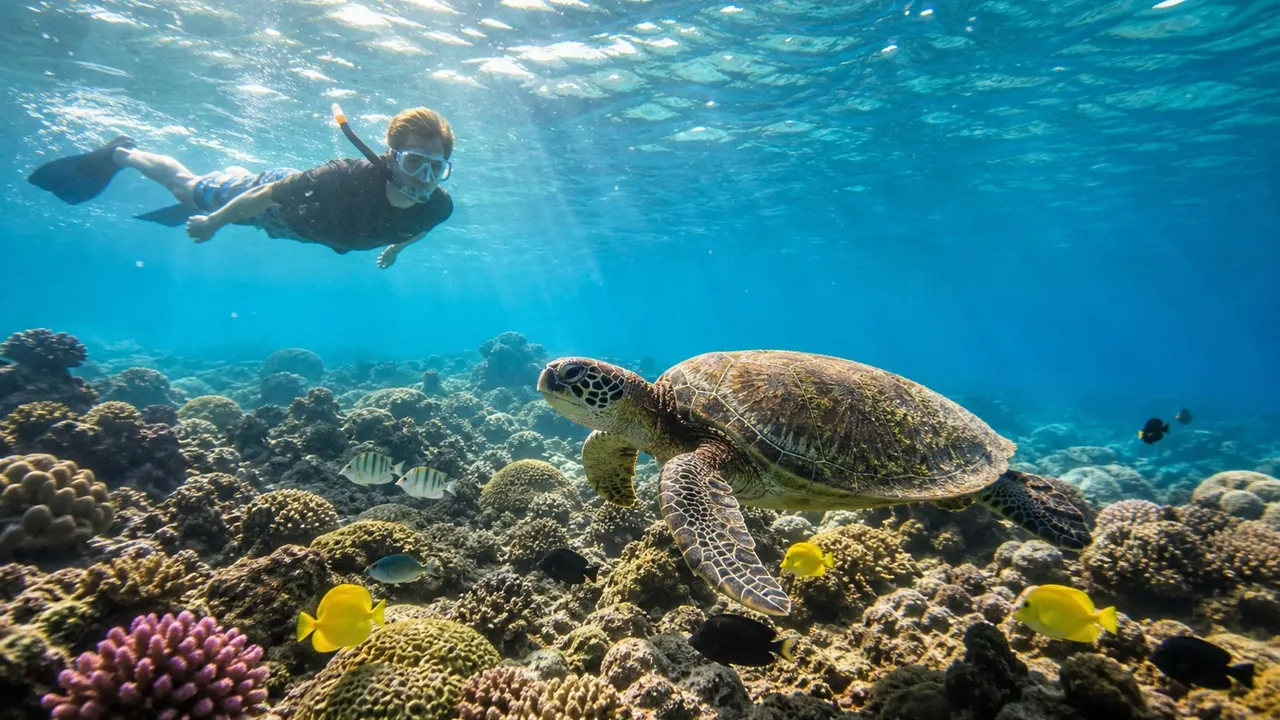
Then the rhythm settles. You float, breathe through the snorkel, and scan slowly instead of trying to swim everywhere at once. Urchin-covered ledges appear below. Reef fish move through the coral. If a curious honu glides past, the best response is to stop kicking, give it space, and let it choose the encounter.
Families often expect a long, continuous swim. In practice, people take breaks, adjust masks, talk with the guide, and return to the water when they feel ready. The crew's job isn't just to point out wildlife. It's to help a nervous swimmer conserve energy, stay oriented, and understand that floating well is more useful than swimming hard.
Practical rule: The clearest trip isn't necessarily the one with the calmest-looking beach. Ask about the conditions at the actual snorkel site, not only the water beside your hotel.
That difference frames every decision in this guide. Waikiki has accessible beach entries and excellent boat-based reefs, but each option delivers something different. The right choice depends on whether you value flexibility, wildlife access, flotation support, or the highest chance of clear water.
When Waikiki Water Is Clear Enough to Enjoy
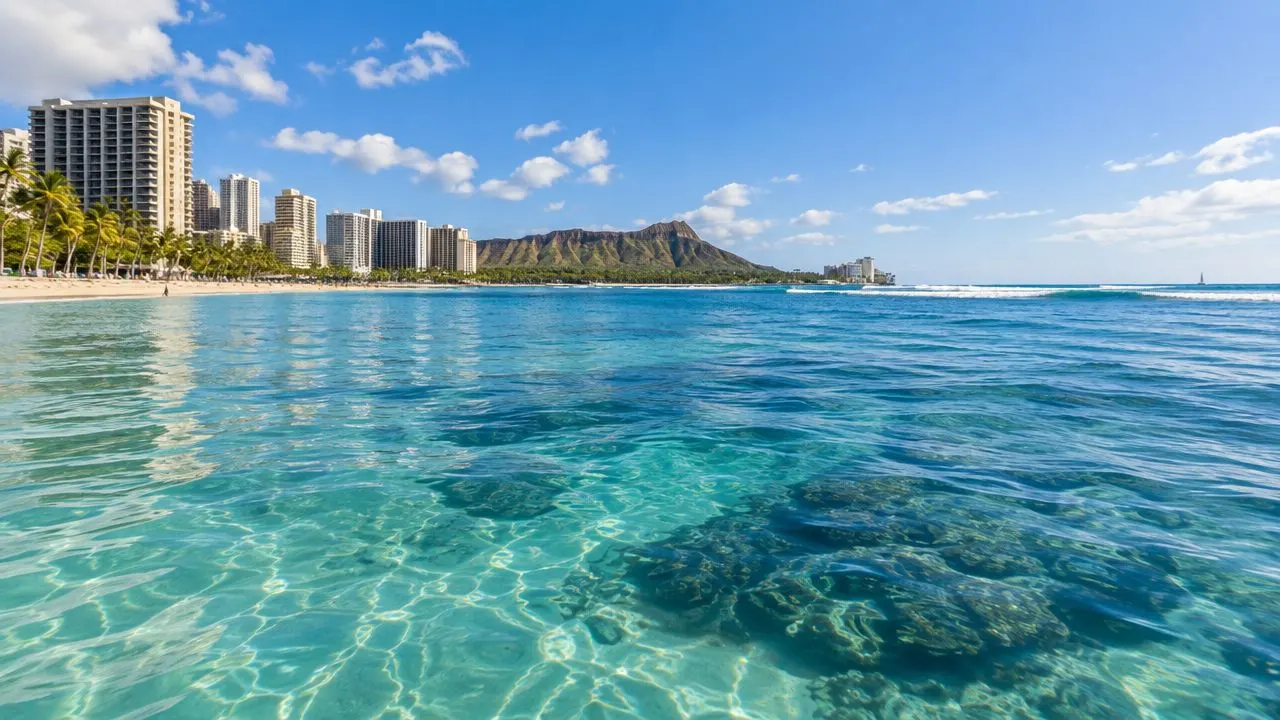
Visibility changes because several conditions act at once. Wind chop suspends sand and loose sediment, boat wakes disturb the surface, and runoff can carry cloudy water toward nearshore reefs after rain. A seasonal swell can also push energy across the south shore, even when the beach appears inviting from land.
The clearest practical window is usually May through September, with early morning offering the best odds before wind and crowds stir the water. Nearshore Waikiki reef areas commonly provide about 10 to 30 feet of visibility, while protected or offshore sites may reach 30 to 50 feet, as described in this Waikiki snorkel conditions report.
Read the conditions before you enter
Don't treat a blue sky as a safety report. Hawaii Ocean Safety warns that high surf, strong winds, heavy shorebreak, and strong currents are poor snorkeling conditions, and it recommends checking with lifeguards before entering. Exposed reef flats can create localized surge and current acceleration, so calm-looking surface water doesn't prove that the water below is safe. The Hawaii Ocean Safety snorkeling guidance is a useful reference before a beach entry.
Rain deserves its own decision. Runoff can reduce visibility and affect water quality, which is why one independent recommendation advises staying out of the ocean for at least 72 hours after heavy rain. That isn't a rule to ignore local updates, but it is a sensible reason to postpone a casual beach snorkel when the water has turned brown or cloudy.
Box jellyfish also follow a calendar pattern. A Hawaiʻi snorkeling guide notes that they typically reach south-shore beaches 8 to 10 days after each full moon, including Waikīkī, Ala Moana, and Hanauma Bay. Before entering, check the Waikīkī Aquarium box jellyfish calendar and local beach information, then confirm conditions with lifeguards or your operator.
For a more detailed planning reference, review this Oahu snorkeling guide before choosing between a beach and a boat. The useful question isn't only whether the water is open. It's whether the visibility, wind, swell, and your group's comfort level line up on the same morning.
Best Snorkel Spots You Can Reach from Waikiki
The strongest Waikiki option depends on what you want to see and how comfortable your group is in open water. Turtle Canyons offers boat access to offshore reef habitat and is generally the more rewarding choice for turtle-focused visitors. Nearshore areas are easier to reach but can be more affected by swimmers, wind chop, runoff, and changing visibility.
A candid comparison
| Spot | Access | Depth | Best For | Honest Drawback |
|---|---|---|---|---|
| Turtle Canyons | Guided boat from Waikiki and Kewalo Basin | Offshore reef water with deeper drop-offs near the boat | Turtle encounters, families with support, confident swimmers | Requires a boat trip and conditions can still change |
| Waikiki MLCD areas | Walk-in beach entry | Shallow reef flats with variable contours | Flexible, low-commitment snorkeling | Crowds, patchy visibility, surge, and limited flotation support |
| Sans Souci | Walk-in beach entry near Diamond Head | Nearshore reef and shallow water | Experienced beach snorkelers and independent swimmers | Rip currents and poor visibility can make it unsafe |
| Papaʻena Point | Shore access outside the busiest central beach area | Variable nearshore reef | Cautious beginners when conditions are suitable | Less convenient for visitors staying in central Waikiki |
| Magic Island reef area | Shore access near Ala Moana | Generally calmer protected-water approach, depending on conditions | Families seeking a gentler alternative | Wildlife encounters and visibility are less predictable |
Turtle Canyons is the practical pick when your priority is marine life rather than convenience. A boat gets you beyond the most disturbed nearshore water, and a guide can help your group stay together. It still isn't an aquarium. Swell, wind, and animal behavior determine what you see.
The Turtle Canyon snorkeling information is useful when comparing boat access with a walk-in plan. Nearshore Waikiki MLCD areas can work well for a capable swimmer who wants to enter and leave on their own schedule, but they demand more self-reliance. A beginner who struggles with mask clearing or fin control may find the reef edge more tiring than expected.
The spot with the shortest walk isn't automatically the easiest spot to snorkel.
Papaʻena Point and Magic Island can suit cautious groups when the water is settled, but neither should be treated as a guaranteed backup. Check the exact site, not just the island-wide forecast. If the beach looks rough, the water is cloudy, or a lifeguard advises against entry, choose land activities instead.
Guided Tour Versus Beach Entry for Beginners
Beach entry costs less in money and more in responsibility. You carry your own gear, decide when to enter, judge the current, manage your flotation, and recognize when a child or tired swimmer needs to leave the water. That flexibility suits a confident swimmer who wants a short session without committing to a boat schedule.
A guided tour costs more, but it bundles several decisions into one managed experience. The crew fits the mask and fins, explains entry technique, watches the group, and helps guests understand where they are in relation to the boat and reef. You also get access to offshore habitat that you can't reach by just walking into the water from Waikiki.
| Factor | Guided Tour | Beach Entry |
|---|---|---|
| Safety support | Crew briefing, flotation guidance, and in-water assistance | Self-assessment, lifeguard advice, and personal judgment |
| Gear | Mask, fins, and snorkel fitting handled by staff | Bring or rent equipment and solve fit issues yourself |
| Turtle etiquette | Guide reinforces the 10-foot viewing distance | You must know and enforce the rule within your group |
| Learning curve | Easier for first-timers and children who need coaching | Steeper if you haven't snorkeled in moving water |
| Flexibility | Fixed check-in and departure schedule | Enter and exit when you choose |
| Water access | Offshore reef sites, subject to conditions | Nearshore areas, with visibility and surf variability |
| Best match | Families, beginners, and visitors wanting structure | Confident swimmers seeking a low-commitment outing |
The turtle rule matters because a beach group can drift closer without realizing it. NOAA Fisheries says sea turtles should be viewed from at least 10 feet, or 3 meters, away on land and in the water, as explained in its Hawaiʻi marine wildlife viewing guidance.
For a first trip, a guided option usually removes the most stressful variables. For a strong swimmer who already owns comfortable equipment and understands local conditions, beach entry may be enough. The wrong choice is bringing a nervous beginner into moving water and assuming a shallow reef will make the experience easy.
For a practical overview of boat-based options, compare the Oahu snorkeling experience with the beach plan you had in mind. Choose based on support and conditions, not only price.
What a Living Ocean Tours Trip Looks Like
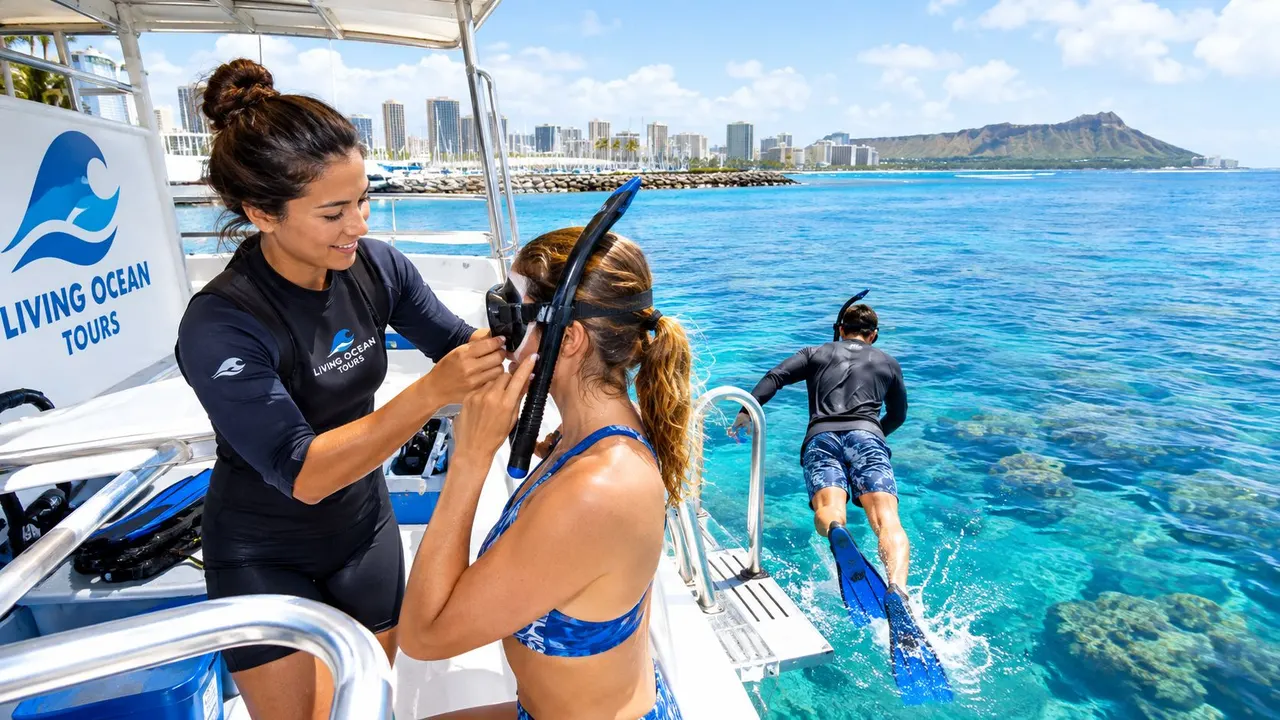
A Living Ocean Tours morning begins with a 7:00 a.m. check-in at Kewalo Basin. Guests confirm their booking, get fitted for a mask, fins, and snorkel, then board for Turtle Canyons. The boat ride takes about 15 minutes, giving the crew time to explain the plan before arrival.
From harbor to reef
The briefing covers water entry, hand signals, group spacing, and the 10-foot turtle rule. A boat requires different habits from a hotel pool. Beginners need to know how to enter without rushing, signal discomfort, and locate the guide after surfacing.
Once in the water, the guide helps first-timers establish a steady breathing rhythm and monitors the group. Hawaiian green sea turtles and reef fish are the usual targets, though wildlife never follows a schedule. Hawaiian spinner dolphins may occasionally appear in deeper water during the cruise. The crew should observe them without changing course to pursue them.
The operator's Deluxe Waikiki Snorkel and Wildlife Cruise includes family-friendly features such as water slides, floating mats, and lunch. These additions are useful when one child wants more time in the water while another needs a break. The boat generally returns to Kewalo around late morning, and guests can ask about a photo package if they want the crew to record the outing.
Living Ocean Tours operates the Turtle Canyons Snorkel Excursion from Kewalo Basin. Travelers comparing departure times and boat formats can also review Turtle Canyon Snorkel. Compare the actual schedule, included support, and conditions for your day rather than choosing on price alone.
Viewing Turtles and Reef Life the Right Way
A honu encounter is successful when the turtle remains calm and continues its natural behavior. NOAA Fisheries recommends staying at least 10 feet, or 3 meters, away from sea turtles. In the water, that distance is roughly the length of a small room, but don't rely on estimation alone. If the turtle turns away, changes direction, or begins moving faster, you're too close.
Never touch, chase, block, or surround marine life. Keep your fins away from coral and the seafloor, and don't stand on a reef ledge to steady yourself. Coral can look like rock, but contact can damage living tissue and can injure your feet or hands.
Small habits protect the reef
Use a mineral sunscreen based on zinc oxide or titanium dioxide, apply it before boarding, and cover up with a rashguard when practical. No sunscreen makes careless contact acceptable, so combine sun protection with buoyancy control and a slow, deliberate swimming style.
- Watch your fins: Bend your knees and keep your kick compact over shallow reef.
- Follow the guide: Stay with the group and use the agreed hand signals.
- Leave animals room: Let turtles and fish choose whether to pass nearby.
- Don't collect anything: Shells, coral, sand, and wildlife belong in the marine environment.
- Control your breathing: Slow breathing helps you float instead of pushing down with your hands.
The Hawaiian honu viewing guide gives visitors a useful foundation before they enter the water. Respectful snorkeling isn't passive. It requires you to notice your fins, position, speed, distance, and the behavior of the animal in front of you.
Booking, Transport, and What to Pack
Reserve a morning slot early during the busy summer period, particularly if your dates are fixed or your group needs several places together. Morning departures generally line up with calmer water and better visibility before wind and boat traffic affect the surface.
Kewalo Basin Boat Harbor sits off Ala Moana Boulevard between Waikiki and Honolulu. Paid parking is available, but spaces are limited, so build in extra time rather than arriving at the last minute. Rideshares can drop passengers close to the launch area, which is useful when you're carrying towels, bags, and children's gear.
Plan the arrival, not only the departure
Arrive 30 minutes before departure for check-in, equipment fitting, and the safety briefing. A mask that fits at the dock is far easier to correct than one that leaks after the boat leaves the harbor.
Pack lightly:
- Sun protection: Bring reef-conscious mineral sunscreen, a rashguard, or a UV shirt.
- Water and towels: Carry a refillable water bottle and a towel for the ride home.
- Motion comfort: If you're prone to seasickness, bring the remedy you already know works for you.
- Phone protection: Use a dry bag for your phone and leave bulky valuables at the hotel.
- Personal mask: Bring your own if you have a reliable fit, although rental gear is sanitized and included.
Boats can store small personal items, but they aren't designed for large luggage. Children as young as five may join family trips, but call ahead about weight limits for smaller life vests. Equipment policies and schedules can change, so confirm the current details directly with the operator.
This Waikiki boat tour packing guide is a helpful final check. The practical goal is simple, arrive dry, comfortable, and ready to listen. You don't need a suitcase of equipment to enjoy the reef.
Your Simple Plan for a Great Snorkel Day
Start with the surf report the night before, then check again before leaving the hotel. If Waikiki waves exceed 3 feet, or if a south-shore swell is running, skip the snorkel and reschedule. A reef encounter isn't worth forcing through rough water, nausea, or a frightened child.
Aim for a 7:00 a.m. boat departure from May through September. Wear a rashguard, apply mineral reef-conscious sunscreen before leaving the harbor, and keep a small defog wipe accessible. Once the crew begins the briefing, pay attention to the entry method, dive flag, turtle distance, and reef etiquette.
The conditions-first decision rule
Use this order:
- Conditions first: Check surf, wind, visibility, runoff, jellyfish information, and lifeguard advice.
- Reef second: Choose a boat or beach site that matches your group's swimming ability.
- Wildlife third: Observe turtles and other animals without touching, chasing, or crowding them.
Stay within sight of the dive flag and your group. Keep your mask clear, float rather than fight the water, and surface slowly if you dive down. If anyone feels tired, cold, seasick, or anxious, signal the guide and exit before the problem grows.
A successful morning doesn't need perfect wildlife sightings. It means everyone returns to the boat comfortable, the reef remains undisturbed, and your family still has energy for a shave ice in Kapiolani Park or lunch at Da Cove Health Bar near Kewalo Basin.
Living Ocean Tours offers guided Waikiki snorkeling from Kewalo Basin, including Turtle Canyons trips and a deluxe wildlife cruise with family-friendly water features. Visit Living Ocean Tours to compare the current morning options and choose a conditions-first snorkel experience for your group.


