
Snorkeling Waikiki: The Complete Local Guide
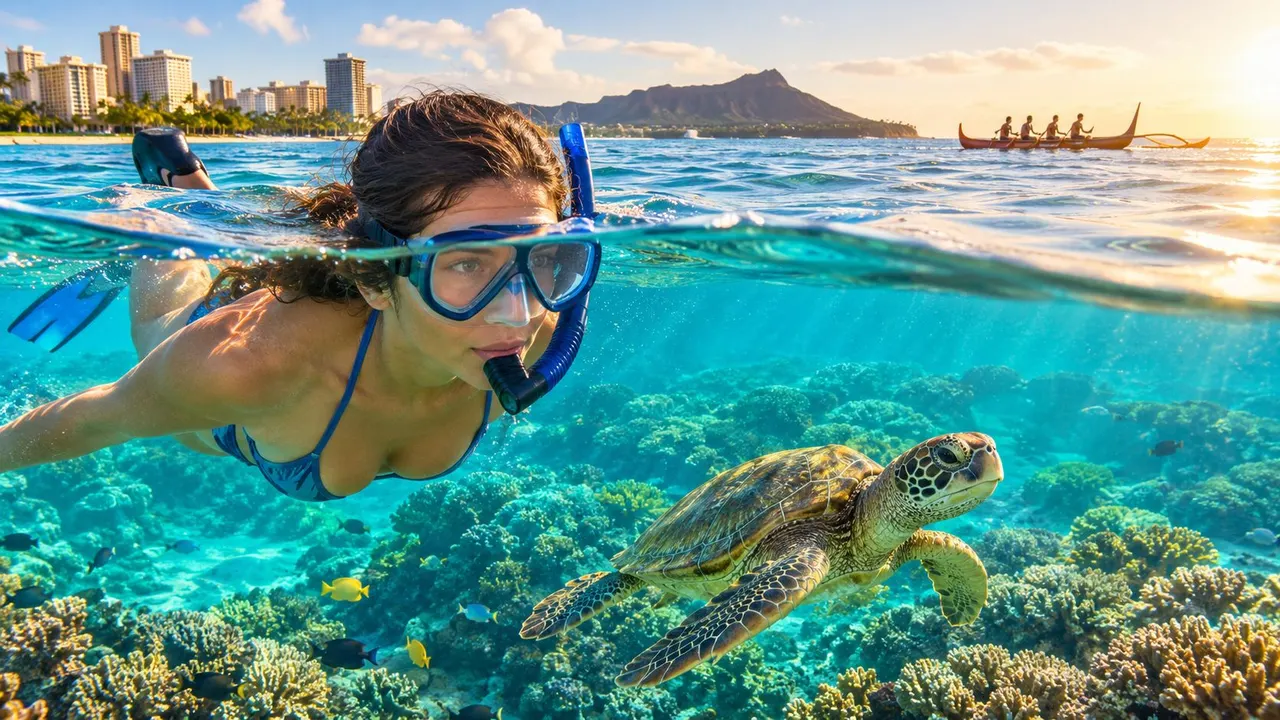
You're standing on Waikiki Beach with a mask in one hand and fins in the other, looking across calm turquoise water and wondering where the fish are hiding. The beach looks perfect for snorkeling, yet the most memorable marine life usually isn't found by swimming straight out from the sand.
After years of running daily trips along this coast, I've learned to give visitors the honest version first. Shore snorkeling in Waikiki can be convenient, but offshore reefs and turtle cleaning stations usually offer a more dependable wildlife experience. The right choice depends on water conditions, swimming confidence, age, and whether your group values easy access or better underwater encounters.
This guide explains what works, where the trade-offs are, and how to plan a safer, more rewarding day on the water. For a broader look at local options, see this guide to snorkeling on Oahu.
Why Snorkeling in Waikiki Is Different From What You Expect
The beach is convenient, not always productive
A visitor staying near the Royal Hawaiian may see clear water close to shore and assume the reef begins directly beyond the breaking waves. In reality, Waikiki's nearshore areas are busy, shallow, and easily stirred by swimmers, paddleboards, beach traffic, and runoff. You may see small reef fish, but you shouldn't book a shore swim expecting a guaranteed turtle encounter.
Neutral local guidance describes snorkeling straight off Waikiki as a convenience option with some fish, limited coral, variable visibility, and heavier crowding near shore. The same guidance identifies Queen's Beach and Sans Souci as more realistic shore choices for wildlife viewing, while noting that turtle-focused offshore trips are more dependable. Read the Waikiki snorkeling FAQ before deciding whether a beach entry matches your expectations.
That distinction matters most for families. A confident swimmer may enjoy exploring a shallow reef patch close to shore, while a child, grandparent, or nervous first-timer may spend the entire outing fighting chop and avoiding other swimmers. A boat lets the crew choose a site based on the day's wind, swell, current, and visibility rather than asking you to gamble on one beach entrance.
Why Kewalo Basin changes the day
Kewalo Basin Boat Harbor sits close to Waikiki but puts you immediately into a working harbor and open-water departure pattern. From there, a captain can run toward offshore ledges, sheltered reef patches, or known turtle habitat instead of relying on whatever conditions happen to exist at the beach.
The difference is especially noticeable at Turtle Canyons. The ride is short, but the location places you over underwater ledges where Hawaiian green sea turtles often pause at cleaning stations. Surgeonfish remove algae and other material from the turtles' shells, creating a natural behavior that makes encounters more predictable than searching a broad stretch of coastline.
Local rule of thumb: If your priority is seeing marine life rather than merely getting wet, start by comparing boat departures from Kewalo Basin with shore access.
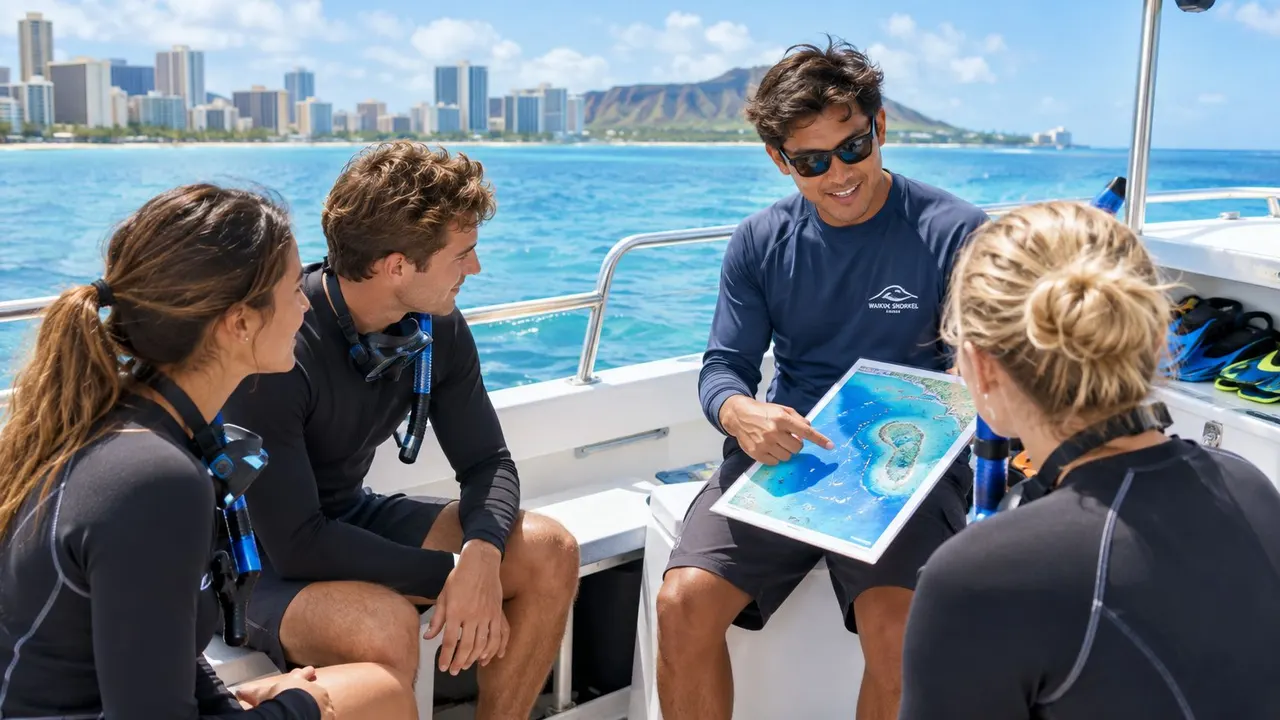
A guided trip also removes several beginner problems at once. The crew checks the water, provides properly fitted equipment, explains entries and exits, and watches the group while you focus on breathing and looking underwater. You'll still need to accept that the ocean changes, but you won't be making every decision alone.
Understanding the Waikiki Underwater Environment
Waikiki's underwater environment isn't one continuous coral garden. It's a patchwork of fringing reef, volcanic rock, sandy channels, and ledges, with different habitats supporting different marine life. Fish gather around structure, turtles use particular resting and cleaning areas, and sandy gaps can make a reef feel empty even when animals are nearby.
What Turtle Canyons means
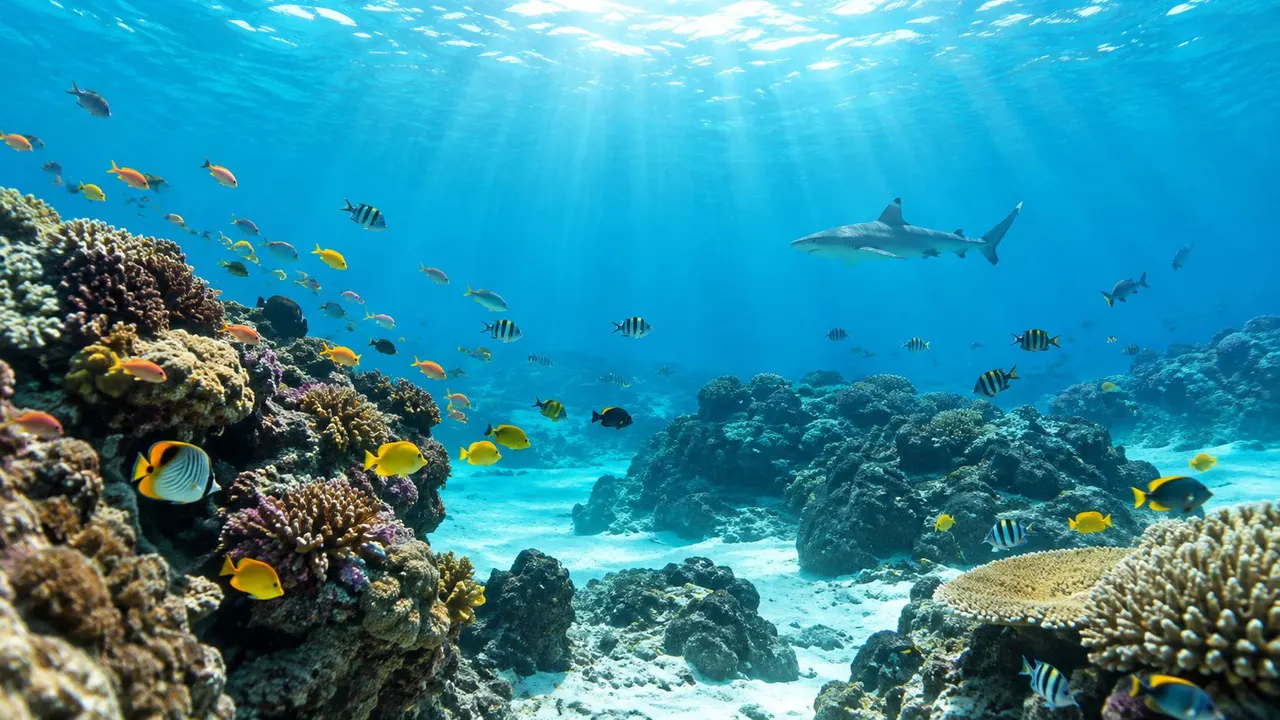
Turtle Canyons refers to underwater ledges near Waikiki where Hawaiian green sea turtles gather to be cleaned by reef fish, particularly surgeonfish. The location isn't a manufactured attraction and the turtles aren't trained to appear for visitors. Their repeated use of the habitat is what creates a better chance of observation.
That still doesn't make wildlife viewing guaranteed. Turtles may be resting elsewhere, conditions may limit access, or the crew may need to choose a different site for safety. A responsible captain treats the animals and the conditions as the priority, not a promise printed on a booking page.
Waikiki's reef environment has been documented with substantial biodiversity. An environmental assessment recorded 50 fish species in the project vicinity, at least 38 fish species on the reef flat, and a combined total of 58 fish species in the Waikīkī Beach project area from surveys off Gray's Beach and Waikīkī Beach. It also reported a mean fish biomass of 39 kg/ha on nearshore reef-flat transects from 2007 surveys off Gray's Beach. Those figures come from the Waikīkī Beach maintenance environmental assessment.
Reef quality changes what you see
The coastline has ecological value, but it isn't immune to pressure. A peer-reviewed study of the Waikiki-Diamond Head Fishery Management Area found that fish biomass declined by around two-thirds between 1978 and 2002. The study reviewed 99 fish surveys conducted between January 20 and April 30, 2002, and found that biomass generally increased during one- to two-year closure periods, though those gains didn't offset losses during open periods. The Waikiki reef monitoring summary provides that historical context.
For snorkelers, the practical lesson is simple. You're visiting a living, managed reef system, not an aquarium. Fish abundance varies by habitat and conditions, and your behavior affects the animals you came to see. Stay above the reef, avoid contact, and let the site remain usable for the next group.
If you want more context on the coast and its marine habitats, this overview of Oahu snorkeling areas is a useful starting point.
Top Snorkeling Spots in and Around Waikiki
The right spot depends on what you're willing to trade. Shore sites save time and money, while offshore locations usually improve wildlife access and reduce the frustration caused by stirred-up water.
| Spot | Access | Typical Marine Life | Best For |
|---|---|---|---|
| Waikiki Beach | Direct beach entry | Small reef fish, limited coral habitat | Absolute convenience |
| Queen's Beach and Sans Souci | Shore entry, usually easier for local exploration | Fish and occasional wildlife, conditions vary | Confident swimmers who want a quick session |
| Ala Moana Reef | Shore access with more open reef area | Reef fish and rocky habitat | Experienced shore snorkelers |
| Magic Island Lagoon area | Easy shoreline access | Smaller fish and protected-water sightings | Families prioritizing calm access |
| Turtle Canyons | Guided boat departure | Hawaiian green sea turtles and reef fish | Couples, families, and first-time visitors seeking wildlife |
| Baby Barge and nearby reefs | Boat access from Kewalo Basin or other launch points | Reef fish and varied structure | Repeat visitors and guided exploration |
| Hawaii Kai reefs | Drive and water access depend on the exact site | Reef fish, rocky bottom, changing conditions | Strong swimmers with local knowledge |
Shore sites
Waikiki Beach Lagoon and the areas near Sans Souci are attractive because you can walk in from shore. That convenience comes with limitations. Nearshore water can turn cloudy after rain, swimmers disturb the bottom, and the reef structure is less consistent than what you'll find at selected offshore sites.
Ala Moana Reef and the Magic Island lagoon area can work better for confident shore snorkelers who understand entries, currents, and changing visibility. They aren't automatically empty or clear, though. The best experience depends on the day, your timing, and your ability to read the water before committing.
Offshore sites
Turtle Canyons is the clear choice when the group cares most about honu. Boats can reach both deeper and shallower ledge areas, allowing the crew to match the site to the sea state and the group's comfort. You'll find the strongest value in a guided trip if you're new to the coast, traveling with mixed ages, or don't want to spend your vacation searching.
For a detailed look at the experience, review the Turtle Canyon snorkeling information. Nearby reefs accessed from Kewalo Basin, including Baby Barge and other local sites, can add variety when the crew needs a different bottom profile or a more sheltered option.
Guided Tour Options From Kewalo Basin
Kewalo Basin departures serve several different kinds of travelers, and the tours shouldn't be treated as interchangeable. A short turtle trip, a family wildlife cruise, a scenic sunset outing, and a private charter solve different problems.
| Tour Type | Best For | Duration | Key Feature |
|---|---|---|---|
| Turtle snorkel excursion | First-timers, couples, turtle-focused visitors | Short outing with dedicated water time | Direct access to Turtle Canyons |
| Deluxe family snorkel cruise | Families with children and grandparents | Longer cruise with multiple activities | Multiple snorkel sites, shade, lunch, and water features |
| Sunset cruise | Couples, celebrations, and non-snorkelers | Scenic evening cruise | Golden-hour Waikiki views |
| Whale watching tour | Seasonal wildlife viewers | Dedicated wildlife outing | Humpback-focused sightseeing in season |
| Private charter | Celebrations, photographers, and groups | Customized to the group | Flexible itinerary and pacing |
The turtle snorkel format
A focused turtle tour usually makes sense for travelers who want a straightforward introduction to Waikiki snorkeling. The boat ride to Turtle Canyons is short, water time is generally 30 to 45 minutes, and flotation aids plus in-water guides help beginners settle into the ocean.
That format works well for a couple chasing turtles or a first-time snorkeler who doesn't want an all-day commitment. It's less suitable for groups that need extensive shade, a long sightseeing route, or several separate activities.
The deluxe family option
A deluxe family snorkel cruise takes a different approach. The longer ride, dual snorkel sites, included lunch, shaded seating, and slower pace help when children and grandparents are sharing the boat. Water features such as a waterslide, water trampoline, or lily pad can give non-snorkelers something worthwhile to do while stronger swimmers explore.
This is often the better value for a mixed-age group, even if the per-person price is higher than a short excursion. You're paying for comfort, flexibility, and a boat setup that can keep the whole family engaged.
The publisher's Deluxe Waikiki Snorkel and Wildlife Cruise is one example of that family-oriented format. Living Ocean Tours is also described as a highly reviewed and frequently reviewed snorkel company on Oahu, but compare the actual itinerary and conditions policy rather than choosing on reputation alone.
Scenic trips and private boats
Sunset and whale watching trips are scenic add-ons, not substitutes for a dedicated snorkeling excursion. They suit guests who want views, wildlife watching, or a celebration without spending most of the outing in the water.
Private charters earn their place when the group needs control. You can tailor departure timing, snorkel duration, food, photography stops, and celebration details, but the cost is higher and the captain still can't override unsafe conditions. Private boats outperform shared trips for large families, corporate groups, photographers, and milestone events. They don't automatically produce clearer water or more turtles.
When to Go, What to Pack, and How to Read the Conditions
Water conditions decide whether a Waikiki snorkel feels effortless or disappointing. May through September usually brings flatter, clearer south-facing water. Winter can bring southerly swells, while rain runoff may lower visibility along the south shore.
After heavy rain, Ala Wai Canal runoff is a serious reason to change plans. Local guidance recommends avoiding snorkeling for 72 hours after heavy rain, since runoff can reduce visibility and increase bacteria exposure. It also identifies the dry season, May through September, and early morning as generally clearer windows. Review the local Waikiki snorkeling safety guidance before entering the water.
Read the water before entering
Morning departures typically offer better light and less wind-driven chop. Watch the waterline, not only the color beyond the break. Brown or greenish water near shore, floating debris, strong sideways movement, or a visible runoff line are reasons to pause.
A boat crew can relocate when conditions shift. Shore snorkelers have fewer options after entering, especially at rocky access points or when the wind rises. Families should weigh that flexibility against the boat ride, while beginners may prefer a protected beach entry if the water is calm.
Pack for comfort, not just photos
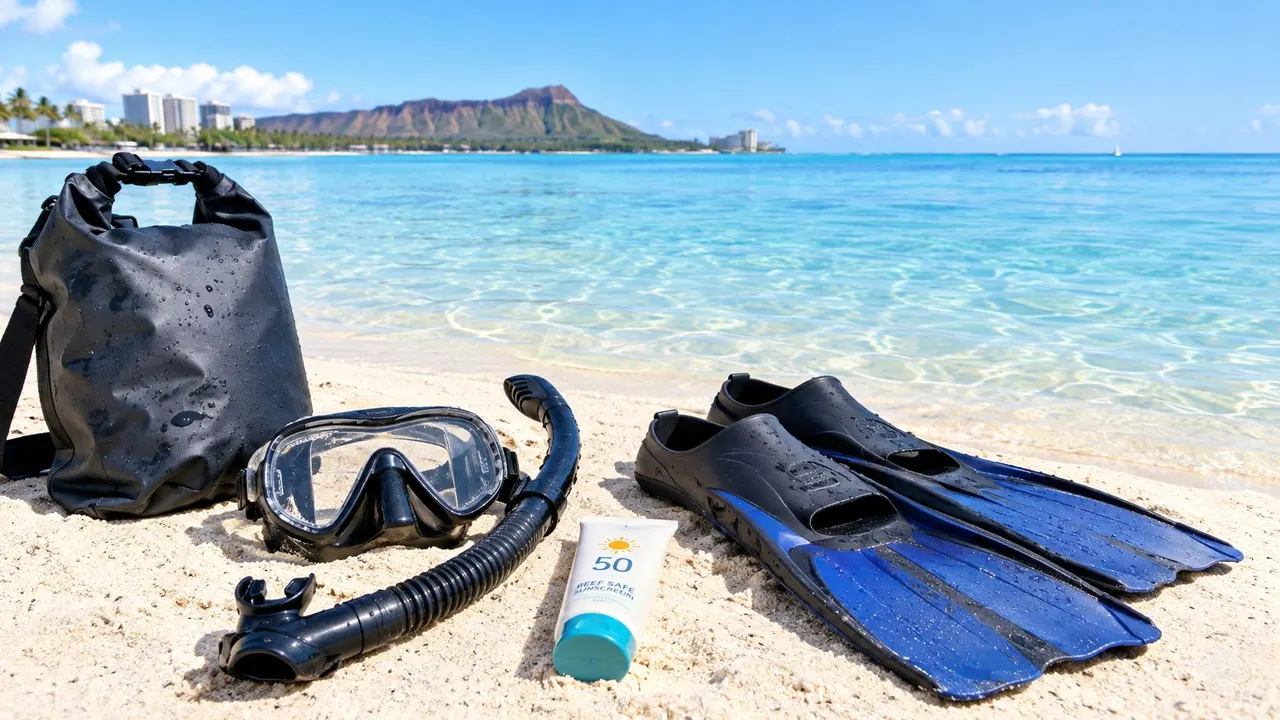
Use this Oahu snorkeling packing list to prepare, then bring equipment that solves common problems:
- Reef-safe sunscreen: Apply it before leaving and reapply during the day.
- Rashguard or wetsuit top: These reduce sun exposure and help people who get cold while floating.
- Mask defog: A clear mask matters more than an expensive camera.
- Quick-dry towel and dry bag: Protect phones, room keys, and spare clothing.
- Water shoes: They help with rocky shore entries, but never justify walking across reef.
- Motion sickness medicine: If seasickness is a concern, take your chosen medication about 30 minutes before departure, following the product label or your clinician's direction.
- Reusable water bottle: Hydration still matters on the ocean.
Safety Etiquette and Family-Friendly Practices
Snorkeling is easier than lap swimming, but it still requires comfort floating in open ocean. Tell the operator about ear infections, asthma, severe motion sensitivity, or any condition that could affect breathing, balance, or water confidence before departure. A good crew can explain flotation options and decide whether the outing fits your group.
Children who aren't confident swimmers should use an approved flotation device and stay with an adult or guide. Establish a buddy system before entering the water, keep younger swimmers close, and choose a boat with shaded seating if your group includes toddlers, grandparents, or anyone sensitive to sun.
Give marine life room
Hawaiian green sea turtles are protected. Snorkelers should keep at least 10 feet, or 3 meters, away from honu, and guidance for Oahu turtle snorkeling states that touching, chasing, or harassing them is illegal. The Hawaiʻi turtle snorkeling rules explain the behavior expected around these animals.
Hawaiʻi Ocean Safety also says never to feed fish, turtles, or other animals, and never to stand on coral reef. Follow the official snorkeling safety guidance even when another visitor ignores it.
Protect the encounter: Keep your fins up, stay above the reef, and let the turtle choose its direction.
Reapply sun protection according to your product instructions, and remember that water reflection increases exposure. Guides should brief everyone on entries, exits, hand signals, flotation, and what to do if someone becomes tired.
Vet the operator
Look for a clear safety talk, properly maintained equipment, in-water guides, and vessels inspected and operated according to applicable United States Coast Guard requirements. Ask how the crew responds to poor visibility, strong current, or a crowded site. The best operator isn't the one making the loudest wildlife promise. It's the one that explains the conditions truthfully and changes the plan when the ocean requires it.
Booking Tips and Choosing the Right Experience
The cheapest Waikiki snorkeling option is rarely the best value if it leaves your family uncomfortable, crowded, or disappointed. The most expensive charter isn't automatically right either. Match the format to the people in your group and the kind of day you want.
Before reserving, ask these questions:
- What's included: Confirm whether masks, fins, flotation, instruction, food, and drinks are part of the booking.
- How long is the water time: A long boat outing may include limited time snorkeling.
- Where will we go: Ask whether the crew chooses the site based on conditions or follows a fixed itinerary.
- How large is the group: Group size affects personal attention, water entry, and crowding at the site.
- What works for children: Check for shade, seating, flotation, bathrooms, and activities for non-swimmers.
- What happens in poor visibility: Read the cancellation, rescheduling, and weather policy before paying.
Choose by traveler type
A budget Turtle Canyons trip suits first-time snorkelers, couples focused on turtles, and travelers who want a shorter commitment. A deluxe family catamaran makes more sense for children under 10, grandparents, and groups with mixed swimming ability because the boat itself provides comfort and alternatives.
A private charter earns its price when you're coordinating a celebration, photographing with a small group, or need an itinerary built around your schedule. A do-it-yourself shore swim works for confident swimmers who accept variable visibility, limited wildlife, and the responsibility of reading the water without a crew.
Photographers should prioritize departure timing, water clarity, and site flexibility over marketing language. Couples wanting a romantic afternoon may prefer a focused snorkel followed by time on the beach, while a family may value shade, lunch, and a waterslide more than an extra minute at one reef.
Living Ocean Tours offers guided Waikiki snorkeling from Kewalo Basin, including access to offshore reef sites, gear, instruction, and in-water guidance for beginners and families. Visit Living Ocean Tours to compare the Turtle Canyons excursion with the Deluxe Waikiki Snorkel and Wildlife Cruise, then choose the departure that fits your group and the day's ocean conditions.


