
Snorkeling Oahu Guide: Spots, Tours & Safety Tips
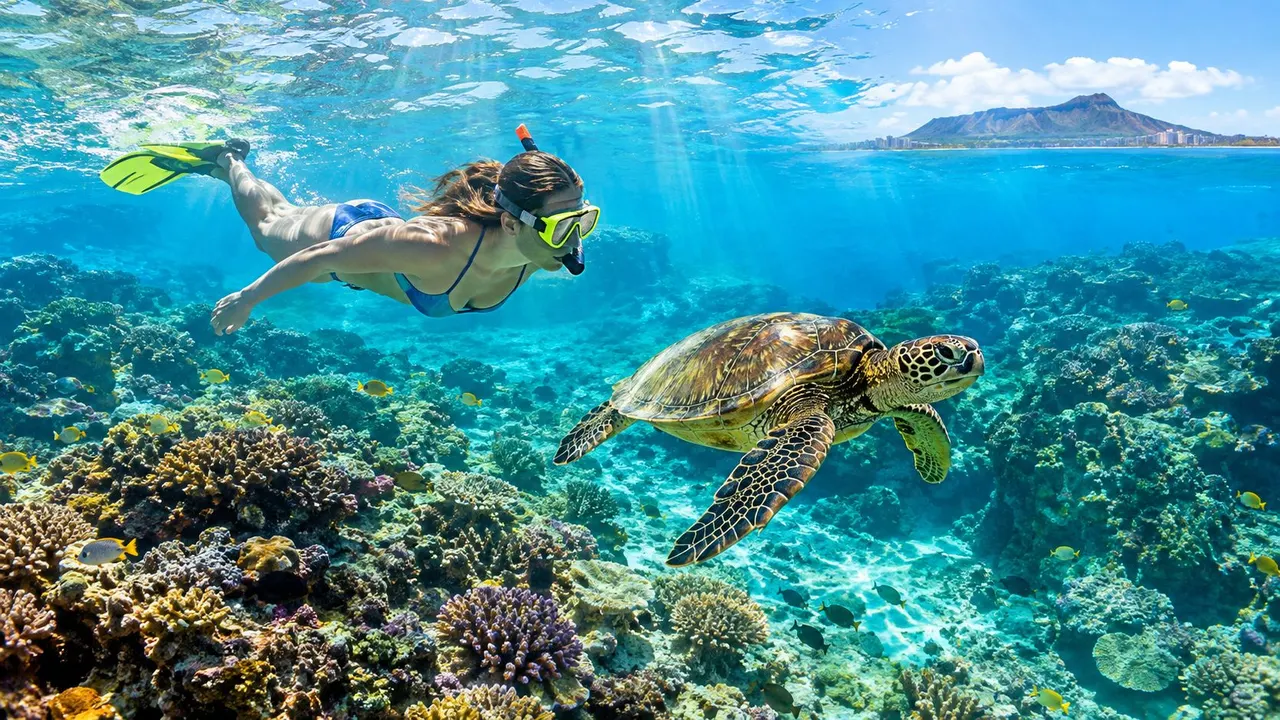
While most of Oahu requires an ocean pass or boat access, Hanauma Bay, with reservations, and Waikiki shore access offer some of the easiest entry points for beginners. Hawaii has about 1,200 miles of coral reef fringing its islands, so snorkeling around Oahu can range from a sheltered beach float to a boat ride over a deeper offshore reef.
You may be standing in a Waikiki hotel room right now with a mixed group, a nervous first-time swimmer, confident adults, and children who want to see turtles. The right choice isn't just the place with the clearest photos. It depends on whether your group needs a gentle shore entry, a structured boat experience, or a wildlife-focused trip that reaches reefs you can't comfortably access from land.
Oahu is part of a major reef tourism system, and the official Hawaii snorkeling and scuba guide describes snorkeling as one of the islands' most popular water activities. The practical lesson is straightforward: choose the environment first, then choose the tour or beach.
Oahu Snorkeling Environments Versus Shore Reefs
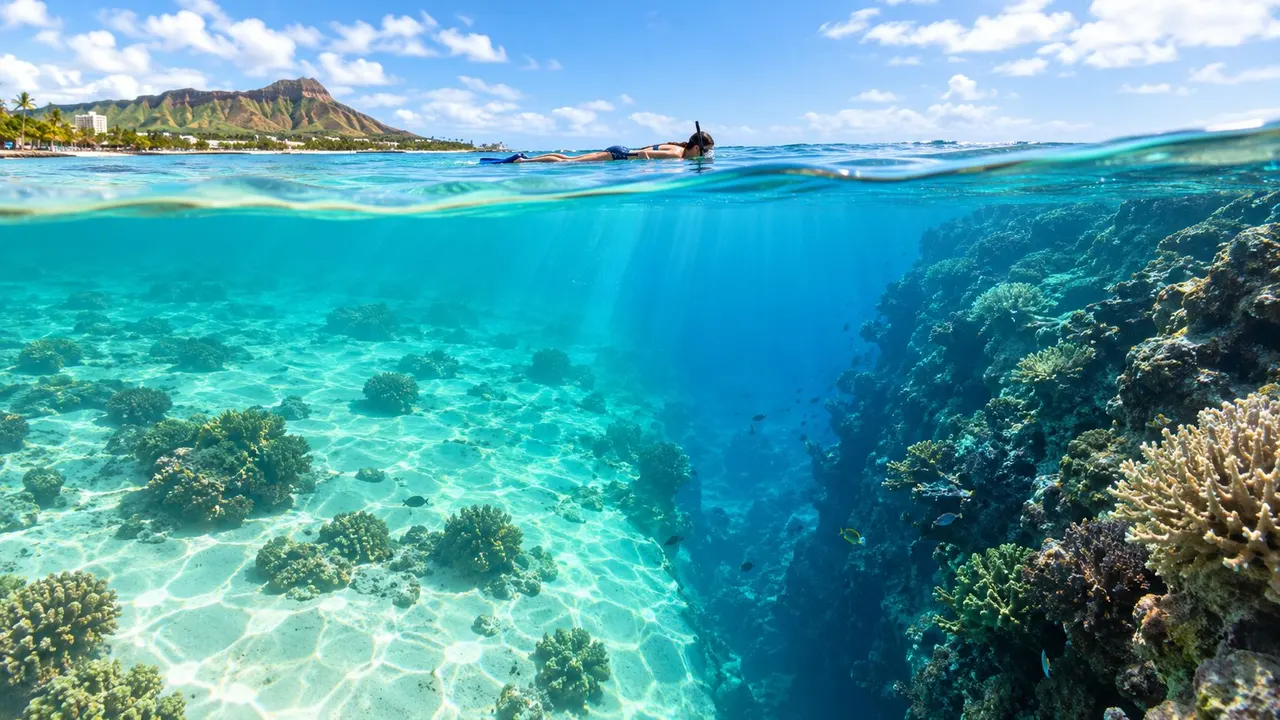
The first decision is whether your group should enter from land or board a boat. Shore snorkeling works best when you want control over the outing. You can watch the water, enter gradually, stop whenever someone gets tired, and return to the beach without committing to a scheduled ride. Waikiki is useful for that reason, especially for beginners staying nearby.
Boat snorkeling solves a different problem. Many of Oahu's most dependable offshore encounters sit beyond a simple beach swim, where reef structure attracts fish and resting turtles. A boat gives you direct access to those areas, but it also means your group needs to be comfortable with a fixed departure, open water, and conditions that may change during the trip.
Match the entry to the swimmer
Use this simple filter before booking anything:
- Young children or tentative swimmers: Start with a protected shore area or a guided trip that provides flotation and instruction.
- Confident swimmers who want reef variety: Consider a boat excursion, particularly when the target site sits offshore.
- Mixed-ability families: Favor an operator with crew support, flotation options, and a way for non-snorkelers to remain comfortable onboard.
- Independent travelers: Waikiki access can be convenient, but don't confuse convenience with guaranteed calm water.
Hanauma Bay is the major shore exception because its volcanic bay offers protected water and an established conservation system. It isn't a casual walk-up plan for non-residents. Hawaii.com's Oahu snorkeling guidance notes that visitors need an advance reservation and entry fee, and the bay closes on Monday and Tuesday to allow the area to rest.
Practical rule: A sheltered shoreline is usually the better classroom. An offshore reef is usually the better choice when your priority is access to a particular wildlife habitat.
For a broader starting point, compare the options in this Oahu snorkeling overview, then check the forecast and your group's swimming ability before committing.
The Science Behind Turtle Encounters
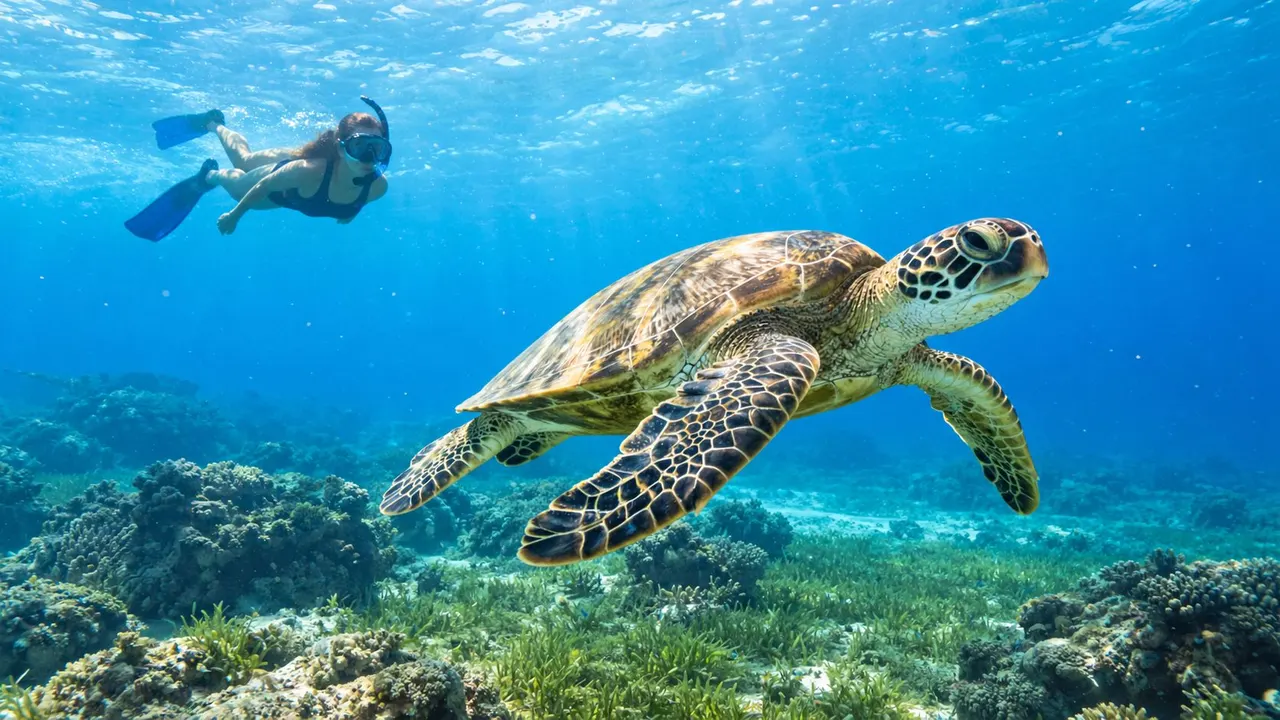
A turtle sighting feels lucky when it happens from shore. At Turtle Canyon, however, the repeated presence of Hawaiian green sea turtles has an ecological explanation.
NOAA describes a cleaning station as a reef location where fish remove parasites from a turtle's shell. The turtle arrives, settles into the area, and allows small reef fish to groom it. That relationship makes the site useful to both animals, so turtles may return to the same reef zone to feed, rest, or receive cleaning.
Turtle Canyon sits about 15 boat minutes from Kewalo Basin near Diamond Head, according to an Oahu marine-life summary of the site. The short ride matters for visitors because it connects Waikiki-area lodging with a habitat that differs from swimming out directly from the sand.
Why the reef behaves like a meeting place
The cleaning station isn't an aquarium and it doesn't make wildlife predictable on demand. Ocean conditions, boat traffic, water clarity, and the turtles' own behavior still shape what you see. What it does provide is a biological reason for repeated turtle use, which is stronger than choosing a random beach and hoping a turtle passes by.
Calmer summer conditions generally offer the best visibility for observing the interaction from the surface, as described in NOAA's marine-life coverage. A guided boat trip can also help your group spend more of its water time near the relevant reef rather than using energy on a long surface swim.
Read the Turtle Canyon location guide before you go so everyone understands the experience. The practical etiquette is simple: remain calm, keep your distance, never chase a turtle, and let the animal decide how close it wants to come. A quiet snorkeler sees more than a swimmer who kicks hard, blocks the turtle's path, or dives repeatedly over its back.
Why Guided Tours Enhance Your Experience
Self-guided snorkeling offers freedom, but freedom also transfers every decision to you. You must select the entry, inspect the conditions, bring or rent gear, judge your swimming range, and decide when the water has become uncomfortable. That can be rewarding for experienced swimmers, but it becomes a poor vacation value when a family spends its best morning solving logistics.
A guided boat trip adds structure. Crew members can explain how to use the mask and snorkel, provide equipment, monitor the group, and move guests toward offshore habitat without requiring them to get there independently. The trade-off is less flexibility. You follow a departure time and the captain's safety decision, even when your ideal plan was to stay ashore.
Choose based on the problem you need solved
| Your priority | Shore outing | Guided boat tour |
|---|---|---|
| Easy timing | You control the schedule | You follow a departure |
| Gear | You bring or arrange it | Equipment is commonly supplied |
| Wildlife focus | Sightings depend more on chance | Crew can target known habitat |
| Safety support | You manage your own limits | Crew provides instruction and oversight |
| Access | Limited to reachable shoreline | Reaches offshore reefs |
A tour is especially useful for a mixed group. One adult may be an excellent swimmer, while a child or grandparent needs flotation, close supervision, or the option to remain onboard. A captain can also cancel, relocate, or shorten the water portion when the ocean doesn't cooperate. That's not a failure of the trip. It's the correct response to Pacific conditions.
Living Ocean Tours offers guided snorkeling from Kewalo Basin, including gear, instruction, and crew support, through its Waikiki snorkeling options. Treat it as one structured option among several, and compare the departure location, water activities, duration, and cancellation terms against your group's needs.
A good guide doesn't promise that the ocean will behave. A good guide gives you a safer plan when it doesn't.
Independent shore snorkeling still makes sense for a confident couple with its own equipment and a flexible schedule. For first-timers, families, and visitors focused on turtles, the added organization often removes the parts of the day that create the most stress.
Top Snorkeling Destinations and Tour Options
The right Oahu snorkeling plan depends on your group, swimming ability, and the season. Shore reefs such as Hanauma Bay and Waikiki offer easier access and more control over timing. Boat trips reach offshore habitats, including Turtle Canyon, but require a fixed departure and tolerance for changing ocean conditions.
Hanauma Bay is a practical shore-based choice for beginners who want a protected setting. According to the Hanauma Bay snorkeling coverage, about 88% of Hanauma Bay visitors come specifically to snorkel. The same coverage cites an average of 4 to 5 rescues per day. Those figures show why reservations, visitor education, lifeguard guidance, and conservative decisions matter at a busy marine site.
Reserve ahead, arrive prepared, and do not treat the bay as guaranteed calm water. Its conservation status protects the habitat, but conditions can still change. Follow posted instructions and stay within your swimming ability.
Pick the style that fits your group
For a first snorkeling day near Waikiki, a boat trip can simplify transport, equipment, and access to an unfamiliar reef. A guided outing from Kewalo Basin may suit families or mixed-ability groups because crew support, flotation, and instruction reduce the work each person must manage. Anyone who does not want to snorkel for the full outing may prefer a boat with other water activities.
Turtle Canyon fits a more specific goal: reaching an offshore habitat associated with turtle sightings. The excursion is typically about 2 hours, with snorkel gear, light refreshments, snacks, and a professional guide listed among the inclusions. Hotel pickup is not included, so review the Turtle Canyons snorkel excursion and confirm that the departure point suits your hotel.
A strong alternative for a turtle-focused outing is Snorkel Turtle Canyon, particularly if its schedule or format better matches your group.
Use season and ability as filters
Choose Hanauma Bay or Waikiki when accessible entry and schedule control matter most. Choose Turtle Canyon when offshore turtle habitat is the main purpose of the day. In summer, Turtle Canyon generally benefits from calmer conditions and better visibility. The south shore is also a useful planning reference because it is less exposed to the large winter swell affecting other parts of the island.
Living Ocean Tours is one structured option to compare with other operators. Check the exact itinerary, safety approach, included equipment, departure instructions, and cancellation terms. This Oahu snorkeling destination guide can help compare shore and boat formats before reserving.
Safety Protocols and Essential Gear
Oahu's water can look inviting while carrying more energy than a visitor expects. The official Hawaii ocean-safety guidance identifies high surf, high winds, heavy shorebreak, and strong currents as poor snorkeling conditions. It also advises avoiding dawn or dusk and staying out of murky water, when reduced light and suspended sediment make hazards harder to detect.
For south-shore outings, morning is usually the smarter technical choice because wind-driven chop often builds later. That doesn't override the day's actual forecast or lifeguard advice. Look at the water before you enter, and accept that a beautiful beach can still be unsafe for snorkeling.
Build a simple safety system
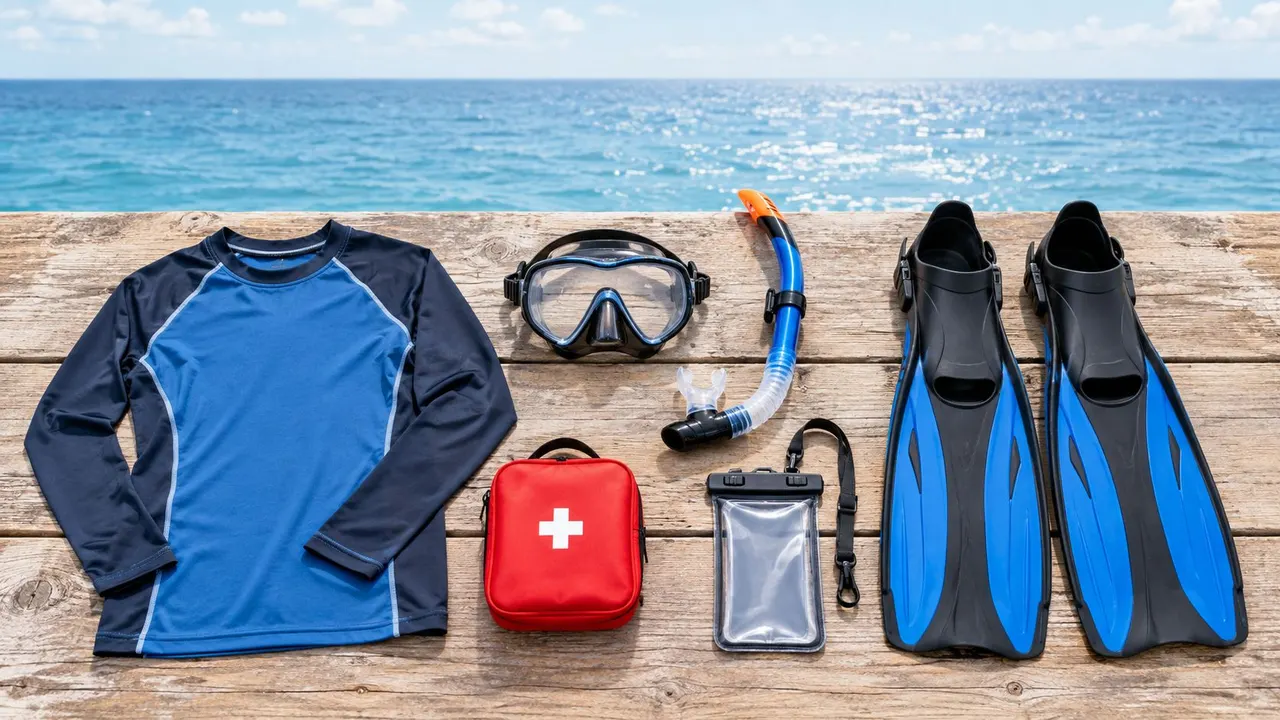
- Check the surface: Wind ripples, breaking waves, foam lines, and a strong pull near the entry deserve caution.
- Use a buddy: Stay close enough to see one another without relying on shouting through the water.
- Test the mask: A leaking or fogging mask turns a manageable swim into a disorienting one.
- Choose flotation wisely: A flotation device can support comfort, but it doesn't replace swimming ability or supervision.
- Protect your feet: Water shoes help at rocky shore entries, while fins are most useful when you can control them without contacting the reef.
- Carry water and a dry layer: Sun, wind, and salt can drain energy faster than expected.
The most common mistake is treating gear as a substitute for judgment. A high-quality mask won't help if the swimmer enters a shorebreak beyond their ability, and fins can make a shallow rocky entry more hazardous when the wearer can't keep them clear of the bottom.
Use the Oahu snorkeling safety guide as a planning reference, then ask lifeguards or crew members about the specific conditions on the day. Leave immediately if someone becomes cold, anxious, tired, or short of breath. The best snorkel is the one that ends before a small problem becomes an emergency.
Sustainable Practices for Ocean Lovers
Responsible snorkeling starts with a change in attitude. You're not visiting a display tank. You're entering a living reef where fish, coral, turtles, currents, and other swimmers all need room.
Keep your body horizontal and your movements controlled. Kicking hard over shallow coral stirs sediment and increases the chance of contact. Don't stand on the bottom, touch coral, collect anything, feed fish, or chase wildlife. A calm observer usually gets a better view because marine animals behave more naturally around someone who gives them space.
Protect the habitat through small choices
- Apply sunscreen thoughtfully: Use reef-conscious mineral products where possible, and favor a rash guard when practical so less product enters the water.
- Secure every item: Loose wrappers, plastic straps, and disposable containers can become marine debris. Pack out everything you bring.
- Respect turtle behavior: If a honu changes direction, dives, or shows signs of avoiding you, increase your distance instead of following.
- Listen to local instructions: Hanauma Bay's conservation rules and guided-tour briefings exist because repeated visitor contact can damage fragile habitat.
- Choose education over spectacle: A responsible operator explains wildlife etiquette, follows crew direction, and treats a missed sighting as preferable to disturbing an animal.
Turtle encounters carry a particular responsibility because the cleaning-station behavior described earlier depends on the reef functioning as habitat, not as a stage. Your group should never surround a turtle, block its route to the surface, or touch its shell. Read the Oahu turtle conservation guide before booking if wildlife protection is central to your trip.
The broader lesson is that shore and boat snorkeling both create impact. Shore visitors can damage shallow reef through careless footing, while boat groups can crowd a wildlife site or leave waste behind. Choose the access style that lets your group move calmly, follow instructions, and leave the water as you found it.
Living Ocean Tours offers guided Waikiki snorkeling, Turtle Canyon trips, and family-friendly wildlife cruises with equipment, instruction, and crew support. Visit Living Ocean Tours to compare the available Oahu outings and choose the format that best matches your swimmers, schedule, and interest in responsible marine viewing.


