
Turtle Canyon Oahu: How Green Turtles Regulate Their Heart Rate
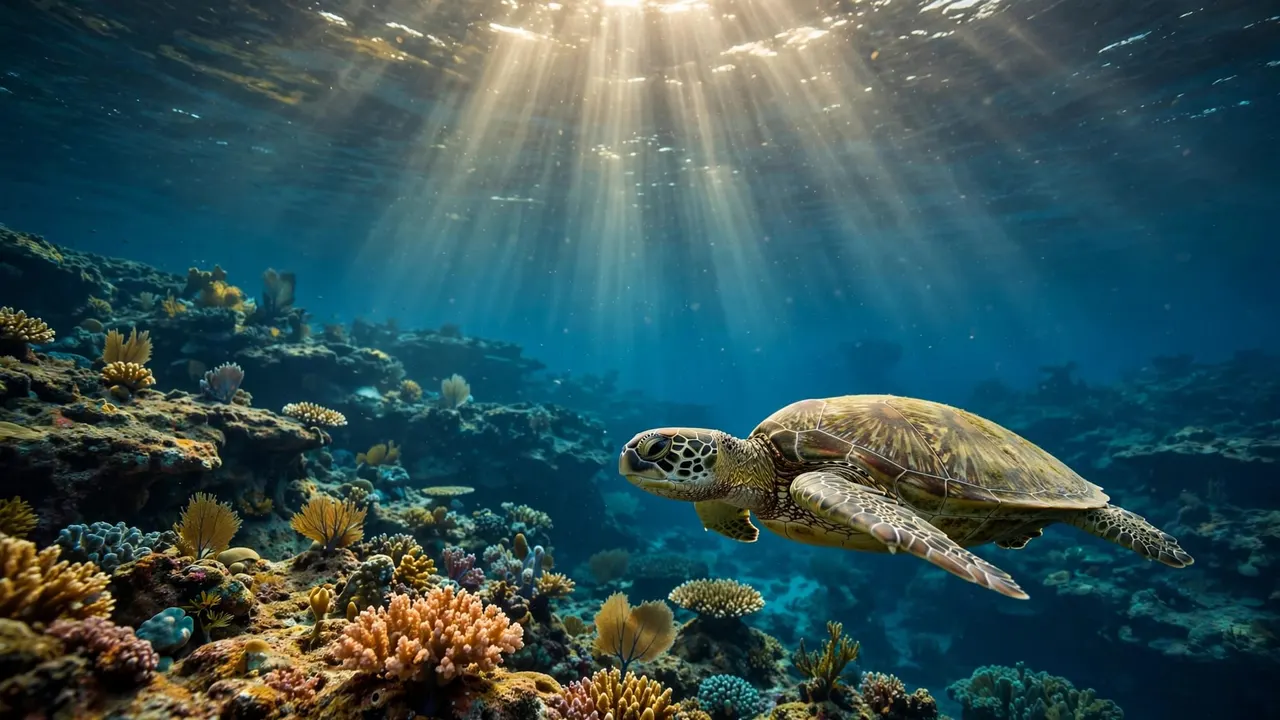
A Hawaiian green sea turtle can appear almost motionless beneath a Waikiki reef, yet its body is actively managing a limited supply of oxygen. At Turtle Canyon Oahu, that calm underwater pause often reveals one of the honu’s most useful survival tools: a slower heartbeat.
Green turtles are air-breathing reptiles, so every dive depends on careful oxygen use. When you watch patiently from a respectful distance, you may see the outward signs of this adaptation, including slow flipper movements, quiet hovering, and an unhurried return to the surface.
Why Turtle Canyon Oahu Is a Window Into Turtle Behavior
Turtle Canyon sits offshore from Waikiki, where reef ledges, coral habitat, and cleaning stations attract Hawaiian green sea turtles. You are visiting active wild habitat, not a controlled animal encounter. A turtle decides when to arrive, rest, surface, or move on.
Because the reef is close to Waikiki, it gives snorkelers a rare chance to observe natural honu behavior in clear coastal water. That includes the quiet periods when a turtle reduces activity and conserves oxygen.
Green turtles use lungs, not gills
A honu must surface to breathe. Its nostrils may open underwater, but they do not pull oxygen from seawater. Instead, a turtle takes air at the surface, dives, and uses that stored oxygen while it swims, feeds, rests, or pauses near the reef.
Activity changes the schedule. A turtle swimming against current or moving quickly needs to surface more often. A relaxed turtle resting near a ledge can stay underwater much longer because its body uses less oxygen.
Stillness can have several meanings
A quiet turtle may be resting, hovering, grazing, or pausing while reef fish work around its shell. You cannot confirm sleep or judge a turtle’s health from above the water.
Watch the full scene instead. Notice where the turtle is positioned, whether fish are nearby, and whether it has an open route to the surface. That wider view gives you a better understanding of its behavior without needing to move closer.
How Green Turtles Slow Their Heart Rate Underwater
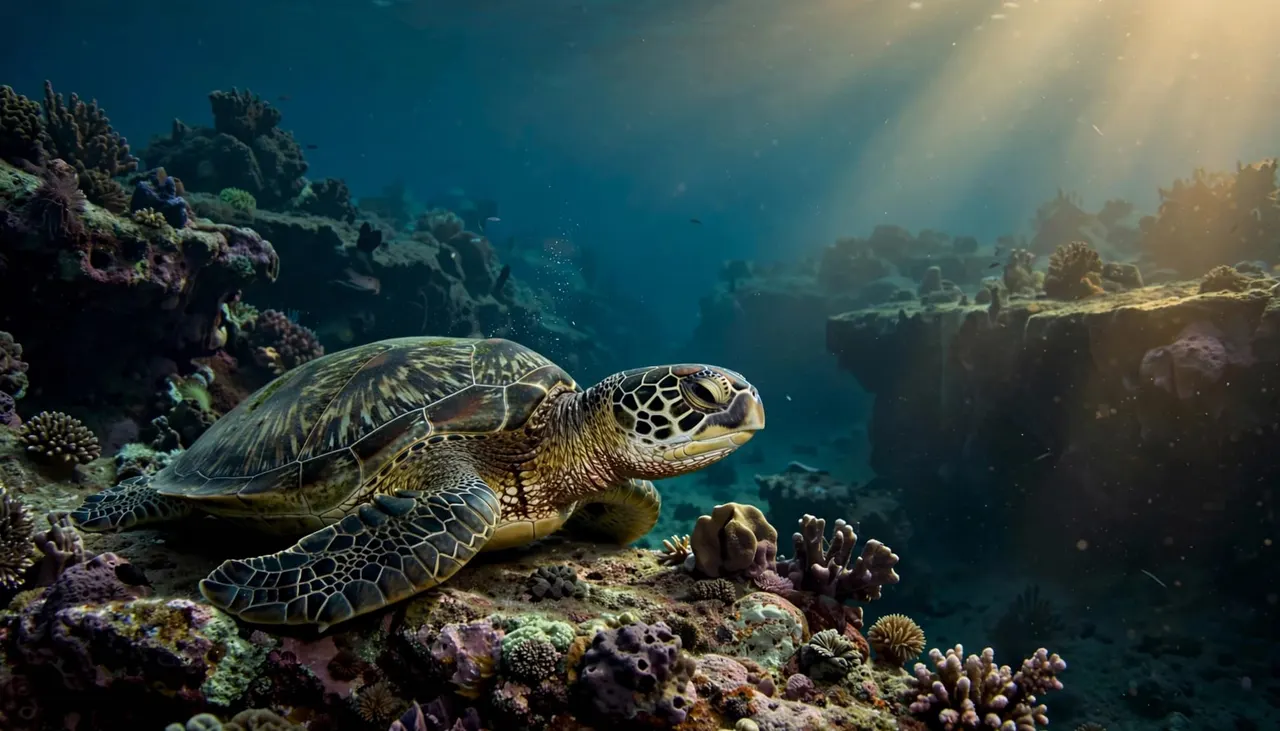
When a green turtle submerges, its heart rate can drop sharply. This response is called diving bradycardia, and it allows the turtle to stretch its available oxygen through a longer dive.
The heart does not need to deliver blood at the same pace when the turtle is resting. By slowing circulation, the animal can direct oxygen toward tissues that need it most and reduce wasteful energy use.
Oxygen conservation supports longer rests
A turtle’s calm posture is practical, not passive. Minimal flipper movement reduces muscle demand, while a slower heartbeat extends the time before the turtle needs another breath.
That is why a resting honu may seem content to hover beneath a coral overhang or settle on a sandy patch beside the reef. It is not ignoring the surface. It is using an efficient rhythm that has helped sea turtles thrive in the ocean.
Research on diving turtles shows that this response begins with submersion, not only after oxygen levels fall. Heart-rate changes are part of a normal diving reflex.
Pressure experiments have limits
Early pressure-simulation experiments recorded long spaces between heartbeats in turtles. In some tests, researchers saw periods of two to seven minutes without a heartbeat after pressure was applied, with intervals reaching nine minutes during the pressure phase.
Those findings do not mean you will see a Turtle Canyon turtle’s heart stop while it rests. The tests explored physiology under controlled pressure, not ordinary reef behavior. A snorkeler cannot measure a turtle’s heart rate by watching it glide beneath the surface.
A motionless turtle is not an invitation to approach. Its quiet behavior may be part of how it conserves oxygen before the next trip to the surface.
What You Can Observe Around Turtle Canyon’s Reef
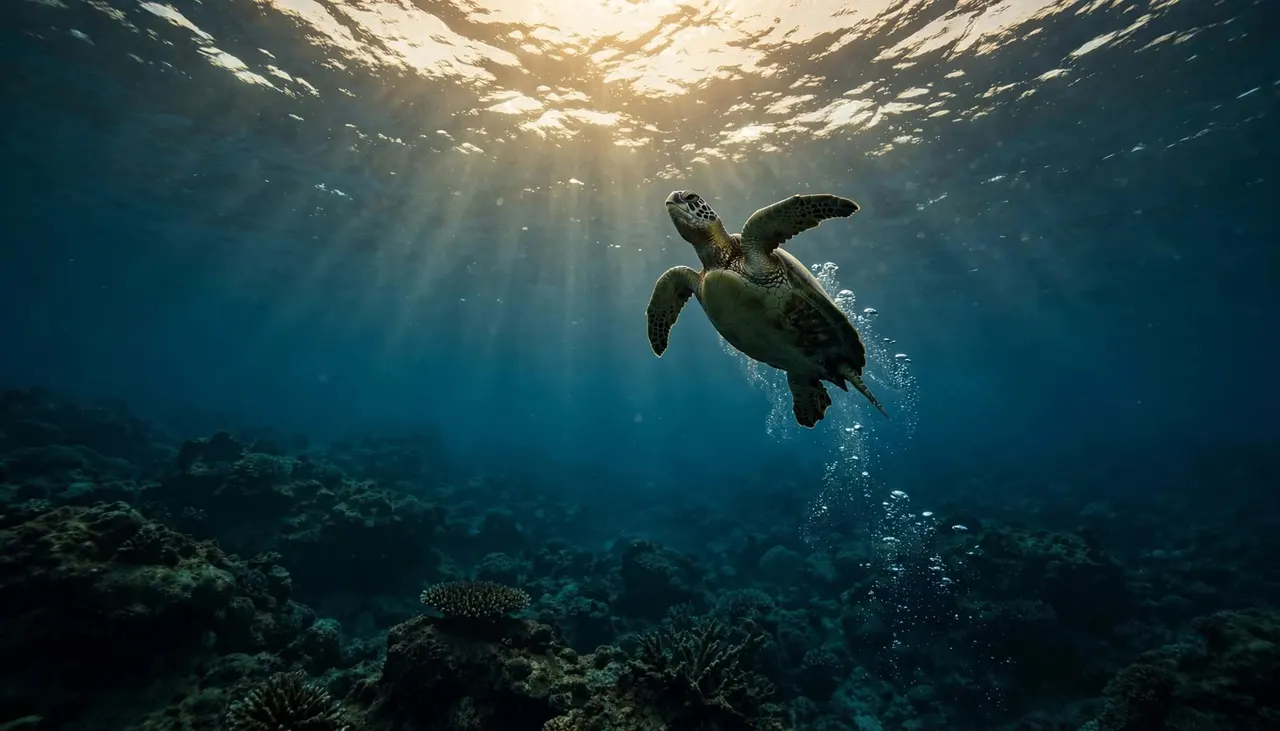
At Turtle Canyon Oahu, you may see a turtle resting close to reef structure, moving through blue water, or rising toward the surface. Each behavior fits into the same daily need for air, food, safety, and recovery.
Your best view comes when you hold a relaxed position and let the turtle manage the distance. A calm group gives the animal room to follow its normal pattern.
The trip to the surface
A turtle often rises with steady, deliberate strokes. Once it reaches the surface, it takes a breath, then may descend toward the reef again. Avoid swimming above it or positioning yourself between the turtle and open water.
If a honu changes direction because of you, increases speed, or abandons a resting spot, give it more room. You will see more natural behavior when the animal does not need to react to swimmers.
Cleaning stations are working habitat
Turtle Canyon is known for natural cleaning stations, where small reef fish may remove algae, loose material, and tiny organisms from a turtle’s shell and skin. The turtle may hover in place while the fish work.
A cleaning station is not a photo stop. Crowding the turtle can interrupt the interaction and force it away. Keep your fins controlled, avoid touching coral, and give the honu a clear path in every direction.
Give Every Honu a Clear Route to Breathe
Hawaiian green sea turtles are protected wildlife. Both NOAA’s Hawaii marine wildlife viewing guidelines and Hawaii DLNR sea turtle guidance recommend staying at least 10 feet, or 3 meters, away from sea turtles in the water and on shore.
That distance protects the turtle’s need to surface, rest, and travel without being redirected by people. It also makes your encounter more rewarding because you see behavior that has not been interrupted.
Float beside the action, not over it
Keep your body horizontal and use slow, easy fin kicks. Never stand on coral, grab the reef for balance, or let loose gear drag across the bottom.
Stay off to the side of a turtle’s route. If it swims toward you, remain calm and allow it to pass. Do not follow it for a closer image, even when it looks relaxed.
Leave handling to trained responders
A turtle with algae on its shell, a slow swimming pace, or a long rest is not automatically injured. Do not attempt to remove algae, fishing line, or debris yourself.
However, you should tell your guide if you notice a fresh wound, clear entanglement, uneven flipper movement, or obvious trouble swimming. If you see a turtle with white alphanumeric markings, report the sighting without moving closer. NOAA’s Honu Count guidance helps support monitoring efforts for marked turtles.
Snorkel With Living Ocean Tours Near Waikiki
Living Ocean Tours operates from Kewalo Basin Boat Harbor, minutes from Waikiki, and brings you to offshore reef habitat aboard Coast Guard-inspected double-decker vessels. The company is Oahu’s top-rated and most-reviewed turtle snorkeling tour company, and it is the only tour company with professional snorkel guides in the water with you.
You can browse Turtle Canyon snorkeling tours in Waikiki for a boat-based outing with snorkel gear, flotation support, shaded seating, restrooms, dry storage, and help entering the water.
Professional guidance changes the water experience
Professional snorkel guides can help you adjust your mask, settle your breathing, choose flotation support, and stay oriented around the reef. That support is useful for first-time snorkelers, families with children, and swimmers who want more confidence in open water.
When a turtle appears, guides help the group spread out rather than surround it. You can focus on the fish, coral, and water around you while the turtle keeps control of its own route.
A sighting is special, never staged
Living Ocean Tours reports a 95% turtle-sighting success rate at Turtle Canyons. Still, honu are wild animals, and no operator can guarantee what the ocean will offer on a particular day.
Some trips bring several turtles near the reef. Others may include tropical fish, rays, and open Pacific water with only a brief turtle sighting. The right expectation is simple: observe what arrives, then leave the reef as undisturbed as possible.
If a guided Turtle Canyon Oahu snorkel fits your Waikiki plans, you can CHECK AVAILABILITY before your preferred departure fills.
Key Takeaways for a Respectful Turtle Encounter
- At Turtle Canyon Oahu, green turtles must surface for air because they breathe with lungs.
- Diving bradycardia helps a resting honu conserve oxygen by slowing its heartbeat underwater.
- Resting, hovering, and cleaning-station behavior can look similar from the surface, so give turtles plenty of space.
- Keep at least 10 feet between yourself and every turtle, even when one swims in your direction.
- Never touch, feed, chase, block, surround, or try to ride a turtle.
- Your calm body position and careful fin control protect coral as well as the wildlife you came to see.
Frequently Asked Questions
Can green turtles stay underwater for hours?
They can remain submerged for extended periods when resting, depending on the animal and conditions. That does not mean every turtle rests for the same length of time. Active swimming requires more oxygen, so a moving turtle may return to the surface much sooner.
Do turtles sleep at Turtle Canyon?
A turtle may rest for long periods under reef ledges or near the seafloor, but you cannot confirm sleep from a snorkel mask. Avoid disturbing a quiet turtle. Its stillness may be part of a normal rest period or oxygen-conserving dive.
What should you do if a turtle swims close?
Stay relaxed, hold your position, and let the turtle pass. Do not reach toward it or swim after it. A turtle that approaches has chosen its own route, and you should leave it a clear path to the surface or reef.
Let the Turtle Set the Pace
Turtle Canyon Oahu offers more than a chance to spot a beautiful animal. It gives you a close look at the daily choices that help a green turtle breathe, rest, feed, and conserve oxygen beneath the waves.
The most memorable sighting happens when the honu remains free to move naturally. Give it room, protect the reef below you, and let respect guide every moment in the water.


